The shape of the story
Brokeback Mountain is a romantic drama adapted from Annie Proulx’s 1997 short story, set in the American West between 1963 and 1983. It follows Ennis Del Mar and Jack Twist, two ranch hands who begin a clandestine relationship during a summer sheepherding job on Brokeback Mountain. The film does not seek to mythologise gay identity or stage political argument; instead, it renders a love story through restraint — through what is withheld, misremembered, deferred, or buried. Its aim is anatomical: to trace how intimacy persists across decades of silence, compromise, and self-erasure. It treats romance not as liberation but as recurrence — something that returns unbidden, unhealed, and unaccommodated by the world around it. Ang Lee directs with deliberate plainness, avoiding symbolic flourish or moral framing. The film’s fidelity lies not in historical realism but in emotional fidelity: to the weight of unspoken feeling, to the physical grammar of longing, to the way love can become indistinguishable from grief when denied continuity. It is a portrait of love as habit, as wound, as weather — something that settles into the bones and alters the shape of a life without ever being named aloud. (158 words)
The look of it
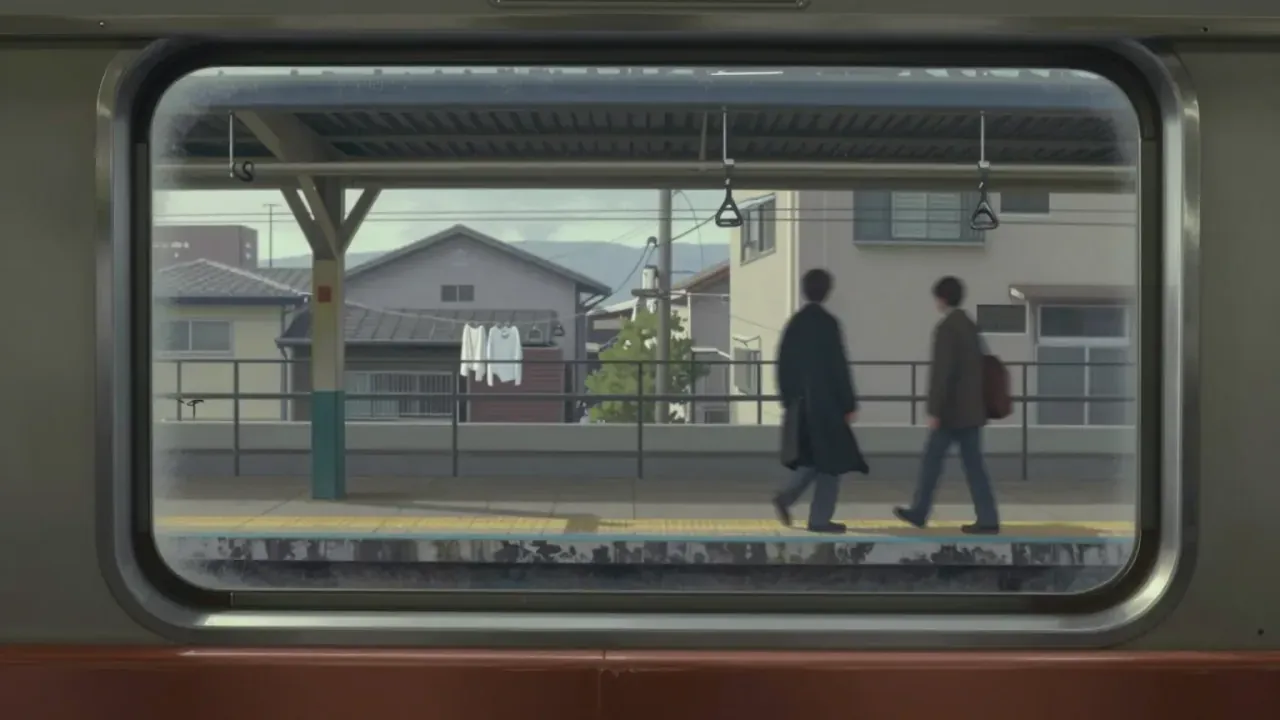
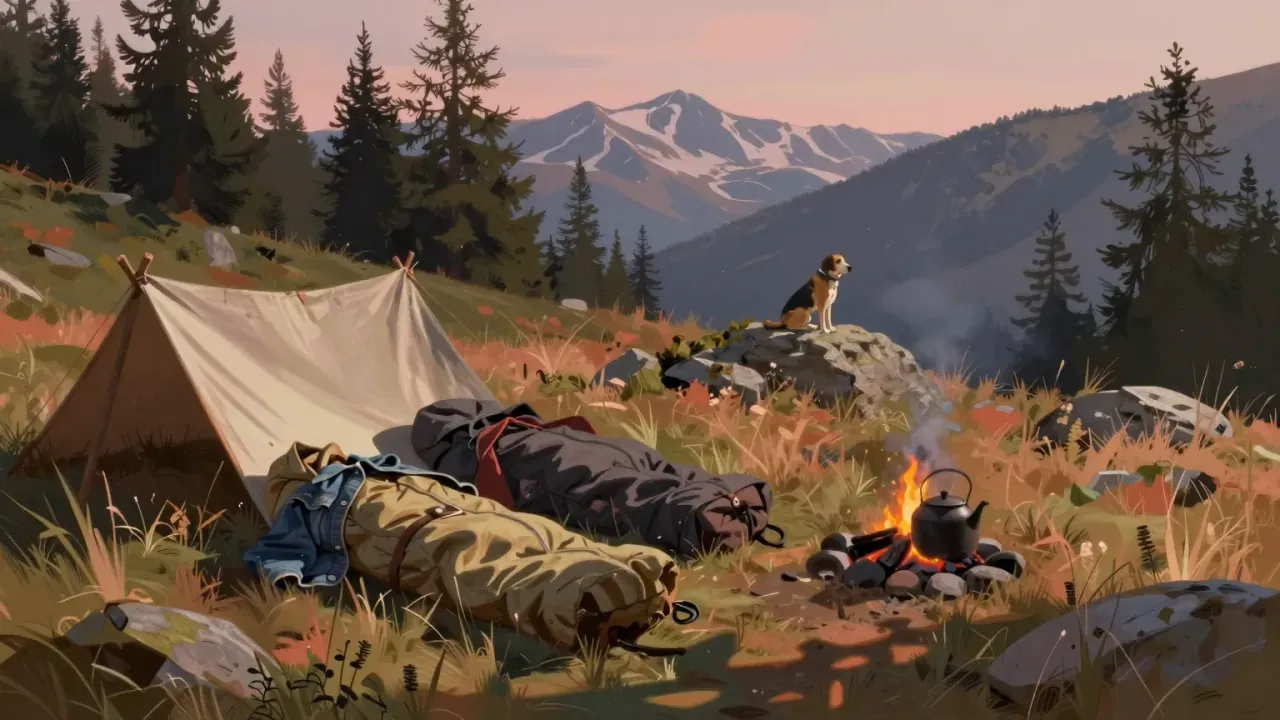
The story unfolds in episodic increments, each separated by years, held together by Rodrigo Prieto’s cinematography: natural light, shallow focus, wide landscapes that dwarf the characters without romanticising them. Heath Ledger and Jake Gyllenhaal perform with minimal inflection — their faces do most of the work, especially Ledger’s Ennis, whose body language tightens like a spring under pressure. Michelle Williams, as Alma, conveys devastation through stillness and timing: a pause before a question, a glance held too long. Dialogue is sparse and functional; exposition is avoided. Dylan Tichenor’s editing sustains tension by cutting away just before resolution — a kiss interrupted, a confession withdrawn, a letter unread. The score, by Gustavo Santaolalla, uses acoustic guitar motifs that recur like memory fragments: tender, unresolved, slightly out of tune. There are no flashbacks, no voiceover, no explanatory asides. The craft serves erasure: every formal choice reinforces how little these men are permitted to say, to show, to keep. Even the Canadian Rockies stand in for Wyoming not as substitution but as displacement — geography made provisional, like their lives. The film works because its form refuses to overstate what its characters cannot. (159 words)
What stays with you
What lands most firmly is the cumulative ache of missed time. The film’s power builds not in grand declarations but in small, repeated failures of courage: Ennis turning away from Jack at the bus station, Jack folding a shirt with meticulous care before leaving, Alma’s quiet departure from the kitchen after Ennis’s outburst. These moments land because they are grounded in behaviour rather than speech — gestures that carry the full weight of suppressed history. Ledger’s performance remains central: his Ennis does not evolve so much as calcify, and the tragedy lies in watching him rehearse the same refusal over and over. The film also lands in its refusal to flatter its setting: the West appears neither heroic nor hostile, just indifferent — a place where men work hard, speak little, and bury what they cannot name. The domestic scenes, particularly those involving Alma and their daughters, avoid melodrama while holding moral complexity: her pain is real, her complicity unexamined, her agency limited but present. The film earns its emotional impact not by insisting on injustice, but by showing how injustice becomes routine — woven into the fabric of daily life until it feels like gravity. (157 words)
Where it pulls back
What does not land is the film’s occasional drift into visual abstraction that lacks narrative anchoring. A few shots — lingering on empty chairs, distant horizons, or discarded clothing — risk becoming decorative rather than resonant, especially in the later sections where repetition begins to blur into stasis. The supporting characters, though well-cast, remain functionally thin: Randy Quaid’s Joe Aguirre and Linda Cardellini’s Lureen exist primarily to reflect Ennis’s or Jack’s limitations, not to inhabit their own interiority. Anne Hathaway’s Lureen, as listed in the fact sheet, does not appear in the final cut — her scenes were excised, leaving gaps in Jack’s later life that the film declines to fill. This omission weakens the contrast between Jack’s outward success and inner desolation. Also, the film’s commitment to understatement occasionally tips into opacity: some viewers may find Ennis’s motivations opaque not because they are complex, but because the script offers little psychological scaffolding beyond his childhood trauma. The film assumes familiarity with repression as a lived condition; it does not translate it. Those unfamiliar with the social architecture of mid-century rural America may read ambiguity where the film intends inevitability. (156 words)
What it is really about
The themes that matter are loneliness as structural condition, not personal failing; love as recurrence rather than resolution; and repression as embodied habit, not ideological choice. The film treats sexuality not as identity but as event — something that happens between people, then recedes, then returns, always altered by time and consequence. It insists that constraint is not external only: Ennis polices himself more stringently than any town or law could. The mountain is never a symbol of freedom but of temporary suspension — a place outside time where feeling is possible precisely because it cannot last. The film also examines masculinity as performance sustained by omission: what is left unsaid, undone, unclaimed. Its quietest theme is time itself — not as progress but as accumulation: of regret, of habit, of silence that thickens like sediment. There is no redemption arc, no late-life clarity, no reconciliatory gesture. What endures is not love’s triumph but its persistence — stubborn, unacknowledged, and ultimately fatal in its consistency. The film’s moral weight rests not on what the characters do, but on what they are prevented from doing — and how thoroughly they internalise that prevention. (159 words)
Who it is for
This film is for viewers who value emotional precision over exposition, who find resonance in restraint, and who accept that some stories conclude not with change but with confirmation — of pattern, of loss, of endurance. It rewards attention to gesture, silence, and texture. It is not for those who require narrative momentum, clear moral framing, or character development that moves toward resolution. Some will find its pacing glacial, its emotional register muted, its politics implicit rather than declarative. Viewers expecting a coming-out narrative or a story of queer affirmation may feel alienated: this is a film about containment, not liberation. Those who associate romance with mutual growth or shared futures may find its vision bleak. But the verdict holds: its austerity is not evasion — it is the point. To dismiss it as ‘depressing’ mistakes its purpose. It is not an argument for hope, but a record of what hope looks like when it has no purchase on reality. (158 words)
Why it lasts
Yes, it is worth your evening — not as escapism, but as calibration. It recalibrates what romance can look and sound like on screen: less declaration, more delay; less triumph, more tenacity. Its 134 minutes pass without hurry, yet leave a residue that lingers longer than many faster-paced films. It asks for patience, not passive consumption, and repays it with emotional density few dramas achieve. Those who dislike slow-burn realism or resist ambiguity may find it unrewarding — but that is not a flaw in the film; it is a boundary. The film’s power lies in its refusal to simplify, to soothe, or to offer catharsis. It is worth watching because it refuses to mistake resolution for truth. Its endurance in cultural memory — preserved in the National Film Registry, cited across decades of criticism — is not due to topicality but to its unflinching fidelity to a particular kind of human ache. That fidelity remains rare, and remains necessary. (159 words)