filmbriefs
Topic

Biography

A life shaped into a narrative it did not have while being lived.

70
in film
13:00
average
910 min
in total
86
across the network
Biography across the network →
All briefs70
13:00

A Brief History of Time

Errol Morris · 1991

Errol Morris’s 1991 documentary profiles Stephen Hawking not as a disembodied genius but as a man whose physical constraints and intellectual ambitions coexist in constant dialogue. Shot on studio sets with a score by Philip Glass, it weaves family testimony, scientific reflection, and quiet observation into a portrait where cosmology and biography are inseparable.
13:00

A Constant Forge

Charles Kiselyak · 2000

A two-hundred-minute documentary portrait of John Cassavetes, assembled from interviews and archival footage. It focuses on his working process — rehearsal, editing, directing — rather than biography or filmography. Featuring Ben Gazzara, Gena Rowlands, Peter Falk, Sean Penn and others, it treats filmmaking as embodied resistance, refusing summary or resolution.

13:00

A Dedicated Life

Kazuo Hara · 1994

Kazuo Hara’s 1994 documentary follows Japanese writer Mitsuharu Inoue during his final four years with terminal cancer. Filmed in real time, it interweaves public appearances, private moments, interviews with peers and former students, and re-enactments of Inoue’s childhood — some later challenged by relatives. The film avoids narration or score, trusting juxtaposition and duration to build a portrait defined by contradiction, not coherence.

13:00

Alex Wheatle

Steve McQueen · 2020

Steve McQueen’s Alex Wheatle (2020) follows the British novelist from institutional childhood through Brixton’s sound-system culture to imprisonment after the 1981 uprising, where he discovers literature. Starring Sheyi Cole and shot by Shabier Kirchner, it is the fourth film in the Small Axe anthology — a focused, atmospheric biographical drama that prioritises sensory detail and quiet transformation over exposition or historical sweep.

13:00

All the Beauty and the Bloodshed

Laura Poitras · 2022

Laura Poitras’s 2022 documentary follows photographer and activist Nan Goldin across five decades — from her early portraits of New York’s queer and AIDS-affected communities to her founding of P.A.I.N. and protests against the Sackler family’s role in the opioid crisis. Built almost entirely from Goldin’s own archive and recent footage of museum demonstrations, the film frames art-making and political action as inseparable practices of truth-telling.

13:00

An Angel at My Table

Jane Campion · 1990

Jane Campion’s 1990 film adapts Janet Frame’s three autobiographies into a restrained, chronologically grounded portrait of a New Zealand writer whose voice was nearly erased by misdiagnosis and institutionalisation. Kerry Fox leads a layered performance across Frame’s life stages, supported by Stuart Dryburgh’s muted cinematography and Veronika Jenet’s unhurried editing. It avoids biopic cliché, focusing instead on the quiet labour of self-reclamation through language.

13:00

And Everything Is Going Fine

Steven Soderbergh · 2010

Steven Soderbergh’s 2010 documentary And Everything Is Going Fine assembles archival monologues, interviews and home movies of Spalding Gray into a portrait built entirely from his own words and presence. Edited by Susan Littenberg and scored by Gray’s son Forrest, it avoids biography-by-explanation in favour of temporal layering and verbal recurrence. The film premiered at Slamdance in January 2010 and was released on Criterion Collection Blu-ray and DVD in 2012.

13:00

Anselm

Wim Wenders · 2023

Wim Wenders’ 2023 documentary Anselm is a 3D portrait of German artist Anselm Kiefer, filmed over three years across Germany, France, and Italy. Eschewing biography and exposition, it renders Kiefer’s creative process — burning canvases, photographing ruins, building towers from rubble — through sustained, tactile 6K 3D imagery. Staged sequences with younger actors echo Kiefer’s life across decades, while poetry by Paul Celan and archival footage anchor the film in postwar German reckoning. The result is less a film about art than an attempt to make cinema behave like painting: slow, material, heavy with time.

13:00

Basquiat

Julian Schnabel · 1996

Julian Schnabel’s 1996 directorial debut is a biographical film about Jean-Michel Basquiat, starring Jeffrey Wright and David Bowie as Warhol. Made without access to Basquiat’s actual artwork, it relies on stylistic approximation and a self-reflexive script co-written by Schnabel and Lech Majewski. The film traces Basquiat’s rapid ascent and decline in 1980s New York, foregrounding his relationship with Warhol and his struggle with addiction. Its strength lies in texture and restraint; its limitation, in the narrowing of Basquiat’s voice, politics and heritage to fit Schnabel’s personal elegy.

13:00

Blaise Pascal

Roberto Rossellini · 1972

Roberto Rossellini’s 1972 biographical film follows Blaise Pascal’s intellectual and spiritual path from scientific prodigy to Jansenist recluse. Starring Pierre Arditi and shot by Mario Fioretti, it prioritises fidelity to Pascal’s writings over dramatic convention, using restrained performance, flat natural lighting, and sparse music to render ideas as embodied acts. It lands most strongly as a study of intellectual exhaustion and the physical cost of certainty — but falters in situating Pascal’s ideas within their historical and political consequences.

13:00

Burroughs: The Movie

Howard Brookner · 1983

Howard Brookner’s 1983 documentary Burroughs: The Movie is the only film made with William S. Burroughs’ full participation during his lifetime. Shot over five years with Tom DiCillo and sound by Jim Jarmusch, it traces Burroughs’ life through interviews, location footage, and quiet observation—no narration, no re-enactments, no interpretive framing. The film premiered at the 1983 New York Film Festival and aired as part of BBC Arena. Restored in 2012, it remains a rare, unvarnished portrait of a writer whose life and work resist easy summary.

13:00

Carl Th. Dreyer: My Metier

Torben Skjødt Jensen · 1995

Torben Skjødt Jensen’s 1995 documentary examines Carl Theodor Dreyer’s filmmaking practice through interviews with collaborators, archival material, and voiceover readings of his notes. It focuses on method — rehearsal, lighting, editing, negotiation — rather than biography or interpretation, assuming prior knowledge of Dreyer’s major works.

13:00

Carlos

Olivier Assayas · 2010

Olivier Assayas’s 2010 French drama Carlos traces the operational life of Ilich Ramírez Sánchez across three decades and multiple continents. Shot in English with multilingual dialogue, it avoids moral framing in favour of procedural fidelity: safe houses, intercepted signals, bureaucratic friction, and the slow decay of ideological certainty. Édgar Ramírez leads a large international cast; editing and cinematography privilege duration and texture over exposition. At 338 minutes, it demands sustained attention but repays it with historical granularity and structural rigour.

13:00

Cartesius

Roberto Rossellini · 1974

Roberto Rossellini’s 1974 biographical film Cartesius follows René Descartes’ intellectual discipline across 152 minutes of restrained, daylight-lit scenes. Starring Ugo Cardea and scored by Mario Nascimbene, it treats philosophy as embodied practice — writing, walking, pausing, revising — rather than as doctrine or drama. Produced by Renzo Rossellini, it belongs to Rossellini’s late pedagogical phase, prioritising method over myth.

13:00

Che Part 2: Guerrilla

Steven Soderbergh · 2008

Che Part 2: Guerrilla follows Ernesto Guevara’s 1965–67 Bolivian campaign as a procedural collapse: dwindling supplies, failed communications, eroding morale, and mounting isolation. Directed by Steven Soderbergh and starring Benicio del Toro, it avoids mythmaking in favour of granular, unsentimental chronology — treating revolution as logistics, not legend.

13:00

Crumb

Terry Zwigoff · 1994

Terry Zwigoff’s 1994 documentary follows cartoonist R. Crumb and his two brothers over nine years, using long, unadorned takes to trace how childhood trauma echoes through adult lives. Shot by Maryse Alberti and edited by Victor Livingston, it avoids narration, score, or exposition, building its argument through repetition, silence, and sustained attention. It won the Sundance Grand Jury Prize and widespread critical acclaim, though its ethical stance toward vulnerable subjects remains contested.

13:00

David Lynch: The Art Life

Jon Nguyen, Rick Barnes, Olivia Neergaard-Holm · 2016

David Lynch: The Art Life is a 2016 documentary shot over four years, composed entirely of Lynch’s voice (recorded across twenty conversations) and footage of him painting, sketching and caring for his infant daughter at home. Archival photographs punctuate his recollections of childhood in the American West, art school in Boston and Philadelphia, and the early days of his filmmaking career in Los Angeles. Directed by Jon Nguyen, Rick Barnes and Olivia Neergaard-Holm, it avoids commentary, context or interpretation — offering not a life story but a sustained, quiet immersion in Lynch’s sensory memory and daily practice.

13:00

Elvira Madigan

Bo Widerberg · 1967

Bo Widerberg’s 1967 Elvira Madigan retells the fatal romance of a Danish circus performer and a Swedish army officer as a study in sensory presence and quiet dissolution. Shot with natural light and minimal crew, it follows their summer-long flight through rural Denmark, using Mozart and Vivaldi as structural anchors and Jörgen Persson’s cinematography to render every blade of grass and drop of sweat with painterly precision. Its power lies in what it omits — exposition, judgement, aftermath — and in what it insists upon: the weight of a shared silence, the dignity of a final choice, and the beauty of a world seen, for ninety-one minutes, without hurry.

13:00

General Idi Amin Dada: A Self Portrait

Barbet Schroeder · 1974

Barbet Schroeder’s 1974 documentary follows Idi Amin across military drills, cabinet meetings, and staged spectacles, all filmed with Amin’s full cooperation and direction. Shot by Néstor Almendros, it presents Amin’s self-mythology without commentary, letting his rhetoric, gestures, and contradictions accumulate as evidence. Though stripped of historical context or moral framing, its rigour lies in sustained observation — a portrait not of a man, but of power performing itself.

13:00

Grey Gardens

Albert Maysles, David Maysles, Ellen Horde · 1975

A 1975 direct-cinema documentary by Albert and David Maysles, Ellen Hovde and Muffie Meyer, Grey Gardens observes Edith ‘Big Edie’ Beale and her daughter ‘Little Edie’ Bouvier Beale in their decaying East Hampton home. Filmed over several months in 1974, it offers no narration, no external context, and no judgment — only sustained, intimate observation of two women performing dignity amid squalor, memory amid decay, and selfhood amid erasure.

13:00

I Shot Jesse James

Samuel Fuller · 1949

Samuel Fuller’s 1949 directorial debut tells the story of Bob Ford, the man who murdered Jesse James—not as a folk villain but as a psychologically fraying opportunist. Shot cheaply and quickly, it uses stark black-and-white cinematography and tightly written scenes to trace Ford’s moral disintegration after the killing, his failed attempts at respectability, and his inevitable downfall. With John Ireland in a defining early role and Fuller’s signature moral directness, it remains a lean, unsentimental study of infamy, reputation, and the cost of self-deception.

13:00

Ingrid Bergman: In Her Own Words

Stig Björkman · 2015

Stig Björkman’s 2015 documentary assembles Ingrid Bergman’s letters, diaries, and home movies into a first-person portrait, voiced by Alicia Vikander and Melinda Kinnaman. Interviews with her children and peers provide grounded counterpoint. Structured chronologically and sparingly scored, it privileges Bergman’s voice over analysis—succeeding where her writing is rich, thinning where it ends.

13:00

Ivan the Terrible. Part I
Sergei Eisenstein · 1944

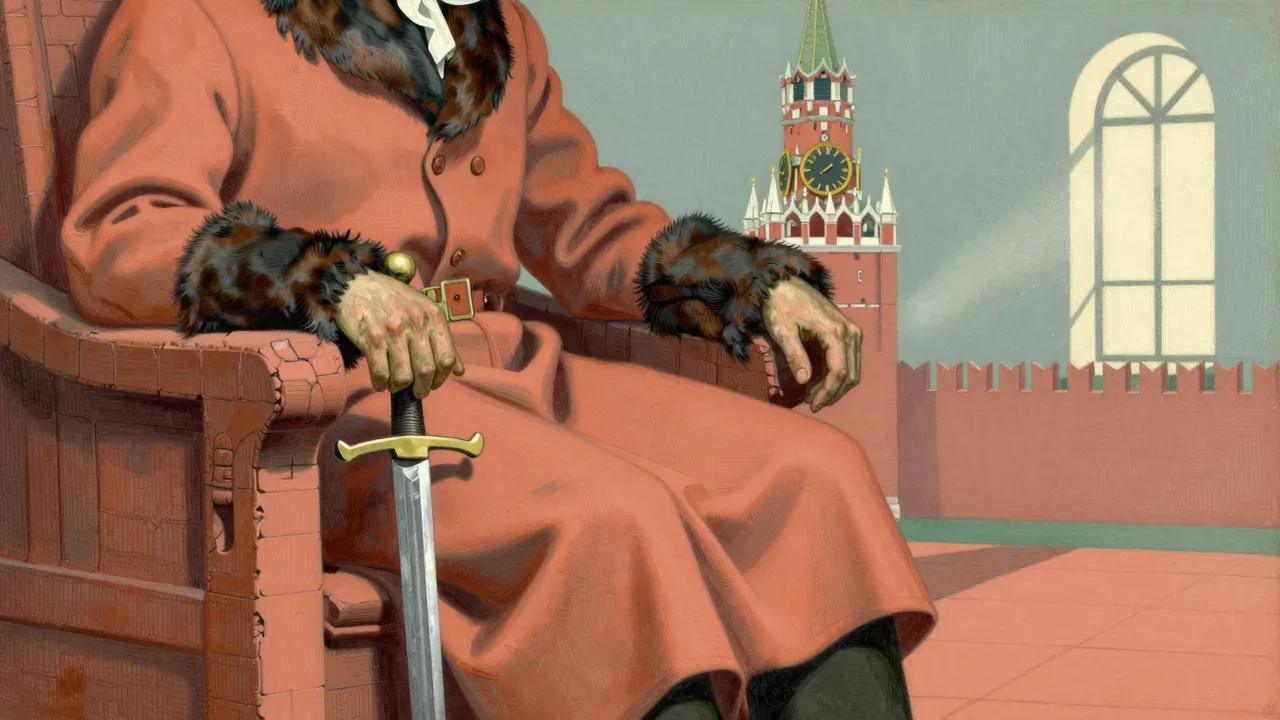
Sergei Eisenstein’s 1944 biographical drama Ivan the Terrible, Part I depicts the early reign of Ivan IV of Russia, using stylised imagery, ritualistic performance, and Sergei Prokofiev’s liturgical score to frame autocratic rule as historically necessary and morally grounded. Shot in stark black-and-white with deliberate, iconic compositions, it privileges ideological clarity over psychological realism — a work of Soviet statecraft as much as cinema.

13:00

Jacquot de Nantes

Agnès Varda · 1991

Jacquot de Nantes (1991) is Agnès Varda’s tender, unhurried portrait of her husband Jacques Demy’s childhood in wartime Nantes. Blending dramatised scenes with documentary interludes and archival fragments, it traces his early fascination with film-making — not as spectacle, but as tangible craft: drawing, lighting, set-building, animation. Shot by Patrick Blossier, Agnès Godard and Georges Strouvé, with music by Joanna Bruzdowicz, it privileges material detail and quiet observation over narrative drive or psychological exposition.

13:00

Jane B. par Agnès V.

Agnès Varda · 1988

Agnès Varda’s 1988 essay-film Jane B. par Agnès V. is a collaborative, self-reflexive portrait of actress and singer Jane Birkin, conceived around her apprehension at turning forty. Blending real interviews with scripted vignettes in which Birkin plays invented roles, the film rejects linear biography in favour of variation, ambiguity, and playful artifice. Shot in English with a modest crew and naturalistic craft, it foregrounds Birkin’s presence — humorous, vulnerable, restless — over exposition or resolution. Though occasionally uneven in execution, its intelligence, warmth, and formal daring make it a singular work in Varda’s filmography and in the history of cinematic portraiture.

13:00

Jo Jo Dancer, Your Life Is Calling

Richard Pryor · 1986

Richard Pryor’s 1986 directorial debut is a biographical drama structured around his near-fatal 1980 freebasing accident. As Jo Jo Dancer lies in a coma, his spirit revisits key episodes — Peoria childhood, early comedy struggles, fame, addiction, and collapse — without offering resolution or redemption. Shot with restrained naturalism by John A. Alonzo and scored sparsely by Herbie Hancock, the film prioritises behavioural realism over dramatic catharsis. Its strengths lie in accumulated detail and psychological consistency; its weaknesses include underdeveloped symbolism and muted engagement with race and systemic constraint. It is a demanding, unresolved, and unmistakably personal work.

13:00

La Bamba

Luis Valdez · 1987

La Bamba (1987), directed by Luis Valdez, tells the story of Ritchie Valens’ rapid rise and early death, centred on his family in 1950s California. Lou Diamond Phillips stars, performing all vocals live; Los Lobos arranged and performed the music. The film avoids myth-making in favour of domestic texture, grounding Valens’ story in his mother’s quiet strength, his half-brother’s resentment, and his own fear of flying. It was selected for preservation in the National Film Registry in 2017.

13:00

Lenny

Bob Fosse · 1974

Bob Fosse’s 1974 biographical drama follows Lenny Bruce across fractured timelines — nightclub triumphs, obscenity trials, domestic fraying — using tight framing, jarring edits, and Dustin Hoffman’s physically exacting performance to render comedy as forensic speech. Adapted from Julian Barry’s play, it avoids explanation in favour of accumulation: of legal pressure, vocal fatigue, and linguistic risk. Its black-and-white austerity refuses nostalgia, its structure refuses closure.

13:00

Limelight

Charlie Chaplin · 1952

Limelight (1952), written, directed, and starring Charlie Chaplin, follows a faded music-hall comedian who saves a suicidal dancer and helps her rebuild her career — while confronting his own obsolescence. Shot in Hollywood but set in Edwardian London, it blends pathos and physical comedy, features Buster Keaton in their only joint screen appearance, and won Chaplin an Oscar for its score two decades after release. Though commercially stymied in the US by political boycott, it has since been reassessed as Chaplin’s most personal and introspective work.

13:00

Lola Montès

Max Ophüls · 1955

Max Ophüls’s 1955 film frames the life of courtesan Lola Montez as a circus spectacle, using CinemaScope, tri-lingual production, and systemic colour to examine how memory, gender, and power shape reputation. Martine Carol stars in a formally rigorous, emotionally restrained portrait that prioritises structure over psychology and spectacle over sentiment.

13:00

Louie Bluie

Terry Zwigoff · 1985

Terry Zwigoff’s 1985 documentary Louie Bluie observes Howard Armstrong — fiddler, painter, linguist, raconteur — in his Detroit home. Shot with minimal equipment and no narration, it captures his music, wit, and visual artistry without contextualising his place in American musical history. The film’s power lies in its restraint: it treats Armstrong as a living, breathing person, not a historical exhibit.

13:00

Madadayo

Akira Kurosawa · 1993

Madadayo (1993), Akira Kurosawa’s thirtieth and final film, is a quiet Japanese drama based on the life of academic Hyakken Uchida. Structured as a series of vignettes across decades, it follows Uchida’s retirement, wartime displacement, post-war rebuilding, and gradual ageing — all anchored by the recurring ‘Not Yet Banquet’. With restrained performances, even lighting by Takao Saito, and minimal music by Shinichiro Ikebe, it affirms endurance through repetition rather than resolution.

13:00

Malcolm X

Spike Lee · 1992

Spike Lee’s 1992 Malcolm X follows Denzel Washington’s portrayal of the civil rights leader across three decades — from street hustler to Nation of Islam minister to international human rights advocate. Built from Alex Haley’s Autobiography and shaped by Lee’s structural rigour, the film refuses simplification, holding contradiction without resolution. Ernest Dickerson’s cinematography, Terence Blanchard’s score, and Barry Alexander Brown’s editing sustain its 201-minute arc with discipline. It is less a tribute than a reckoning: dense, demanding, and deliberately unhurried.

13:00

Moonage Daydream

Brett Morgen · 2022

Moonage Daydream is a 140-minute documentary about David Bowie, directed and edited by Brett Morgen from five million items in Bowie’s personal archive. It uses montage, remixed music, and unreleased footage to construct a non-linear, sensory portrait — avoiding biography in favour of immersion. Premiered at Cannes in 2022, it won a Grierson Award and was shortlisted for an Oscar. It is structured as a series of associative chapters, emphasising Bowie’s intellectual and aesthetic preoccupations over career milestones.

13:00

One Night in Miami...

Regina King · 2020

Regina King’s directorial debut adapts Kemp Powers’s play into a contained, dialogue-driven drama set in a Miami motel room on 25 February 1964. Kingsley Ben-Adir, Eli Goree, Aldis Hodge and Leslie Odom Jr. portray Malcolm X, Cassius Clay, Jim Brown and Sam Cooke, debating faith, art, politics and legacy in the wake of Clay’s title win. Shot by Tami Reiker and scored by Terence Blanchard, it prioritises voice and presence over exposition or visual flourish.

13:00

Paul Robeson: Tribute to an Artist

Saul J. Turell · 1979

Saul J. Turell’s 1979 Oscar-winning short documentary focuses on Paul Robeson’s evolving performances of 'Ol’ Man River' across three decades, using archival footage and Sidney Poitier’s restrained narration to trace artistic and political transformation without biographical exposition. It is a precise, austere act of reclamation — less a life story than a sustained listening.

13:00

Peter Hujar’s Day

Ira Sachs · 2025

Set in a SoHo apartment in 1974, Peter Hujar’s Day reconstructs a single day in the photographer’s life through his real-time recollection for writer Linda Rosenkrantz. Directed by Ira Sachs and starring Ben Whishaw and Rebecca Hall, it unfolds almost entirely in one room, trusting the rhythms of speech, silence, and memory over conventional narrative. Shot by Alex Ashe and edited by Affonso Gonçalves, the film honours the granularity of artistic labour — developing film, negotiating commissions, navigating fame — without embellishment or explanation.

13:00

Rembrandt

Alexander Korda · 1936

Alexander Korda’s 1936 biographical film follows Rembrandt van Rijn across two decades of personal and financial decline, anchored by Charles Laughton’s physically precise performance and Georges Périnal’s shadow-drenched cinematography. Eschewing Hollywood plot mechanics, it renders grief, debt, exile, and quiet resilience through mood, gesture, and composition — not exposition or climax.

13:00

Samurai I: Musashi Miyamoto

Hiroshi Inagaki · 1954

Hiroshi Inagaki’s 1954 Samurai I: Musashi Miyamoto follows the transformation of the unruly Takezo into the disciplined swordsman Musashi Miyamoto. Adapted from Eiji Yoshikawa’s novel, it charts his journey through exile, imprisonment, and moral education in early Tokugawa Japan. With Toshirō Mifune in a physically commanding, psychologically restrained performance, the film privileges restraint over action, silence over exposition, and accumulation over epiphany. Shot in Eastman Color by Toho, it won a Special Academy Award in 1955 and remains a cornerstone of Japanese cinematic craft.

13:00

Secret Honor

Robert Altman · 1984

Robert Altman’s 1984 film Secret Honor confines itself to one room and one performer: Philip Baker Hall as Richard Nixon, delivering a furious, fragmented, self-justifying monologue in the aftermath of resignation. Adapted from Donald Freed and Arnold M. Stone’s play, it rejects historical reconstruction in favour of psychological immersion — tracking how power, paranoia and self-deception reshape language and memory. Pierre Mignot’s restrained cinematography and George Burt’s minimal score serve Hall’s physically precise, verbally dense performance. It is arthouse drama of rare focus and endurance.

13:00

Sid and Nancy

Alex Cox · 1986

A 1986 British biographical drama directed by Alex Cox, Sid and Nancy traces the final years of Sex Pistols bassist Sid Vicious and his girlfriend Nancy Spungen. Starring Gary Oldman and Chloe Webb, it depicts their descent into heroin addiction across London and New York, filmed by Roger Deakins in a tightly framed, high-contrast style. Though critically praised and now cult-acclaimed, it failed to recoup its $4 million budget. The film avoids myth-making, opting instead for visceral, unvarnished observation of mutual erosion — with no redemption, explanation, or narrative distance.
13:00

The Ballad of Gregorio Cortez

Robert Milton Young · 1982

Robert Milton Young’s 1982 biographical Western follows Gregorio Cortez, a Mexican-American farmer wrongly accused after a fatal misunderstanding in 1901 Texas. Starring Edward James Olmos and shot on authentic locations—including the real Gonzales courthouse—the film unfolds with documentary restraint, charting twelve years of trials and imprisonment. Its strength lies in structural clarity and historical fidelity; its limitation, in emotional distance. Preserved by the Library of Congress in 2022, it is a rigorous, unsentimental account of jurisdictional violence on the US-Mexico border.
13:00

The Beaches of Agnès

Agnès Varda · 2008

The Beaches of Agnès is a 2008 French documentary essay directed by Agnès Varda, in which she revisits places, people and objects from her life to mark her eightieth birthday. Using mirrors on beaches, stills, home movies, and everyday artefacts, she builds a portrait that privileges texture over timeline, presence over exposition. Shot and edited with Hélène Louvart and Marie-Josèphe Yoyotte, with music by Joanna Bruzdowicz, it won the César Award for Best Documentary in 2009.

13:00

The Elephant Man

David Lynch · 1980

David Lynch’s 1980 film tells the story of John Merrick, a severely deformed man in Victorian London, not as tragedy or curiosity but as a sustained inquiry into perception, care, and the quiet violence of being perpetually seen. Shot in stark black-and-white by Freddie Francis, with John Hurt delivering a performance of extraordinary stillness and vocal control, the film resists sentimentality, avoids exposition, and trusts the audience to sit with ambiguity. Its power lies in restraint: in what it shows, how long it holds it, and what it refuses to explain.

13:00

The Eternal Breasts

Kinuyo Tanaka · 1955

Kinuyo Tanaka’s 1955 film follows Fumiko Nakajō, a tanka poet diagnosed with late-stage breast cancer, as she navigates divorce, motherhood, literary ambition, and mortality. Shot on location in Hokkaidō, it avoids biopic conventions, favouring quiet observation over exposition. Yumeji Tsukioka anchors a restrained ensemble; Kumenobu Fujioka’s naturalistic cinematography and Takanobu Saitō’s sparse score support a film that values duration, physical detail, and unspoken tension over narrative closure or thematic pronouncement.

13:00

The Last Emperor

Bernardo Bertolucci · 1987

Bernardo Bertolucci’s 1987 epic traces the life of Puyi, last Emperor of China, from infant coronation in the Forbidden City to political re-education in a Communist prison. Shot on location in Beijing with unprecedented access, it uses scale, silence and ritual to explore how systems — imperial, colonial, fascist, communist — inscribe themselves on a single body. John Lone stars, supported by Joan Chen, Peter O'Toole and a cast of thousands. Vittorio Storaro’s cinematography and Ryuichi Sakamoto’s score anchor its formal rigour. It won nine Academy Awards, including Best Picture and Best Director.

13:00

The Private Life of Henry VIII

Alexander Korda · 1933

The Private Life of Henry VIII (1933) is a British biographical drama directed by Alexander Korda and starring Charles Laughton as the ageing king. Structured as a series of vignettes covering five of his six marriages, it avoids religious and political context in favour of intimate, darkly comic portraiture. Shot by Georges Périnal and written by Arthur Wimperis and Lajos Bíró, it won Laughton the Academy Award for Best Actor — the first foreign winner in that category. Though historically selective and stylistically restrained, it endures as a masterclass in performance-led storytelling.

13:00

The Rise of Catherine the Great

Paul Czinner · 1934

The Rise of Catherine the Great (1934) is a UK-produced biographical drama directed by Paul Czinner and produced by Alexander Korda. Starring Elisabeth Bergner as Catherine, Douglas Fairbanks Jr. as Grand Duke Peter, and Flora Robson as Empress Elizabeth, it adapts a 1912 Hungarian play to trace Catherine’s path from German princess to Russian empress. Shot by Georges Périnal with music by Ernst Toch, the film privileges interiority over action, restraint over spectacle, and performance over exposition.

13:00

The Scarlet Empress

Josef von Sternberg · 1934

Josef von Sternberg’s 1934 The Scarlet Empress stars Marlene Dietrich as Catherine the Great, but discards historical fidelity for baroque expressionism — grotesque sculpture, candlelit gloom, and rhythmic, ritualistic pacing. Bert Glennon’s cinematography and Max Steiner’s score reinforce a vision of imperial power as oppressive theatre. Though dramatically uneven and narratively elliptical, it remains a landmark of studio-era stylistic audacity, prioritising atmosphere over exposition and iconography over psychology.

13:00

The Times of Harvey Milk

Rob Epstein · 1984

Rob Epstein’s 1984 documentary assembles interviews, news footage and archival material to trace Harvey Milk’s election, advocacy and assassination in San Francisco. It avoids dramatisation, focusing instead on the mechanics of coalition-building, the texture of local politics and the public aftermath of violence. Awarded the Academy Award for Best Documentary Feature and preserved in the National Film Registry, it remains a model of factual rigour and civic empathy.

13:00

The Wandering Princess

Kinuyo Tanaka · 1960

Kinuyo Tanaka’s 1960 film, adapted from Hiro Saga’s memoir, follows a Japanese aristocrat’s marriage into the deposed Qing imperial family in Manchukuo. Shot in CinemaScope and colour — Tanaka’s first in both formats — it prioritises stillness over spectacle, using muted palettes, precise framing, and understated performances to trace quiet endurance across political rupture. Machiko Kyō anchors the film with restrained intensity; Eiji Funakoshi’s Pujie remains enigmatic by design. The script avoids exposition and moral framing, treating history as atmosphere rather than argument.

13:00

Thelonious Monk: Straight, No Chaser

Charlotte Zwerin · 1988

Charlotte Zwerin’s 1988 documentary assembles rediscovered 1967 footage of Thelonious Monk in performance, rehearsal, and daily life, supplemented by interviews with collaborators and family. Produced by Clint Eastwood’s Malpaso Productions, it avoids narration and chronology in favour of sustained, intimate observation — capturing Monk’s physicality, discipline, and reserve with unprecedented fidelity. Selected for the National Film Registry in 2017, it remains the definitive visual record of the pianist at work.

13:00

Thirty Two Short Films About Glenn Gould

François Girard · 1993

François Girard’s 1993 Canadian film abandons linear biography for thirty-two discrete segments — documentary, re-enactment, animation, silence — each offering a distinct, unmediated angle on pianist Glenn Gould. Colm Feore performs with meticulous restraint, Alain Dostie photographs with quiet exactness, and the soundtrack uses only Gould’s own recordings. It does not seek to resolve his contradictions — his isolation, his technology use, his early retirement — but to hold them in careful, cumulative balance.

13:00

TINY: The Life of Erin Blackwell

Martin Bell · 2016

TINY: The Life of Erin Blackwell is a 2016 documentary directed by Martin Bell, following Erin from age eleven into her thirties across twenty-five years of intermittent filming in Seattle. Shot and edited by Bell with producer Mary Ellen Mark, it uses no voiceover, no score, and no external commentary — relying solely on accumulated footage to trace a life shaped by poverty, resilience, and time itself.

13:00

Topsy-Turvy

Mike Leigh · 1999

Mike Leigh’s Topsy-Turvy (1999) follows W. S. Gilbert and Arthur Sullivan through the 15-month creation of The Mikado, foregrounding rehearsal, costume design, salary negotiation, and backstage friction over biographical revelation. Shot by Dick Pope, scored by Carl Davis, and performed live by the cast, it treats Victorian theatre as a site of material, social, and artistic labour — yielding an arthouse drama that values process, texture, and ensemble over plot or polish.

13:00

Uncle Janco

Agnès Varda · 1967

Agnès Varda’s 1967 documentary Uncle Janco observes Romanian-born sculptor Marcel Janco in his Paris studio over 22 minutes. With no narration, no interviews, and no contextual framing, the film rests on sustained observation: Janco’s speech, his handling of materials, and the quiet rhythm of his daily practice. It is a study in presence, not biography — a work that values tactile knowledge and embodied memory over exposition or historical positioning.

13:00

Varda by Agnès

Agnès Varda · 2019

Varda by Agnès is Agnès Varda’s last film: a self-directed documentary in which, at eighty-nine, she reflects on her six-decade career in photography and film. Seated, speaking directly to camera, she watches excerpts from her own work and comments on them with characteristic clarity, wit and warmth. Structured around the words inspiration, creation and sharing, it is less a historical account than an act of sustained authorial presence — intimate, unhurried, materially attentive. Edited by Varda herself, it privileges texture, recurrence and silence over exposition or argument.

13:00

Vengeance Is Mine

Shohei Imamura · 1979

Shohei Imamura’s 1979 film adapts Ryūzō Saki’s account of serial killer Akira Nishiguchi, renaming him Iwao Enokizu. Through fragmented flashbacks, it traces his crimes, deceptions and flight across post-war Japan, centring Ken Ogata’s restrained, physically precise performance. Shot by Shinsaku Himeda with unadorned naturalism and scored sparingly by Shinichiro Ikebe, the film avoids psychology and moral framing, instead mapping how Enokizu moves unchallenged through institutions — family, church, law, sex work — until his capture and execution. Its final image — ashes suspended mid-air — closes without resolution, leaving the viewer with the weight of unprocessed consequence.

13:00

Young Mr. Lincoln

John Ford · 1939

John Ford’s 1939 biographical drama follows a young Abraham Lincoln — played by Henry Fonda — from New Salem store clerk to Springfield lawyer, centring on a murder trial where logic and moral clarity defeat mob rule and false testimony. Shot in measured, shadowed compositions by Bert Glennon and Arthur Charles Miller, with a restrained score by Alfred Newman, the film builds Lincoln’s authority through gesture, silence and procedural rigour rather than speechifying or psychology. Though romantic subplots feel underdeveloped and historical compression sacrifices nuance, its ethical architecture and Fonda’s defining performance hold firm across eighty-five years.

13:00

Ivan the Terrible. Part II

Sergei Eisenstein · 1958

Sergei Eisenstein’s Ivan the Terrible. Part II (1958) is the suppressed second chapter of his biographical project on Ivan IV, completed in 1946 but unreleased until after Stalin’s death. Shot in stark studio sets with chiaroscuro lighting by Moskvin and Tisse, and scored by Prokofiev, it depicts the Tsar’s descent into isolation and the founding of the Oprichnina. Starring Nikolay Cherkasov and Pavel Kadochnikov, it is a formally rigorous, psychologically dense, and politically unsparing work — less historical narrative than dialectical study of how power organises space, time, and the human body.

13:00

Ali

Michael Mann · 2001

Michael Mann’s Ali traces ten years in Muhammad Ali’s life, from his 1964 title win over Sonny Liston to the 1974 Rumble in the Jungle. Will Smith performs Ali as physical and vocal presence rather than psychological portrait; Emmanuel Lubezki’s cinematography and Pieter Bourke and Lisa Gerrard’s score reinforce texture over exposition. The film prioritises endurance, visibility, and voice over narrative clarity or emotional exposition — landing hardest in its sensory fidelity, faltering where it attempts thematic breadth or relational depth.

13:00

Bright Star

Jane Campion · 2009

Jane Campion’s Bright Star follows the final years of John Keats and his relationship with Fanny Brawne, drawing directly from his letters and poems. Set in Hampstead and Italy between 1818 and 1821, it renders their love with quiet precision — in shared walks, handwritten notes, stitched garments and unspoken grief. Ben Whishaw and Abbie Cornish anchor a restrained, visually tactile film shaped by Greig Fraser’s naturalistic cinematography and Janet Patterson’s lived-in production and costume design. It is less a biographical survey than an intimate study of endurance within limitation: of health, income, time and language itself.

13:00

Fritz Lang

Gordian Maugg · 2016

Gordian Maugg’s 2016 biographical film Fritz Lang follows the director in the months before and after his 1933 departure from Weimar Germany. Starring Heino Ferch, it avoids hagiography or melodrama, instead focusing on procedural tensions — studio politics, bureaucratic pressure, and unspoken allegiances — with deliberate pacing and muted visuals. The film presumes familiarity with Lang’s work and the historical context, offering ambiguity where others might supply certainty.

13:00

Funny Girl

William Wyler · 1968

Funny Girl (1968), directed by William Wyler, adapts the Fanny Brice story into a romantic musical drama starring Barbra Streisand in her film debut. It charts her rise from Brooklyn vaudeville to Ziegfeld stardom and her turbulent marriage to Nicky Arnstein (Omar Sharif). With music by Jule Styne and a script by Isobel Lennart, the film privileges psychological realism over musical convention — its camerawork is tight and unshowy, its performances grounded, its emotional arcs unresolved. Though commercially huge and critically lauded — winning Streisand the Best Actress Oscar — it remains a singular, deliberate work: more portrait than pageant, more rehearsal than revue.

13:00

Grizzly Man

Werner Herzog · 2005

Werner Herzog’s 2005 documentary assembles Timothy Treadwell’s own footage, interviews with friends and experts, and his own narration to examine the bear enthusiast’s thirteen years in Alaska and his 2003 death alongside Amie Huguenard. It does not seek to vindicate or condemn, but to trace the logic of a man who believed he had transcended the boundary between human and wild—and what that belief cost.

13:00

Jackie

Pablo Larraín · 2016

Jackie (2016) follows Jacqueline Kennedy in the week after John F. Kennedy’s assassination, framed by a Life magazine interview at Hyannis Port. Directed by Pablo Larraín and starring Natalie Portman, it focuses on her psychological navigation of grief, legacy, and public performance — not as a biographical survey, but as a study in containment. Stéphane Fontaine’s cinematography, Mica Levi’s score, and Sebastián Sepúlveda’s editing sustain a tense, intimate atmosphere. The film received three Academy Award nominations, including Best Actress for Portman.

13:00

Mishima: A Life in Four Chapters

Paul Schrader · 1985

Paul Schrader’s 1985 film interweaves Yukio Mishima’s final day with biographical flashbacks and dramatisations of three of his novels, organised into four colour-coded chapters. Shot in Japan with a rigorous visual syntax, it privileges form over exposition, using John Bailey’s cinematography, Philip Glass’s score and Eiko Ishioka’s production design to render Mishima’s aesthetic absolutism as cinematic grammar. It was banned in Japan until 2025.

13:00

Mughal-e-Azam

K. Asif · 1960

K. Asif’s 1960 epic retells the legend of Prince Salim and Anarkali as a monumental study in authority, desire, and sacrifice. Shot over years with unprecedented scale and linguistic care, it uses Urdu poetry, classical music, and handcrafted sets to construct a vision of Mughal grandeur that feels less like recreation than revelation.

13:00

Spencer

Pablo Larraín · 2021

A psychological portrait of Diana, Princess of Wales, over three days at Sandringham in 1991. Directed by Pablo Larraín and written by Steven Knight, it uses Claire Mathon’s Super 16mm cinematography, Jonny Greenwood’s dissonant score, and Kristen Stewart’s physically precise performance to render Diana’s existential crisis as sensory experience — not biography, but embodiment.

13:00

The Great Ziegfeld

Robert Z. Leonard · 1936

The Great Ziegfeld (1936) is MGM’s lavish biographical musical about Florenz Ziegfeld Jr., starring William Powell, Luise Rainer and Myrna Loy. Directed by Robert Z. Leonard and produced by Hunt Stromberg, it prioritises spectacle over accuracy — staging extravagant musical numbers, deploying hundreds of costumers and technicians, and constructing monumental sets like the 100-ton ‘Melody’ staircase. Though factually loose and dramatically thin, its unwavering commitment to scale, craft and ceremonial grandeur makes it a defining artefact of studio-era ambition.