The shape of absence
Jackie is a tightly focused biographical film about Jacqueline Kennedy in the immediate aftermath of John F. Kennedy’s assassination, structured around a single interview she gives to a journalist at Hyannis Port in November 1963. It does not attempt a cradle-to-grave portrait, nor does it dramatise the assassination itself as spectacle. Instead, it treats the four days between the shooting and the state funeral as psychological terrain — a space where grief, performance, memory, and legacy are negotiated under extreme pressure. The film’s ambition is narrow but exacting: to reconstruct not what happened, but how it felt to inhabit that moment as Jackie — a woman trained in poise, fluent in image-making, now forced to manage both national mourning and private collapse. It draws heavily on Theodore H. White’s Life magazine interview, though it compresses and reorders events for emotional rather than documentary fidelity. Pablo Larraín’s direction signals early that this is not a conventional biopic: the camera stays close, the editing fractures time, and the score avoids orchestral grandeur in favour of dissonant, breath-like textures. The film aims for interiority, not exposition.
The voice of it
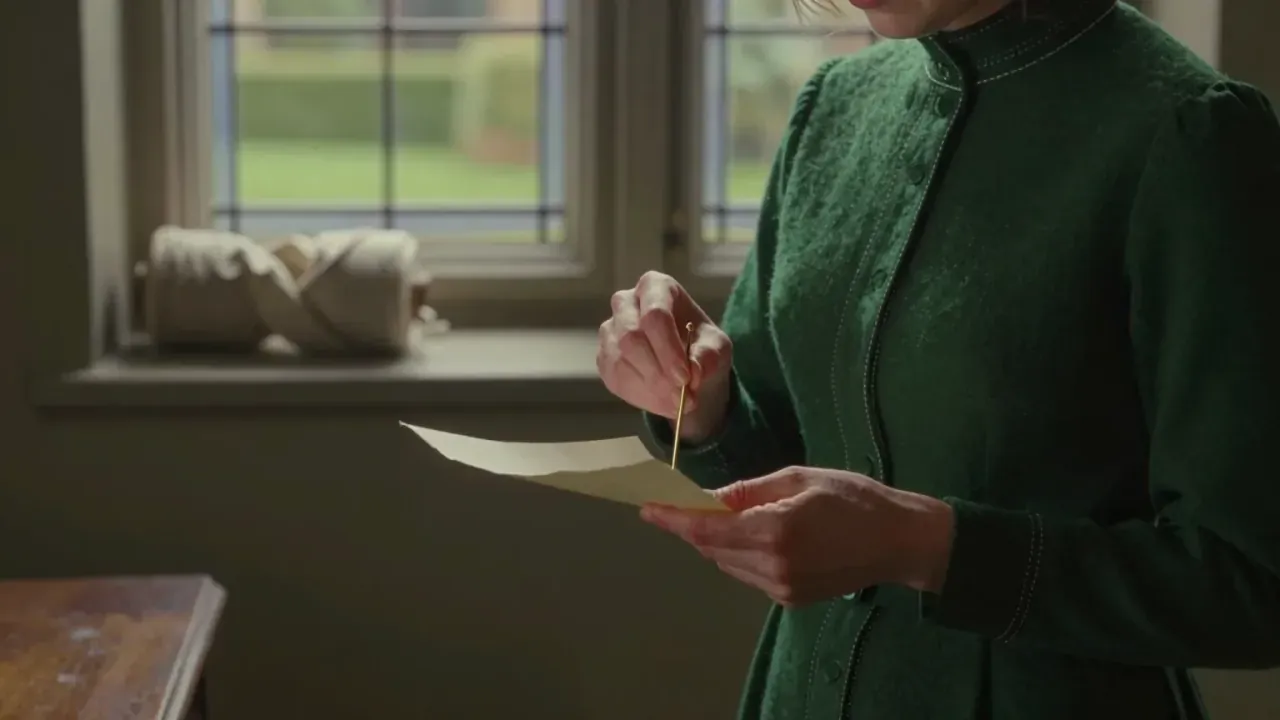
The story unfolds in overlapping timelines — the Hyannis Port interview, the White House tour footage from 1962, and the chaotic hours after Dallas — held together by Natalie Portman’s performance, which anchors every frame. She modulates voice, posture, and stillness with surgical precision: the clipped vowels, the slight forward tilt of the head, the way her hands fold and refold when speaking of loss. Stéphane Fontaine’s cinematography keeps interiors dim and shallow-focus, often framing Portman through doorways or behind glass, reinforcing isolation. Sebastián Sepúlveda’s editing avoids clean transitions; cuts land like interruptions, mimicking the way trauma loops and stutters. Mica Levi’s score uses strings like frayed nerves — glissandi that never resolve, harmonics that hover just out of tune. Peter Sarsgaard as Robert F. Kennedy offers quiet gravity, while Greta Gerwig as Nancy Tuckerman provides the only sustained warmth. The production design replicates the White House with uncanny restraint — no gilt excess, just muted tones and precise period detail. Every craft choice serves the central question: how does a person hold themselves together when the world demands they hold something else together first?
The weight of it
What lands most decisively is the film’s refusal to flinch from Jackie’s contradictions — her composure and fragility, her calculation and raw need, her role as widow and as architect of myth. Portman’s vocal control alone carries weight: the shift from public cadence to private rasp is never overplayed, yet always legible. The recreation of the 1962 White House tour is especially effective — not as nostalgia, but as a stark contrast to the disarray that follows, making the loss of order feel physical. The funeral sequence avoids sentimentality by focusing on logistics: the placement of the casket, the length of the procession, the children’s shoes. These details ground the spectacle in lived consequence. The priest scenes work because they avoid theological exposition; his presence is functional, not doctrinal — a listener, not a saviour. Even the decision to show Oswald’s murder on television, then cut to Jackie’s face before she hears the news, lands with quiet force: it is less about shock than about the erosion of agency. The film earns its intensity not through volume, but through accumulation — small choices, repeated gestures, withheld reactions — all calibrated to suggest what cannot be spoken.
The edge of it
What does not land is the film’s occasional drift into abstraction at the expense of clarity. A few sequences — particularly those involving the priest — verge on symbolic shorthand rather than dramatic necessity, their meaning too thinly anchored in character or context. The use of archival-style grain and unstable framing sometimes feels mannered, especially in scenes meant to evoke memory, where the visual distortion competes with, rather than supports, emotional intent. Some supporting performances remain under-served by the script’s tight focus: Billy Crudup’s Johnson appears more as a silhouette of political pragmatism than a fully rendered figure, and John Hurt’s brief turn as a newspaper editor feels truncated, his lines landing without sufficient setup. The film’s resistance to exposition also means viewers unfamiliar with the historical scaffolding — the significance of the White House restoration, the tension between Jackie and Johnson over funeral arrangements, the role of the Life interview itself — may struggle to grasp the stakes of certain exchanges. It assumes knowledge, not curiosity.
The work of it
The themes that matter are control, performance, and the construction of history in real time. Jackie is shown not as a passive subject of tragedy, but as an active participant in shaping its narrative — choosing the music for the funeral, insisting on the riderless horse, rehearsing answers for the press. Her grief is inseparable from her labour: the work of preserving dignity, legacy, and family stability amid institutional indifference. The film treats fashion, architecture, and ritual not as decoration but as tools of sovereignty — ways to assert agency when political power has evaporated. It also examines the gendered expectation of stoicism: Jackie is allowed sorrow only when it is stylised, contained, televised. Her reliance on alcohol and medication is shown without moralising, as a physiological response to unrelenting demand. There is no redemption arc, no catharsis — only endurance, and the slow, uneven return to function. The film’s quietest theme is silence: what is withheld, what is unsayable in front of cameras, what remains unrecorded even in the most exhaustive interviews.
The pace of it
This film is for viewers who value psychological precision over plot propulsion, who find resonance in restraint, and who accept that a biographical film can be less about facts than about emotional fidelity. It suits those accustomed to arthouse pacing and willing to sit with discomfort without resolution. It is not for viewers seeking narrative momentum, explanatory exposition, or a broader historical canvas — those looking for context on the Cold War, civil rights, or JFK’s policies will find none. Nor is it for those who require moral clarity or redemptive closure: Jackie’s decisions are presented without judgment, and her compromises go uninterrogated beyond their personal cost. Anyone expecting a conventional prestige biopic — one that builds to a triumphant speech or a decisive turning point — will leave unsettled. The film rewards attention to texture, not summary. Its audience is narrow but exact: people who watch films not to be told what to think, but to feel how something might be thought.
The choice of it
Yes, it is worth your evening — provided you approach it as a study in containment, not a chronicle of events. Its 99 minutes sustain a single, unwavering tone without slackening, and Portman’s performance repays close attention in every frame. Those who dislike ambiguity or demand narrative payoff will find it withholding, and viewers unused to elliptical editing or non-linear structure may feel adrift. But the film’s rigour — in writing, performance, sound, and image — makes its narrow scope feel necessary, not limited. It does not ask for empathy so much as recognition: of how public figures grieve, how women negotiate powerlessness, how history is stitched together in real time by people who know they are being watched. To dismiss it as ‘cold’ mistakes its discipline for detachment. Its power lies in what it refuses to say, and what it trusts the viewer to hold.