The shape of their days
Bright Star is a biographical film about the last three years of John Keats’s life, centred on his relationship with Fanny Brawne. It does not aim to dramatise poetic achievement or literary influence, but to render the texture of intimacy — how love forms in quiet rooms, how grief settles in silence, how language passes between two people when money, health and time are all in short supply. Jane Campion’s screenplay draws heavily from Keats’s letters, treating them not as source material but as lived speech: lines are spoken as if written moments before, ink still damp. The film avoids the biopic’s usual pivot points — no grand readings, no rivalries with Wordsworth or Shelley, no editorialising about reputation. Instead, it holds steady on domestic scale: a shared walk, a folded letter, a dress pinned by candlelight. Its ambition is narrow and exact: to make visible what Keats called ‘the feel of not to feel it’ — the ache of proximity without permanence. It assumes the audience knows little of Romanticism but trusts them to recognise devotion when it is shown, not told. (158 words)
The look of it
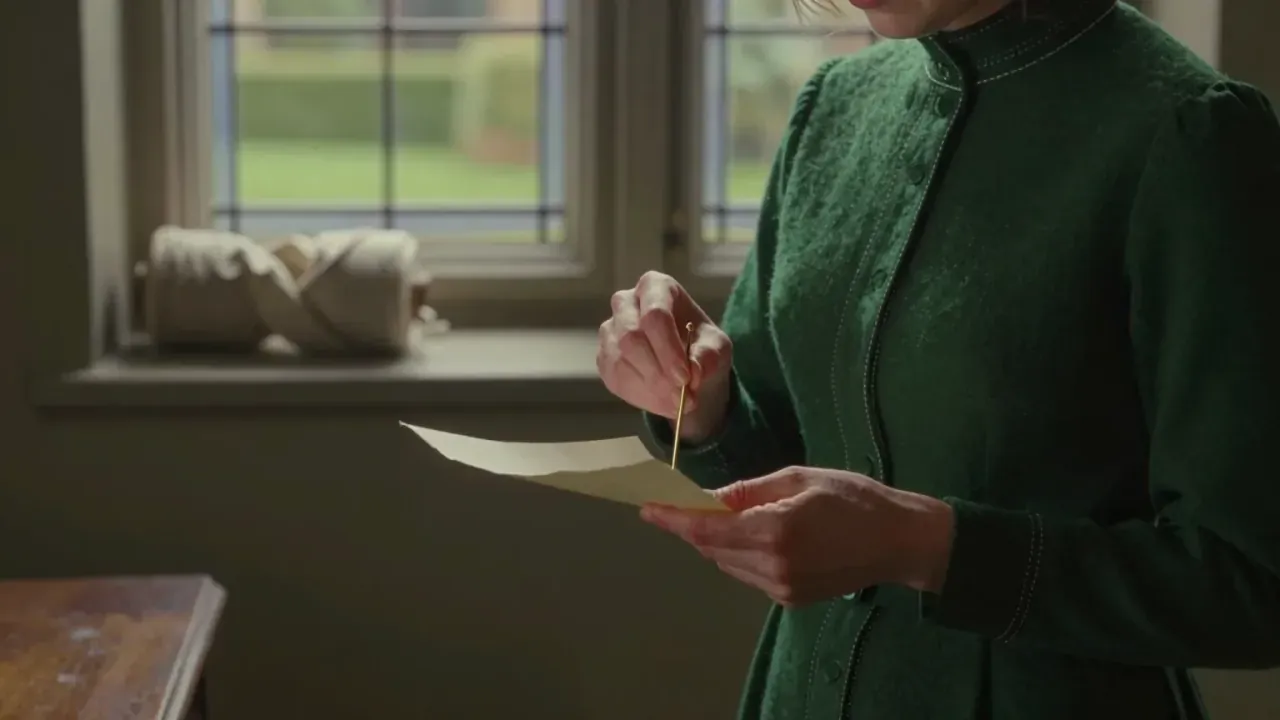
The story unfolds in measured increments, anchored by seasonal shifts and the rhythm of correspondence. Ben Whishaw’s Keats is physically slight and verbally precise, his voice low but never recessive; Abbie Cornish’s Fanny carries her intelligence in posture and glance, never in exposition. Paul Schneider’s Charles Brown is neither villain nor foil but a man whose loyalty wears thin under pressure — his performance rests in pauses, not pronouncements. Greig Fraser’s cinematography avoids period-postcard lushness: interiors are lit as if by real firelight, exteriors often misted or overcast, the camera lingering just long enough to register a hand resting on a windowsill or a breath fogging glass. Janet Patterson’s dual role as costume and production designer ensures fabric and furniture share the same grain — wool, linen, wood, plaster, all slightly worn, never polished. Mark Bradshaw’s score uses chamber textures and sparse piano motifs, avoiding orchestral sweep. Editing by Veronika Jenet favours duration over cut: scenes breathe, sometimes too long, but never rush. There is no voiceover, no flash-forward, no explanatory title card. The craft serves restraint, not spectacle. (159 words)
What stays unspoken
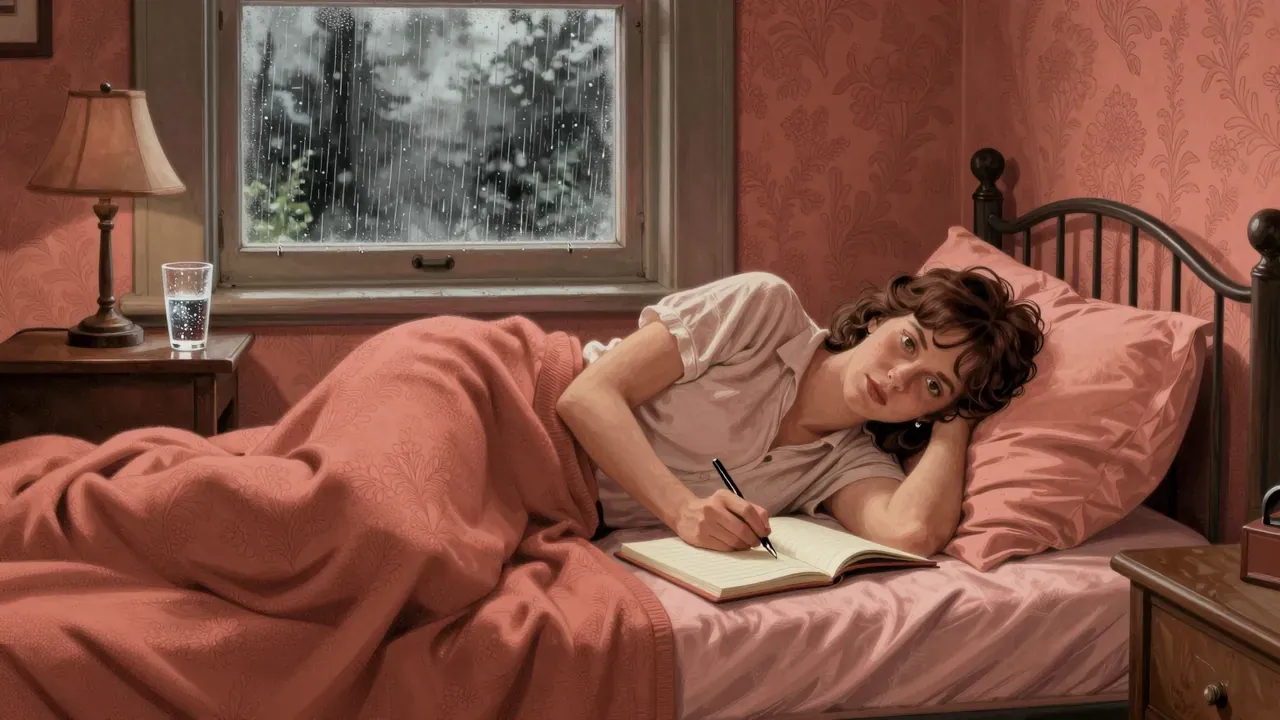
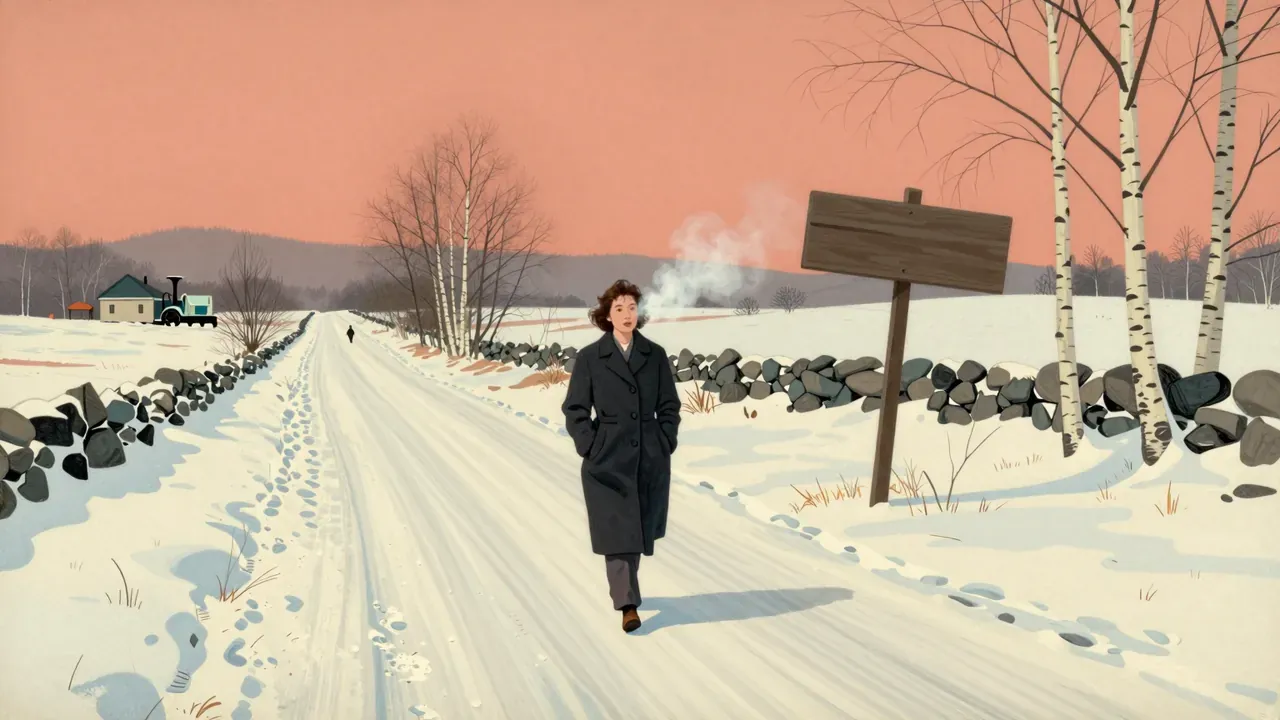
What lands is the weight of unspoken things. A glance held too long across a dinner table; the way Fanny folds a letter before reading it; the sound of Keats’s pen scratching while he writes to her in bed, ill and feverish. The film makes palpable the physicality of writing — the dip of the quill, the blot of ink, the tremor in the hand — because these are the only tools Keats has left to prove he exists for her. The final sequence — Fanny walking Hampstead’s snow-dusted paths, reciting ‘Bright star, would I were stedfast as thou art’ — works not as climax but as quiet culmination: her voice does not rise, her grief does not break, yet the accumulation of earlier silences gives the moment its force. The film also lands its sense of historical immediacy: this is not Regency England as backdrop but as lived environment — cold floors, damp walls, the labour of sewing, the cost of coal. Costume and set design do not signal ‘1819’ through ornament but through wear, mending, repetition. Even the poetry feels earned: lines are not declaimed for effect but murmured, misremembered, rewritten, passed like currency between two people who know they have little else to give. (157 words)
Where the rhythm slips
What does not land is the structural weight given to Charles Brown. His antagonism toward Fanny remains under-motivated, less a character choice than a plot necessity to generate friction where the central relationship offers none. The film’s refusal to dramatise external conflict leaves Brown stranded between function and personhood — he warns, he judges, he departs, but his inner logic stays opaque. Similarly, the Dilke family’s abrupt departure from Hampstead feels narratively convenient rather than emotionally inevitable. Some scenes linger past their resonance: a protracted sequence of Fanny sewing alone, though visually coherent, adds little beyond atmosphere. The film’s commitment to stillness occasionally tips into inertia — particularly in the middle stretch, where Keats’s illness is conveyed more through pallor and quiet than physiological detail, blurring the line between dignity and vagueness. The decision to shoot at Hyde House rather than Keats’s actual Hampstead home, while justified in the sheet, results in interiors that feel generically Georgian rather than specifically inhabited — the ‘fustiness’ Campion sought to avoid is replaced by a certain airlessness. These are not failures of craft but of calibration: the film’s austerity sometimes mistakes absence for meaning. (159 words)
The weight of the ordinary
The themes that matter are not love versus duty, or art versus life, but endurance within limitation: the limits of income, of health, of time, of language itself. The film treats poetry not as self-expression but as survival strategy — a way to hold feeling steady when the body fails. It insists on the materiality of love: letters must be written, dresses stitched, rooms heated, debts managed. Grief here is not cathartic but cumulative, measured in months of waiting, in unanswered letters, in the slow erosion of certainty. Class is present not as polemic but as texture — in the way Fanny’s mother measures Keats’s prospects against her daughter’s future, in the unspoken knowledge that a poet’s income is speculation, not salary. Mortality is not abstract but domestic: Tom Keats’s death is felt in the silence after a cough, in the way Fanny’s younger siblings stop speaking of him. The film’s most persistent theme is fidelity — not to vows, but to attention: the act of looking closely, listening patiently, remembering precisely. That fidelity becomes the film’s quiet argument for why Keats’s work endures: not because it is grand, but because it is exact. (156 words)
Who it meets halfway
This film is for viewers who value slowness as intention, not deficiency — those who find emotional precision in a held glance or a pause before a sentence ends. It suits readers of letters, stitchers of cloth, listeners of chamber music, anyone who has ever waited for a reply. It is not for those who require narrative propulsion, clear antagonists, or resolution that arrives with fanfare. Anyone expecting a conventional romance will find its pacing withholding; anyone seeking historical exposition will miss contextual scaffolding. Those who dislike films where weather matters more than plot, or where silence carries more weight than dialogue, will grow restless. The film assumes patience as a condition of engagement — not as a test, but as a shared rhythm. It does not ask for surrender, but for alignment. A viewer who finds beauty in restraint, who trusts that a single line of poetry can carry the weight of a lifetime, will find it generous. Someone who needs explanation, escalation or closure will leave unsatisfied — and rightly so. The verdict does not change if the film were shorter or louder; its terms are fixed. (158 words)
An evening held gently
Yes, it is worth your evening — provided you bring the right attention. It repays close watching not with revelation but with accumulation: small details accrue until the final walk in the snow feels inevitable, not imposed. Its 119 minutes do not pass quickly, but they do not drag; they settle, like dust in sunlit air. This is not entertainment in the transactional sense, but immersion — a temporary inhabitation of another tempo, another sensibility. It asks nothing more than that you notice how light falls on a sleeve, how a voice breaks mid-sentence, how love persists even when hope does not. Those who watch for plot beats may call it inert; those who watch for texture will find it rich. It is not a film to consume, but to keep — like a letter folded and re-folded, its creases deepening with each handling. Its value lies not in what it delivers, but in what it allows space for: memory, quiet, the slow return of feeling. If your evening permits that kind of presence, then yes — it is worth it. (159 words)