filmbriefs
Topic

Power

Who holds it, how it is kept, and what it costs.

47
in film
13:00
average
611 min
in total
91
across the network
Power across the network →
All briefs47
13:00

Beware of a Holy Whore

Rainer Werner Fassbinder · 1971

Rainer Werner Fassbinder’s 1971 drama Beware of a Holy Whore stages the slow disintegration of a film crew stranded in a Spanish hotel, awaiting production that never begins in earnest. Shot by Michael Ballhaus and edited by Fassbinder and Thea Eymèsz, it uses repetition, confinement and unresolved tension to explore self-deception, dependency and the violence of creative collaboration.
13:00

Danton

Andrzej Wajda · 1983

Andrzej Wajda’s 1983 Danton, starring Gérard Depardieu and Wojciech Pszoniak, dramatises the final weeks of Georges Danton during the Reign of Terror. Adapted from Stanisława Przybyszewska’s play, it avoids historical literalism in favour of stark political psychology — showing how revolutionary ideals curdle into bureaucratic violence. Shot in muted tones by Igor Luther, edited with deliberate gravity by Halina Prugar-Ketling, and scored sparingly by Jean Prodromidès, it rests on two towering, mutually corrosive performances. Though occasionally opaque in its plotting, its moral precision and formal restraint make it a defining arthouse drama of the Cold War era.

13:00

Dry Summer

Metin Erksan · 1964

Metin Erksan’s 1964 Turkish drama Dry Summer follows tobacco farmer Osman, who dams a river to secure his harvest at the expense of neighbouring farmers. His younger brother Hasan reluctantly complies, then wavers; their conflict escalates legally and violently, entangling Hasan’s wife Bahar in a web of coercion, deception and retribution. Shot in stark black-and-white with minimal score and restrained performances, the film traces how property law, patriarchal control and ecological scarcity converge. It won the Golden Bear at Berlin and remains a landmark of socially engaged Turkish cinema.

13:00

Harakiri

Masaki Kobayashi · 1962

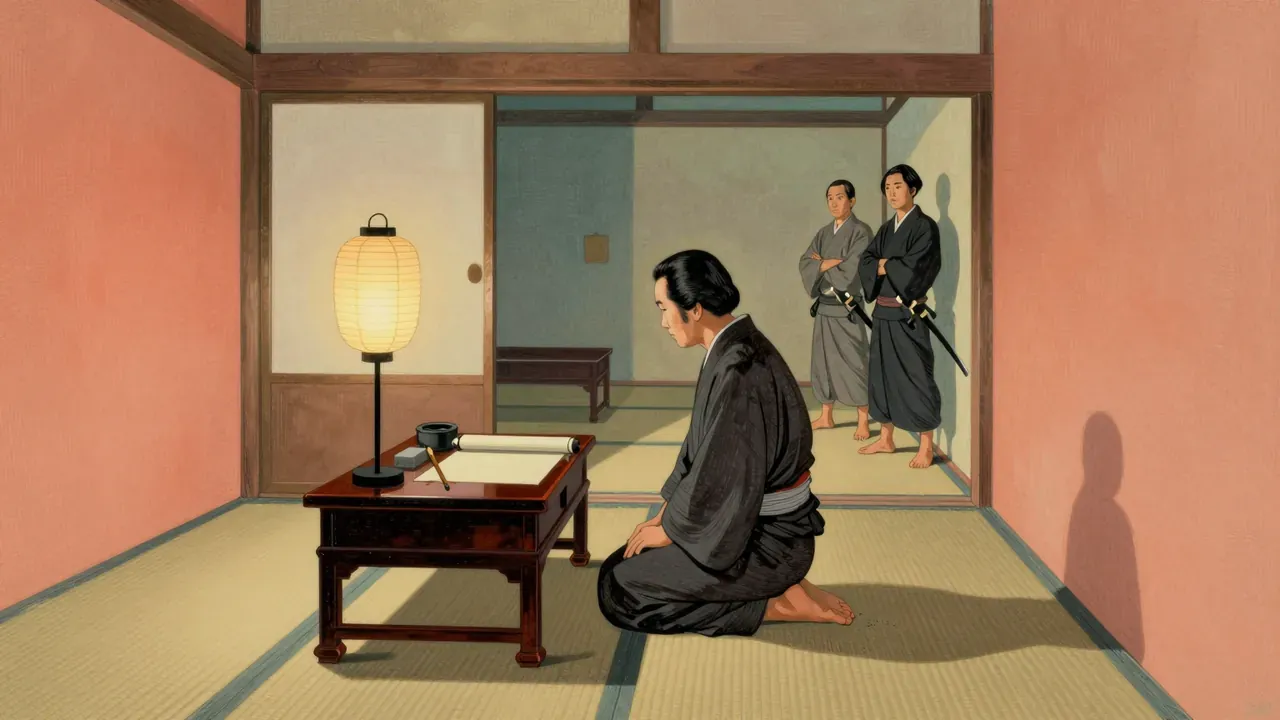
Masaki Kobayashi’s 1962 jidaigeki follows rōnin Tsugumo Hanshirō as he requests seppuku at the Iyi clan’s estate — not to die, but to force a reckoning with their hypocrisy. Through precise framing, restrained performance, and a narrative structured like a legal deposition, the film exposes how bushido functions as bureaucratic cover for cruelty. Tatsuya Nakadai anchors the film with implacable gravity; Yoshio Miyajima’s cinematography and Tōru Takemitsu’s score deepen its moral austerity. It remains a landmark of ethical cinema, less concerned with honour than with who bears the cost when honour becomes theatre.

13:00

Investigation of a Citizen Above Suspicion

Elio Petri · 1970

Elio Petri’s 1970 Italian crime satire follows a high-ranking police inspector who kills his mistress and then manipulates the ensuing investigation to confirm he is above suspicion. Starring Gian Maria Volonté and scored by Ennio Morricone, it uses stark formal control to dissect the mechanics of institutional impunity — not as corruption, but as routine. It won the Cannes Grand Prix, the David di Donatello for Best Film, and the Oscar for Best International Feature.

13:00

Samurai Rebellion

Masaki Kobayashi · 1967

Masaki Kobayashi’s 1967 jidaigeki follows a loyal samurai whose adherence to protocol forces him into open revolt against his daimyo. Based on Yasuhiko Takiguchi’s short story and scripted by Shinobu Hashimoto, the film traces how rigid hierarchy turns love, parenthood, and honour into liabilities. With Toshirō Mifune and Tatsuya Nakadai, Kazuo Yamada’s restrained cinematography and Tōru Takemitsu’s sparse, traditional score deepen its austerity. It won Best Film at Kinema Junpo and Mainichi, and the FIPRESCI Prize at Venice.

13:00

The Servant

Joseph Losey · 1963

Joseph Losey’s 1963 adaptation of Robin Maugham’s novella, scripted by Harold Pinter, charts the slow, chilling inversion of power between a wealthy Londoner and his manservant. Shot at Elstree Studios by Douglas Slocombe and edited by Reginald Mills, it uses minimal dialogue, precise framing, and psychological tension to dissect British class structures without exposition or judgment.

13:00

The Taking of Power by Louis XIV

Roberto Rossellini · 1966

Roberto Rossellini’s 1966 television film charts Louis XIV’s consolidation of power not through battle or charisma, but through administrative rigour, spatial control, and ceremonial discipline. Shot in 23 days with non-professional actors and restrained cinematography, it presents the birth of the modern French state as a slow, procedural accumulation — where tax reform, Versailles’ construction, and the arrest of Fouquet are all moments in the same system. Its power lies in its austerity: no score, no close-ups, no moralising — just the steady, unsettling logic of institutional control.

13:00

Three Outlaw Samurai

Hideo Gosha · 1964

Hideo Gosha’s 1964 debut follows three ronin who abandon fixed loyalties to defend starving peasants from a corrupt magistrate. Structured like a legal brief — cause, breach, consequence — it treats honour as practice, not principle, and finds moral clarity not in victory but in the repeated, costly act of choosing sides. Shot with stark economy and performed with restrained gravity, it remains a precise, unsentimental study of power, class, and the slow, dangerous work of conscience.

13:00

Torment

Alf Sjöberg · 1944

Torment (1944), written by Ingmar Bergman and directed by Alf Sjöberg, follows a Stockholm student tormented by a sadistic Latin teacher. Shot with stark realism and minimal score, it uses the school as a closed system of power, exposing how abuse thrives in bureaucratic silence. Its restrained performances and unsentimental structure make it a foundational work of Scandinavian arthouse cinema — less concerned with individual guilt than with the architecture of complicity.

13:00

Sweet Smell of Success

Alexander Mackendrick · 1957

Sweet Smell of Success (1957) is a tightly wound New York drama about a press agent’s moral collapse under the influence of a ruthless columnist. Directed by Alexander Mackendrick, with a screenplay restructured by Clifford Odets and Ernest Lehman, it stars Burt Lancaster and Tony Curtis in career-defining roles. James Wong Howe’s high-contrast cinematography and Elmer Bernstein’s jagged score deepen its portrait of media power as systemic, not personal. Though commercially unsuccessful on release, it is now regarded as a landmark of American cinema—culturally preserved, critically revered, and formally uncompromising.

13:00

The Face Reader

Han Jae-rim · 2013

Set in 15th-century Joseon, The Face Reader follows Nae-gyeong, a master of gwansang, who uses facial analysis to navigate court intrigue after being drawn from seclusion into royal service. When King Munjong dies, he must choose between loyalty to the late monarch and survival under the usurping Grand Prince Suyang. Anchored by Song Kang-ho’s restrained performance and Han Jae-rim’s deliberate direction, the film treats physiognomy as psychological method rather than mysticism — though its final act falters under the weight of historical inevitability.

13:00

The Power of the Dog

Jane Campion · 2021

Jane Campion’s 2021 adaptation of Thomas Savage’s novel is a slow-burning psychological drama set on a 1925 Montana ranch. Benedict Cumberbatch plays Phil Burbank, a rancher whose contempt for his brother’s new wife and her son masks deeper anxieties about masculinity, inheritance, and control. Shot by Ari Wegner in New Zealand, scored by Jonny Greenwood, and edited by Peter Sciberras, the film trades Western spectacle for interior tension — building dread through restraint, composition, and performance. It premiered at Venice, won Best Director there and at the Oscars, and received widespread critical acclaim for its formal discipline and thematic rigour.

13:00

Aguirre, the Wrath of God

Werner Herzog · 1972

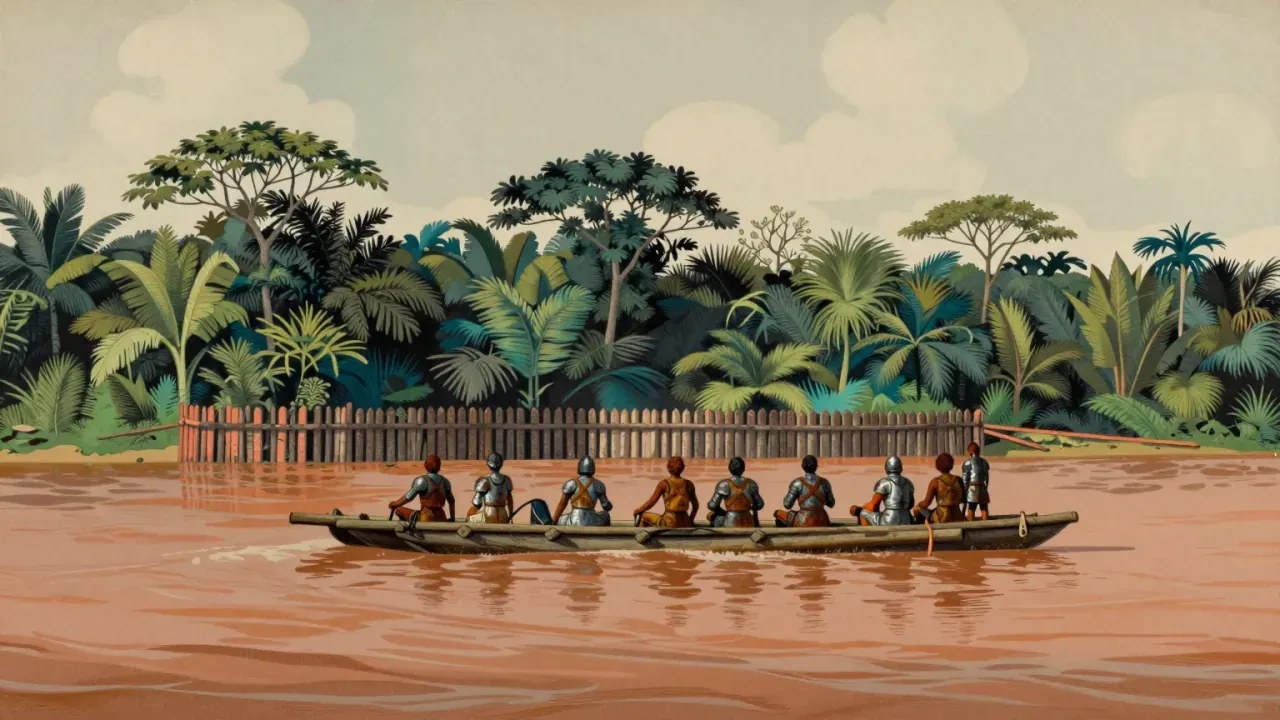
Werner Herzog's 1972 film follows Spanish conquistador Lope de Aguirre, played by Klaus Kinski in the first of five collaborations between the two, as he leads a splinter group of Spanish soldiers deeper into the Amazon in a doomed search for the mythical city of gold, El Dorado. Written in under three days, shot chronologically over five weeks entirely on location in the Peruvian rainforest on a budget of roughly $370,000, and scored by Popol Vuh, the film became a cult favourite whose off-screen production stories, including Kinski's on-set volatility, are nearly as well known as the film itself.

13:00

Akira

Katsuhiro Otomo · 1988

Akira is Katsuhiro Otomo's 1988 adaptation of his own unfinished manga, following biker-gang leader Kaneda as he tries to stop his friend Tetsuo, whose collision with an escaped psychic child leaves him with telekinetic power that threatens to destroy Neo-Tokyo. A landmark of Japanese animation on its original release, it has grown into one of the most influential science-fiction films of its era.

13:00

Aladdin

John Musker, Ron Clements · 1992

John Musker and Ron Clements's 1992 musical follows a street thief who finds a genie's lamp and poses as a prince to court Princess Jasmine while the vizier Jafar schemes to steal the lamp for himself. Rewritten entirely on a compressed schedule after a studio-mandated overhaul, it became the highest-grossing film of 1992 and the first animated feature to cross half a billion dollars worldwide.

13:00

Aliens

James Cameron · 1986

James Cameron's 1986 sequel to Alien sends Sigourney Weaver's Ripley back to the colonised moon where the first creature was found, this time with a unit of Colonial Marines whose confidence collapses fast once the aliens appear. Greenlit only after Brandywine settled a profit-sharing lawsuit with Fox, and made after two separate standoffs over Weaver's return, the film swept effects and sound awards, earned Weaver a rare Best Actress nomination for a science-fiction role, and returned more than seven times its 18.5 million dollar budget.

13:00

All the President's Men

Alan J. Pakula · 1976

Robert Redford and Dustin Hoffman play Washington Post reporters Woodward and Bernstein chasing a break-in story that grows into the reporting that helped end a presidency, told almost entirely from inside the newsroom.

13:00

Apocalypse Now

Francis Ford Coppola · 1979

Francis Ford Coppola's 1979 film relocates Joseph Conrad's Heart of Darkness to the Vietnam War, sending Captain Willard up a river into Cambodia to assassinate Colonel Kurtz, a decorated officer who has gone rogue and established himself as a warlord among a private army. Shot by Vittorio Storaro on a production in the Philippines that ran a year over schedule, battered by a typhoon, a leading actor's heart attack and an unprepared, overweight Marlon Brando, it premiered unfinished at Cannes to win the Palme d'Or, and later took home Oscars for cinematography and sound on a budget of $31.5 million against an $83.5 million return.

13:00

Casino

Martin Scorsese · 1995

Martin Scorsese's 1995 film, adapted with Nicholas Pileggi from Pileggi's nonfiction book, follows Sam 'Ace' Rothstein, sent by the Chicago Outfit to run the fictional Tangiers casino, as his marriage to hustler Ginger McKenna and his friendship with volatile enforcer Nicky Santoro both collapse around him. Based closely on the real skimming operation run through Las Vegas's Stardust casino in the 1970s, and shot largely inside the actual Riviera casino rather than on built sets, the 178-minute film grossed $116 million against a $50 million budget and earned Sharon Stone an Academy Award nomination.

13:00

Chicken Run

Peter Lord, Nick Park · 2000

Chicken Run reworks the World War Two escape film as a story about hens on a Yorkshire egg farm run like a prison camp, who pin their hopes of freedom on a crash-landed American rooster claiming he can fly. Aardman's first feature, directed by Peter Lord and Nick Park, was shot in stop-motion across thirty sets over eighteen months and became the highest-grossing stop-motion film ever made, taking $225 million against a $45 million budget.

13:00

Chinatown

Roman Polanski · 1974

Chinatown sends Jack Nicholson's private investigator into a municipal water scandal modelled on the early-twentieth-century disputes that built Los Angeles, opposite Faye Dunaway and John Huston. Robert Towne's script won the film's only Oscar from eleven nominations, but the ending that gives the film its reputation was Polanski's, forced through over the writer's objections, and it is worth knowing which parts of the film are whose before deciding what the story is actually arguing.

13:00

Citizen Kane

Orson Welles · 1941

Orson Welles's 1941 debut tells the life of publishing baron Charles Foster Kane through the conflicting memories of the people who knew him, filmed by Gregg Toland in deep focus that keeps whole rooms in sharp relief at once. It cost RKO under $840,000, won a single Oscar out of nine nominations, and lost money on release before critics rebuilt its reputation from the 1950s onward.

13:00

Dr. Strangelove

Stanley Kubrick · 1964

Stanley Kubrick's 1964 black comedy, adapted from Peter George's thriller novel Red Alert, follows a rogue American general's order for a nuclear strike on the Soviet Union and the frantic, mostly useless efforts of the President, his aides and a visiting RAF officer, all three played by Peter Sellers, to call it back. Shot entirely at Shepperton Studios on Ken Adam's cavernous War Room set for $1.8 million, it grossed $9.4 million, won three BAFTAs, and is now ranked among the American Film Institute's greatest and funniest American films.

13:00

Fantastic Planet

René Laloux · 1973

On the planet Ygam, humans called Oms are kept as pets or exterminated as vermin by the giant Draags, until an orphaned Om named Terr escapes his owner with a stolen education headset and helps organise a rebellion. René Laloux directed this 1973 French-Czechoslovak co-production, animated at Prague's Jiří Trnka Studio from designs by Roland Topor, based on Stefan Wul's 1957 novel Oms en série.

13:00

Goodfellas

Martin Scorsese · 1990

Martin Scorsese's 1990 account of Henry Hill's rise and fall inside the Lucchese crime family, adapted from Nicholas Pileggi's book Wiseguy. Told through overlapping narration and a compressed, accelerating style, it follows money, loyalty and violence as the daily business of a life Hill first found glamorous and eventually could not escape.

13:00

Isle of Dogs

Wes Anderson · 2018

A dictatorial mayor exiles every dog in the fictional Japanese city of Megasaki to Trash Island over a manufactured flu outbreak, and his own twelve-year-old ward hijacks a plane to find his banished bodyguard dog among them. Wes Anderson's second stop-motion feature, drawing openly on Akira Kurosawa and Hayao Miyazaki, pairs meticulous handcrafted puppetry with a plot about political corruption and canine loyalty, while drawing sustained criticism for how it handles the Japanese setting and characters within it.

13:00

Monsters, Inc.

Pete Docter, Lee Unkrich, David Silverman · 2001

Monsters, Inc. imagines child-scaring as an actual industry, converting screams into a city's power supply, until a small girl named Boo slips into the factory and forces two scarers to smuggle her home before anyone notices. Directed by Pete Docter for Pixar over a five-year production, the film cost $115 million, took $632 million worldwide, and won the Academy Award for Best Original Song.

13:00

Network

Sidney Lumet · 1976

Sidney Lumet's satire follows a failing network that builds a hit show around its anchor's on-air unravelling, with four Oscar-winning performances built almost entirely on monologue.

13:00

Nimona

Nick Bruno, Troy Quane · 2023

Framed for the Queen's murder, disgraced knight Ballister teams up with Nimona, a shapeshifter with no interest in explaining herself, to clear his name in a medieval-futuristic kingdom. Originally a Blue Sky Studios production cancelled when Disney shut the studio down in 2021, the film was revived by Annapurna and Netflix and completed by a new creative team.

13:00

One Flew Over the Cuckoo's Nest

Miloš Forman · 1975

Miloš Forman's adaptation of Ken Kesey's novel puts Jack Nicholson's disruptive new patient against Louise Fletcher's controlled head nurse inside the Oregon State Hospital, an operating psychiatric facility used as the actual set. Made for $3 million after a development history stretching back to 1962, it became one of only three films to sweep the top five Academy Awards, and it still plays as a study of institutional control rather than a simple underdog story.

13:00

Paths of Glory

Stanley Kubrick · 1957

Stanley Kubrick's 1957 film, adapted from Humphrey Cobb's novel based on the real Souain corporals affair, follows Colonel Dax as he leads a suicidal attack demanded by his superiors and then defends three of his own men, chosen at random, against a court-martial for cowardice. Shot in Bavaria because its portrayal of the French military barred it from filming, or release, in France for fifteen years, the film starred Kirk Douglas, whose production company financed it on a budget reported near $935,000, and drew acclaim that only grew once France finally allowed it to screen in 1972.

13:00

Scarface

Brian De Palma · 1983

Brian De Palma's 1983 remake of Howard Hawks' original relocates the story to Miami's 1980 Mariel boatlift, with Oliver Stone's screenplay tracking a Cuban refugee's rise through the cocaine trade under Al Pacino at his most excessive. Giorgio Moroder's synthesizer score and a mansion-siege finale that a visiting Steven Spielberg helped shoot gave the film an afterlife in pop culture far larger than its mixed initial reviews suggested.

13:00

Star Wars: Episode IV – A New Hope

George Lucas · 1977

George Lucas's 1977 space opera sends farm boy Luke Skywalker into a rebellion against the Galactic Empire after he acquires stolen plans for a planet-destroying superweapon, teaming with smuggler Han Solo, Princess Leia and Jedi master Obi-Wan Kenobi. Made for $11 million after multiple studios turned the project down, it became a surprise blockbuster, grossing $775 million across its releases, winning six Academy Awards, and establishing the modern template for franchise filmmaking.

13:00

Star Wars: Episode V – The Empire Strikes Back

Irvin Kershner · 1980

Irvin Kershner's 1980 sequel sends the Rebel Alliance into retreat as the Galactic Empire hunts them down, splitting Luke Skywalker's training under Jedi master Yoda from Han Solo and Princess Leia's flight from Darth Vader's forces. Written by Leigh Brackett and Lawrence Kasdan from George Lucas's story outline, it went well over its original $8 million budget to a reported $30.5 million, became the year's highest-grossing film, and is now widely regarded as the strongest entry in the Star Wars series.

13:00

The Conversation

Francis Ford Coppola · 1974

Gene Hackman plays a wiretap specialist convinced his latest recording documents a murder he's enabling, in Coppola's Palme d'Or-winning thriller that arrived just months before Watergate made its premise feel prophetic rather than speculative.

13:00

The Godfather

Francis Ford Coppola · 1972

Francis Ford Coppola's 1972 adaptation of Mario Puzo's novel follows the Corleone family as the youngest son, Michael, is pulled from war-hero outsider into the head of an organised-crime dynasty. Shot by Gordon Willis in interiors so underlit that faces disappear into shadow, scored by Nino Rota, and built on an ensemble led by Marlon Brando and Al Pacino, it cost Paramount $7 million and returned over $268 million, and swept that year's Best Picture, Best Actor and Best Adapted Screenplay Oscars.

13:00

The Godfather Part II

Francis Ford Coppola · 1974

Francis Ford Coppola's 1974 sequel cuts between young Vito Corleone's immigrant rise in early-twentieth-century New York, played by Robert De Niro, and Michael Corleone's ruthless consolidation of the family's power a generation later, played again by Al Pacino. Gordon Willis returns as cinematographer and Nino Rota as composer, on a budget of $13 million against a $48 million take, and the film won six Oscars including Best Picture and Best Director, an unusual feat for a sequel.

13:00

The Holy Mountain

Alejandro Jodorowsky · 1973

Alejandro Jodorowsky's 1973 film, financed by Beatles manager Allen Klein with production money from John Lennon and Yoko Ono, follows a Christlike thief who becomes an alchemist's apprentice and joins seven wealthy, corrupt figures, each embodying a planet, on a journey to seize immortality from beings said to rule from a sacred mountain's summit. Shot sequentially in Mexico on a $750,000 budget after its cast spent three months in spiritual training under Oscar Ichazo, the film became a fixture of New York's midnight-movie circuit, running for sixteen months at the Waverly Theatre after its Cannes premiere.

13:00

The Lion King

Roger Allers, Rob Minkoff · 1994

The Lion King follows Simba, a lion cub exiled after his uncle Scar arranges his father Mufasa's death, as he grows up away from his kingdom and eventually returns to reclaim it. Roger Allers and Rob Minkoff directed after an earlier documentary-style version by George Scribner was abandoned for a musical treatment with songs by Elton John and Tim Rice and a score by Hans Zimmer. Made on a $45 million budget, it grossed $968.5 million, becoming the highest-grossing traditionally animated film ever made and winning the Academy Award for Best Original Score.

13:00

The Lives of Others

Florian Henckel von Donnersmarck · 2006

Ulrich Mühe plays Stasi Captain Gerd Wiesler, assigned to bug the apartment of a celebrated East German playwright in 1984 whose real offence is that a government minister covets his girlfriend. As Wiesler listens in, he begins quietly protecting the couple from the surveillance he was sent to conduct, an act of conscience that Florian Henckel von Donnersmarck's 2006 debut treats as fiction the director openly acknowledges the real Stasi never produced.

13:00

The Shawshank Redemption

Frank Darabont · 1994

Frank Darabont's 1994 adaptation of Stephen King's novella follows banker Andy Dufresne through nearly two decades in a corrupt Maine prison, and his friendship with fellow inmate Red. A commercial disappointment on release, it became one of the most rewatched and highly rated American films through home video, television and word of mouth.

13:00

The Social Network

David Fincher · 2010

The Social Network reconstructs the founding of Facebook through the two lawsuits that followed it, cutting between Harvard in 2003 and the depositions years later where Mark Zuckerberg, Eduardo Saverin, and the Winklevoss twins each give a different account of who invented what. David Fincher directs Aaron Sorkin's script, based loosely on Ben Mezrich's book, with Jesse Eisenberg as Zuckerberg and a score by Trent Reznor and Atticus Ross that treats a founding myth as something closer to a thriller.

13:00

The Truman Show

Peter Weir · 1998

Jim Carrey plays a man raised from birth inside a soundstage as the unwitting star of a round-the-clock broadcast, gradually noticing the cracks in a world built entirely around him.

13:00

The Wolf of Wall Street

Martin Scorsese · 2013

The Wolf of Wall Street follows Jordan Belfort's rise from a junior broker to the head of Stratton Oakmont, a firm built on pump-and-dump stock schemes, told almost entirely through his own boastful narration. Martin Scorsese directs Leonardo DiCaprio, Jonah Hill and Margot Robbie in a three-hour account, adapted by Terence Winter from Belfort's memoir, that stages fraud as slapstick and addiction as spectacle without ever pulling back to show what any of it cost the people on the other end of the trades.

13:00

There Will Be Blood

Paul Thomas Anderson · 2007

There Will Be Blood follows Daniel Plainview, a silver miner turned oilman, across roughly three decades of the Californian oil boom, loosely adapting Upton Sinclair's novel Oil! Daniel Day-Lewis plays Plainview opposite Paul Dano's preacher Eli Sunday, with Jonny Greenwood's score and Robert Elswit's cinematography setting a tone closer to horror than period drama. Anderson's screenplay narrows Sinclair's sprawling novel to its first chapters and lets one man's ambition curdle into something closer to a diagnosis than a character study.

13:00

Watership Down

Martin Rosen, John Hubley · 1978

A small group of rabbits flees their doomed warren on a premonition of disaster and treks across the English countryside to found a new one, clashing along the way with the totalitarian warren of Efrafa under General Woundwort. Martin Rosen took over direction from John Hubley partway through production, financed the film through a British consortium, and released it in 1978 to an audience unsure what age it was made for.