filmbriefs
Topic

Mental health

Diagnosis, treatment and the argument about where the line is.

51
in film
13:00
average
663 min
in total
70
across the network
Mental health across the network →
All briefs51
13:00

A Christmas Tale

Arnaud Desplechin · 2008

Arnaud Desplechin’s 2008 French drama follows the fractured Vuillard family as they reunite for Christmas after matriarch Junon is diagnosed with leukemia. Set over several wintry days in Roubaix, the film charts shifting alliances, buried resentments, and fragile intimacies among three adult siblings, their partners, children, and extended kin — all held in uneasy orbit by Junon’s iron will and Abel’s quiet endurance. With a dense script, naturalistic performances, and Éric Gautier’s muted cinematography, it treats family as a site of repetition, inheritance, and unspoken history.
13:00

A Safe Place

Henry Jaglom · 1971

Henry Jaglom’s 1971 drama follows Noah, a young woman drifting between present loneliness and childhood memory in New York City. Starring Tuesday Weld, Orson Welles, and Jack Nicholson, it uses fragmented editing, recurring motifs, and nostalgic music to evoke mental fragility without diagnosis. Culled from fifty hours of footage, it is a formally ambitious but divisive experiment in psychological portraiture — intimate, unresolved, and demanding of its viewer.

13:00

An Angel at My Table

Jane Campion · 1990

Jane Campion’s 1990 film adapts Janet Frame’s three autobiographies into a restrained, chronologically grounded portrait of a New Zealand writer whose voice was nearly erased by misdiagnosis and institutionalisation. Kerry Fox leads a layered performance across Frame’s life stages, supported by Stuart Dryburgh’s muted cinematography and Veronika Jenet’s unhurried editing. It avoids biopic cliché, focusing instead on the quiet labour of self-reclamation through language.

13:00

Betty Blue

Jean-Jacques Beineix · 1986

A 1986 French psychological drama directed by Jean-Jacques Beineix, Betty Blue follows Zorg, a handyman and aspiring writer, and Betty, a volatile 19-year-old, as their passionate relationship unravels across coastal, urban and provincial France. Shot by Jean-François Robin and scored by Gabriel Yared, it renders emotional extremity through saturated visuals, rhythmic editing and physical performance — prioritising mood and texture over exposition or diagnosis.

13:00

Beyond the Hills

Cristian Mungiu · 2012

Beyond the Hills (2012), directed by Cristian Mungiu, follows two orphaned Romanian women — one newly professed at an Orthodox convent, the other arriving from Germany seeking reunion — as their bond unravels under the weight of doctrine, isolation, and escalating restraint. Based on real events surrounding the 2005 Tanacu exorcism, it unfolds with clinical restraint: long takes, muted sound, no score, and performances that withhold explanation. The film builds not to revelation but to consequence — a death that arrives not with fanfare, but as the logical endpoint of unchallenged assumptions.

13:00

Bigger Than Life

Nicholas Ray · 1956

Nicholas Ray’s 1956 drama follows schoolteacher Ed Avery, whose recovery from a rare illness via cortisone treatment triggers a psychological unraveling that fractures his marriage, terrifies his son, and exposes the brittle ideologies underpinning Eisenhower-era domestic life. James Mason stars and produced; Joseph MacDonald’s CinemaScope cinematography turns suburban interiors into psychological pressure chambers.

13:00

Breaking the Waves

Lars von Trier · 1996

Breaking the Waves (1996), directed by Lars von Trier, follows Bess McNeill, a devout young woman in the Scottish Highlands, whose literal interpretation of love and faith leads her to increasingly harrowing acts of self-sacrifice after her husband is paralysed. Shot on location in Scotland and in Danish studios, with Robby Müller’s handheld cinematography and Emily Watson’s breakthrough performance, it is a morally uncompromising drama about belief, gender, and communal judgment—neither a Dogme 95 film nor a conventional religious parable, but something starker and more enduring.

13:00

Chilly Scenes of Winter

Joan Micklin Silver · 1979

Joan Micklin Silver’s 1979 adaptation of Ann Beattie’s novel follows Charles Richardson, a Salt Lake City civil servant clinging to a failed relationship. Shot with quiet precision and performed with unshowy realism, it charts his slow, uneventful withdrawal from obsession — not through epiphany, but through accumulated small choices. Two versions exist: the original 1979 cut ends with reconciliation; the 1982 re-release concludes with quiet resignation. Neither offers catharsis. Both insist on the dignity of ordinary endurance.

13:00

Clean, Shaven

Lodge Kerrigan · 1994

Lodge Kerrigan’s 1994 debut Clean, Shaven follows Peter Winter (Peter Greene), a man recently released from a psychiatric institution, as he navigates a hostile world while searching for his daughter. Shot on 16mm with fragmented editing, dissonant sound design and tightly constrained perspective, the film immerses the viewer in a subjective experience of schizophrenia — avoiding diagnosis, exposition or moral framing. Its power lies in sustained formal discipline, not plot resolution.

13:00

C'mon C'mon

Mike Mills · 2021

Mike Mills’ 2021 drama follows radio journalist Johnny (Joaquin Phoenix) as he temporarily cares for his nine-year-old nephew Jesse (Woody Norman) while his sister tends to her husband’s mental health crisis. Shot in black-and-white across multiple US cities, the film centres on quiet exchanges, authentic child interviews, and the slow recalibration of fractured family bonds — all held together by Robbie Ryan’s textured cinematography and a restrained Dessner score.

13:00

Crumb

Terry Zwigoff · 1994

Terry Zwigoff’s 1994 documentary follows cartoonist R. Crumb and his two brothers over nine years, using long, unadorned takes to trace how childhood trauma echoes through adult lives. Shot by Maryse Alberti and edited by Victor Livingston, it avoids narration, score, or exposition, building its argument through repetition, silence, and sustained attention. It won the Sundance Grand Jury Prize and widespread critical acclaim, though its ethical stance toward vulnerable subjects remains contested.

13:00

Él

Luis Buñuel · 1953

Luis Buñuel’s 1953 Mexican drama Él follows Francisco, a bourgeois husband whose obsessive jealousy isolates and terrorises his wife Gloria. Adapted from Mercedes Pinto’s novel, the film uses rigorous realism — Gabriel Figueroa’s cinematography, restrained performances, and a tightly controlled structure — to dissect how paranoia functions not as breakdown but as coherent, socially reinforced logic. Its power lies in plausibility, not shock.

13:00

Fists in the Pocket

Marco Bellocchio · 1965

Marco Bellocchio’s 1965 debut is a stark, black-and-white drama about a young epileptic man who plots to kill his dysfunctional family. Set in a provincial Italian villa, it uses rigorous composition, sparse sound, and restrained performances to explore inheritance, enclosure, and moral inertia — not as ideas, but as lived conditions.

13:00

From the Life of the Marionettes

Ingmar Bergman · 1980

Ingmar Bergman’s 1980 German-language television film reimagines the troubled couple from Scenes from a Marriage as Peter and Katarina Egermann, a Munich-based pair whose emotional disintegration culminates in Peter’s murder of a prostitute. Shot in black and white by Sven Nykvist, with a dissonant score by Rolf Alexander Wilhelm, the film unfolds through clinical interrogations and restrained performances. It is less a crime drama than a psychological case study — austere, unsentimental, and formally exacting.

13:00

Frownland

Ronald Bronstein · 2007

Ronald Bronstein’s 2007 debut follows Keith, a socially overwhelmed door-to-door salesman in New York, over three days of escalating disconnection. Shot on a minimal crew and budget, it uses relentless close-ups, fragmented editing, and Dore Mann’s physically exacting performance to immerse the viewer in sustained psychological exposure—without exposition, score, or narrative relief.

13:00

Häxan

Benjamin Christensen · 1922

A 1922 Swedish-Danish silent film directed by Benjamin Christensen, Häxan blends documentary exposition and dramatised medieval vignettes to argue that witch-hunts stemmed from misdiagnosed mental and neurological conditions. Shot in Denmark with meticulous period detail, it uses restrained cinematography, functional special effects, and a deliberate pace to trace a line from superstition to early psychiatry. Though censored on release for its depictions of torture and nudity, it endures as a landmark essay film — rigorous, unsettling, and structurally innovative.

13:00

Hour of the Wolf

Ingmar Bergman · 1968

Ingmar Bergman’s 1968 Hour of the Wolf is a psychological horror film starring Max von Sydow and Liv Ullmann as a painter and his wife isolated on a Swedish island. As his visions intensify and his sleep fails, the line between hallucination and reality dissolves. Shot by Sven Nykvist on Fårö and Hovs Hallar, it uses stark naturalism to frame surreal imagery, with Johann Sebastian Bach and Lars Johan Werle on the soundtrack. It explores artistic collapse, intimacy under strain, and the unreliability of perception — not as metaphor, but as lived condition.

13:00

I Live in Fear

Akira Kurosawa · 1955

Akira Kurosawa’s 1955 drama follows Kiichi Nakajima (Toshirō Mifune), an ageing foundry owner convinced that nuclear war is inevitable, and his desperate, legally contested plan to move his family to Brazil. Framed by a family arbitration and ending in psychiatric confinement, the film avoids sensationalism, using restrained performances, precise black-and-white cinematography by Asakazu Nakai, and Masaru Sato’s austere score to examine fear, competence, and the social cost of foresight in postwar Japan.

13:00

Infernal Affairs III

Andrew Lau, Alan Mak · 2003

Infernal Affairs III closes the Hong Kong crime trilogy by abandoning narrative resolution for psychological recursion. Interweaving timelines before and after Chan Wing-Yan’s death, it charts Senior Inspector Lau Kin-Ming’s irreversible dissociation as his criminal past overtakes his present self. Anchored by Andy Lau’s physically precise performance and Andrew Lau and Ng Man-Ching’s muted, interior-heavy cinematography, the film renders guilt as somatic decay—not moral failure but neurological saturation. Its power lies in accumulation, not climax: Morse code taps, repeated corridors, overlapping voices. It is the trilogy’s most demanding and least forgiving chapter.

13:00

Life Is Sweet

Mike Leigh · 1990

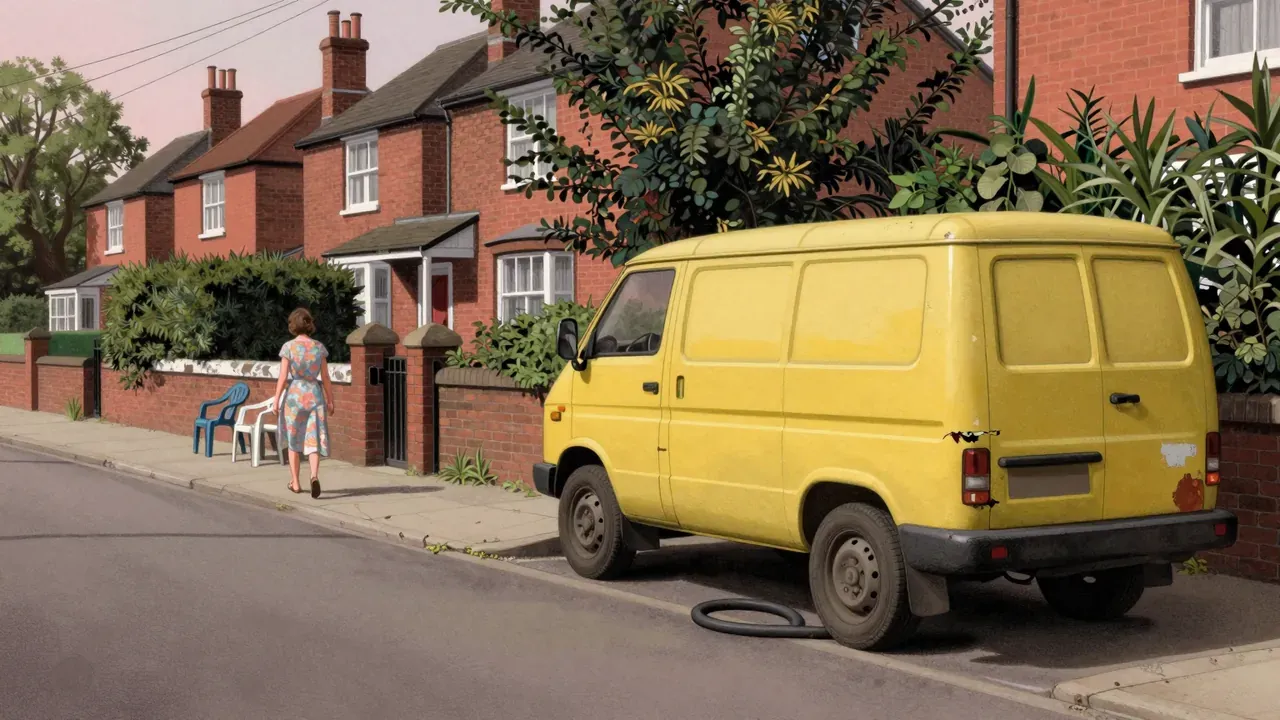
Mike Leigh’s 1990 domestic tragi-comedy follows a North London family over a summer: chef Andy buys a broken fast-food van; his wife Wendy holds things together; their daughters Natalie and Nicola navigate adulthood in opposite directions; and their friend Aubrey opens a doomed Parisian restaurant. Shot on location in Enfield with a cast developed through improvisation, it treats working-class life with unsentimental warmth, finding emotional weight in small gestures, quiet failures, and unspoken care.

13:00

Madonna of the Seven Moons

Arthur Crabtree, Roland Pertwee, Margery Lawrence · 1945

Madonna of the Seven Moons (1945) is a Gainsborough Pictures drama starring Phyllis Calvert as Maddalena Labardi, a woman whose childhood trauma manifests as a second personality. Set across three decades in Italy, it uses stark visual contrasts, controlled performances, and a tightly wound script to enact — not explain — dissociation. Jack E. Cox’s cinematography and Hans May’s score reinforce its rhythmic, ceremonial structure. Though dated in its psychology and reductive in its portrayal of marginal figures, it remains a lucid, self-contained example of British studio melodrama at its most assured.

13:00

Memory for Max, Claire, Ida and Company

Allan King · 2005

Memory for Max, Claire, Ida and Company (2005) is a Canadian documentary by Allan King observing residents with dementia at Toronto’s Baycrest Health Sciences. Eschewing narration, interviews, or medical context, it relies on sustained observation, ambient sound, and unhurried editing to portray daily life with quiet rigour. The film premiered at TIFF 2005, was broadcast by TVOntario, and shortlisted for multiple Gemini Awards. It functions less as advocacy or education than as an ethical act of attention — one that asks viewers to recalibrate how they perceive continuity, agency, and personhood when memory changes shape.

13:00

Now, Voyager

Irving Rapper · 1942

Now, Voyager (1942) follows Charlotte Vale’s transformation from a cowed Boston heiress into a composed, quietly autonomous woman, guided by therapy, a transatlantic cruise, and a chaste, enduring bond with a married architect. Directed by Irving Rapper and starring Bette Davis, it avoids melodrama in favour of psychological precision, using Sol Polito’s lighting, Max Steiner’s score, and Casey Robinson’s adaptation to sustain tension in restraint. Its power lies in what it withholds — resolution, romance, catharsis — and what it insists upon: dignity as practice, care as continuity, and healing as ongoing recalibration.

13:00

Opening Night

John Cassavetes · 1977

John Cassavetes’ 1977 film follows actress Myrtle Gordon through a week of mounting disintegration before her Broadway premiere. Shot on location in California, it stars Gena Rowlands in a performance of extraordinary physical and psychological fidelity. With no exposition, no score to guide feeling, and no narrative resolution, it treats performance, grief, and ageing as overlapping states of being — not problems to solve, but conditions to inhabit.

13:00

Repulsion

Roman Polanski · 1965

Roman Polanski’s 1965 psychological horror follows Carol Ledoux, a withdrawn Belgian manicurist in London, as she descends into acute dissociation while left alone in her sister’s flat. Shot in black and white on a modest budget, the film uses tight framing, amplified diegetic sound, and meticulous pacing to replicate the texture of perceptual collapse — cracks in walls, hands emerging from plaster, time stretching and warping. Catherine Deneuve’s restrained performance anchors a film that refuses exposition, causality, or resolution. It is a study in claustrophobia, not of space alone, but of consciousness under pressure.

13:00

Secret Sunshine

Lee Chang-dong · 2007

Lee Chang-dong’s 2007 drama follows Shin-ae, a widow who moves to her late husband’s hometown with her young son, only to endure his abduction and murder. As she cycles through denial, faith, rage and self-harm, the film refuses catharsis or symbolism, anchoring itself instead in Jeon Do-yeon’s restrained, physically precise performance and a world rendered in muted, unvarnished detail. Shot in Miryang, South Korea, it treats trauma not as narrative engine but as lived, untranslatable condition.

13:00

Shock Corridor

Samuel Fuller · 1963

Samuel Fuller’s 1963 film noir follows a journalist who fakes insanity to investigate a murder inside a psychiatric hospital. Using stark cinematography, jagged editing and allegorical patient characters, it frames Cold War anxieties — racism, militarism, nuclear fear — as contagious pathologies. Though made on a shoestring budget and tight schedule, its formal rigour and political bite earned it preservation in the US National Film Registry.

13:00

Spellbound

Alfred Hitchcock · 1945

Alfred Hitchcock’s 1945 thriller Spellbound stars Ingrid Bergman and Gregory Peck as psychiatrists entangled in a mystery of identity, memory, and repression. Made for Selznick International Pictures, it uses Freudian concepts as narrative architecture, anchored by Miklós Rózsa’s theremin-scored score and a famously truncated Dalí-designed dream sequence. Though its clinical framework feels period-specific, its formal discipline and psychological clarity remain compelling.

13:00

Sundays and Cybele

Serge Bourguignon · 1962

Sundays and Cybele (1962), directed by Serge Bourguignon, follows Pierre, a psychologically wounded French Indochina War veteran, and Cybèle, an eleven-year-old girl abandoned by her family and confined to a Parisian boarding school. Their Sunday meetings in Ville-d’Avray form a fragile, wordless bond — tender, unorthodox, and ultimately unsustainable. Shot by Henri Decaë and scored by Maurice Jarre, the film avoids exposition and moral framing, trusting gesture, rhythm and absence to convey grief, legibility and the limits of care. It won the 1963 Academy Award for Best International Feature Film.

13:00

Sweetie

Jane Campion · 1989

Jane Campion’s 1989 black comedy drama follows Kay, a superstitious factory worker, as her erratic sister Dawn returns home and unravels the fragile order of their dysfunctional Australian family. Shot in Sydney on a low budget, the film uses physical performance, jagged editing, and oppressive domestic spaces to explore inheritance, containment, and the violence of care — not as psychology but as atmosphere.

13:00

The Brood

David Cronenberg · 1979

David Cronenberg’s 1979 body horror film follows a man investigating brutal murders tied to his ex-wife’s experimental therapy. Conceived amid Cronenberg’s own custody battle, it externalises psychological rupture as literal, parthenogenetic offspring — dwarf-like creatures born from suppressed rage. Shot in Toronto with clinical restraint, it privileges coherence over catharsis, using flat lighting, sparse scoring, and unadorned performances to sustain dread. Its power lies in its refusal to explain, reassure, or resolve.

13:00

The Fire Within

Louis Malle · 1963

Louis Malle’s 1963 drama follows a recovering alcoholic over his final day in Paris, as he revisits old friends and tests whether any connection might hold him to life. With Maurice Ronet in a performance of profound stillness, and Ghislain Cloquet’s muted cinematography, the film registers despair not as explosion but as slow attrition — a portrait of desire’s disappearance.

13:00

The Fisher King

Terry Gilliam · 1991

Terry Gilliam’s 1991 film follows a disgraced radio host who seeks redemption by helping a delusional homeless man haunted by visions of the Red Knight. Built around Robin Williams’s layered performance as Parry and Jeff Bridges’s restrained turn as Jack, it blends New York realism with Arthurian myth to explore grief, class, and the slow, non-linear work of healing. Though uneven in its framing devices, its emotional honesty and commitment to psychological fidelity make it a singular, unsentimental portrait of care.

13:00

The Merchant of Four Seasons

Rainer Werner Fassbinder · 1972

Rainer Werner Fassbinder’s 1972 film follows Hans Epp, a Munich fruit peddler in the 1950s, as his marriage, health, and sense of self steadily collapse under familial disdain, class prejudice, and his own inertia. Shot with restrained precision by Dietrich Lohmann and performed with unadorned gravity by Hans Hirschmüller and Irm Hermann, it treats despair as routine, not crisis.

13:00

The Prince of Tides

Barbra Streisand · 1991

Barbra Streisand’s 1991 adaptation of Pat Conroy’s novel follows South Carolina teacher Tom Wingo (Nick Nolte) as he travels to New York to help his suicidal twin sister, guided by psychiatrist Susan Lowenstein (Streisand). Through therapy sessions and flashbacks, buried family trauma surfaces — violence, repression, and the long shadow of the Lowcountry. Though the film foregrounds romance over the novel’s sibling-centred depth, its power lies in restrained performances, Stephen Goldblatt’s naturalistic cinematography, and its unwavering focus on how silence shapes identity.

13:00

The Ruling Class

Peter Medak · 1972

Peter Medak’s 1972 adaptation of Peter Barnes’s play stars Peter O'Toole as Jack Gurney, a paranoid schizophrenic who inherits a peerage and cycles between believing he is Christ and Jack the Ripper. Set against the decaying grandeur of Harlaxton Manor, the film uses theatrical staging, sharp dialogue and O'Toole’s ferocious performance to dissect class, psychiatry and institutional power. Though divisive on release, it endures as a formally bold, morally uncompromising satire.

13:00

The Small Back Room

Michael Powell, Emeric Pressburger · 1949

Michael Powell and Emeric Pressburger’s 1949 adaptation of Nigel Balchin’s novel follows a disabled weapons scientist navigating bureaucratic inertia, chronic pain, and personal collapse during the Second World War. Shot in naturalistic style across London and Dorset, it trades spectacle for psychological texture, locating heroism in quiet mastery rather than action. David Farrar delivers a physically anchored performance, supported by Kathleen Byron and a tightly drawn ensemble. Though its middle stretches sag under procedural weight, the film’s final sequence — a harrowing, tactile disarming of a Nazi booby trap — affirms its core concern: dignity earned through endurance, not bestowed by victory.

13:00

The Truth

Henri-Georges Clouzot · 1960

A young woman stands trial for murder in 1960s France. Through flashbacks, the film traces her descent from provincial restlessness to Parisian disillusionment, her turbulent relationship with a conductor, and her eventual breakdown — all while lawyers debate not her actions, but what they say about her character. Brigitte Bardot gives a physically exacting performance; Clouzot and his collaborators build a world where emotion is evidence, memory is contested, and justice is procedural, not redemptive.

13:00

Tie Me Up! Tie Me Down!

Pedro Almodóvar · 1989

Pedro Almodóvar’s 1989 film follows a recently released psychiatric patient who kidnaps an actress to force a marriage, treating the premise as a stylised romantic fairy tale rather than psychological realism. Shot in saturated colour by José Luis Alcaine Escaño, scored by Ennio Morricone, and anchored by Victoria Abril and Antonio Banderas, it sustains a precise, unsettling tone — neither endorsing nor condemning its central act, but exploring love as effort, repetition, and recalibration.

13:00

Two Days, One Night

Jean-Pierre Dardenne, Luc Dardenne · 2014

Two Days, One Night follows Sandra, a Belgian factory worker returning from medical leave for depression, as she spends a weekend visiting sixteen colleagues to persuade them to reverse their vote against her reinstatement — a vote linked to a €1,000 bonus. Shot in Seraing with rigorous naturalism, the Dardenne brothers anchor ethical questions in physical detail: bus tickets, kitchen tables, rain-slicked pavements. Marion Cotillard’s performance avoids exposition, locating dignity in hesitation, fatigue, and quiet persistence. The film won the European Film Award for Best Actress and was Belgium’s Oscar submission.

13:00

Warrendale

Allan King · 1967

Allan King’s 1967 documentary observes life at the Warrendale Children’s Centre in Ontario, where emotionally disturbed children lived under intensive care. Shot in cinéma vérité style with no narration, interviews or score, it relies on sustained, unfiltered observation. The film provoked controversy for its raw depiction of outbursts and interventions, and was banned by CBC for profanity. It won top honours at Cannes and the Canadian Film Awards, and remains a landmark of observational documentary — demanding, uncompromising, and ethically precise.
13:00

A Woman Under the Influence

John Cassavetes · 1974

John Cassavetes’ 1974 drama follows Mabel Longhetti, a Los Angeles housewife whose behaviour grows increasingly erratic, straining her marriage and triggering her involuntary commitment. Starring Gena Rowlands and Peter Falk, it was independently financed, shot on location with non-professional actors, and edited from a three-hour cut to 155 minutes. Its power lies in sustained, unflinching observation — not psychological exposition — rendering mental distress as lived, domestic, and profoundly relational.

13:00

Antichrist

Lars von Trier · 2009

Lars von Trier’s 2009 film Antichrist stars Willem Dafoe and Charlotte Gainsbourg as a grieving couple who retreat to a forest cabin, only to confront psychological disintegration, theological dread, and nature’s indifference. Shot digitally in Germany with precise, unrelenting craft, it divides itself into symbolic chapters and refuses narrative or emotional release. Though polarising and widely debated for its imagery and themes, it remains a benchmark of arthouse extremity — technically controlled, thematically uncompromising, and ethically demanding.

13:00

A Tale of Two Sisters

Kim Ji-woon · 2003

A teenage girl returns home from a mental institution to her father’s secluded country house, where her younger sister and new stepmother await. As tensions mount and strange events unfold, the line between haunting and hallucination blurs — until the film reveals that the horror resides not in the house, but in the mind’s desperate, self-preserving fictions.

13:00

Anomalisa

Charlie Kaufman, Duke Johnson · 2015

A middle-aged man perceives everyone as identical—same face, same voice—except one woman he meets in a Cincinnati hotel. Adapted from Charlie Kaufman’s 2005 audio play, this stop-motion feature renders alienation as tactile, acoustic and temporal experience, using painstaking puppetry and vocal repetition to explore perception, loneliness and the fragile mechanics of connection.

13:00

Bianca

Nanni Moretti · 1984

Nanni Moretti’s 1984 comedy Bianca follows Michele Apicella, a Rome-based maths teacher whose obsessive need for rationality collapses as neighbours die, relationships falter, and a new lover enters his life. Shot with clinical precision by Luciano Tovoli and scored with restrained repetition by Franco Piersanti, the film treats emotional breakdown as a slow arithmetic error — accumulating, irreversible, and quietly devastating.

13:00

Melancholia

Lars von Trier · 2011

Lars von Trier’s 2011 science fiction drama Melancholia uses an inevitable planetary collision to examine how two sisters—one depressive, one anxious—respond when all future is cancelled. Kirsten Dunst and Charlotte Gainsbourg anchor its two-part structure, supported by Manuel Alberto Claro’s restrained cinematography and Richard Wagner’s Tristan und Isolde prelude, which dictates the film’s rhythm. Made by Zentropa with co-producers across Europe, it premiered at Cannes, where Dunst won Best Actress. Its power lies in tonal certainty, not plot mechanics: it asks how consciousness persists when meaning has no horizon.

13:00

Spencer

Pablo Larraín · 2021

A psychological portrait of Diana, Princess of Wales, over three days at Sandringham in 1991. Directed by Pablo Larraín and written by Steven Knight, it uses Claire Mathon’s Super 16mm cinematography, Jonny Greenwood’s dissonant score, and Kristen Stewart’s physically precise performance to render Diana’s existential crisis as sensory experience — not biography, but embodiment.

13:00

The Master

Paul Thomas Anderson · 2012

Paul Thomas Anderson’s 2012 drama follows Freddie Quell, a volatile WWII veteran, as he falls under the influence of Lancaster Dodd, leader of a fledgling philosophical movement. Shot almost entirely on 65 mm film, it relies on Joaquin Phoenix and Philip Seymour Hoffman’s physically precise performances, Jonny Greenwood’s jagged score, and a structure that favours ambiguity over exposition. Set in 1945–46, it explores post-war dislocation, the seduction of certainty, and the limits of personal transformation — without offering diagnosis, satire or resolution.

13:00

The Terrorizers

Edward Yang · 1986

A 1986 Taiwanese drama by Edward Yang, The Terrorizers traces intersecting lives in Taipei — a depressed novelist, a photographer obsessed with a stranger, a hospital worker unraveling professionally and personally — bound by miscommunication, mediated images, and unspoken grief. Its structure resists resolution, favouring spatial and temporal disorientation over narrative closure.

13:00

Through a Glass Darkly

Ingmar Bergman · 1961

Ingmar Bergman’s 1961 chamber drama follows a family over twenty-four hours on a remote Swedish island, centring on Karin, a young woman recently released from psychiatric care. Harriet Andersson delivers a physically precise performance as her grip on reality frays, observed by her husband (Max von Sydow), novelist father (Gunnar Björnstrand), and teenage brother (Lars Passgård). Shot by Sven Nykvist with stark naturalism and scored with Bach’s cello suites, the film explores faith, exploitation, and the asymmetry of care—though its stated philosophy feels tacked on, its emotional precision remains unmatched.