filmbriefs
Topic

Satire

Comedy with a target, and whether the blow lands.

51
in film
13:00
average
663 min
in total
84
across the network
Satire across the network →
All briefs51
13:00

A Confucian Confusion

Edward Yang · 1994

Edward Yang’s 1994 satirical comedy follows a web of young professionals in 1994 Taipei whose relationships, careers, and self-presentation are governed by unspoken codes of duty, face, and transactional loyalty. Over three days, misunderstandings accrue not from malice but from systemic pressure to perform coherence — whether in love, work, or art. With muted performances, flat lighting, and procedural pacing, it maps the quiet corrosion of authenticity under late-capitalist professionalism.
13:00

All These Women

Ingmar Bergman · 1964

Ingmar Bergman’s 1964 comedy All These Women is a stylised, colour-saturated parody of artistic biography and authorial myth-making. Set over four days at a summer villa, it follows a biographer unable to meet his subject — a cellist surrounded by lovers, each performing a version of devotion. With Sven Nykvist’s precise cinematography and Erik Nordgren’s waltz-and-dissonance score, the film sustains a tone of elegant, unrelenting artifice. It is among Bergman’s few comedies, and his first in colour — a formal departure that underscores its thematic preoccupation with surface, performance, and the unreliability of memory.

13:00

Babo 73

Robert Downey Sr. · 1964

Babo 73 is a 1964 American underground comedy directed by Robert Downey Sr., presenting a surreal, non-narrative campaign for a fictional presidential candidate named Babo. Shot on 16mm in black and white, it uses repetition, deadpan delivery, and jagged editing to dissect the performative emptiness of political theatre. With no score, minimal dialogue, and no character development, it operates as a formal experiment in anti-rhetoric—less satire than structural diagnosis.

13:00

Bamboozled

Spike Lee · 2000

Spike Lee’s 2000 film Bamboozled follows a Black television writer who creates a modern minstrel show as a cynical ploy to get fired—only to see it become a hit. Shot partly on Mini DV and partly on Super 16, it blends satire, drama and documentary-style montage to confront the persistence of racist imagery in American media. Though critically divisive on release, it has since been reappraised for its prescience and added to the National Film Registry.

13:00

Being There

Hal Ashby · 1979

Hal Ashby’s 1979 adaptation of Jerzy Kosiński’s novel follows Chauncey Gardiner, a sheltered gardener mistaken for a sage after stepping into Washington society. Peter Sellers delivers a performance of radical stillness, while the film’s craft — cinematography, editing, score — enforces a tone of calm, unblinking observation. It is satire without ridicule, comedy without punchlines, and a portrait of meaning-making as collective fiction.

13:00

Beyond the Valley of the Dolls

Russ Meyer · 1970

Beyond the Valley of the Dolls (1970) is a Russ Meyer–Roger Ebert collaboration: a knowingly excessive, tonally unstable parody of Valley of the Dolls and Hollywood itself. Made quickly on the Fox lot, it blends teen melodrama, rock musical, exploitation thriller and moral fable — all delivered with poker-faced solemnity. Its cult status rests on its deliberate incoherence, not despite it.

13:00

Boudu Saved from Drowning

Jean Renoir · 1932

Jean Renoir’s 1932 Boudu Saved from Drowning follows a Paris bookseller who rescues a suicidal tramp and tries to assimilate him into middle-class life. Starring Michel Simon, the film uses precise staging, behavioural realism and dry wit to dissect the contradictions of respectability — not by arguing against it, but by letting its rituals collapse under the weight of an unassimilable presence.

13:00

Chafed Elbows

Robert Downey Sr. · 1966

Robert Downey Sr.’s 1966 underground comedy Chafed Elbows uses still photography, post-dubbed dialogue, and radical role doubling to dismantle narrative cinema from within. Shot for $12,000, mostly on 35mm stills developed at Walgreens, it follows Walter Dinsmore’s hallucinatory day at the 1964 World’s Fair — a sequence of grotesque, satirical episodes held together by rhythm and repetition rather than logic. Though technically crude and structurally fractured, it remains a pivotal work of American experimental film: abrasive, intelligent, and deliberately unsustainable as entertainment.

13:00

Cluny Brown

Ernst Lubitsch · 1946

Ernst Lubitsch’s 1946 Cluny Brown follows a gifted London plumber’s niece who disrupts British high society with her practicality, honesty, and uncanny knack for fixing pipes — and people. Set in 1938, it pairs Jennifer Jones and Charles Boyer in a gently barbed satire of class, exile, and the politics of domestic competence, anchored by Joseph LaShelle’s restrained cinematography and Samuel Hoffenstein’s economical script.

13:00

Half a Loaf of Kung Fu

Chi-Hwa Chen · 1978

Half a Loaf of Kung Fu (1978) is Jackie Chan’s early experiment in kung fu slapstick: a bumbling acrobat named Jiang stumbles through a series of misadventures — spying on a witch, collecting bounties on corpses, apprenticing to a beggar — all while trying, and mostly failing, to learn kung fu. Directed by Chi-Hwa Chen and written by Chan, it parodies the genre’s gravitas with physical comedy, episodic plotting, and a refusal to treat mastery as earned rather than stumbled upon.

13:00

Hollywood Shuffle

Robert Townsend · 1987

Hollywood Shuffle is a 1987 semi-autobiographical satire directed by Robert Townsend, following Bobby Taylor as he navigates Hollywood’s demand for stereotypical Black roles. Shot on a $100,000 budget over two and a half years, it uses vignettes, parodies, and daydreams to expose how race is commodified in casting, writing, and performance. Though praised for its sharp humour and technical ingenuity, it draws criticism for reproducing sexist and homophobic stereotypes it otherwise critiques. The film ends not with success but with quiet recalibration — Bobby filming a US Postal Service PSA.

13:00

If....

Lindsay Anderson · 1968

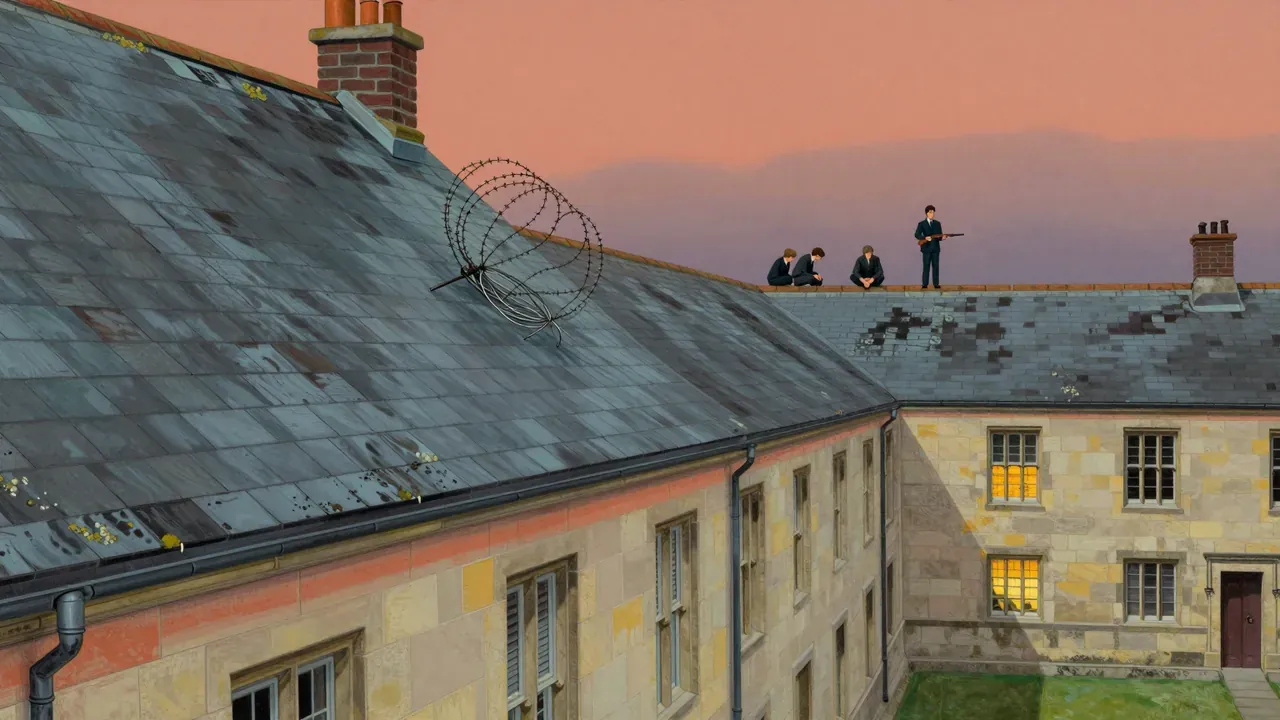
Lindsay Anderson’s 1968 If.... is a black-and-white-and-colour satire of English public school life, following Malcolm McDowell’s Mick Travis and two peers as they move from quiet dissent to armed revolt. Shot across Cheltenham College and Aldenham School, it uses surrealist interludes, abrupt tonal shifts, and a fragmented narrative to dissect hierarchy, delegated authority, and the institutional reproduction of violence. Though its Palme d’Or win and critical acclaim attest to its impact, its refusal of psychological exposition and narrative closure makes it demanding — and enduring.

13:00

Kill!

Kihachi Okamoto · 1968

Kihachi Okamoto’s 1968 Kill! is a formally precise, darkly comic chambara that follows a disillusioned ex-samurai and an ambitious farmer caught in the fallout of a clan’s internal purge. Adapted from Shūgorō Yamamoto and scored by Masaru Sato, it uses deadpan timing, anti-climactic editing, and grounded performances to dissect the performativity of honour, loyalty and status in Edo-period Japan.

13:00

Kind Hearts and Coronets

Robert Hamer · 1949

Kind Hearts and Coronets (1949), directed by Robert Hamer for Ealing Studios, follows Louis Mazzini’s calm, calculated elimination of eight aristocratic relatives to claim a dukedom. Dennis Price narrates with detached elegance; Alec Guinness plays all eight victims with subtle, precise differentiation. Douglas Slocombe’s cinematography and Ernest Irving’s Mozart-infused score sustain a tone of immaculate, unsettling decorum. Loosely adapted from Roy Horniman’s Israel Rank, the film sharpens its source into a satire of class, legitimacy, and performative Englishness — dry, controlled, and morally unmoored.

13:00

Lost in America

Albert Brooks · 1985

Albert Brooks’s 1985 road comedy follows a Los Angeles couple who quit their jobs, sell their house, and set off in a Winnebago to 'drop out' — only to lose their savings in Las Vegas and end up working dead-end jobs in rural Arizona. With dry precision, the film charts the collapse of their countercultural fantasy under the weight of real-world logistics, language, and class structure. It is a satire of self-deception disguised as liberation, built on understated performances, unshowy craft, and a script that treats ideology as infrastructure.

13:00

Major Barbara

Gabriel Pascal · 1941

Gabriel Pascal’s 1941 adaptation of George Bernard Shaw’s Major Barbara is a rigorously faithful, studio-bound rendering of the 1905 play. Starring Wendy Hiller and Robert Morley, it stages a moral contest between Salvation Army idealism and industrial pragmatism, filmed in London during The Blitz. Ronald Neame’s cinematography and William Walton’s score serve the text, not the image. It is talk-driven, structurally intact, and intellectually uncompromising — a rare case where fidelity is both method and meaning.

13:00

Miracle in Milan

Vittorio De Sica · 1951

Vittorio De Sica’s 1951 Miracle in Milan blends post-war Italian neo-realism with gentle fantasy. Set on a Milanese wasteland, it follows Totò — raised by a woman who finds him in a cabbage patch — as he helps build a self-governing shantytown, only to confront eviction by industrialists. When magic intervenes, it does so not to erase hardship but to affirm the dignity already present in mutual aid, shared labour and unguarded joy.

13:00

Mon Oncle

Jacques Tati · 1958

Jacques Tati’s Mon Oncle (1958) is a colour comedy set in postwar France, contrasting the sterile geometry of a modernist villa with the worn textures of an old Paris neighbourhood. Starring Tati as the amiable, unmoored Monsieur Hulot, the film uses choreographed movement, precise sound design and architectural detail — not dialogue — to explore how design, automation and consumerism reshape human behaviour and relationships.

13:00

Monty Python’s Life of Brian

Terry Jones · 1979

Monty Python’s Life of Brian (1979) is a British comedy directed by Terry Jones, written by the full Python troupe, and produced by HandMade Films after EMI withdrew funding. Set in Roman Judea, it follows Brian Cohen, mistaken for the Messiah despite having no interest in prophecy or power. The film targets institutional rigidity, sectarian infighting, and the absurdity of uncritical belief — not faith itself. Shot in Tunisia, edited tightly by Julian Doyle, and scored with solemn restraint by Geoffrey Burgon, it remains a benchmark of structural satire: dry, disciplined, and deeply unsentimental.

13:00

Mr. Freedom

William Klein · 1969

William Klein’s 1969 Mr. Freedom is a French-made English-language satirical comedy starring Albert Augier as a US vigilante sent to France to combat communism — and to enforce a ‘white wall of freedom’. With Delphine Seyrig, Donald Pleasence, and Daniel Cohn-Bendit, it deploys inflatable villains, supermarket embassies, and nuclear brinkmanship to dissect Cold War rhetoric, white nationalism, and the theatricality of power. Pierre Lhomme shot it; Michel Colombier scored it. It is abrasive, uncompromising, and deliberately exhausting — less a story than a sustained political provocation.

13:00

Multiple Maniacs

John Waters · 1970

Multiple Maniacs (1970), written and directed by John Waters, is a black-and-white 16mm comedy starring Divine and the Dreamland troupe. Set in Baltimore, it follows a perverse carnival’s descent into violence and surreal retribution. Shot, edited, and scored by Waters himself, it rejects narrative logic and technical polish in favour of sustained provocation. Its themes include the performativity of morality, the politics of disgust, and the aesthetics of marginality. Though rated 100% on Rotten Tomatoes, its value lies not in consensus but in its uncompromising coherence as a polemic in film form.

13:00

Polyester

John Waters · 1981

John Waters’s 1981 satire Polyester mimics Douglas Sirk’s melodramas to lampoon suburban life, moral panic, and the ‘woman’s picture’ genre. Starring Divine as a crumbling housewife in Baltimore, it deploys Odorama — a scratch-and-sniff gimmick — as both narrative device and audience provocation. With precise lighting, deadpan performances, and a tightly wound plot, it sustains a tone of controlled absurdity. Its final act falters under cartoonish violence, but its formal rigour and thematic bite make it a singular, unsentimental portrait of consumption masquerading as care.

13:00

Putney Swope

Robert Downey Sr. · 1969

Putney Swope (1969), written and directed by Robert Downey Sr., follows Arnold Johnson as Putney Swope, the sole Black board member who accidentally becomes head of an ad agency. Renaming it Truth and Soul, Inc., he fires the white staff, bans harmful clients, and commissions surreal, colour-saturated commercials — all while being voiced by Downey himself. The film’s low-budget aesthetic, jagged editing, and deadpan absurdity target advertising, corporate liberalism, and racial tokenism. Though uneven in pacing and reliant on period-specific references, its structural rigour and thematic persistence earned it preservation in the US National Film Registry.
13:00

Real Life

Albert Brooks · 1979

Albert Brooks’ 1979 directorial debut is a dry, structural satire in which a filmmaker embeds himself with the Yeager family to document 'real life' for a year. Using helmet-mounted cameras and clinical oversight, the project unravels as intrusion replaces observation, ethics erode, and the family withdraws. The film’s strength lies in its precise, unblinking exposure of power imbalances in media — not its jokes.

13:00

Repo Man

Alex Cox · 1984

Alex Cox’s 1984 debut follows a disillusioned punk (Emilio Estevez) who joins a car repossession agency in Los Angeles, only to become entangled in a surreal chase for a radioactive Chevrolet Malibu linked to extraterrestrials. Shot on location by Robby Müller and scored by Tito Larriva and punk bands including Black Flag and Iggy Pop, the film uses deadpan absurdity to dissect Reagan-era consumerism, bureaucracy, and Cold War anxiety. It has endured as a cult object for its texture, not its plot.

13:00

Risky Business

Paul Brickman · 1983

Risky Business (1983), written and directed by Paul Brickman, follows Chicago high school senior Joel Goodson during a week alone in his affluent Glencoe home. What begins as hedonistic freedom spirals into a series of escalating transactions—sexual, financial, logistical—culminating in a brothel-party business venture. Tom Cruise and Rebecca De Mornay anchor a tightly constructed satire about class, performance, and deferred consequence, shot by Bruce Surtees and Reynaldo Villalobos, scored by Tangerine Dream. Though some supporting elements feel dated or underdeveloped, its structural rigour and thematic clarity sustain its reputation as a defining American comedy-drama of the 1980s.

13:00

Seduced and Abandoned

Pietro Germi · 1964

Pietro Germi’s 1964 film Seduced and Abandoned uses dark procedural satire to examine Sicilian customs around forced marriage, statutory rape and legal 'honour repair'. Set in Sciacca, it follows fifteen-year-old Agnese Ascalone as her family, the Califanos and the courts negotiate her future through staged kidnappings, legal loopholes and public shaming. With Stefania Sandrelli and Saro Urzì, and written by Germi, Incrocci, Scarpelli and Vincenzoni, it is formally rigorous, morally unsentimental and structurally relentless.

13:00

Shampoo

Hal Ashby · 1975

Shampoo (1975), directed by Hal Ashby and co-written by Warren Beatty and Robert Towne, follows a Beverly Hills hairdresser across Election Day 1968 as he navigates overlapping affairs, professional frustration, and the quiet hypocrisies of his social circle. Shot by László Kovács and scored with period-appropriate music by Paul Simon and others, it uses romantic comedy structure to dissect sexual politics, class, and the erosion of public attention. Though commercially successful and awarded an Oscar for Lee Grant’s supporting performance, its satire remains understated, its pacing deliberate, its conclusions ambiguous.

13:00

Simon of the Desert

Luis Buñuel · 1965

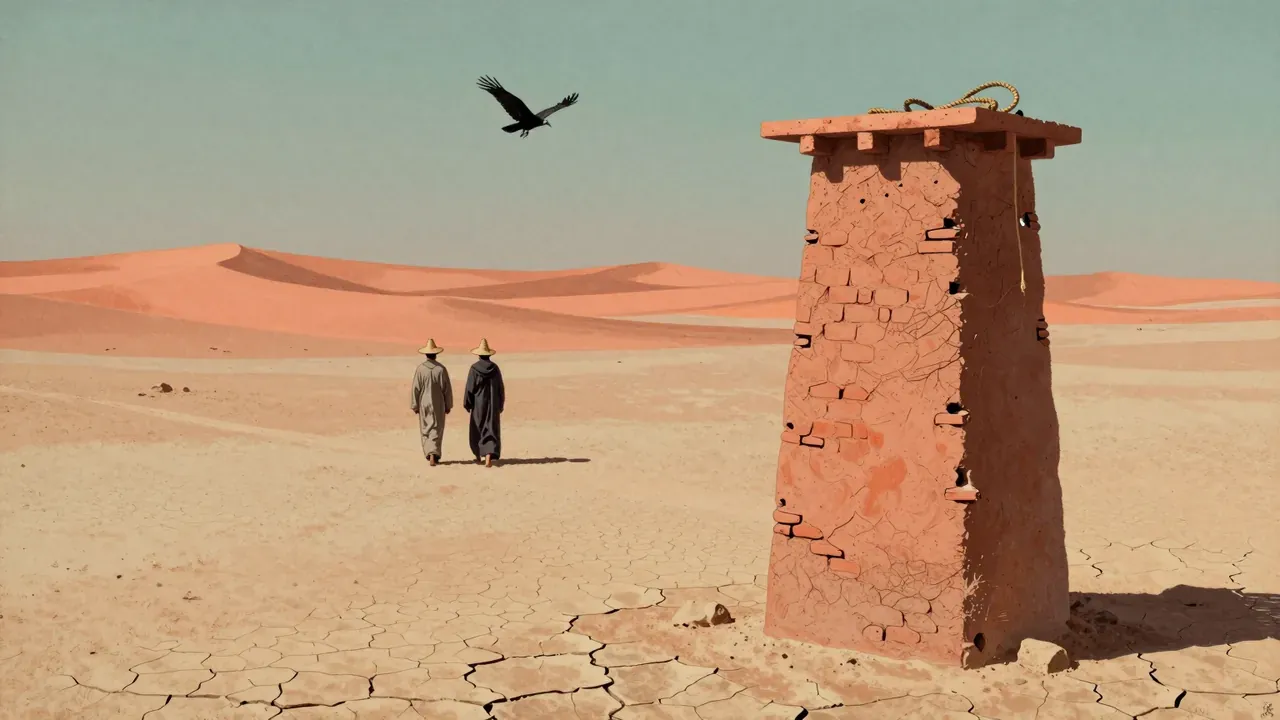
Luis Buñuel’s 1965 Simon of the Desert follows a sixth-century ascetic who lives atop a pillar in the Syrian desert — until Satan transports him to a 1960s New York nightclub. Shot by Gabriel Figueroa in the Samalayuca Dune Fields and edited with surgical restraint, the film uses Claudio Brook’s still, weary Simón to dissect the fragility of spiritual authority, the absurdity of purity, and the quiet violence of being watched. At 45 minutes, it is both complete and unresolved — a dry, precise, and deeply unsettling work of surrealist satire.

13:00

Sullivan's Travels

Preston Sturges · 1942

Preston Sturges’s 1942 comedy follows a Hollywood director who abandons frivolous hits to make a serious film about poverty — then tries, and fails, to live as a tramp to gather material. His journey leads him instead to a Southern chain gang, where he discovers laughter’s unvarnished power among the condemned. With Joel McCrea and Veronica Lake, and shot by John F. Seitz, it balances screwball pacing with sober observation — less a critique of Hollywood than a defence of comedy’s quiet seriousness.

13:00

The Devil's Eye

Ingmar Bergman · 1960

Ingmar Bergman’s 1960 fantasy comedy The Devil’s Eye follows Satan’s attempt to cure a metaphysical stye by sending Don Juan to seduce a Swedish vicar’s chaste daughter. Shot by Gunnar Fischer and scored by Erik Nordgren, it treats heaven, hell, and bourgeois domesticity as adjacent departments in the same administrative system — dry, precise, and quietly subversive.

13:00

The Love Parade

Ernst Lubitsch · 1929

Ernst Lubitsch’s 1929 debut sound film stars Maurice Chevalier and Jeanette MacDonald as a queen and her reluctant consort in the fictional kingdom of Sylvania. Built on a French stage farce, it uses operetta conventions, witty dialogue, and Victor Schertzinger’s songs to explore power, gender, and the performance of authority. Though technically inventive and tonally assured, its satire is limited by its hollow setting and reliance on archetype over depth. A landmark of early Hollywood musical craftsmanship — elegant, intelligent, and knowingly artificial.

13:00

The Model Couple

William Klein · 1977

William Klein’s 1977 film follows a 'model couple' subjected to relentless observation in a state-run experiment designed to engineer future society. With deadpan performances, sterile cinematography, and a score that veers between lounge jazz and electronic unease, it satirises surveillance capitalism, bureaucratic theatre, and media-driven reality before those terms existed — not through prophecy, but through forensic mimicry of their logic.

13:00

The Pornographers

Shohei Imamura · 1966

Shohei Imamura’s 1966 film follows Subuyan Ogata, a small-time pornographer in post-war Osaka, living in a crowded house with his landlady Haru, her daughter Keiko and others. Based on Akiyuki Nosaka’s novel, it uses deadpan observation and unvarnished detail to explore desire, exploitation and ritual as inseparable parts of daily life. Shinsaku Himeda’s restrained cinematography and Shoichi Ozawa’s understated performance anchor a film that refuses moral framing in favour of anthropological clarity.

13:00

The Ruling Class

Peter Medak · 1972

Peter Medak’s 1972 adaptation of Peter Barnes’s play stars Peter O'Toole as Jack Gurney, a paranoid schizophrenic who inherits a peerage and cycles between believing he is Christ and Jack the Ripper. Set against the decaying grandeur of Harlaxton Manor, the film uses theatrical staging, sharp dialogue and O'Toole’s ferocious performance to dissect class, psychiatry and institutional power. Though divisive on release, it endures as a formally bold, morally uncompromising satire.

13:00

This Is Spinal Tap

Rob Reiner · 1984

This Is Spinal Tap (1984) is a mockumentary following the faltering US tour of a fictional British heavy metal band. Directed by Rob Reiner and improvised by Christopher Guest, Michael McKean and Harry Shearer, it satirises rock pretension, documentary hagiography and institutional incompetence — not through parody, but through sustained, deadpan observation. Shot on 16mm in vérité style, it builds comedy from logistical failure, miscommunication and unshaken self-belief. Its influence on the mockumentary form is foundational; its cultural longevity rests on its precision, not its punchlines.

13:00

Three Resurrected Drunkards

Nagisa Ōshima · 1968

Three Resurrected Drunkards (1968), directed by Nagisa Ōshima, follows three young Japanese men who, after having their clothes stolen at the beach, are mistaken for Korean illegal immigrants and pursued by authorities. Built around a hit folk song and performed with deadpan restraint, the film uses repetition, costume and bureaucratic absurdity to critique Japan’s treatment of Zainichi Koreans — not through exposition or emotion, but through relentless, low-key ridicule of the systems that assign and police identity.

13:00

To Be or Not to Be

Ernst Lubitsch · 1942

Ernst Lubitsch’s 1942 To Be or Not to Be follows a Warsaw theatre troupe who use disguise, timing, and theatrical cunning to deceive the Gestapo. Starring Carole Lombard and Jack Benny, it balances farce with peril, treating performance as both profession and resistance. Rudolph Maté’s cinematography and Dorothy Spencer’s editing sustain its breakneck logic, while its themes—identity as costume, authority as mimicry—remain sharply relevant. Though some tonal shifts now feel abrupt, its rigour and restraint make it a landmark of satirical craft.

13:00

To Die For

Gus Van Sant · 1995

Gus Van Sant’s 1995 black comedy follows Suzanne Stone, a New Hampshire woman who engineers her husband’s murder to advance her television career. Framed by direct-to-camera monologues and mockumentary interviews, the film dissects how media formats confer legitimacy, turning crime into content and ambition into algorithm. Nicole Kidman’s performance anchors its precise, unsentimental critique of fame’s infrastructure.

13:00

Triangle of Sadness

Ruben Östlund · 2022

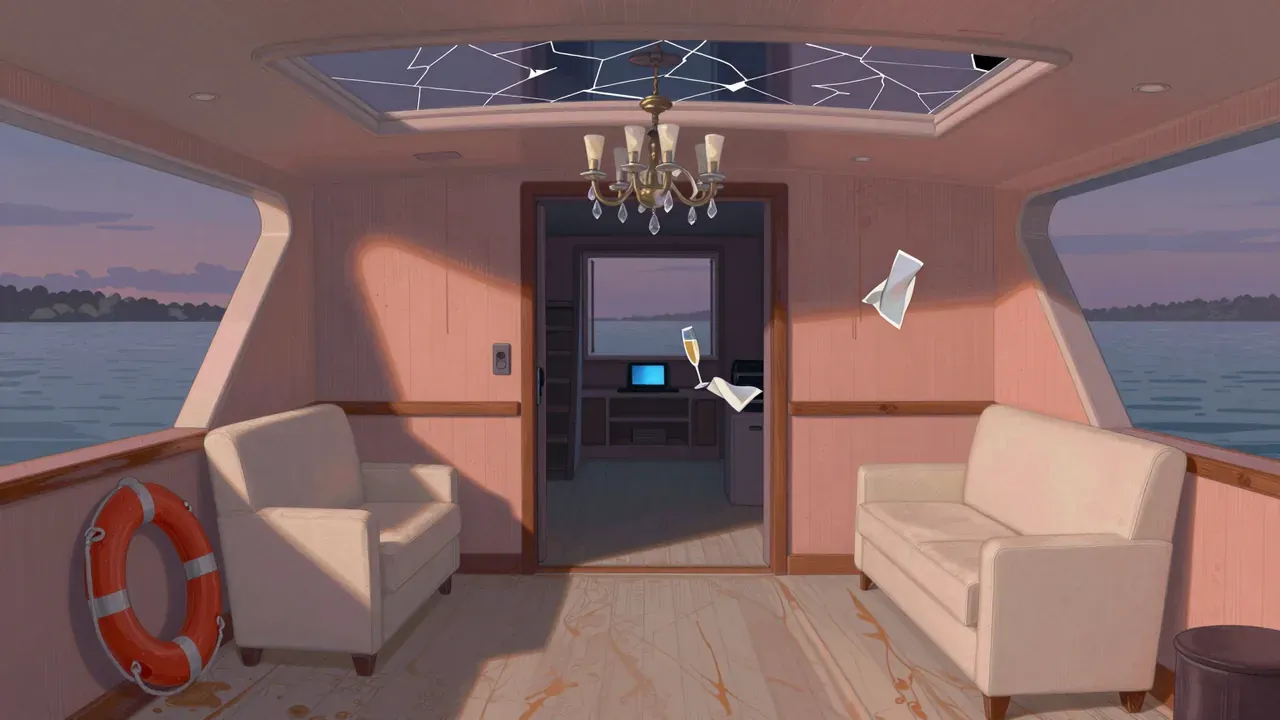
Ruben Östlund’s Triangle of Sadness is a three-act satirical drama following a male model, his influencer girlfriend, and a group of ultra-wealthy cruise passengers who survive a shipwreck only to confront a brutal inversion of social order on a remote island. Shot by Fredrik Wenzel and edited by Mikel Cee Karlsson and Östlund, it uses duration, repetition, and clinical observation to dissect capitalism’s reliance on invisible labour and arbitrary status. Winner of the 2022 Palme d’Or and eight European Film Awards, it asks what remains when beauty, money, and language all fail as currencies.

13:00

True Stories

David Byrne · 1986

David Byrne’s 1986 musical film True Stories unfolds in the fictional town of Virgil, Texas, as a nameless visitor observes residents preparing for a sesquicentennial ‘Celebration of Specialness’. Built from vignettes rather than plot, it features John Goodman, Spalding Gray, Swoosie Kurtz and others performing stylised, sincere portraits of small-town life, scored largely by Talking Heads. Edward Lachman’s flat, frontal cinematography and Byrne’s deliberate pacing create a tone both surreal and tender — less mockery than meticulous documentation of how people build meaning from thin air.

13:00

Unfaithfully Yours

Preston Sturges · 1948

Preston Sturges’ 1948 comedy follows Sir Alfred de Carter, a world-renowned conductor who, suspecting his wife of infidelity, imagines three elaborate responses — murder, magnanimous forgiveness, and Russian roulette — each triggered by a piece of classical music he conducts in concert. Back home, his attempts to enact any of them unravel in farcical detail. With Rex Harrison, Linda Darnell and Alfred Newman, it is a formally inventive, musically anchored satire of ego, creativity and self-deception.

13:00

Watermelon Man

Melvin Van Peebles · 1970

A 1970 Columbia Pictures satire directed by Melvin Van Peebles, in which a bigoted white insurance salesman wakes up black and confronts the immediate, unvarnished consequences of racialised systems — housing, work, medicine, marriage. Written by Herman Raucher and starring Godfrey Cambridge, it uses allegory, not realism, to dissect liberal complicity and structural exclusion. Its power lies in its restraint, its refusal to explain, and its unwavering focus on consequence over cause.

13:00

Who Are You, Polly Maggoo?

William Klein · 1966

William Klein’s 1966 French film is a satirical mockumentary following Polly Maggoo, an American model pursued by a television crew in Paris. Using fragmented editing, stylised photography, and deadpan performance, it dissects how media constructs identity through repetition, framing, and erasure — never resolving who Polly is, because the system it critiques has no use for her answer.

13:00

Xala

Ousmane Sembène · 1975

Ousmane Sembène’s 1975 satire follows El Hadji, a Senegalese businessman whose sudden impotence coincides with his appointment to the Chamber of Commerce and his third marriage. As his business unravels and his authority crumbles, the affliction proves allegorical: a diagnosis of moral and political failure in post-independence Senegal. Stylised, unsentimental and precisely constructed, the film uses folk logic and social ritual to indict elite complicity, not individual weakness.

13:00

Yojimbo

Akira Kurosawa · 1961

Akira Kurosawa’s 1961 jidaigeki follows a nameless rōnin who manipulates two warring yakuza factions into mutual ruin. Starring Toshirō Mifune, it uses stark composition, rhythmic editing and Masaru Sato’s jaunty, dissonant score to deliver a dry, structural satire of authority and competence. Made for Toho, it was Japan’s fourth-highest-grossing film of 1961 and later inspired Sergio Leone’s A Fistful of Dollars.

13:00

O Brother, Where Art Thou?

Joel Coen, Ethan Coen · 2000

O Brother, Where Art Thou? (2000) transplants the Odyssey’s structure to Depression-era Mississippi, following three escaped convicts on a rambling quest. Directed by Joel and Ethan Coen, it features George Clooney, John Turturro, and Tim Blake Nelson, with cinematography by Roger Deakins and music curated by T Bone Burnett. Its sepia-toned digital look was pioneering; its soundtrack, rooted in period folk and gospel, won a Grammy. Though loosely plotted and deliberately arch, the film sustains a unified tone — dry, musical, mythic — that rewards attentive viewing.

13:00

The White Sheik

Federico Fellini · 1952

Federico Fellini’s 1952 debut as sole director follows a nervous groom whose bride vanishes in Rome to meet the hero of her favourite photo-strip. Built around the mechanics of Italian fotoromanzi, the film uses crisp comic timing, stylised cinematography and Nino Rota’s light score to dissect how mass fantasy reshapes desire, class performance and marital expectation — without sentiment or resolution.

13:00

Batman Returns

Tim Burton · 1992

Tim Burton’s 1992 sequel discards superhero convention to explore abandonment and performance through Gotham’s grotesque, snowbound winter. With Michael Keaton, Danny DeVito, and Michelle Pfeiffer delivering career-defining turns, it leans on Stefan Czapsky’s shadow-heavy cinematography, Bo Welch’s layered production design, and Danny Elfman’s jagged score to sustain a tone both festive and funereal. Structurally loose but thematically tight, it remains a landmark of auteur-driven genre filmmaking.

13:00

The Great Dictator

Charlie Chaplin · 1940

Charlie Chaplin’s 1940 The Great Dictator is his first full sound film and a bold, early condemnation of Hitler, Mussolini and fascism. Playing both a ruthless dictator and a persecuted Jewish barber, Chaplin uses physical comedy, musical irony and direct address to expose authoritarian spectacle and affirm human dignity. Though structurally uneven and limited by its era’s conventions, it remains historically vital and morally unflinching.
13:00

Thor: Ragnarok

Taika Waititi · 2017

Thor: Ragnarok (2017), directed by Taika Waititi, is the third Thor film in the Marvel Cinematic Universe. It follows Thor’s exile to the alien planet Sakaar, his gladiatorial duel with the Hulk, and his return to Asgard to stop Hela’s conquest. With vibrant cinematography by Javier Aguirresarobe, a synth-driven score by Mark Mothersbaugh, and performances led by Chris Hemsworth, Cate Blanchett, and Tessa Thompson, the film prioritises wit, pace, and visual invention over mythic solemnity. It grossed $854 million worldwide and received praise for its direction and energy, though some critics found its themes underdeveloped and its finale visually overwhelming.