filmbriefs
Topic

Loneliness

A condition now common enough to be treated as public health.

46
in film
13:00
average
598 min
in total
61
across the network
Loneliness across the network →
All briefs46
13:00

A Summer's Tale

Éric Rohmer · 1996

Éric Rohmer’s 1996 comedy-drama follows mathematics graduate Gaspard over three weeks in the Breton seaside town of Dinard, as he navigates hesitant affections for three women — Margot, Léna and Solène — without ever resolving between them. Shot with quiet precision by Diane Baratier and edited to sustain long takes and unhurried dialogue, the film treats romantic uncertainty not as failure but as sustained, everyday practice. Its power lies in its fidelity to duration, silence and the moral weight of small, unremarkable choices.
13:00

An Autumn Afternoon

Yasujirō Ozu · 1962

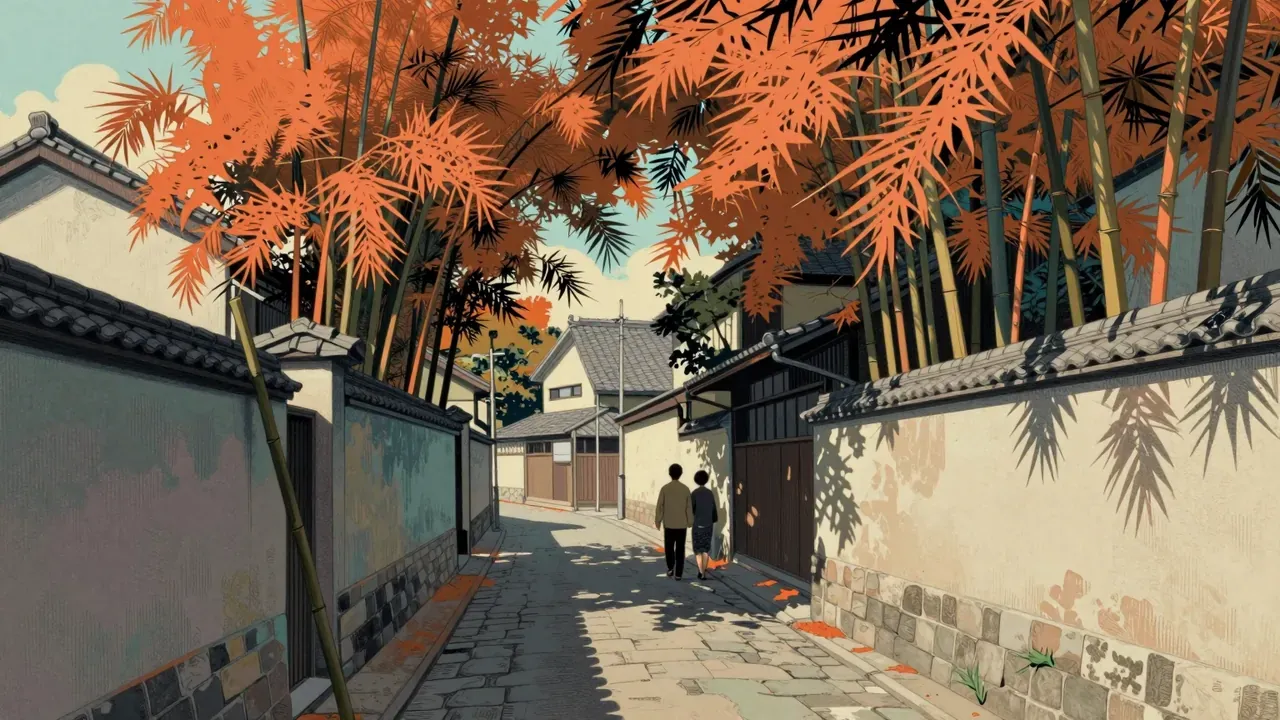
Yasujirō Ozu’s 1962 An Autumn Afternoon follows widower Shūhei Hirayama as he arranges his daughter Michiko’s marriage — not as a triumph of paternal love, but as an act of belated self-reckoning. Set in Tokyo, the film moves through school reunions, bar visits and domestic routines, using precise framing, muted colour and deliberate pacing to trace how time, duty and silence shape family life. With Chishū Ryū, Shima Iwashita and Mariko Okada, it is a restrained, deeply humane portrait of ageing, obligation and the quiet cost of staying put.

13:00

Anna's Meetings

Chantal Akerman · 1978

Chantal Akerman’s 1978 film follows Anne Silver, a Belgian filmmaker travelling across Western Europe to promote her work. She meets lovers, friends, family and strangers, but remains emotionally detached. Shot in restrained, observational style by Jean Penzer and edited by Francine Sandberg, the film builds its power through duration, repetition and unspoken tension — culminating in Anne alone, listening to unanswered messages. It is a study in autonomy, exhaustion and the quiet persistence of loneliness.

13:00

Certain Women

Kelly Reichardt · 2016

Kelly Reichardt’s 2016 triptych adapts three Maile Meloy stories set in Montana, following a lawyer, a builder’s wife and a ranch hand as they navigate quiet crises of agency, expectation and connection. Shot by Christopher Blauvelt and edited by Reichardt, it uses precise framing, location sound and deliberate pacing to explore how law, geography and gender shape ordinary lives — without exposition, score or resolution.

13:00

Fallen Angels

Wong Kar-wai · 1995

Wong Kar-wai’s 1995 Hong Kong drama Fallen Angels unfolds across two parallel, nocturnal storylines: a hitman seeking autonomy and a mute ex-convict drifting through repetition. Shot entirely at night by Christopher Doyle with extreme wide-angle lenses, it privileges atmosphere over exposition, using voiceover, pop music, and visual distortion to render urban alienation as physical fact. Though structurally loose and emotionally restrained, its sensory consistency and precise articulation of loneliness make it a defining arthouse work of the 1990s.

13:00

Frownland

Ronald Bronstein · 2007

Ronald Bronstein’s 2007 debut follows Keith, a socially overwhelmed door-to-door salesman in New York, over three days of escalating disconnection. Shot on a minimal crew and budget, it uses relentless close-ups, fragmented editing, and Dore Mann’s physically exacting performance to immerse the viewer in sustained psychological exposure—without exposition, score, or narrative relief.

13:00

Happy Together

Wong Kar-wai · 1997

Happy Together (1997) follows two Hong Kong men whose turbulent relationship fractures during a trip to Argentina. Directed by Wong Kar-wai and shot by Christopher Doyle, it uses saturated, grainy imagery, South American music, and elliptical structure to explore memory, displacement, and the quiet aftermath of love. Tony Leung and Leslie Cheung anchor the film with restrained, physically precise performances. It is less a story about reconciliation than about learning to live alongside absence.

13:00

Le Amiche

Michelangelo Antonioni · 1955

Michelangelo Antonioni’s 1955 drama follows Clelia, a Rome-based fashion executive returning to Turin, where she becomes entangled with a circle of upper-class women — including the fragile Rosetta, whose suicide attempt sets in motion a series of restrained, unresolved encounters. Shot on location in Turin by Gianni Di Venanzo and adapted from Cesare Pavese’s novella, the film observes emotional distance, class performance, and the hollowness beneath social ritual — all without exposition, climax, or catharsis.

13:00

Lonesome

Paul Fejos · 1928

Paul Fejos’s 1928 Lonesome follows two New York workers who meet by chance at Coney Island and spend a day falling in love — only to be separated by chaos and rain. Shot in fluid, inventive silent style with three awkward sound inserts, it treats the city as both barrier and bridge. Its emotional force comes from restraint: precise camerawork, minimal intertitles, and a finale rooted in shared geography, not fate.

13:00

Man Push Cart

Ramin Bahrani · 2005

Man Push Cart (2005) is a spare, observant American drama about Ahmad, a Pakistani immigrant who sells coffee and bagels from a pushcart in Midtown Manhattan. Directed and written by Ramin Bahrani, it follows a week in his life — marked by physical labour, quiet encounters, and unspoken grief — using natural light, non-professional acting, and minimal music. It avoids exposition, melodrama, and resolution, favouring duration and detail as tools of empathy.

13:00

Me and You and Everyone We Know

Miranda July · 2005

Miranda July’s 2005 debut follows a shoe salesman and a performance artist navigating loneliness, miscommunication, and tentative connection in suburban Los Angeles. Shot with quiet precision and performed with deliberate restraint, it builds meaning through accumulated detail rather than plot turns. Its romance is structural, not sentimental; its comedy arises from behavioural accuracy, not punchlines.
13:00

Midnight Cowboy

John Schlesinger · 1969

Midnight Cowboy follows Joe Buck, a Texan who arrives in New York dressed as a cowboy to become a male prostitute, and Ratso Rizzo, a sickly con man who becomes his reluctant partner in survival. Set against the grimy, unglamorous backdrop of late-1960s Manhattan, the film charts their slow descent into mutual dependence, not friendship. With restrained performances, unsentimental cinematography, and a script that trusts silence over exposition, it renders marginality as lived reality rather than social commentary. It won Best Picture despite its X rating — the only film to do so — and remains a benchmark of American dramatic realism.

13:00

Night Moves

Arthur Penn · 1975

Arthur Penn’s 1975 neo-noir follows LA private investigator Harry Moseby (Gene Hackman) as he searches for a missing teenager, only to uncover layers of smuggling, infidelity, and paternal violation across Los Angeles, New Mexico, and the Florida Keys. With Bruce Surtees’ sun-bleached cinematography, Michael Small’s vibraphone-led score, and Dede Allen’s unhurried editing, the film sustains a mood of quiet disillusionment. It offers no resolution—its final image is a bleeding man aboard a boat that circles endlessly—making it less a thriller than a study in moral suspension and psychological erosion.

13:00

Old Joy

Kelly Reichardt · 2006

Kelly Reichardt’s 2006 debut follows two old friends, Mark and Kurt, on an overnight camping trip to Bagby Hot Springs in Oregon. Mark is settling into domestic life and impending fatherhood; Kurt remains rootless, spiritually adrift. Their conversation circles shared history and unspoken distance, culminating not in reconciliation but in quiet, mutual departure. Shot on a $30,000 budget, the film relies on understated performances, natural light, and ambient sound to trace the subtle erosion of intimacy across divergent adult paths.

13:00

Shadows in Paradise

Aki Kaurismäki · 1986

Aki Kaurismäki’s 1986 debut feature follows Ilona, a supermarket checkout clerk, and Nikander, a garbage collector, as they form a tentative bond amid Finland’s muted urban landscape. Shot with flat, natural light by Timo Salminen and edited with metronomic precision by Raija Talvio, the film unfolds in unhurried, symmetrical scenes, trusting silence and repetition to convey emotional depth. Its power lies in what it omits: exposition, psychology, music, and narrative urgency. Starring Matti Pellonpää and Kati Outinen, it is the first of Kaurismäki’s Proletariat Trilogy — a study of dignity in routine, and connection in quiet.

13:00

Sunday, Bloody Sunday

John Schlesinger · 1971

Sunday, Bloody Sunday (1971) follows a love triangle in London between a gay Jewish doctor, a divorced recruitment consultant, and a younger bisexual sculptor. Directed by John Schlesinger and written by Penelope Gilliatt and David Sherwin, it avoids moralising or melodrama, instead holding its characters’ contradictions in steady, unsentimental focus. Glenda Jackson and Peter Finch deliver restrained, deeply felt performances; Billy Williams and David Harcourt’s cinematography grounds the story in quiet realism. Though structurally austere and emotionally reserved, the film remains a landmark for its mature treatment of sexuality, identity, and the quiet costs of openness.

13:00

The Fiances

Ermanno Olmi · 1963

Ermanno Olmi’s 1963 drama follows Giovanni, a Milanese welder relocated to Sicily for work, and his fiancée Liliana, left behind in the north. Through sparse dialogue, restrained performances, and Lamberto Caimi’s understated black-and-white cinematography, the film charts the quiet recalibration of their relationship across letters, phone calls, and solitary routines. It is a study in endurance, not crisis — love as continuity rather than climax.

13:00

The Man Who Fell to Earth

Nicolas Roeg · 1976

Nicolas Roeg’s 1976 adaptation of Walter Tevis’s novel follows Thomas Jerome Newton (David Bowie), an alien who lands in New Mexico to secure water for his drought-ravaged planet. Using advanced knowledge, he amasses wealth and builds a rocket — but becomes entangled in human relationships, addiction, and surveillance. Shot by Anthony B. Richmond in New Mexico, with a fragmented, atmospheric score by John Phillips, the film treats estrangement as perceptual, not biological. Its power lies in cumulative mood, not plot mechanics.

13:00

The Match Factory Girl

Aki Kaurismäki · 1990

Aki Kaurismäki’s 1990 film follows Iris, a lonely Finnish factory worker whose quiet endurance of poverty, familial exploitation, and sexual dismissal culminates in a series of methodical, unsentimental acts of retribution. Shot in stark, static compositions and performed with near-total emotional restraint, it is the final chapter of Kaurismäki’s Proletariat Trilogy — a study in how dignity erodes when every door is closed, and every gesture is transactional.

13:00

2046

Wong Kar-wai · 2004

Wong Kar-wai’s 2004 romantic drama follows writer Chow Mo-wan as he drifts through 1960s Hong Kong, entangled with several women while haunted by an unconsummated past. Structured non-chronologically and interwoven with sci-fi fragments, it uses repetition, texture and sound to explore memory, longing and emotional stasis — not as narrative problems to solve, but as perceptual conditions to inhabit.

13:00

Brokeback Mountain

Ang Lee · 2005

Ang Lee’s 2005 film adapts Annie Proulx’s short story into a restrained, deeply felt portrait of two cowboys whose secret relationship spans twenty years. Heath Ledger and Jake Gyllenhaal anchor a film that finds emotional power in what is unsaid, unseen, and unkept — using landscape, gesture, and silence to convey longing, repression, and endurance. Shot in Alberta and scored by Gustavo Santaolalla, it avoids sentimentality while sustaining profound melancholy.

13:00

Edward Scissorhands

Tim Burton · 1990

Edward Scissorhands (1990), directed by Tim Burton and written by Caroline Thompson, tells of an unfinished humanoid with scissor hands adopted by a suburban family. Johnny Depp stars opposite Winona Ryder, with Danny Elfman scoring and Bo Welch designing the iconic pastel suburb and Gothic mansion. It is a visually unified, deliberately paced fable about difference, empathy, and the quiet violence of assimilation — more mood piece than narrative engine.

13:00

In a Lonely Place

Nicholas Ray · 1950

Nicholas Ray’s 1950 drama stars Humphrey Bogart as a volatile screenwriter suspected of murder and Gloria Grahame as the neighbour who falls for him — only to realise his charm and rage are two sides of the same coin. Shot by Burnett Guffey and edited by Viola Lawrence, it trades noir thrills for psychological precision, treating Hollywood as a pressure chamber for intimacy. Its reputation has grown steadily since release, now ranked among the greatest film noirs ever made.

13:00

Lost in Translation

Sofia Coppola · 2003

Sofia Coppola’s 2003 film follows an ageing actor and a young woman forming a fragile bond while adrift in Tokyo. Shot with quiet restraint by Lance Acord and scored by Kevin Shields, it sustains a mood of melancholic intimacy without narrative resolution. Though widely acclaimed for its writing and performances, its depiction of Japan has drawn sustained criticism for cultural flattening and Orientalist framing.

13:00

Summertime

David Lean · 1955

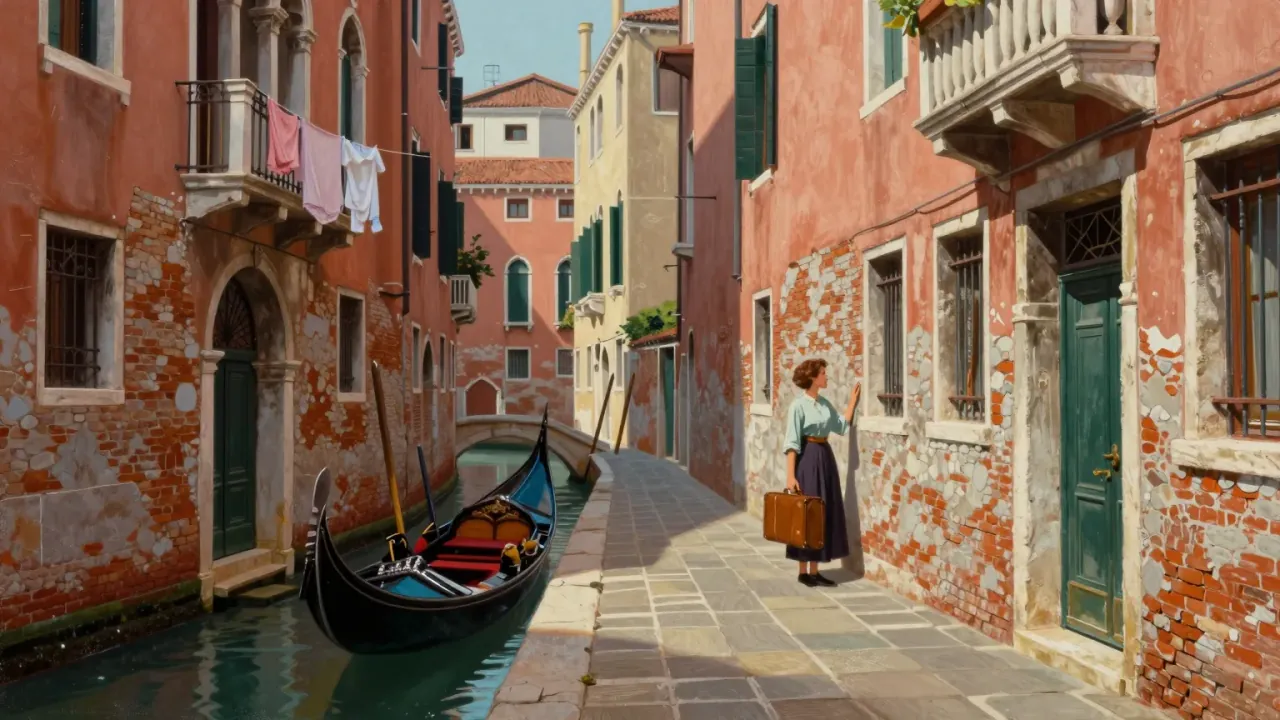
David Lean’s 1955 Summertime follows Katharine Hepburn as Jane Hudson, a lonely American secretary on her first solo trip to Venice, where she forms a tender, complicated bond with an Italian antiques dealer. Shot on location in Eastmancolor, the film leans on Hepburn’s understated performance, Jack Hildyard’s observant cinematography, and a script that prizes psychological realism over plot mechanics. Though constrained by 1950s censorship and occasional theatrical residue, it remains a quietly devastating study of longing, ageing, and the asymmetries of desire.

13:00

Amélie

Jean-Pierre Jeunet · 2001

Audrey Tautou plays Amélie Poulain, a Paris waitress raised in near-isolation who discovers a box of childhood keepsakes hidden in her apartment and, after tracking down its owner, decides to spend her life secretly engineering happiness for the people around her while avoiding her own romantic chance with a man named Nino. Jean-Pierre Jeunet's 2001 film, shot with heavy digital colour grading and built almost entirely from small, invented rituals, became one of the highest-grossing French films ever released internationally.

13:00

Chungking Express

Wong Kar-wai · 1994

Wong Kar-wai's 1994 diptych follows two Hong Kong policemen through separate break-ups, one obsessed with an expiring can of pineapple, the other unknowingly courted by a snack-bar worker who lets herself into his flat. Shot handheld with Christopher Doyle's step-printing technique, it turns a tiny budget and an unfinished script into one of the defining moods of 1990s Hong Kong cinema.

13:00

E.T. the Extra-Terrestrial

Steven Spielberg · 1982

Steven Spielberg's 1982 film, written by Melissa Mathison from a rejected Columbia Pictures script, follows a boy named Elliott who hides and befriends a stranded alien while government agents close in. Shot in sequence over four months on a $10.5 million budget, with a Carlo Rambaldi animatronic creature voiced by a chain-smoking retiree, it overtook Star Wars to become the highest-grossing film ever made and held that record for eleven years, until Spielberg's own Jurassic Park surpassed it.

13:00

Heat

Michael Mann · 1995

Michael Mann's 1995 crime epic pairs Al Pacino's LAPD detective against Robert De Niro's professional thief across a Los Angeles built from real locations and a case Mann first wrote up as a 1989 television film. Its bank-heist shootout, drilled for months with a former SAS trainer, and the single diner scene bringing its two leads together for the first time on screen remain the reasons it is still watched, even at 171 unhurried minutes.

13:00

Her

Spike Jonze · 2013

In a comfortable near-future Los Angeles, a lonely letter-writer buys an artificially intelligent operating system and falls for the voice that answers back, in Spike Jonze's Oscar-winning screenplay.

13:00

In the Mood for Love

Wong Kar-wai · 2000

In 1962 Hong Kong, a newspaper editor and a secretary living next door to each other realise their spouses are having an affair, and grow close while insisting they will not repeat it. Wong Kar-wai shot for fifteen months without a finished script, switching cinematographers mid-production, and built the film around Maggie Cheung's cheongsams and Tony Leung's restraint rather than plot incident. It won Leung the Cannes best actor award and has since been ranked among the major works of Asian cinema.

13:00

Jeanne Dielman, 23 quai du Commerce, 1080 Bruxelles

Chantal Akerman · 1975

Chantal Akerman's 1975 film spends 201 minutes tracking a widowed Brussels housewife, played by Delphine Seyrig, through the exact domestic routine that structures her days, including the afternoon clients she sees for money while her teenage son is at school. Shot by Babette Mangolte from a fixed, eye-level camera that never enters Jeanne's private space and rarely cuts within a task, it was made on a budget of $120,000 and has since been named, in one major critics' poll, the greatest film ever made, a status built almost entirely on how literally it commits to watching unglamorous, repeated labour.

13:00

La Dolce Vita

Federico Fellini · 1960

Federico Fellini's 1960 portrait of a tabloid journalist drifting through Rome's high society over a week of nights gave the world the word paparazzi and became both a critical landmark and a box-office hit despite censors in several countries. Marcello Mastroianni anchors an episodic structure built around parties, a starlet's arrival, and a friend's unexplained despair, shot largely at Cinecittà on Piero Gherardi's elaborate sets.

13:00

Le Samouraï

Jean-Pierre Melville · 1967

Alain Delon plays Jef Costello, a Parisian hitman whose meticulous alibi unravels after witnesses fail to identify him for a killing they saw him commit, forcing him to work out who hired him and who now wants him dead. Jean-Pierre Melville directs with almost no music and long stretches of silence, and the 1967 film's spare, controlled style went on to shape a generation of American and European crime cinema.

13:00

Lilo & Stitch

Chris Sanders, Dean DeBlois · 2002

Lilo & Stitch follows an orphaned Hawaiian girl who adopts what she thinks is a stray dog, not realizing he's an escaped, genetically engineered weapon being hunted across the galaxy. Directed by Chris Sanders and Dean DeBlois, the film cost $80 million, grossed $273 million worldwide, and won an Annie Award, building its story around the Hawaiian concept of extended family rather than a generic redemption arc.

13:00

Marcel the Shell with Shoes On

Dean Fleischer Camp · 2021

A documentary filmmaker moves into an Airbnb and finds Marcel, a talking, one-inch-tall shell living there with his grandmother Connie, and starts filming his daily routines. When the resulting videos make Marcel briefly famous, he has to decide whether that attention can actually help him find the family he lost years earlier.

13:00

Paris, Texas

Wim Wenders · 1984

A man wanders out of the Texas desert after four unexplained years, and Wim Wenders spends 147 patient minutes on what it costs him to reclaim a son and finally speak to the wife he left behind.

13:00

Persona

Ingmar Bergman · 1966

Ingmar Bergman's 1966 film pairs Elisabet Vogler, an actress who has gone entirely silent for reasons the film never states, with Alma, the nurse assigned to care for her at a remote coastal cottage, and lets the imbalance between one woman's silence and the other's compulsive talking gradually erode the line between them. Shot by Sven Nykvist, scored sparingly by Lars Johan Werle, and running just 84 minutes, it opens with a self-conscious montage of film equipment and unrelated images before settling into the two-hander at its centre, and it has since become one of the most closely analysed films in the medium's history.

13:00

Rear Window

Alfred Hitchcock · 1954

Confined almost entirely to one apartment and the courtyard it overlooks, Rear Window turns a photographer's boredom into a murder investigation conducted through binoculars. Built on a single elaborate Paramount set, it is Hitchcock at his most tightly engineered, with James Stewart watching and Grace Kelly eventually doing the one thing he cannot: crossing the courtyard himself.

13:00

Robot Dreams

Pablo Berger · 2023

In 1985 Manhattan, a lonely dog orders a robot companion by mail, and the two become inseparable until a day at the beach leaves the robot rusted, stranded and eventually lost to a junkyard. Pablo Berger adapts Sara Varon's 2007 graphic novel entirely without dialogue, built around the recurring pull of Earth, Wind and Fire's September.

13:00

Taxi Driver

Martin Scorsese · 1976

Martin Scorsese's 1976 film follows Travis Bickle, an insomniac Vietnam veteran driving a New York taxi through the city's worst hours, as his isolation and contempt for the people around him build toward an act of violence aimed first at a political candidate and then at the pimp controlling a twelve-year-old sex worker he has taken an interest in. Written by Paul Schrader, shot with a jittery, restless camera, and scored by Bernard Herrmann in the days before his death, the film was made for $1.9 million and returned over $117 million, winning the Palme d'Or and later becoming entangled in real-world controversy after inspiring an actual assassination attempt.

13:00

The Conversation

Francis Ford Coppola · 1974

Gene Hackman plays a wiretap specialist convinced his latest recording documents a murder he's enabling, in Coppola's Palme d'Or-winning thriller that arrived just months before Watergate made its premise feel prophetic rather than speculative.

13:00

The Red Turtle

Michaël Dudok de Wit · 2016

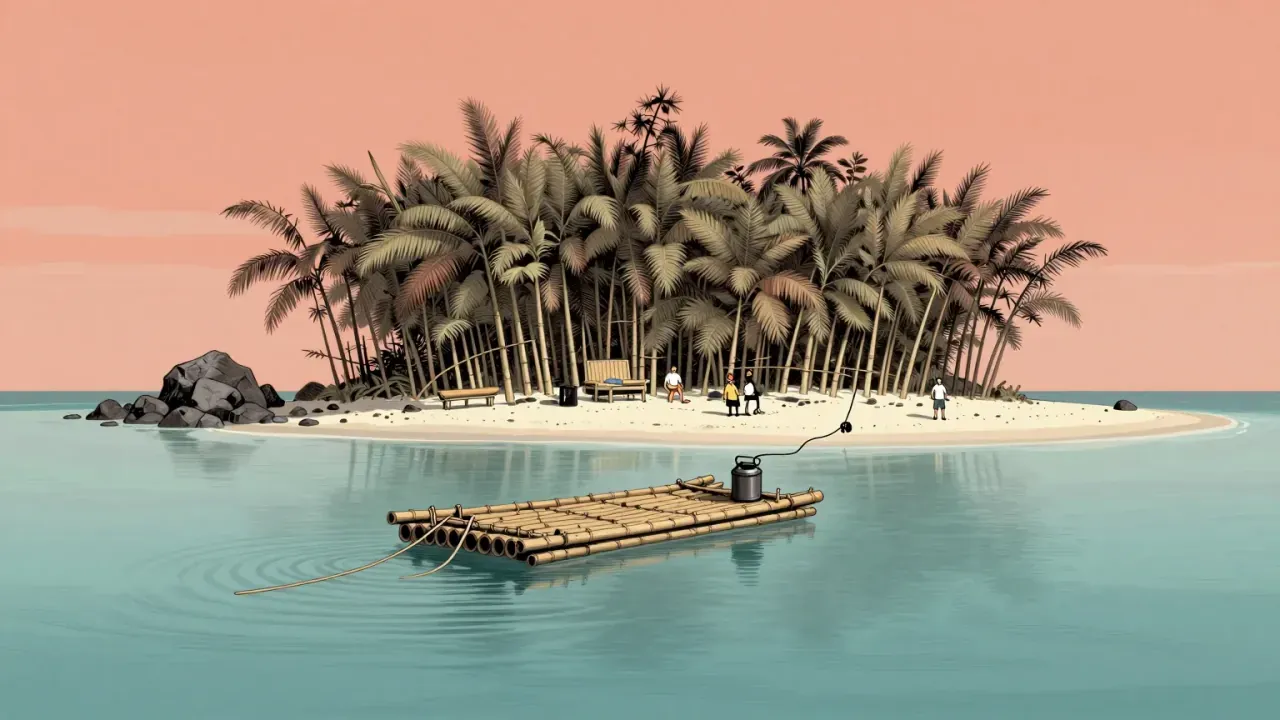
A shipwrecked man's repeated attempts to leave an uninhabited island are sabotaged by a giant red sea turtle, and his violent response to it sets in motion a transformation that reshapes his life on the island rather than ending it. Michaël Dudok de Wit's feature debut, made at Hayao Miyazaki's suggestion after he saw the director's short Father and Daughter, tells its entire story without a single word of dialogue across three generations on one stretch of sand.

13:00

The Thing

John Carpenter · 1982

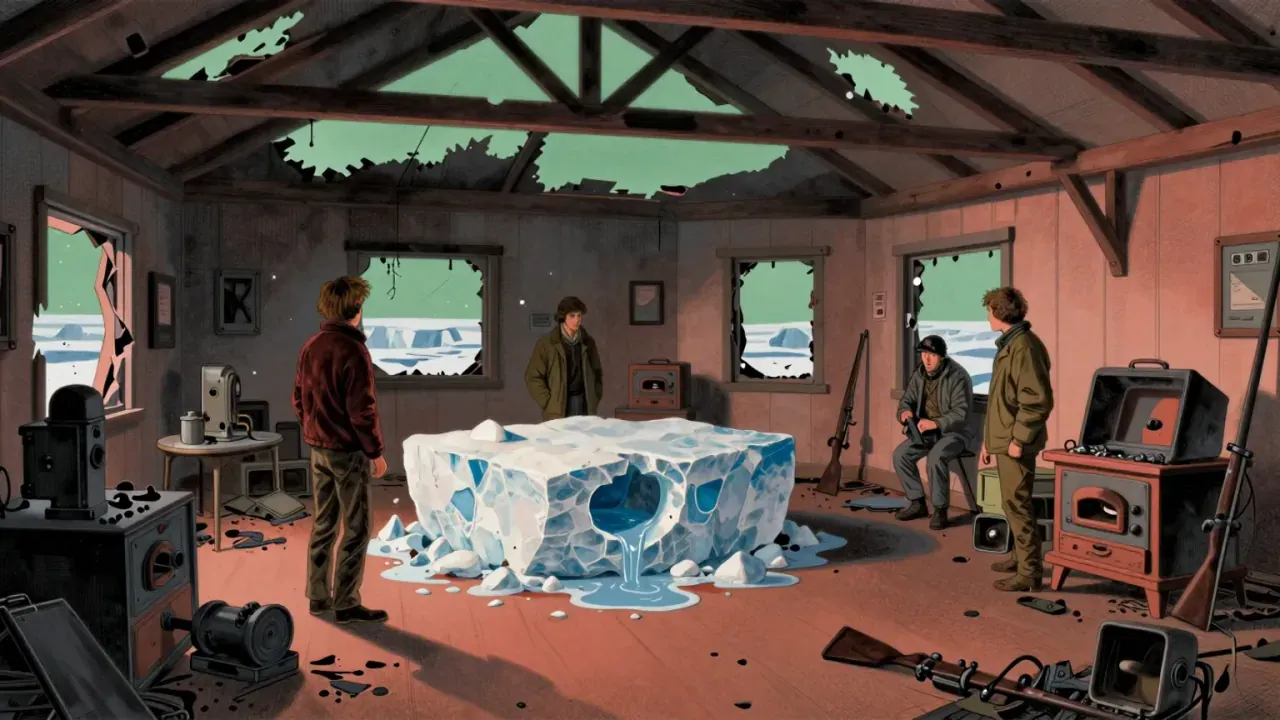
A helicopter pilot and a research crew at a remote Antarctic base find a shape-shifting alien freed from a Norwegian camp, and John Carpenter turns the ensuing hunt for the impostor into a study of paranoia as much as a monster film. Poorly received and a box-office loss on release, it has since been reassessed as one of the strongest science-fiction horror films made.

13:00

The Truman Show

Peter Weir · 1998

Jim Carrey plays a man raised from birth inside a soundstage as the unwitting star of a round-the-clock broadcast, gradually noticing the cracks in a world built entirely around him.

13:00

Toy Story 3

Lee Unkrich · 2010

Andy leaves for college and his toys are accidentally donated to a daycare centre ruled by a resentful stuffed bear. Lee Unkrich's 2010 conclusion to the Toy Story trilogy pushes the franchise's premise, toys who fear abandonment, to its most literal extreme.