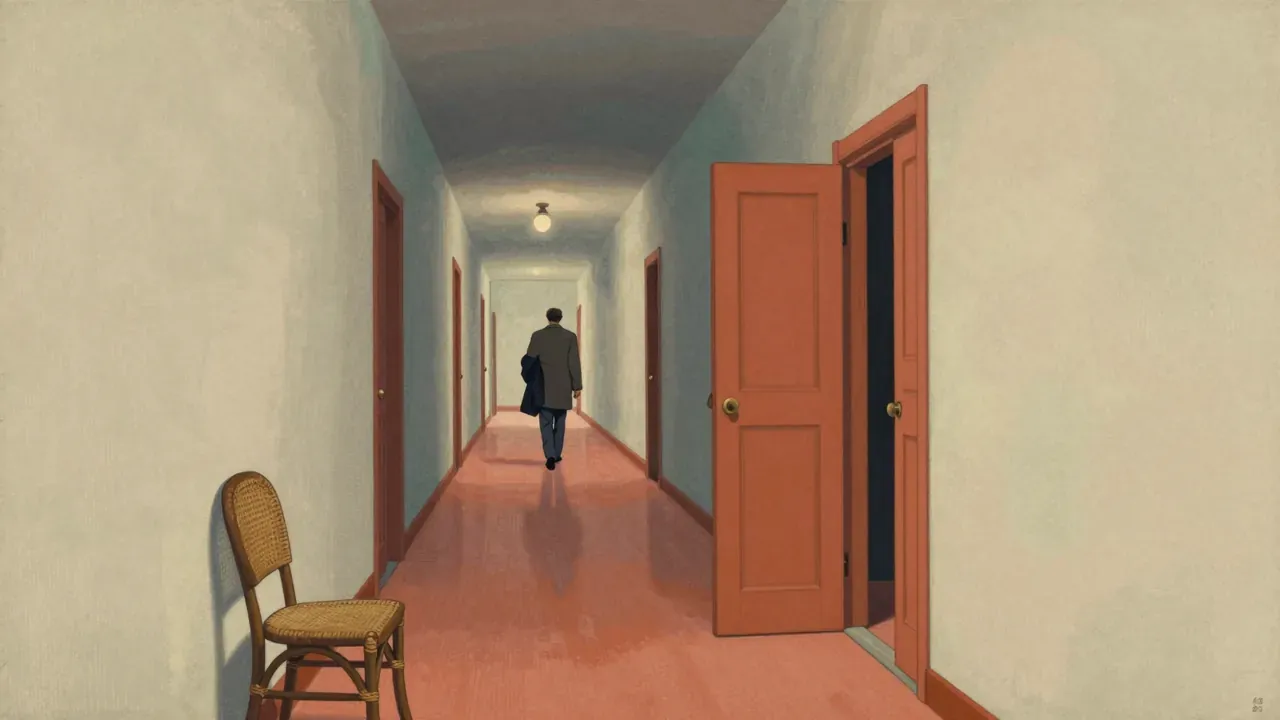
The shape of distance
The Fiancés is a quiet, observational romance film set in early-1960s Italy, centred on the emotional strain of physical separation between two young people bound by long-standing commitment. Ermanno Olmi does not aim for narrative momentum or dramatic escalation; instead, he seeks to register the texture of absence — how routine unravels when habit is interrupted, how love persists not through declaration but through the weight of unspoken expectation and delayed reply. The film treats distance as both geographical and psychological: Giovanni’s relocation from Milan to Sicily is less a plot device than a structural condition, one that exposes the quiet architecture of intimacy — letters, phone calls, rain-soaked bus stops, hotel corridors at night. Olmi avoids exposition or backstory, trusting the viewer to infer history from gesture, silence, and the rhythm of daily repetition. This is not a film about decision-making but about endurance; not about conflict but about the slow recalibration of feeling when the body is absent but the mind remains tethered.
The look of it
The story unfolds in sparse, deliberate episodes: Giovanni’s arrival in Sicily, his first day at the factory, his solitary walks, his exchanges with Liliana by post and telephone. There are no flashbacks, no voiceover, no symbolic objects — only Lamberto Caimi’s restrained black-and-white cinematography, which favours medium shots and shallow focus to keep attention on posture and hesitation rather than setting. Carlo Cabrini plays Giovanni with minimal inflection, his face often half-lit, his movements economical; Anna Canzi’s Liliana is heard more than seen, her presence registered through tone and timing in letters read aloud. Gianni Ferrio’s score is spare and tonal, never underlining emotion but hovering at its edge. Carla Colombo’s editing sustains a tempo that mirrors fatigue — pauses linger, scenes end before resolution, transitions are unmarked. The film refuses emphasis: no scene is privileged, no moment heightened. Even the factory sequence — potentially a site of social commentary — is shot without irony or critique, as if the work itself were neutral ground, neither oppressive nor redemptive.
The rhythm of waiting
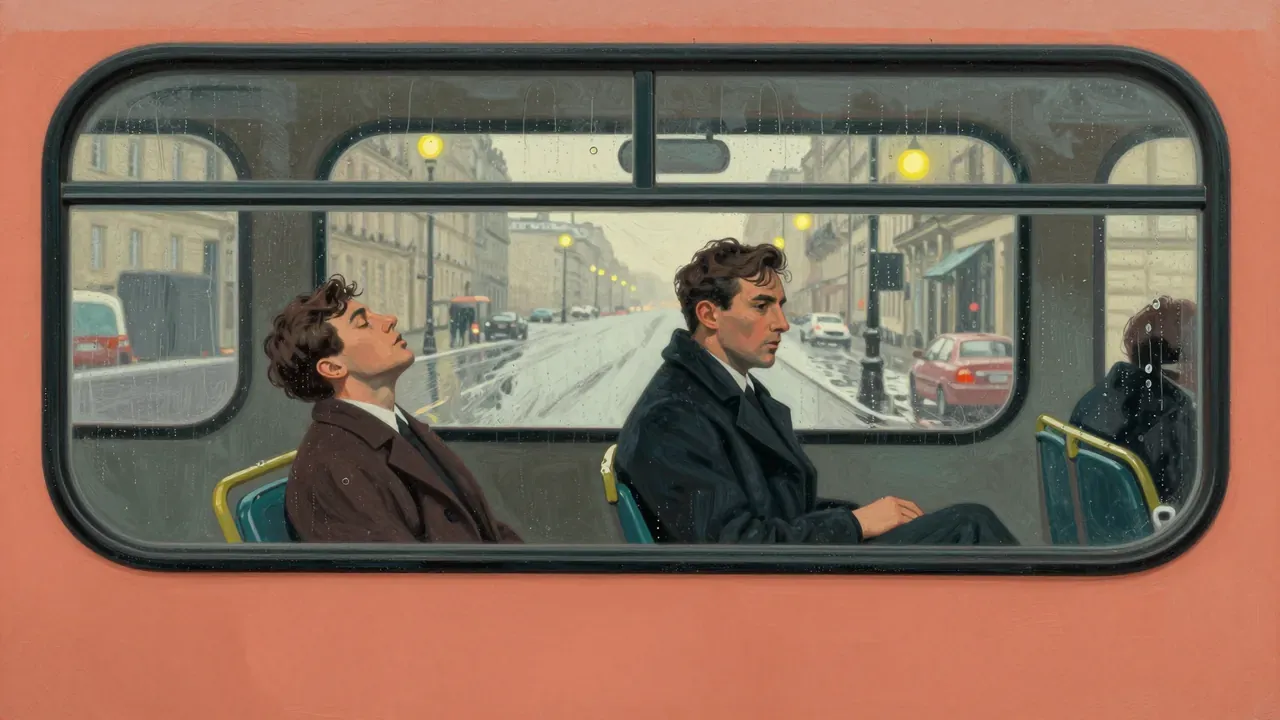
What lands is the accumulated weight of small things: the way Giovanni holds the phone before dialling, the pause before Liliana’s voice answers, the rain blurring the bus window as he waits. These are not flourishes but observations, rendered with such consistency that they begin to feel like shared memory rather than fiction. The film’s restraint becomes its authority — it does not ask the viewer to empathise so much as to inhabit the duration of waiting. The letters between Giovanni and Liliana gain resonance not from their content but from their cadence: each arrives after a delay, each is written in anticipation of another delay, each carries the residue of earlier silences. The sense of time passing is tactile — in the grain of the film stock, in the hum of the hotel lounge television, in the repeated framing of Giovanni walking alone at night. This is not mood as atmosphere but mood as structure: the film’s form enacts the very condition it describes. Its success lies in making absence palpable without recourse to melodrama or metaphor.
The weight of Sicily
What does not land is any sustained sense of place beyond its function as exile. Sicily remains indistinct — not as a cultural void, but as a deliberately flattened backdrop, stripped of local specificity or historical context. The factory, the hotel, the bus stop could belong to any provincial Italian town in the early 1960s; no dialect, no regional detail, no political texture anchors them. This is not negligence but choice — yet it leaves the film vulnerable to charges of abstraction without anchor. Similarly, the relationship between Giovanni and Liliana, though tenderly rendered, lacks friction beyond the initial resentment; their reconciliation feels less earned than assumed, arriving via letter rather than encounter. There is no third party, no competing claim, no material pressure — just distance, and the slow return of feeling. For viewers who require narrative consequence or social dimension, this may register as thinness rather than economy. The film offers no counterpoint to its own stillness, and that stillness, while coherent, risks monotony over its seventy-seven minutes.
The language of letters
The themes that matter are not those of grand social transition — though the film was made during Italy’s economic boom — but of intimacy as practice, not state. It treats love as maintenance: something sustained across gaps, revised through miscommunication, reconfirmed in delay. Loneliness here is not pathological but structural — built into the rhythms of industrial labour, urban migration, and postal systems. The film also explores time as uneven: eight months feels longer to Liliana than to Giovanni, not because of differing emotions but because of differing temporal economies — hers governed by expectation, his by routine. Ageing, memory, and class are present only as subtext: Giovanni’s elderly father lives nearby but unseen; the factory job is offered not as opportunity but as assignment. What matters most is the quiet assertion that fidelity is not constancy of feeling but continuity of attention — a distinction the film traces with patience and precision, never stating it outright but holding it in every frame where Giovanni looks away, then back, then away again.
Who watches it
This film is for viewers who value slowness as method, not symptom — those accustomed to the pacing of early Antonioni or late Bresson, or who find emotional truth in withheld gesture rather than spoken revelation. It suits readers of Natalia Ginzburg or viewers of Jean-Marie Straub’s early work: people who listen for what is unsaid and watch for what is barely done. It is not for those who rely on plot propulsion, character arcs, or clear moral stakes. Someone expecting social realism in the mode of De Sica or Rosi will find The Fiancés too reticent; someone seeking romantic catharsis will find its resolution too muted. A change in verdict would follow either a tighter integration of place — giving Sicily historical or sensory weight — or a deeper interrogation of the couple’s dynamic beyond mutual longing. As it stands, its audience is narrow but exact: those who believe that watching someone wait can be an act of profound attention.
The bus stop
Yes, it is worth your evening — provided you approach it as a study in duration, not diversion. Its seventy-seven minutes do not pass quickly, but they do accumulate meaning: by the final shot of Giovanni waiting for the bus in the rain, the viewer has absorbed the rhythm of his days, the texture of his solitude, the quiet persistence of his attachment. It demands nothing more than sustained attention, and repays it with a rare kind of emotional honesty — one that refuses to flatter, explain, or resolve. Those who dislike films that withhold explanation or resist closure will find it frustrating. But for anyone willing to sit with uncertainty, to trust the significance of a glance held a beat too long or a letter delayed by three days, the film offers a precise, unsentimental portrait of love as endurance. It is not entertainment, but it is not austerity either — it is simply, rigorously, about what remains when everything else is stripped away.