A companion, not a continuation
Fallen Angels is a 1995 Hong Kong drama film written and directed by Wong Kar-wai, conceived as a companion piece to Chungking Express but developed into its own feature after being excised from the earlier film’s structure. It attempts to render urban alienation not through plot or psychology but through sustained sensory pressure: nocturnal light, distorted wide-angle framing, fragmented voiceover, and a soundtrack that treats pop songs as environmental texture rather than emotional punctuation. The film does not seek to explain its characters’ motives but to hold them in suspension—between action and inertia, connection and withdrawal, memory and erasure. Its ambition is atmospheric rather than narrative: to make the viewer feel the weight of unspoken longing, the friction of proximity without intimacy, the exhaustion of perpetual motion in a city that never sleeps but rarely sees. It operates less as a story about people and more as a study of how space, time, and sound condition feeling in late-20th-century Hong Kong. The pre-Handover setting is present not as history but as mood—a city holding its breath. (158 words)
The look of it
The film works through parallel, loosely linked narratives: one following a hitman (Leon Lai) and his unseen agent (Michelle Reis), the other tracking a mute ex-convict (Takeshi Kaneshiro) and a woman (Charlie Yeung) cycling through grief and repetition. There is no conventional exposition; character is disclosed via gesture, habit, and off-kilter framing. Christopher Doyle’s cinematography uses extreme wide-angle lenses to warp faces and compress space, making interiors feel claustrophobic and streets disorientingly shallow. William Chang’s editing sustains this rhythm—jump cuts, black-and-white noise inserts, abrupt shifts between storylines—denying narrative rest. Performances are muted, internalised: Lai’s stillness reads as resignation, not stoicism; Kaneshiro’s silence is physical, not symbolic. Karen Mok’s ‘Blondie’ is all nervous surface, her instability conveyed through erratic movement and close-up distortion. Voiceover narration replaces dialogue as the primary carrier of interiority, often detached, ironic, or elliptical. The score—trip hop and mid-90s Cantopop—functions diegetically and non-diegetically, blurring the line between what the characters hear and what the film imposes. (159 words)
How it moves
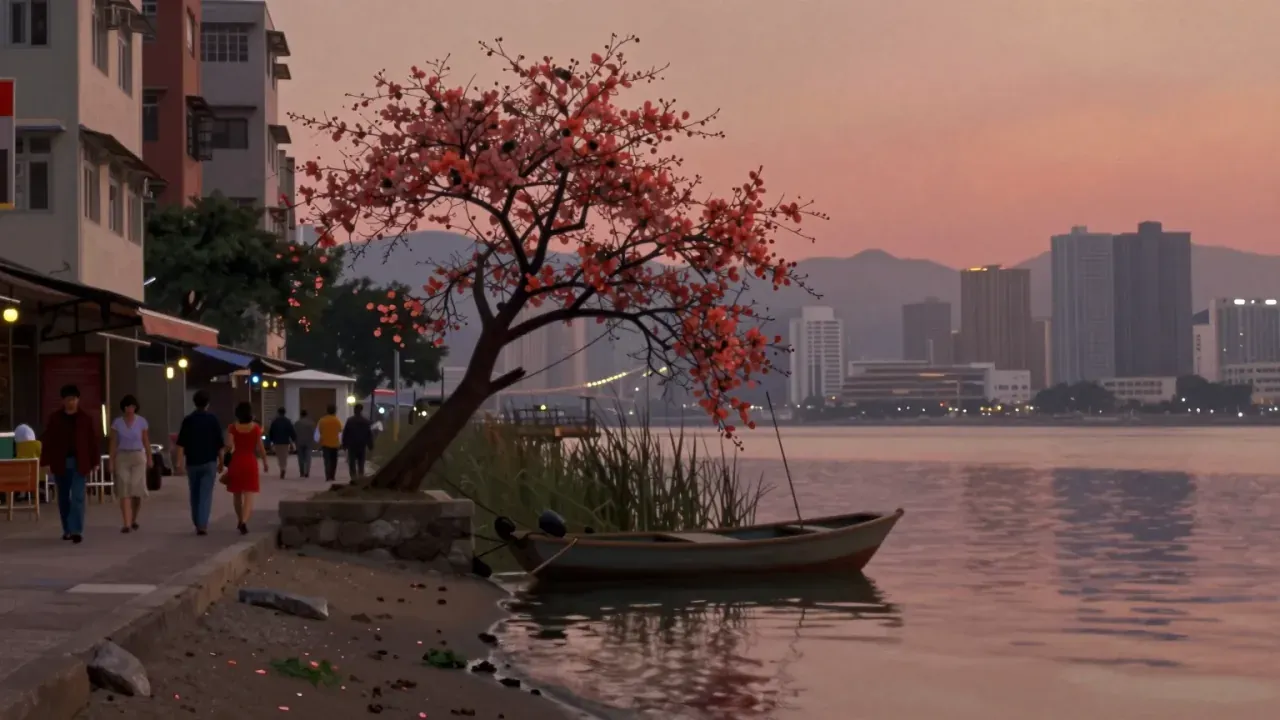
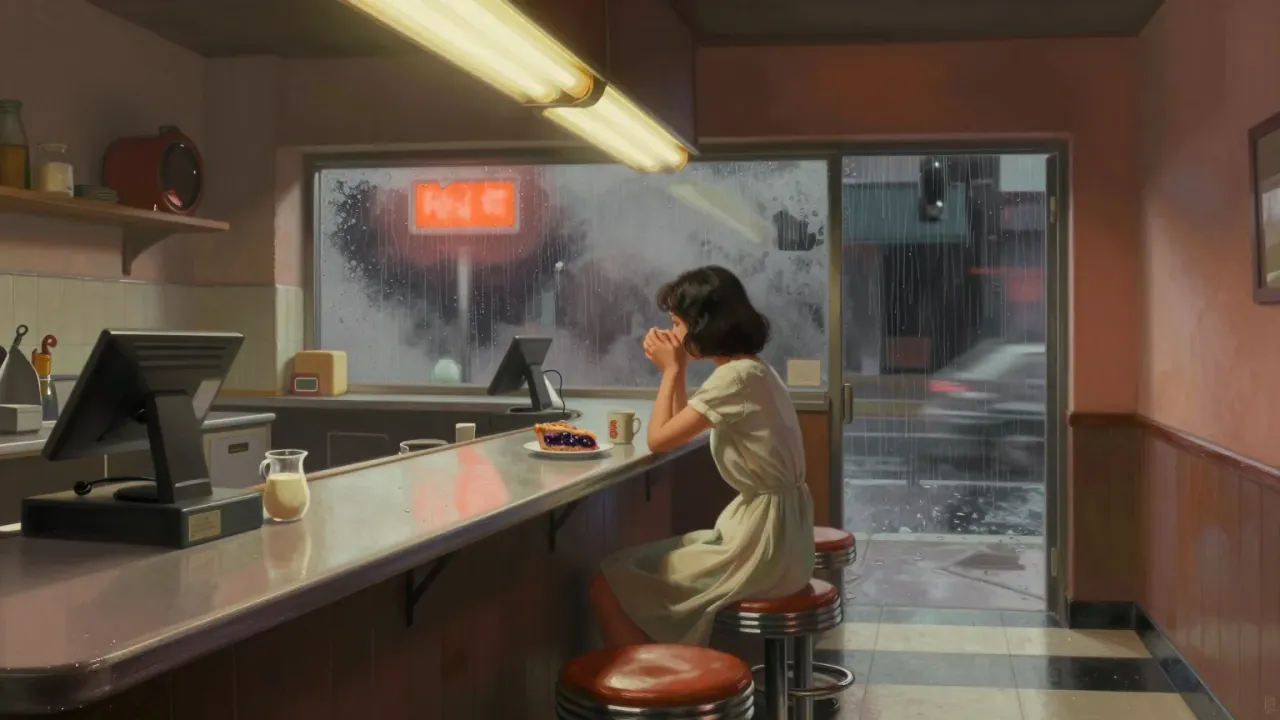
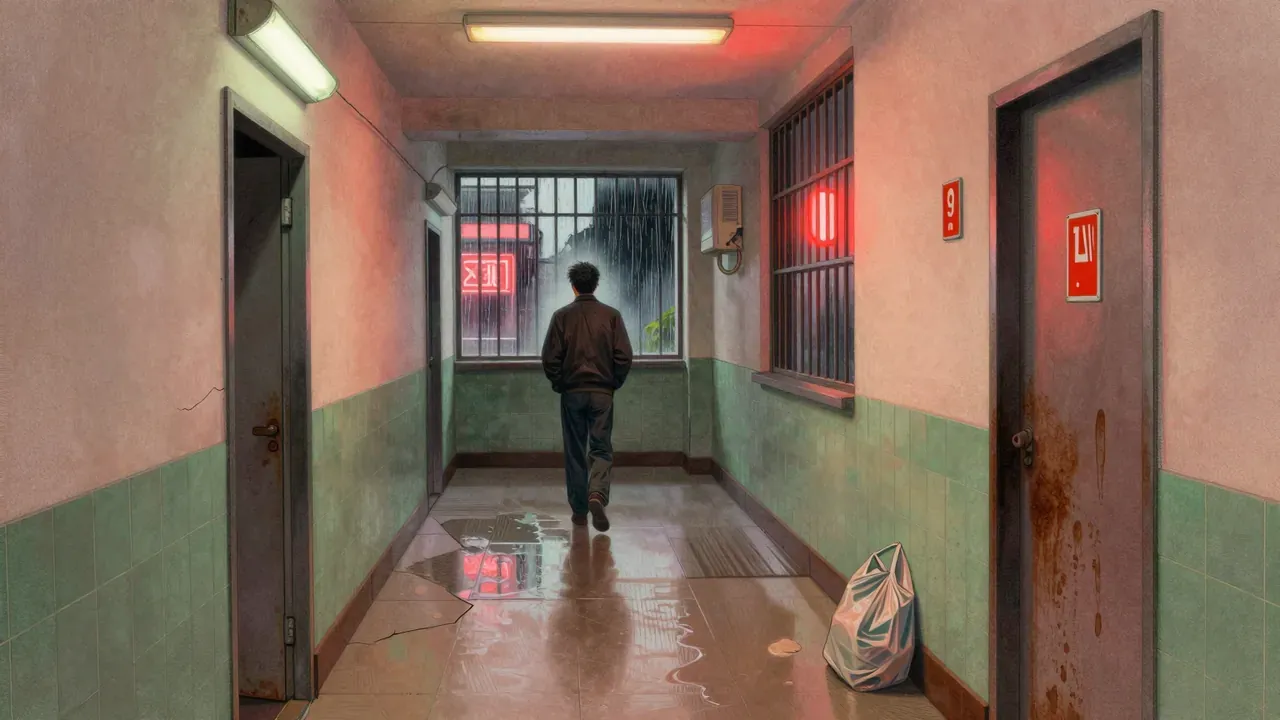
What lands is the film’s tactile consistency: the way neon bleeds across wet pavement, the grain of skin under fluorescent glare, the jolt of a sudden whip-pan into darkness. The hitman’s final decision to act—to choose death over complicity—lands not as catharsis but as quiet release, made credible by the accumulation of small refusals across the film. The partner’s breakdown in his apartment feels earned because her obsession has been rendered with clinical precision: her rituals of cleaning, her fantasies, her precise, unspoken grammar of longing. Similarly, Ho Chi-mo’s shift—from predatory intruder to tentative observer—gains weight through visual repetition: his repeated visits to Charlie, the gradual softening of his posture, the switch from stolen video footage to self-recorded memory. The motorbike ride at the end lands because it offers no resolution, only shared temperature—the warmth of another body in motion, brief and unrepeatable. These moments work because they avoid explanation; they trust the viewer to register meaning in duration, texture, and recurrence rather than revelation. The film’s power resides in its refusal to name what it shows. (157 words)
What ends
What does not land is the structural conceit of doubling itself: the two storylines remain stubbornly separate, their thematic parallels never cohering into dialogue. The hitman’s arc is tightly wound and fatalistic; Ho Chi-mo’s is looser, almost anecdotal—his father’s death, his new job, his video camera—none of which resonates with the same density as the central partnership. The film’s insistence on fragmentation begins to feel like avoidance rather than strategy when key relationships lack sufficient grounding: Charlie’s sob story repeats without variation, her function remaining opaque; Blondie’s attachment to the hitman lacks the obsessive logic that makes the partner’s devotion legible. Some stylistic choices—like the frequent use of out-of-focus violence—feel mannered rather than expressive, substituting visual chaos for emotional consequence. The voiceover occasionally slips into abstraction without anchoring, leaving lines hanging without resonance. And while the night-only shooting creates a unified palette, it also flattens tonal range: there is no contrast, no relief, no daylight against which the darkness can be measured. The film’s rigour becomes its limitation. (156 words)
What it says about the city
The themes that matter are free will as performance, loneliness as infrastructure, and memory as residue. The hitman’s attempt to quit is not a moral choice but an assertion of agency in a system designed to erase it—his final job is both surrender and victory. The partner’s surveillance of him—through blueprints, groceries, fantasy—is less about love than about constructing a self through another’s absence. Ho Chi-mo’s muteness is not metaphorical but logistical: he communicates through presence, theft, mimicry—until he begins filming, turning observation into record, then record into remembrance. The city itself functions as a third protagonist: Chungking Mansions is not backdrop but condition—dense, transient, indifferent. The film treats connection not as outcome but as flicker: the jukebox song, the motorbike ride, the shared glance before violence. Even grief is rendered as habit—the partner’s caution, Ho’s ritual filming—not as climax but as ongoing adjustment. These are not ideas argued but states inhabited: the film insists that alienation is not psychological failure but environmental fact, and that warmth, however fleeting, is still warmth. (155 words)
What connects
This film is for viewers who value atmosphere over exposition, who find emotional weight in duration and texture rather than revelation or resolution. It suits those accustomed to Wong Kar-wai’s syntax—voiceover, repetition, chromatic saturation—and who accept that narrative propulsion may be sacrificed for cumulative effect. It is not for viewers who require causal clarity, psychological motivation, or moral framing: the hitman’s ethics are never interrogated, Ho’s past remains unexplained, Blondie’s breakdown is presented without context. Those who expect genre fidelity—crime thriller, romance, or even neo-noir—will find the film withholding. Critics who found Chungking Express too mannered may find Fallen Angels more so: its narrower palette and tighter formal constraints amplify its artifice. A viewer who values narrative economy or character-driven stakes would likely reject its drift. But for those who read image and sound as equal carriers of meaning, who tolerate ambiguity as honesty, it remains compelling. Its difficulty is not obscurity—it is precision. (159 words)
What stays
Yes, it is worth your evening—if you approach it as a sensory immersion rather than a story to be solved. Its ninety-one minutes sustain a singular, unbroken mood: urgent yet exhausted, intimate yet distant, saturated yet drained. It rewards attention to detail—the way light catches on a rain-slicked window, the rhythm of footsteps in an empty corridor, the pause before a voiceover resumes—but does not demand interpretation. Those who dislike it tend to cite its emotional detachment or structural looseness; they are not wrong, but they mistake restraint for emptiness. A different verdict would follow if the film offered more narrative reciprocity between its halves, or if its visual language varied beyond night-time distortion—but that would contradict its purpose. This is not a film about answers. It is about staying with the question of how to exist, alone but adjacent, in a city that hums but never listens. That question remains urgent. (158 words)