filmbriefs
Topic

Addiction

Wanting without liking, and the industries that engineer for it.

39
in film
13:00
average
507 min
in total
95
across the network
Addiction across the network →
All briefs39
13:00

All the Beauty and the Bloodshed

Laura Poitras · 2022

Laura Poitras’s 2022 documentary follows photographer and activist Nan Goldin across five decades — from her early portraits of New York’s queer and AIDS-affected communities to her founding of P.A.I.N. and protests against the Sackler family’s role in the opioid crisis. Built almost entirely from Goldin’s own archive and recent footage of museum demonstrations, the film frames art-making and political action as inseparable practices of truth-telling.
13:00

Basquiat

Julian Schnabel · 1996

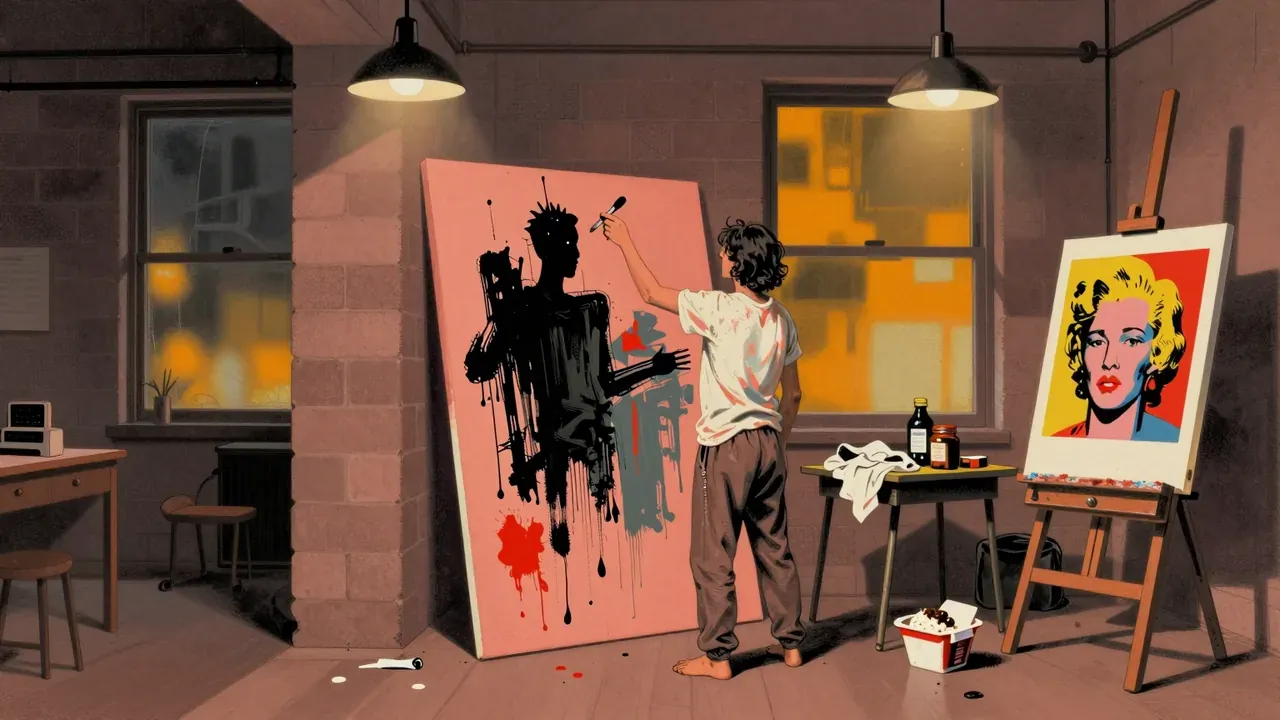
Julian Schnabel’s 1996 directorial debut is a biographical film about Jean-Michel Basquiat, starring Jeffrey Wright and David Bowie as Warhol. Made without access to Basquiat’s actual artwork, it relies on stylistic approximation and a self-reflexive script co-written by Schnabel and Lech Majewski. The film traces Basquiat’s rapid ascent and decline in 1980s New York, foregrounding his relationship with Warhol and his struggle with addiction. Its strength lies in texture and restraint; its limitation, in the narrowing of Basquiat’s voice, politics and heritage to fit Schnabel’s personal elegy.

13:00

Bay of Angels

Jacques Demy · 1963

Jacques Demy’s 1963 black-and-white drama follows a young bank clerk and a compulsive gambler through the casinos of Nice and Monte Carlo. Built around Jeanne Moreau’s tightly coiled performance and Michel Legrand’s percussive score, it studies addiction as rhythm, not pathology — where money is incidental, and the real stakes are time, attention, and the diminishing space between decisions.

13:00

Christiane F.

Uli Edel · 1981

Christiane F. (1981) is a West German drama adapted from a real teenager’s account of heroin addiction in 1970s West Berlin. Directed by Uli Edel and shot with non-professional actors on location, it charts Christiane’s descent from bored 13-year-old to dependent user over two years, using unflinching realism, restrained performances, and a grey, grounded visual style. It omits her full biography — beginning and ending abruptly — and makes no claim to diagnosis or resolution. David Bowie appears in concert footage and contributes to the soundtrack, but his role is atmospheric, not symbolic.

13:00

Corridors of Blood

Robert Day · 1958

Corridors of Blood (1958) is a British horror-drama starring Boris Karloff as Dr. Thomas Bolton, an 1840s surgeon whose pioneering work with anaesthetic gases leads to professional ruin, addiction, and entanglement with criminals. Directed by Robert Day and shot by Geoffrey Faithfull, it trades gothic excess for moral austerity, using tight framing, chiaroscuro lighting, and Karloff’s restrained performance to trace a downward spiral rooted in cause and effect. Though hampered by repetitive plotting and thin characterisation in places, it remains a coherent, atmospheric study of scientific vocation undone by human frailty.

13:00

Dead Ringers

David Cronenberg · 1988

David Cronenberg’s 1988 film follows identical twin gynecologists Elliot and Beverly Mantle as their shared professional and personal life fractures under drug dependency, ethical collapse, and blurred identity. Jeremy Irons plays both roles with uncanny precision, supported by Peter Suschitzky’s austere cinematography and Howard Shore’s unnerving score. Based loosely on the Marcus twins and adapted from Bari Wood’s novel, it is a tightly controlled psychological drama that prioritises behavioural realism over exposition, clinical space over emotional catharsis, and structural inevitability over narrative surprise.

13:00

Drugstore Cowboy

Gus Van Sant · 1989

Set in 1971 Portland, Drugstore Cowboy follows Bob Hughes and his crew as they rob pharmacies to sustain their heroin habits. When a death forces Bob to confront consequences, he attempts sobriety — only to circle back, not in despair, but with grim, ironic resolve. Gus Van Sant’s second feature avoids moralising, instead observing addiction as a structure of time, labour and loyalty. Shot by Robert Yeoman, scored by Elliot Goldenthal, and anchored by Matt Dillon’s restrained lead performance, it remains a benchmark of American indie realism.

13:00

Fear and Loathing in Las Vegas

Terry Gilliam · 1998

Terry Gilliam’s 1998 adaptation of Hunter S. Thompson’s Fear and Loathing in Las Vegas commits fully to the novel’s hallucinatory logic and period specificity. Starring Johnny Depp and Benicio del Toro as Raoul Duke and Dr. Gonzo, it charts their chemically accelerated descent through Las Vegas in 1971 — less a story than a sensory and moral autopsy of a fraying American dream. The film’s craft serves immersion over clarity, its themes revolve around eroded reality and institutional decay, and its value lies in fidelity, not comfort.

13:00

Gervaise

René Clément · 1956

René Clément’s 1956 Gervaise adapts Émile Zola’s L’Assommoir with forensic restraint, following Maria Schell’s laundress through a decade of incremental collapse in mid-nineteenth-century Paris. Shot by Robert Juillard and scored sparingly by Georges Auric, it locates tragedy not in grand gestures but in the weight of wet linen, the silence after a slammed door, the slow emptying of a shopfront. Its power lies in accumulation, not revelation.

13:00

High Art

Lisa Cholodenko · 1998

Lisa Cholodenko’s 1998 debut follows Syd, a young magazine editor drawn into the orbit of Lucy, a reclusive photographer whose fame and heroin dependency unsettle Syd’s orderly life. Shot by Tami Reiker and anchored by Ally Sheedy’s restrained performance, the film traces the blurring of professional and personal boundaries in New York’s art world—with precision, restraint, and no easy answers.

13:00

In Vanda's Room

Pedro Costa · 2000

Pedro Costa’s 2000 film In Vanda’s Room observes life in Lisbon’s Fontainhas shantytown over 170 minutes, using fixed digital shots to document Vanda Duarte and her community as their homes are demolished. Neither documentary nor fiction, it treats time, place and presence as primary materials — offering no exposition, no score, no narrative arc, only sustained attention to what remains when story is set aside.

13:00

Jo Jo Dancer, Your Life Is Calling

Richard Pryor · 1986

Richard Pryor’s 1986 directorial debut is a biographical drama structured around his near-fatal 1980 freebasing accident. As Jo Jo Dancer lies in a coma, his spirit revisits key episodes — Peoria childhood, early comedy struggles, fame, addiction, and collapse — without offering resolution or redemption. Shot with restrained naturalism by John A. Alonzo and scored sparsely by Herbie Hancock, the film prioritises behavioural realism over dramatic catharsis. Its strengths lie in accumulated detail and psychological consistency; its weaknesses include underdeveloped symbolism and muted engagement with race and systemic constraint. It is a demanding, unresolved, and unmistakably personal work.

13:00

Le Beau Serge

Claude Chabrol, Philippe de Broca, Claude de Givray · 1958

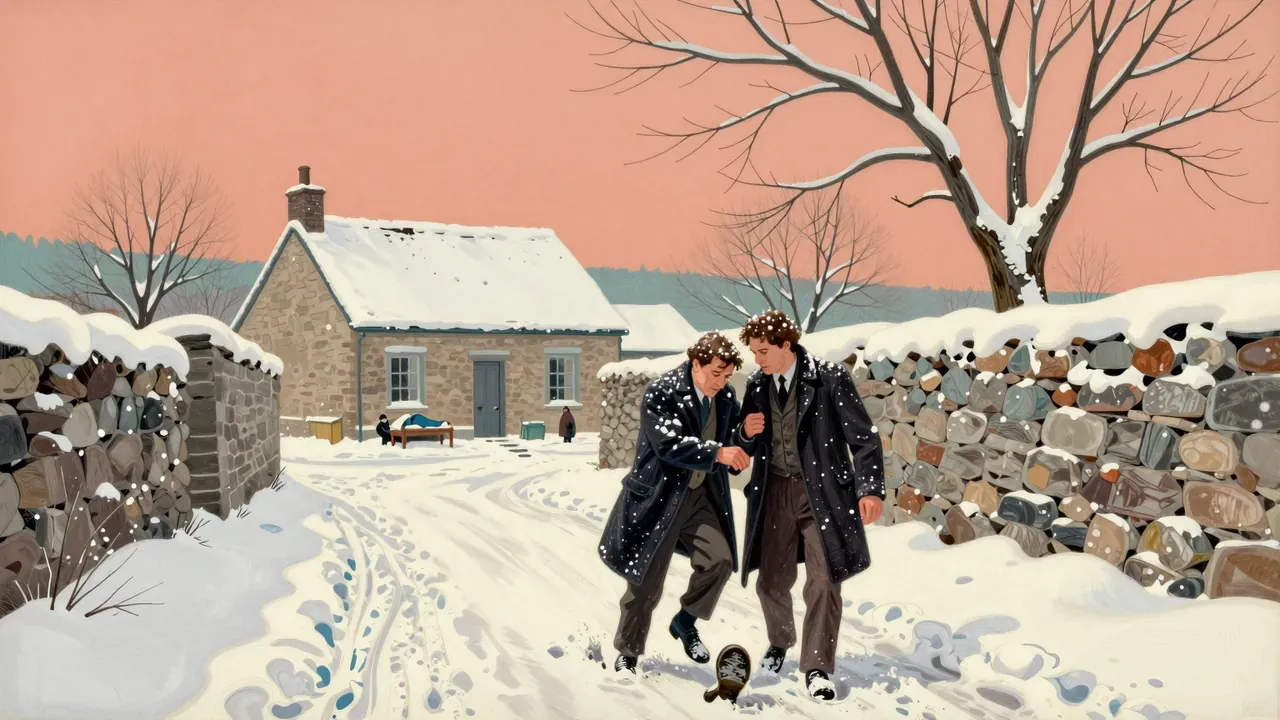
Claude Chabrol’s 1958 debut follows François, a Parisian recovering from illness, as he returns to his rural hometown and tries—and fails—to rescue his alcoholic childhood friend Serge. Shot in winter in Sardent with documentary restraint, the film observes provincial life without sentiment or judgment, building its moral weight through silence, duration, and understated performances. It is less a story of redemption than of endurance, where care and harm blur, and salvation looks like dragging someone home through snow.

13:00

Merrily We Go to Hell

Dorothy Arzner · 1932

Dorothy Arzner’s 1932 Paramount drama follows a Chicago reporter’s descent into alcoholism and infidelity, and his wife’s measured, devastating response. Fredric March and Sylvia Sidney anchor a tightly paced narrative where every glance and pause carries weight, and the title’s irony is sustained to the final frame.

13:00

Naked Lunch

David Cronenberg · 1991

David Cronenberg’s 1991 film Naked Lunch reimagines William S. Burroughs’s 1959 novel not as narrative but as psychological architecture. Starring Peter Weller as writer William Lee, it traces a descent into hallucination following the accidental death of his wife—a descent rendered through literalised surrealism, tactile special effects, and Howard Shore’s layered score. Shot in Toronto with deliberate visual austerity, the film treats addiction, authorship, and language as interlocking systems of compulsion and control. Though commercially unsuccessful and structurally demanding, it endures as a rigorous, self-contained exploration of how trauma reshapes perception—and how perception, in turn, writes itself into being.
13:00

Nightmare Alley

Edmund Goulding · 1947

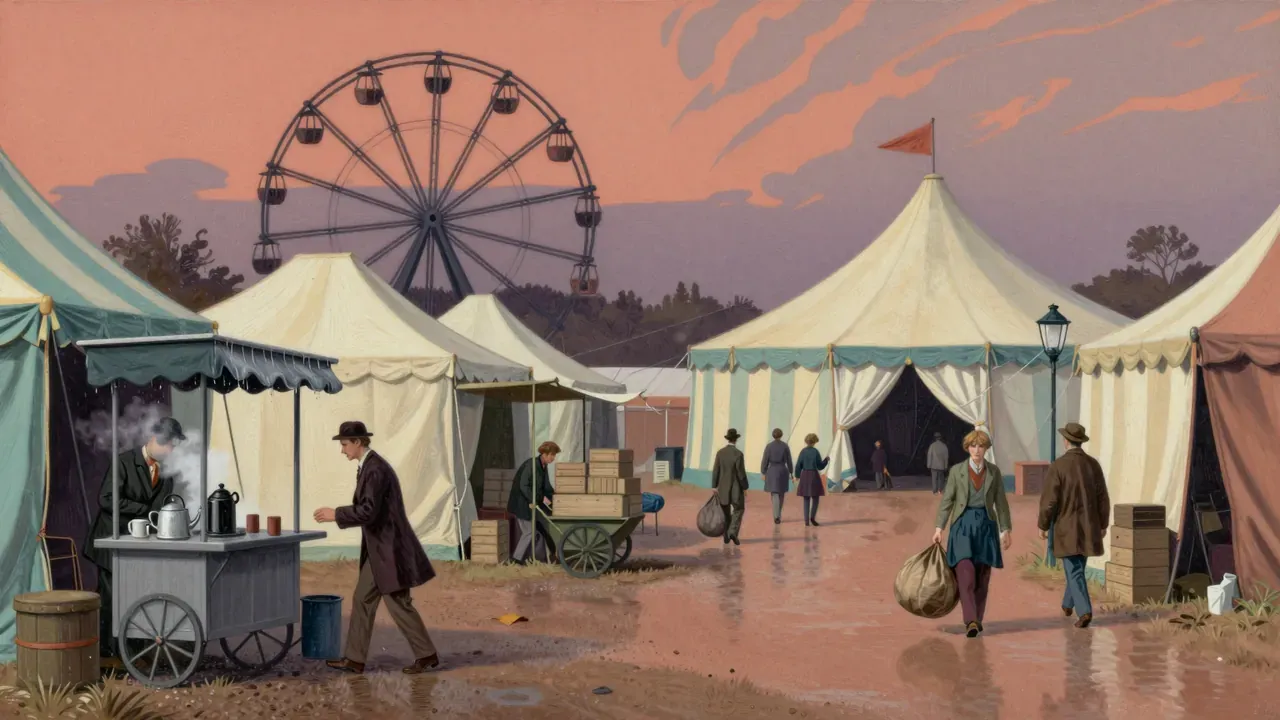
Nightmare Alley (1947) follows carnival barker Stanton Carlisle as he masters deception, rises in Chicago society, and implodes under the weight of his own fabrications. Directed by Edmund Goulding from Jules Furthman’s adaptation of William Lindsay Gresham’s novel, it stars Tyrone Power in a career-defining turn away from romantic leads. Shot by Lee Garmes and edited by Barbara McLean, the film balances studio polish with unflinching thematic rigour — though its softened ending and underdeveloped urban milieu dilute its fatalism. It remains a landmark of psychological crime cinema, less for its shocks than for its sustained, unsentimental scrutiny of self-deception.

13:00

Round Midnight

Bertrand Tavernier · 1986

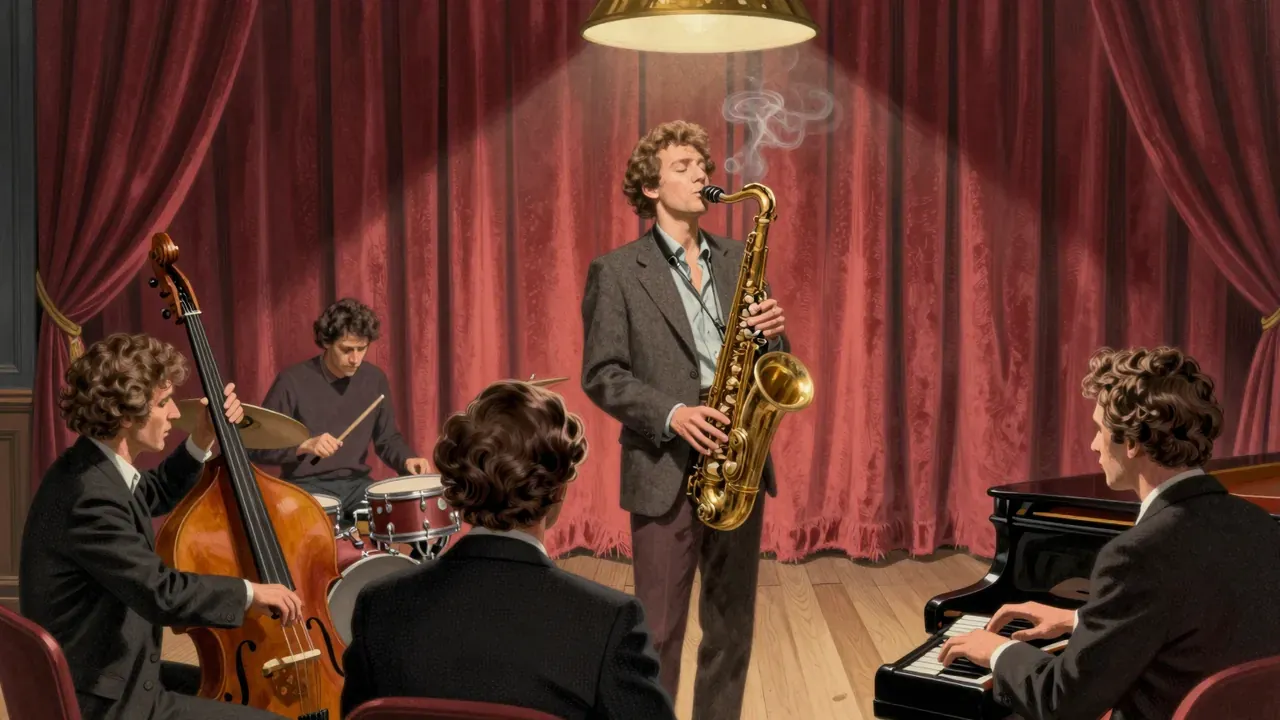
Bertrand Tavernier’s 1986 film follows American saxophonist Dale Turner (Dexter Gordon) as he seeks refuge from addiction in 1950s Paris, aided by a devoted French graphic designer (François Cluzet). Built around live jazz performances and anchored by Gordon’s restrained, deeply embodied performance, the film avoids biopic clichés to explore endurance, care, and the untranslatable language of music. Shot in Paris and New York, with a score by Herbie Hancock, it won the Academy Award for Best Original Score and was named one of the year’s top ten films by the National Board of Review.

13:00

Salaam Bombay!

Mira Nair · 1988

Mira Nair’s 1988 debut follows Krishna, a runaway boy who lands in Bombay’s Falkland Road slums and red-light district. Played by non-professional street children, the film renders their daily survival—tea-stall work, drug-running, petty theft—with documentary rigour and fictional discipline. Shot on location, edited for duration over pace, and scored sparingly by L. Subramaniam, it refuses uplift or explanation. Its power lies in accumulation, not climax; its ethics in restraint, not advocacy.

13:00

Sid and Nancy

Alex Cox · 1986

A 1986 British biographical drama directed by Alex Cox, Sid and Nancy traces the final years of Sex Pistols bassist Sid Vicious and his girlfriend Nancy Spungen. Starring Gary Oldman and Chloe Webb, it depicts their descent into heroin addiction across London and New York, filmed by Roger Deakins in a tightly framed, high-contrast style. Though critically praised and now cult-acclaimed, it failed to recoup its $4 million budget. The film avoids myth-making, opting instead for visceral, unvarnished observation of mutual erosion — with no redemption, explanation, or narrative distance.

13:00

Sound of Metal

Darius Marder · 2019

Sound of Metal follows a metal drummer who loses his hearing and enters a deaf-run recovery community. Rejecting cure narratives, it charts his slow adaptation to silence, language, and stillness — not as loss, but as reorientation. Riz Ahmed’s performance and Nicolas Becker’s sound design anchor a film built on restraint, repetition, and tactile detail.

13:00

Streetwise

Martin Bell · 1984

A 1984 documentary by Martin Bell, shot by Mary Ellen Mark, following homeless teenagers in Seattle over one autumn. It observes without commentary, centres Erin Blackwell (‘Tiny’) and eight peers, and avoids exposition, score, or narration. Funded by Willie Nelson, nominated for an Oscar, it endures for its restraint and intimacy — not as advocacy, but as sustained, ethically complex witness.

13:00

The Fire Within

Louis Malle · 1963

Louis Malle’s 1963 drama follows a recovering alcoholic over his final day in Paris, as he revisits old friends and tests whether any connection might hold him to life. With Maurice Ronet in a performance of profound stillness, and Ghislain Cloquet’s muted cinematography, the film registers despair not as explosion but as slow attrition — a portrait of desire’s disappearance.

13:00

The Man Who Fell to Earth

Nicolas Roeg · 1976

Nicolas Roeg’s 1976 adaptation of Walter Tevis’s novel follows Thomas Jerome Newton (David Bowie), an alien who lands in New Mexico to secure water for his drought-ravaged planet. Using advanced knowledge, he amasses wealth and builds a rocket — but becomes entangled in human relationships, addiction, and surveillance. Shot by Anthony B. Richmond in New Mexico, with a fragmented, atmospheric score by John Phillips, the film treats estrangement as perceptual, not biological. Its power lies in cumulative mood, not plot mechanics.

13:00

The Rose

Mark Rydell · 1979

The Rose (1979), directed by Mark Rydell, stars Bette Midler as Mary Rose Foster, a self-destructive rock diva loosely inspired by Janis Joplin. Shot by Vilmos Zsigmond and scored by Paul A. Rothchild, it traces her final months amid touring, addiction, and a fraught relationship with her manager and a soldier-lover. The film avoids biographical literalism in favour of emotional precision, anchoring its drama in Midler’s live performances and the tactile realism of its late-1960s milieu. Nominated for four Academy Awards, it remains a singular entry in the musical-drama canon — unsentimental, unrelenting, and deeply embodied.

13:00

Tie Me Up! Tie Me Down!

Pedro Almodóvar · 1989

Pedro Almodóvar’s 1989 film follows a recently released psychiatric patient who kidnaps an actress to force a marriage, treating the premise as a stylised romantic fairy tale rather than psychological realism. Shot in saturated colour by José Luis Alcaine Escaño, scored by Ennio Morricone, and anchored by Victoria Abril and Antonio Banderas, it sustains a precise, unsettling tone — neither endorsing nor condemning its central act, but exploring love as effort, repetition, and recalibration.

13:00

Traffic

Steven Soderbergh · 2000

Steven Soderbergh’s 2000 crime drama Traffic traces the US drug trade across four interwoven storylines — political, enforcement, consumer, and supplier — using distinct colour grading, multilingual dialogue (including unsubtitled English and fully subtitled Spanish), and a procedural rhythm. Written by Stephen Gaghan and shot by Soderbergh under a pseudonym, it won four Academy Awards including Best Director and Best Supporting Actor for Benicio del Toro. Its ambition lies in structural coherence, not emotional resolution.

13:00

Trainspotting

Danny Boyle · 1996

Danny Boyle’s 1996 adaptation of Irvine Welsh’s novel follows Mark Renton and his friends through heroin use, betrayal and brief escapes in economically depressed Edinburgh. Written by John Hodge and shot by Brian Tufano, it uses rapid editing, saturated colour and Scottish vernacular to forge a visceral, morally unmoored portrait of youth under pressure. Though its ending strains against its own logic, its formal rigour and performative precision hold up — not as nostalgia, but as a sustained act of stylistic honesty.

13:00

Uncut Gems

Benny Safdie, Josh Safdie · 2019

A 2019 crime thriller set in New York’s Diamond District, Uncut Gems follows Howard Ratner, a jeweller and compulsive gambler, over a few chaotic days in 2012. When a rare Ethiopian opal arrives at his store, he leverages it across multiple high-stakes bets while evading loan sharks and managing fractured personal relationships. Directed by Benny and Josh Safdie, the film uses aggressive editing, claustrophobic cinematography, and a pulsing electronic score to simulate the physiology of addiction. Adam Sandler delivers a career-defining performance as a man whose intelligence and energy are indistinguishable from his self-destruction.

13:00

Under the Volcano

John Huston, Danny Huston · 1984

John Huston’s 1984 adaptation of Malcolm Lowry’s novel follows one Day of the Dead in 1938, as British consul Geoffrey Firmin — played by Albert Finney — unravels across the streets and cantinas of Quauhnahuac. Shot in sequence with Gabriel Figueroa’s restrained cinematography and Alex North’s brooding score, it commits fully to the novel’s psychological density and temporal claustrophobia. The film’s strength lies in its unflinching portrayal of addiction as embodied decay, not moral failure.

13:00

Valley of the Dolls

Mark Robson · 1967

Valley of the Dolls (1967), directed by Mark Robson, adapts Jacqueline Susann’s novel into a glossy, emotionally heightened drama about three women whose careers in entertainment unravel amid barbiturate dependency. Starring Barbara Parkins, Patty Duke, and Sharon Tate, with Susan Hayward as the formidable Helen Lawson, it uses tight close-ups, emphatic scoring, and location shooting to anchor its melodrama in a specific cultural moment — the twilight of the studio system. Though critically divided and formally uneven, it endures as a revealing artefact of how mid-century Hollywood represented female ambition, exhaustion, and systemic collapse.

13:00

Veronika Voss

Rainer Werner Fassbinder · 1982

Rainer Werner Fassbinder’s 1982 black-and-white drama follows Veronika Voss, a faded UFA film star in 1955 Munich, as she unravels under morphine addiction and the control of a corrupt neurologist. Loosely based on actress Sybille Schmitz, the film uses stark monochrome cinematography, sparse scoring, and Rosel Zech’s tightly controlled performance to dissect how institutions discard compromised women while preserving their image. It is the final film released in Fassbinder’s lifetime and the last of his BRD Trilogy.

13:00

Withnail and I

Bruce Robinson · 1987

Withnail and I (1987) is a British black comedy written and directed by Bruce Robinson, following two unemployed actors — Withnail (Richard E. Grant) and Marwood (Paul McGann) — as they spend a disastrous weekend in a remote Lake District cottage owned by Withnail’s eccentric uncle Monty (Richard Griffiths). Shot on location in Cumbria and Hertfordshire, it uses precise dialogue, naturalistic cinematography and period-accurate music to chart a mood of late-1960s drift, addiction and fragile male friendship. Though now regarded as a cult classic, it resists easy classification: it is neither farce nor tragedy, but a tightly observed, linguistically rich study of stasis.

13:00

Bad Lieutenant

Abel Ferrara · 1992

Abel Ferrara’s 1992 Bad Lieutenant follows a New York police officer over a single day of spiralling addiction, abuse of power, and spiritual erosion. With Harvey Keitel in a physically uncompromising performance, the film rejects redemption arcs and procedural logic in favour of sustained, unsparing immersion in ethical collapse. Shot on gritty 16mm by Ken Kelsch and scored sparsely by Joe Delia, it treats Catholic iconography and police authority as hollowed-out symbols. Not a thriller, but a forensic study of vacancy wearing a badge.

13:00

Drunken Angel

Akira Kurosawa · 1948

Drunken Angel (1948), Akira Kurosawa’s first major work, follows an alcoholic doctor and a tubercular yakuza enforcer locked in a tense, unsentimental relationship amid the black-market ruins of postwar Osaka. Shot in stark black-and-white by Takeo Itō, scored with ironic waltzes by Fumio Hayasaka, and anchored by Takashi Shimura and Toshirō Mifune’s tightly coiled performances, the film locates moral urgency not in grand gestures but in recurring details — a sump, a cough, a trembling hand. It is a foundational work of Japanese cinema: unsparing, unadorned, and deeply concerned with what happens when systems fail and only broken people remain to tend the wounds.

13:00

Nikita

Luc Besson · 1990

A convicted junkie is erased from official record and retrained as a government assassin. Under the supervision of a shadowy agency, she masters weapons, languages and deception — then begins a fragile relationship with a man who knows nothing of her past. When duty and desire collide, she must choose between two irreconcilable lives. Luc Besson’s 1990 French thriller is a study in control, performance and the cost of competence.

13:00

The Phantom Carriage

Victor Sjöström · 1921

Victor Sjöström’s 1921 adaptation of Selma Lagerlöf’s Körkarlen follows a dying drunkard forced by Death’s carriage to confront the damage he has wrought — on his wife, children, friends, and community. Shot by Julius Jaenzon with pioneering double exposures, it uses silence, shadow, and nested flashbacks to build a moral architecture where consequence is spatial, time is debt, and reform is earned in real time. Not horror in the genre sense, but in its unflinching gaze.

13:00

Postcards from the Edge

Mike Nichols · 1990

Postcards from the Edge (1990), directed by Mike Nichols and adapted by Carrie Fisher from her semi-autobiographical novel, follows actress Suzanne Vale’s return to work after a drug overdose, contingent on living with her formidable mother Doris. Anchored by Meryl Streep and Shirley MacLaine, it uses Hollywood’s machinery — insurance riders, on-set critiques, studio politics — as the frame for a sharp, unsentimental study of intergenerational inheritance, performance as survival, and the quiet labour of staying sober without mythologising it.

13:00

Requiem for a Dream

Darren Aronofsky · 2000

Requiem for a Dream (2000), directed by Darren Aronofsky and adapted from Hubert Selby Jr.’s novel, traces four Brooklyn lives unravelling under addiction — to drugs, television, validation, and fantasy. Shot by Matthew Libatique and edited by Jay Rabinowitz with over 2,000 cuts, its visual and rhythmic intensity mirrors psychological disintegration. Ellen Burstyn, Jared Leto, Jennifer Connelly, and Marlon Wayans perform with physical and emotional extremity. Clint Mansell’s score reinforces the film’s oppressive momentum. Though lauded for its craft and emotional force, its schematic structure limits sociological depth. It remains a landmark of arthouse intensity — demanding, unrelenting, and formally singular.

13:00

Tender Mercies

Bruce Beresford · 1983

Tender Mercies (1983), directed by Bruce Beresford and written by Horton Foote, follows Mac Sledge — a washed-up country singer recovering from alcoholism — as he rebuilds a life with a young widow and her son in rural Texas. Robert Duvall’s Oscar-winning performance anchors a film defined by restraint: sparse dialogue, unvarnished performances, and a documentary-like gaze. It avoids melodrama, instead locating meaning in small, repeated acts of care — mowing the lawn, singing quietly, sharing meals. Shot on location in Waxahachie, Texas, with Russell Boyd’s naturalistic cinematography and George Dreyfus’s understated score, it is a study in endurance, presence, and the quiet persistence of mercy.