filmbriefs
Studio

Paramount Pictures

60
briefs
13:00
average
780 min
in total
On film.briefs60
13:00

Ace in the Hole

Billy Wilder · 1951

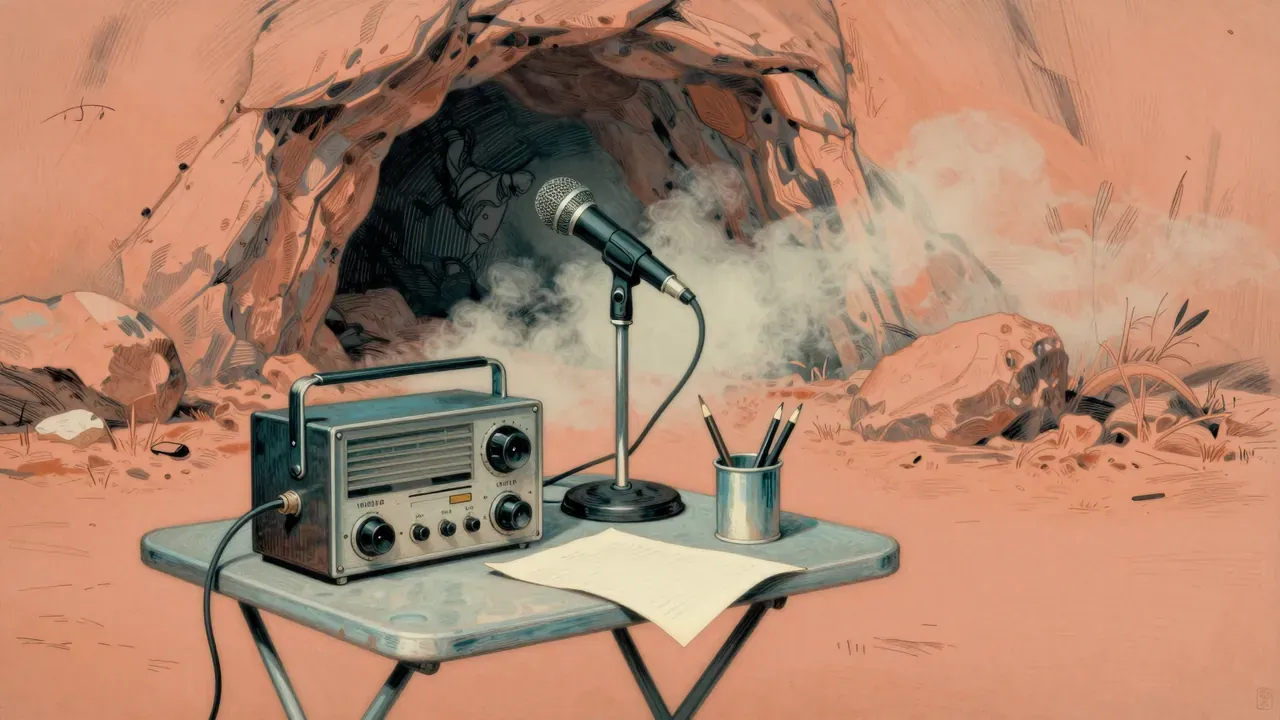
Billy Wilder’s 1951 drama follows a disgraced reporter who manipulates a cave rescue into a week-long media circus in rural New Mexico. With Kirk Douglas as the ruthlessly pragmatic Chuck Tatum, the film charts the incremental erosion of ethics across journalism, law enforcement, and community—treating truth as a negotiable resource rather than a principle. Shot by Charles Lang and edited by Arthur P. Schmidt, it remains stark, unsentimental, and structurally rigorous.
13:00

Blonde Venus

Josef von Sternberg · 1932

Blonde Venus (1932), directed by Josef von Sternberg and starring Marlene Dietrich, follows a chemist’s wife who returns to the cabaret stage to fund her husband’s life-saving treatment, then descends into flight, poverty, and arrest before a fragile reconciliation. Its power lies not in plot but in Dietrich’s commanding presence, Bert Glennon’s high-contrast cinematography, and a formal insistence on dignity amid degradation — all within the constrained moral universe of pre-Code Hollywood.

13:00

Days of Heaven

Terrence Malick · 1978

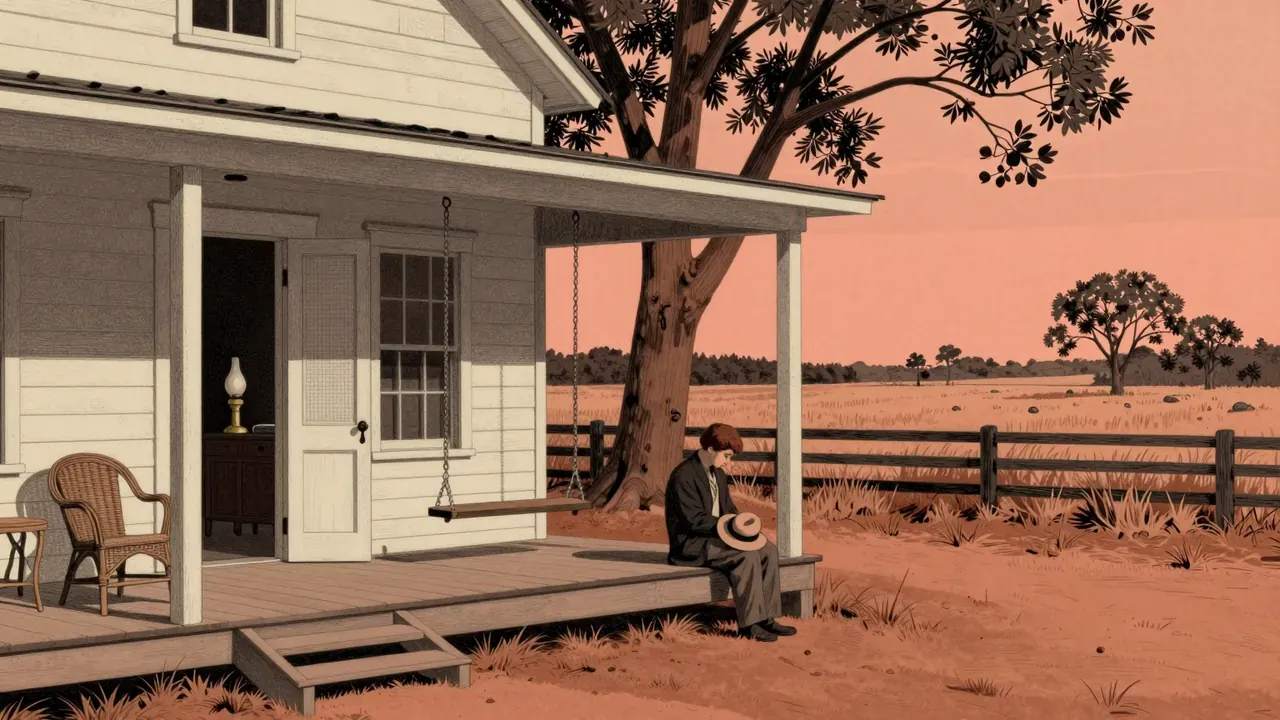
Terrence Malick’s 1978 period drama follows migrant workers in 1916 Texas who entangle themselves in deception and desire on a wealthy farmer’s estate. Shot almost entirely in magic hour by Néstor Almendros, it prioritises image and atmosphere over narrative exposition. Linda Manz’s improvised narration anchors its elliptical structure. Though commercially modest, it won the Academy Award for Best Cinematography and has since been canonised for its painterly realism and meditative pacing.

13:00

Design for Living

Ernst Lubitsch, Ben Hecht · 1933

Ernst Lubitsch and Ben Hecht’s 1933 romantic comedy adapts Noël Coward’s play into a buoyant, Depression-era farce about a woman living with two men who love her. Starring Fredric March, Gary Cooper and Miriam Hopkins, it trades Coward’s epigrams for physical charm and situational humour, using swift editing, uncluttered cinematography and effortless performances to sustain its risqué premise without scandal. Though structurally loose and verbally thin, it remains a rare, coherent vision of non-monogamy as joyful improvisation — not transgression.

13:00

Dishonored

Josef von Sternberg · 1931

A 1931 Paramount drama directed by Josef von Sternberg, starring Marlene Dietrich as Marie Kolverer, a Viennese pianist turned secret agent whose loyalty, love, and eventual execution unfold with stark visual discipline and minimal exposition. Lee Garmes’ cinematography and Travis Banton’s costumes anchor a film less concerned with espionage mechanics than with dignity in extremis.

13:00

Double Indemnity

Billy Wilder · 1944

A 1944 crime film directed by Billy Wilder, adapted from James M. Cain’s novella by Wilder and Raymond Chandler. Insurance salesman Walter Neff conspires with Phyllis Dietrichson to kill her husband and collect a double indemnity payout, only to find himself trapped by his own logic and the scrutiny of claims manager Barton Keyes. Shot in stark black-and-white by John F. Seitz, with a taut script and restrained performances, it established core conventions of film noir while refusing easy moral binaries or emotional release.
13:00

Harold and Maude

Hal Ashby · 1971

Hal Ashby’s 1971 film follows Harold Chasen, a young man obsessed with staging his own death, and Maude, a 79-year-old woman who lives with irreverent joy in a railroad car. Their relationship unfolds across San Francisco locations — cemeteries, ruins, hospitals, and highways — to a soundtrack by Cat Stevens. Written by Colin Higgins, it balances black comedy, romance, and existential reflection without resolving its central tension. Initially unsuccessful, it gained cult status and was preserved in the National Film Registry in 1997.

13:00

Hud

Martin Ritt · 1963

Hud (1963), directed by Martin Ritt and starring Paul Newman, is a stark, black-and-white drama set on a Texas ranch during a foot-and-mouth outbreak. It follows the corrosive rivalry between cynical son Hud and principled father Homer, with grandson Lonnie caught between them. James Wong Howe’s austere cinematography and Elmer Bernstein’s sparse score serve a screenplay that treats amorality as fact, not flaw. It won three Academy Awards and endures for its unblinking restraint.

13:00

I Married a Witch

René Clair · 1942

René Clair’s 1942 I Married a Witch is a tightly wound romantic fantasy starring Veronica Lake as a resurrected witch who disrupts the engagement of politician Wallace Wooley (Fredric March). Adapted from Thorne Smith’s unfinished novel, it uses magic not for wonder but as a scalpel to dissect marriage, politics, and gender. Ted Tetzlaff’s cinematography, Roy Webb’s score, and Clair’s economical staging sustain a tone of wry, unhurried absurdity — one that rewards attention to rhythm and restraint over plot or sentiment.

13:00

Island of Lost Souls

Erle C. Kenton · 1932

Island of Lost Souls (1932), directed by Erle C. Kenton and starring Charles Laughton as the tyrannical Dr. Moreau, adapts H. G. Wells’ novel into a stark, atmospheric horror about vivisection, control, and the instability of the human form. Shot by Karl Struss and written by Philip Wylie and Waldemar Young, it sustains dread through Laughton’s chillingly rational performance, the beast-men’s halting recitation of ‘The Law’, and a rigorous 70-minute structure. Though some elements feel dated or underdeveloped, its central inquiry—into power as pedagogy, language as coercion, and civilisation as performance—remains unnervingly precise.

13:00

Make Way for Tomorrow

Leo McCarey · 1937

Make Way for Tomorrow (1937), directed by Leo McCarey, follows Barkley and Lucy Cooper, an elderly couple forced to separate after losing their home. With no room for both in any of their children’s houses, they spend their final days together wandering the city before boarding trains to different states. Shot in restrained, unadorned style, it avoids sentimentality while building unbearable emotional pressure through quiet observation and unwavering performances.

13:00

Marius

Alexander Korda · 1931

Marius (1931), directed by Alexander Korda from Marcel Pagnol’s play, is the first film of the Marseille Trilogy. Set in a waterfront bar in pre-war Marseille, it traces Marius’s conflict between love for Fanny and longing for the sea. With restrained performances, naturalistic lighting by Theodore J. Pahle, and dialogue rooted in subtext, it prioritises emotional authenticity over plot mechanics. Though structurally dependent on coincidence, its power lies in specificity: gesture, silence, and the quiet gravity of ordinary choice.

13:00

Merrily We Go to Hell

Dorothy Arzner · 1932

Dorothy Arzner’s 1932 Paramount drama follows a Chicago reporter’s descent into alcoholism and infidelity, and his wife’s measured, devastating response. Fredric March and Sylvia Sidney anchor a tightly paced narrative where every glance and pause carries weight, and the title’s irony is sustained to the final frame.

13:00

Midnight

Mitchell Leisen · 1939

Midnight (1939), directed by Mitchell Leisen and written by Charles Brackett and Billy Wilder, follows American showgirl Eve Peabody as she impersonates a baroness in Paris to escape poverty — only to become entangled in a wealthy couple’s marital crisis. Anchored by Claudette Colbert’s precise physical comedy and Charles Lang’s softly lit cinematography, the film balances screwball energy with studio-era sophistication. Though its final act retreats from its sharpest ideas into convention, its craftsmanship, timing, and thematic clarity make it a durable, pleasurable artefact of Golden Age Hollywood.

13:00

Ministry of Fear

Fritz Lang · 1944

Fritz Lang’s 1944 Ministry of Fear adapts Graham Greene’s novel into a tightly paced spy thriller set in Blitz-era London. Ray Milland plays Stephen Neale, a man recently released from a mental asylum who stumbles into a Nazi espionage ring masquerading as a charitable organisation. The film prioritises procedural suspense and period texture over the novel’s deep psychological guilt, delivering a lean, atmospheric, studio-era noir anchored in tangible wartime detail.

13:00

Monte Carlo

Ernst Lubitsch · 1930

Ernst Lubitsch’s 1930 Monte Carlo stars Jeanette MacDonald and Jack Buchanan in a romantic musical comedy set in the French Riviera. A countess flees her arranged marriage and checks into a luxury hotel with little money; a count disguises himself as a hairdresser to win her affection. Built around the hit song 'Beyond the Blue Horizon' and a self-referential opera sequence, the film prioritises tonal control, musical integration, and elegant artifice over psychological realism or social critique.

13:00

Morocco

Josef von Sternberg · 1930

Josef von Sternberg’s 1930 romantic drama stars Marlene Dietrich as a disillusioned cabaret singer who follows Gary Cooper’s legionnaire into the desert — not as a conclusion, but as a gesture. Filmed entirely in California, it uses light, costume, and composition to construct desire as defiance. Though stripped of its source novel’s grittier elements, it endures for its visual authority and psychological economy.

13:00

One-Eyed Jacks

Marlon Brando · 1961

Marlon Brando’s 1961 Western One-Eyed Jacks follows Rio, a bandit seeking revenge on his former mentor Dad Longworth, now sheriff of Monterey. Shot in VistaVision across California and Mexico, it foregrounds psychological tension over action, with Brando starring and directing. Though critically mixed on release and commercially disappointing, its reputation has deepened over decades for its atmospheric realism, complex male relationships, and formal restraint. Restored in 4K in 2016, it remains Brando’s only film behind the camera.

13:00

One Hour with You

Ernst Lubitsch, George Cukor · 1932

One Hour with You (1932) is a Paramount romantic musical comedy directed by Ernst Lubitsch with George Cukor, starring Maurice Chevalier and Jeanette MacDonald. Adapted from Lothar Schmidt’s play and Lubitsch’s own 1924 film, it follows a Parisian doctor whose marital calm is gently disrupted by his wife’s flirtatious friend. With Oscar Straus’s score and Samson Raphaelson’s script, it prioritises wit, timing, and surface elegance over psychological depth — a polished, pre-Code exercise in controlled charm.

13:00

Robinson Crusoe on Mars

Byron Haskin · 1964

Robinson Crusoe on Mars (1964) relocates Defoe’s castaway tale to a scientifically plausible Mars — one with thin air, hidden water, and mineral oxygen. Commander Draper survives alone, then with a monkey and finally with Friday, a fellow captive. Shot in Death Valley by Winton Hoch and directed by Byron Haskin, it favours procedural realism over spectacle, trusting silence, scale, and incremental discovery. Its strengths lie in tactile survival logic and visual consistency; its weaknesses are a rushed finale and underdeveloped alien context. It remains a singular, unhurried vision of isolation and reciprocity in space.

13:00

Rosemary's Baby

Roman Polanski · 1968

Roman Polanski’s 1968 adaptation of Ira Levin’s novel follows Mia Farrow as Rosemary Woodhouse, a young wife who suspects her neighbours and husband are conspiring over her pregnancy. Shot with clinical precision by William A. Fraker and edited with unobtrusive rigour, the film sustains tension through accumulation — not revelation. Its power lies in what remains unsaid, unconfirmed, and unchallenged: a portrait of gaslighting as architecture, paranoia as logic, and horror as domestic routine.

13:00

Shanghai Express

Josef von Sternberg · 1932

Shanghai Express (1932) is a tightly wound pre-Code drama set aboard a train commandeered by a warlord during China’s civil war. Directed by Josef von Sternberg and starring Marlene Dietrich and Anna May Wong, it uses stark black-and-white cinematography and precise performances to explore reputation, agency, and colonial blindness. Though visually commanding and thematically sharp on gender and performance, its portrayal of China relies on stereotype and omission. It remains a landmark of studio-era craft — compelling, coherent, and compromised.

13:00

Sullivan's Travels

Preston Sturges · 1942

Preston Sturges’s 1942 comedy follows a Hollywood director who abandons frivolous hits to make a serious film about poverty — then tries, and fails, to live as a tramp to gather material. His journey leads him instead to a Southern chain gang, where he discovers laughter’s unvarnished power among the condemned. With Joel McCrea and Veronica Lake, and shot by John F. Seitz, it balances screwball pacing with sober observation — less a critique of Hollywood than a defence of comedy’s quiet seriousness.

13:00

Testament

Lynne Littman · 1983

Testament (1983) follows Carol Wetherly and her family in a Northern California suburb after a nuclear attack. With no special effects, no named antagonists and no grand speeches, it charts the erosion of domestic life — from school plays to backyard burials — as infrastructure fails and radiation sickness takes hold. Made for PBS and released theatrically by Paramount, it relies on Jane Alexander’s restrained performance, Steven Poster’s naturalistic cinematography and James Horner’s sparse score to anchor nuclear dread in intimate, unremarkable detail.

13:00

The Blob

Irvin Yeaworth · 1958

The Blob is a concise, location-bound science fiction horror film from 1958, directed by Irvin Yeaworth and starring Steve McQueen in his first leading role. It follows a gelatinous extraterrestrial organism that crashes to Earth near a Pennsylvania town, consumes people, grows larger, and is ultimately contained — not destroyed — by extreme cold. Made on a modest budget with practical effects and regional filming, it prioritises escalation, spatial logic, and collective response over psychology or allegory. Its enduring appeal lies in its structural rigour, tonal consistency, and refusal to over-explain.

13:00

The Devil Is a Woman

Josef von Sternberg · 1935

Josef von Sternberg’s 1935 final collaboration with Marlene Dietrich is a formally rigorous, emotionally detached fable set during Seville’s Carnival. Adapted from Pierre Louÿs’s novel, it follows the destructive allure of Concha Pérez, whose indifference to devotion becomes a structural principle. With deliberate artifice, stylised lighting, and rhythmic austerity, it examines self-deception as inevitable, not tragic. Not a romance but a parable of asymmetry—cold, precise, and unforgettable.

13:00

The Docks of New York

Josef von Sternberg · 1928

Josef von Sternberg’s 1928 romance, set on the New York waterfront, follows a stoker and a prostitute whose brief, impulsive marriage unfolds in a saloon, a flophouse, and a night court. Made at the end of the silent era, it relies on Harold Rosson’s chiaroscuro cinematography, Hans Dreier’s evocative sets, and Jules Furthman’s pared-down script to convey emotional complexity without exposition. Its power lies in restraint: in what is withheld, what is implied, and what is felt in the space between gestures.

13:00

The Friends of Eddie Coyle

Peter Yates · 1973

Peter Yates’s 1973 neo-noir adapts George V. Higgins’s novel with unsentimental rigour, following small-time Boston gunrunner Eddie Coyle (Robert Mitchum) as he navigates a web of informants, robbers, and indifferent lawmen. Shot on location across Greater Boston by Victor J. Kemper, with a muted Dave Grusin score and Paul Monash’s terse script, it privileges behavioural realism over plot mechanics. Though commercially unsuccessful on release, it is now regarded as a landmark of 1970s crime cinema — lean, credible, and morally flat.

13:00

The Heiress

William Wyler · 1949

William Wyler’s 1949 adaptation of Henry James’s Washington Square follows Catherine Sloper’s quiet, decades-long transformation from a cowed daughter into an unassailable heiress. Olivia de Havilland’s precisely calibrated performance, Leo Tover’s under-lit interiors, and Aaron Copland’s sparse score coalesce into a film that treats emotional deprivation as structural fact — not melodrama. It is austere, deliberate, and unsentimental, earning its acclaim through cumulative psychological precision rather than dramatic flourish.

13:00

The Kid Brother

Harold Lloyd, Lewis Milestone, Ted Wilde · 1927

The Kid Brother (1927) is Harold Lloyd’s deliberate departure from urban thrills into rural character comedy. As Harold Hickory — the bookish, overlooked son of a respected sheriff — he must prove himself not through strength but wit, navigating a travelling medicine show, a stolen dam fund, and a beached ship full of thieves. Directed partly by Lewis Milestone and shot by Walter Lundin, it balances dense physical gags with emotional continuity and thematic weight. Restored in 4K for Criterion, it remains a masterclass in silent-era storytelling where every laugh serves the man behind the glasses.

13:00

The Lady Eve

Preston Sturges · 1941

Preston Sturges’ 1941 screwball comedy follows con artist Jean Harrington as she targets naive ale heir Charles Pike aboard an ocean liner, falls for him, is rejected, then returns disguised as English aristocrat ‘Lady Eve’ to exact revenge — only to fall again. With Barbara Stanwyck and Henry Fonda delivering career-defining performances, the film uses repetition, linguistic precision, and structural symmetry to explore identity, performance, and the porous line between deception and devotion.

13:00

The Last Command

Josef von Sternberg · 1928

The Last Command (1928), directed by Josef von Sternberg and starring Emil Jannings, follows a fallen Russian grand duke reduced to working as a Hollywood extra. When cast to play his former self, memory and reality blur, culminating in a fatal breakdown on set. Shot in five weeks with Bert Glennon’s precise cinematography, it is a tightly wound study of identity, power, and performance — awarded the first Best Actor Oscar and preserved in the US National Film Registry.

13:00

The Love Parade

Ernst Lubitsch · 1929

Ernst Lubitsch’s 1929 debut sound film stars Maurice Chevalier and Jeanette MacDonald as a queen and her reluctant consort in the fictional kingdom of Sylvania. Built on a French stage farce, it uses operetta conventions, witty dialogue, and Victor Schertzinger’s songs to explore power, gender, and the performance of authority. Though technically inventive and tonally assured, its satire is limited by its hollow setting and reliance on archetype over depth. A landmark of early Hollywood musical craftsmanship — elegant, intelligent, and knowingly artificial.

13:00

The Palm Beach Story

Preston Sturges · 1942

Preston Sturges’ 1942 romantic comedy follows a woman who leaves her broke husband to seek fortune, only to become entangled with a millionaire and his eccentric club. Written, directed, and produced under the studio system, it sustains a high-wire tone of social satire through rapid dialogue, precise editing, and unwavering commitment to its own absurd rules.

13:00

The Parallax View

Alan J. Pakula · 1974

The Parallax View (1974) follows journalist Joe Frady as he investigates a string of deaths linked to the assassination of a US senator — only to find himself drawn into the recruitment pipeline of the shadowy Parallax Corporation. Directed by Alan J. Pakula and shot by Gordon Willis, it is a tightly wound, visually austere thriller whose power lies in its procedural rigour and refusal to grant its protagonist redemption or revelation.

13:00

The Scarlet Empress

Josef von Sternberg · 1934

Josef von Sternberg’s 1934 The Scarlet Empress stars Marlene Dietrich as Catherine the Great, but discards historical fidelity for baroque expressionism — grotesque sculpture, candlelit gloom, and rhythmic, ritualistic pacing. Bert Glennon’s cinematography and Max Steiner’s score reinforce a vision of imperial power as oppressive theatre. Though dramatically uneven and narratively elliptical, it remains a landmark of studio-era stylistic audacity, prioritising atmosphere over exposition and iconography over psychology.

13:00

The Smiling Lieutenant

Ernst Lubitsch · 1931

Ernst Lubitsch’s 1931 musical comedy follows an Austrian lieutenant whose ill-timed wink sparks a royal marriage, a broken engagement, and a surprisingly tender act of sabotage. Built on Oscar Straus’s operetta and sharpened by Samson Raphaelson’s script, it balances Chevalier’s charm, Colbert’s poise, and Hopkins’s vulnerability within tightly controlled studio spaces. Technically assured for its time, it privileges tonal precision over psychological realism — and ends not with reconciliation, but with a satin-clad, cigarette-puffing princess and a wink that closes the door on easy answers.

13:00

The Story of Temple Drake

Stephen Roberts · 1933

Stephen Roberts’s 1933 adaptation of William Faulkner’s Sanctuary stars Miriam Hopkins as Temple Drake, a Southern woman whose recklessness leads to coercion, assault, and courtroom reckoning. Produced by Benjamin Glazer at Paramount, shot by Karl Struss, and adapted under strict pre-Code scrutiny, it softens the novel’s extremes but retains its moral unease — making it a key document of Hollywood’s transition into enforced restraint.

13:00

The Uninvited

Lewis Allen · 1944

The Uninvited (1944), directed by Lewis Allen and written by Dodie Smith, follows siblings who purchase a Cornish seaside house only to encounter inexplicable phenomena rooted in grief and suppressed attachment. Shot by Charles Lang with deliberate restraint, it avoids horror tropes in favour of sustained atmosphere, ambiguous motivation, and psychological weight. Though uneven in performance and occasionally expositional, its influence on supernatural cinema is foundational — less about ghosts than about what haunts us long after we stop speaking their names.

13:00

Trouble in Paradise

Ernst Lubitsch · 1932

Ernst Lubitsch’s 1932 romantic comedy follows a gentleman thief and a lady pickpocket who con a perfume magnate — only to find themselves entangled in genuine feeling. With Herbert Marshall, Miriam Hopkins, and Kay Francis, it sustains a tone of poised, knowing irony, using Art Deco design, precise editing, and understated performance to explore class, consent, and value as performance. Made before strict enforcement of the Production Code, it relies on implication over exposition and rewards attention to gesture, timing, and spatial relationships.

13:00

Underworld

Josef von Sternberg · 1927

A 1927 Paramount silent directed by Josef von Sternberg, Underworld stars George Bancroft, Clive Brook and Evelyn Brent in a tightly wound crime story about patronage, betrayal and inescapable consequence. Based on a Ben Hecht story and shot by Bert Glennon, it established visual and thematic templates for the gangster genre — not through realism, but through mythic compression, deliberate pacing and a stark, shadowed aesthetic. It won the first Academy Award for Best Story.

13:00

White Dog

Samuel Fuller · 1982

Samuel Fuller’s 1982 drama follows a white actress who adopts a stray dog trained to attack Black people on sight. When a Black trainer attempts to recondition it, the film becomes a stark, unsentimental inquiry into whether racism is a treatable reflex or an irreversible imprint. Shot in 45 days with clinical precision, it avoids moralising, opting instead for procedural realism—its power lies in what it refuses to show, explain, or resolve.

13:00

Face/Off

John Woo · 1997

John Woo’s 1997 action thriller Face/Off stars John Travolta and Nicolas Cage as an FBI agent and terrorist who swap faces via experimental surgery. Built on operatic violence, precise choreography, and dual performances of startling commitment, it uses identity exchange as narrative engine rather than philosophical probe. Shot by Oliver Wood and scored by John Powell, it balances absurd premise with rigorous craft — delivering coherent, emotionally charged set pieces across 133 minutes. Though thin on thematic depth and scientific rigour, its confidence, control, and clarity make it a durable artefact of late-20th-century studio action cinema.

13:00

Hard Boiled

John Woo · 1992

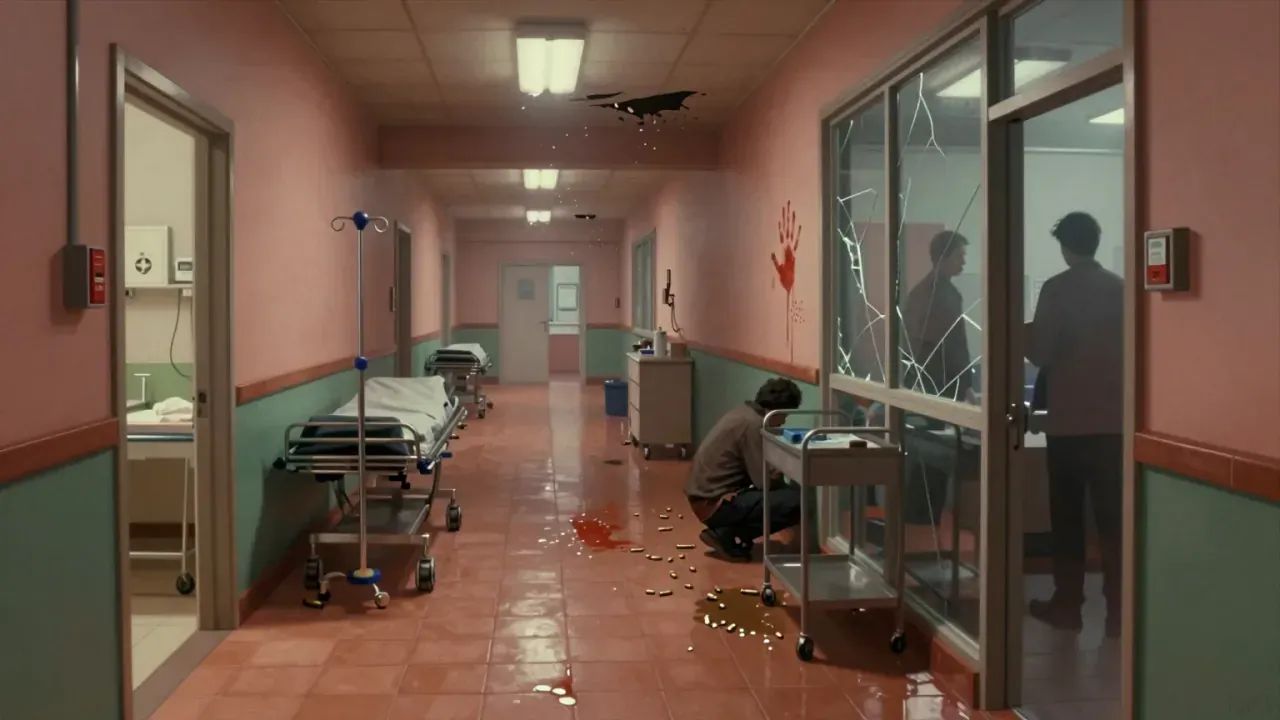
John Woo’s 1992 Hong Kong action film stars Chow Yun-fat as Inspector Tequila, a jazz-playing cop pursuing a Triad syndicate alongside undercover officer Alan (Tony Leung). Shot over 123 days, its defining sequence — a five-minute hospital shootout — exemplifies its commitment to spatial coherence and physical storytelling. Though conceived as a ‘Dirty Harry’-style police centrepiece, its improvisational production left thematic threads unresolved. Still, its influence on action cinema remains foundational.

13:00

Top Gun

Tony Scott · 1986

A 1986 Paramount action film directed by Tony Scott, Top Gun follows naval aviator Pete ‘Maverick’ Mitchell through the Navy’s elite fighter weapons school. Built around real F-14 flight footage and a synth-heavy score, it prioritises kinetic clarity and visual rhythm over psychological depth or political nuance. Though critically mixed on release, its formal coherence and cultural resonance have secured its status as a defining artefact of 1980s studio filmmaking.

13:00

Collateral

Michael Mann · 2004

Michael Mann’s 2004 thriller follows LA cab driver Max Durocher (Jamie Foxx) over one night as he shuttles contract killer Vincent (Tom Cruise) between hits. Shot digitally on the streets of Los Angeles, it uses tight framing, low-light cinematography, and precise editing to sustain tension without exposition. The film explores detachment, routine, and the quiet cost of competence—more interested in how its characters move through the city than in why they do.

13:00

Days of Thunder

Tony Scott · 1990

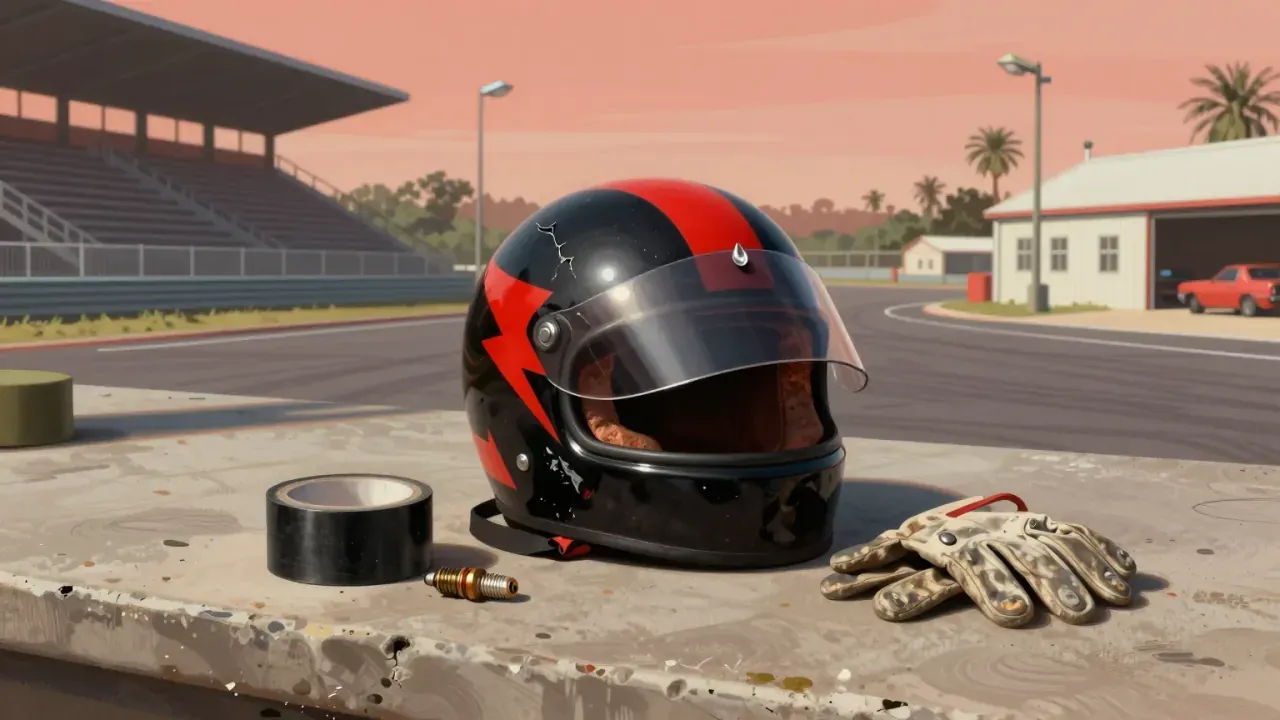
Tony Scott’s 1990 NASCAR romance stars Tom Cruise as a sprint-car prodigy thrust into Winston Cup racing, mentored by Robert Duvall and drawn into rivalry and romance. Shot on location with real drivers and cars, its strengths lie in visceral racing sequences, Hans Zimmer’s propulsive score, and Duvall’s grounded authority. Its weaknesses include underdeveloped relationships, thin thematic scaffolding, and a script that favours momentum over meaning. It remains a coherent, craft-led studio artefact — best appreciated as sensory experience rather than narrative inquiry.

13:00

Inside Llewyn Davis

Ethan Coen, Joel Coen · 2013

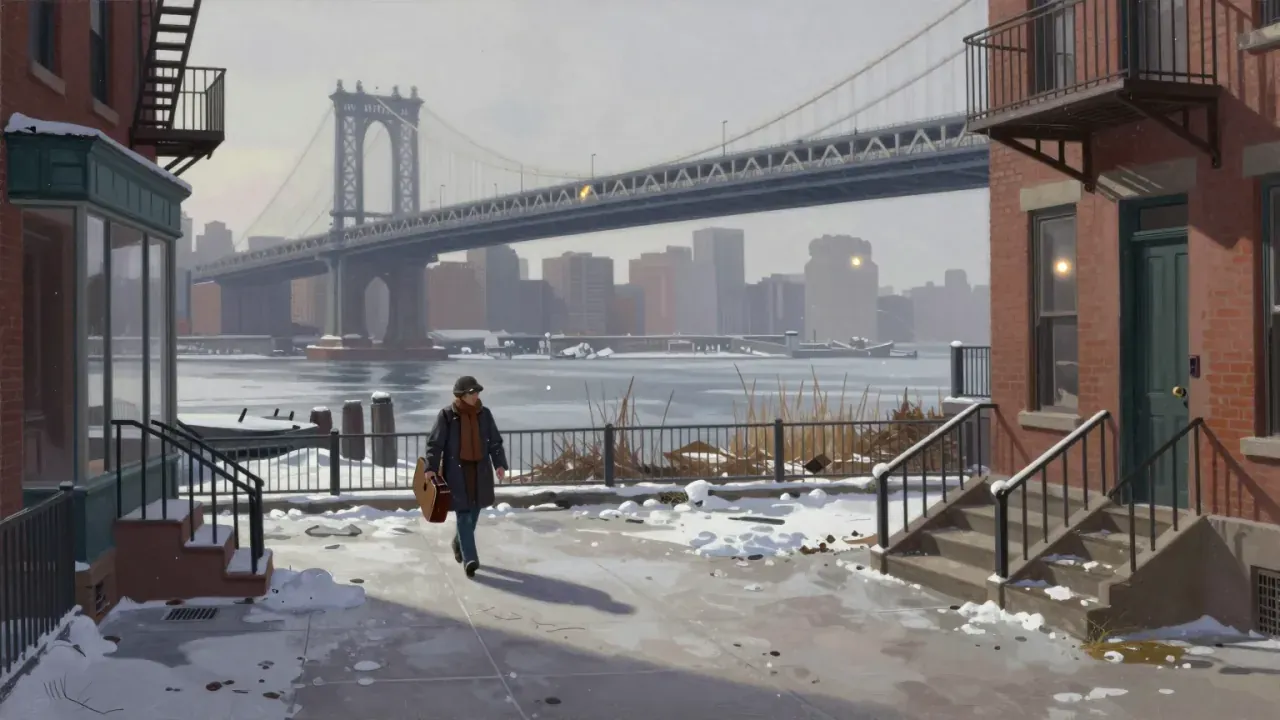
A 2013 Coen brothers film set in early-1961 New York, following folk singer Llewyn Davis over one wintry week. Oscar Isaac stars in a performance defined by vocal authenticity and physical weariness. Bruno Delbonnel’s muted cinematography and T Bone Burnett’s live-recorded folk soundtrack anchor a story that loops rather than progresses — rejecting biopic convention in favour of a precise, unsentimental study of artistic persistence without reward.

13:00

Chinatown

Roman Polanski · 1974

Chinatown sends Jack Nicholson's private investigator into a municipal water scandal modelled on the early-twentieth-century disputes that built Los Angeles, opposite Faye Dunaway and John Huston. Robert Towne's script won the film's only Oscar from eleven nominations, but the ending that gives the film its reputation was Polanski's, forced through over the writer's objections, and it is worth knowing which parts of the film are whose before deciding what the story is actually arguing.

13:00

Once Upon a Time in the West

Sergio Leone · 1968

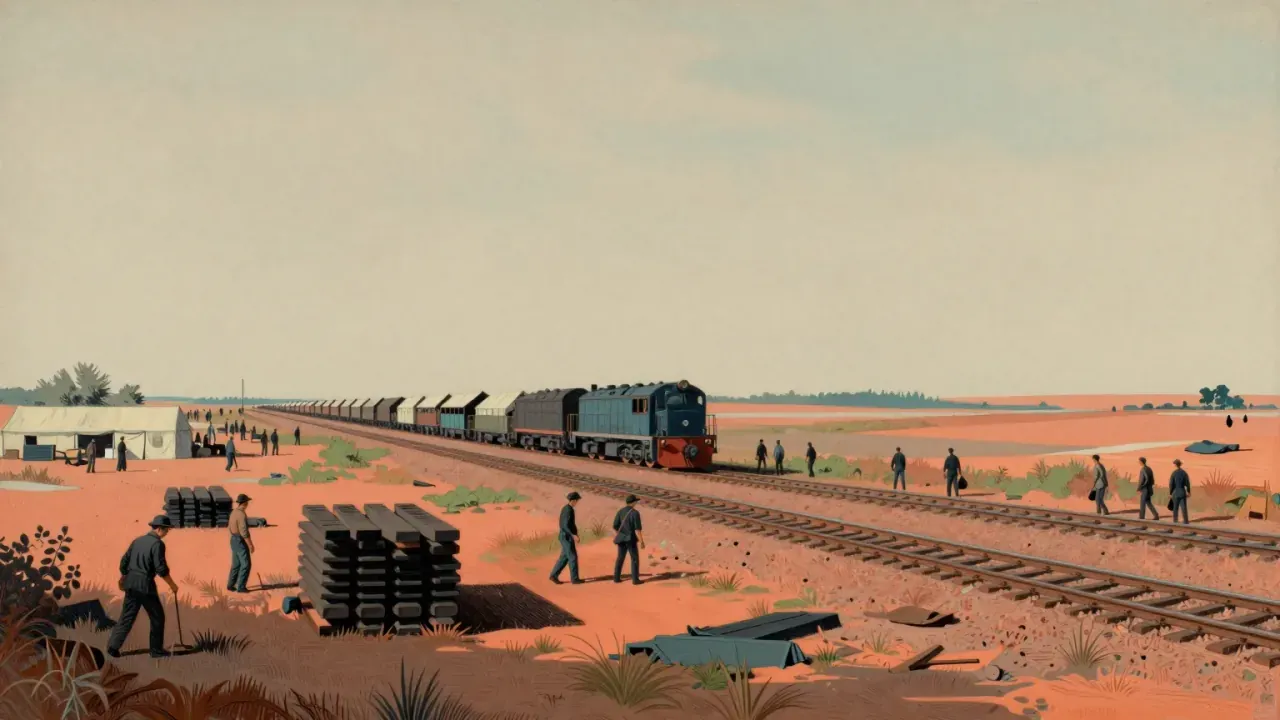
Sergio Leone's 1968 Western, funded by Paramount specifically to secure Henry Fonda, casts the actor against type as a hired killer clearing land for the railroad while a harmonica-playing stranger, played by Charles Bronson, pursues him for reasons the film withholds until its final scenes. Composed with Ennio Morricone's score written and recorded before filming began, and shot across Spain, Utah and Cinecittà, the film ran 165 minutes in Europe to strong box office, but Paramount's 140-minute US cut flopped on release in 1969, a fate the film's reputation has long since reversed.

13:00

Psycho

Alfred Hitchcock · 1960

Hitchcock financed Psycho himself after Paramount balked at the material, shooting it fast, cheap and in black and white with his television crew. Anthony Perkins's Norman Bates, Bernard Herrmann's string score and a mid-film murder that removes the film's ostensible heroine turned a low-budget genre picture into the template for the modern horror thriller.

13:00

Rango

Gore Verbinski · 2011

A pet chameleon stranded in the desert invents a tough-guy persona to survive a lawless town, and the fiction becomes real enough to matter. Gore Verbinski's 2011 animated Western leans on genre homage and an unusually cinematic visual approach for an animated film.

13:00

Rear Window

Alfred Hitchcock · 1954

Confined almost entirely to one apartment and the courtyard it overlooks, Rear Window turns a photographer's boredom into a murder investigation conducted through binoculars. Built on a single elaborate Paramount set, it is Hitchcock at his most tightly engineered, with James Stewart watching and Grace Kelly eventually doing the one thing he cannot: crossing the courtyard himself.

13:00

South Park: Bigger, Longer & Uncut

Trey Parker · 1999

Trey Parker and Matt Stone expand their Comedy Central series into a full musical: four boys learn a stream of profanity from an R-rated movie, a parental panic follows, and the United States ends up declaring war on Canada. Made for $21 million and released by Paramount, it took $83 million worldwide and became the highest-grossing R-rated animated film at the time, earning an Academy Award nomination for the song Blame Canada.

13:00

The Conversation

Francis Ford Coppola · 1974

Gene Hackman plays a wiretap specialist convinced his latest recording documents a murder he's enabling, in Coppola's Palme d'Or-winning thriller that arrived just months before Watergate made its premise feel prophetic rather than speculative.

13:00

The Godfather

Francis Ford Coppola · 1972

Francis Ford Coppola's 1972 adaptation of Mario Puzo's novel follows the Corleone family as the youngest son, Michael, is pulled from war-hero outsider into the head of an organised-crime dynasty. Shot by Gordon Willis in interiors so underlit that faces disappear into shadow, scored by Nino Rota, and built on an ensemble led by Marlon Brando and Al Pacino, it cost Paramount $7 million and returned over $268 million, and swept that year's Best Picture, Best Actor and Best Adapted Screenplay Oscars.

13:00

The Godfather Part II

Francis Ford Coppola · 1974

Francis Ford Coppola's 1974 sequel cuts between young Vito Corleone's immigrant rise in early-twentieth-century New York, played by Robert De Niro, and Michael Corleone's ruthless consolidation of the family's power a generation later, played again by Al Pacino. Gordon Willis returns as cinematographer and Nino Rota as composer, on a budget of $13 million against a $48 million take, and the film won six Oscars including Best Picture and Best Director, an unusual feat for a sequel.

13:00

The Truman Show

Peter Weir · 1998

Jim Carrey plays a man raised from birth inside a soundstage as the unwitting star of a round-the-clock broadcast, gradually noticing the cracks in a world built entirely around him.

13:00

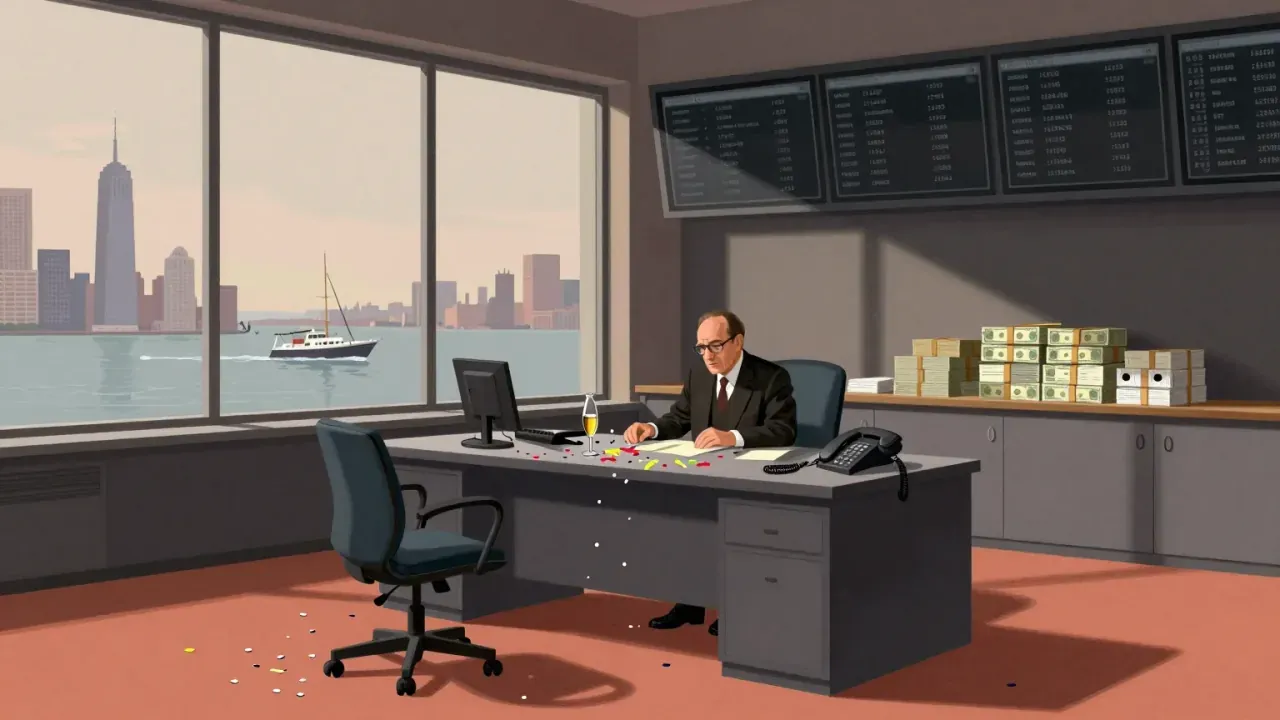
The Wolf of Wall Street

Martin Scorsese · 2013

The Wolf of Wall Street follows Jordan Belfort's rise from a junior broker to the head of Stratton Oakmont, a firm built on pump-and-dump stock schemes, told almost entirely through his own boastful narration. Martin Scorsese directs Leonardo DiCaprio, Jonah Hill and Margot Robbie in a three-hour account, adapted by Terence Winter from Belfort's memoir, that stages fraud as slapstick and addiction as spectacle without ever pulling back to show what any of it cost the people on the other end of the trades.

13:00

Vertigo

Alfred Hitchcock · 1958

Alfred Hitchcock's 1958 film follows Scottie Ferguson, a retired police detective with a crippling fear of heights, hired to trail a friend's wife who believes she is possessed by a dead ancestor. What begins as surveillance turns into obsession, and after a death he could not prevent, Scottie tries to remake a second woman into the image of the first. Shot by Robert Burks with a spiralling title-sequence effect and scored by Bernard Herrmann, it earned back roughly three times its $2.5 million budget on release and has since climbed steadily in critical standing, unseating Citizen Kane at the top of one long-running critics' poll.