filmbriefs
Topic

Realism

Showing it as it is, which is also a choice.

31
in film
13:00
average
403 min
in total
47
across the network
Realism across the network →
All briefs31
13:00

A Woman of Paris

Charlie Chaplin, A. Edward Sutherland · 1923

A Woman of Paris (1923) is Charlie Chaplin’s sole silent drama without the Tramp, starring Edna Purviance as Marie St. Clair — a woman whose life unravels not through vice, but through miscommunication, social constraint, and quiet consequence. Directed with surgical restraint, it uses décor, editing, and understated performance to trace fate as environment rather than destiny. Though its contemporary reception was mixed and its lead performance uneven, its influence on narrative realism endures.
13:00

Accattone

Pier Paolo Pasolini · 1961

Pasolini’s 1961 debut follows Accattone, a Roman pimp adrift in the borgate, as he slides from exploitation to theft to death. Shot in stark black-and-white with non-professional actors and scored to Bach, it treats poverty not as condition to be solved but as reality to be held in view — unflinching, unexplained, and utterly devoid of sentiment.

13:00

Barnvagnen

Bo Widerberg · 1963

Bo Widerberg’s 1963 Swedish drama Barnvagnen follows a young father’s first months in a Stockholm apartment, using restrained performance, Jan Troell’s naturalistic cinematography, and Jan Johansson’s sparse piano score to observe the uneventful gravity of early care. It avoids narrative escalation, psychological exposition, or symbolic framing — instead building meaning through duration, acoustic detail, and the physical presence of domestic objects.

13:00

Big Deal on Madonna Street

Mario Monicelli · 1958

Big Deal on Madonna Street (1958) is an Italian heist comedy directed by Mario Monicelli, following a group of Rome-based petty criminals attempting—unsuccessfully—to burgle a pawn shop through a shared wall. Shot on location with harsh, naturalistic lighting by Gianni Di Venanzo and scored with restrained jazz by Piero Umiliani, it parodies both neorealist gravity and crime-thriller solemnity by applying their formal rigour to characters who lack the means to succeed. The film’s humour arises from procedural fidelity, not absurdity: every setback follows logically from material constraint, linguistic mismatch or spatial miscalculation. Though nominated for an Academy Award and listed among Italy’s 100 essential films, its appeal lies in its precision, not its polish.

13:00

Casque d'Or

Jacques Becker · 1952

Jacques Becker’s 1952 drama follows Marie and Manda, lovers caught in the violent hierarchies of Belle Époque Paris. Shot with precise, unadorned realism, it avoids moralising or spectacle, instead anchoring emotion in gesture, setting, and consequence. Simone Signoret and Serge Reggiani deliver performances of quiet intensity, supported by Robert Lefebvre’s understated cinematography and Marguerite Renoir’s taut editing. Its final sequence — Marie watching Manda’s execution from a hotel window — remains one of cinema’s most devastating uses of spatial restraint.

13:00

Death of a Cyclist

Juan Antonio Bardem · 1955

Juan Antonio Bardem’s 1955 Spanish drama follows a wealthy married woman and her academic lover after they strike and abandon a cyclist. As guilt and paranoia fracture their relationship, the film maps the moral geography of Franco-era Madrid — contrasting bourgeois insulation with working-class reality through precise editing, restrained performances, and Alfredo Fraile’s stark cinematography. It won the FIPRESCI Prize at Cannes and remains a landmark of socially engaged arthouse cinema.

13:00

Fires on the Plain

Kon Ichikawa · 1959

Kon Ichikawa’s 1959 adaptation of Shōhei Ōoka’s novel follows a tubercular Japanese private abandoned on Leyte in late 1944. Shot in stark black-and-white, it traces his physical and moral dissolution amid starvation, disease and escalating atrocity—not as drama, but as inexorable attrition. With minimal dialogue, sparse music and unflinching realism, it asks what remains of personhood when every boundary—bodily, ethical, linguistic—has been breached.

13:00

Frownland

Ronald Bronstein · 2007

Ronald Bronstein’s 2007 debut follows Keith, a socially overwhelmed door-to-door salesman in New York, over three days of escalating disconnection. Shot on a minimal crew and budget, it uses relentless close-ups, fragmented editing, and Dore Mann’s physically exacting performance to immerse the viewer in sustained psychological exposure—without exposition, score, or narrative relief.

13:00

Germany, Year Zero

Roberto Rossellini · 1948

Roberto Rossellini’s 1948 drama follows twelve-year-old Edmund Köhler in ruined Berlin, where hunger, ideological debris, and adult failure converge on a single child’s conscience. Shot partly on location and partly in Rome studios, it uses non-professional actors and restrained craft to trace a quiet, logical descent into moral collapse — ending not with outcry, but with silence and a jump from rubble.

13:00

Hôtel du Nord

Marcel Carné · 1938

Marcel Carné’s 1938 Hôtel du Nord is a cornerstone of poetic realism: a slow-burning drama set in a working-class Paris hotel, where suicide, romance, and criminal threat unfold amid Bastille Day revelry. Anchored by Arletty and Louis Jouvet, and shaped by Jean Aurenche and Henri Jeanson’s dialogue, it privileges mood, texture, and moral ambiguity over exposition or resolution.

13:00

One Wonderful Sunday

Akira Kurosawa · 1947

One Wonderful Sunday (1947) follows a young Tokyo couple through a single Sunday with thirty-five yen between them. Shot on location in occupied Japan with unknown actors and makeshift equipment, it blends neorealist observation with imaginative interludes—including a famous fourth-wall-breaking finale. Directed and edited by Akira Kurosawa, with script by Kurosawa and Keinosuke Uekusa, it is a quiet, resilient portrait of love as daily practice amid scarcity.

13:00

Paisà

Roberto Rossellini · 1946

Roberto Rossellini’s 1946 neorealist film Paisà unfolds in six loosely connected episodes set during the Allied campaign in Italy, from Sicily to the Po delta. Using non-professional actors, real locations, and untranslated dialogue, it captures moments of miscommunication, fleeting connection, and quiet devastation — not as drama but as record. Its power lies in restraint: in what is withheld, misunderstood, or left unsaid.

13:00

Pépé le Moko

Julien Duvivier · 1937

Julien Duvivier’s 1937 French crime film follows Jean Gabin as Pépé le Moko, a celebrated thief holed up in Algiers’ Casbah, where he rules a labyrinthine enclave but cannot step beyond it. When a glamorous Parisian visitor arrives, his carefully maintained stasis unravels. Built on a studio set and defined by its moody, shadow-drenched cinematography, the film is a landmark of poetic realism — less a thriller than a slow, fatal meditation on exile, desire and the illusion of control.

13:00

Port of Call

Ingmar Bergman · 1948

Set in postwar Gothenburg, Port of Call follows Berit, a young woman recovering from a suicide attempt, and Gösta, a sailor choosing to stay on land. Their relationship unfolds without melodrama, anchored in small gestures, unspoken histories, and the quiet persistence of daily life. Shot by Gunnar Fischer and scored sparingly by Erland von Koch, it is Bergman’s first sustained engagement with psychological realism—grounded, restrained, and resolutely unmetaphorical.

13:00

Port of Shadows

Marcel Carné · 1938

Marcel Carné’s 1938 French drama Port of Shadows follows a deserter and a runaway girl in Le Havre, where love and escape are undermined by circumstance, jealousy, and inevitability. With Jean Gabin, Michèle Morgan, and Michel Simon, and written by Jacques Prévert, it exemplifies poetic realism through restrained performances, Schüfftan’s low-lit cinematography, and a fatalistic structure that privileges mood over momentum.

13:00

Shadows in Paradise

Aki Kaurismäki · 1986

Aki Kaurismäki’s 1986 debut feature follows Ilona, a supermarket checkout clerk, and Nikander, a garbage collector, as they form a tentative bond amid Finland’s muted urban landscape. Shot with flat, natural light by Timo Salminen and edited with metronomic precision by Raija Talvio, the film unfolds in unhurried, symmetrical scenes, trusting silence and repetition to convey emotional depth. Its power lies in what it omits: exposition, psychology, music, and narrative urgency. Starring Matti Pellonpää and Kati Outinen, it is the first of Kaurismäki’s Proletariat Trilogy — a study of dignity in routine, and connection in quiet.

13:00

Story of a Prostitute

Seijun Suzuki · 1965

Seijun Suzuki’s 1965 Story of a Prostitute follows Harumi, a prostitute who moves to a Japanese military outpost in Manchuria during the Sino-Japanese War. There, she forms a forbidden bond with an officer’s aide while enduring the casual brutality of the chain of command. Shot with stark realism and deliberate restraint, the film rejects heroic mythmaking in favour of behavioural truth — exposing the absurdity, exhaustion and moral erosion embedded in imperial military life. Based on Taijiro Tamura’s story and informed by Suzuki’s own wartime service, it remains a singular, unsettling portrait of power, complicity and quiet defiance.

13:00

Stromboli

Roberto Rossellini · 1950

Roberto Rossellini’s 1950 Stromboli stars Ingrid Bergman as a displaced Lithuanian woman who marries to escape an internment camp, only to confront harsh isolation on the volcanic island of Stromboli. Shot on location with non-professional actors and pared-down craft, it is a foundational neorealist work that treats landscape, silence, and endurance as primary dramatic tools — less a story about a woman than an inquiry into what happens when identity is stripped back to breath, rock, and sky.

13:00

The Celebration

Thomas Vinterberg · 1998

Thomas Vinterberg’s 1998 debut, the first Dogme 95 film, follows a Danish family’s birthday gathering where a son publicly accuses his father of childhood sexual abuse. Shot on Mini-DV with no artificial lighting or post-sync sound, it uses radical formal restraint to focus on performance, gesture and the banality of complicity. The film won the Cannes Jury Prize and numerous Nordic and European awards.

13:00

The Children Are Watching Us

Vittorio De Sica · 1944

Vittorio De Sica’s 1944 drama follows young Pricò as he observes his mother’s repeated departures and his father’s silent collapse. Shot by Romolo Garroni with austere precision and scored sparingly by Renzo Rossellini, it treats childhood not as innocence but as unblinking witness. There are no villains, no explanations — only cause, effect, and the unbearable clarity of a child’s gaze.

13:00

The Daytrippers

Greg Mottola · 1996

The Daytrippers (1996) follows Eliza and her family on a single-day drive from Long Island to Manhattan after she finds evidence her husband may be having an affair. Written and directed by Greg Mottola, it unfolds through tightly observed interactions, subtle performances, and a refusal to resolve its tensions neatly. With a strong ensemble cast and a focus on emotional authenticity over plot mechanics, it captures the friction and tenderness of family life under uncertainty.

13:00

The Friends of Eddie Coyle

Peter Yates · 1973

Peter Yates’s 1973 neo-noir adapts George V. Higgins’s novel with unsentimental rigour, following small-time Boston gunrunner Eddie Coyle (Robert Mitchum) as he navigates a web of informants, robbers, and indifferent lawmen. Shot on location across Greater Boston by Victor J. Kemper, with a muted Dave Grusin score and Paul Monash’s terse script, it privileges behavioural realism over plot mechanics. Though commercially unsuccessful on release, it is now regarded as a landmark of 1970s crime cinema — lean, credible, and morally flat.

13:00

The Honeymoon Killers

Leonard Kastle · 1970

Leonard Kastle’s 1970 debut is a stark, black-and-white docudrama about Martha Beck and Raymond Fernandez, two real-life killers whose relationship curdles into murder. Made on a $200,000 budget with non-star actors, rough cinematography and Mahler on the soundtrack, it rejects glamour, psychology and historical fidelity in favour of sustained moral unease. Shirley Stoler’s performance as Martha remains one of cinema’s most unsettling studies in embodied desperation.

13:00

The Runner

Amir Naderi · 1984

Amir Naderi’s 1984 Iranian drama follows Amiro, an orphan surviving alone in Abadan, as he cycles through menial jobs — collecting bottles, selling ice, mending shoes — while fixating on ships and planes as distant, unreachable horizons. Shot in sun-bleached natural light with minimal dialogue and no score, the film anchors its realism in physical detail: the weight of ice, the burn of sun, the rhythm of running. Its power lies in sustained attention to endurance as routine, not metaphor.

13:00

The Tree of Wooden Clogs

Ermanno Olmi · 1978

Ermanno Olmi’s 1978 epic follows four peasant families in late-nineteenth-century Bergamo, filmed in Lombard dialect with non-professional actors on location. Its 186-minute runtime mirrors the unhurried rhythm of agrarian life — sowing, birth, debt, eviction — without exposition or score. It won the Palme d’Or and remains a landmark of neorealist commitment to material truth over narrative convenience.

13:00

Toni

Jean Renoir · 1935

Jean Renoir’s 1935 Toni follows an Italian migrant in Provence as he navigates work, love and displacement among a mixed group of labourers. Shot entirely on location with non-professional actors, it uses restraint — in performance, editing and sound — to observe class, language and longing without commentary. Its influence on later movements is well documented, but its power lies in its quiet, unwavering attention to the material conditions of ordinary lives.

13:00

Walpurgis Night

Gustaf Edgren · 1935

A 1935 Swedish drama set over one Walpurgis Night in Stockholm, Walpurgis Night observes a civil servant’s household as long-held tensions surface amid guests, family, and fading light. Directed by Gustaf Edgren and written by Oscar Rydqvist, it features early performances by Ingrid Bergman and Victor Sjöström, with restrained craft across cinematography, editing, and performance. Its strength lies in behavioural nuance and temporal precision; its weakness, occasional narrative vagueness and underdeveloped subplots.

13:00

Wanda

Barbara Loden · 1970

Barbara Loden’s 1970 debut is a stark, 16mm portrait of Wanda Goronski, a woman adrift in Pennsylvania’s coal country, who drifts into a criminal’s orbit without resistance or revelation. Made for $115,000 with a crew of four, it avoids psychology, music, and narrative payoff—choosing instead sustained observation, improvised dialogue, and unvarnished locations. Its power lies in what it refuses: explanation, judgement, uplift. Restored and preserved by the Library of Congress, it remains a landmark of American arthouse realism.

13:00

Nights of Cabiria

Federico Fellini · 1957

Federico Fellini’s 1957 drama follows Cabiria, a Roman sex worker, through a series of encounters that test but never extinguish her capacity for hope. Giulietta Masina’s performance anchors a film that favours duration over plot, quiet observation over exposition, and emotional fidelity over resolution. Shot on location across Rome and its outskirts, with cinematography by Aldo Tonti and Otello Martelli and music by Nino Rota, it won the 1958 Academy Award for Best International Feature Film.

13:00

Pather Panchali

Satyajit Ray · 1955

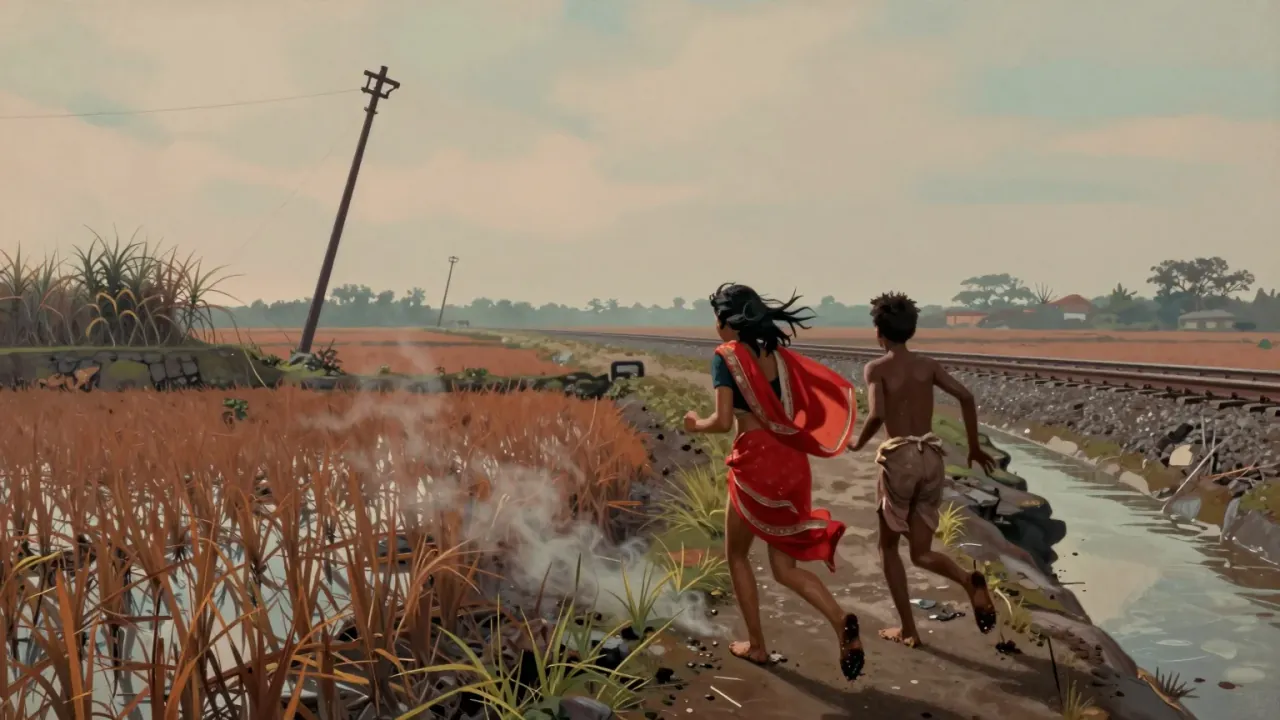
Satyajit Ray’s 1955 debut, adapted from Bibhutibhushan Bandyopadhyay’s novel, follows Apu’s childhood in rural Bengal. Shot on location with amateur actors and a minimal budget, it renders poverty, joy and loss through unhurried observation — no score to cue feeling, no edits to underline meaning. Its influence on global cinema is vast, but its power remains local, specific, and deeply human.

13:00

The French Connection

William Friedkin · 1971

The French Connection follows two New York narcotics detectives, modelled on real officers Eddie Egan and Sonny Grosso, as they trail a heroin shipment tied to an actual 1962 seizure. Made for $1.8 million after seven actors turned down the lead, it won five Academy Awards including Best Picture and Best Actor for Gene Hackman, and its documentary-style handheld camera and an unscripted-feeling car chase set a template for the decade of American crime films that followed it.