The people in it
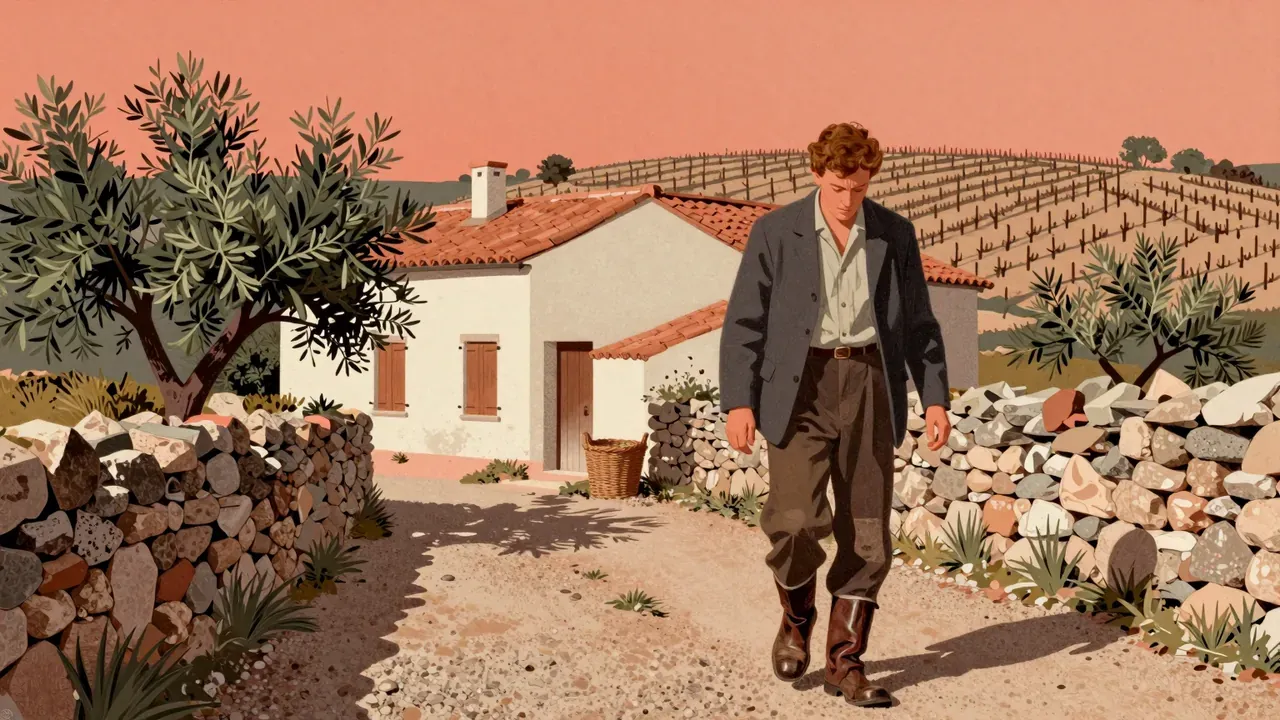
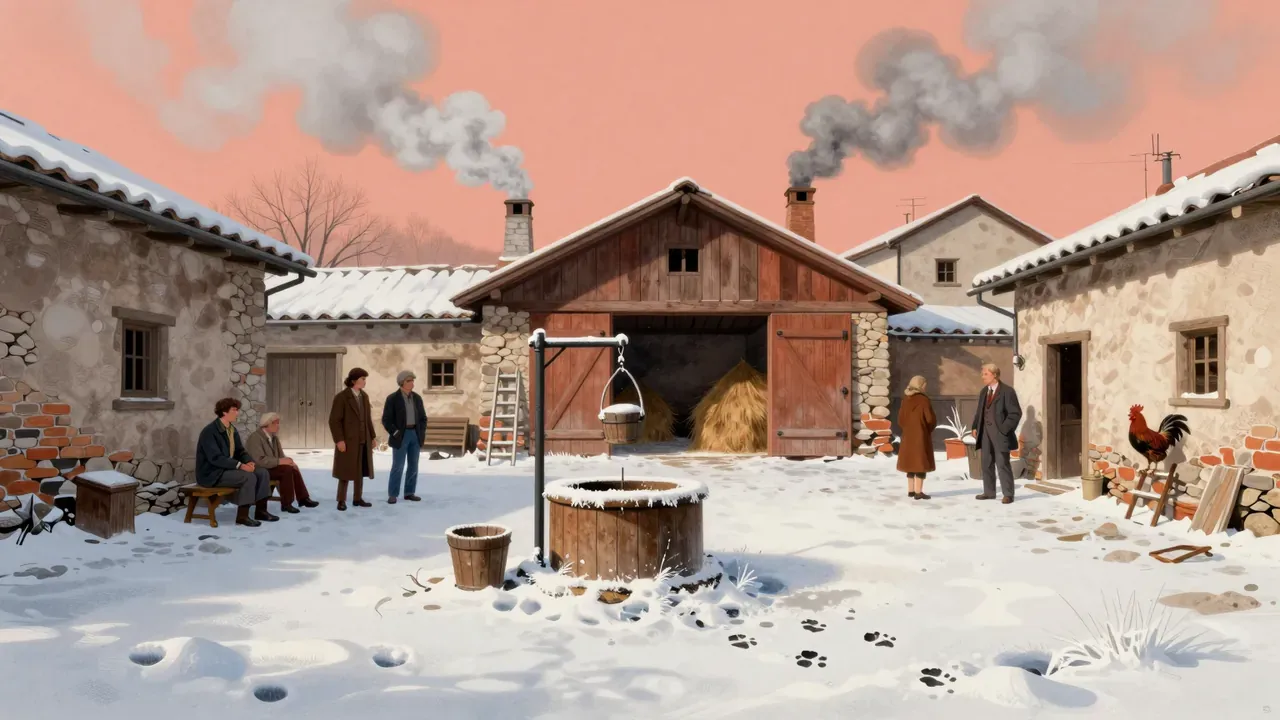
The Tree of Wooden Clogs is a long, quiet film about four peasant families living in a Lombard cascina in 1898. It does not dramatise history as event but as rhythm: sowing, threshing, childbirth, illness, debt, prayer, the slow accumulation of wear on hands and wood and soil. Ermanno Olmi made it to show life as lived by people whose names do not appear in textbooks — not as subjects of pity or political allegory, but as agents of their own continuity. He rejects professional actors, period costume departments, and studio lighting; instead he works with farmers from Bergamo, uses their dialect, shoots in the actual buildings where their grandparents were born, and lets the seasons dictate the schedule. The film’s ambition is structural: to hold time without commentary, to let duration itself become meaning. It treats labour not as hardship to be overcome but as the medium through which identity, kinship and dignity are sustained. This is not historical reconstruction. It is ethnographic fidelity rendered as narrative form — a film that asks to be measured not by plot turns but by how closely its pulse matches the breath of the people it shows. (158 words)
The shape of time
The story unfolds across a single year, anchored to agricultural cycles rather than dramatic arcs. There are no villains, only systems: the landlord’s ledger, the church’s calendar, the weather’s indifference. Performances are unmodulated because the cast are non-actors — Luigi Ornaghi, a farmer, plays Batistì with the same physical economy he uses to mend a fence. Olmi directs without prompting expression; he waits for it to emerge in gesture, in the way a hand rests on a child’s shoulder or a woman lifts a bucket. Cinematography is unobtrusive: natural light, fixed frames, shallow depth, often shot from just above eye level. Bach’s music appears sparingly — harpsichord preludes over black leader, never underscoring action. Editing avoids emphasis: scenes end when the task ends, not when emotion peaks. Sound design favours ambient fidelity — rain on slate, axe on alder, distant cowbells — over dialogue clarity. The language is Bergamasque Lombard, untranslated, so comprehension depends on context, posture, pause. This is craft as restraint: every decision serves the refusal to interpret the world for the viewer, only to place them inside it. (159 words)
The look of it
What lands is the weight of ordinary endurance. A father carving clogs by firelight, his son’s bare feet in winter mud, the shared silence after eviction — these register not as moments but as conditions. The film’s scale works because it refuses to isolate ‘the important’; every frame contains labour, care, repetition, small kindnesses exchanged without ceremony. The absence of score during scenes of work makes the physicality audible: breath, strain, the scrape of tool on wood. The use of non-actors means no performance masks — only presence, unvarnished and unselfconscious. When Batistì cuts the tree, the act feels inevitable, not symbolic; when he is evicted, the injustice is legible in the landlord’s paperwork, not his face. The film trusts the viewer to notice the ledger entry, the worn sole, the way the widow Runk folds her shawl before speaking. Its compassion is procedural: it gives time, space and attention to what other films would omit as background. That consistency — the refusal to elevate one moment over another — builds a cumulative gravity no monologue could match. (157 words)
The web of it
What does not land is the assumption that all viewers will meet the film on its own terms. Its pace resists absorption; scenes linger beyond comfort, dialogue remains untranslated, emotional cues are withheld. Some sequences — a long walk to Milan, an extended fairground sequence — test attention without offering conventional payoff. The lack of exposition means political context stays vague: the communist agitator’s speech is heard but not parsed, the arrest in Milan registered visually but not explained. This is not ambiguity by design but omission by principle — and while that honours the peasants’ own limited access to wider currents, it may leave modern viewers adrift. The film also assumes familiarity with rural rhythms: the significance of a broken ploughshare or a delayed harvest is implicit, not dramatised. For those unaccustomed to agrarian time, the narrative can feel diffuse. There is no irony, no counterpoint, no stylistic relief — just sustained immersion. That is its strength and its limit: it offers no bridge, only the river. (156 words)
The quiet in it
The themes that matter are inheritance, reciprocity and quiet resistance. Inheritance is not wealth but knowledge: how to split timber, read cloud, treat fever with herbs, name each calf. Reciprocity structures every relationship — between families sharing a well, between generations passing tools, between humans and land that yields only if tended. Resistance is not shouted but enacted: the decision to cut the tree is defiance disguised as necessity; the widow’s refusal to remarry is autonomy without declaration. Class is shown as material fact — the landlord’s boots versus Batistì’s bare feet — but never theorised. Faith appears as ritual, not doctrine: prayers at dawn, candles at feast days, the priest’s visits measured in sacraments, not sermons. Time is cyclical but not mythic; seasons return, but people age, children die, debts compound. The film’s moral centre is stewardship: of land, of memory, of each other. It treats poverty not as lack but as a different economy — one measured in shared bread, mended shoes, remembered names. That economy has no currency outside the cascina, and the film never tries to translate it. (159 words)
The silence in it
This film is for viewers who value slowness as substance, who find meaning in texture over trajectory, and who trust images to carry weight without explanation. It suits those familiar with neorealist precedent or documentary practice, or with rural life itself. It is not for viewers who rely on narrative propulsion, psychological exposition or linguistic accessibility — the Lombard dialogue is not subtitled in the original version, and even in dubbed or subtitled releases, much remains culturally opaque. Those expecting political polemic or character arcs will leave unsatisfied. A historian might object to its deliberate vagueness on late-nineteenth-century labour organising; a dramaturg might note the absence of interior monologue or turning points. But the film’s terms are clear: it offers observation, not interpretation. Change the condition — add exposition, shorten scenes, cast professionals — and it becomes a different film, one less committed to the integrity of its subjects’ silence. (159 words)
The weight of it
Yes, it is worth your evening — but only if you set aside the expectation of being led. Its 186 minutes demand patience, not passivity: attention must be active, attuned to shifts in light, posture, weather. It rewards rewatching, not because it conceals clues but because its density reveals itself gradually — the pattern in the laundry line, the hierarchy in seating, the rhythm in the milking. Those who find three hours of unbroken rural life intolerable will not be converted. But for those willing to sit within its tempo, it offers rare immersion: not into a story, but into a way of being in time. It does not argue for empathy; it engineers the conditions for it. To watch it is to accept its terms — and in doing so, to experience cinema as duration, not diversion. That is not everyone’s idea of an evening well spent, but for those it meets, it is irreplaceable. (159 words)