filmbriefs
Topic

Cities

The machine most people now live inside.

33
in film
13:00
average
429 min
in total
90
across the network
Cities across the network →
All briefs33
13:00

After Hours

Martin Scorsese · 1985

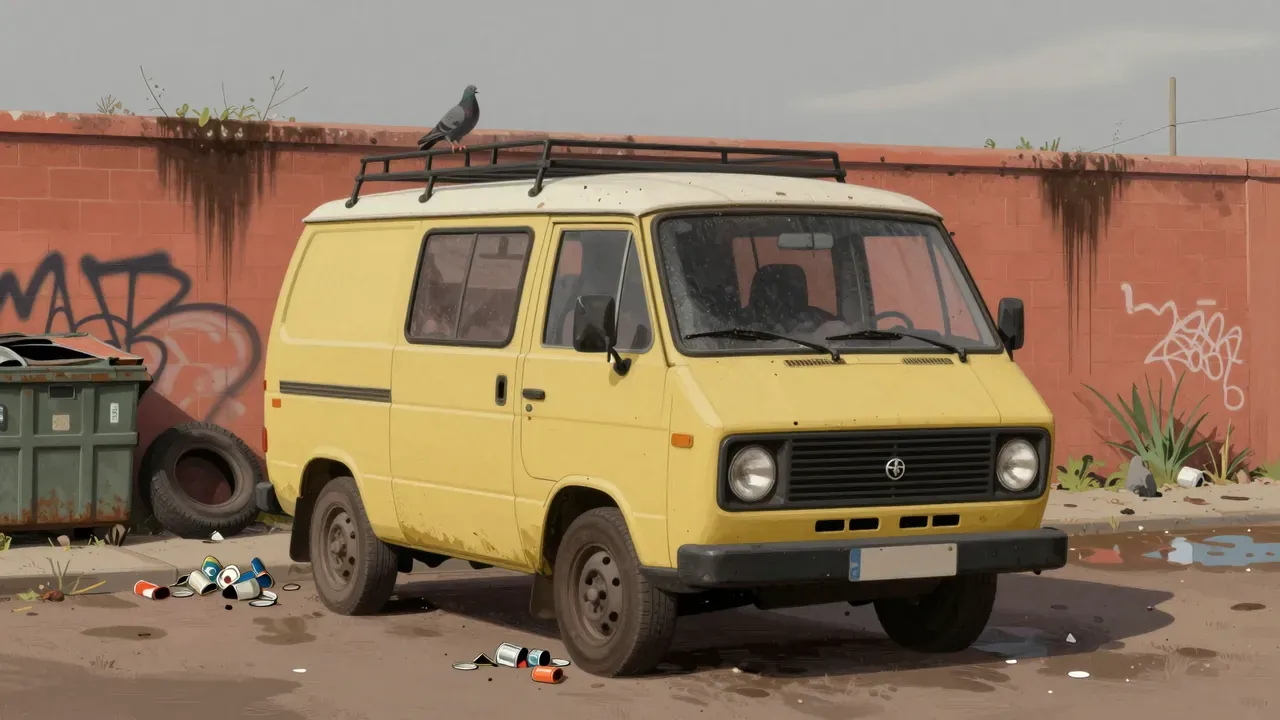
Martin Scorsese’s 1985 black comedy follows office worker Paul Hackett through a single, increasingly surreal night in SoHo. Stranded without money, misunderstood at every turn, and hunted by neighbours, he careens from one absurd crisis to the next — until the plaster hardens, the van doors fly open, and he crashes, barefoot and broken, into his office at dawn. Michael Ballhaus’s tight cinematography, Thelma Schoonmaker’s razor-sharp editing, and Howard Shore’s nervy score sustain a tone of escalating, inescapable farce.
13:00

Alice in the Cities

Wim Wenders · 1974

Wim Wenders’ 1974 road film follows a stalled writer and a nine-year-old girl as they search across Germany for her estranged grandmother. Shot in black-and-white 16 mm by Robby Müller, it favours duration over exposition, silence over speech, and observation over explanation. Its power lies in restraint: in the weight of a glance, the rhythm of a bus ride, the quiet persistence of mutual attention.

13:00

Calcutta

Louis Malle · 1969

Louis Malle’s 1969 documentary Calcutta observes the city over 105 minutes without narration, interviews, or explanatory text. Shot on location in 1967–68, it relies on long takes, ambient sound, and unmediated access to street life, ritual, and labour. Its method is observational, its stance unflinching but unjudging. It offers no synthesis — only duration, texture, and the quiet insistence of the real.

13:00

Chop Shop

Ramin Bahrani · 2007

Chop Shop follows twelve-year-old Ale as he works, saves, and schemes in Willets Point, Queens — a scrap-metal district where auto repair shops double as homes and survival is measured in hubcaps, candy bars, and stolen DVDs. Directed by Ramin Bahrani with non-professional actors and handheld digital footage, it is a neorealist portrait of resourcefulness without recourse, ambition without infrastructure, and care without safety nets.

13:00

Daguerréotypes

Agnès Varda · 1975

Made in 1975 on Paris’s Rue Daguerre, Agnès Varda’s Daguerréotypes is a quietly radical documentary composed of static portraits of local shopkeepers and residents, all filmed within ninety metres of her home. Each subject answers three questions about origin and arrival, their responses left unedited and unframed by commentary. Nurith Aviv and William Lubtchansky’s cinematography is unobtrusive and naturalistic; Varda’s direction is resolutely local, anti-extractive, and typologically curious. The film treats the street as both subject and limit—offering not analysis, but sustained attention.

13:00

Hands Over the City

Francesco Rosi · 1963

Francesco Rosi’s 1963 Golden Lion winner follows Neapolitan developer and councillor Edoardo Nottola as he leverages public office for private real-estate gain—until a building collapse triggers an official inquiry. Shot in stark, observational style by Gianni Di Venanzo and written with journalistic rigour, the film avoids psychology and spectacle in favour of committee rooms, permits, and quiet complicity. Rod Steiger and Carlo Fermariello anchor a cast that includes non-professionals, reinforcing its documentary texture. It is a film about how power consolidates not in crises but in paperwork.

13:00

In Vanda's Room

Pedro Costa · 2000

Pedro Costa’s 2000 film In Vanda’s Room observes life in Lisbon’s Fontainhas shantytown over 170 minutes, using fixed digital shots to document Vanda Duarte and her community as their homes are demolished. Neither documentary nor fiction, it treats time, place and presence as primary materials — offering no exposition, no score, no narrative arc, only sustained attention to what remains when story is set aside.

13:00

Koyaanisqatsi

Godfrey Reggio · 1982

Koyaanisqatsi (1982) is a non-narrative American documentary directed by Godfrey Reggio, shot by Ron Fricke and scored by Philip Glass. Comprising time-lapse, slow motion and static imagery of natural and urban landscapes across the US, it constructs a sensory argument about technological acceleration and ecological rupture — without voiceover, text or exposition. Its title, from the Hopi language, means 'life out of balance'. Though widely regarded as a landmark of avant-garde documentary, its formal rigour sits alongside omissions: no engagement with the people behind the images, no contextualisation of its US-specific sites, and no reckoning with the cultural source of its title.

13:00

Lonesome

Paul Fejos · 1928

Paul Fejos’s 1928 Lonesome follows two New York workers who meet by chance at Coney Island and spend a day falling in love — only to be separated by chaos and rain. Shot in fluid, inventive silent style with three awkward sound inserts, it treats the city as both barrier and bridge. Its emotional force comes from restraint: precise camerawork, minimal intertitles, and a finale rooted in shared geography, not fate.

13:00

Mahanagar

Satyajit Ray · 1963

Satyajit Ray’s 1963 Bengali drama Mahanagar follows Arati, a Calcutta housewife who becomes a door-to-door saleswoman to support her extended family. As her earnings reshape domestic authority and challenge patriarchal norms, the film traces the subtle, irreversible recalibration of dignity, dependence and decision-making — not through polemic, but through gesture, silence and economic fact.

13:00

Medicine for Melancholy

Barry Jenkins · 2008

Barry Jenkins’ 2008 debut follows Micah and Jo, two Black San Franciscans, over one day of conversation, wandering, and quiet confrontation. Shot in desaturated tones by James Laxton and edited by Nat Sanders, it uses minimal narrative scaffolding to explore identity, gentrification, and the unspoken tensions of interracial dating and cultural assimilation in a city where Black residents make up just seven percent of the population.

13:00

My Winnipeg

Guy Maddin · 2007

Guy Maddin’s My Winnipeg (2007) is a self-narrated ‘docu-fantasia’ that uses staged re-enactments, archival fragments and invented history to explore his lifelong entanglement with his hometown. Framed as an attempt to ‘film his way out’, the film treats Winnipeg as a psychic landscape — where sleepwalking is epidemic, rivers run double beneath the streets, and demolition sites hold sacred residue. It is less about the city’s facts than its emotional architecture.

13:00

News from Home

Chantal Akerman · 1976

News from Home (1976) is a French-language documentary by Chantal Akerman, composed of extended static shots of New York City locations — subway platforms, ferry decks, city streets — accompanied by Akerman’s voice reading letters from her mother written between 1971 and 1973. Shot by Babette Mangolte and edited by Francine Sandberg, it is a study in duration, alienation, and the quiet labour of correspondence across distance.

13:00

Night on Earth

Jim Jarmusch · 1991

Night on Earth (1991) is Jim Jarmusch’s anthology film following five taxi rides across Los Angeles, New York, Paris, Rome, and Helsinki, all occurring over the same night. Each vignette centres on a temporary, often fraught, bond between driver and passenger. Shot on location with minimal intervention, it prioritises quiet observation over plot, using natural light, sparse music by Tom Waits, and unhurried performances to explore miscommunication, class, mortality, and fleeting kinship. Though uneven in impact—its Paris and Rome segments falter linguistically and tonally—the film’s cumulative power lies in its restraint and specificity.

13:00

Perfect Days

Wim Wenders · 2023

Perfect Days is a 2023 Japanese-language drama directed by Wim Wenders, following Hirayama (Kōji Yakusho), a public toilet cleaner in Tokyo. Shot over 17 days in Shibuya, it observes his precise, repetitive routine — cleaning, listening to cassettes, photographing trees — with Ozu-inspired stillness and a 4:3 frame. Co-written with Takuma Takasaki, it avoids exposition and backstory, instead anchoring meaning in gesture, light, and quiet fidelity to small acts. Yakusho won Best Actor at Cannes; the film was Japan’s Oscar submission, the first by a non-Japanese director selected as such.

13:00

Place de la République

Louis Malle · 1974

Louis Malle’s 1974 documentary Place de la République observes daily life at its namesake Paris square with fixed cameras, natural sound, and no narration. Eschewing context or commentary, it treats duration and routine as primary subjects — a rigorous, unsentimental study of public space as lived, uninterpreted time.

13:00

Roma

Federico Fellini · 1972

Federico Fellini’s 1972 Roma is a semi-autobiographical, episodic portrait of the city as living archive. Alternating between the director’s youth in Fascist-era Rome and his present-day filming in the early 1970s, it builds meaning through texture, juxtaposition, and sustained observation rather than narrative. Giuseppe Rotunno’s cinematography, Nino Rota’s score, and Danilo Donati’s production design render Rome tactile and layered — ancient, sacred, vulgar, and resilient. Though uneven in pacing and occasionally opaque in intent, it remains a singular achievement in cinematic essay-making: a city remembered not as fact, but as feeling.

13:00

Speedy

Ted Wilde · 1928

Harold Lloyd’s 1928 silent comedy Speedy follows a quick-witted New Yorker who defends his girlfriend’s grandfather’s horse-drawn streetcar line from corporate takeover. Shot on location in New York City and Coney Island, it combines romantic comedy, civic satire, and elaborate stunts — including a cross-Manhattan chase — all anchored by Lloyd’s energetic, grounded performance. It was Lloyd’s last silent film and survives in both silent and sound-on-film versions.

13:00

Taipei Story

Edward Yang · 1984

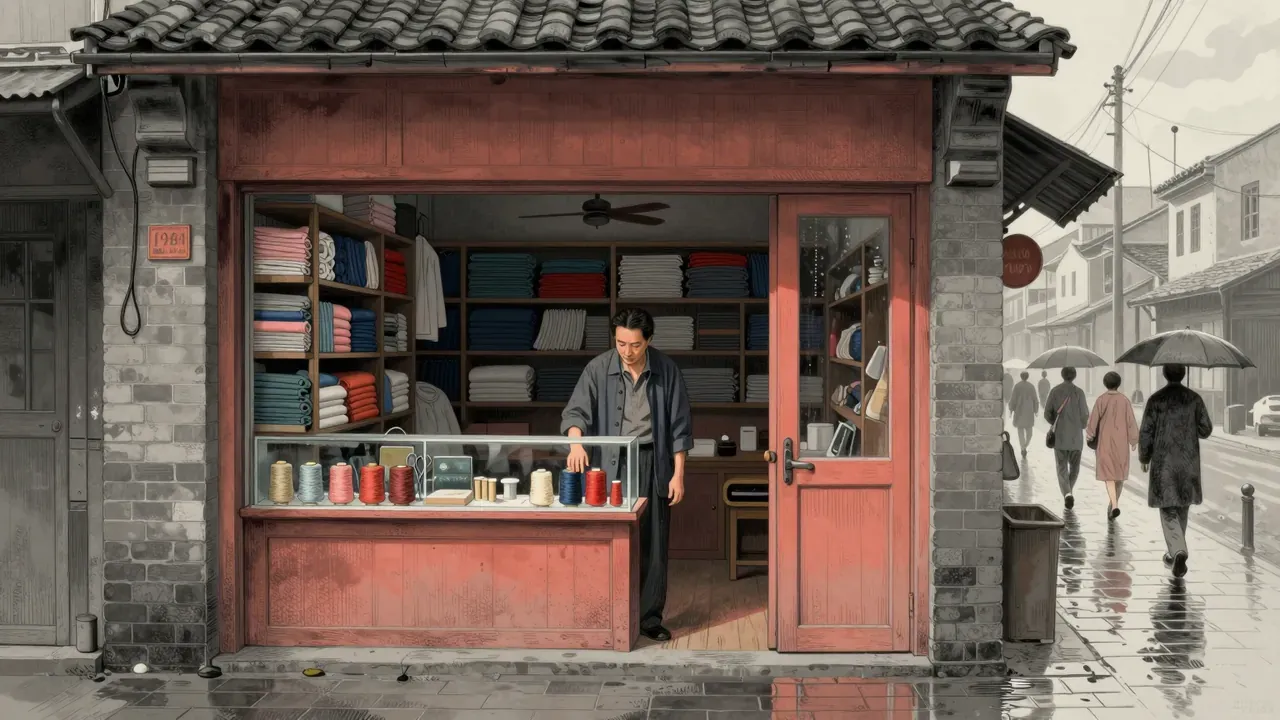
Edward Yang’s 1984 Taipei Story observes the quiet dissolution of a childhood bond between Ah-chen, an office worker planning emigration, and Ah-lung, a cloth-shop owner rooted in memory and habit. Set against Taipei’s rapid modernisation, the film uses duration, restraint, and precise framing to trace how structural change fractures intimacy. Co-written with Hou Hsiao-hsien — who stars — it avoids melodrama in favour of accumulated detail: a withheld glance, an unlit cigarette, an empty mountain road. Restored in 4K in 2017, it remains a cornerstone of New Taiwanese Cinema.

13:00

The Claws of Light

Lino Brocka · 1975

Lino Brocka’s 1975 drama follows Julio Madiaga, a young man from Marinduque, as he searches Manila for his missing lover Ligaya — only to uncover her entrapment in sexual slavery. Shot on location with non-professional and stage actors, the film avoids exposition and musical scoring, relying instead on duration, texture, and precise spatial composition to convey systemic violence under the Marcos dictatorship.

13:00

The Red Balloon

Albert Lamorisse · 1956

Albert Lamorisse’s 1956 French short The Red Balloon follows five-year-old Pascal as he forms a quiet, wordless bond with a sentient red balloon in the Ménilmontant district of Paris. Shot on location with natural light and minimal intervention, it relies on observation, texture and spatial choreography rather than narrative or dialogue. Though often described as poetic or symbolic, its power lies in its literal fidelity — to place, to childhood scale, to the physics of air and rubber. It won the Palme d’Or for short films and an Academy Award for Best Original Screenplay — the only short ever to receive that honour.

13:00

The Wiz

Sidney Lumet · 1978

Sidney Lumet’s 1978 musical The Wiz recasts The Wizard of Oz in Harlem and a decaying, stylised New York City, starring Diana Ross and Michael Jackson. Though critically panned on release for its script, pacing, and direction, its bold production design, choreography, and performances have cemented its status as a culturally vital, if uneven, cult classic.

13:00

The Naked City

Jules Dassin · 1948

The Naked City (1948) follows NYPD detectives investigating the murder of a model across real New York locations. Directed by Jules Dassin and written by Albert Maltz, it prioritises procedural fidelity over character depth or moral commentary. William H. Daniels’ cinematography and Paul Weatherwax’s editing anchor the film in tangible urban space, while Miklós Rózsa’s score underscores its climactic bridge chase and elegiac epilogue. Winner of two Academy Awards, it remains influential for its documentary rigour and structural clarity — a film less about crime than about how cities and institutions absorb and resolve it.

13:00

Two or Three Things I Know About Her

Jean-Luc Godard · 1967

Jean-Luc Godard’s 1967 essay-film follows a Parisian housewife who prostitutes herself by day, using her routine as a lens to examine consumerism, advertising, the Vietnam War, and the banlieue as ideological infrastructure. Built from fragmented scenes, whispered narration, and deliberate interruptions, it rejects narrative for inquiry — asking not what happens next, but how meaning is produced, circulated, and dissolved in modern life.

13:00

Bed and Sofa

Abram Room · 1927

A 1927 Soviet silent film set in cramped Moscow housing during the NEP, Bed and Sofa follows three people — two men and a woman — sharing one room, one bed, and one sofa. Directed by Abram Room with script by Viktor Shklovsky, it observes, without comment, how scarcity, gendered labour, and unspoken desire reshape intimacy. Its realism is architectural, psychological, and unsentimental.

13:00

Killer's Kiss

Stanley Kubrick · 1955

Stanley Kubrick’s 1955 second feature is a lean, black-and-white film noir shot on real New York streets — Penn Station, Times Square, SoHo lofts — with a shoestring budget and no studio oversight. It follows a fading boxer and a taxi dancer caught in the orbit of a violent dance-hall boss. Kubrick wrote, produced, directed, photographed and edited it himself, using post-dubbed sound and stark, high-contrast cinematography. Though structurally thin and acted with restraint rather than flourish, its physical authenticity, spatial intelligence and unblinking urban gaze make it a singular early document of a major filmmaker’s method.

13:00

Chungking Express

Wong Kar-wai · 1994

Wong Kar-wai's 1994 diptych follows two Hong Kong policemen through separate break-ups, one obsessed with an expiring can of pineapple, the other unknowingly courted by a snack-bar worker who lets herself into his flat. Shot handheld with Christopher Doyle's step-printing technique, it turns a tiny budget and an unfinished script into one of the defining moods of 1990s Hong Kong cinema.

13:00

City of God

Fernando Meirelles, Kátia Lund · 2002

Told through the eyes of Rocket, a boy who wants to be a photographer rather than a criminal, City of God traces two decades of gang warfare in a Rio de Janeiro housing project through the rise of the ruthless drug lord Li'l Zé. Directed by Fernando Meirelles and Kátia Lund and cast almost entirely with residents of real favelas trained in an improvisation workshop, the 2002 film adapts Paulo Lins's novel and earned four Academy Award nominations.

13:00

La Dolce Vita

Federico Fellini · 1960

Federico Fellini's 1960 portrait of a tabloid journalist drifting through Rome's high society over a week of nights gave the world the word paparazzi and became both a critical landmark and a box-office hit despite censors in several countries. Marcello Mastroianni anchors an episodic structure built around parties, a starlet's arrival, and a friend's unexplained despair, shot largely at Cinecittà on Piero Gherardi's elaborate sets.

13:00

Rear Window

Alfred Hitchcock · 1954

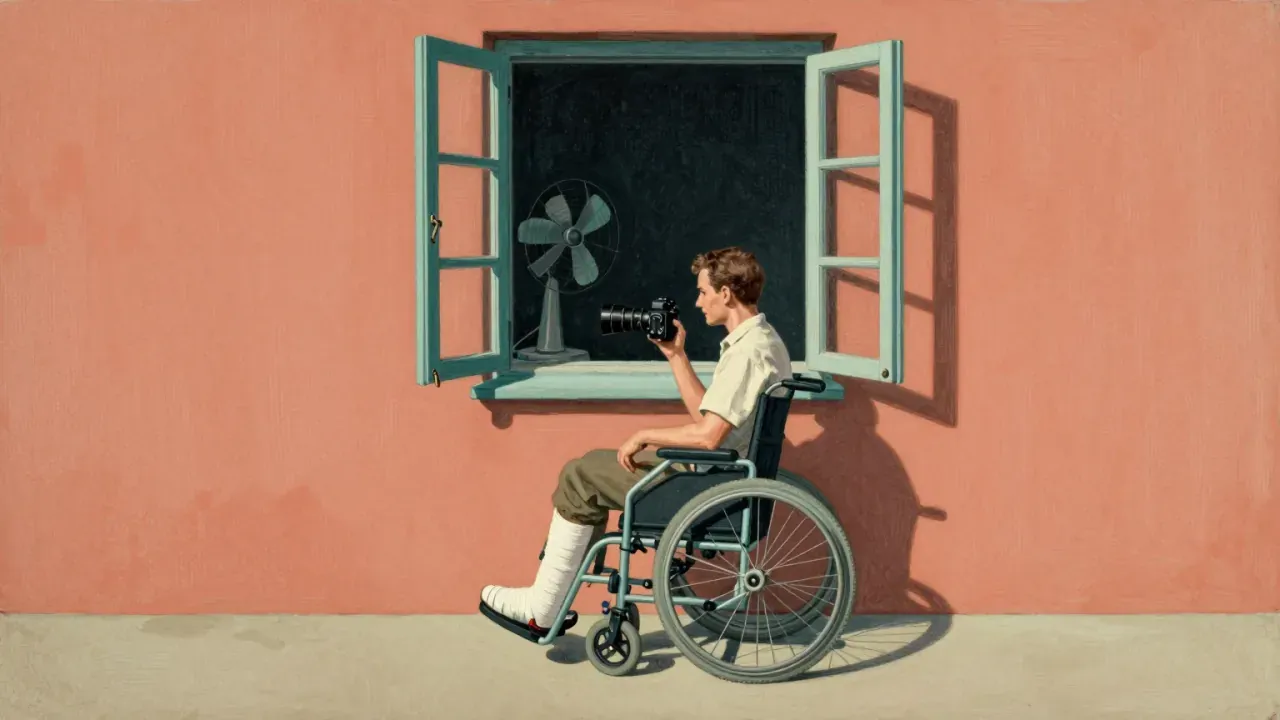
Confined almost entirely to one apartment and the courtyard it overlooks, Rear Window turns a photographer's boredom into a murder investigation conducted through binoculars. Built on a single elaborate Paramount set, it is Hitchcock at his most tightly engineered, with James Stewart watching and Grace Kelly eventually doing the one thing he cannot: crossing the courtyard himself.

13:00

Run Lola Run

Tom Tykwer · 1998

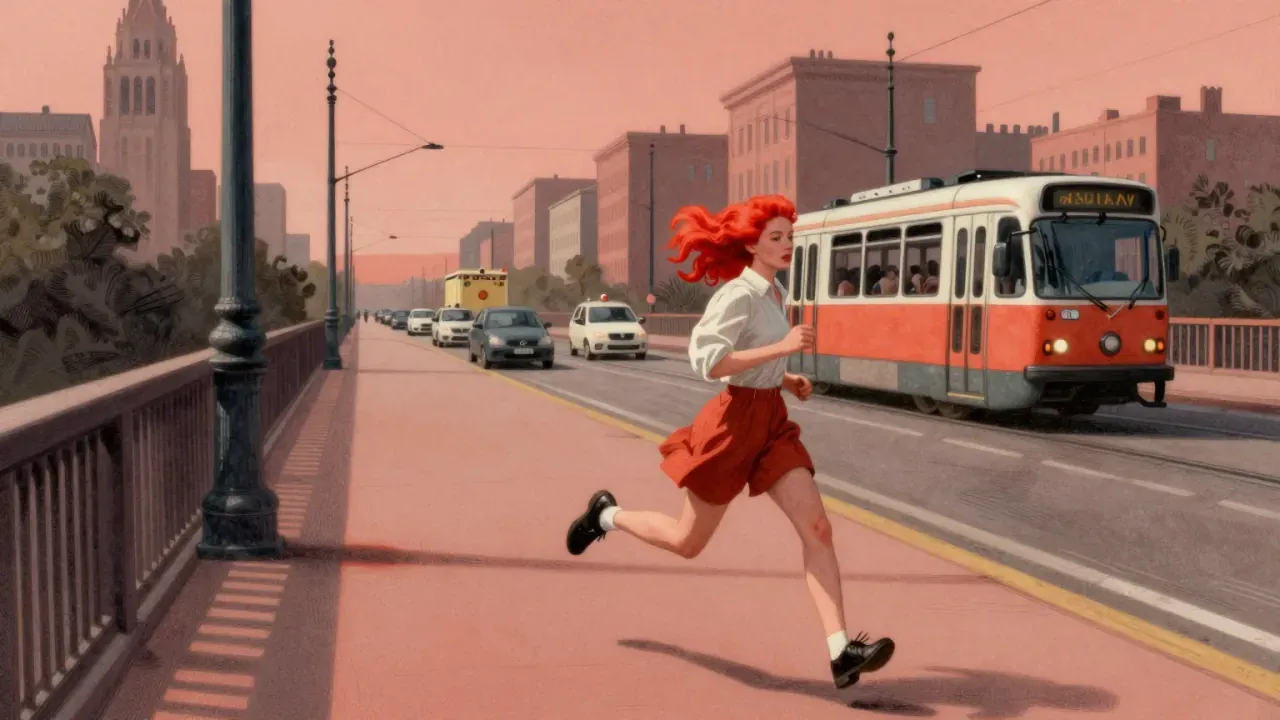
Franka Potente plays Lola, who has twenty minutes to find 100,000 marks and save her boyfriend Manni from a violent debt collector, and Tom Tykwer's 1998 film runs the same twenty minutes three times, letting split-second differences in Lola's path — a man with a dog, a delay on the stairs — cascade into wildly different outcomes for everyone she passes. Told through a mix of live action, animation and still-photo flash-forwards, it became the highest-grossing German film of its year.

13:00

The Triplets of Belleville

Sylvain Chomet · 2003

The Triplets of Belleville follows an elderly Frenchwoman who reshapes her life around her grandson's obsessive cycling career, then pursues him across an invented city, an amalgam of New York, Montreal and Quebec City, after gangsters kidnap him mid-Tour de France. Sylvain Chomet's first feature, told almost entirely through pantomime, sound and song, cost $8 million, took $14.8 million worldwide, and earned two Academy Award nominations, including the first for a PG-13 animated feature.

13:00

Zootopia

Byron Howard, Rich Moore, Jared Bush · 2016

Judy Hopps, the first rabbit on the Zootopia police force, partners against her will with Nick Wilde, a fox con artist, to solve a missing-mammal case that exposes prejudice baked into the city's design. Byron Howard and Rich Moore's Disney feature restructures a buddy-cop plot around predator-prey tension, using new fur-simulation software and years of zoo research to render a mammal metropolis that looks, and argues, like it was built for its inhabitants rather than around them.