filmbriefs
Topic

Masculinity

The script men are handed, and what it costs to follow.

39
in film
13:00
average
507 min
in total
46
across the network
Masculinity across the network →
All briefs39
13:00

A Ship Bound for India

Ingmar Bergman · 1947

A Ship Bound for India (1947) is Ingmar Bergman’s third feature and first original screenplay, co-written with Martin Söderhjelm. Set in a Swedish port town, it follows Johannes, who returns after seven years at sea and dreams of his teenage years under his domineering, blind-bound father. Built around a single extended flashback, the film charts Johannes’s slow assertion of self amid familial cruelty, unrequited love, and physical stigma — all rendered with stark, unhurried realism and no stylistic flourish.
13:00

Amores perros

Alejandro González Iñárritu · 2000

Alejandro González Iñárritu’s 2000 debut is a tripartite Mexican drama linked by a single car crash. Three stories — a teenager in dogfighting, a model recovering from injury, and a hitman estranged from his daughter — unfold across Mexico City’s social strata. Rodrigo Prieto’s unadorned cinematography and Iñárritu’s tight editing sustain a tone of controlled urgency. The film treats dogs not as symbols but as narrative counterpoints, and its themes — fractured masculinity, economic precarity, moral inertia — emerge through action, not exposition. It won the BAFTA for Best Film Not in the English Language and remains a touchstone of early-2000s arthouse cinema.
13:00

Baby Boy

John Singleton · 2001

John Singleton’s 2001 crime drama follows Joseph 'Jody' Summers, a 20-year-old South Central LA resident navigating fatherhood, fractured relationships, and the quiet pressure to grow up. Anchored by Tyrese Gibson’s layered performance and grounded in domestic realism, the film traces Jody’s incremental shift from evasion to accountability — not through grand gestures, but through repeated, often awkward choices. Its power lies in specificity, restraint, and its refusal to separate personal failure from structural constraint.

13:00

Beau Travail

Claire Denis · 1999

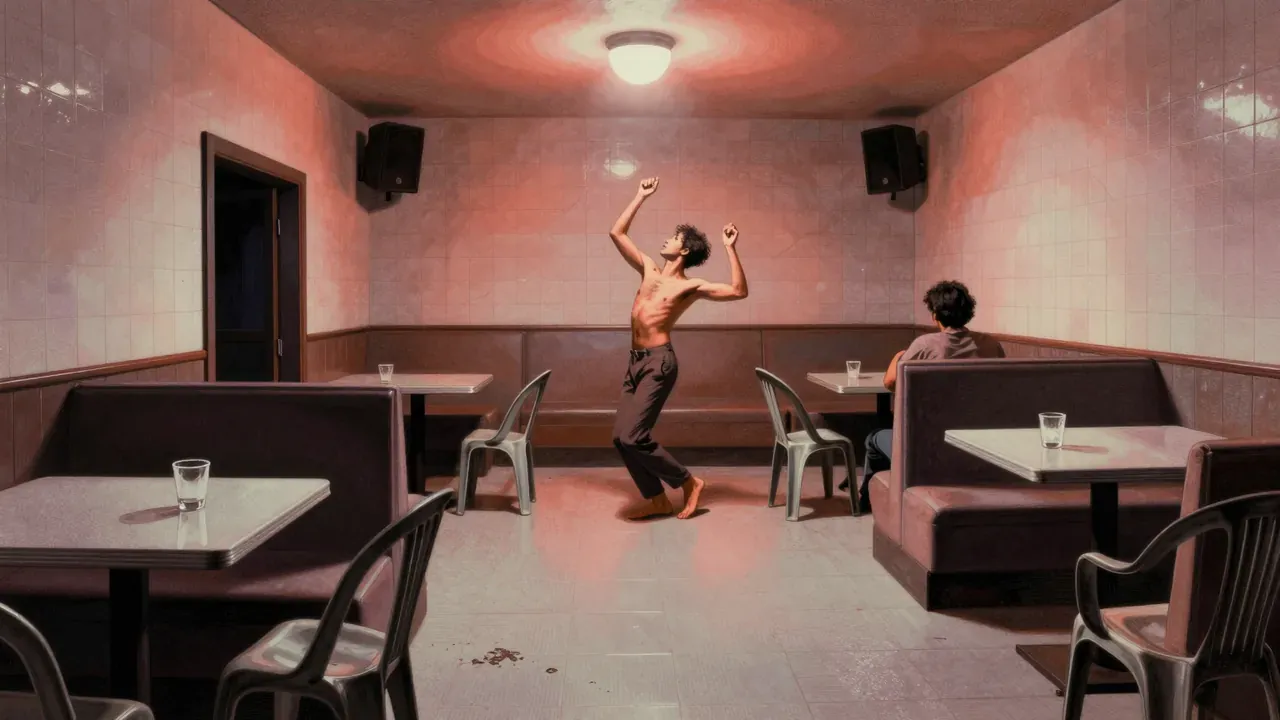
Claire Denis’s 1999 arthouse drama relocates Herman Melville’s Billy Budd to the French Foreign Legion in Djibouti, tracing Adjudant-Chef Galoup’s psychological unravelling as he fixates on a new recruit. Shot by Agnès Godard and edited by Nelly Quettier, it relies on physicality, repetition and withheld motivation to explore power, masculinity and colonial space — culminating in a solitary, ecstatic nightclub dance that resolves nothing but everything.

13:00

Bull Durham

Ron Shelton · 1988

Ron Shelton’s 1988 romantic comedy follows a veteran catcher, a rookie pitcher, and a baseball-obsessed teacher in the Durham Bulls minor-league team. Grounded in precise detail and unhurried pacing, it explores mentorship, obsolescence, and the rituals that give shape to transient lives — all without resorting to sentiment or spectacle.

13:00

Chasing Amy

Kevin Smith · 1997

Kevin Smith’s third feature follows comic artist Holden McNeil as he falls for lesbian writer Alyssa Jones, fracturing his lifelong friendship with Banky Edwards. Shot on a $250,000 budget in New York, the film uses talk, not spectacle, to explore jealousy, sexual history, and the limits of empathy. It won Independent Spirit Awards for Best Screenplay and Best Supporting Male (Jason Lee), and remains a defining — if contested — entry in 90s American indie cinema.

13:00

Decision at Sundown

Budd Boetticher · 1957

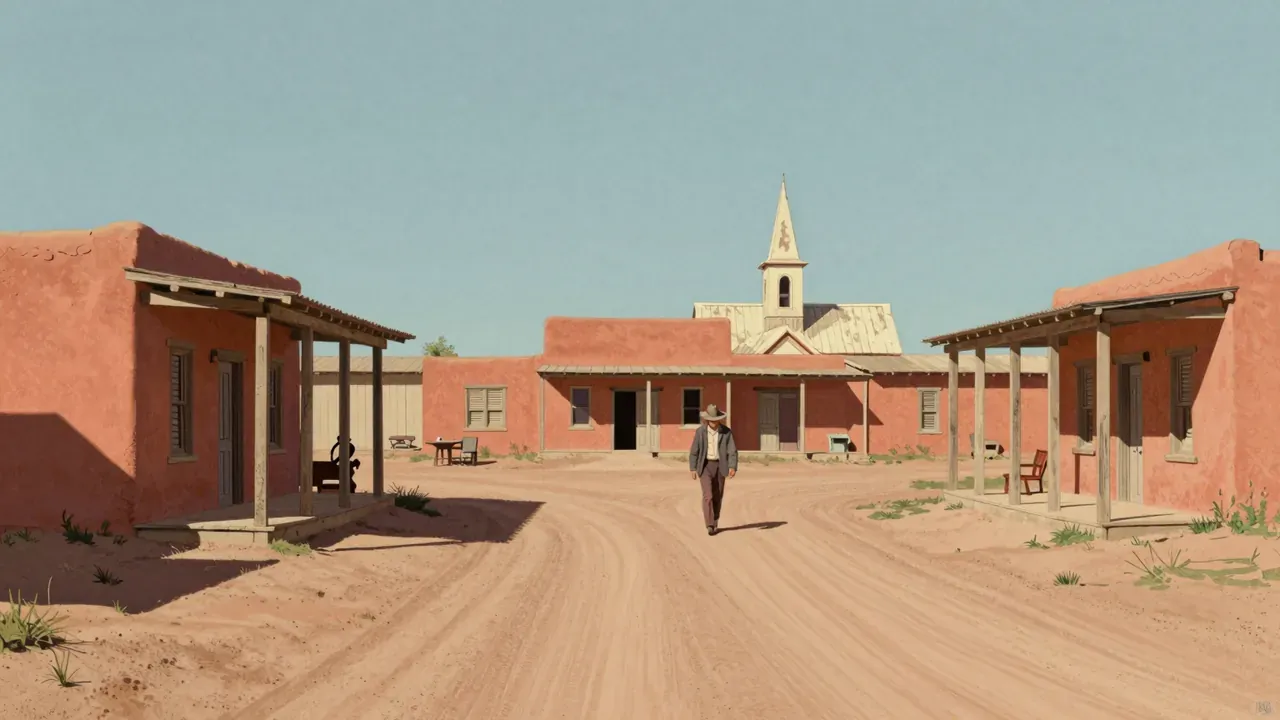
Decision at Sundown (1957), directed by Budd Boetticher and starring Randolph Scott, follows a man seeking vengeance in a small Western town — only to have his certainty unravel over a single day. With Burnett Guffey’s stark cinematography and Charles Lang’s tightly coiled script, the film builds tension through dialogue and silence rather than action, culminating not in a showdown but in a quiet, bitter withdrawal. Part of the Boetticher–Scott cycle, it stands apart for its psychological austerity and moral ambiguity.

13:00

Drive, He Said

Jack Nicholson · 1971

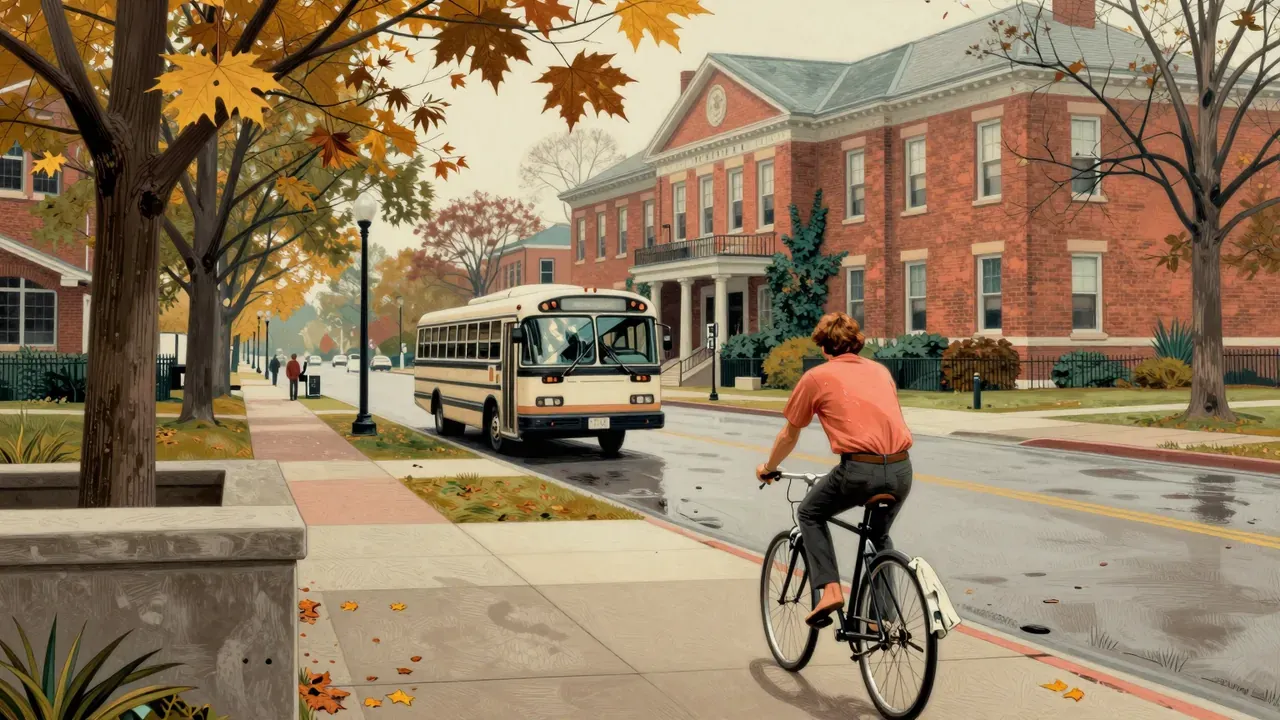
Jack Nicholson’s 1971 directorial debut, adapted from Jeremy Larner’s novel, follows a disillusioned college basketball star navigating affairs, draft anxiety, campus unrest, and a volatile roommate. Shot on location at the University of Oregon, it features committed performances from William Tepper, Karen Black, and Bruce Dern, with cinematography by Bill Butler and a sparse score by David Shire. Though critically divided and commercially obscure, it remains a singular artefact of early-70s American countercinema—uneven, urgent, and uninterested in tidy answers.

13:00

Fighting Elegy

Seijun Suzuki · 1966

Seijun Suzuki’s 1966 drama follows Kiroku Nanbu, a Catholic teen in pre-war Japan whose sexual repression and institutional alienation spiral into ritualised violence and, finally, political extremism. Adapted by Kaneto Shindō from Takashi Suzuki’s novel, the film uses stark black-and-white imagery, abrupt editing and physical performance to chart a psyche collapsing under the weight of unspoken longing and enforced discipline.

13:00

I Vitelloni

Federico Fellini · 1953

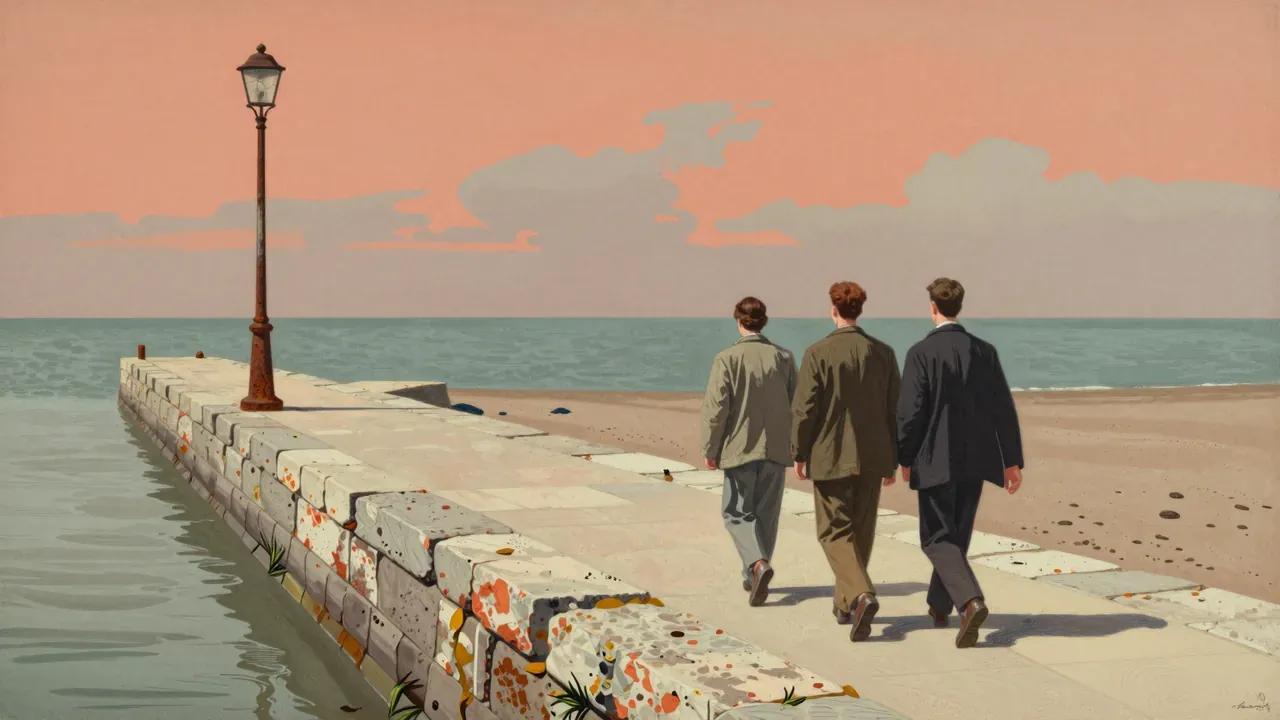
Federico Fellini’s 1953 film follows five idle young men in a provincial Italian town as summer ends and inertia sets in. With no grand plot, only accumulated moments — a shotgun wedding, a masquerade ball, a seaside walk — it observes how lives persist without direction. Otello Martelli’s understated cinematography and Nino Rota’s delicate score reinforce its mood of suspended time. Though some subplots falter and its pacing resists conventional engagement, its power lies in its fidelity to a specific, unromantic truth: that growing up is often less about leaping forward than learning to bear the weight of staying still.

13:00

Il sorpasso

Dino Risi · 1962

Set over Ferragosto 1962, Il sorpasso follows Bruno Cortona — a charismatic, reckless Roman — as he sweeps timid law student Roberto Mariani into a spontaneous coastal drive. Over two days, Roberto sheds inhibition under Bruno’s influence, adopting his mannerisms, his risks, and ultimately his fate. Directed by Dino Risi and shot by Alfio Contini, the film uses real-time pacing, sparse editing, and Riz Ortolani’s brassy score to trace the slow, irreversible transfer of worldview — not as lesson, but as contagion.

13:00

Knife in the Water

Roman Polanski · 1962

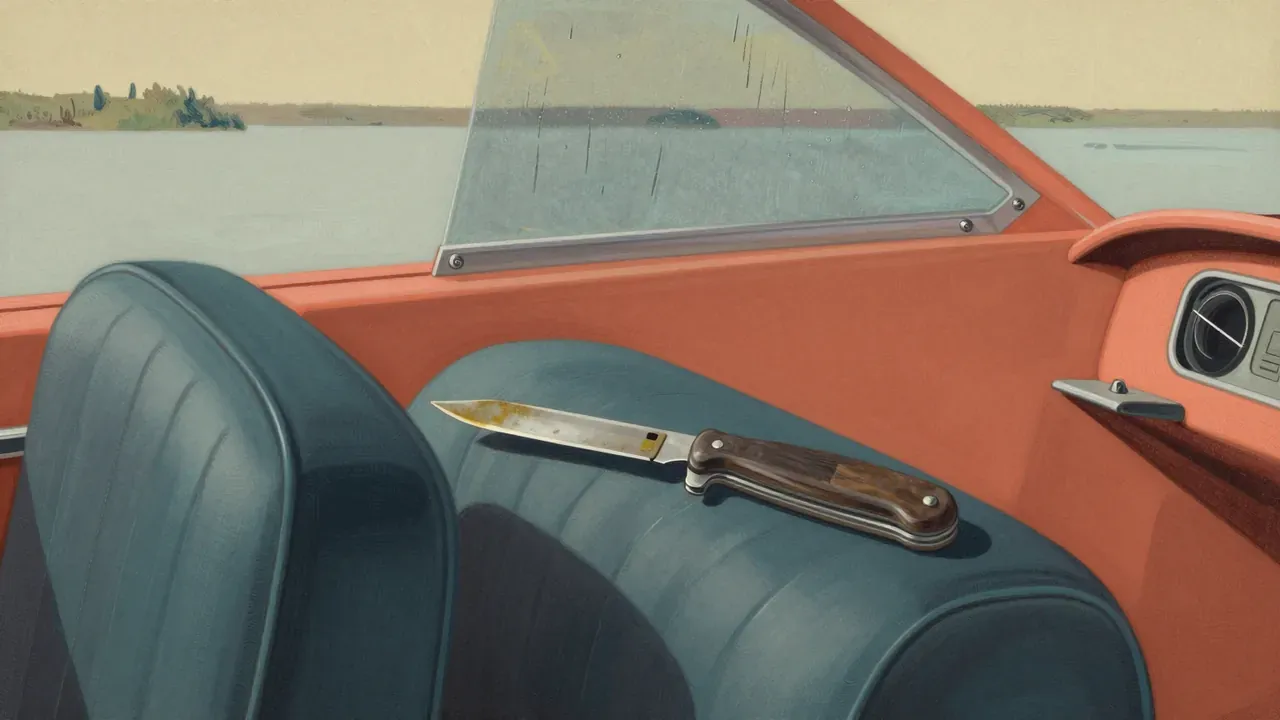
Roman Polanski’s 1962 feature debut Knife in the Water is a tightly controlled Polish drama about a married couple and a young hitchhiker adrift on a sailboat. With no exposition, minimal setting, and three restrained performances, it studies status, silence, and sexual tension through duration and constraint — culminating not in violence or revelation, but in total stasis.

13:00

Maidstone

Norman Mailer · 1970

Norman Mailer’s 1970 independent film Maidstone stars him as a narcissistic filmmaker-politician shooting a brothel drama on his East Hampton estate. Shot over five days with no script, handheld cameras, and improvised performances — including a real, bloody fight with Rip Torn — it attempts a radical critique of media, power and ego. Its ambition is structural: to make authority visible by dismantling control. But its execution exposes the limits of that vision — especially in its treatment of women and race. Though obscure for decades, it remains a singular, uncomfortable artefact of late-1960s American cultural crisis.

13:00

Mikey and Nicky

Elaine May · 1976

Elaine May’s 1976 film follows two Philadelphia men—a desperate mob associate and his loyal friend—over one fractured night. Built around John Cassavetes and Peter Falk’s physically exacting performances, it uses repetition, silence, and unvarnished realism to trace the erosion of intimacy under pressure. Shot over 110 nights and edited for nearly two years, it resists genre expectations to focus on gesture, memory, and the labour of sustaining a relationship neither man fully understands.

13:00

Naked

Mike Leigh · 1993

Mike Leigh’s 1993 drama follows Johnny, a fugitive intellectual played by David Thewlis, over two days in London. Moving between borrowed flats, night-shift jobs, and street corners, he dominates conversations with erudite cruelty while his own life unravels. Shot by Dick Pope and edited by Jon Gregory, the film uses Leigh’s signature improvisational method to build raw, unsentimental performances. It is a study in alienation, masculinity, and moral exhaustion — stark, unrelenting, and formally precise.

13:00

Shaft

Gordon Parks · 1971

A 1971 crime thriller directed by Gordon Parks, Shaft stars Richard Roundtree as a Black private investigator navigating Harlem and Manhattan to rescue a mobster’s daughter from the Italian mafia. Built on Ernest Tidyman’s novel and shaped by Isaac Hayes’ Grammy-winning score, it uses lean plotting, location realism, and deliberate casting to assert Black agency within a Hollywood genre. Its significance lies less in thematic depth than in its structural intervention: who directs, scores, edits, and occupies the frame — and on what terms.

13:00

Straw Dogs

Sam Peckinpah · 1971

Straw Dogs (1971), directed by Sam Peckinpah, follows an American mathematician and his wife who retreat to a Cornish farmhouse, only to face escalating hostility from locals culminating in a violent siege. Adapted from Gordon M. Williams’s novel, the film strips away moral framing to examine the erosion of pacifism under sustained provocation. Shot by John Coquillon and scored by Jerry Fielding, it relies on meticulous realism, rhythmic editing and restrained performances — particularly Dustin Hoffman’s and Susan George’s — to build dread. Its themes of territoriality, masculinity and civilised self-deception remain urgent, though its handling of agency and motivation continues to divide viewers.

13:00

The Merchant of Four Seasons

Rainer Werner Fassbinder · 1972

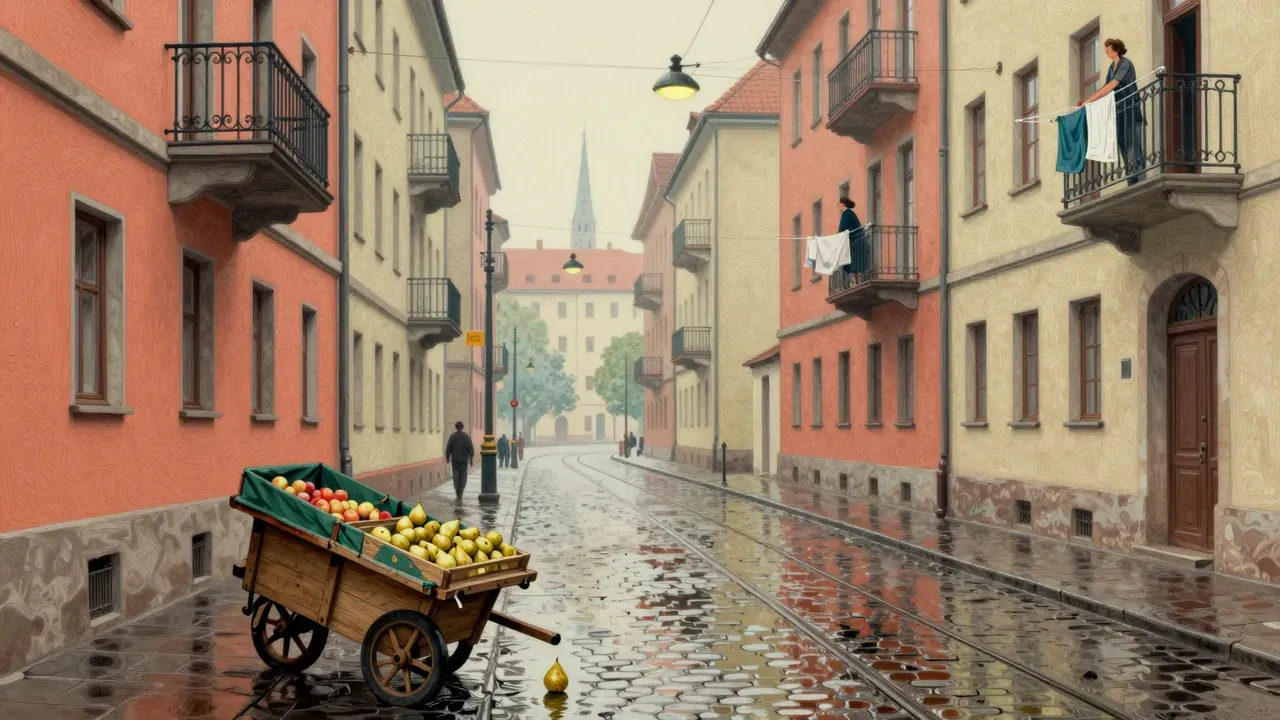
Rainer Werner Fassbinder’s 1972 film follows Hans Epp, a Munich fruit peddler in the 1950s, as his marriage, health, and sense of self steadily collapse under familial disdain, class prejudice, and his own inertia. Shot with restrained precision by Dietrich Lohmann and performed with unadorned gravity by Hans Hirschmüller and Irm Hermann, it treats despair as routine, not crisis.

13:00

This Sporting Life

Lindsay Anderson · 1963

Lindsay Anderson’s 1963 debut, adapted by David Storey from his novel, follows Frank Machin — a rugby league player in industrial Yorkshire — whose physical dominance on the pitch contrasts with his emotional paralysis off it. Shot by Denys Coop and edited by Peter Taylor, it uses fractured chronology, restrained performance, and unvarnished locations to explore class, grief, and the limits of male expression. Though commercially unsuccessful, it was critically lauded, earning BAFTA and Cannes honours.

13:00

A Better Tomorrow

John Woo · 1986

John Woo’s 1986 crime film redefined Hong Kong action cinema by fusing wuxia ethics with urban fatalism. Ti Lung, Leslie Cheung, and Chow Yun-fat play three men bound by blood, betrayal, and bullets. Its influence on 'heroic bloodshed' is foundational; its emotional logic remains uncompromising.

13:00

Nymphomaniac

Lars von Trier · 2013

Lars von Trier’s Nymphomaniac is a two-part, four-hour English-language drama in which a woman recounts her sexual history to a celibate man who interprets it through analogies drawn from mathematics, music, and natural history. Starring Charlotte Gainsbourg and Stacy Martin as different ages of the same woman, it is structured as a series of titled chapters, filmed by Manuel Alberto Claro and edited by Molly Malene Stensgaard. Produced by Zentropa in France, it asks not whether desire can be understood, but how interpretation inevitably distorts it.

13:00

The Wrestler

Darren Aronofsky · 2008

Darren Aronofsky’s 2008 drama follows Randy 'The Ram' Robinson, an ageing professional wrestler clinging to identity through performance as his body fails and his relationships fray. Shot on 16mm by Maryse Alberti and scored by Clint Mansell, it stars Mickey Rourke in a physically exacting performance that revitalised his career. The film won the Golden Lion at Venice and received critical acclaim for its restraint, realism, and unsentimental treatment of ageing, labour, and obsolescence.

13:00

Carnal Knowledge

Mike Nichols · 1971

Mike Nichols’ 1971 Carnal Knowledge follows two men across twenty-five years as their relationships with women deteriorate not through crisis but through repetition, habit, and emotional default. Adapted from Jules Feiffer’s play, it uses flat lighting, restrained performances, and unadorned editing to chart how language, routine and performance replace intimacy. Starring Jack Nicholson, Art Garfunkel, Ann-Margret and Candice Bergen, it remains a cold, structurally rigorous study of masculinity and desire — admired for its honesty, challenged for its austerity.

13:00

Husbands

John Cassavetes · 1970

John Cassavetes’s 1970 drama follows three middle-aged friends—Gus, Harry, and Archie—after the sudden death of their closest companion. Unmoored, they flee suburban New York for London, where their attempts at distraction collapse under the weight of unspoken grief, ageing, and mutual dependence. Shot in loose, handheld style with extensive improvisation, the film prioritises duration and behavioural realism over plot. Its reception was polarised: hailed by some as radical and deeply sincere, dismissed by others as self-indulgent and misogynistic. Restored in 2020 by Criterion, it remains a demanding, uncompromising portrait of masculinity in suspension.

13:00

The Power of the Dog

Jane Campion · 2021

Jane Campion’s 2021 adaptation of Thomas Savage’s novel is a slow-burning psychological drama set on a 1925 Montana ranch. Benedict Cumberbatch plays Phil Burbank, a rancher whose contempt for his brother’s new wife and her son masks deeper anxieties about masculinity, inheritance, and control. Shot by Ari Wegner in New Zealand, scored by Jonny Greenwood, and edited by Peter Sciberras, the film trades Western spectacle for interior tension — building dread through restraint, composition, and performance. It premiered at Venice, won Best Director there and at the Oscars, and received widespread critical acclaim for its formal discipline and thematic rigour.
13:00

Burning

Lee Chang-dong · 2018

Eight years after his last film, Lee Chang-dong adapted a short Murakami story into a slow, unsettling thriller about a young writer, the childhood friend who vanishes, and the wealthy man who may or may not have killed her. Cannes competed for it, critics kept it on year-end lists, and a Korean poll of over a hundred critics later called it the best Korean film ever made.

13:00

Drive

Nicolas Winding Refn · 2011

Ryan Gosling plays an unnamed Hollywood stuntman who moonlights as a wheelman, drawn toward his neighbour Irene and her young son right as her ex-convict husband's debts pull them all into a heist that goes wrong. Adapted by Hossein Amini from James Sallis's nonlinear novel and directed by Refn after Gosling handpicked him, the film pairs a stripped-down, near-silent lead performance with Cliff Martinez's synth score and long stretches where almost nothing is said out loud.

13:00

Fight Club

David Fincher · 1999

David Fincher's 1999 adaptation of Chuck Palahniuk's novel follows an unnamed, insomniac office worker who starts an underground bare-knuckle club with a charismatic soap-maker, Tyler Durden, only for the club to grow into something far more dangerous. Edward Norton and Brad Pitt lead a film built around a structural twist Fincher fought to keep, on a 63 million dollar budget that returned a modest sum before turning, on home video, into one of the decade's defining cult titles.

13:00

Full Metal Jacket

Stanley Kubrick · 1987

Stanley Kubrick's 1987 war film, shot entirely around London, splits into a Parris Island boot-camp section under a savage drill instructor and a Tet Offensive combat section in Hue. Built from Gustav Hasford's novel with Michael Herr, and carried by R. Lee Ermey's largely self-written performance, it argues that training, not combat, is where a soldier is actually made.

13:00

Heat

Michael Mann · 1995

Michael Mann's 1995 crime epic pairs Al Pacino's LAPD detective against Robert De Niro's professional thief across a Los Angeles built from real locations and a case Mann first wrote up as a 1989 television film. Its bank-heist shootout, drilled for months with a former SAS trainer, and the single diner scene bringing its two leads together for the first time on screen remain the reasons it is still watched, even at 171 unhurried minutes.

13:00

Oldboy

Park Chan-wook · 2003

Park Chan-wook's 2003 thriller, the middle film of his Vengeance Trilogy, follows Oh Dae-su as he hunts the man who imprisoned him for fifteen years with no explanation. Built around Choi Min-sik's ferocious lead performance and a single-take corridor fight shot over three days, it won the Grand Prix at Cannes and remains one of the most-cited South Korean films abroad, for reasons that are as uncomfortable as they are precise.

13:00

Once Upon a Time in the West

Sergio Leone · 1968

Sergio Leone's 1968 Western, funded by Paramount specifically to secure Henry Fonda, casts the actor against type as a hired killer clearing land for the railroad while a harmonica-playing stranger, played by Charles Bronson, pursues him for reasons the film withholds until its final scenes. Composed with Ennio Morricone's score written and recorded before filming began, and shot across Spain, Utah and Cinecittà, the film ran 165 minutes in Europe to strong box office, but Paramount's 140-minute US cut flopped on release in 1969, a fate the film's reputation has long since reversed.

13:00

Raging Bull

Martin Scorsese · 1980

Martin Scorsese's 1980 film adapts former middleweight champion Jake LaMotta's own memoir into a study of a man whose jealousy and temper wreck his marriage and his relationship with his brother and manager Joey at the same rate his boxing career rises and falls. Shot in black and white, partly because research showed period boxing gloves came in too narrow a range of colours to justify colour film, and built around a physical transformation in which Robert De Niro gained roughly 60 pounds to play LaMotta's later years, the film returned only a modest $23.4 million against its $18 million budget on release but later won Oscars for De Niro's performance and Thelma Schoonmaker's editing.

13:00

Reservoir Dogs

Quentin Tarantino · 1992

Quentin Tarantino's 1992 debut follows six career criminals, known to each other only by colour-coded aliases, after a jewellery heist collapses within minutes. Confined largely to one warehouse and told through flashbacks rather than the robbery itself, it built its reputation on tense dialogue, a single notorious torture scene, and its influence on the crime cinema that followed it.

13:00

Taxi Driver

Martin Scorsese · 1976

Martin Scorsese's 1976 film follows Travis Bickle, an insomniac Vietnam veteran driving a New York taxi through the city's worst hours, as his isolation and contempt for the people around him build toward an act of violence aimed first at a political candidate and then at the pimp controlling a twelve-year-old sex worker he has taken an interest in. Written by Paul Schrader, shot with a jittery, restless camera, and scored by Bernard Herrmann in the days before his death, the film was made for $1.9 million and returned over $117 million, winning the Palme d'Or and later becoming entangled in real-world controversy after inspiring an actual assassination attempt.

13:00

The Good, the Bad and the Ugly

Sergio Leone · 1966

Sergio Leone's 1966 close to the Dollars Trilogy follows a bounty hunter, an outlaw and a hired gun across the American Civil War as they hunt buried Confederate gold, shot in Techniscope across Spain on a $1.2 million budget that returned nearly $39 million, built around Eli Wallach's performance and Ennio Morricone's score.

13:00

The Incredibles

Brad Bird · 2004

The Incredibles follows a superhero family forced into hiding by government mandate, focusing on a father stuck in a soul-crushing insurance job until a secret assignment pulls him back into hero work and endangers his family. Written and directed solely by Brad Bird for Pixar, with an all-human cast the studio had never animated before, the film grossed $631 million against a $92 million budget and won two competitive Academy Awards plus the first Hugo Award given to an entirely animated film.

13:00

The Searchers

John Ford · 1956

John Ford's 1956 western follows Ethan Edwards, a Confederate veteran played by John Wayne, across years of searching Monument Valley for a niece abducted in a Comanche raid, adapted from Alan Le May's novel and shot in VistaVision and Technicolor, its reputation built on Winton Hoch's photography and an ending that leaves its hero permanently outside the door.

13:00

Unforgiven

Clint Eastwood · 1992

Directed by and starring Clint Eastwood, Unforgiven follows a widowed farmer and reformed killer pulled back into one last bounty job, made on a $14.4 million budget that returned over $101 million and won four Academy Awards including Best Picture, with Gene Hackman's affable, brutal sheriff as its centre of gravity.