filmbriefs
Topic

The American South

Defeat, memory and most of the music the country exported.

41
in film
13:00
average
533 min
in total
88
across the network
The American South across the network →
All briefs41
13:00

A Face in the Crowd

Elia Kazan · 1957

Elia Kazan’s 1957 drama follows Larry 'Lonesome' Rhodes, a charismatic drifter turned national TV star, whose rise and fall exposes the collusion between media, advertising and politics in shaping public belief. Andy Griffith’s debut performance anchors a tightly structured critique of persuasion as infrastructure, not personality.
13:00

A Poem Is A Naked Person

Les Blank · 1974

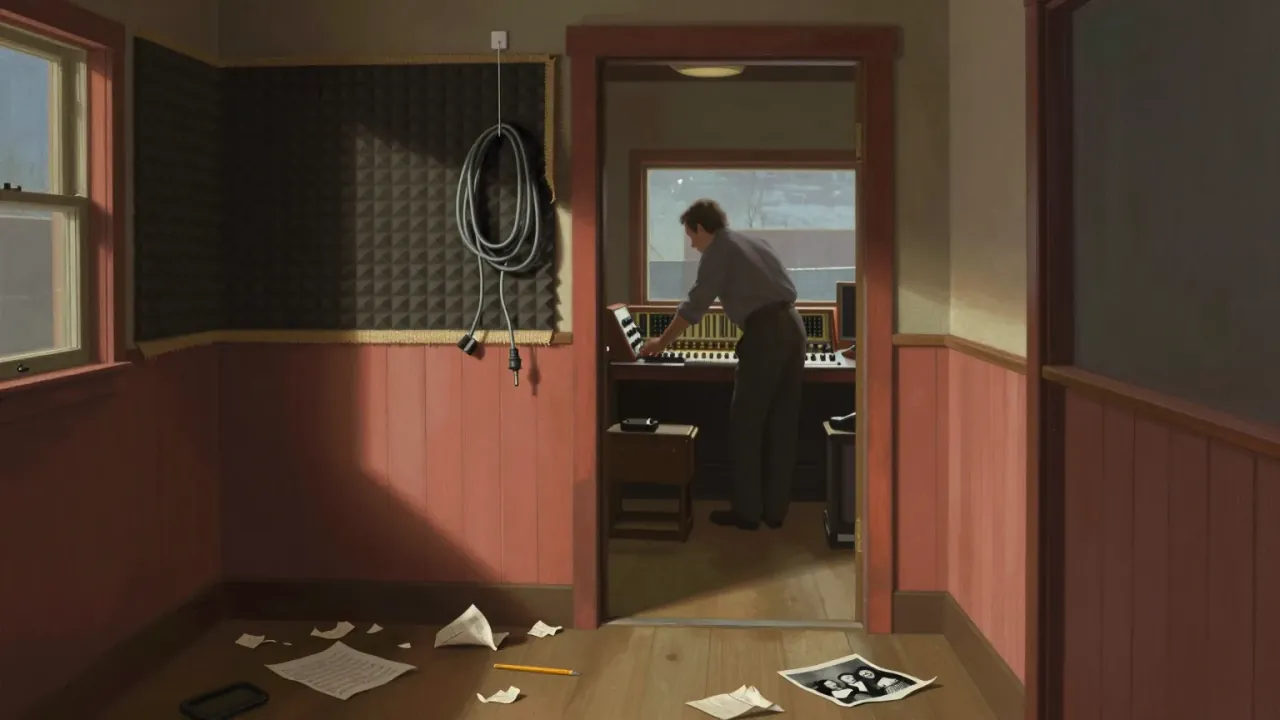
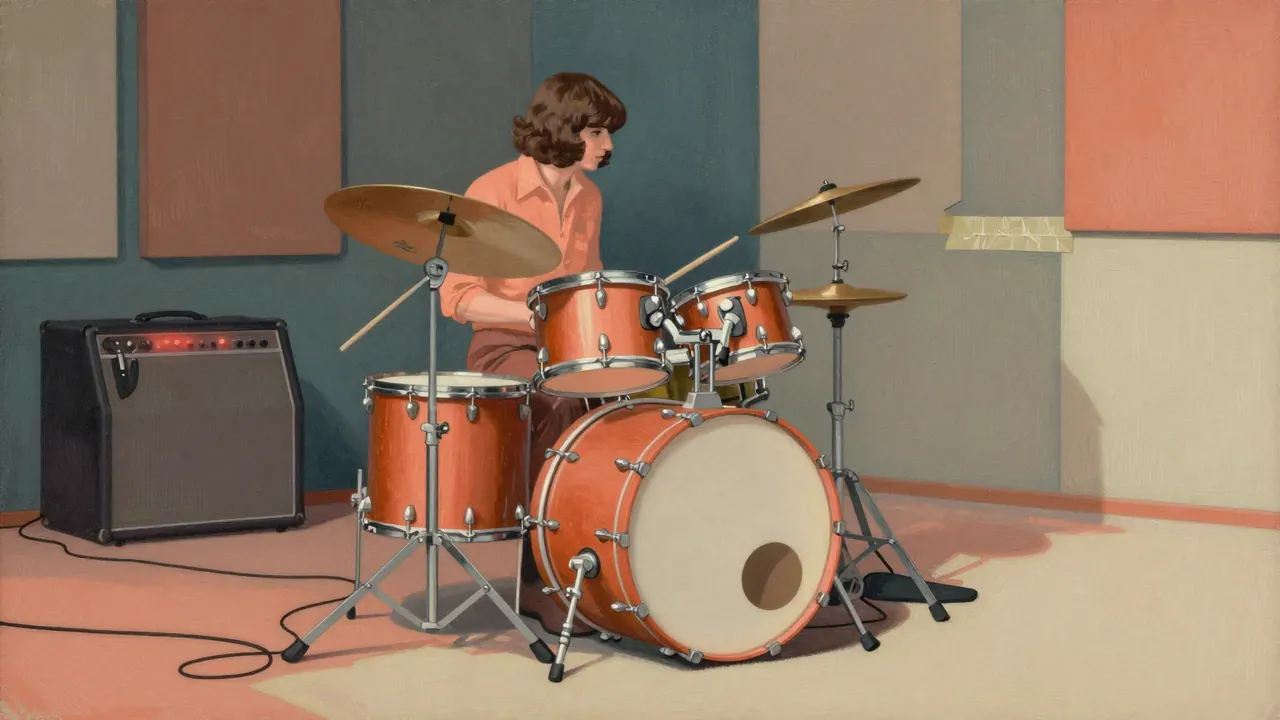
Les Blank’s 1974 documentary A Poem Is a Naked Person spent forty years unreleased, emerging only after his death. Shot over two years at Leon Russell’s Oklahoma studio, it avoids biography in favour of immersive texture: rehearsals, murals painted in drained pools, lakeside light, and unscripted encounters. Its power lies in sustained attention, not exposition — a film that treats music, place, and personality as inseparable elements of a single, breathing world.

13:00

Buck and the Preacher

Sidney Poitier · 1972

Sidney Poitier’s 1972 directorial debut Buck and the Preacher recasts the Western around the Exoduster movement: Buck (Poitier) leads freed people westward, negotiates with Native Americans for safe passage, and allies with the sharp-tongued Reverend Rutherford (Harry Belafonte) to evade white marauders. Shot in Mexico and Kenya, with cinematography by Alex Phillips Jr. and music by Benny Carter, it balances action with quiet realism — prioritising collective survival over individual legend. Though its villains lack nuance and some plot devices feel functional, its commitment to Black self-determination, material history, and genre reclamation remains potent.

13:00

Down by Law

Jim Jarmusch · 1986

Jim Jarmusch’s 1986 black-and-white arthouse film follows three mismatched convicts — a radio DJ, a pimp, and an Italian immigrant — who escape from a New Orleans prison into the Louisiana bayou. With minimal plot, deliberate pacing, and Robby Müller’s stark cinematography, it foregrounds texture, silence, and the quiet evolution of trust over conventional narrative drive. Starring Tom Waits, John Lurie, and Roberto Benigni, it is a study in tonal precision, linguistic friction, and the unforced poetry of ordinary endurance.

13:00

Easy Rider

Dennis Hopper · 1969

Easy Rider (1969), directed by Dennis Hopper and starring Peter Fonda and Jack Nicholson, follows two bikers travelling cross-country after a drug deal. Shot on location with natural light and improvised dialogue, it captures a fractured America through landscape, gesture, and omission. Its influence on independent cinema is well documented, but its endurance rests on formal discipline — not countercultural myth-making.

13:00

Eve's Bayou

Kasi Lemmons · 1997

Set in 1962 Louisiana, Eve’s Bayou follows ten-year-old Eve Batiste as she witnesses fractures in her prosperous Creole-American family — infidelity, silence, spiritual inheritance — without the language or authority to name them. Kasi Lemmons’ debut sustains a mood of suspended dread and quiet revelation, anchored by Jurnee Smollett’s restrained performance and Amy Vincent’s humid, intimate cinematography. It treats memory, mysticism, and moral ambiguity not as devices but as conditions of being.

13:00

George Washington

David Gordon Green · 2000

David Gordon Green’s 2000 debut is a slow, sun-baked coming-of-age drama set in a decaying North Carolina town. Following a group of preteens — including a boy whose skull never hardened — it traces the aftermath of an accidental death not through plot, but through lingering glances, ambient sound, and Tim Orr’s grain-heavy cinematography. Made for $42,000 with local non-actors, it trades exposition for texture, and resolution for resonance.

13:00

God's Country

Louis Malle · 1985

A 1985 PBS documentary by Louis Malle, filmed across six years in Glencoe, Minnesota, capturing the quiet unraveling of a farming community amid the mid-1980s agricultural crisis. Shot and edited with deliberate restraint, it observes residents’ daily lives, conversations, and surroundings without narration or exposition — offering texture over analysis, continuity over climax.

13:00

Harlan County, USA

Barbara Kopple · 1976

Barbara Kopple’s 1976 documentary follows the Brookside Strike in Harlan County, Kentucky: a year-long dispute between coal miners and Duke Power-owned Eastover Coal. Filmed over four years with no narration, it places viewers among strikers, their families, and union organisers, using only direct testimony, observational footage, and folk music rooted in the community. It won the Academy Award for Best Documentary and was preserved in the US National Film Registry.

13:00

In the Heat of the Night

Norman Jewison · 1967

Norman Jewison’s 1967 crime drama follows Philadelphia detective Virgil Tibbs (Sidney Poitier), detained in a Mississippi town and reluctantly drawn into a murder investigation alongside racist police chief Bill Gillespie (Rod Steiger). Haskell Wexler’s lighting, Hal Ashby’s editing, and Quincy Jones’ score serve a tightly wound procedural that exposes racial hierarchy as structural, not incidental. It won five Academy Awards, including Best Picture and Best Actor.

13:00

Louie Bluie

Terry Zwigoff · 1985

Terry Zwigoff’s 1985 documentary Louie Bluie observes Howard Armstrong — fiddler, painter, linguist, raconteur — in his Detroit home. Shot with minimal equipment and no narration, it captures his music, wit, and visual artistry without contextualising his place in American musical history. The film’s power lies in its restraint: it treats Armstrong as a living, breathing person, not a historical exhibit.

13:00

Matewan

John Sayles · 1987

John Sayles’s 1987 drama reconstructs the 1920 Matewan coal strike in West Virginia with forensic attention to economic detail, regional speech, and collective agency. Shot on location with Haskell Wexler’s naturalistic cinematography and Mason Daring’s period-accurate score, it follows union organiser Joe Kenehan as he navigates racial division, corporate espionage, and escalating violence — culminating in the historic Battle of Matewan. The film avoids hero worship, instead distributing moral weight across miners, widows, preachers, and lawmen. Though critically lauded and preserved in the National Film Registry, its deliberate pace and structural complexity make it demanding but rewarding viewing.

13:00

Mississippi Masala

Mira Nair · 1991

Mississippi Masala (1991), directed by Mira Nair and written by Sooni Taraporevala, follows Mina, a Ugandan Indian woman raised in exile in rural Mississippi, as she begins a relationship with African-American carpet cleaner Demetrius Williams. The film traces the collision of inherited trauma, cultural expectation, and personal desire, moving between Greenwood, Biloxi, and Kampala. It avoids moral simplification, grounding its exploration of race, memory, and belonging in specific places and quiet, accumulative moments.

13:00

Mudbound

Dee Rees · 2017

Mudbound is a 2017 historical drama directed by Dee Rees, adapted from Hillary Jordan’s novel. Set in post-war rural Mississippi, it follows two families — white landowners and Black tenant farmers — whose lives intersect amid poverty, racism and shared war trauma. With Rachel Morrison’s grounded cinematography and restrained performances, it renders systemic injustice as environmental fact rather than moral allegory.

13:00

Mystery Train

Jim Jarmusch · 1989

Mystery Train is Jim Jarmusch’s 1989 triptych set over one night in Memphis, following a Japanese couple, an Italian widow, and a disoriented Englishman as they navigate the city’s margins. Shot in controlled colour by Robby Müller and scored sparsely by John Lurie, it treats narrative as variation rather than progression. Though critically acclaimed and formally assured, its third segment falters under schematic weight. It rewards patient attention with cumulative texture, not plot resolution.

13:00

Native Land

Leo Hurwitz, Paul Strand · 1942

A 1942 American docudrama co-directed by Leo Hurwitz and Paul Strand, Native Land combines archival footage and staged reenactments to document corporate suppression of union organising in the 1930s, drawing on the La Follette Committee’s findings. Paul Robeson narrates and sings; Marc Blitzstein scores; Strand photographs. Restored in 2011 from original nitrate elements, it remains a rigorous, austere, and politically uncompromising work of activist cinema.

13:00

Nothing but a Man

Michael Roemer · 1964

Nothing but a Man (1964), directed by Michael Roemer, follows Duff Anderson, a Black railroad worker in Alabama, as he marries a preacher’s daughter and confronts systemic racism, economic precarity, and fractured fatherhood. Made independently on a $300,000 budget, it uses Motown’s early 1960s hits as diegetic sound and relies on understated performances—especially Ivan Dixon’s and Abbey Lincoln’s—to trace dignity as quiet persistence. Though initially overlooked, it entered the National Film Registry in 1993 and now stands as a landmark of American neorealism.

13:00

One False Move

Carl Franklin · 1992

One False Move (1992) is a tightly wound neo-noir crime film directed by Carl Franklin and written by Billy Bob Thornton. Three Los Angeles criminals flee to Star City, Arkansas, triggering a quiet, inevitable convergence with the town’s police chief — a man whose authority is rooted in local knowledge, not jurisdiction. Shot on location in Arkansas and California, the film avoids genre clichés in favour of psychological precision, restrained performances, and a morally complex portrait of place, race, and consequence.

13:00

Red River

Howard Hawks, Arthur Rosson · 1948

A 1948 Western following Thomas Dunson’s cattle drive from Texas to Kansas, and the slow, inevitable rupture between him and his adopted son Matt. Built on restraint and duration, it treats authority, succession and landscape as interlocking forces — not as myth, but as gruelling, embodied work.

13:00

Ride with the Devil

Ang Lee · 1999

Ang Lee’s 1999 film Ride with the Devil follows young Missouri bushwhackers during the Civil War, adapting Daniel Woodrell’s novel with deliberate slowness and minimal exposition. Shot by Frederick Elmes and written by James Schamus, it foregrounds domestic endurance over battlefield drama, treating violence as rupture rather than climax. Its themes — loyalty, freedom, gendered labour, and the weight of time — emerge through gesture and silence, not speech. Though commercially overlooked and structurally demanding, it remains a singular, unhurried portrait of war’s human residue.

13:00

Sex, Lies, and Videotape

Steven Soderbergh · 1989

Steven Soderbergh’s 1989 debut is a tightly controlled drama set in Baton Rouge, following a married couple, the wife’s sister, and a visiting friend whose videotaped interviews about female sexuality unsettle their relationships. Shot on a $1.2m budget, with deliberate pacing, flat natural lighting by Walt Lloyd, and a sparse Cliff Martinez score, it builds tension through understatement. It won the Palme d’Or, launched the 1990s US indie wave, and remains a benchmark for psychological realism — not as catharsis, but as sustained, uncomfortable attention.

13:00

Show Boat

James Whale · 1936

James Whale’s 1936 Show Boat is a rigorously faithful adaptation of the Kern–Hammerstein musical, starring Irene Dunne and Paul Robeson. Shot by John J. Mescall and edited by Bernard W. Burton, it preserves the original’s multi-decade structure, racial themes, and theatrical grammar — even adding three new songs to deepen character rather than modernise. Though some late edits weaken its temporal arc, its integrity, restraint, and historical precision make it a singular artifact in Hollywood’s musical canon.

13:00

The Delta

Ira Sachs · 1996

Ira Sachs’s 1996 debut The Delta follows 18-year-old Lincoln Bloom as he drifts from his straight-laced life in Memphis into queer spaces and a relationship with Vietnamese immigrant Minh Nguyen. Shot on grainy 16 mm, the film avoids exposition and psychology in favour of texture, silence, and place. Its strengths lie in atmosphere and restraint; its weaknesses in underdeveloped relationships and structural thinness after the river journey begins. A quiet, unsentimental portrait of emergent desire — not as revelation, but as recalibration.

13:00

The Fugitive Kind

Sidney Lumet · 1959

Sidney Lumet’s 1960 adaptation of Tennessee Williams’s Orpheus Descending stars Marlon Brando and Anna Magnani as doomed lovers in a repressive Southern town. Shot in upstate New York, it struggles to translate theatrical heat into cinematic coherence — undermined by dubbing, miscasting, and unresolved thematic tensions — yet endures for its atmosphere, Boris Kaufman’s photography, and Kenyon Hopkins’s evocative score.

13:00

The Last Picture Show

Peter Bogdanovich · 1971

Peter Bogdanovich’s 1971 black-and-white coming-of-age drama follows two high school seniors in a dying Texas town between 1951 and 1952. Adapted from Larry McMurtry’s novel, it trades plot for atmosphere, using restrained performances, flat naturalistic lighting, and diegetic 1950s country music to evoke the slow erosion of community, certainty, and youth. Though praised for its supporting turns — Ben Johnson and Cloris Leachman won Oscars — its structural looseness around the female lead and deliberate pacing divide viewers. It remains a landmark of American arthouse realism.

13:00

The Night of the Hunter

Charles Laughton · 1955

Charles Laughton’s 1955 film adapts Davis Grubb’s novel into a Southern Gothic fable starring Robert Mitchum as a murderous preacher pursuing two children for hidden money. Shot by Stanley Cortez with expressionist lighting and deliberate pacing, it favours symbolic repetition over psychological realism. Though poorly received on release, it is now regarded as a landmark of arthouse thriller cinema.

13:00

The Prince of Tides

Barbra Streisand · 1991

Barbra Streisand’s 1991 adaptation of Pat Conroy’s novel follows South Carolina teacher Tom Wingo (Nick Nolte) as he travels to New York to help his suicidal twin sister, guided by psychiatrist Susan Lowenstein (Streisand). Through therapy sessions and flashbacks, buried family trauma surfaces — violence, repression, and the long shadow of the Lowcountry. Though the film foregrounds romance over the novel’s sibling-centred depth, its power lies in restrained performances, Stephen Goldblatt’s naturalistic cinematography, and its unwavering focus on how silence shapes identity.

13:00

The Story of Temple Drake

Stephen Roberts · 1933

Stephen Roberts’s 1933 adaptation of William Faulkner’s Sanctuary stars Miriam Hopkins as Temple Drake, a Southern woman whose recklessness leads to coercion, assault, and courtroom reckoning. Produced by Benjamin Glazer at Paramount, shot by Karl Struss, and adapted under strict pre-Code scrutiny, it softens the novel’s extremes but retains its moral unease — making it a key document of Hollywood’s transition into enforced restraint.

13:00

Thelma & Louise

Ridley Scott · 1991

Thelma & Louise (1991), directed by Ridley Scott and written by Callie Khouri, follows two friends whose weekend road trip unravels into a fugitive odyssey after a violent confrontation. Anchored by Susan Sarandon and Geena Davis, it uses precise craft and restrained performance to trace how systemic dismissal, economic dependence, and accumulated compromise narrow into irreversible choice. Its cultural resonance rests less on symbolism than on structural rigour: every beat follows from the last, making the final image not shocking but inevitable.

13:00

To Sleep with Anger

Charles Burnett · 1990

Charles Burnett’s 1990 film follows a South Central Los Angeles family unsettled by the arrival of Harry, a charismatic old friend from the South. As Harry’s enigmatic presence triggers marital strain, paternal illness, and fraternal conflict, the film unfolds with deliberate slowness, anchoring its folkloric tensions in domestic detail rather than exposition. Shot by Walt Lloyd and scored by Stephen James Taylor, it sustains a mood of quiet unease, where meaning accrues through gesture, setting, and withheld information — not plot mechanics.

13:00

True Stories

David Byrne · 1986

David Byrne’s 1986 musical film True Stories unfolds in the fictional town of Virgil, Texas, as a nameless visitor observes residents preparing for a sesquicentennial ‘Celebration of Specialness’. Built from vignettes rather than plot, it features John Goodman, Spalding Gray, Swoosie Kurtz and others performing stylised, sincere portraits of small-town life, scored largely by Talking Heads. Edward Lachman’s flat, frontal cinematography and Byrne’s deliberate pacing create a tone both surreal and tender — less mockery than meticulous documentation of how people build meaning from thin air.

13:00

Two-Lane Blacktop

Monte Hellman · 1971

Monte Hellman’s 1971 road film follows unnamed racers — Driver, Mechanic, Girl and GTO — across the American Southwest in a stripped-down, near-silent contest with no clear stakes and no resolution. Shot on location over eight weeks, edited by Hellman and photographed by John Bailey, it treats motion, machinery and landscape as primary subjects, not backdrops. Its rigour is formal and philosophical: no backstory, no score, no names, no climax. Over time, it has been reassessed not as a commercial misfire but as a defining work of New Hollywood minimalism.

13:00

Vernon, Florida

Errol Morris · 1981

Errol Morris’s 1981 documentary Vernon, Florida profiles residents of a small Florida town through unadorned, static interviews. Abandoning an earlier plan to investigate insurance-related limb loss, Morris instead captures everyday speech — on pigeons, dentures, mousetraps and heaven — with clinical stillness and no narration, music or context. Its power lies in duration, neutrality and the quiet dignity of unmediated presence.

13:00

Wild at Heart

David Lynch · 1990

David Lynch’s 1990 Palme d’Or winner adapts Barry Gifford’s novel into a hyper-stylised Southern Gothic crime film starring Nicolas Cage and Laura Dern as a couple fleeing violence across the American South. Anchored by Elvis obsession, Wizard of Oz motifs and Angelo Badalamenti’s score, it trades psychological realism for emotional extremity — landing some sequences with unforgettable force, while others rely too heavily on shock. Its value lies in its unwavering commitment to a singular, dissonant vision.

13:00

Wise Blood

John Huston · 1979

John Huston’s 1979 film Wise Blood adapts Flannery O’Connor’s 1952 novel with formal precision and moral gravity. Brad Dourif stars as Hazel Motes, a war veteran who founds an atheistic church only to spiral into self-annihilation. Shot in Georgia with Gerry Fisher’s subdued cinematography and Alex North’s sparse score, the film sustains a tone of grave absurdity, refusing psychological explanation or redemptive closure. Its power lies in its fidelity to O’Connor’s vision: belief and unbelief as equally binding, the body as theological text, and the American South as a landscape saturated with inherited conviction.

13:00

Written on the Wind

Douglas Sirk · 1956

Written on the Wind (1956), directed by Douglas Sirk for Universal Pictures, is a Southern Gothic melodrama tracing the disintegration of a Texas oil dynasty. Kyle Hadley’s infertility, his sister Marylee’s obsessive desire, and Lucy Moore’s quiet resilience collide in a world where wealth functions as toxin and dignity as performance. Russell Metty’s cinematography, Dorothy Malone’s Oscar-winning turn, and Robert Wilder’s source novel anchor a film that prioritises symbolic coherence over psychological realism.

13:00

O Brother, Where Art Thou?

Joel Coen, Ethan Coen · 2000

O Brother, Where Art Thou? (2000) transplants the Odyssey’s structure to Depression-era Mississippi, following three escaped convicts on a rambling quest. Directed by Joel and Ethan Coen, it features George Clooney, John Turturro, and Tim Blake Nelson, with cinematography by Roger Deakins and music curated by T Bone Burnett. Its sepia-toned digital look was pioneering; its soundtrack, rooted in period folk and gospel, won a Grammy. Though loosely plotted and deliberately arch, the film sustains a unified tone — dry, musical, mythic — that rewards attentive viewing.

13:00

The Birth of a Nation

D. W. Griffith · 1915

D. W. Griffith’s 1915 silent epic pioneered cinematic grammar while propagating a violently racist revision of Reconstruction history. Adapted from Thomas Dixon Jr.’s The Clansman, it glorifies the Ku Klux Klan as saviours of white womanhood and Southern order. Though lauded for its editing, scale, and orchestral score, its depictions of Black Americans—many performed in blackface—are dehumanising fabrications that incited protest on release and continue to shape debates about film preservation, pedagogy, and responsibility.

13:00

Big Fish

Tim Burton · 2003

Tim Burton’s 2003 fantasy drama Big Fish adapts Daniel Wallace’s novel into a tripartite portrait of a father’s tall tales and his son’s reluctant reckoning with them. Shot in Alabama with Philippe Rousselot’s sun-bleached cinematography and scored by Danny Elfman, it balances Southern Gothic texture with mythic whimsy. Though its tonal shifts and narrative looseness divided critics, its central theme — that stories are how we hold people close after they’re gone — remains its quiet, steady pulse.

13:00

Driving Miss Daisy

Bruce Beresford · 1989

Driving Miss Daisy (1989) follows twenty-five years in the relationship between Daisy Werthan, a Jewish widow in Atlanta, and Hoke Colburn, the Black chauffeur her son hires after she can no longer drive. Adapted by Alfred Uhry from his play and directed by Bruce Beresford, it relies on understated performances by Jessica Tandy and Morgan Freeman, restrained cinematography by Peter James, and a patient, episodic structure. Though commercially successful and awarded Best Picture, it has drawn criticism for its gentle treatment of systemic racism. Its strength lies in cumulative intimacy, not exposition.

13:00

Louisiana Story

Robert J. Flaherty · 1948

Louisiana Story (1948) is a scripted 'documentary' commissioned by Standard Oil to portray oil drilling in the Louisiana bayous as peaceful and mutually beneficial. Directed by Robert J. Flaherty, it follows a Cajun boy whose life intersects with a drilling crew — a narrative built on visual lyricism, Virgil Thomson’s Pulitzer-winning score, and deliberate omissions. Though celebrated for its aesthetic control and historical significance, it sidesteps industrial impact, corporate identity, and social complexity. It is a masterclass in mediated realism — and a cautionary artefact of documentary ethics.