The span of years
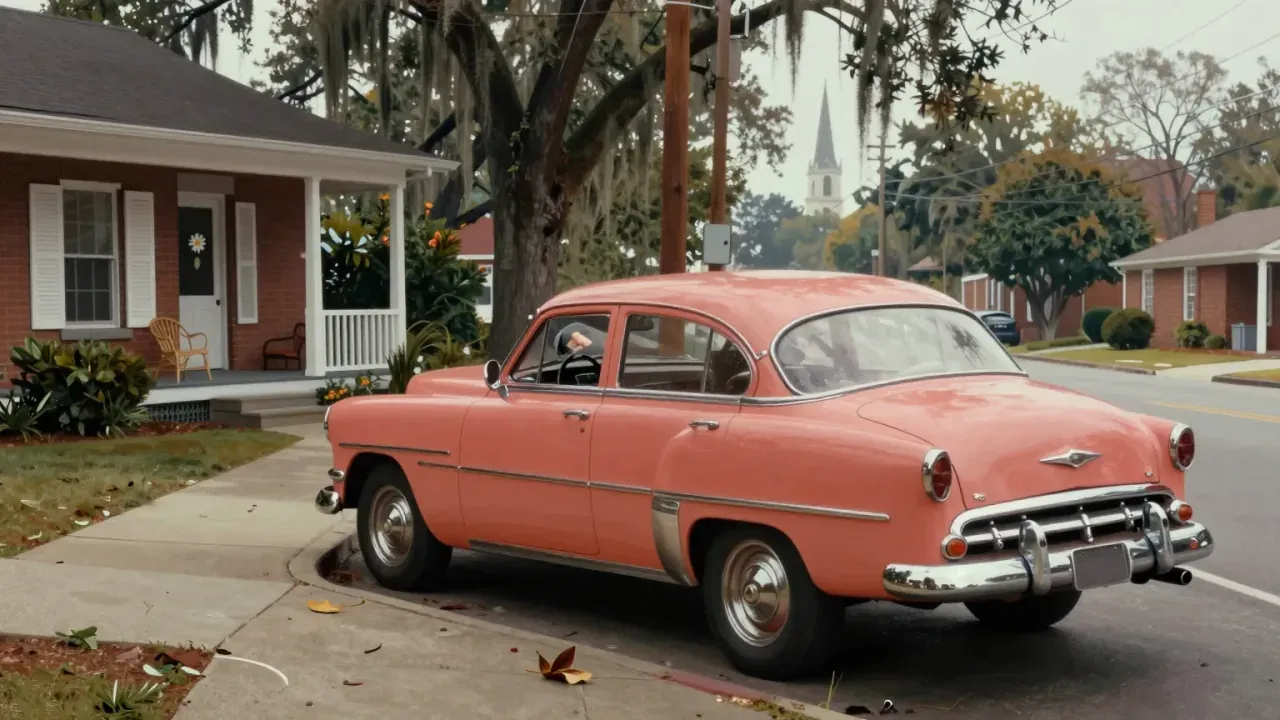
Driving Miss Daisy is a domestic drama set in Atlanta between 1948 and 1973, adapted by Alfred Uhry from his own 1987 play. It traces the slow, quiet evolution of a relationship between Daisy Werthan, a proud, widowed Jewish schoolteacher in her seventies, and Hoke Colburn, the Black chauffeur her son hires after she crashes her car. The film does not seek to dramatise the civil rights movement through protest or policy but through proximity: shared silences, repeated errands, incremental trust, and the quiet erosion of habituated distance. Its ambition is modest and precise — to show how two people, shaped by segregation, age, and mutual suspicion, arrive at something like friendship without ever calling it that. It works within tight physical and emotional boundaries: the Hudson Commodore, the synagogue steps, the kitchen table, the retirement home corridor. There are no flashbacks, no voiceover, no symbolic weather. The period is marked by calendar years on screen and subtle shifts in clothing, radio broadcasts, and car models. It treats history as lived texture, not backdrop.
The look of it
The story unfolds across twenty-five years in episodic, unforced increments, each scene anchored by small exchanges rather than exposition. Morgan Freeman’s Hoke speaks with measured cadence and physical stillness; Jessica Tandy’s Daisy holds herself upright even when her body begins to fail, her authority expressed in clipped syllables and withheld glances. Dan Aykroyd, as Boolie, modulates between dutiful son and pragmatic businessman without broadening into caricature. Peter James’ cinematography avoids stylisation: interiors are evenly lit, compositions balanced but unobtrusive, camera movement rare and purposeful. Hans Zimmer’s score is restrained — piano motifs recur, but never swell. Mark Warner’s editing sustains rhythm through duration: a pause lasts long enough to register weight, a glance lingers just past comfort. The craft serves restraint. There are no dramatic confrontations staged for catharsis; even the synagogue bombing arrives off-screen, its impact registered only in Daisy’s silence and the way she grips Hoke’s arm on their next drive.
The weight of small things
What lands is the accumulation of small, unremarkable acts — Hoke replacing the stolen salmon, Daisy teaching him to read, him feeding her pie in the retirement home — because they are rendered without embellishment or irony. The performances land because Freeman and Tandy avoid both sentimentality and theatricality: their characters do not transform so much as settle, gradually shedding defensiveness like layers of old skin. The film’s moral gravity comes not from pronouncements but from what is withheld: no speeches about justice, no declarations of love, no grand reconciliations. Instead, there is the quiet shock of Daisy saying ‘You’re my best friend’ while disoriented by dementia — a line that lands because it arrives without preparation, without music, without cutaway. The film trusts the audience to hold the weight of what is unsaid: the decades of segregation that make Hoke’s patience neither noble nor passive, but necessary; the loneliness that makes Daisy’s stubbornness a kind of survival tactic; the sheer labour of dignity under constraint.
The space outside the car
What does not land is the film’s handling of structural racism as background rather than force. Hoke’s experience of being denied a restroom, or the bombing of Daisy’s synagogue, are presented as discrete incidents rather than systemic conditions — moments observed, not interrogated. The film declines to show Hoke’s life outside Daisy’s orbit: no family, no community, no interiority beyond his role as caregiver. His character remains defined by service, even as the script grants him dignity; the narrative structure itself reinforces that limitation. Some viewers find this omission not neutral but evasive — a choice that preserves emotional comfort at the expense of political clarity. Others argue the film’s narrow focus is its integrity: it is about one relationship, not a movement. But the gap remains: the world outside the car window feels less lived-in than the space between the front and back seats. The film’s gentleness can read as insulation, especially when viewed alongside contemporaneous work that treated race as collision, not coexistence.
The shape of endurance
The themes that matter are ageing as gradual diminishment, not decline; dignity as performance sustained over time; and intimacy as accumulated proximity rather than declared affection. The film treats memory not as continuity but as fragility — Daisy’s dementia does not erase her selfhood but reveals how much of it was held in routine, in repetition, in the certainty of daily drives. Class and race operate not as abstract categories but as practical constraints: Boolie’s business concerns, Hoke’s salary negotiations, the unspoken rules of who sits where and who serves whom. Judaism appears not as doctrine but as habit — the synagogue’s architecture, the sound of Hebrew prayers on the radio, the quiet grief of lost rituals. The film’s central tension is not between opposing ideologies but between two forms of endurance: Daisy’s insistence on autonomy, Hoke’s commitment to presence. Neither wins. Both wear down, soften, adjust — and in doing so, make room for something new that neither names nor claims.
Who sits with it
This film is for viewers who value quiet observation over exposition, who find emotional resonance in gesture and timing rather than plot turns, and who accept that some relationships deepen without ever becoming equal. It suits those comfortable with ambiguity — who do not require villains, resolutions, or historical verdicts. It is not for viewers seeking structural analysis of American racism, or for those who find its pacing too deliberate, its conflicts too muted, its politics too contained. Those who prefer narrative propulsion or thematic urgency may find it thin. Others, particularly those familiar with Uhry’s Southern Jewish milieu or with Freeman’s stage work in the original production, may feel its specificity more acutely. A viewer expecting the formal daring of Do the Right Thing or the sociological scope of Mississippi Burning will leave dissatisfied — not because the film fails on its own terms, but because it refuses to adopt theirs.
The worth of stillness
Yes, it is worth your evening — provided you approach it as a study in restraint, not a statement on justice. Its ninety-nine minutes unfold without hurry, trusting attention over explanation. It rewards patience with cumulative emotional precision, not spectacle or surprise. You will not leave energised, but perhaps recalibrated: aware of how much meaning resides in what is held back, how much care lives in repetition, how much history is carried in the space between two people in a car. Those who find its gentleness indistinct or its politics insufficient will not be persuaded by this brief — and rightly so. The film’s power lies precisely in its refusal to shout, to summarise, or to resolve. Its worth depends not on whether it answers questions about race or power, but on whether you value the act of watching two people learn, slowly and silently, how to share a world they were never meant to inhabit together.