filmbriefs
Topic

Disease

What goes wrong, and what a society decides to do about it.

36
in film
13:00
average
468 min
in total
109
across the network
Disease across the network →
All briefs36
13:00

Apart from You

Mikio Naruse · 1933

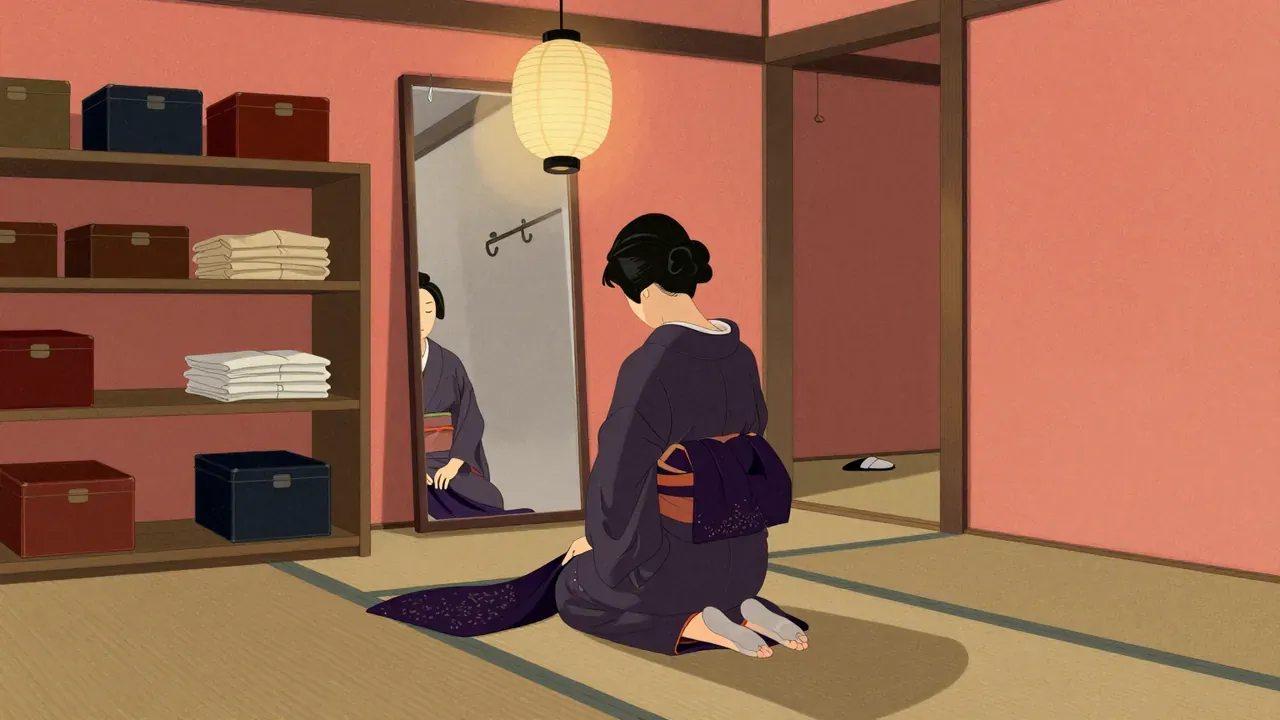
Mikio Naruse’s 1933 silent drama follows Kikue, an ageing geisha, her ashamed teenage son Yoshio, and Terugiku, a younger colleague who mediates between them. Set in Tokyo’s geisha districts and a coastal fishing village, the film traces shifting loyalties, familial duty, and the cost of survival in a rigid social order. With precise editing, understated performances, and a pragmatic view of its world, it avoids moralising in favour of sustained observation.
13:00

As Tears Go By

Wong Kar-wai · 1988

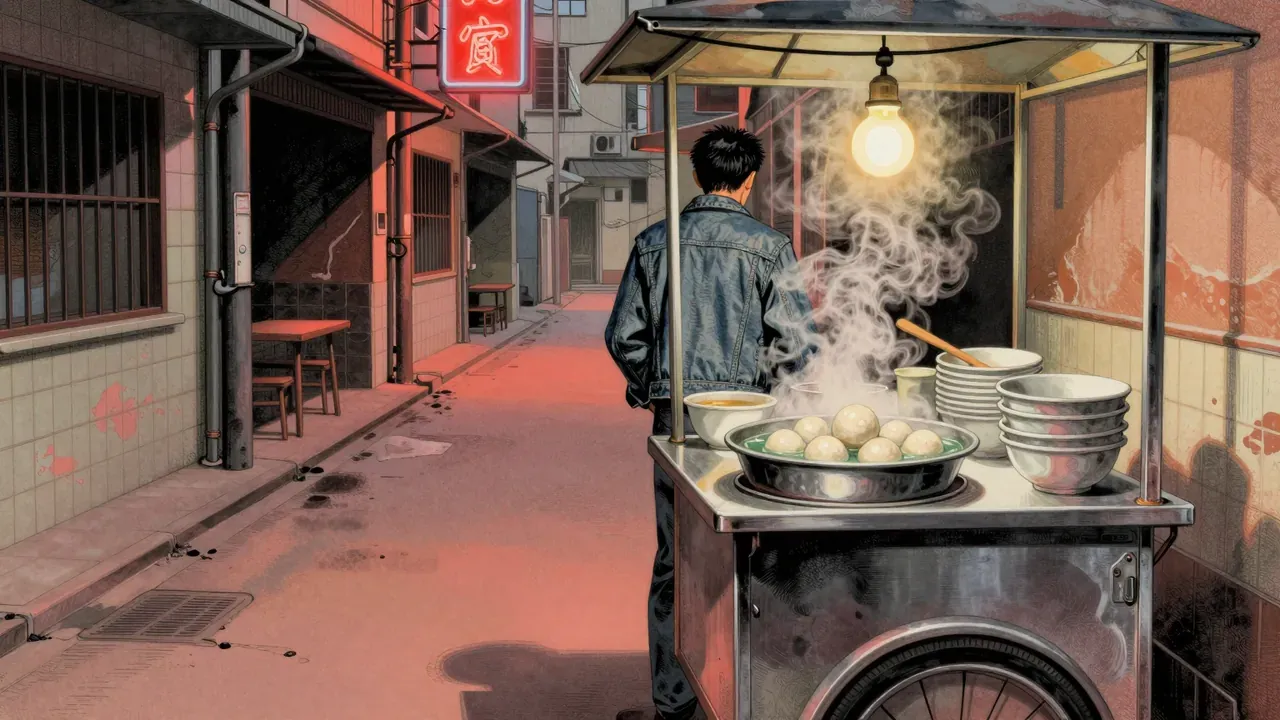
Wong Kar-wai’s 1988 debut follows Wah, a Mong Kok triad enforcer, as he tries to manage his volatile friend Fly while growing close to his cousin Ngor, who visits from Lantau Island. Shot in naturalistic tones by Andrew Lau and edited with deliberate slowness by William Chang, the film grounds crime-drama tropes in quiet consequence rather than spectacle. Its power lies in restraint: in Andy Lau’s muted performance, Maggie Cheung’s understated presence, and the unforced contrast between urban claustrophobia and island stillness. Though structurally uneven in its second half, it establishes Wong’s enduring concerns — time, loyalty, and the geography of longing.

13:00

Betty Blue

Jean-Jacques Beineix · 1986

A 1986 French psychological drama directed by Jean-Jacques Beineix, Betty Blue follows Zorg, a handyman and aspiring writer, and Betty, a volatile 19-year-old, as their passionate relationship unravels across coastal, urban and provincial France. Shot by Jean-François Robin and scored by Gabriel Yared, it renders emotional extremity through saturated visuals, rhythmic editing and physical performance — prioritising mood and texture over exposition or diagnosis.

13:00

Compensation

Zeinabu irene Davis · 2000

Compensation is a 1999 independent film directed by Zeinabu irene Davis, telling parallel love stories—one in 1910 Chicago, the other in the 1990s—between deaf women and hearing men. Shot in black-and-white silent-film style for the past and with open captions for the present, it draws on Paul Laurence Dunbar’s 1906 poem and foregrounds ASL, Chicago’s geography, and the social realities of tuberculosis and AIDS. Restored in 4K by Criterion and UCLA, it premiered at Sundance 2000 and entered the National Film Registry in 2024.

13:00

Crazed Fruit

Kō Nakahira · 1956

Crazed Fruit (1956), directed by Kō Nakahira and written by Shintarō Ishihara, follows two brothers whose rivalry over a woman escalates to fatal violence on Japan’s summer coast. Stylised and restrained, it uses heat, water, and motor noise as narrative forces, avoiding psychology in favour of physical and rhythmic inevitability. Its power lies in what it omits: explanation, redemption, or moral framing.

13:00

Epidemic

Lars von Trier · 1987

Lars von Trier’s 1987 metafictional horror Epidemic follows two screenwriters drafting a script about a plague while a real outbreak begins to mirror their fiction. Shot on 16mm, structured across five days, and starring von Trier and Niels Vørsel as themselves, it treats narrative as a vector and authorship as contagion — the second instalment of the Europa trilogy.

13:00

General Della Rovere

Roberto Rossellini · 1959

Roberto Rossellini’s 1959 drama follows a conman hired by Nazi occupiers to impersonate a dead Resistance general inside a Milan prison. As he inhabits the role among real prisoners, his performance hardens into conviction — not through revelation, but through repeated, quiet acts of solidarity. Shot in German by Italian filmmakers, with Vittorio De Sica in a career-defining turn, it is a restrained, morally exacting portrait of identity forged in extremity.

13:00

Gray's Anatomy

Steven Soderbergh · 1996

Spalding Gray’s 1996 monologue film, directed by Steven Soderbergh, documents his diagnosis with macular pucker and his turn toward alternative treatments. Filmed in ten days with minimal staging, it relies entirely on Gray’s voice, syntax, and timing. Elliot Davis’s restrained cinematography and Cliff Martinez’s sparse score support rather than interpret. The film balances wit and vulnerability without resolving into either satire or sermon — though its final passages strain under the weight of their own metaphysical drift.

13:00

La Piscine

Jacques Deray · 1969

La Piscine (1969), directed by Jacques Deray, follows a couple’s holiday on the French Riviera that unravels when an old lover and his teenage daughter arrive. What begins as languid erotic tension escalates into jealousy, violence, and concealment. With Alain Delon, Romy Schneider, Maurice Ronet and Jane Birkin, it uses restrained performances, deliberate pacing and Jean-Jacques Tarbès’ cool, sun-drenched cinematography to explore possession, memory and the fragility of control. Not a thriller in the conventional sense, it is a slow-burn study in psychological erosion, anchored by real-life tensions between its stars.

13:00

Le Beau Serge

Claude Chabrol, Philippe de Broca, Claude de Givray · 1958

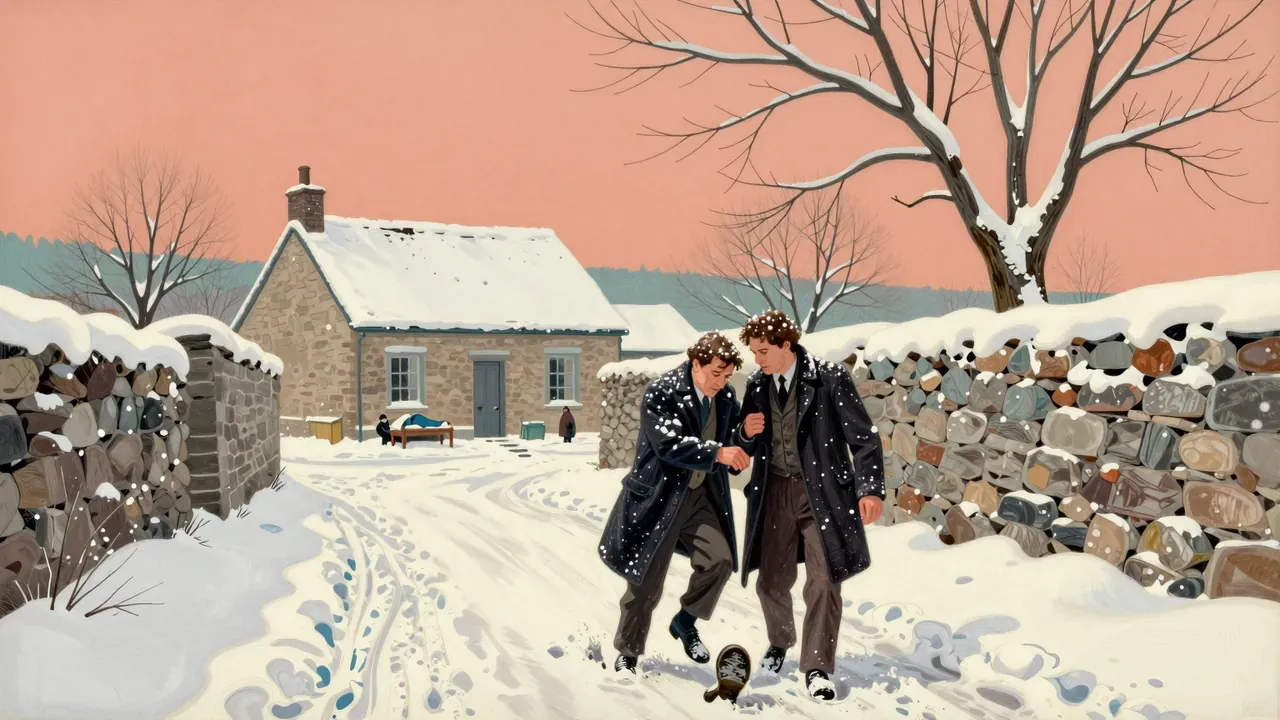
Claude Chabrol’s 1958 debut follows François, a Parisian recovering from illness, as he returns to his rural hometown and tries—and fails—to rescue his alcoholic childhood friend Serge. Shot in winter in Sardent with documentary restraint, the film observes provincial life without sentiment or judgment, building its moral weight through silence, duration, and understated performances. It is less a story of redemption than of endurance, where care and harm blur, and salvation looks like dragging someone home through snow.

13:00

Madonna of the Seven Moons

Arthur Crabtree, Roland Pertwee, Margery Lawrence · 1945

Madonna of the Seven Moons (1945) is a Gainsborough Pictures drama starring Phyllis Calvert as Maddalena Labardi, a woman whose childhood trauma manifests as a second personality. Set across three decades in Italy, it uses stark visual contrasts, controlled performances, and a tightly wound script to enact — not explain — dissociation. Jack E. Cox’s cinematography and Hans May’s score reinforce its rhythmic, ceremonial structure. Though dated in its psychology and reductive in its portrayal of marginal figures, it remains a lucid, self-contained example of British studio melodrama at its most assured.

13:00

Mean Streets

Martin Scorsese · 1973

Martin Scorsese’s 1973 breakthrough follows Charlie, a young Italian-American in New York’s Little Italy, torn between Catholic guilt, Mafia duty, and loyalty to his self-destructive friend Johnny Boy. Shot on a $500,000 budget with documentary grit and improvised intensity, it features defining early performances by Harvey Keitel and Robert De Niro. Its moral density, urban texture, and formal daring marked the arrival of a major American filmmaker — and reshaped decades of screen storytelling.

13:00

Miss Julie

Alf Sjöberg · 1951

Alf Sjöberg’s 1951 Swedish adaptation of Strindberg’s Miss Julie stars Anita Björk and Ulf Palme in a tightly wound, single-night drama set on a noble estate during Midsummer’s Eve. Retaining the play’s psychological rigour and class critique, the film uses restrained cinematography, precise performances, and minimal music to trace Julie’s collapse under intersecting pressures of birth, gender, and desire. It won the Grand Prix at Cannes and remains a benchmark of naturalist cinema.

13:00

Moonrise

Frank Borzage · 1948

Frank Borzage’s 1948 Moonrise adapts Theodore Strauss’s novel about Danny Hawkins, a man haunted by his father’s execution for murder. After killing a bully in self-defence, Danny wrestles with inherited shame before choosing surrender over evasion. Shot by John L. Russell with restrained noir-inflected lighting and scored sparsely by William Lava, it’s a psychologically dense, atmospherically precise drama about moral continuity, not catharsis.

13:00

Mouchette

Robert Bresson · 1967

Robert Bresson’s 1967 adaptation of Georges Bernanos’s novel follows a teenage girl’s silent, unrelenting attrition in a rural French village. Using non-professional actors, sparse dialogue, and Ghislain Cloquet’s restrained cinematography, the film renders suffering as routine, not event — culminating in a final act of physical surrender that feels less like despair than exhaustion made visible.

13:00

Safe

Todd Haynes · 1995

Todd Haynes’ 1995 arthouse drama follows Carol White, a Los Angeles housewife whose unexplained physical collapse leads her from suburban sterility to a desert wellness commune. With Julianne Moore in her first lead role, the film uses rigorous formal distance — static framing, muted colour, sparse sound — to trace how environments, language, and care systems pathologise rather than heal. It offers no diagnosis, no resolution, and no comfort — only an unblinking portrait of suffocation as social fact.

13:00

Sansho the Bailiff

Kenji Mizoguchi · 1954

Kenji Mizoguchi’s 1954 jidai-geki follows two siblings sold into slavery after their father’s exile. Anchored by Kazuo Miyagawa’s deep-focus long takes and Fumio Hayasaka’s sparse score, it traces Zushiō’s moral fracture and slow reassembly around his father’s injunction: 'Without mercy, man is like a beast.' Its power resides in physical precision — a statuette’s grooves, a lake’s surface, a mother’s blind fingers — not exposition or catharsis.

13:00

Secrets of Women

Ingmar Bergman · 1952

Ingmar Bergman’s 1952 drama Secrets of Women unfolds across three interwoven stories told by women waiting for their husbands. Shot in crisp black-and-white by Gunnar Fischer, it observes marital tension, concealed pregnancy, and marital farce with quiet precision — avoiding grand statements in favour of subtle shifts in tone, glance, and silence.

13:00

Sennan Asbestos Disaster

Kazuo Hara · 2016

Kazuo Hara’s 2016 documentary Sennan Asbestos Disaster observes survivors of industrial asbestos exposure in Osaka over many years. With no narration, score, or archival inserts, it tracks legal battles, medical decline, and daily endurance — treating latency, embodiment, and institutional slowness as its core subjects.

13:00

Sentimental Value

Joachim Trier · 2025

Joachim Trier’s 2025 drama Sentimental Value follows sisters Nora and Agnes as their estranged father Gustav returns to Oslo to film a project rooted in their grandmother’s wartime trauma. With Renate Reinsve, Stellan Skarsgård and Inga Ibsdotter Lilleaas, it traces how grief, ambition and memory circulate through performance, architecture and silence—without offering catharsis or easy resolution.
13:00

Sólo Con Tu Pareja

Alfonso Cuarón · 1991

Alfonso Cuarón’s 1991 debut Sólo Con Tu Pareja is a tightly wound Mexican romantic comedy about a womanising ad man falsely diagnosed with AIDS, whose ensuing suicide pact with a disillusioned flight attendant becomes an accidental path to emotional honesty. Shot by Emmanuel Lubezki and edited by him too, it balances farce, satire, and quiet realism across 94 minutes in Mexico City. Though it won Ariel Awards and international festival acclaim, it was delayed for domestic release until 1993. Its strength lies in formal control and moral unsentimentality — not in likable characters or tidy resolutions.

13:00

Solution

Abbas Kiarostami · 1978

Solution (1978) is Abbas Kiarostami’s austere, observational drama set in a single institutional interior. With no score, no exposition, and minimal dialogue, it tracks a young man’s encounter with bureaucratic procedure. Its power lies in duration, repetition, and withheld meaning — not as evasion, but as method. A key early work in Iranian New Wave cinema, it rewards attention not with narrative payoff but with perceptual recalibration.

13:00

Stormy Waters

Jean Grémillon · 1941

Stormy Waters (1941), directed by Jean Grémillon, follows tugboat captain André Laurent as his devotion to salvage work strains his marriage and draws him into a fraught relationship with a woman he rescues at sea. Shot on location in Brittany and at Billancourt Studios, it blends poetic realism with maritime procedural, anchored by Jean Gabin’s restrained performance and Armand Thirard’s atmospheric cinematography.

13:00

Sunday, Bloody Sunday

John Schlesinger · 1971

Sunday, Bloody Sunday (1971) follows a love triangle in London between a gay Jewish doctor, a divorced recruitment consultant, and a younger bisexual sculptor. Directed by John Schlesinger and written by Penelope Gilliatt and David Sherwin, it avoids moralising or melodrama, instead holding its characters’ contradictions in steady, unsentimental focus. Glenda Jackson and Peter Finch deliver restrained, deeply felt performances; Billy Williams and David Harcourt’s cinematography grounds the story in quiet realism. Though structurally austere and emotionally reserved, the film remains a landmark for its mature treatment of sexuality, identity, and the quiet costs of openness.

13:00

That Night's Wife

Yasujirō Ozu · 1930

That Night’s Wife (1930), Yasujirō Ozu’s early Shochiku silent, confines its entire action to a single night in a Tokyo apartment. A father robs a bank to pay for his daughter’s life-saving medicine; a detective tracks him home; the wife disarms the law, then helps her husband flee—only for him to return at dawn and surrender. Shot by Hideo Shigehara and co-written by Ozu and Kōgo Noda, it is a study in compressed ethics, where silence, stillness and domestic detail carry the full weight of choice.

13:00

The Eternal Breasts

Kinuyo Tanaka · 1955

Kinuyo Tanaka’s 1955 film follows Fumiko Nakajō, a tanka poet diagnosed with late-stage breast cancer, as she navigates divorce, motherhood, literary ambition, and mortality. Shot on location in Hokkaidō, it avoids biopic conventions, favouring quiet observation over exposition. Yumeji Tsukioka anchors a restrained ensemble; Kumenobu Fujioka’s naturalistic cinematography and Takanobu Saitō’s sparse score support a film that values duration, physical detail, and unspoken tension over narrative closure or thematic pronouncement.

13:00

The Fugitive Kind

Sidney Lumet · 1959

Sidney Lumet’s 1960 adaptation of Tennessee Williams’s Orpheus Descending stars Marlon Brando and Anna Magnani as doomed lovers in a repressive Southern town. Shot in upstate New York, it struggles to translate theatrical heat into cinematic coherence — undermined by dubbing, miscasting, and unresolved thematic tensions — yet endures for its atmosphere, Boris Kaufman’s photography, and Kenyon Hopkins’s evocative score.

13:00

The Ice Storm

Ang Lee · 1997

Set over a single Thanksgiving weekend in 1973, The Ice Storm follows two Connecticut families adrift in marital and generational disaffection. Directed by Ang Lee from James Schamus’s screenplay, it renders suburban ennui through restrained performances, muted cinematography, and a structure built on accumulation rather than escalation. A fatal accident during an ice storm forces a reckoning — not with morality, but with the cost of emotional drift.

13:00

The Touch

Ingmar Bergman · 1971

Ingmar Bergman’s 1971 English-language debut follows Karin, a Swedish housewife whose affair with an American archaeologist unravels her assumptions about duty, desire, and selfhood. Shot on Gotland with Sven Nykvist, it privileges psychological nuance over plot, using restraint and silence to trace a woman’s slow, uncertain reclamation of agency. Though criticised at release for stiffness and imbalance, it remains a rare, transparent record of Bergman adapting his methods to new language, cast, and expectation.

13:00

The White Angel

Raffaello Matarazzo · 1955

Raffaello Matarazzo’s 1955 sequel The White Angel follows a wrongfully imprisoned woman’s return to society under a false name, her search for her lost child, and her slow reintegration into a world that punished her for motherhood. Starring Amedeo Nazzari and Yvonne Sanson, and shot by Tonino Delli Colli, it sustains emotional force through restraint — in performance, editing, and score — rather than escalation.

13:00

Vermiglio

Maura Delpero · 2024

Set in a remote Italian alpine village in late winter 1944, Vermiglio follows Lucia, a teenage girl whose secret relationship with a Sicilian deserter upends her family and community. Directed by Maura Delpero and shot by Mikhail Krichman, the film observes tradition, Catholic ritual, and female labour with unsentimental precision — avoiding exposition, score-led emotion, or psychological shorthand. Its power lies in accumulation: in gestures, textures, and the weight of unspoken consequence.

13:00

Women of the Night

Kenji Mizoguchi · 1948

Kenji Mizoguchi’s Women of the Night (1948) follows three women in post-war Osaka as each enters prostitution under distinct but converging pressures: infant mortality, syphilis, police raids, and familial rejection. Shot on location with Kinuyo Tanaka in a restrained, physically grounded performance, it avoids melodrama in favour of structural clarity — showing how poverty, gendered law, and institutional neglect produce outcomes with clinical precision. Though some characters remain schematic and its pacing resists modern expectations, its rigour and historical immediacy make it a vital, unsentimental reckoning with survival.

13:00

The Phantom Carriage

Victor Sjöström · 1921

Victor Sjöström’s 1921 adaptation of Selma Lagerlöf’s Körkarlen follows a dying drunkard forced by Death’s carriage to confront the damage he has wrought — on his wife, children, friends, and community. Shot by Julius Jaenzon with pioneering double exposures, it uses silence, shadow, and nested flashbacks to build a moral architecture where consequence is spatial, time is debt, and reform is earned in real time. Not horror in the genre sense, but in its unflinching gaze.

13:00

Caro diario

Nanni Moretti · 1993

Caro diario (1993) is Nanni Moretti’s semi-autobiographical essay film in three chapters: riding a Vespa through Rome, seeking quiet on the Aeolian Islands, and navigating misdiagnosis and treatment for Hodgkin’s lymphoma. Shot with quiet precision by Giuseppe Lanci and edited by Mirco Garrone, it uses personal experience to examine failures of attention in politics, culture, and medicine. Moretti appears as himself throughout, his dry, self-aware tone holding the film’s fragments together.

13:00

Light of My Life

Casey Affleck · 2019

Casey Affleck’s Light of My Life is a restrained, low-key post-apocalyptic drama set in British Columbia, following a father and his daughter as they evade male raiders in a world where most women have died. Shot by Adam Arkapaw and scored by Daniel Hart, it prioritises behavioural realism over exposition or action, building emotional resonance through gesture, routine and withheld information.

13:00

The Deep Blue Sea

Terence Davies · 2011

Terence Davies’ 2011 adaptation of Terence Rattigan’s play follows Hester Collyer over one day in her London flat, tracing her affair with a former RAF pilot against the quiet certainty of her marriage to a High Court judge. Rachel Weisz anchors a restrained, visually exacting film about love as destabilisation, not salvation.