filmbriefs
Topic

Love

The subject with the largest literature and the least agreement.

27
in film
13:00
average
351 min
in total
67
across the network
Love across the network →
All briefs27
13:00

A Lesson in Love

Ingmar Bergman · 1954

A Lesson in Love (1954) is Ingmar Bergman’s gently ironic study of a Stockholm marriage tested by professional pride, quiet restlessness, and a charming patient. Starring Eva Dahlbeck and Gunnar Björnstrand, it trades existential gravity for domestic nuance, using light comedy and unhurried observation to explore love as daily practice rather than grand declaration. Shot by Martin Bodin and scored by Dag Wirén, it remains a subtle, underseen pivot in Bergman’s career — modest in scope, exact in execution.
13:00

Before Midnight

Richard Linklater · 2013

Before Midnight (2013), directed by Richard Linklater and co-written by Linklater, Ethan Hawke, and Julie Delpy, follows Jesse and Céline nine years after Before Sunset as they vacation in Greece with their twin daughters. Structured around three extended conversations — in a car, at dinner, and in a hotel room — the film examines the quiet tensions of long-term partnership, parental compromise, and the erosion and endurance of love. Shot in 15 days on the Peloponnese coast, it relies on performance, writing, and restraint rather than plot or spectacle. It received universal critical acclaim and was nominated for Best Adapted Screenplay at the Academy Awards.

13:00

Birth

Jonathan Glazer · 2004

Jonathan Glazer’s 2004 film Birth follows Anna, a woman who becomes convinced that her deceased husband has been reborn in a ten-year-old boy. Shot in New York with Haris Savides, scored by Alexandre Desplat, and anchored by Nicole Kidman’s restrained performance, it is a psychological mystery that sustains ambiguity as principle. It does not confirm or deny the boy’s claim, instead focusing on the weight of Anna’s belief, the erosion of shared reality among those around her, and the quiet devastation of love that refuses to expire. Polarising on release, it has since gained recognition for its formal rigour and emotional precision.

13:00

Brief Encounter

David Lean · 1945

David Lean’s 1945 adaptation of Noël Coward’s Still Life follows Laura Jesson and Alec Harvey, two married strangers whose brief, chaste affair unfolds over Thursdays in a Lancashire railway station. Shot in stark black-and-white by Robert Krasker, scored with Rachmaninoff’s Second Piano Concerto, and performed with extraordinary restraint by Celia Johnson and Trevor Howard, it renders love not as liberation but as quiet crisis — a collision of feeling and duty that resolves not in triumph or tragedy, but in return.

13:00

Brief Encounters

Kira Muratova · 1967

Brief Encounters (1967) follows two women unknowingly in love with the same geologist in Odessa. Nadya, newly arrived from the village, falls for his charm and wanderlust; Valya, his long-term partner, endures his absences with quiet rigour. When Nadya takes work as Valya’s maid, they live under one roof without ever naming their shared attachment. Directed by Kira Muratova, the film builds emotional weight through restraint — minimal dialogue, precise framing, and the physical labour of waiting — culminating not in confrontation, but in Nadya’s silent departure.

13:00

Chilly Scenes of Winter

Joan Micklin Silver · 1979

Joan Micklin Silver’s 1979 adaptation of Ann Beattie’s novel follows Charles Richardson, a Salt Lake City civil servant clinging to a failed relationship. Shot with quiet precision and performed with unshowy realism, it charts his slow, uneventful withdrawal from obsession — not through epiphany, but through accumulated small choices. Two versions exist: the original 1979 cut ends with reconciliation; the 1982 re-release concludes with quiet resignation. Neither offers catharsis. Both insist on the dignity of ordinary endurance.

13:00

Defending Your Life

Albert Brooks · 1991

Albert Brooks’ 1991 romantic comedy-fantasy follows a recently deceased advertising executive navigating Judgment City, a bureaucratic afterlife where souls are tried on their capacity to overcome fear. With Shirley MacLaine, Rip Torn, and Lee Grant, it blends dry wit, tender romance, and existential inquiry — using the trial format to explore courage not as heroism but as daily, quiet choice.

13:00

Let the Sunshine In

Claire Denis · 2017

Claire Denis’s 2017 drama follows Isabelle, a Parisian painter in her late forties, as she moves through a series of unsatisfying relationships. Built from fragments rather than plot points, it draws on Roland Barthes’s A Lover’s Discourse to explore desire, self-deception and the quiet persistence of hope. Juliette Binoche anchors the film with a performance of restrained intensity, supported by Agnès Godard’s unadorned cinematography and Stuart A. Staples’ spare score. It premiered at Cannes, where it won the SACD Award.

13:00

Love in the Afternoon

Éric Rohmer · 1972

Éric Rohmer’s 1972 film closes his Six Moral Tales series with a study of marital fidelity tested not by betrayal but by imagination. Frédéric, a contented Parisian husband and father, begins spending afternoons with Chloé, a woman from his past — a relationship built on talk, not sex, until a single moment of near-surrender forces him home. Shot by Néstor Almendros and written and directed by Rohmer, it is a film of restraint, quiet tension, and precise observation.

13:00

The Fiances

Ermanno Olmi · 1963

Ermanno Olmi’s 1963 drama follows Giovanni, a Milanese welder relocated to Sicily for work, and his fiancée Liliana, left behind in the north. Through sparse dialogue, restrained performances, and Lamberto Caimi’s understated black-and-white cinematography, the film charts the quiet recalibration of their relationship across letters, phone calls, and solitary routines. It is a study in endurance, not crisis — love as continuity rather than climax.

13:00

A Matter of Life and Death

Michael Powell, Emeric Pressburger · 1946

A Matter of Life and Death (1946) is a British fantasy romance in which an RAF pilot, saved from certain death by a bureaucratic error in the afterlife, must argue for his right to remain on Earth — not on technicality, but on the strength of his love for a woman he met moments after surviving. Directed by Michael Powell and Emeric Pressburger, it uses Technicolor for Earth and a custom 'Dye-Monochrome' process for the celestial realm, staging its metaphysical trial with procedural rigour and emotional precision.

13:00

Letter from an Unknown Woman

Max Ophüls · 1948

Max Ophüls’ 1948 adaptation of Stefan Zweig’s novella follows Lisa Berndle’s lifelong devotion to concert pianist Stefan Brand, rendered in flashback through her final letter. Joan Fontaine’s restrained performance and Franz Planer’s under-lit cinematography sustain a mood of quiet accumulation, where emotional weight gathers not in climaxes but in silences, glances, and withheld names.

13:00

Scenes from a Marriage

Ingmar Bergman · 1974

Ingmar Bergman’s 1974 Scenes from a Marriage follows a Swedish couple’s decade-long marital unraveling through six intimate, dialogue-driven episodes. Shot by Sven Nykvist and performed with unsparing naturalism by Liv Ullmann and Erland Josephson, it treats domestic life as a site of existential exposure — where love, resentment, and habit coexist without hierarchy. Its power lies in cumulative detail, not plot.

13:00

The Passionate Friends

David Lean · 1949

David Lean’s 1949 adaptation of H. G. Wells’s novel follows Mary Justin, a woman caught between her husband Howard and her former lover Steven, as memory and present collide during a Swiss hotel stay. Anchored by Ann Todd’s restrained performance and Guy Green’s understated cinematography, it examines autonomy, loyalty, and the quiet erosion of self in bourgeois romance — not through drama, but through accumulation of small, unspoken truths.

13:00

Amélie

Jean-Pierre Jeunet · 2001

Audrey Tautou plays Amélie Poulain, a Paris waitress raised in near-isolation who discovers a box of childhood keepsakes hidden in her apartment and, after tracking down its owner, decides to spend her life secretly engineering happiness for the people around her while avoiding her own romantic chance with a man named Nino. Jean-Pierre Jeunet's 2001 film, shot with heavy digital colour grading and built almost entirely from small, invented rituals, became one of the highest-grossing French films ever released internationally.

13:00

Casino

Martin Scorsese · 1995

Martin Scorsese's 1995 film, adapted with Nicholas Pileggi from Pileggi's nonfiction book, follows Sam 'Ace' Rothstein, sent by the Chicago Outfit to run the fictional Tangiers casino, as his marriage to hustler Ginger McKenna and his friendship with volatile enforcer Nicky Santoro both collapse around him. Based closely on the real skimming operation run through Las Vegas's Stardust casino in the 1970s, and shot largely inside the actual Riviera casino rather than on built sets, the 178-minute film grossed $116 million against a $50 million budget and earned Sharon Stone an Academy Award nomination.

13:00

Chungking Express

Wong Kar-wai · 1994

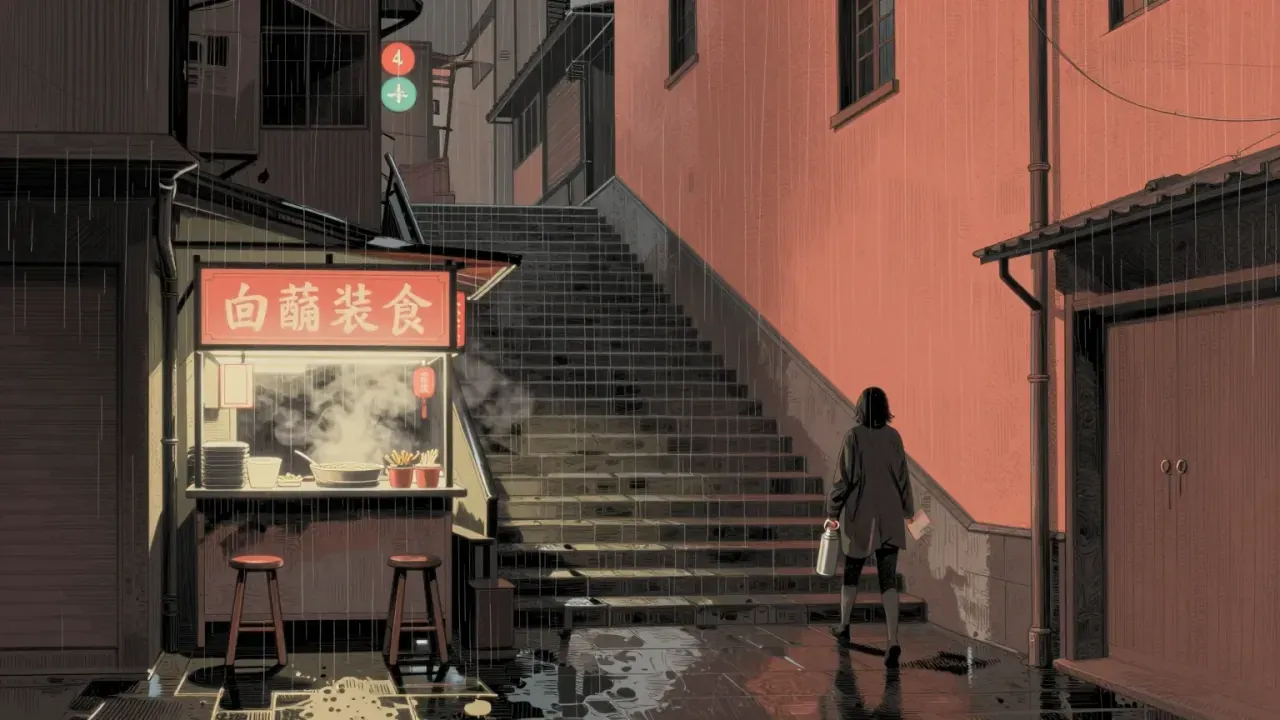
Wong Kar-wai's 1994 diptych follows two Hong Kong policemen through separate break-ups, one obsessed with an expiring can of pineapple, the other unknowingly courted by a snack-bar worker who lets herself into his flat. Shot handheld with Christopher Doyle's step-printing technique, it turns a tiny budget and an unfinished script into one of the defining moods of 1990s Hong Kong cinema.

13:00

Corpse Bride

Tim Burton, Mike Johnson · 2005

Corpse Bride follows Victor, an anxious young man in an arranged marriage, who accidentally weds a murdered woman named Emily after placing a ring on what he thinks is a tree root, then must choose between her vivid Land of the Dead and his living fiancée. Co-directed by Tim Burton and Mike Johnson for Laika on a $40 million budget, shot on digital cameras rather than film, it grossed $118 million and drew three award nominations.

13:00

Eternal Sunshine of the Spotless Mind

Michel Gondry · 2004

Jim Carrey and Kate Winslet play exes who each have their relationship erased from memory, in a film that plays their romance in reverse and ends with them choosing it again anyway.

13:00

Her

Spike Jonze · 2013

In a comfortable near-future Los Angeles, a lonely letter-writer buys an artificially intelligent operating system and falls for the voice that answers back, in Spike Jonze's Oscar-winning screenplay.

13:00

In the Mood for Love

Wong Kar-wai · 2000

In 1962 Hong Kong, a newspaper editor and a secretary living next door to each other realise their spouses are having an affair, and grow close while insisting they will not repeat it. Wong Kar-wai shot for fifteen months without a finished script, switching cinematographers mid-production, and built the film around Maggie Cheung's cheongsams and Tony Leung's restraint rather than plot incident. It won Leung the Cannes best actor award and has since been ranked among the major works of Asian cinema.

13:00

Sleeping Beauty

Clyde Geronimi, Les Clark, Eric Larson, Wolfgang Reitherman · 1959

Princess Aurora is cursed at birth to die by a spinning wheel's needle, saved instead by three fairies who soften the curse to a deep sleep breakable only by true love's kiss, while the evil fairy Maleficent works to see the original curse fulfilled anyway. Designed around Eyvind Earle's tapestry-like visual style, drawing on pre-Renaissance European art, and scored using Tchaikovsky's 1889 ballet, the film took nearly ten years and $6 million to complete, making it Disney's most expensive animated feature at the time — and, on release, one of its most costly failures.

13:00

The Book of Life

Jorge R. Gutiérrez · 2014

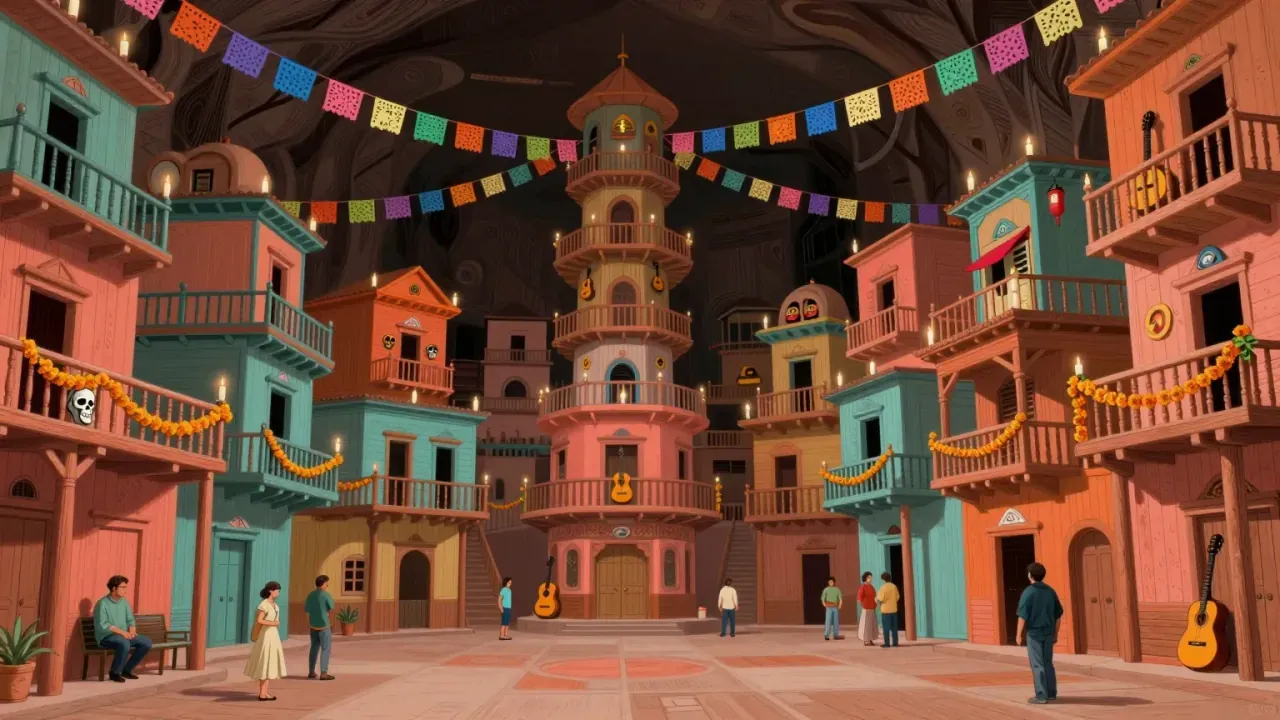
A bullfighter who would rather play guitar navigates a love triangle, his family's expectations and a wager between two gods of the afterlife. Jorge R. Gutierrez's 2014 directorial debut renders its Day of the Dead setting as carved wooden folk art brought to motion.

13:00

The Wild Robot

Chris Sanders · 2024

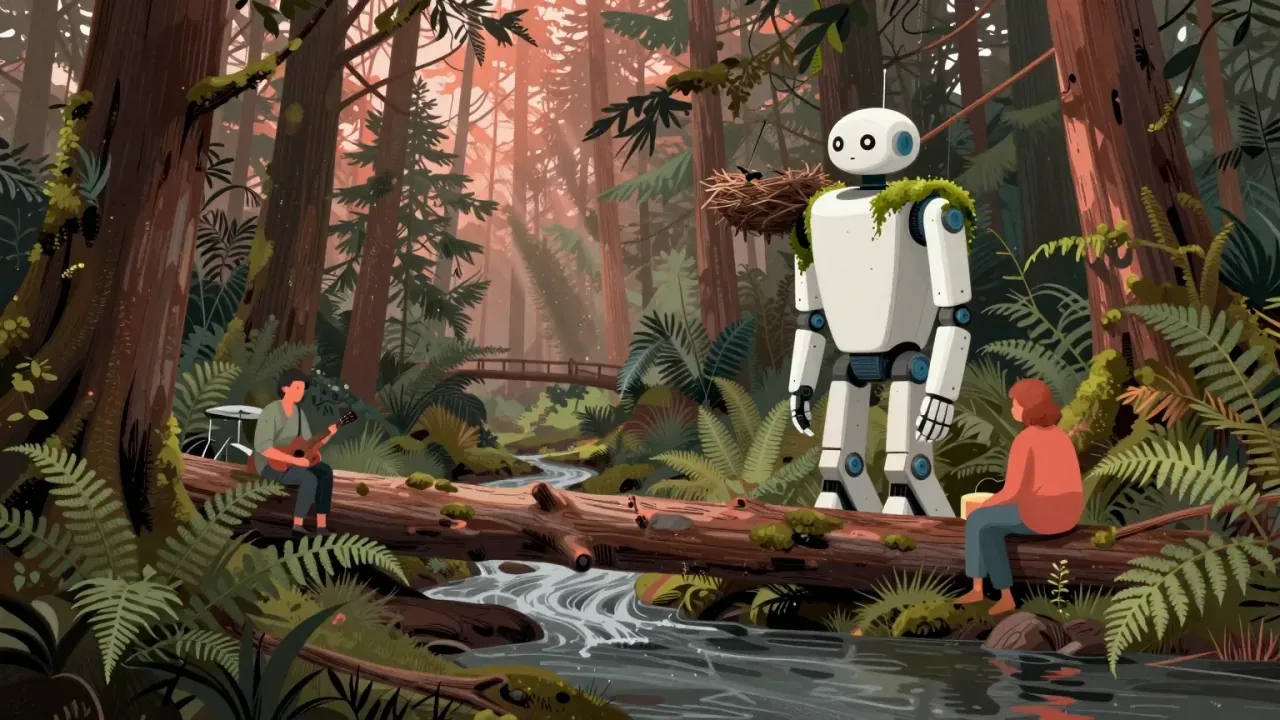
Shipwrecked on an uninhabited island, service robot Roz has to learn to survive among wildlife that first treats her as a monster, and ends up raising an orphaned gosling as her own. Chris Sanders adapted Peter Brown's 2016 novel with a hand-painted, watercolour visual style built to resemble Bambi filtered through Hayao Miyazaki.

13:00

Vertigo

Alfred Hitchcock · 1958

Alfred Hitchcock's 1958 film follows Scottie Ferguson, a retired police detective with a crippling fear of heights, hired to trail a friend's wife who believes she is possessed by a dead ancestor. What begins as surveillance turns into obsession, and after a death he could not prevent, Scottie tries to remake a second woman into the image of the first. Shot by Robert Burks with a spiralling title-sequence effect and scored by Bernard Herrmann, it earned back roughly three times its $2.5 million budget on release and has since climbed steadily in critical standing, unseating Citizen Kane at the top of one long-running critics' poll.

13:00

Weathering with You

Makoto Shinkai · 2019

Hodaka, a runaway sixteen-year-old scraping by in Tokyo, teams up with Hina, an orphaned girl who can part the rain with a prayer, to sell her ability as a paid service during an unusually long, disaster-scale downpour. Shinkai's follow-up to Your Name, again scored by Radwimps, pushes his interest in weather and disaster further than its predecessor by making the couple's happiness and the city's survival mutually exclusive, and then letting a teenager choose.

13:00

Your Name

Makoto Shinkai · 2016

A Tokyo boy and a rural girl who have never met begin waking up in each other's bodies, building a friendship across the swap before a hidden twist reveals the stakes are far higher than a shared inconvenience. Makoto Shinkai wrote, directed, shot and edited the film after visiting a village destroyed by the 2011 tsunami, and Your Name became the first entry in what critics now call his disaster trilogy, and briefly the highest-grossing Japanese film ever made.