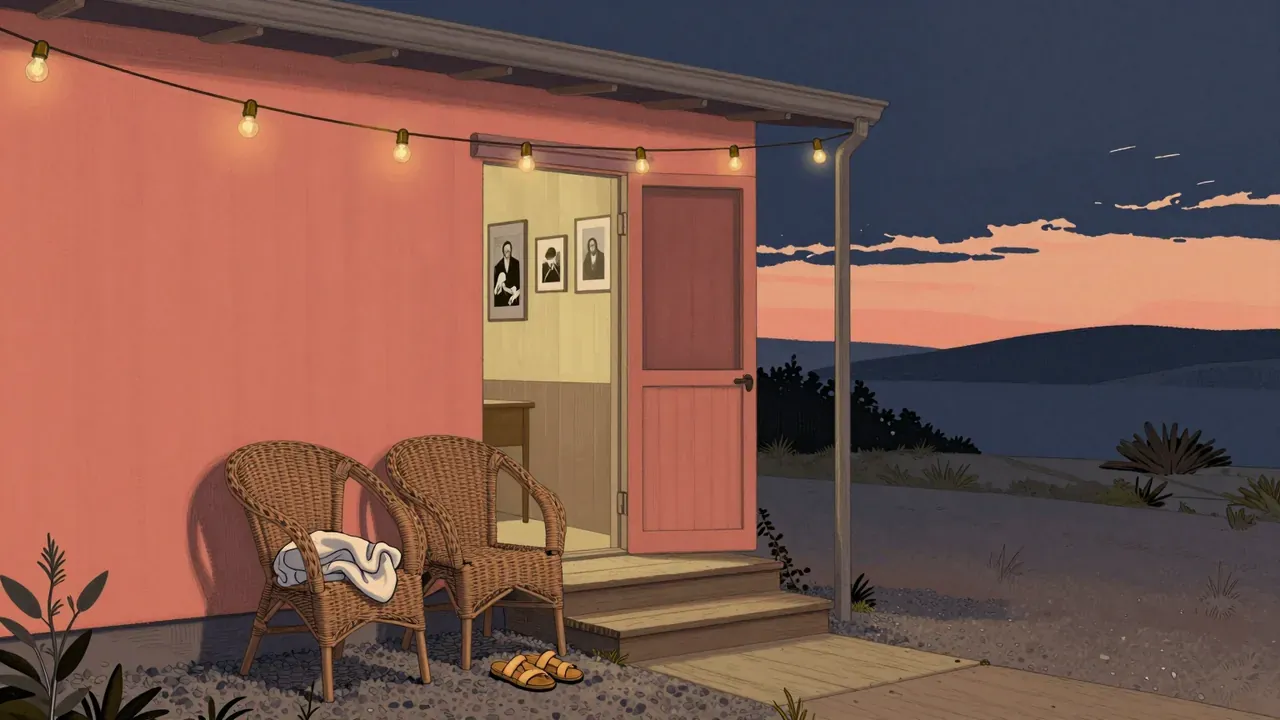
The shape of wanting
Let the Sunshine In is a French drama about a woman in her late forties navigating love, desire and self-deception after divorce. It does not follow a conventional narrative arc but instead arranges a sequence of encounters — with a married banker, an actor who misleads her, her ex-husband, a gallery director — as variations on a single question: what does it mean to want intimacy when experience has taught you to expect disappointment? Claire Denis and co-writer Jean-Pol Fargeau adapt no plot from Roland Barthes’s A Lover’s Discourse, but use its structure and tone as a scaffold: each scene functions like a fragment, not a step. The film is not trying to resolve Isabelle’s situation, nor to diagnose it sociologically. It aims instead to hold space for the contradictions of middle-aged longing — the impatience and the caution, the hunger and the fatigue — without assigning blame or offering catharsis. Its ambition is modest in form but precise in focus: to render emotional states with the same attention others give to action or exposition. Word count: 142.
Juliette Binoche’s face
The story unfolds through accumulation rather than causality: Isabelle meets men, sleeps with some, talks with others, walks away from most. Juliette Binoche carries the film not by commanding scenes but by inhabiting them — her face registers shifts in expectation before dialogue catches up, her posture changes subtly between encounters, her voice tightens or softens without warning. Agnès Godard’s cinematography avoids flourish: interiors are lit evenly, daylight is unfiltered, faces are framed at medium distance, never too close, never too far. Stuart A. Staples’ score is sparse, mostly piano and muted strings, entering only where silence would feel like evasion. Editing by Guy Lecorne maintains a steady, unhurried rhythm — no jump cuts, no montages, no musical cues to signal transition. The craft serves restraint: every decision defers interpretation, refusing to tell the viewer how to feel about Isabelle’s choices or hesitations. There are no visual metaphors, no symbolic objects, no flashbacks. What appears is what matters. Word count: 150.
The psychic’s waiting room
What lands is the texture of Isabelle’s solitude — not as absence, but as a condition thick with memory, habit and unspoken calculation. Her conversations with the psychic, played by Josiane Balasko, land with particular force: not because they offer insight, but because they expose how readily Isabelle outsources judgement, even as she resists being told what to do. The film’s refusal to moralise her sexual agency — neither celebrating nor condemning her encounters — feels rare and necessary. The casting works precisely because none of the men are caricatures: Gérard Depardieu’s banker is neither villain nor fool, Valeria Bruni-Tedeschi’s gallerist friend is neither wise nor cynical, Nicolas Duvauchelle’s actor is neither deceitful nor naive. Each relationship is rendered with enough specificity that its collapse feels inevitable yet unscripted. The film trusts the audience to sit with ambiguity, and that trust is repaid in moments of quiet recognition — a pause before answering, a glance held too long, a door closed without sound. Word count: 148.
Doors left open
What does not land is the structural looseness, which risks reading as indecision rather than design. Some encounters — particularly with the ex-husband and the actor — repeat emotional beats without deepening them, and the film’s resistance to narrative momentum can blur distinctions between scenes. The psychic’s predictions, though well-acted, function more as framing device than dramatic engine, and their recurrence begins to feel like scaffolding left visible. The film assumes familiarity with Denis’s earlier work and with French arthouse conventions; viewers expecting psychological explanation or social context may find the interiority opaque, the pacing inert. There is little sense of Isabelle’s professional life beyond her being a painter — no studio, no commissions, no critical reception — which flattens her identity into romantic subjecthood. And while the Barthesian influence is clear in tone, the film does not dramatise his ideas so much as echo their mood, leaving the literary connection implicit rather than illuminating. Word count: 149.
The grammar of middle age
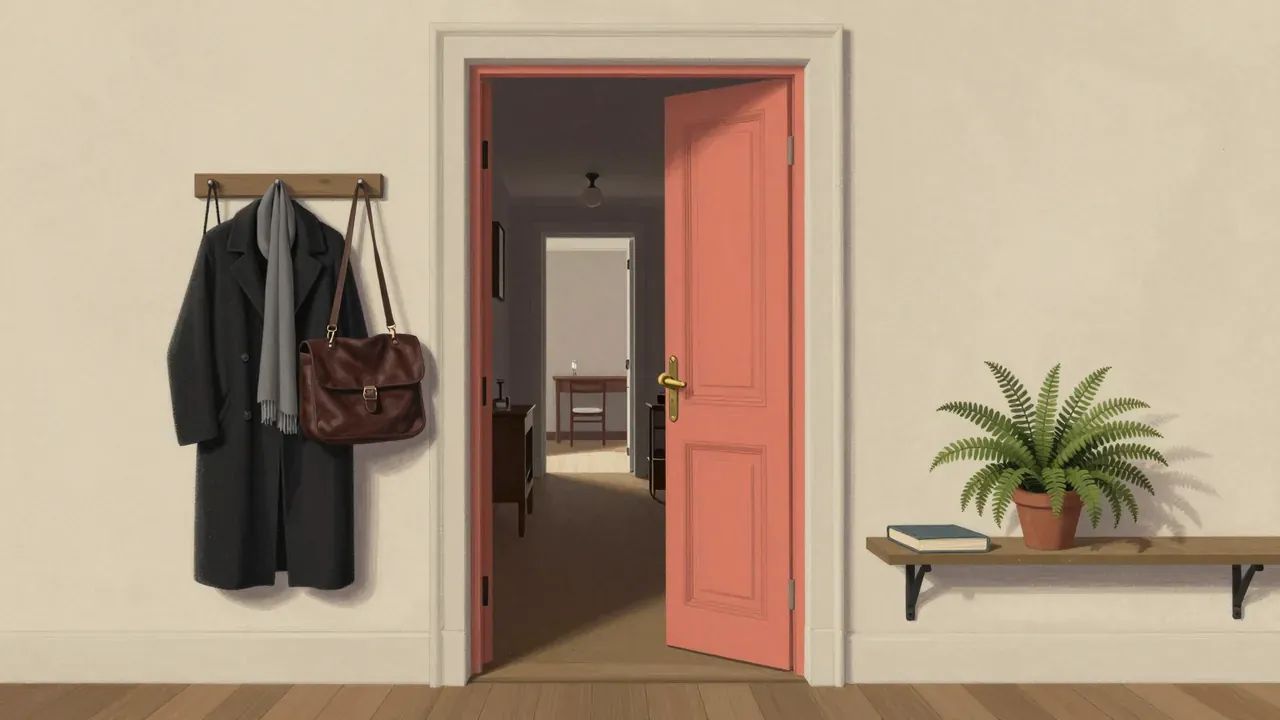
The themes that matter are ageing as a site of renegotiation rather than decline, desire as persistent but no longer unexamined, and love as a practice shaped by repetition, not revelation. The film treats romantic longing not as a problem to be solved but as a language Isabelle keeps speaking despite knowing its grammar is unreliable. It insists on the dignity of uncertainty: Isabelle does not need to choose between independence and partnership, nor between honesty and self-protection — she lives inside both. The recurring motif of doors — opening, closing, remaining ajar — signals not opportunity or obstruction but threshold itself: the moment before decision, where intention and impulse are still indistinguishable. The film also examines how women’s emotional labour is rarely named: Isabelle listens, reassures, interprets, forgives, recalibrates — often without reciprocity — and the film registers this not as sacrifice but as routine. There is no grand statement about feminism, but the politics reside in the refusal to make Isabelle either exemplary or pitiable. Word count: 147.
Who it speaks to
This film is for viewers who value psychological fidelity over plot propulsion, who find resonance in hesitation and who accept that some questions have no answer but still deserve attention. It suits those familiar with Denis’s body of work or with French-language dramas that treat time as elastic rather than linear. It is not for viewers who require narrative closure, causal logic or clearly defined stakes — those who expect character arcs to resolve or relationships to culminate will leave unsatisfied. Anyone seeking social critique, historical context or stylistic innovation beyond tonal consistency may find it underpowered. Those who dislike extended silences, unresolved endings or performances that withhold rather than declare will not connect with its rhythms. A viewer who values clarity of purpose over ambiguity, or who reads emotional realism as a sign of weakness rather than discipline, would likely dismiss it as meandering. Word count: 149.
The weight of light
Yes, it is worth your evening — provided you approach it as a sustained observation, not a story to be followed. Its ninety-four minutes pass without urgency, but also without waste: every scene contributes to a cumulative portrait of how one woman holds herself together while waiting for something she cannot name. It rewards patience, not analysis; presence, not decoding. Those who find value in films that mirror the texture of lived experience — uneven, inconclusive, quietly insistent — will leave with a stronger sense of Isabelle’s world than of any plot summary. It is not a film to watch for diversion or instruction, but for confirmation: that wanting, doubting, returning, walking away — all of it counts. To call it slight is to mistake economy for emptiness. Its power lies in what it refuses to say, and in how precisely it shows what remains. Word count: 149.