filmbriefs
Topic

Fascism

The politics of rebirth through violence, and how ordinary it can look first.

27
in film
13:00
average
351 min
in total
45
across the network
Fascism across the network →
All briefs27
13:00

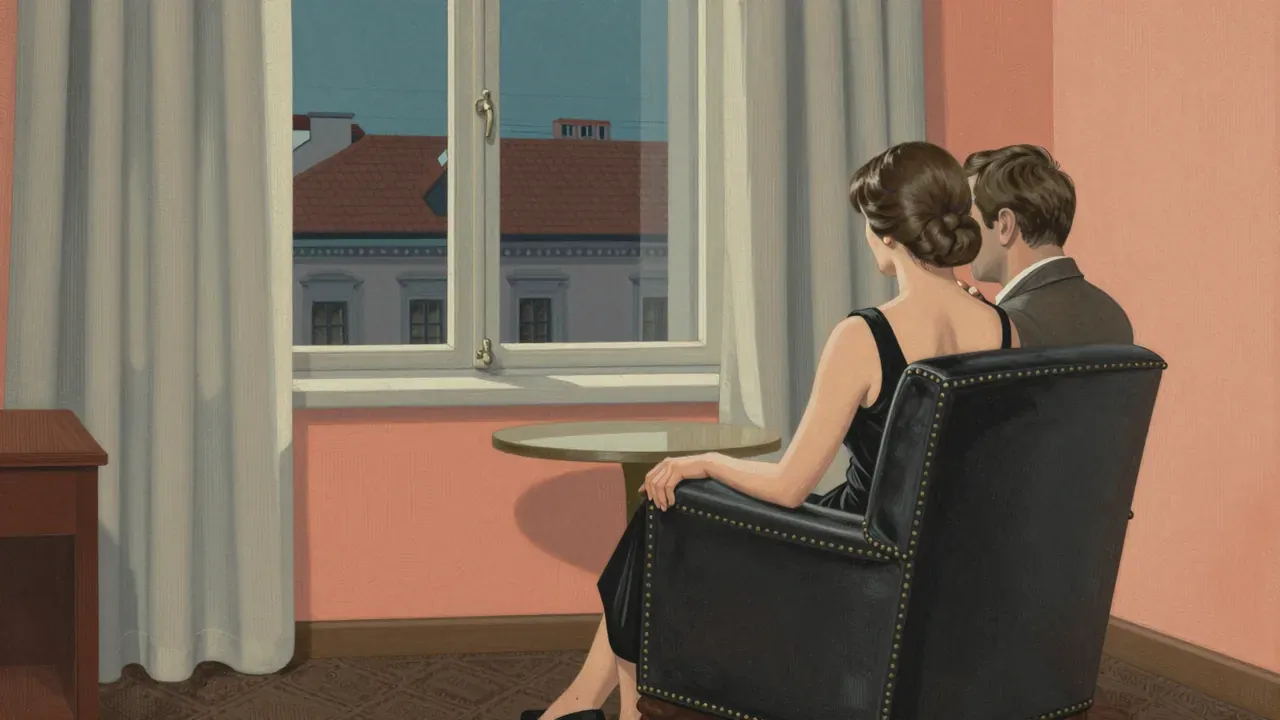
A Special Day

Ettore Scola · 1977

Set in Rome on 4 May 1938 — the day Hitler visits Mussolini — A Special Day confines itself to a single apartment building where a housewife and a dismissed gay radio broadcaster spend an afternoon together. Directed by Ettore Scola and starring Sophia Loren and Marcello Mastroianni, it uses muted colour, deep focus, and restrained performances to explore gender, sexuality, and quiet dissent under fascism.
13:00

Blood for Dracula

Paul Morrissey, Antonio Margheriti · 1974

Blood for Dracula (1974) is a co-credited Paul Morrissey–Antonio Margheriti splatter film starring Udo Kier as a dying Count Dracula who travels to pre-Fascist Italy seeking virgin blood, only to find sexual candour, Marxist rhetoric, and aristocratic bankruptcy instead. Shot in France with an English-speaking cast, it uses gothic tropes to dissect legitimacy, scarcity, and ideological exhaustion. Luigi Kuveiller’s underlit cinematography and Claudio Gizzi’s sparse score reinforce its clinical tone. Though released as Andy Warhol’s Dracula, Warhol’s involvement was nominal. The film opened to mixed reviews and remains a singular artefact of 1970s arthouse-horror hybridity.

13:00

Christ Stopped at Eboli

Francesco Rosi · 1979

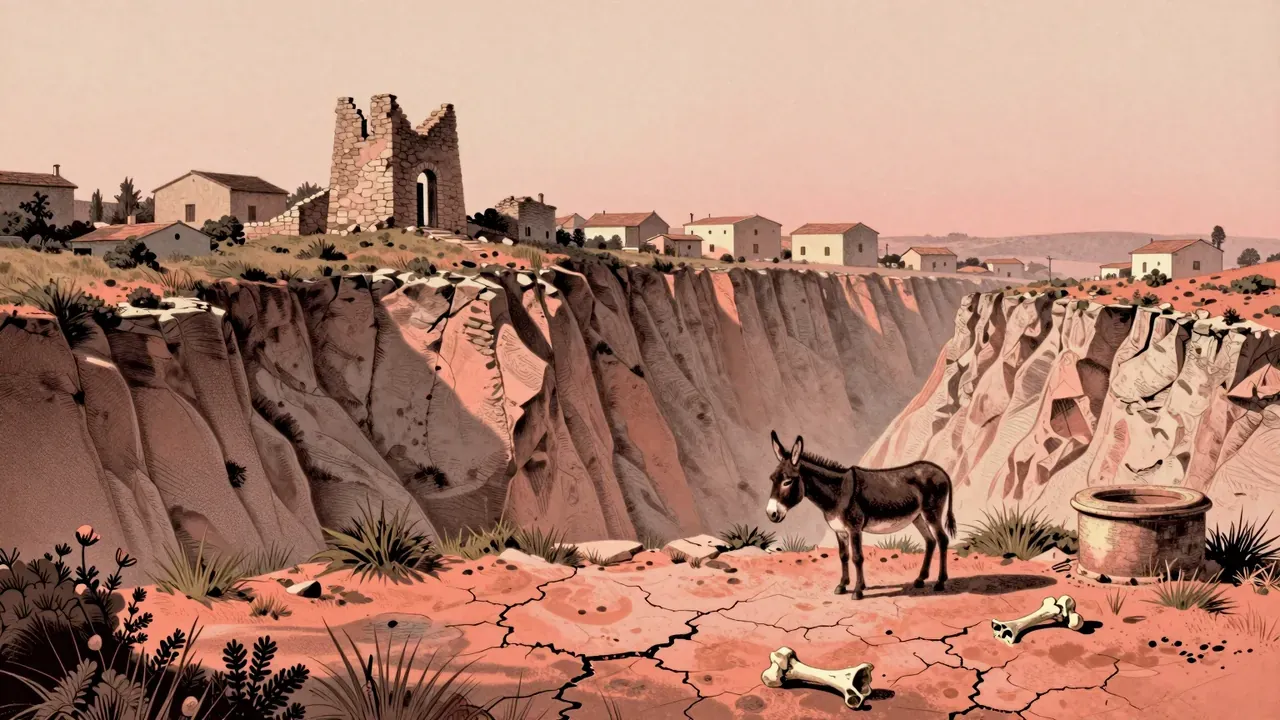
Francesco Rosi’s 1979 adaptation of Carlo Levi’s memoir follows a Turin intellectual exiled to rural Basilicata under Fascism. Shot on location in crumbling villages, it renders poverty, superstition and resilience without sentiment or exposition. Gian Maria Volonté plays Levi as observer first, healer second, and the film’s power lies in its patient, unsparing gaze—not on suffering, but on what power ignores.

13:00

Day of Wrath

Carl Theodor Dreyer · 1943

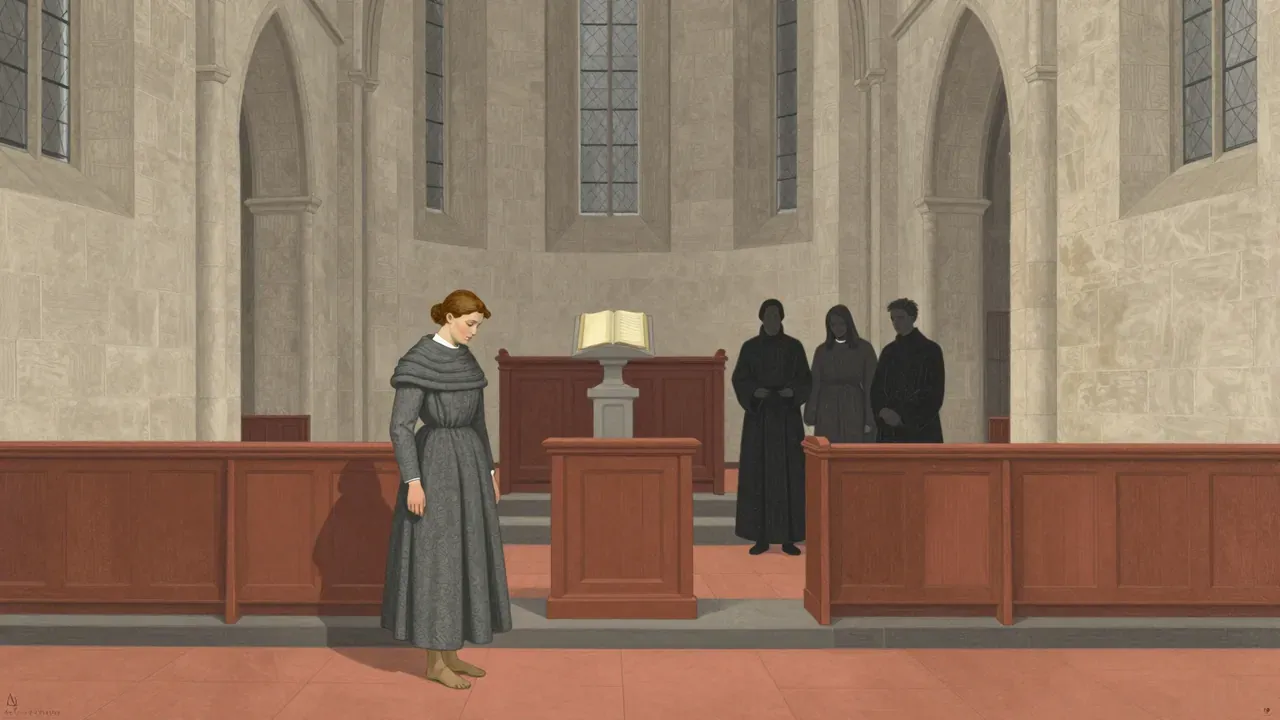
Carl Theodor Dreyer’s 1943 Danish drama, set in 1623, follows Anne, a young woman married to an elderly pastor, as she navigates suspicion, forbidden desire and the violent logic of witch trials. Made under Nazi occupation, it uses extreme restraint—of movement, music, editing—to expose how authority, faith and family conspire to erase individual conscience.

13:00

Desperate Living

John Waters · 1977

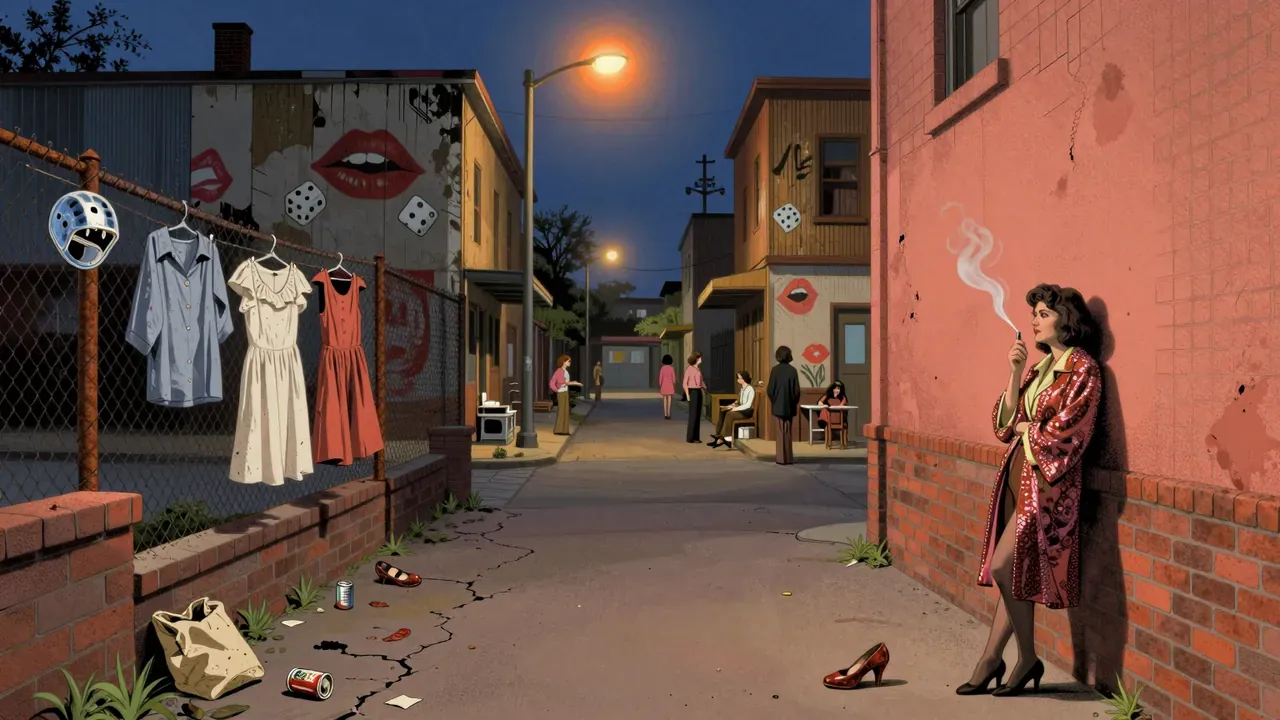
John Waters’ 1977 Desperate Living is the third and most formally controlled entry in his Trash Trilogy: a black comedy set in Mortville, a shantytown exile colony ruled by a fascist queen. Made without Divine and shot on scavenged sets in rural Maryland, it trades shock for sustained tone — using deadpan performances, flimsy production design, and bureaucratic absurdity to dissect power, gender, and class. Its cult status rests not on laughter, but on its unwavering commitment to a world where cruelty wears a clipboard and revolution smells of roasting pork.

13:00

Diary of a Chambermaid

Luis Buñuel · 1964

Luis Buñuel’s 1964 Diary of a Chambermaid adapts Octave Mirbeau’s novel with Jean-Claude Carrière, following Jeanne Moreau’s Célestine as she navigates a decaying provincial household in late-1920s France. Rejecting surrealism for restrained realism, the film traces how power, prejudice and violence settle into routine — through glances, footwear, leaflets and wills. Roger Fellous’ cinematography treats interiors like crime scenes; Moreau’s performance hinges on withheld reaction. It ends not with justice but consolidation: the system endures, reshaped but intact.

13:00

Fighting Elegy

Seijun Suzuki · 1966

Seijun Suzuki’s 1966 drama follows Kiroku Nanbu, a Catholic teen in pre-war Japan whose sexual repression and institutional alienation spiral into ritualised violence and, finally, political extremism. Adapted by Kaneto Shindō from Takashi Suzuki’s novel, the film uses stark black-and-white imagery, abrupt editing and physical performance to chart a psyche collapsing under the weight of unspoken longing and enforced discipline.

13:00

General Della Rovere

Roberto Rossellini · 1959

Roberto Rossellini’s 1959 drama follows a conman hired by Nazi occupiers to impersonate a dead Resistance general inside a Milan prison. As he inhabits the role among real prisoners, his performance hardens into conviction — not through revelation, but through repeated, quiet acts of solidarity. Shot in German by Italian filmmakers, with Vittorio De Sica in a career-defining turn, it is a restrained, morally exacting portrait of identity forged in extremity.

13:00

Lacombe, Lucien

Louis Malle · 1974

Set in occupied France in June 1944, Lacombe, Lucien follows a disaffected 17-year-old farm boy who, after being rejected by the Resistance, is recruited by the Carlingue — French auxiliaries of the Gestapo. With no psychological exposition or moral framing, the film observes his gradual immersion in violence, his uneasy relationship with a Jewish family in hiding, and his eventual flight. Directed by Louis Malle and co-written with Patrick Modiano, it uses restrained performances, naturalistic cinematography, and deliberate pacing to explore how moral emptiness becomes operational in times of crisis.

13:00

Monsieur Klein

Joseph Losey · 1976

Set in occupied Paris in 1942, Monsieur Klein follows art dealer Robert Klein as he is mistaken for a Jewish namesake and drawn into a vortex of suspicion, paperwork, and erasure. Directed by Joseph Losey and starring Alain Delon, it uses Kafkaesque structure and austere craft to explore identity as a fragile, administratively conferred status — culminating not in revelation, but in the Vel' d'Hiv Roundup and deportation to Auschwitz.

13:00

Pigsty

Pier Paolo Pasolini, Sergio Citti · 1969

Pigsty is a 1969 dual-narrative allegory co-directed by Pier Paolo Pasolini and Sergio Citti. One strand follows a mute, cannibalistic youth on Mount Etna around 1500; the other traces Julian, a listless German industrialist’s son who retreats into a pigsty in 1967. Shot in Italy and Germany with stark cinematography and near-silent editing, the film draws a structural parallel between premodern violence and postwar consumer fascism — not through argument, but through relentless, unrelieved juxtaposition.

13:00

Roma

Federico Fellini · 1972

Federico Fellini’s 1972 Roma is a semi-autobiographical, episodic portrait of the city as living archive. Alternating between the director’s youth in Fascist-era Rome and his present-day filming in the early 1970s, it builds meaning through texture, juxtaposition, and sustained observation rather than narrative. Giuseppe Rotunno’s cinematography, Nino Rota’s score, and Danilo Donati’s production design render Rome tactile and layered — ancient, sacred, vulgar, and resilient. Though uneven in pacing and occasionally opaque in intent, it remains a singular achievement in cinematic essay-making: a city remembered not as fact, but as feeling.

13:00

Rome, Open City

Roberto Rossellini · 1945

Rome, Open City (1945) is a foundational Italian neorealist war drama directed by Roberto Rossellini, shot in Rome months after Nazi withdrawal using salvaged film stock and largely non-professional performers. Set during the German occupation in 1944, it follows a Resistance fighter, a Catholic priest, and civilians navigating betrayal, sacrifice and moral compromise. Its raw aesthetic—uneven lighting, abrupt edits, sparse score—emerges from material constraint, not stylistic choice. Though structurally uneven and morally uncompromising, it remains essential for its unflinching portrayal of collective endurance under occupation.

13:00

Salò, or the 120 Days of Sodom

Pier Paolo Pasolini · 1975

Pasolini’s final film transposes de Sade’s novel to Mussolini’s puppet republic in 1944, depicting four fascist libertines who subject eighteen teenagers to escalating physical, sexual and psychological violation over four months. Structured like Dante’s Inferno and shot with forensic restraint by Tonino Delli Colli, it treats cruelty as bureaucracy and the body as commodity. Its themes — power, nihilism, fascism, consumerism — are rendered without ornament or release. Controversial on release and banned in several countries, it remains a demanding, unflinching inquiry into authority unmoored from consequence.

13:00

The Cremator

Juraj Herz · 1969

Juraj Herz’s 1969 film follows Karel Kopfrkingl, a Prague cremator whose devotion to ritual, Tibetan Buddhism, and Nazi ideology converges into murderous certainty. Shot in stark black and white by Stanislav Milota, edited with jarring precision by Jaromír Janáček, and anchored by Rudolf Hrušínský’s unnervingly calm performance, it charts the banal mechanics of moral collapse. Banned after release, it resurfaced as a landmark of the Czechoslovak New Wave — less a thriller than a forensic study of how language, architecture, and routine conspire to normalise atrocity.

13:00

The Damned

Luchino Visconti · 1969

Luchino Visconti’s 1969 film traces the Essenbeck family’s moral dissolution as they align with the Nazi Party in early 1933. Shot across Italy, West Germany and Austria, it uses lavish production, deliberate pacing and psychologically precise performances to chart how privilege, desire and fear enable authoritarianism from within. Though acclaimed, it has drawn criticism for its handling of Jewish characters and its reliance on Helmut Berger’s volatile charisma over Dirk Bogarde’s restrained gravitas.

13:00

The Night Porter

Liliana Cavani · 1974

Liliana Cavani’s 1974 art film stars Dirk Bogarde and Charlotte Rampling as a former SS officer and a concentration camp survivor who reunite in postwar Vienna. Set almost entirely in a grand but decaying hotel, it explores power, memory, and eroticised dependency through restrained performances, Alfio Contini’s underlit cinematography, and Franco Arcalli’s elliptical editing. It avoids exposition and historical context, focusing instead on behavioural recurrence and moral ambiguity.

13:00

The Serpent's Egg

Ingmar Bergman · 1977

Set in 1923 Berlin, Ingmar Bergman’s The Serpent’s Egg follows Abel Rosenberg, a broken trapeze artist drawn into a world of medical experimentation, prostitution, and state surveillance. Shot in Munich with Sven Nykvist, it is a deliberately oppressive drama about the moral erosion preceding fascism — technically assured but narratively opaque, admired by some for its austerity, dismissed by others as shapeless and detached.

13:00

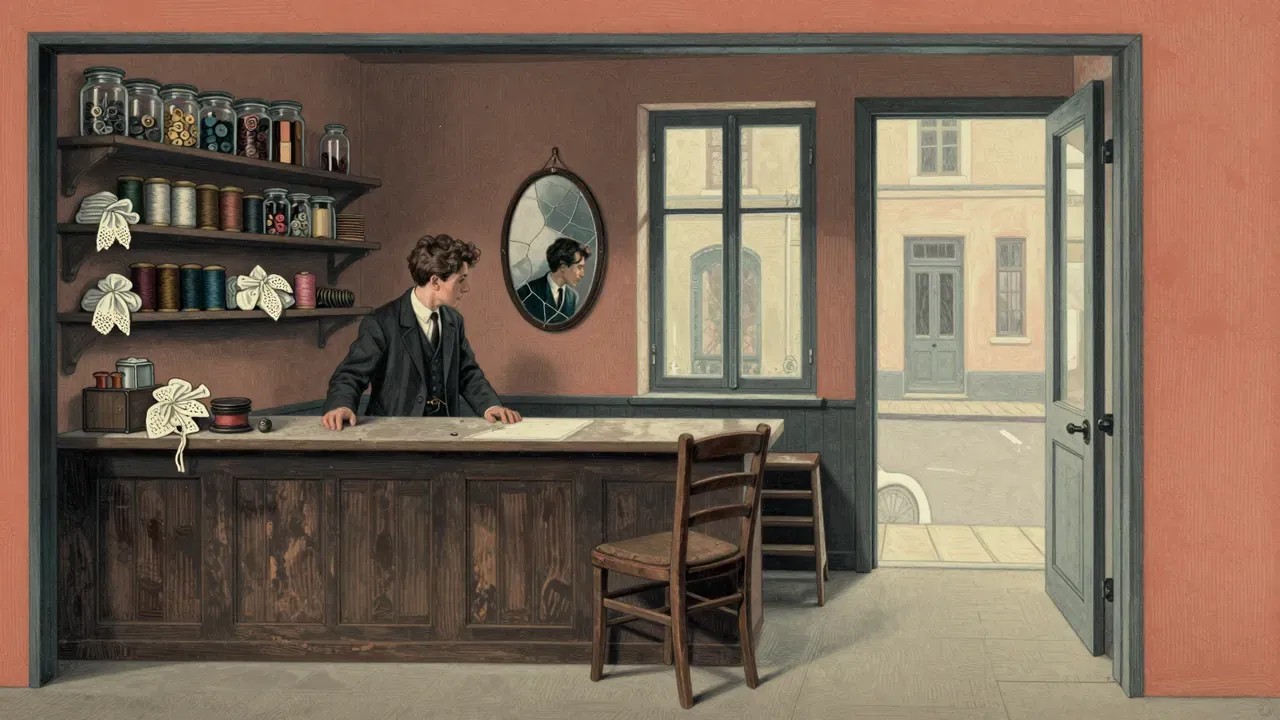
The Shop on Main Street

Ján Kadár, Elmar Klos · 1965

Set in a Slovak town during WWII, The Shop on Main Street follows a carpenter assigned to take over a Jewish widow’s haberdashery under the Aryanization programme. His growing, ineffectual bond with her exposes the slow corrosion of conscience under bureaucratic antisemitism. Made in 1965 at Barrandov Studios, directed by Ján Kadár and Elmar Klos, it won the Academy Award for Best International Feature Film.

13:00

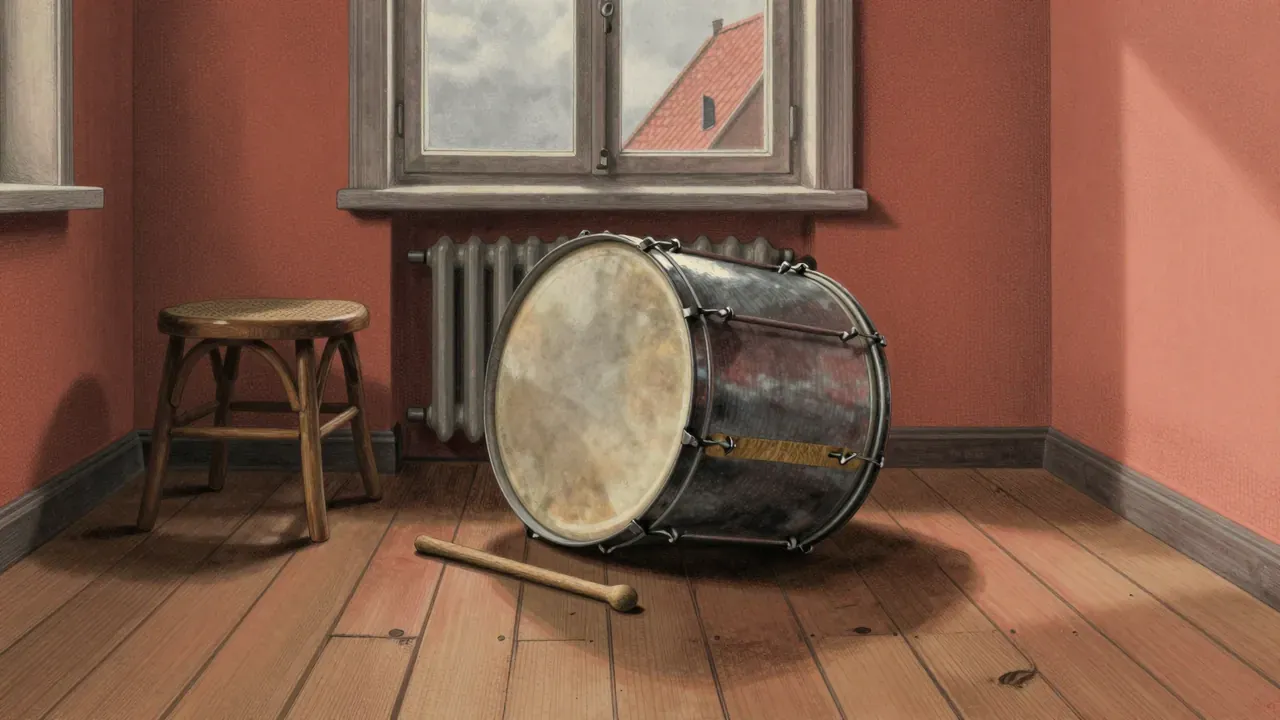
The Tin Drum

Volker Schlöndorff · 1979

Volker Schlöndorff’s 1979 adaptation of Günter Grass’s novel follows Oskar Matzerath, a boy who stops growing at age three and uses his tin drum and glass-shattering scream to navigate Danzig through Nazism and war. Shot in Italian by Jadran Film, with cinematography by Igor Luther and music by Maurice Jarre, it won the Palme d’Or and the Academy Award for Best International Feature Film. Its power lies in sustained allegory, not exposition — a rigorous, unsentimental reckoning with complicity, memory and the body as historical archive.

13:00

Amarcord

Federico Fellini · 1973

Federico Fellini’s 1973 Amarcord is a semi-autobiographical art film set in a fictionalised 1930s Rimini, structured as a year-long seasonal cycle through the life of a coastal village under Fascism. Starring Bruno Zanin and featuring a large ensemble of professional and non-professional actors, it uses exaggerated, theatrical imagery and episodic storytelling to evoke memory as associative, contradictory, and deeply sensual. Giuseppe Rotunno’s cinematography, Nino Rota’s score, and Ruggero Mastroianni’s editing cohere around a central irony: that collective remembrance often obscures moral accountability. Winner of the 1975 Academy Award for Best International Feature Film, it remains a defining work of Italian arthouse cinema.

13:00

No Regrets for Our Youth

Akira Kurosawa · 1946

Akira Kurosawa’s 1946 drama follows Yukie Yagihara from Kyoto university protests through Tokyo survival to rural rice-field labour after her husband’s execution for anti-militarist activity. Made under Occupation guidelines, it avoids polemic in favour of embodied consequence: conviction is measured in calloused hands, not declarations. Setsuko Hara’s restrained performance, Asakazu Nakai’s flat naturalistic lighting, and Kurosawa’s unhurried editing build weight through duration. Though some early scenes feel schematic and its politics simplify historical fractures, its power lies in treating democracy as daily practice — silence, stamina, shared meals — not doctrine.

13:00

The Great Dictator

Charlie Chaplin · 1940

Charlie Chaplin’s 1940 The Great Dictator is his first full sound film and a bold, early condemnation of Hitler, Mussolini and fascism. Playing both a ruthless dictator and a persecuted Jewish barber, Chaplin uses physical comedy, musical irony and direct address to expose authoritarian spectacle and affirm human dignity. Though structurally uneven and limited by its era’s conventions, it remains historically vital and morally unflinching.

13:00

Guillermo del Toro's Pinocchio

Guillermo del Toro, Mark Gustafson · 2022

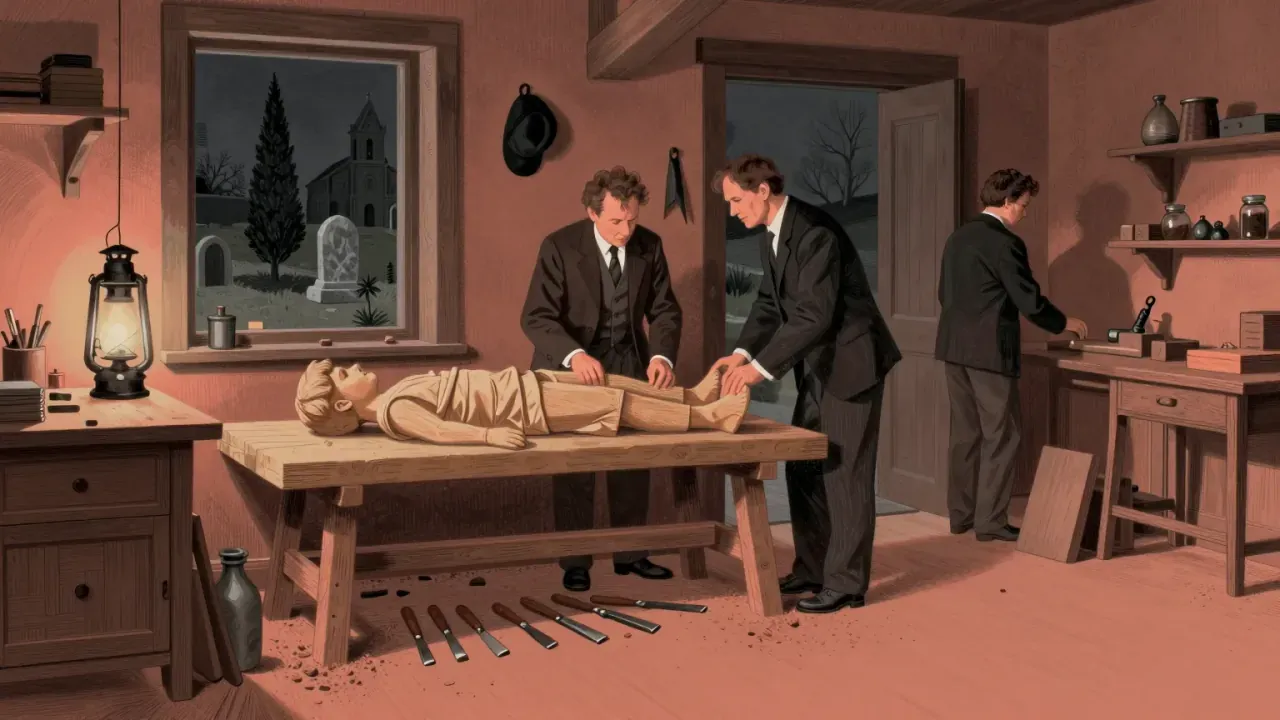
Carved by a grieving Geppetto from the tree growing over his dead son's grave, this stop-motion Pinocchio is rowdy, disobedient and impossible to control, set against the rise of Fascist Italy. Fourteen years in development before Netflix financed it, the film keeps Collodi's darkness rather than softening it into a straightforward morality tale.

13:00

Isle of Dogs

Wes Anderson · 2018

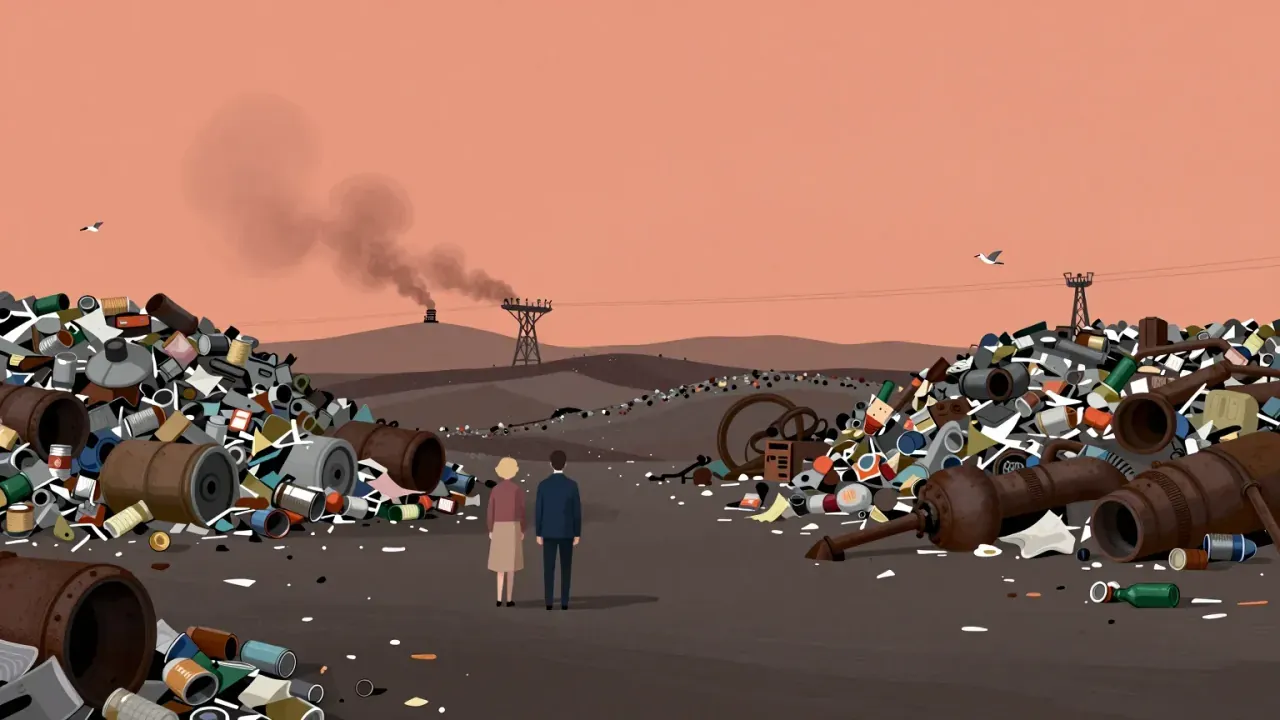
A dictatorial mayor exiles every dog in the fictional Japanese city of Megasaki to Trash Island over a manufactured flu outbreak, and his own twelve-year-old ward hijacks a plane to find his banished bodyguard dog among them. Wes Anderson's second stop-motion feature, drawing openly on Akira Kurosawa and Hayao Miyazaki, pairs meticulous handcrafted puppetry with a plot about political corruption and canine loyalty, while drawing sustained criticism for how it handles the Japanese setting and characters within it.

13:00

Pan's Labyrinth

Guillermo del Toro · 2006

In 1944 Spain, a girl named Ofelia arrives with her pregnant mother at the outpost of her new stepfather, a sadistic Francoist captain hunting republican guerrillas, and finds an ancient labyrinth where a faun sets her three tasks to prove she is the reincarnated princess of an underworld kingdom. Guillermo del Toro's 2006 film alternates between this fantasy and the household's real brutality, using practical creature effects on a modest budget to win three Academy Awards.

13:00

The Grand Budapest Hotel

Wes Anderson · 2014

Ralph Fiennes plays a meticulous concierge framed for murder in Wes Anderson's 2014 comedy, built from Stefan Zweig's writing and won on the strength of its production design and score.