filmbriefs
Topic

Mythology

The stories a culture tells to explain itself to itself.

25
in film
13:00
average
325 min
in total
60
across the network
Mythology across the network →
All briefs25
13:00

Cronos

Guillermo del Toro · 1992

Guillermo del Toro’s 1992 debut follows an elderly antique dealer who discovers a 460-year-old alchemical device that reverses ageing at the cost of bloodlust and physical decay. As he grapples with renewed youth, moral compromise, and encroaching monstrosity, a dying industrialist and his violent nephew pursue the device. Shot in Mexico in Spanish, the film balances gothic horror with Catholic solemnity and familial tenderness — all without recourse to exposition or excess.

13:00

Ghidorah, the Three-Headed Monster

Ishirō Honda · 1964

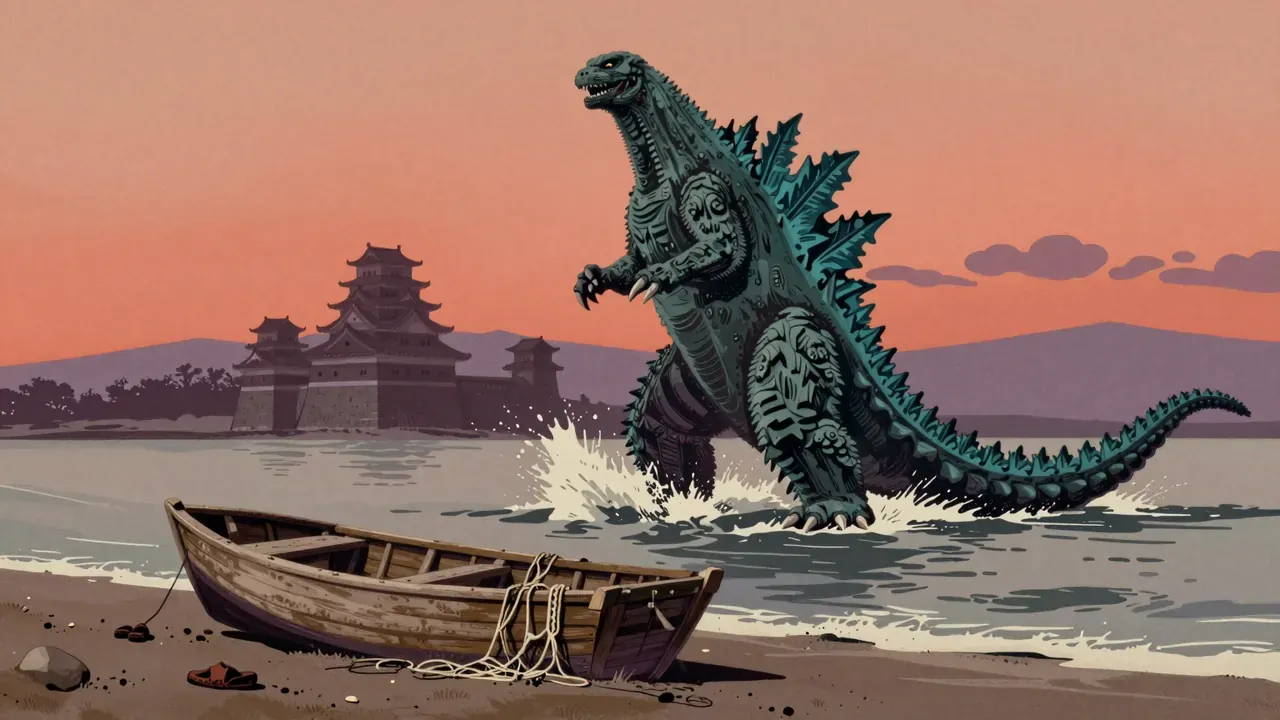
Ghidorah, the Three-Headed Monster (1964) is Toho’s fifth Godzilla film and the first to stage a three-monster alliance against an extraterrestrial threat. Directed by Ishirō Honda with special effects by Eiji Tsuburaya, it follows a Venusian prophetess who warns Earth of King Ghidorah’s arrival, prompting Godzilla, Rodan, and Mothra to set aside rivalry. Built on recycled suits, hand-crafted miniatures, and Akira Ifukube’s score, it privileges ritual over exposition and collective stance over individual heroism. Though human subplots are thin and Ghidorah’s suit proved technically taxing, its vision of reluctant solidarity remains singular in the franchise.

13:00

Godzilla vs. Mechagodzilla

Jun Fukuda · 1974

Toho’s 1974 Godzilla film pits the King of the Monsters against a space-titanium mecha controlled by ape-like aliens from the Third Planet of the Black Hole. Framed by an ancient Okinawan prophecy and centred on the ritual awakening of guardian deity King Caesar, it balances suitmation spectacle with attempts at mythic structure. Though hampered by thin character work and underdeveloped lore, its monster battles are precisely staged, Masaru Sato’s score is distinctive, and its place in the Shōwa era makes it a thoughtful pivot — less jokey than its predecessor, more invested in continuity and consequence.

13:00

Hedwig and the Angry Inch

John Cameron Mitchell · 2001

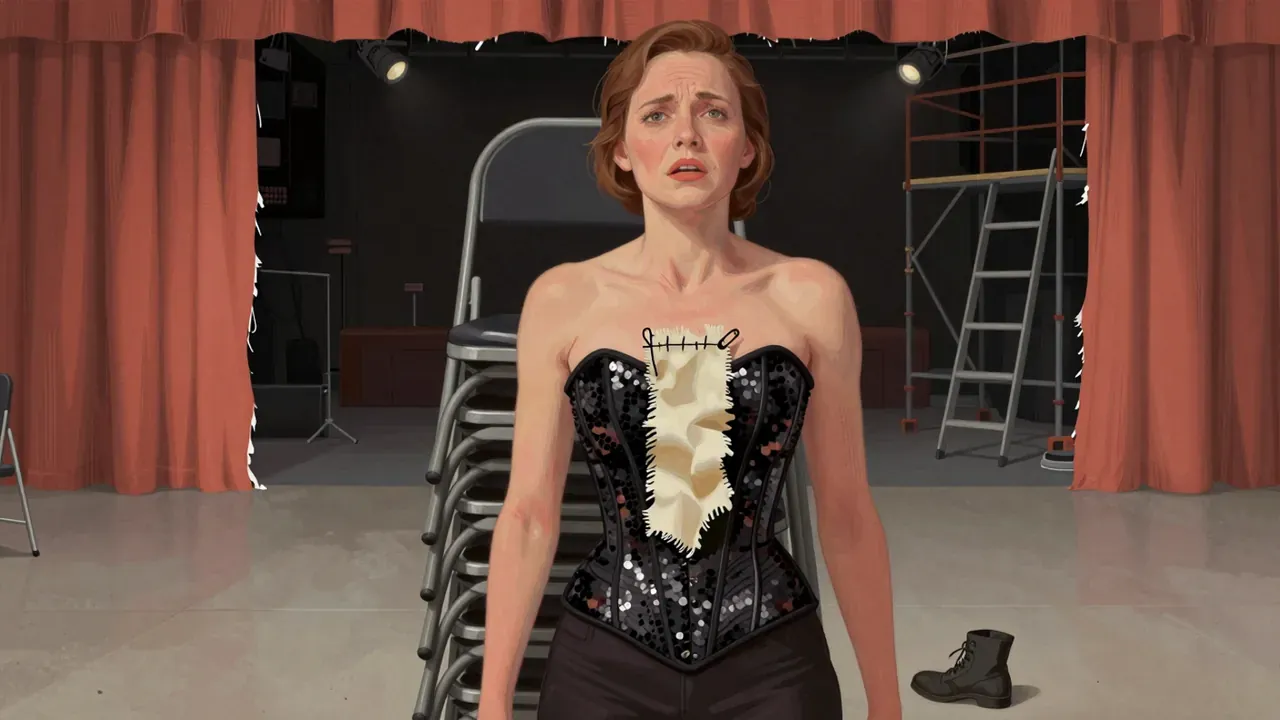
John Cameron Mitchell’s 2001 film adapts his stage musical as a mythic, musically charged portrait of Hedwig Robinson: an East German trans woman, rock frontwoman, and reluctant philosopher. Shot with gritty immediacy by Frankie DeMarco and scored by Stephen Trask, it moves between roadside gigs and fractured memory, using Plato, punk, and botched surgery to explore origin, theft, and the violence of translation. Though its metaphysical finale falters, its performances, craft, and thematic rigour make it a durable arthouse landmark.

13:00

KPop Demon Hunters

Chris Appelhans, Maggie Kang · 2025

KPop Demon Hunters is a 2025 Sony Pictures Animation film co-directed by Maggie Kang and Chris Appelhans. It follows Huntrix, a K-pop girl group who double as demon hunters rooted in Korean folklore, as they confront the Saja Boys — boy-band idols secretly tied to the jeoseung saja. Animated in a bold 3D style inspired by music videos and Korean drama, with songs and score by Marcelo Zarvos, it blends myth, music, and modernity. Released on Netflix, it won Best Animated Feature and Best Original Song at both the Golden Globes and Oscars.

13:00

La Strada

Federico Fellini · 1954

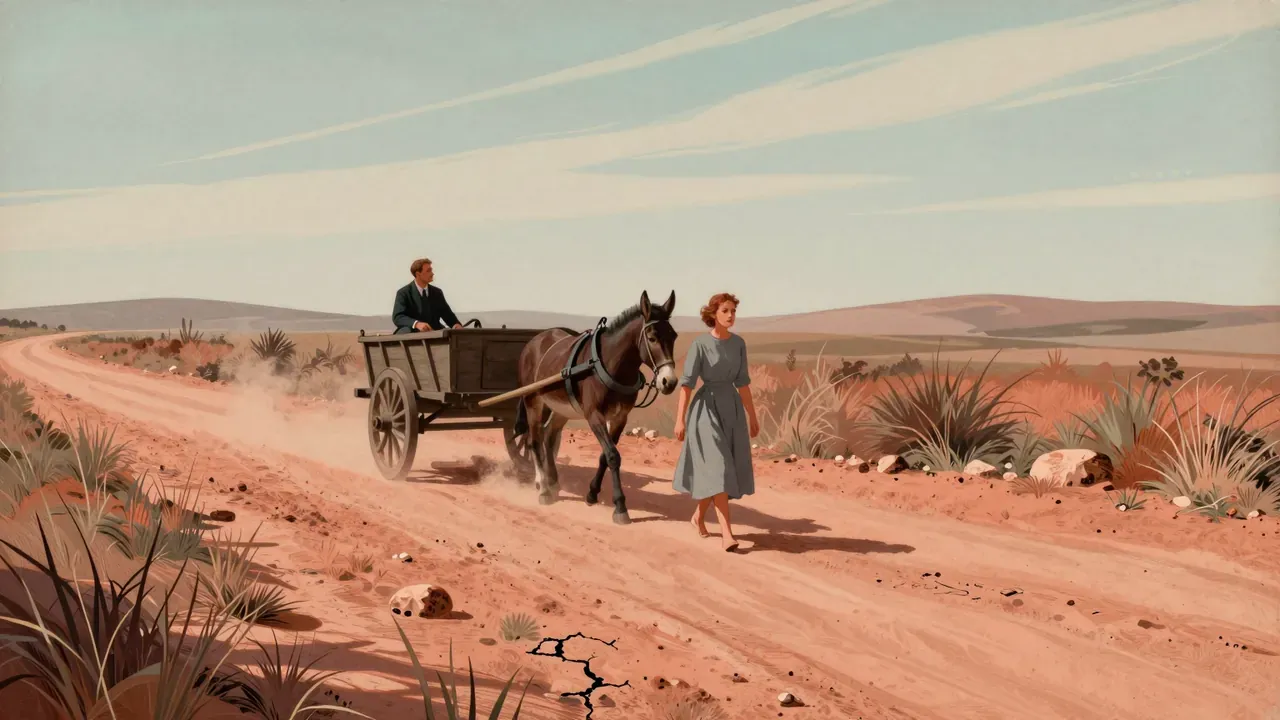
Federico Fellini’s 1954 drama follows Gelsomina, a young woman bought by strongman Zampanò and taken on the road, where she encounters brutality, absurdity and fleeting grace. Shot in rural Italy by Otello Martelli, scored by Nino Rota and anchored by Giulietta Masina’s restrained performance, it rejects narrative resolution in favour of sustained, tactile presence. It won the first Academy Award for Best International Feature Film.

13:00

Leave Her to Heaven

John M. Stahl · 1945

Leave Her to Heaven (1945), directed by John M. Stahl, is a Technicolor psychological drama starring Gene Tierney as Ellen Berent, a woman whose obsessive love curdles into calculated violence. Adapted by Jo Swerling from Ben Ames Williams’s novel, it uses Leon Shamroy’s precise cinematography and Tierney’s controlled performance to map the internal architecture of possession. Though some narrative threads remain underdeveloped and its protagonist’s passivity tests credulity, the film endures as a formally rigorous study of zero-sum love — selected for preservation by the Library of Congress in 2018.

13:00

Medea

Pier Paolo Pasolini · 1969

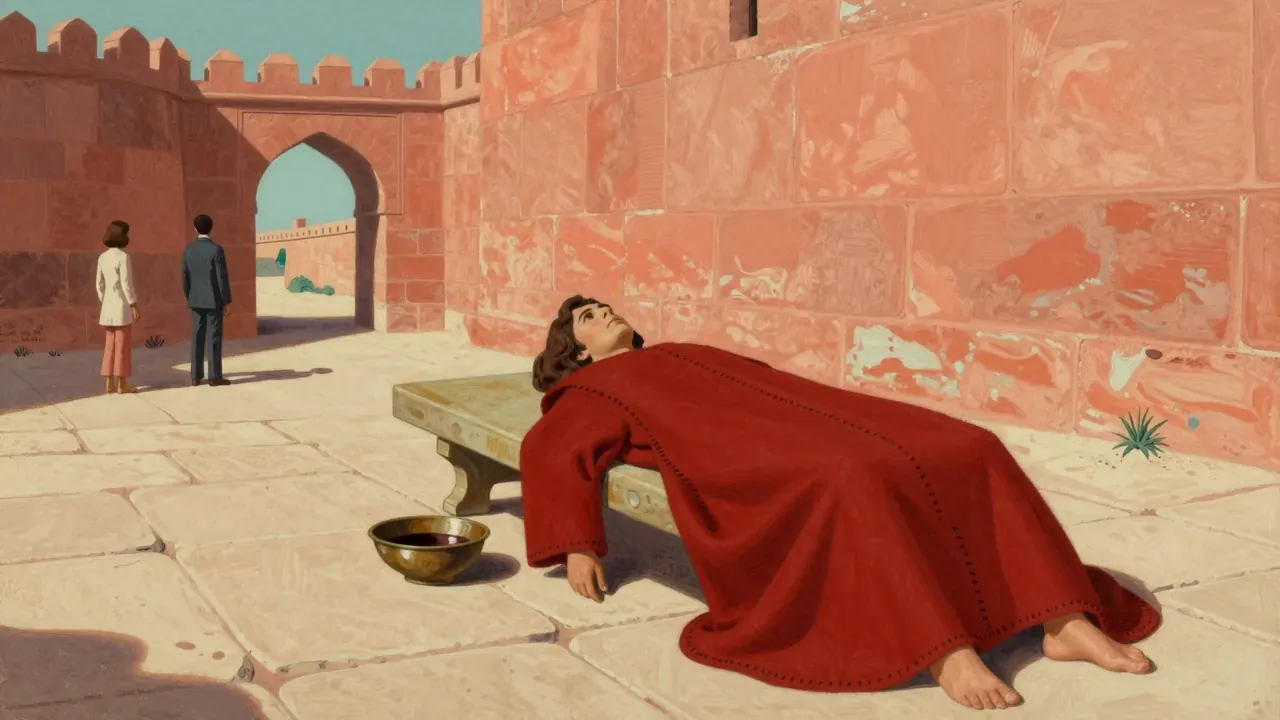
Pier Paolo Pasolini’s 1969 Medea stars Maria Callas in her sole film role, adapting Euripides’ play as an anthropological re-enactment rather than a psychological drama. Shot across Turkey, Syria, and Italy, it uses distinct colour schemes, non-Western music, and ritual pacing to embody three civilisations — Colchis, Iolcus, and Corinth — as competing cosmologies. Callas’s Medea is a force of nature, her infanticide a final assertion of sovereignty over meaning in a world that has abandoned her epistemology.

13:00

Mothra vs. Godzilla

Ishirō Honda · 1964

Mothra vs. Godzilla is a 1964 Toho production directed by Ishirō Honda, pitting the two iconic kaiju in a story where human greed unleashes destruction, and sacred duty restores balance. With practical effects by Eiji Tsuburaya and music by Akira Ifukube, it balances mythic gravity and genre mechanics in 89 tightly composed minutes.

13:00

Oedipus Rex

Pier Paolo Pasolini · 1967

Pier Paolo Pasolini’s 1967 Oedipus Rex reframes Sophocles’ tragedy as a Freudian myth-cycle, bookended by a 1920s Italian prologue and epilogue and centred on a stylised Moroccan-Greek middle. Starring Franco Citti and scored with Romanian folk music, Japanese gagaku, and Mozart, it rejects psychological realism for ceremonial repetition — using costume, sound, and landscape as structural grammar rather than decorative detail.

13:00

Orpheus

Jean Cocteau · 1950

Jean Cocteau’s 1950 Orpheus recasts the Greek myth as a post-war Parisian fable, where poetry, death and mirrors operate under shared, unspoken rules. Jean Marais stars as a poet drawn into a bureaucratic underworld by María Casares’ enigmatic Princess of Death. Shot in ruined academies and Paris streets, with practical effects that foreground craft rather than conceal it, the film sustains a poetic logic across 95 minutes — demanding attention, not explanation.

13:00

Satyricon

Federico Fellini · 1969

Federico Fellini’s 1969 Satyricon is a hallucinatory, episodic reimagining of Petronius’s fragmented Roman satire. Shot on studio sets and Italian locations by Giuseppe Rotunno, it follows Encolpius (Martin Potter) through a surreal, decaying empire — brothels, banquets, pirate ships, deserts — where power is performative, desire transactional, and narrative secondary to texture and tone. Nino Rota’s score and Danilo Donati’s production design anchor its visceral, dreamlike logic.

13:00

Testament of Orpheus

Jean Cocteau · 1960

Testament of Orpheus (1960) is Jean Cocteau’s black-and-white fantasy film starring himself as an 18th-century poet moving through a mythic France. With cameos from Picasso, Marais, Brynner and others, it forms the third part of his Orphic Trilogy. Structured as a series of symbolic vignettes rather than a narrative, it reflects on mortality, authorship and artistic legacy through repetition, doubling and formal restraint. Georges Auric composed the score; Marie-Josèphe Yoyotte edited it. It is an essay-film in cinematic form — elliptical, self-referential, and addressed to those already familiar with Cocteau’s work.

13:00

The Fabulous Baron Munchausen

Karel Zeman · 1962

Karel Zeman’s 1962 The Fabulous Baron Munchausen reimagines the legendary raconteur as a conductor of visual worlds, not a teller of lies. Using live-action actors layered into hand-drawn, animated, and lithographic backdrops inspired by Gustave Doré, the film follows a cosmonaut who lands on the Moon and is escorted by Baron Munchausen through a fantastical, anachronistic Ottoman Empire. With music by Zdeněk Liška and cinematography by Jiří Tarantík, it privileges texture, rhythm, and stylistic unity over psychological realism or narrative drive — a meticulously crafted, gently satirical celebration of storytelling as craft.

13:00

The Fisher King

Terry Gilliam · 1991

Terry Gilliam’s 1991 film follows a disgraced radio host who seeks redemption by helping a delusional homeless man haunted by visions of the Red Knight. Built around Robin Williams’s layered performance as Parry and Jeff Bridges’s restrained turn as Jack, it blends New York realism with Arthurian myth to explore grief, class, and the slow, non-linear work of healing. Though uneven in its framing devices, its emotional honesty and commitment to psychological fidelity make it a singular, unsentimental portrait of care.

13:00

The Thief of Bagdad

Michael Powell, Tim Whelan, Alexander Korda, Zoltan Korda · 1940

The Thief of Bagdad (1940) is a British Technicolor fantasy directed by Michael Powell, Tim Whelan, Alexander Korda and Zoltan Korda. It tells of Prince Ahmad’s exile, his alliance with the thief Abu, and their battle against the sorcerer Jaffar — all sustained by Georges Périnal’s Oscar-winning cinematography, Miklós Rózsa’s score, and a cascade of inventive special effects. Though its romance lacks spark and its cultural framing is decorative, its visual logic, tonal consistency, and sheer craft make it a durable, joyful achievement.

13:00

Time Bandits

Terry Gilliam · 1981

Time Bandits (1981) is a British science fiction fantasy co-written and directed by Terry Gilliam, starring Craig Warnock as Kevin, a boy who joins six dwarfs on a time-travelling heist. Shot in England, Morocco and Wales, it moves through historical and mythic settings — Castiglione, Sherwood Forest, Mycenae, the Titanic — guided by a stolen map of spacetime rifts. The film balances absurd comedy with metaphysical stakes, culminating in a confrontation with Evil and the Supreme Being. Its visual style is tactile and deliberately artificial; its themes centre on perception, inheritance, and the instability of systems. It was financed by George Harrison’s HandMade Films and remains the first in Gilliam’s ‘Trilogy of Imagination’.

13:00

O Brother, Where Art Thou?

Joel Coen, Ethan Coen · 2000

O Brother, Where Art Thou? (2000) transplants the Odyssey’s structure to Depression-era Mississippi, following three escaped convicts on a rambling quest. Directed by Joel and Ethan Coen, it features George Clooney, John Turturro, and Tim Blake Nelson, with cinematography by Roger Deakins and music curated by T Bone Burnett. Its sepia-toned digital look was pioneering; its soundtrack, rooted in period folk and gospel, won a Grammy. Though loosely plotted and deliberately arch, the film sustains a unified tone — dry, musical, mythic — that rewards attentive viewing.

13:00

The Fountain

Darren Aronofsky · 2006

Darren Aronofsky’s 2006 film interweaves three timelines—a conquistador, a neurosurgeon, and a space traveller—all played by Hugh Jackman, bound to Rachel Weisz across centuries by love and loss. Shot on a Montreal soundstage with macro photography and a tightly controlled palette, it uses repetition, motif, and Clint Mansell’s score to explore mortality not as endpoint but as condition. Though commercially unsuccessful and critically divided, it has endured as a precise, austere, and emotionally resonant study of devotion in the face of time’s erosion.

13:00

Black Orpheus

Marcel Camus · 1959

Black Orpheus (1959) transplants the Orpheus and Eurydice myth to Rio de Janeiro’s Carnaval, filmed on location in Morro da Babilônia with non-professional actors. Directed by Marcel Camus and scored by Luiz Bonfá and Antônio Carlos Jobim, it won the Palme d’Or and the Academy Award for Best International Feature Film. Though celebrated for its visual and musical vitality, it has been criticised—especially in Brazil—for reducing Afro-Brazilian life to aestheticised spectacle, sidelining social reality for mythic form.

13:00

The Green Knight

David Lowery · 2021

David Lowery’s The Green Knight reimagines the 14th-century poem as a visually dense, deliberately paced speculative fiction film. Dev Patel stars as Gawain, whose year-long journey to keep a supernatural bargain unfolds through ritualised encounters, practical effects, and a refusal of narrative resolution. Shot in Ireland with hand-painted sets and wood-grain prosthetics, it privileges texture over exposition and ambiguity over catharsis.

13:00

The Lord of the Rings: The Fellowship of the Ring

Peter Jackson · 2001

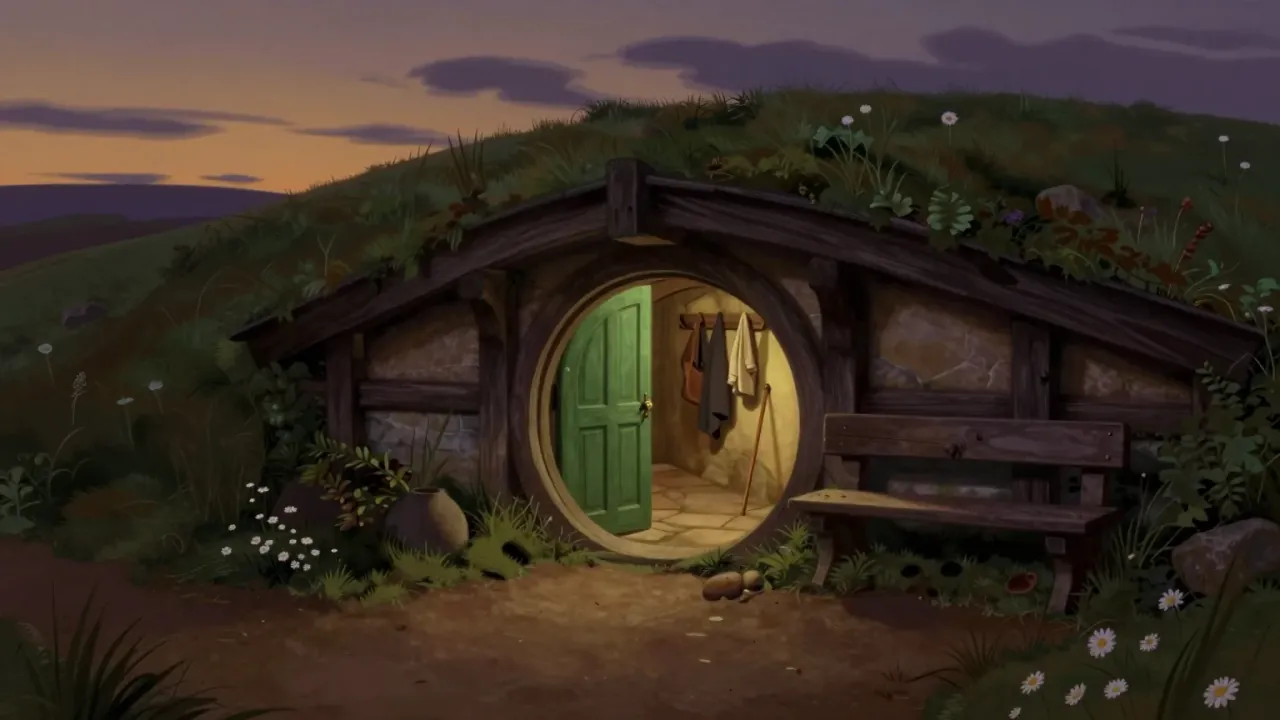
Peter Jackson’s 2001 adaptation of Tolkien’s first volume establishes Middle-earth as a lived-in world, anchored by Andrew Lesnie’s grounded cinematography, Howard Shore’s leitmotif-driven score and performances that privilege quiet resolve over grand pronouncement. At 178 minutes, it balances epic scope with intimate moral stakes — Frodo’s burden, Sam’s loyalty, Arwen’s choice — treating myth not as allegory but as lived consequence. Though some narrative compressions blunt psychological nuance, its thematic coherence and craft cohesion make it a benchmark for fantasy filmmaking.

13:00

The Northman

Robert Eggers · 2022

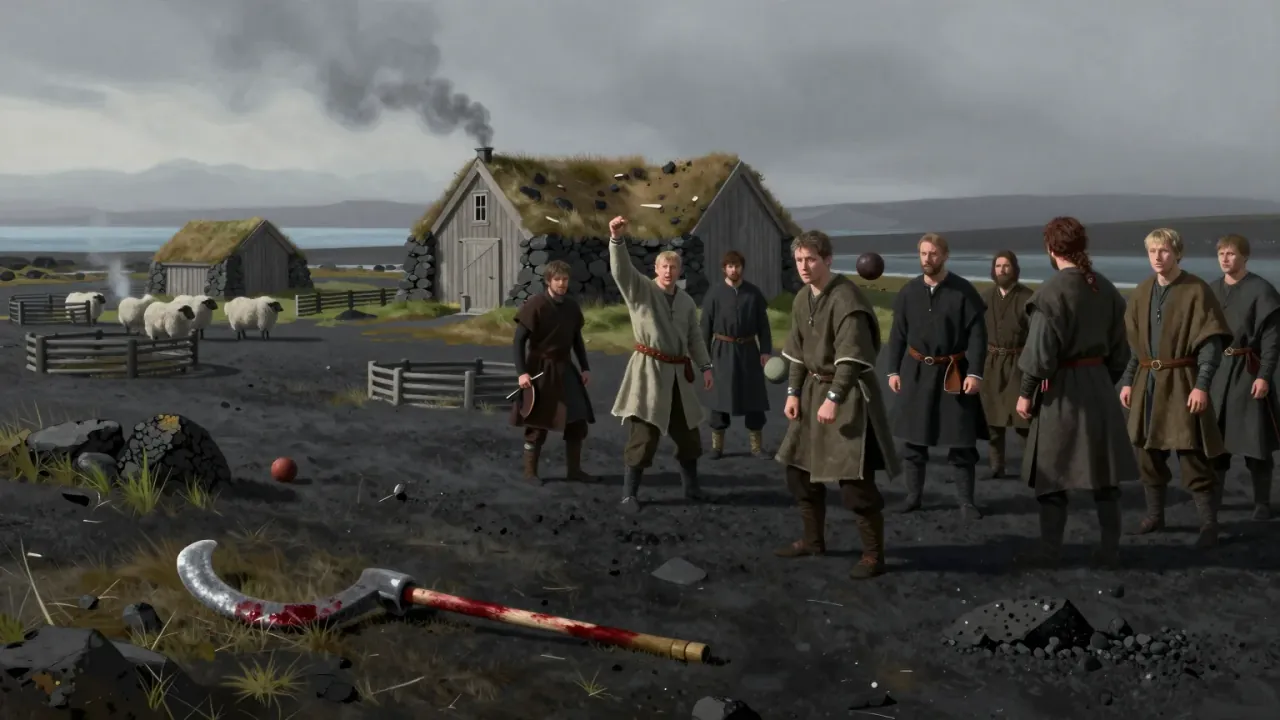
Robert Eggers’ The Northman adapts the Amleth legend into a stark, sensory-driven saga of fate and vengeance. Shot across Iceland and Northern Ireland, it follows Alexander Skarsgård’s Amleth as he fulfils a childhood oath to kill his uncle, played by Claes Bang. With Jarin Blaschke’s austere cinematography and Vessel’s drone-heavy score, the film prioritises ritual over psychology and texture over exposition. Though critically praised, it underperformed commercially and divides audiences on its emotional austerity.

13:00

The Virgin Spring

Ingmar Bergman · 1960

Ingmar Bergman’s 1960 drama, adapted by Ulla Isaksson from a medieval Swedish ballad, follows a Christian landowner whose daughter is raped and murdered by three herdsmen. After they unknowingly seek shelter at his home, he kills them at dawn. At the site of her death, a spring emerges. Shot by Sven Nykvist in austere natural light, the film explores guilt, vengeance, and the silence of God — not as abstract ideas, but as physical, inescapable facts.

13:00

Thor: Ragnarok

Taika Waititi · 2017

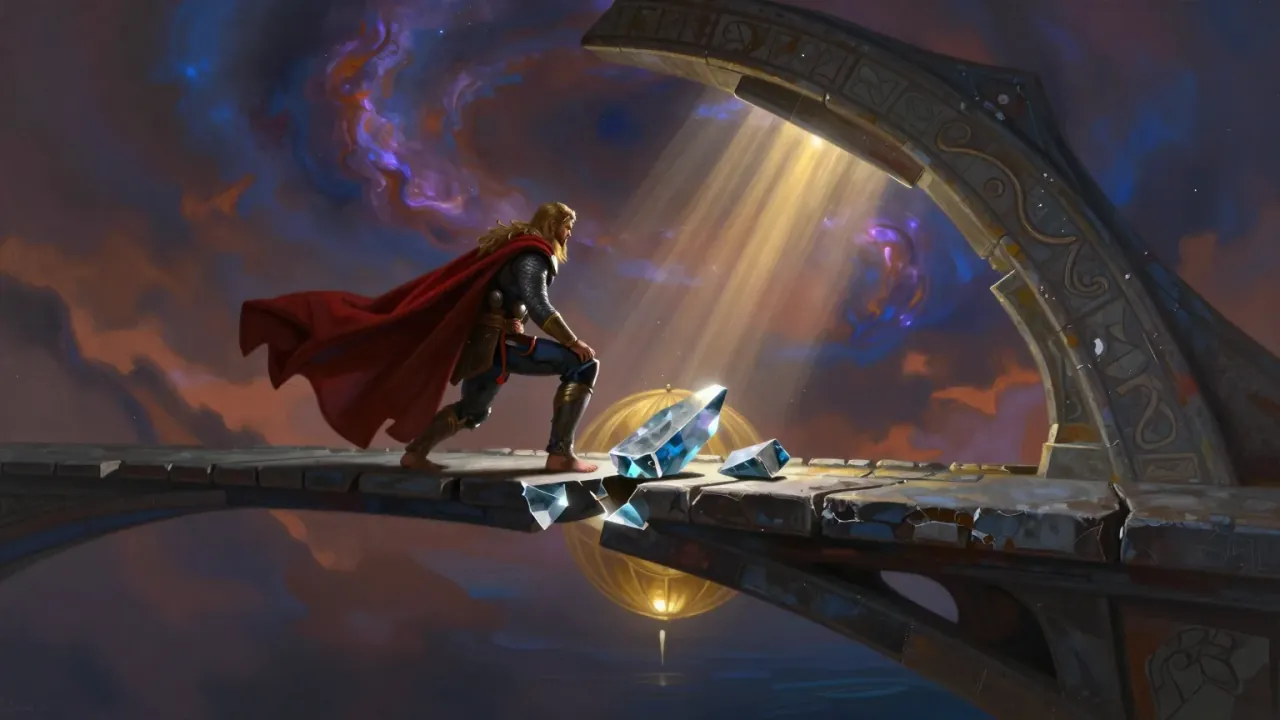
Thor: Ragnarok (2017), directed by Taika Waititi, is the third Thor film in the Marvel Cinematic Universe. It follows Thor’s exile to the alien planet Sakaar, his gladiatorial duel with the Hulk, and his return to Asgard to stop Hela’s conquest. With vibrant cinematography by Javier Aguirresarobe, a synth-driven score by Mark Mothersbaugh, and performances led by Chris Hemsworth, Cate Blanchett, and Tessa Thompson, the film prioritises wit, pace, and visual invention over mythic solemnity. It grossed $854 million worldwide and received praise for its direction and energy, though some critics found its themes underdeveloped and its finale visually overwhelming.