filmbriefs
Topic

Fear

The oldest signal, frequently misfiring in a safe environment.

21
in film
13:00
average
273 min
in total
34
across the network
Fear across the network →
All briefs21
13:00

Ali: Fear Eats the Soul

Rainer Werner Fassbinder · 1974

Rainer Werner Fassbinder’s 1974 drama follows a 60-year-old German widow and a Moroccan migrant worker whose marriage exposes the everyday machinery of racism and class prejudice in postwar West Germany. Shot in under two weeks, it uses Sirkian melodrama not for irony but precision — compressing social critique into intimate gesture, silence, and repeated, unadorned images. Brigitte Mira and El Hedi ben Salem perform with restrained gravity, while Jürgen Jürges’ cinematography and Thea Eymèsz’s editing sustain a tone of quiet, accumulating pressure. The film ends not with resolution but with commitment: two hands held in a hospital corridor, after everything else has been worn away.
13:00

Bowling for Columbine

Michael Moore · 2002

Michael Moore’s 2002 documentary uses the Columbine massacre as a lens to examine America’s relationship with guns, fear, and violence. Through staged interventions, selective interviews, and associative editing, it builds a case against cultural complacency — not by proving single causes, but by exposing patterns of denial, profit, and performance. It won the Academy Award for Best Documentary and remains a touchstone for debates about advocacy filmmaking.

13:00

Cat People

Jacques Tourneur · 1942

Cat People (1942) is a low-budget RKO horror film directed by Jacques Tourneur and produced by Val Lewton. It follows Irena Dubrovna, a Serbian woman who fears she is descended from a tribe of cat-worshipping people who transform into panthers when aroused. Shot in stark black-and-white by Nicholas Musuraca, with a sparse, unsettling score by Roy Webb, the film builds dread through suggestion rather than spectacle. Its psychological depth, formal restraint and thematic rigour have secured its place as a landmark of atmospheric horror.

13:00

Defending Your Life

Albert Brooks · 1991

Albert Brooks’ 1991 romantic comedy-fantasy follows a recently deceased advertising executive navigating Judgment City, a bureaucratic afterlife where souls are tried on their capacity to overcome fear. With Shirley MacLaine, Rip Torn, and Lee Grant, it blends dry wit, tender romance, and existential inquiry — using the trial format to explore courage not as heroism but as daily, quiet choice.

13:00

I Live in Fear

Akira Kurosawa · 1955

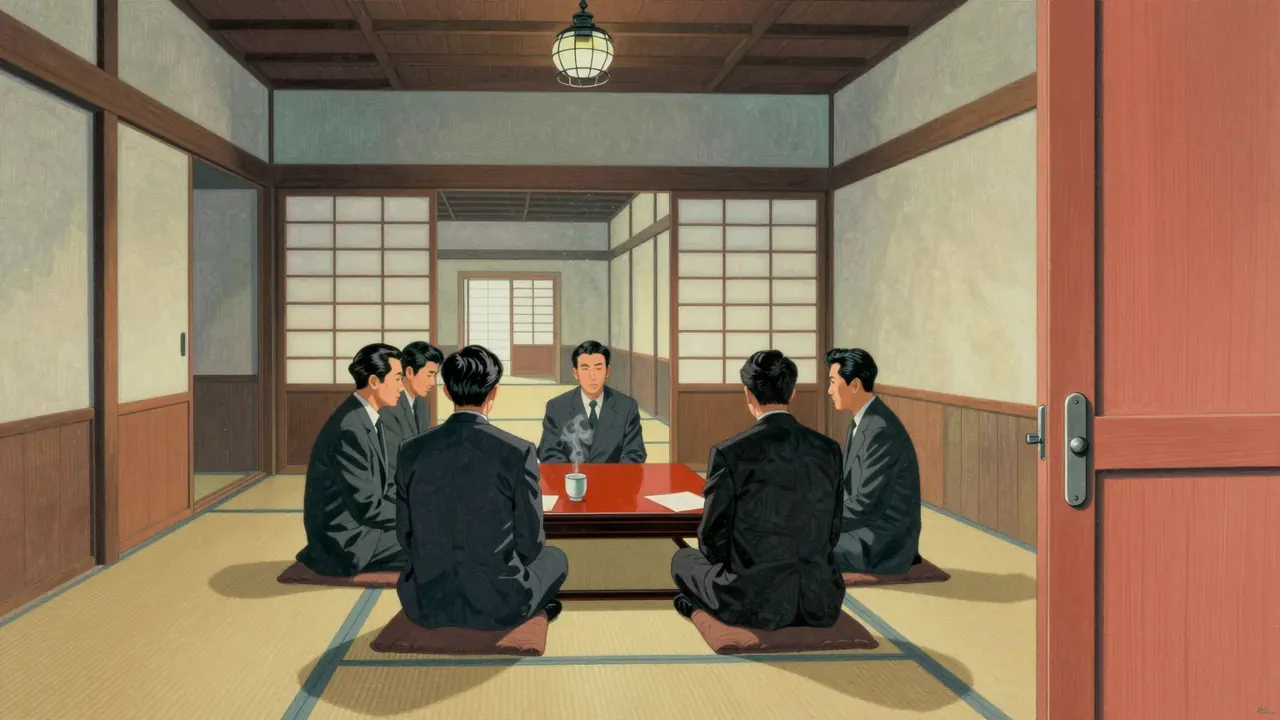
Akira Kurosawa’s 1955 drama follows Kiichi Nakajima (Toshirō Mifune), an ageing foundry owner convinced that nuclear war is inevitable, and his desperate, legally contested plan to move his family to Brazil. Framed by a family arbitration and ending in psychiatric confinement, the film avoids sensationalism, using restrained performances, precise black-and-white cinematography by Asakazu Nakai, and Masaru Sato’s austere score to examine fear, competence, and the social cost of foresight in postwar Japan.

13:00

The Uninvited

Lewis Allen · 1944

The Uninvited (1944), directed by Lewis Allen and written by Dodie Smith, follows siblings who purchase a Cornish seaside house only to encounter inexplicable phenomena rooted in grief and suppressed attachment. Shot by Charles Lang with deliberate restraint, it avoids horror tropes in favour of sustained atmosphere, ambiguous motivation, and psychological weight. Though uneven in performance and occasionally expositional, its influence on supernatural cinema is foundational — less about ghosts than about what haunts us long after we stop speaking their names.

13:00

The Wages of Fear

Henri-Georges Clouzot · 1953

Henri-Georges Clouzot’s 1953 thriller follows four desperate men hired to drive nitroglycerin across treacherous South American roads. With minimal dialogue and relentless physical detail, it sustains unbearable tension through craft rather than plot — a masterclass in cinematic endurance that won both the Palme d’Or and Golden Bear.

13:00

Alien

Ridley Scott · 1979

A commercial towing crew, woken early by what they believe is a distress signal, boards a derelict ship and returns with something that starts killing them one by one. Ridley Scott's first science-fiction film builds the genre's most enduring monster movie almost entirely out of dread, sound design and H.R. Giger's biomechanical creature, on a budget that a science-fiction boom had only just made possible.

13:00

Aliens

James Cameron · 1986

James Cameron's 1986 sequel to Alien sends Sigourney Weaver's Ripley back to the colonised moon where the first creature was found, this time with a unit of Colonial Marines whose confidence collapses fast once the aliens appear. Greenlit only after Brandywine settled a profit-sharing lawsuit with Fox, and made after two separate standoffs over Weaver's return, the film swept effects and sound awards, earned Weaver a rare Best Actress nomination for a science-fiction role, and returned more than seven times its 18.5 million dollar budget.

13:00

Dr. Strangelove

Stanley Kubrick · 1964

Stanley Kubrick's 1964 black comedy, adapted from Peter George's thriller novel Red Alert, follows a rogue American general's order for a nuclear strike on the Soviet Union and the frantic, mostly useless efforts of the President, his aides and a visiting RAF officer, all three played by Peter Sellers, to call it back. Shot entirely at Shepperton Studios on Ken Adam's cavernous War Room set for $1.8 million, it grossed $9.4 million, won three BAFTAs, and is now ranked among the American Film Institute's greatest and funniest American films.

13:00

Finding Nemo

Andrew Stanton, Lee Unkrich · 2003

Finding Nemo follows an overprotective clownfish, Marlin, across the ocean to rescue his son Nemo after a diver captures him, aided by Dory, a fish whose short-term memory resets constantly. Directed by Andrew Stanton for Pixar from a script written before serious animation began, the film grossed $969 million against a $94 million budget, became the best-selling DVD title ever, and won the first Academy Award for Best Animated Feature.

13:00

Get Out

Jordan Peele · 2017

A young Black photographer visits his white girlfriend's family for a weekend that curdles from awkward hospitality into captivity, in Jordan Peele's directorial debut and Oscar-winning screenplay.

13:00

Jaws

Steven Spielberg · 1975

Steven Spielberg's 1975 thriller sends police chief Martin Brody, a marine biologist and a professional shark hunter after a great white attacking swimmers off a New England resort town. Adapted from Peter Benchley's novel and shot on location at Martha's Vineyard, it went over budget and schedule when its mechanical sharks repeatedly failed, forcing Spielberg toward a suggestive, Hitchcock-influenced style built around John Williams's two-note theme. It became the highest-grossing film in history at the time and established the modern summer blockbuster model.

13:00

Monsters, Inc.

Pete Docter, Lee Unkrich, David Silverman · 2001

Monsters, Inc. imagines child-scaring as an actual industry, converting screams into a city's power supply, until a small girl named Boo slips into the factory and forces two scarers to smuggle her home before anyone notices. Directed by Pete Docter for Pixar over a five-year production, the film cost $115 million, took $632 million worldwide, and won the Academy Award for Best Original Song.

13:00

No Country for Old Men

Ethan Coen, Joel Coen · 2007

No Country for Old Men follows a welder who finds two million dollars at a drug deal gone wrong, the hitman sent to retrieve it, and the ageing sheriff trailing both of them across 1980 West Texas. Joel and Ethan Coen adapt Cormac McCarthy's novel with unusual fidelity, keeping dialogue sparse and letting Roger Deakins's landscapes and Javier Bardem's performance as Anton Chigurh carry a story that deliberately withholds the confrontation genre habit expects.

13:00

Pan's Labyrinth

Guillermo del Toro · 2006

In 1944 Spain, a girl named Ofelia arrives with her pregnant mother at the outpost of her new stepfather, a sadistic Francoist captain hunting republican guerrillas, and finds an ancient labyrinth where a faun sets her three tasks to prove she is the reincarnated princess of an underworld kingdom. Guillermo del Toro's 2006 film alternates between this fantasy and the household's real brutality, using practical creature effects on a modest budget to win three Academy Awards.

13:00

Psycho

Alfred Hitchcock · 1960

Hitchcock financed Psycho himself after Paramount balked at the material, shooting it fast, cheap and in black and white with his television crew. Anthony Perkins's Norman Bates, Bernard Herrmann's string score and a mid-film murder that removes the film's ostensible heroine turned a low-budget genre picture into the template for the modern horror thriller.

13:00

The Iron Giant

Brad Bird · 1999

The Iron Giant drops a fifty-foot alien robot into small-town Maine in 1957 and lets a lonely boy's friendship with it, rather than its destructive potential, carry the film. Brad Bird's feature debut, made by Warner Bros. on roughly half the budget and schedule of comparable animated films, was a box-office failure on release but has since become a byword for a cult classic.

13:00

The Shining

Stanley Kubrick · 1980

Stanley Kubrick's 1980 adaptation of Stephen King's novel follows a recovering alcoholic, his wife and their clairvoyant son through a winter at an isolated hotel, shot entirely on constructed sets in England on a $19 million budget, built around Jack Nicholson's escalating performance, John Alcott's Steadicam corridors and Wendy Carlos's electronic score.

13:00

The Thing

John Carpenter · 1982

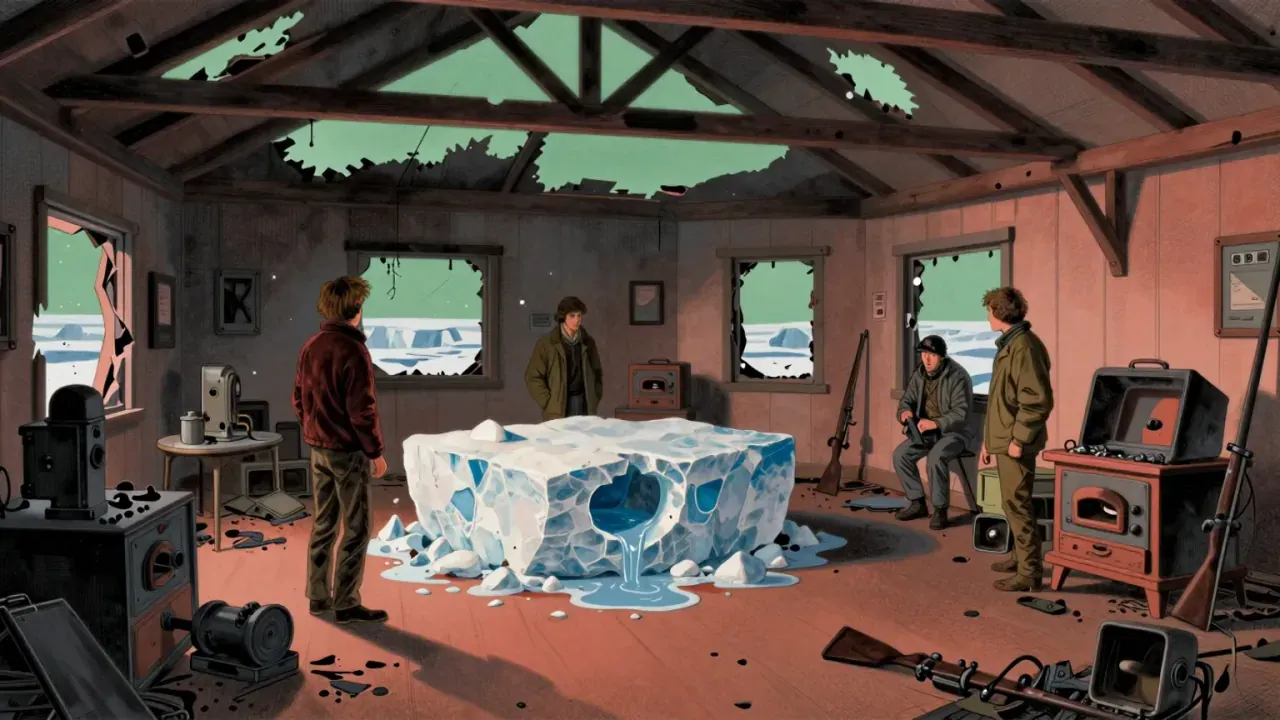
A helicopter pilot and a research crew at a remote Antarctic base find a shape-shifting alien freed from a Norwegian camp, and John Carpenter turns the ensuing hunt for the impostor into a study of paranoia as much as a monster film. Poorly received and a box-office loss on release, it has since been reassessed as one of the strongest science-fiction horror films made.

13:00

Wolfwalkers

Tomm Moore, Ross Stewart · 2020

Robyn, an English hunter's daughter in occupied Ireland, is sent to help exterminate the last wolf pack outside Kilkenny and instead befriends Mebh, a girl from a wolf-linked tribe whose spirit runs as a wolf by night, discovering along the way that a bite has made her one of them too. Tomm Moore and Ross Stewart's Cartoon Saloon feature, the third in Moore's Irish folklore trilogy, builds its visual design and its politics from the same conflict, an authoritarian Lord Protector's rule against nature versus everything the forest represents.