The shape of it
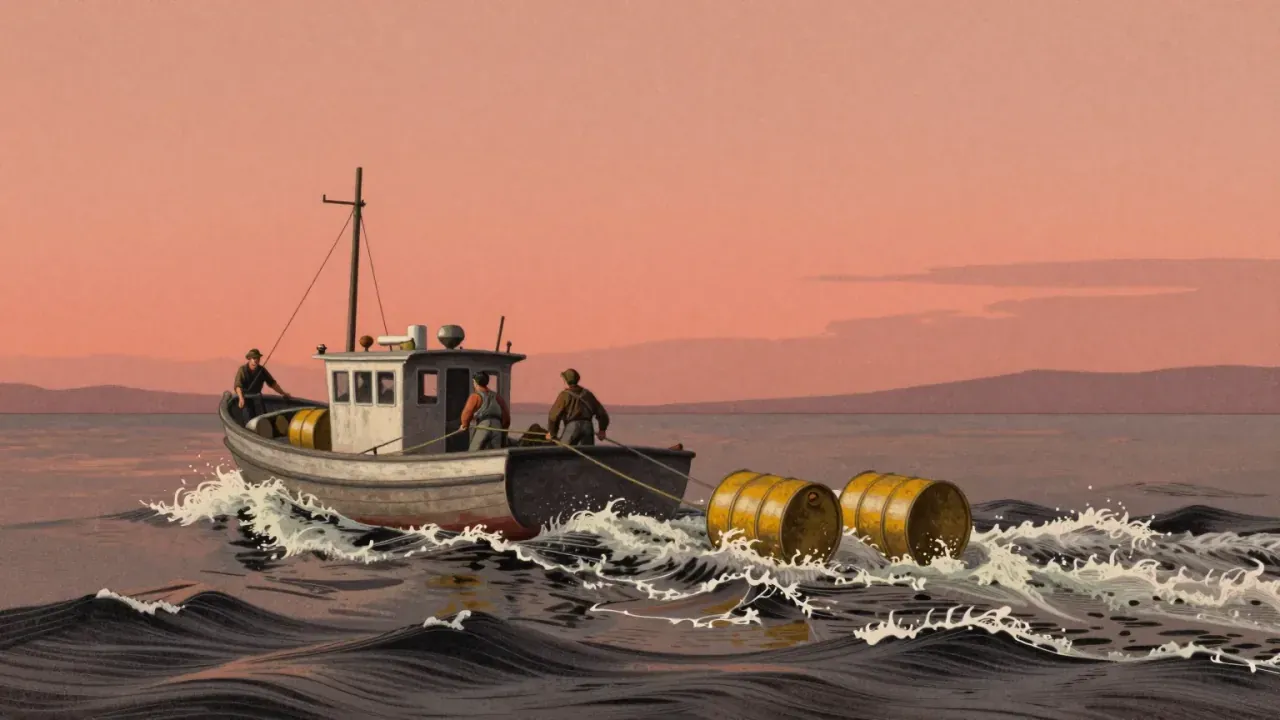
The Wages of Fear is a French drama film from 1953 that sets out to sustain unbearable tension through physical peril, not plot twists or character revelation. It adapts Georges Arnaud’s novel into a tightly controlled study of men under extreme, unrelenting pressure — specifically, the transport of nitroglycerin across 500 km of deteriorating mountain roads. Its aim is not psychological exposition but physiological response: to make the viewer feel the weight of the cargo, the fragility of the trucks, the tremor in the drivers’ hands. It refuses moral framing — there are no heroes, no villains, only compromised men drawn by money they cannot refuse. Clouzot treats the oil company not as a caricature of American capitalism but as an indifferent infrastructure, its compound walled and self-contained, its authority administrative rather than ideological. The film’s ambition is structural: to build suspense not around whether something will happen, but how long it can be delayed — and what frays first, the vehicle, the road, or the man. It does not ask what the characters believe, only what they endure. Word count: 148
The look of it
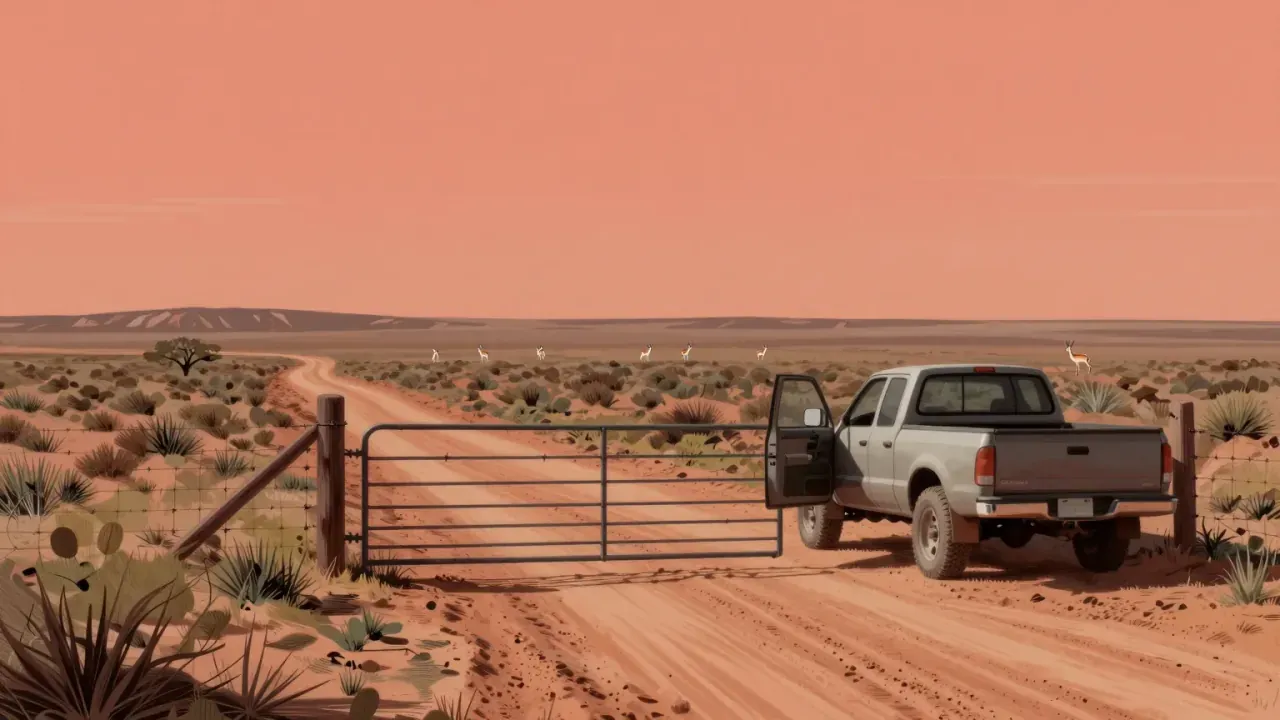
The story unfolds with surgical pacing: four men are selected for a suicide mission; two trucks depart thirty minutes apart; every obstacle is real, tactile, and cumulative. Yves Montand’s Mario carries a weary charisma, Charles Vanel’s Jo a brittle, fading authority — both performances rely on stillness, on glances held too long, on hands that shake just once and then are clenched again. Armand Thirard’s cinematography avoids flourish: wide shots establish scale and isolation; medium frames hold faces mid-sweat; close-ups linger on cracked tyres, dripping condensation, knuckles whitening on a steering wheel. Georges Auric’s score is sparse, mostly absent — silence dominates, broken only by engine strain, gravel crunch, or the low hum of unstable chemistry. Editing by Madeleine Gug and colleagues tightens rhythm without rushing: a flat tyre takes two minutes to change, and we watch every wrench turn. The production’s difficulties — rain delays, struck extras, near-wildfires — left their mark: the mud is thick, the heat palpable, the exhaustion earned. Nothing feels rehearsed or imposed; even the set-built town of Las Piedras looks wind-scoured and temporary. Word count: 152
The weight of it
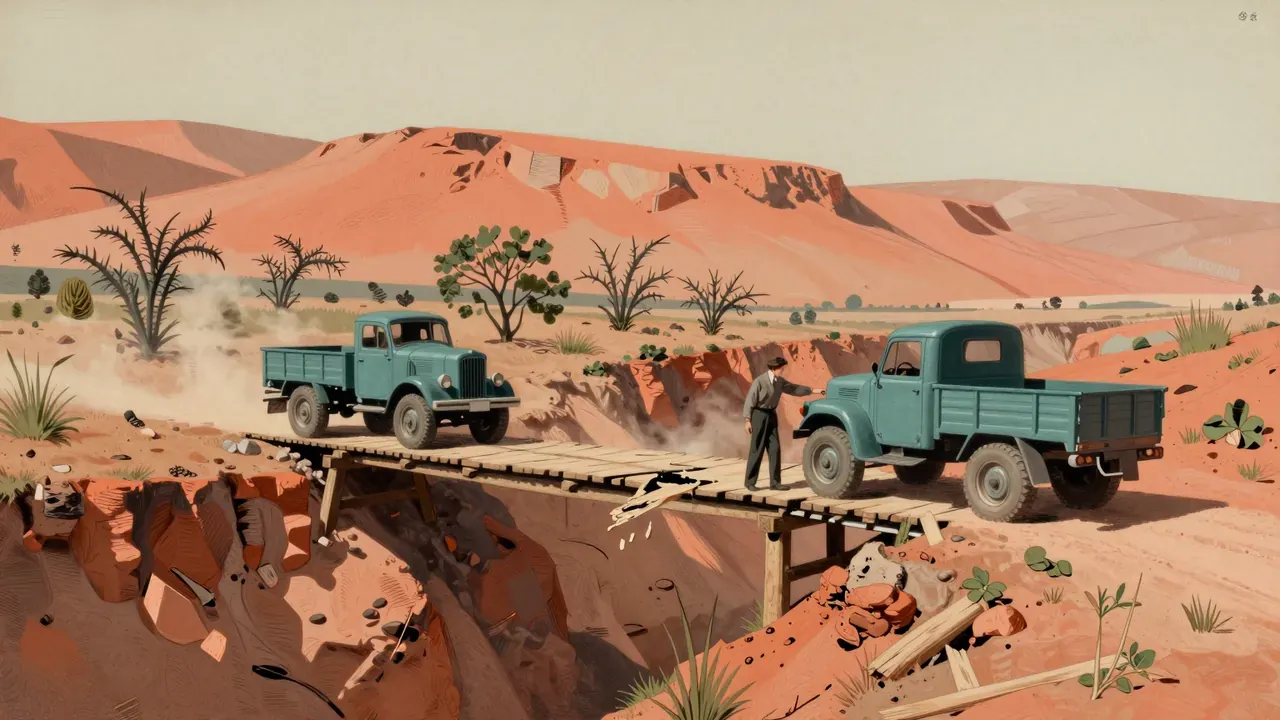
What lands most decisively is the film’s refusal to let relief arrive. Every near-miss — the washboard road, the rotten plank bridge, the boulder — compounds rather than resolves tension. The explosion of Luigi and Bimba’s truck is not a climax but a pivot: it confirms the stakes and strips away any illusion of control. Mario’s final drive down the mountain, reckless and jubilant, lands with brutal irony because it is not catharsis but repetition — he repeats the same risk, now unmoored from necessity, and pays for it. The film’s physicality is inseparable from its effect: the trucks are heavy, the nitro sloshes audibly, the dust sticks to skin. Even the casting choices reinforce this — Montand rejected filming in Francoist Spain on political grounds, and the production settled instead in the Gard department, where the terrain itself becomes a co-performer. The authenticity is procedural, not documentary: every gear shift, every gear-down, every pause before restarting the engine feels necessary and irreversible. Word count: 149
The silence of it
What does not land is any sustained engagement with the colonial or geopolitical framework implied by the setting. Though the film names Southern Oil Company and places its compound within a South American town, it never explores local life beyond background figures or Linda’s brief presence. The Romani extras who struck during production are absent from the final cut; their labour and dissent vanish into the film’s narrow focus. Likewise, the novel’s sharper critique of corporate impunity is flattened: SOC operates with bureaucratic calm, not malice, and its power remains off-screen, delegated to Bill O’Brien’s clipped instructions. The film’s existentialism is individual, not systemic — it asks what fear does to a man, not what exploitation does to a place. Some viewers may find the moral vacuum frustrating, particularly given the real-world context of post-war resource extraction. Others will see that restraint as discipline: the film’s subject is endurance, not indictment. Word count: 147
The logic of it
The themes that matter are endurance, contingency, and the erosion of agency under sustained stress. The film treats time not as narrative progression but as accumulation: every minute on the road adds weight, every bump recalibrates risk. Free will appears only in micro-decisions — whether to brake, swerve, or wait — each one narrowing the next option. Class is present not as dialogue but as condition: the men have no exit except this job, no leverage except their own bodies. Their nationalities (French, German, Italian) matter less than their shared disposability — they are interchangeable, replaceable, already half-erased by circumstance. The title’s ‘wages’ refer not just to money but to cost: what is extracted in return for survival. There is no redemption arc, no growth — only attrition. Even the ending refuses closure: Mario’s death is not tragic irony but mechanical inevitability, the final gear slipping on a road that has already claimed three others. The film’s vision is neither nihilistic nor hopeful, but geological: slow, grinding, indifferent. Word count: 146
The demand of it
This film is for viewers who value sustained formal control over exposition, who respond to physical storytelling more than verbal revelation, and who accept that suspense need not resolve in meaning — only in consequence. It rewards patience, attention to texture, and tolerance for long stretches where nothing changes except the light and the sound of an engine straining. It is not for those who require character arcs, thematic clarity, or emotional payoff beyond dread and exhaustion. Anyone expecting satire, political commentary, or social realism will find the film withholding. Those who prefer rapid editing, musical punctuation, or psychological exposition will likely disengage before the first truck crosses the washboard. A viewer who values Clouzot’s later Les Diaboliques for its twist-driven structure may misread this as a thriller with a solution — it is not. Its logic is arithmetic, not dramatic: two trucks, one cargo, five hundred kilometres, zero margin. Word count: 149
The rhythm of it
Yes, it is worth your evening — provided you watch it whole, uninterrupted, and in a space where silence can be heard. At 148 minutes, it demands commitment, but repays it with a rare unity of purpose: every shot, cut, and pause serves the central proposition — that danger is not an event but a duration. Its influence on later films like Dunkirk or Sorcerer is visible not in imitation but in inheritance: the understanding that tension lives in the gap between intention and outcome. Anyone who dismisses it as ‘slow’ has mistaken pacing for absence — the film is dense, not empty. Those who find it exhausting are responding correctly; that is its design. A viewer who watches it on a small screen, with interruptions, or expecting diversion will misjudge it. But watched as intended — as a single, unbroken act of concentration — it remains one of cinema’s most exacting and coherent statements about human limits. Word count: 149