filmbriefs
Topic

Celebrity

Fame as an industry, with its own labour conditions.

25
in film
13:00
average
325 min
in total
59
across the network
Celebrity across the network →
All briefs25
13:00

A Face in the Crowd

Elia Kazan · 1957

Elia Kazan’s 1957 drama follows Larry 'Lonesome' Rhodes, a charismatic drifter turned national TV star, whose rise and fall exposes the collusion between media, advertising and politics in shaping public belief. Andy Griffith’s debut performance anchors a tightly structured critique of persuasion as infrastructure, not personality.
13:00

A Hard Day's Night

Richard Lester · 1964

Richard Lester’s 1964 musical comedy captures the Beatles during Beatlemania’s peak, using a fictional 36-hour sprint to concert performance as scaffolding for their music, wit, and chemistry. Shot in black-and-white with vérité energy, it prioritises rhythm over narrative, performance over psychology, and spontaneity over polish. Though thin on character depth and social critique, its influence on music video and ensemble comedy remains profound. It remains watchable not as nostalgia, but as a masterclass in tonal discipline.

13:00

All About Eve

Joseph L. Mankiewicz · 1950

All About Eve (1950) follows ageing Broadway star Margo Channing as she takes in devoted fan Eve Harrington, only to find her career, relationships, and sense of self quietly displaced. Written and directed by Joseph L. Mankiewicz, it unfolds through layered narration, razor-sharp dialogue, and restrained performances — especially Bette Davis as Margo and Anne Baxter as Eve. Shot in black-and-white by Milton Krasner, edited by Barbara McLean, and scored by Alfred Newman, it is a precise, unsentimental study of power, performance, and professional inheritance.

13:00

And God Created Woman

Roger Vadim · 1956

Roger Vadim’s 1956 debut stars Brigitte Bardot as Juliette, an orphaned teenager whose unselfconscious sensuality disrupts the social order of Saint-Tropez. Built around Bardot’s physical presence rather than psychological depth, it uses repetition, framing and coastal light to stage a quiet rebellion against convention. Though commercially explosive and culturally seismic — especially in its censored US release — it resists narrative resolution or moral commentary. Its power lies in what it enacted, not what it explained.

13:00

Beyond the Valley of the Dolls

Russ Meyer · 1970

Beyond the Valley of the Dolls (1970) is a Russ Meyer–Roger Ebert collaboration: a knowingly excessive, tonally unstable parody of Valley of the Dolls and Hollywood itself. Made quickly on the Fox lot, it blends teen melodrama, rock musical, exploitation thriller and moral fable — all delivered with poker-faced solemnity. Its cult status rests on its deliberate incoherence, not despite it.

13:00

Clouds of Sils Maria

Olivier Assayas · 2014

Olivier Assayas’s 2014 drama follows Juliette Binoche as an established actress cast opposite a young starlet in a revival of a play that made her famous two decades earlier. Shot on 35mm in Switzerland, Germany and Italy, it traces her psychological recalibration alongside her American assistant (Kristen Stewart) against the backdrop of the Alps and the Maloja Snake — both weather phenomenon and metaphor. The film explores performance, time, and shifting power between women, with restrained craft and deliberate ambiguity.

13:00

Dont Look Back

D. A. Pennebaker · 1967

Dont Look Back is a 1967 vérité documentary by D. A. Pennebaker capturing Bob Dylan’s 1965 UK tour. Shot on handheld 16mm black-and-white film with direct sound, it avoids narration, exposition or chronological framing. Instead, it observes Dylan’s interactions with Joan Baez, Albert Grossman, Allen Ginsberg and others, alongside performances and unscripted encounters. Its power lies in sustained observation, rhythmic editing and deliberate ambiguity — not in decoding its subject, but in recording the conditions of his visibility.

13:00

Female Trouble

John Waters · 1974

John Waters’ 1974 comedy Female Trouble follows Divine as Dawn Davenport, a Baltimore delinquent whose life escalates from expulsion and teen pregnancy to criminal stardom and execution — all staged with deadpan precision, handmade production design, and zero psychological compromise. Shot on 16mm in Baltimore for $25,000, it treats celebrity, punishment, and beauty as interchangeable currencies in a world governed by spectacle, not sense.

13:00

Gilda

Charles Vidor · 1946

A 1946 Columbia Pictures drama starring Rita Hayworth and Glenn Ford, directed by Charles Vidor. Set in an artificial Buenos Aires, it traces the toxic, circular relationship between a gambler, his boss’s wife, and the boss himself — all rendered in high-contrast black-and-white, with precise performances and deliberate pacing. Though framed as noir, its concerns are psychological and performative, not procedural.

13:00

Head

Bob Rafelson · 1968

A 1968 satirical musical directed by Bob Rafelson and written by Jack Nicholson, Head uses The Monkees as raw material to dissect celebrity, media construction, and narrative coherence. With non-linear editing, meta-commentary, and deliberate tonal rupture, it rejects conventional storytelling in favour of structural critique — exposing how pop culture manufactures meaning by assembling fragments. Shot across Los Angeles, Palm Springs, Alaska, and The Bahamas, its craft serves its argument: every cut, lyric, and cameo functions as evidence in a case against authorship, authenticity, and audience expectation.

13:00

I Knew Her Well

Antonio Pietrangeli · 1965

Antonio Pietrangeli’s I Knew Her Well follows Adriana Astarelli, a provincial woman navigating Rome’s celebrity fringes in 1965. With Stefania Sandrelli in a performance of quiet intensity, the film avoids plot in favour of cumulative observation: each encounter reveals how attention is rationed, gender shapes access, and ambition functions as rational response to constraint. Armando Nannuzzi’s cinematography and Benedetto Ghiglia’s restrained score support a structure built on repetition, silence, and unexplained exits. It is arthouse realism at its most patient — a portrait that asks the viewer to attend, not interpret.

13:00

Ingrid Bergman: In Her Own Words

Stig Björkman · 2015

Stig Björkman’s 2015 documentary assembles Ingrid Bergman’s letters, diaries, and home movies into a first-person portrait, voiced by Alicia Vikander and Melinda Kinnaman. Interviews with her children and peers provide grounded counterpoint. Structured chronologically and sparingly scored, it privileges Bergman’s voice over analysis—succeeding where her writing is rich, thinning where it ends.

13:00

Insignificance

Nicolas Roeg · 1985

Nicolas Roeg’s 1985 Insignificance adapts Terry Johnson’s play into a tightly wound, non-linear encounter between four archetypal figures — a movie star, a physicist, a baseball player and a politician — over one night in a New York hotel. Starring Theresa Russell, Tony Curtis, Gary Busey and Michael Emil, it uses fragmentation, silence and precise physical performance to explore how public identity obscures private reality. Though uneven in its treatment of power and consequence, it remains a singular, unsentimental meditation on visibility, vulnerability and the cost of being known.

13:00

Nayak

Satyajit Ray · 1966

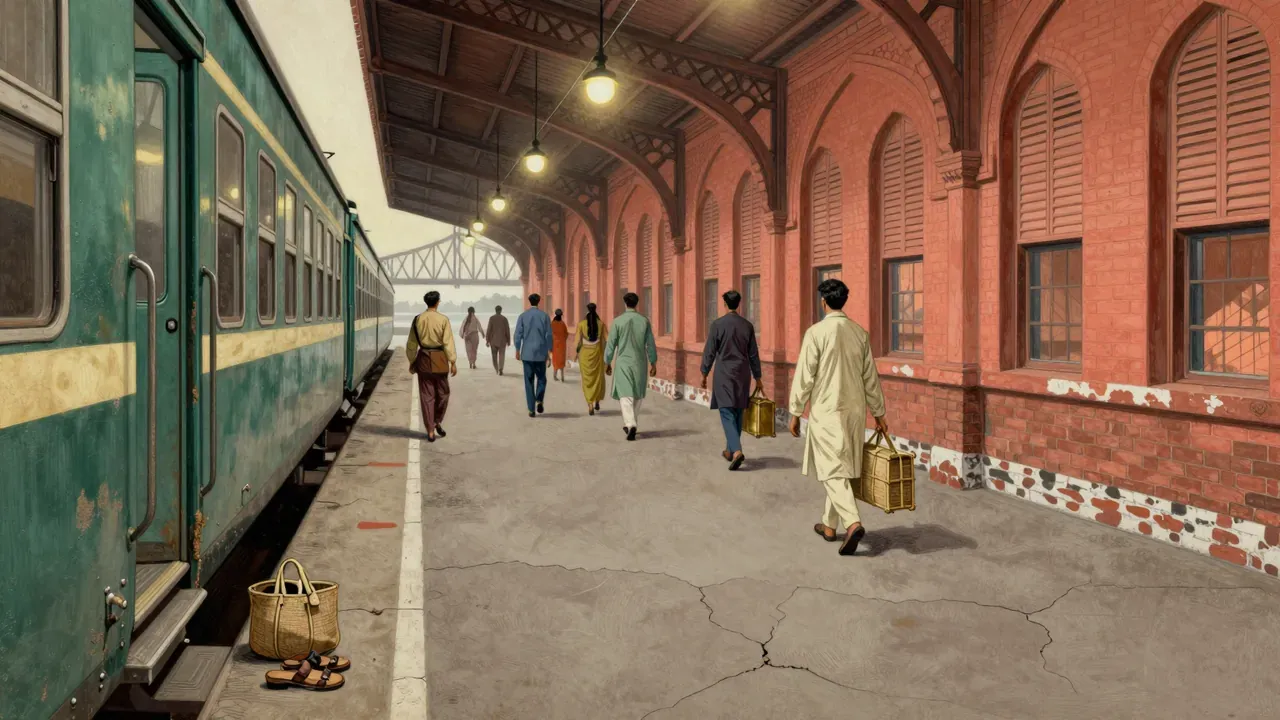
Satyajit Ray’s 1966 drama follows Bengali film star Arindam Mukherjee on an overnight train to receive a national award. Over 113 minutes, he unravels in conversation with a young journalist, revealing insecurities, regrets, and contradictions beneath his celebrity facade. Shot in studio-built train compartments with precise, unhurried craft, the film treats fame as erosion rather than triumph — and intimacy as fleeting, not redemptive.

13:00

One Hundred and One Nights

Agnès Varda · 1995

Agnès Varda’s One Hundred and One Nights (1995) is a French comedy essay-film set over 101 nights at a château belonging to Simon Cinéma, a centenarian film veteran whose fading memory blurs reality and reel. Starring Michel Piccoli and featuring cameos from Marcello Mastroianni, Anouk Aimée, Alain Delon, and others, it weaves scripted scenes with archival clips and playful allusion to celebrate cinema’s first hundred years — not as chronicle, but as collective, tactile memory.

13:00

The Girl Can't Help It

Frank Tashlin · 1956

Frank Tashlin’s 1956 comedy stars Jayne Mansfield as a mobster’s girlfriend launched into stardom against her will. Built around performances by Little Richard, Fats Domino, Gene Vincent and others, it uses animation-derived timing and saturated DeLuxe Color to frame rock ’n’ roll as both commodity and spectacle. Though narratively thin and romantically inert, its visual confidence and musical density make it a singular artifact of mid-century media logic.

13:00

The Player

Robert Altman · 1992

Robert Altman’s 1992 film follows studio executive Griffin Mill, who kills a screenwriter he wrongly believes is threatening him. Set against the backdrop of Los Angeles studio culture, the film uses deadpan performance, long takes and layered cameos to dissect how narrative logic, professional survival and moral evasion intertwine in the film industry.

13:00

The Private Life of Don Juan

Alexander Korda · 1934

Alexander Korda’s 1934 film stars Douglas Fairbanks, aged 51, as an ageing Don Juan returning to Seville only to discover his name has become a public fiction. Adapted from Henry Bataille’s play by Frederick Lonsdale, it uses irony, restraint, and studio-era craft to explore reputation, ageing, and the quiet persistence of self amid erasure. Georges Périnal’s cinematography and Ernst Toch’s music support a tone of wry melancholy, anchored by Fairbanks’s physically diminished but emotionally precise performance.

13:00

The Rose

Mark Rydell · 1979

The Rose (1979), directed by Mark Rydell, stars Bette Midler as Mary Rose Foster, a self-destructive rock diva loosely inspired by Janis Joplin. Shot by Vilmos Zsigmond and scored by Paul A. Rothchild, it traces her final months amid touring, addiction, and a fraught relationship with her manager and a soldier-lover. The film avoids biographical literalism in favour of emotional precision, anchoring its drama in Midler’s live performances and the tactile realism of its late-1960s milieu. Nominated for four Academy Awards, it remains a singular entry in the musical-drama canon — unsentimental, unrelenting, and deeply embodied.

13:00

To Die For

Gus Van Sant · 1995

Gus Van Sant’s 1995 black comedy follows Suzanne Stone, a New Hampshire woman who engineers her husband’s murder to advance her television career. Framed by direct-to-camera monologues and mockumentary interviews, the film dissects how media formats confer legitimacy, turning crime into content and ambition into algorithm. Nicole Kidman’s performance anchors its precise, unsentimental critique of fame’s infrastructure.

13:00

Veronika Voss

Rainer Werner Fassbinder · 1982

Rainer Werner Fassbinder’s 1982 black-and-white drama follows Veronika Voss, a faded UFA film star in 1955 Munich, as she unravels under morphine addiction and the control of a corrupt neurologist. Loosely based on actress Sybille Schmitz, the film uses stark monochrome cinematography, sparse scoring, and Rosel Zech’s tightly controlled performance to dissect how institutions discard compromised women while preserving their image. It is the final film released in Fassbinder’s lifetime and the last of his BRD Trilogy.

13:00

Chicago

Rob Marshall · 2002

Rob Marshall’s 2002 musical adapts the Broadway hit into a sleek, satirical portrait of fame and justice in 1920s Chicago. Framing songs as Roxie Hart’s internal fantasies, it contrasts vaudeville stylisation with gritty realism to expose how spectacle displaces truth. Starring Renée Zellweger, Catherine Zeta-Jones, and Richard Gere, it won six Oscars including Best Picture—the first musical to do so since 1968.

13:00

In a Lonely Place

Nicholas Ray · 1950

Nicholas Ray’s 1950 drama stars Humphrey Bogart as a volatile screenwriter suspected of murder and Gloria Grahame as the neighbour who falls for him — only to realise his charm and rage are two sides of the same coin. Shot by Burnett Guffey and edited by Viola Lawrence, it trades noir thrills for psychological precision, treating Hollywood as a pressure chamber for intimacy. Its reputation has grown steadily since release, now ranked among the greatest film noirs ever made.

13:00

Postcards from the Edge

Mike Nichols · 1990

Postcards from the Edge (1990), directed by Mike Nichols and adapted by Carrie Fisher from her semi-autobiographical novel, follows actress Suzanne Vale’s return to work after a drug overdose, contingent on living with her formidable mother Doris. Anchored by Meryl Streep and Shirley MacLaine, it uses Hollywood’s machinery — insurance riders, on-set critiques, studio politics — as the frame for a sharp, unsentimental study of intergenerational inheritance, performance as survival, and the quiet labour of staying sober without mythologising it.

13:00

The Bling Ring

Sofia Coppola · 2013

Sofia Coppola’s 2013 film adapts the real-life Bling Ring burglaries into a coolly detached portrait of teenage identity formed through consumption. Shot in Los Angeles with Haris Savides and Christopher Blauvelt, it follows a group of affluent teens who use social media to locate and rob celebrity homes. Stylistically austere and morally ambiguous, it foregrounds surface over psychology, repetition over revelation. Though praised for its direction and cast, it drew criticism for omitting racial and class dimensions of the actual case.