filmbriefs
Topic

Agriculture

The invention that made everything else possible, and civilisation's largest employer.

18
in film
13:00
average
234 min
in total
100
across the network
Agriculture across the network →
All briefs18
13:00

Autumn Tale

Éric Rohmer · 1998

Éric Rohmer’s 1998 Autumn Tale, the final chapter of his Tales of the Four Seasons, follows a widowed winemaker in the Rhône Valley as her friends orchestrate quiet, conflicting attempts to reintroduce her to love. Shot with calm precision by Diane Baratier and performed with understated rigour by Béatrice Romand and Marie Rivière, it locates emotional truth in hesitation, miscommunication, and the slow realignment of intention. Its power lies in restraint: no grand declarations, no dramatic reversals—just the fragile, earned possibility of connection, harvested like grapes at the right moment.
13:00

Bitter Rice

Giuseppe De Santis · 1949

Giuseppe De Santis’s 1949 Bitter Rice follows two thieves hiding among female rice workers in Piedmont, blending neorealist location shooting with melodramatic collapse. Silvana Mangano’s debut performance anchors a film preoccupied with labour, legality, and the corrosive allure of American cultural imports — all rendered in Otello Martelli’s stark, waterlogged visuals.

13:00

Days of Heaven

Terrence Malick · 1978

Terrence Malick’s 1978 period drama follows migrant workers in 1916 Texas who entangle themselves in deception and desire on a wealthy farmer’s estate. Shot almost entirely in magic hour by Néstor Almendros, it prioritises image and atmosphere over narrative exposition. Linda Manz’s improvised narration anchors its elliptical structure. Though commercially modest, it won the Academy Award for Best Cinematography and has since been canonised for its painterly realism and meditative pacing.

13:00

Dry Summer

Metin Erksan · 1964

Metin Erksan’s 1964 Turkish drama Dry Summer follows tobacco farmer Osman, who dams a river to secure his harvest at the expense of neighbouring farmers. His younger brother Hasan reluctantly complies, then wavers; their conflict escalates legally and violently, entangling Hasan’s wife Bahar in a web of coercion, deception and retribution. Shot in stark black-and-white with minimal score and restrained performances, the film traces how property law, patriarchal control and ecological scarcity converge. It won the Golden Bear at Berlin and remains a landmark of socially engaged Turkish cinema.

13:00

God's Country

Louis Malle · 1985

A 1985 PBS documentary by Louis Malle, filmed across six years in Glencoe, Minnesota, capturing the quiet unraveling of a farming community amid the mid-1980s agricultural crisis. Shot and edited with deliberate restraint, it observes residents’ daily lives, conversations, and surroundings without narration or exposition — offering texture over analysis, continuity over climax.

13:00

Jean de Florette

Claude Berri · 1986

Jean de Florette is a 1986 French drama directed by Claude Berri, adapted from Marcel Pagnol’s novel. Set in rural Provence in the 1920s, it follows two farmers who sabotage a newcomer’s attempt to farm by concealing a vital spring. Shot back-to-back with its sequel Manon of the Spring, it relies on precise period detail, restrained performances, and a landscape that functions as both setting and moral arbiter.

13:00

Les glaneurs et la glaneuse... deux ans après

Agnès Varda · 2002

Two years after her acclaimed documentary about gleaning, Agnès Varda revisits its subjects and settings, filming herself as much as others. With handheld camerawork, unvarnished sound, and a gently recursive structure, the film measures time’s passage not in events but in textures — wrinkled skin, sprouting potatoes, reused objects, remembered conversations. It is a modest, self-aware extension of her earlier work, rooted in attention rather than argument.

13:00

Manon des Sources

Claude Berri · 1986

A 1986 French drama, directed by Claude Berri and adapted from Marcel Pagnol’s novel, concluding the story begun in Jean de Florette. Set in rural Provence ten years later, it follows Manon Cadoret as she uncovers the truth behind her father’s death and orchestrates a slow, water-based reckoning against those who ruined him. Starring Yves Montand, Daniel Auteuil, and Emmanuelle Béart, it is a formally restrained, morally exacting film about inheritance, silence, and the physical reality of justice.

13:00

The Choice

Idrissa Ouédraogo · 1986

Idrissa Ouédraogo’s 1986 debut, shot in Mooré in rural Burkina Faso, follows a peasant family navigating pregnancy, death, banishment, and reconciliation. Its quiet, observational style resists moral framing, instead anchoring drama in agricultural labour, kinship duty, and the stark contrast between village and city. Though structurally uneven — particularly in its handling of an urban subplot — it remains a rigorous, humane study of constraint as social condition.

13:00

The Emigrants

Jan Troell · 1971

Jan Troell’s 1971 Swedish drama adapts Vilhelm Moberg’s novels about 1840s emigrants from Småland to Minnesota. Shot, written, and edited by Troell, it follows Karl Oskar and Kristina Nilsson through hardship, loss, and arduous journey, anchoring grand historical movement in physical detail: blistered hands, frozen laundry, carved names on trees. With Max von Sydow and Liv Ullmann, it avoids sentimentality, favouring duration, restraint, and environmental realism. Though occasionally pictorial, its power lies in cumulative, unsentimental fidelity to endurance.

13:00

The Gleaners and I

Agnès Varda · 2000

Made in 2000, Agnès Varda’s The Gleaners and I is a self-reflexive French documentary shot on early digital video. Travelling across rural and suburban France, Varda observes people who glean—collecting leftover crops, discarded food, or abandoned objects—for reasons ranging from need to artistry. She includes chefs, lawyers, artists, and farmers, and inserts herself as both filmmaker and subject, filming her ageing hands, her grey hair, and even her lens cap swinging at her side. The film avoids thesis or resolution, favouring accumulation, texture, and quiet observation. It won the European Film Award for Best Documentary and has since been ranked among the greatest documentaries and 21st-century films by multiple critics’ polls.

13:00

The Naked Island

Kaneto Shindō · 1960

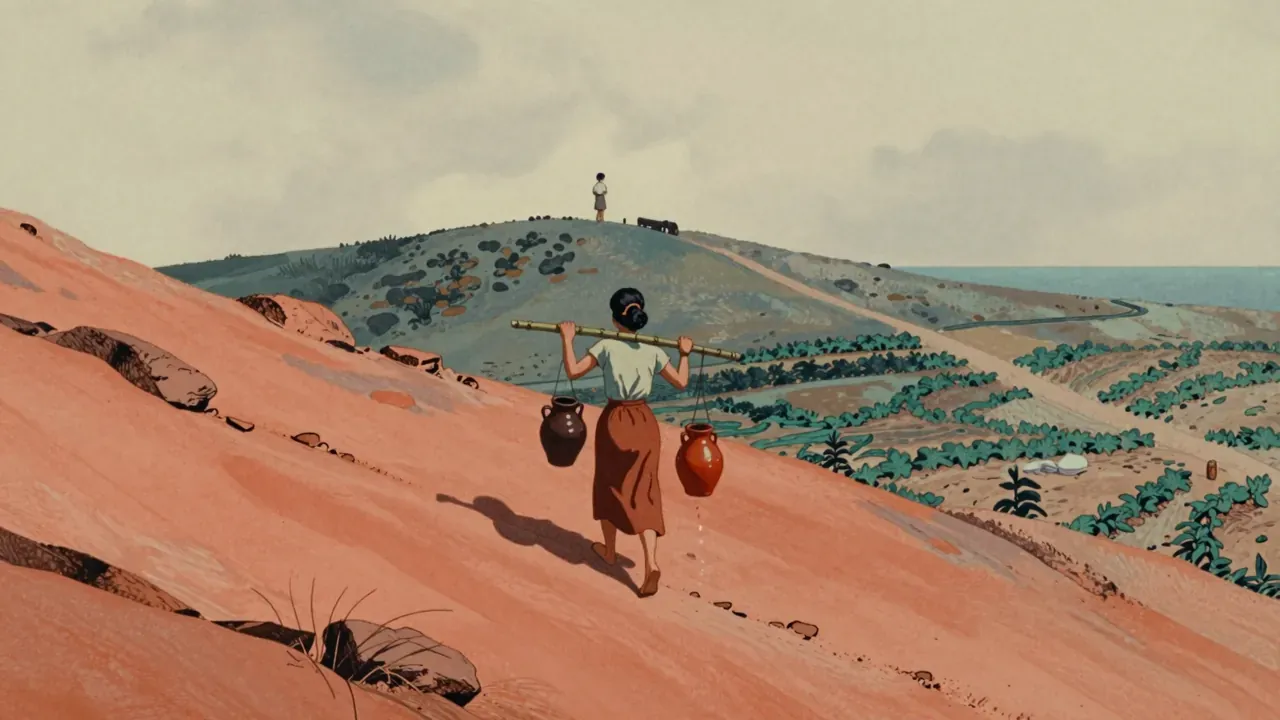
Kaneto Shindō’s 1960 film follows a family surviving alone on a remote island in Japan’s Seto Inland Sea, carrying water daily to grow crops. With almost no spoken dialogue, it relies on repetition, physical exertion and Kiyomi Kuroda’s restrained cinematography to convey endurance, grief and routine. Though its agricultural premise is factually flawed, its austere method remains compelling: a rigorous, unsentimental portrait of persistence.

13:00

The New Land

Jan Troell · 1972

Jan Troell’s 1972 epic The New Land completes his adaptation of Vilhelm Moberg’s emigration novels, following Swedish settlers in 1850s Minnesota as they clear land, raise children, suffer loss, and confront violence — including the Dakota War of 1862. Shot concurrently with its predecessor The Emigrants, it shares the same cast, crew, and patient, tactile realism. At 204 minutes, it unfolds with deliberate slowness, trusting duration over drama. Though acclaimed for its performances and craft, its portrayal of Indigenous people remains framed entirely through settler consciousness — a limitation neither disguised nor addressed.

13:00

The Tree of Wooden Clogs

Ermanno Olmi · 1978

Ermanno Olmi’s 1978 epic follows four peasant families in late-nineteenth-century Bergamo, filmed in Lombard dialect with non-professional actors on location. Its 186-minute runtime mirrors the unhurried rhythm of agrarian life — sowing, birth, debt, eviction — without exposition or score. It won the Palme d’Or and remains a landmark of neorealist commitment to material truth over narrative convenience.

13:00

White Material

Claire Denis · 2009

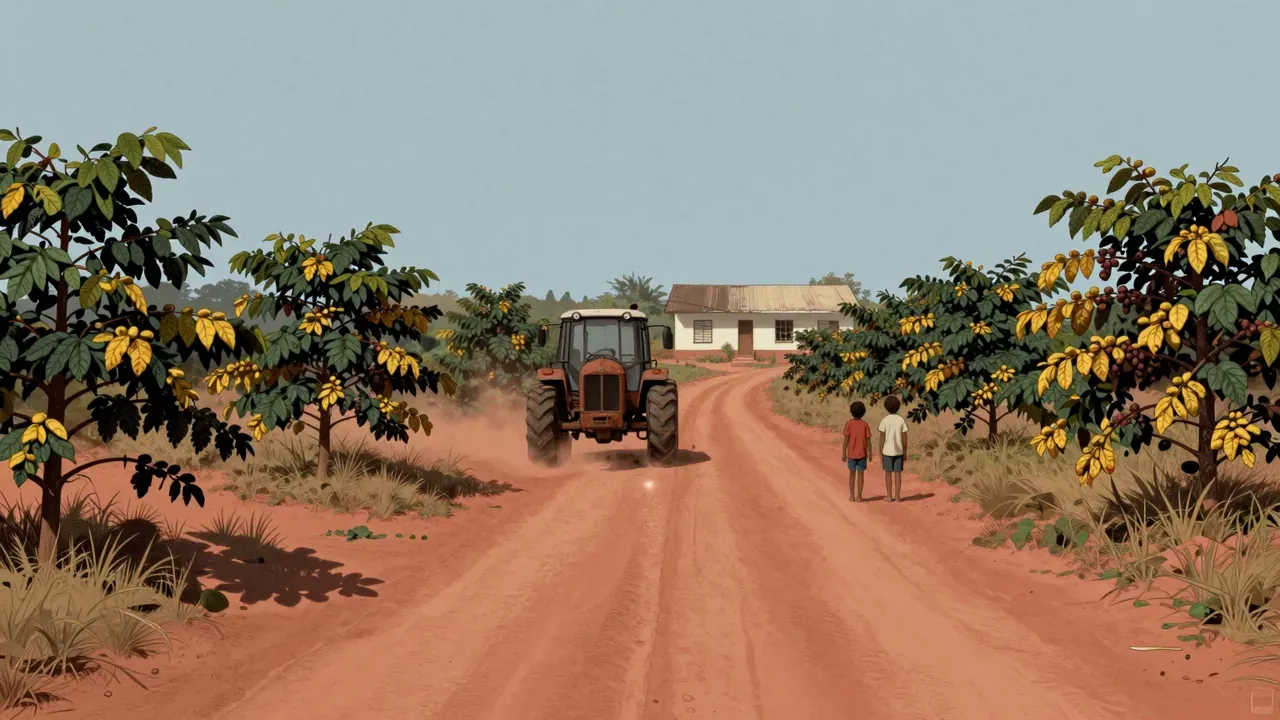
Claire Denis’s 2009 drama follows Maria Vial, a French coffee farmer in an unnamed African country, as she refuses to evacuate her failing plantation amid civil war. Anchored by Isabelle Huppert’s tightly coiled performance and Yves Cape’s humid, unvarnished cinematography, the film traces the slow, logical collapse of agency, inheritance, and meaning — not as tragedy, but as process. It avoids exposition, moral framing, and historical specificity, focusing instead on the material weight of objects, the silence between warnings, and the quiet violence of persistence.

13:00

Zatoichi and the Fugitives

Kimiyoshi Yasuda · 1968

The eighteenth Zatoichi film finds Shintarō Katsu’s blind swordsman confronting a silk-weaving magnate who enforces debt bondage and shelters vicious fugitives. Directed by Kimiyoshi Yasuda with stark cinematography by Kazuo Miyagawa, it strips away mythic flourishes to focus on procedural cruelty and physical consequence — Zatoichi is wounded, outmatched, and morally unrelieved. The film’s rigour lies in its refusal to flinch, to explain, or to console.

13:00

Zatoichi the Outlaw

Satsuo Yamamoto · 1967

Zatoichi the Outlaw (1967), directed by Satsuo Yamamoto and starring Shintarō Katsu, is the sixteenth film in the Zatoichi series and the first produced by Katsu’s own company. Set in a rural village, it pits the blind swordsman against a sword-less rōnin leading a peasant movement for moral reform. With Kazuo Miyagawa’s restrained cinematography and Sei Ikeno’s contemplative score, the film foregrounds ideological tension over action—but stumbles in its handling of secondary characters and pacing. It is a thoughtful, uneven entry that rewards patience and familiarity with Edo-period social thought.

13:00

Earth

Oleksandr Dovzhenko · 1930

Oleksandr Dovzhenko’s 1930 silent film Earth observes collectivisation in rural Ukraine through image, not argument. Shot by Danylo Demutskyi in Poltava Oblast, it traces cycles of life and death — an old man dying beneath an apple tree, a young man dancing before being killed, a woman grieving then embracing anew — all bound by soil, season and silence. Its power resides in physical presence: dust, light, hands, rain. Though politically controversial on release and later banned, it endures as a lyrical, unsentimental vision of continuity amid upheaval.