A new production
Zatoichi the Outlaw is the sixteenth entry in the Daiei Zatoichi series and the first produced by Shintarō Katsu’s own company. It attempts something structural and thematic: to pivot the blind swordsman away from episodic vengeance toward moral arbitration in a village torn between ascetic reform and entrenched vice. The film positions Zatoichi not as a solver of disputes but as a reluctant fulcrum—his presence catalyses conflict between two incompatible orders: the gangsters who profit from gambling, drinking and prostitution, and Shushi Ohara, a sword-less rōnin modelled on the historical agriculturalist Yagaku Ohara, who leads a peasant movement advocating abstinence and communal discipline. Directed by Satsuo Yamamoto—a figure associated with socially engaged Japanese cinema—the film signals ambition beyond genre convention. It seeks to embed Zatoichi within a recognisable socio-economic friction, using the chambara form to ask how authority, violence and restraint cohere when law is absent and ethics are contested. That it does so while retaining the series’ signature fight choreography and tactile sound design marks its formal intention: to be both a Zatoichi film and a Yamamoto film.
The look and sound of doubt
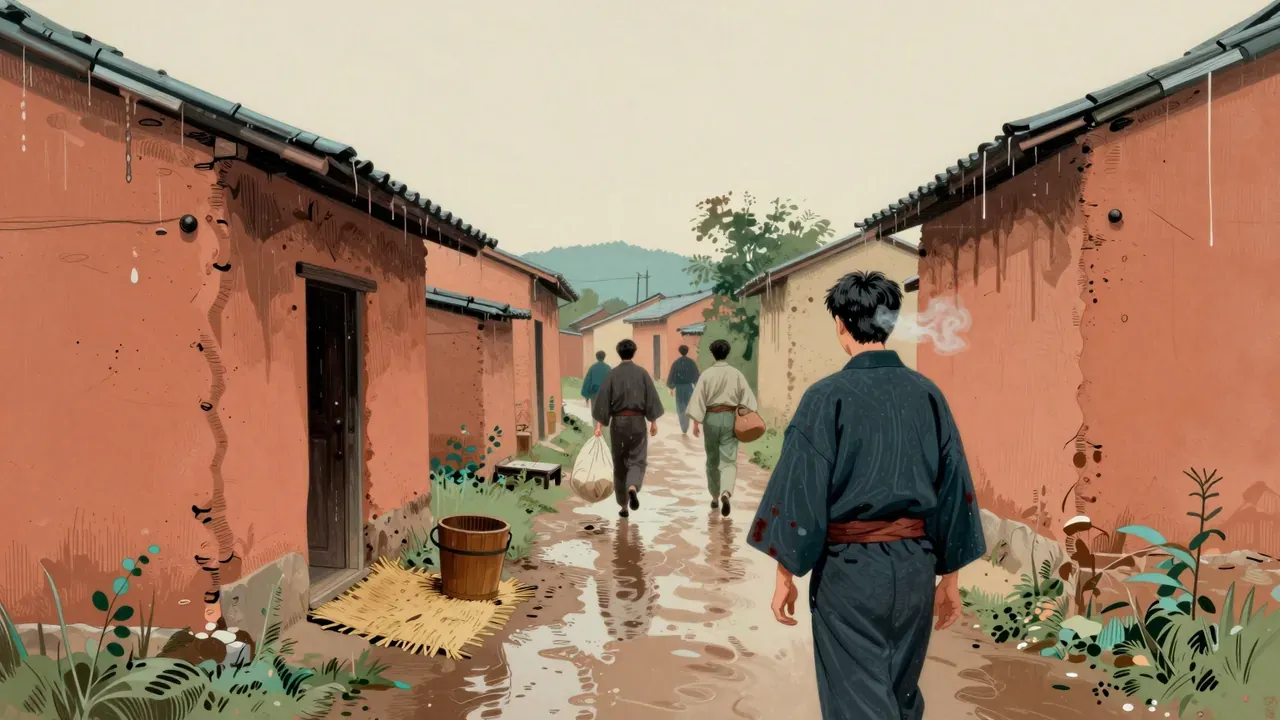
The story moves deliberately, anchoring itself in the village’s physical layout—narrow lanes, low eaves, rice fields just beyond the fence—and in the contrast between Ohara’s quiet gatherings and the boisterous, lantern-lit dens run by Boss Asagoro (Rentarō Mikuni) and Boss Tomizo (Tatsuo Endō). Kazuo Miyagawa’s cinematography avoids high contrast; instead, he uses shallow focus and soft backlighting to flatten depth where ideology flattens choice—faces blur in crowd scenes, while close-ups on hands (a cup lifted, a sword drawn, a blind man’s fingers tracing wood grain) hold steady. Sei Ikeno’s score leans on shamisen and koto but with longer, unresolved phrases than earlier entries, mirroring the film’s unsettled moral register. Performances avoid caricature: Mikuni plays Asagoro with weary calculation, not cartoonish menace; Katsu’s Zatoichi speaks less, listens more, his stillness becoming a narrative device rather than a quirk. The script by Takehiro Nakajima gives Ohara lines that echo Confucian admonition and Edo-period agrarian tracts, yet never explains them—audience comprehension is assumed, not guided.
The weight of restraint
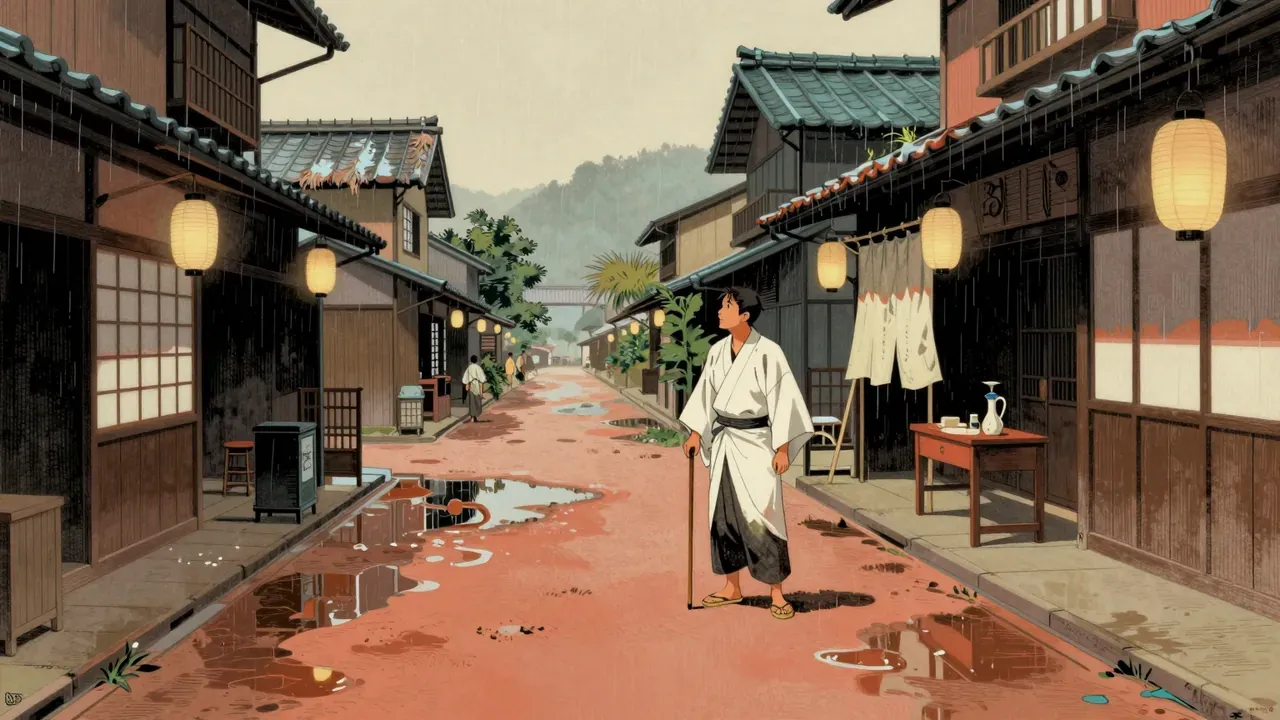
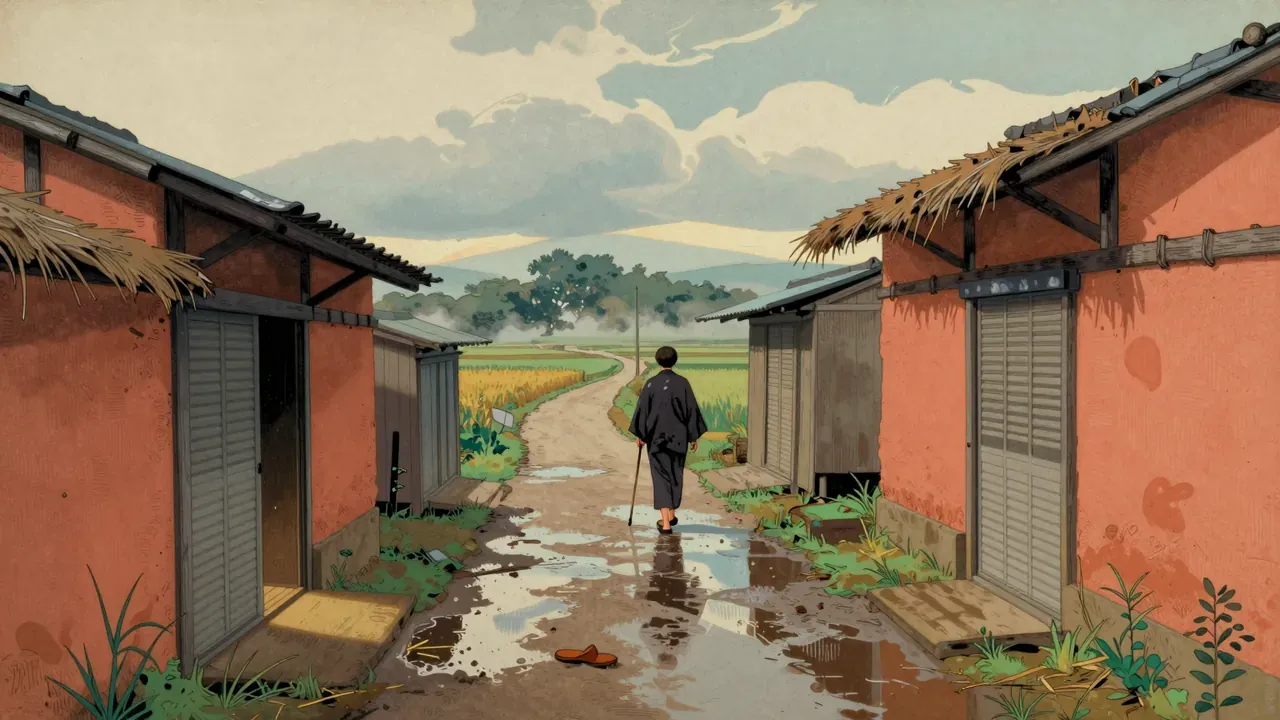
What lands is the central ideological tension—not as debate, but as embodied contradiction. Ohara’s refusal to draw steel, even when surrounded, carries weight because the film refuses to treat non-violence as passive; his body language, posture and timing during fights make restraint feel like exertion, not absence. The village itself functions as a character: its rhythms—market days, temple bells, the clack of wooden clogs on packed earth—are rendered with acoustic specificity, grounding the allegory in lived texture. A sequence where Zatoichi walks through a rain-slicked lane at dusk, passing shuttered shops and open doorways revealing flickering lamps and muffled laughter, conveys social fracture without exposition. The final confrontation avoids spectacle: no duel, no bloodshed, only Zatoichi standing motionless between two factions while rain falls, and the camera holds on the mud at their feet. That image lingers—not for its beauty, but for its refusal to resolve. It lands because it trusts the audience to sit with ambiguity, and because every visual and sonic choice up to that point has prepared the ground for that silence.
The cost of abstraction
What does not land is the dispersal of secondary characters. Figures like Oshino (Yūko Hamada), Nisaburo (Toshiyuki Hosokawa) and Zatosanji (Takuya Fujioka) enter abruptly, each carrying implied histories—grief, debt, betrayal—that the script sketches in single lines or glances, then expects the viewer to retain across thirty minutes of plot drift. Their resolutions arrive without emotional scaffolding, making their arcs feel like obligations rather than outcomes. The film also misjudges pacing in its middle third: extended scenes of Ohara lecturing villagers, while historically resonant, lack dramatic variation in tone or framing, causing momentum to stall. Yamamoto’s direction, usually precise in its use of space, here allows several sequences to unfold in static medium shots without shifts in perspective or rhythm—moments that should build tension instead recede into exposition. The result is not boredom, but disengagement: the stakes remain clear, but the human investment wanes when characters are treated as vessels for theme rather than agents of action.
Discipline as method
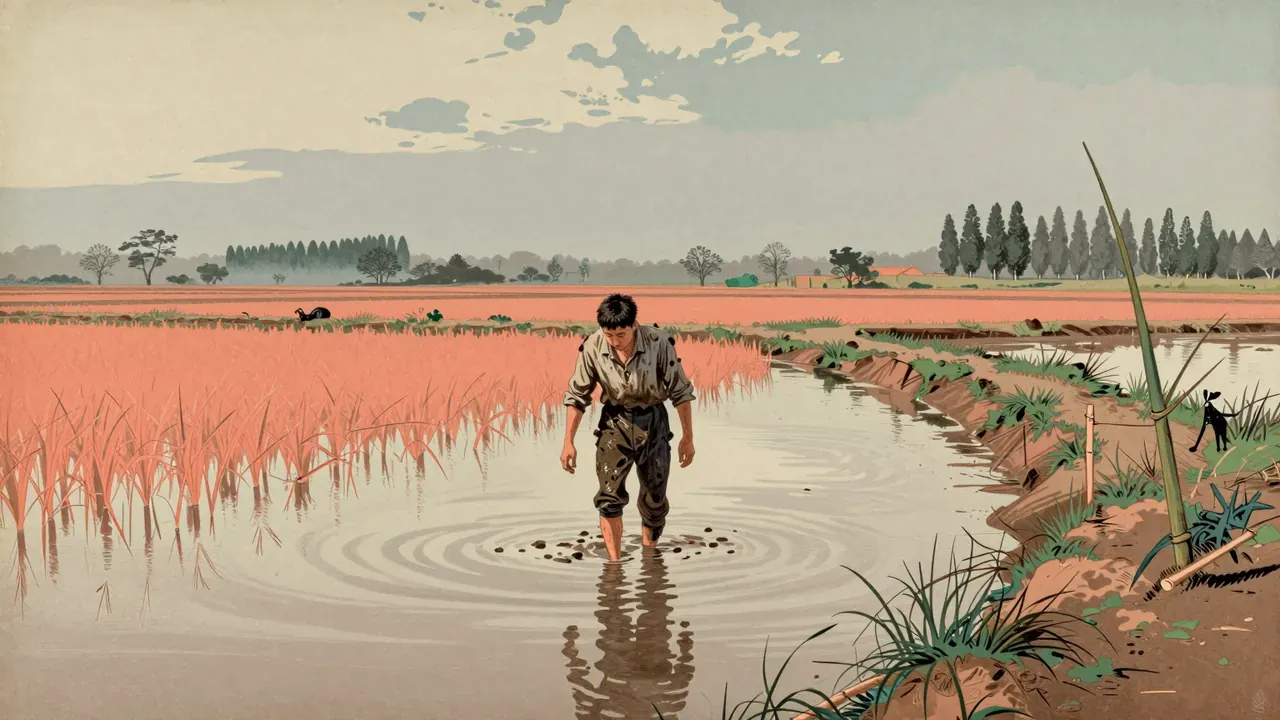
The themes that matter are discipline as resistance, and blindness as epistemic position. Ohara’s abstinence campaign is not framed as moral purity but as collective self-determination—refusing vices that erode labour, memory and kinship ties. His sword-less stance reframes bushidō not as martial code but as civic practice: strength measured in endurance, not dominance. Zatoichi’s blindness operates similarly—not as limitation, but as a different mode of attention: he hears shifts in breath before movement, detects lies in hesitation, navigates by resonance and scent. The film treats sight as overrated, and vision as often deceptive: characters who see clearly—Asagoro, Tomizo—misread the village’s capacity for change; those who listen closely—Zatoichi, Ohara—see further. Agriculture appears not as backdrop but as logic: the film’s concern with soil, season and sowing mirrors its interest in slow, unglamorous transformation. There is no revolution here, only rotation—of power, habit, and perception.
For the patient and the attentive
This film is for viewers who value thematic density over narrative velocity, and who approach chambara not as pure action but as a vessel for social inquiry. It rewards patience with its pacing, familiarity with Edo-period thought, and tolerance for unresolved endings. It is not for those who rely on character exposition to anchor engagement, or who expect Zatoichi films to follow the series’ established rhythm of isolated incident, decisive combat and quiet departure. Fans of Yamamoto’s earlier work—like The Ballad of Narayama or The Human Condition—will find continuity in his treatment of collective life under constraint. Those who prefer Katsu’s more lyrical or melancholic entries—such as Zatoichi and the Fugitives or Zatoichi Meets Yojimbo—may find this one too didactic, too anchored in argument. A shift toward tighter editing of subplots or deeper integration of secondary characters would raise its accessibility without diluting its intent.
Time well spent, if spent rightly
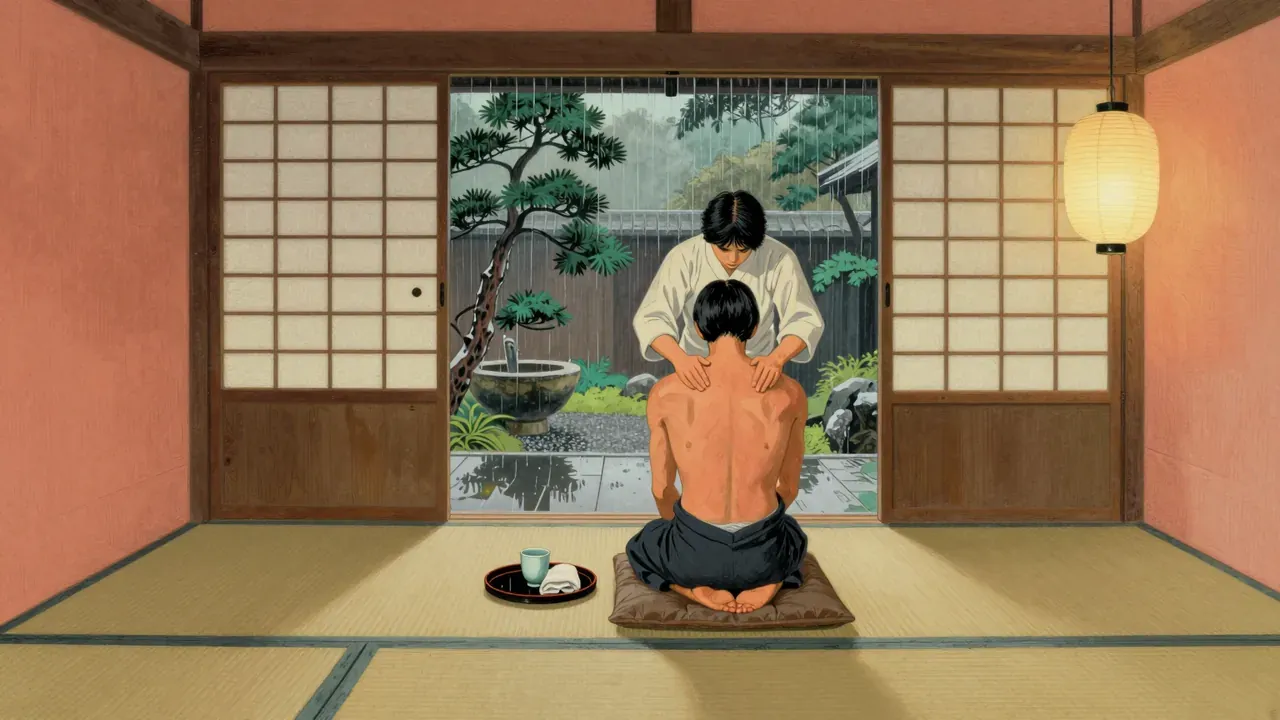
It is worth your evening if you are willing to meet it on its terms: as a mid-series experiment in tonal and ideological recalibration, not as a standalone highlight. Its ninety-six minutes pass without hurry, and its rewards accrue slowly—in the weight of a pause, the texture of a sleeve, the way light falls across a tatami mat. It is not the most fluid or affecting Zatoichi film, but it is among the most considered. Those who watch for kinetic precision may leave unsatisfied; those who watch for how a film thinks will find much to hold. A rewatch clarifies what the first viewing obscures: that its apparent looseness is structural, not slack. It asks for time, and repays it—not with catharsis, but with clarity about what restraint, in both sword and story, demands.