filmbriefs
Actor · Producer · Screenwriter · Director

Shintarō Katsu

29
briefs
13:00
average
377 min
in total
On film.briefs29
13:00

Adventures of Zatoichi

Kimiyoshi Yasuda · 1964

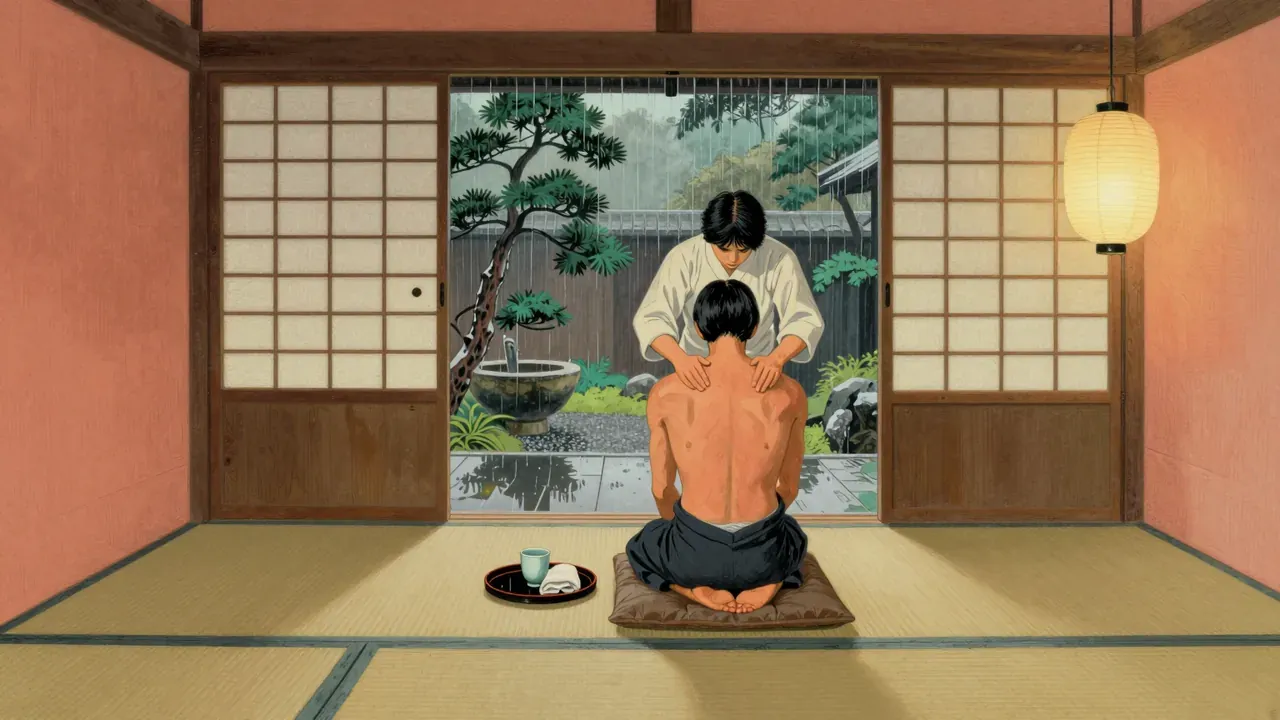
The ninth Zatoichi film finds the blind masseur stepping into a town gripped by bureaucratic corruption and quiet desperation. He does not seek conflict but cannot avoid it — and when he draws his sword, it is never to win, but to weigh. With Shintarō Katsu at peak control and Kimiyoshi Yasuda framing each scene like a scroll painting, Adventures of Zatoichi is a study in restraint: in violence, in revelation, in what a man owes the world when no one is watching.
13:00

An Actor's Revenge

Kon Ichikawa · 1963

Kon Ichikawa’s 1963 film follows Yukinojō Nakamura, an onnagata kabuki actor who returns to Edo to enact revenge on the men who caused his parents’ suicide. Kazuo Hasegawa plays both Yukinojō and the thief Yamitarō, anchoring a film defined by theatrical composition, restrained music by Yasushi Akutagawa, and Musei Tokugawa’s wry benshi narration. It is less a story of justice than a study in performance as survival, gender as labour, and vengeance as repetition — all rendered with formal control and deliberate emotional distance.

13:00

Fight, Zatoichi, Fight

Kenji Misumi · 1964

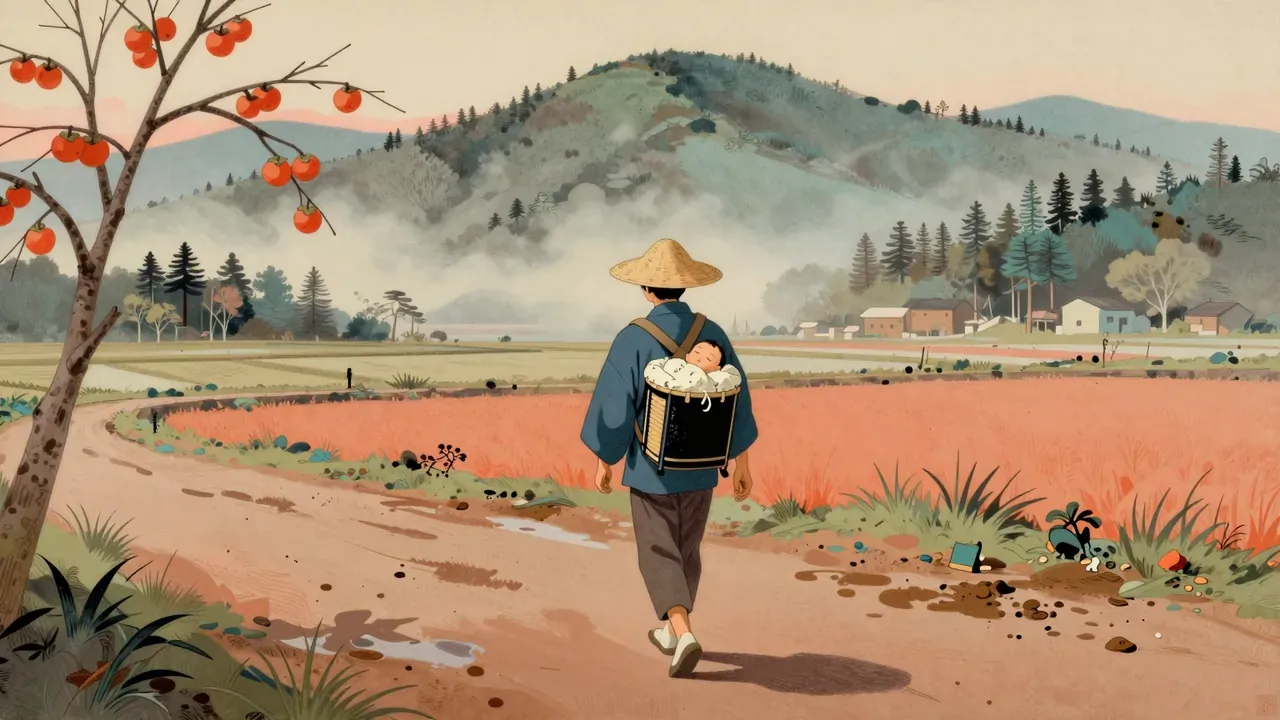
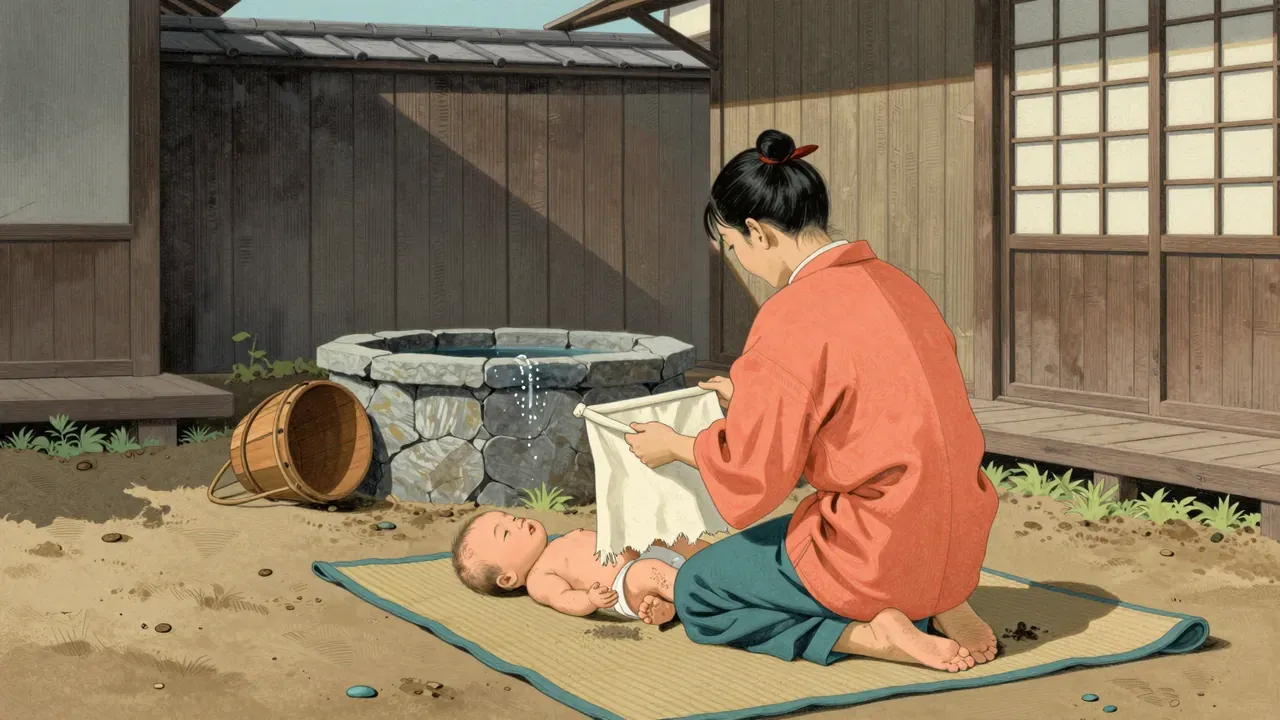
The eighth Zatoichi film follows the blind masseur as he carries a baby across sixty miles to its estranged father, pursued by assassins and accompanied by reluctant helpers. Built on repetition and restraint, it treats duty as a series of concrete actions — reading documents, changing diapers, rolling out fire — rather than abstract virtue. Directed by Kenji Misumi and starring Shintarō Katsu, it is a lean, unsentimental entry in the series, anchored by precise choreography and moral clarity.

13:00

Lone Wolf and Cub: Baby Cart at the River Styx

Kenji Misumi · 1972

The second Lone Wolf and Cub film follows disgraced executioner Ogami Ittō and his young son Daigoro as they travel Japan in a weaponised baby cart, taking assassination contracts while evading rival clans. Directed by Kenji Misumi and adapted from Kazuo Koike’s manga, it prioritises formal rigour over exposition: violence is ritual, parenthood is discipline, and silence carries more weight than dialogue. Its eighty-one minutes unfold through stylised encounters — acrobats, river-washers, sand-dune duels — building a mythic logic rather than a psychological narrative.

13:00

Lone Wolf and Cub: Baby Cart to Hades

Kenji Misumi · 1972

Lone Wolf and Cub: Baby Cart to Hades (1972), directed by Kenji Misumi, is the third in a six-film Japanese martial arts series following the wandering assassin Ogami Ittō and his infant son Daigoro. Set in Edo-period Japan, it weaves episodic encounters — ambushes, torture, duels, and siege — into a sustained meditation on duty, endurance, and the embodied logic of bushidō. Tomisaburō Wakayama’s restrained performance anchors a film defined by stillness, procedural violence, and moral austerity. Though formally rigorous and thematically rich, its treatment of women remains functional, and its pacing assumes fluency with chanbara conventions. It rewards patience, not passive viewing.

13:00

Lone Wolf and Cub: Sword of Vengeance

Kenji Misumi · 1972

Lone Wolf and Cub: Sword of Vengeance (1972), directed by Kenji Misumi, opens the six-film series with Tomisaburō Wakayama as Ogami Ittō, a disgraced executioner turned wandering assassin who pushes his infant son Daigoro in a baby cart while fulfilling contracts across Edo-period Japan. Built from Kazuo Koike and Goseki Kojima’s manga, it prioritises ritual, restraint and structural repetition over exposition or psychology — flashbacks clarify motive but not morality, action follows vow not impulse, and silence carries more weight than speech. Its 83-minute runtime sustains a tone of implacable resolve, using austere framing, percussive sound design and Wakayama’s physically precise performance to render vengeance as a system, not a feeling.

13:00

New Tale of Zatoichi

Tokuzō Tanaka · 1963

New Tale of Zatoichi (1963), directed by Tokuzō Tanaka, is the third and first colour entry in Daiei Film’s Zatoichi series. Shintarō Katsu returns as the blind masseur and swordsman Ichi, who attempts to live by a vow of non-violence — only to face moral collapse in his old village, where his former master has allied with criminals and his childhood friend’s family lives in poverty. Structured around restraint rather than action, the film uses muted colour, sparse dialogue, and deliberate pacing to explore fidelity, quiet corruption, and the asymmetry of mercy. It ends not with resolution but with solitary departure at dawn.

13:00

Samaritan Zatoichi

Kenji Misumi · 1968

Released in December 1968 and directed by Kenji Misumi, Samaritan Zatoichi is the twelfth instalment in Daiei’s long-running series. Starring Shintarō Katsu as the blind masseur-swordsman, it follows his intervention in a rural town exploited by a yakuza gang. Less concerned with action than with ethical presence, the film uses restraint — in pacing, performance and composition — to explore endurance, reciprocity and the weight of unspoken complicity. Cinematographer Kazuo Miyagawa frames scenes with quiet clarity, and the script avoids exposition in favour of implication. Though some character arcs remain underdeveloped, the film’s cumulative power resides in its unwavering commitment to stillness as moral grammar.

13:00

The Tale of Zatoichi

Kenji Misumi · 1962

The 1962 Japanese jidaigeki film The Tale of Zatoichi introduces Shintarō Katsu as the blind masseur-swordsman Zatoichi, hired by warring yakuza factions. Directed by Kenji Misumi and written by Kan Shimozawa, it establishes a tone of quiet gravity, where honour is enacted in small refusals and violence resolved with minimal flourish. Its strength lies in the restrained performances, Akira Ifukube’s percussive score, and its refusal to romanticise either disability or bushidō. Though some supporting characters remain underdeveloped, the central relationship between Zatoichi and the dying ronin Hirate gives the film its enduring resonance.

13:00

The Tale of Zatoichi Continues

Kazuo Mori · 1962

The Tale of Zatoichi Continues (1962), directed by Kazuo Mori and starring Shintarō Katsu, is the second entry in Daiei Film’s long-running series. Returning one year after the first film, Zatōichi visits Joshoji Temple to pay respects, crosses paths with his one-armed brother Yoshirō, and navigates threats from a mad lord’s retainers and local yakuza. With a lean 72-minute runtime, tight framing, and Ichirō Saitō’s restrained score, it prioritises gesture over exposition and recurrence over revelation — deepening the character not through backstory but through repetition, silence, and consequence.

13:00

Zatoichi and the Chess Expert

Kenji Misumi · 1965

The twelfth Zatoichi film follows the blind masseur as he travels with a shogi master, a grieving aunt, and her injured niece. Suspicion mounts as murders occur, each clue pointing toward the master—yet Zatoichi delays judgment, reading intent through games and gesture rather than proof. Directed by Kenji Misumi with austere control, it is a study in withheld certainty, where every pause and every move matters more than the final strike.

13:00

Zatoichi and the Chest of Gold

Kazuo Ikehiro · 1964

In Japan, 1964, Zatoichi travels to a drought-stricken village to pay respects at a grave — only to become entangled in the theft of 1,000 ryo raised for taxes. As corrupt officials, rogue samurai, and desperate bandits converge, he navigates a web of complicity without recourse to vengeance. Directed by Kazuo Ikehiro and shot by Kazuo Miyagawa, this sixth Zatoichi film marks a formal and ethical shift: quieter, more politically attentive, and anchored in the material reality of feudal obligation.

13:00

Zatoichi and the Doomed Man

Kazuo Mori · 1965

The eleventh Zatoichi film, released in 1965 and directed by Kazuo Mori, follows Shintarō Katsu’s blind masseur as he pledges to clear a wrongly jailed man’s name. Built on procedural restraint and moral economy, it delivers quiet intensity in its best moments but stumbles in narrative follow-through and character depth. Its strengths are cumulative, not climactic.

13:00

Zatoichi and the Fugitives

Kimiyoshi Yasuda · 1968

The eighteenth Zatoichi film finds Shintarō Katsu’s blind swordsman confronting a silk-weaving magnate who enforces debt bondage and shelters vicious fugitives. Directed by Kimiyoshi Yasuda with stark cinematography by Kazuo Miyagawa, it strips away mythic flourishes to focus on procedural cruelty and physical consequence — Zatoichi is wounded, outmatched, and morally unrelieved. The film’s rigour lies in its refusal to flinch, to explain, or to console.

13:00

Zatoichi and the One-Armed Swordsman

Kimiyoshi Yasuda · 1971

A Japanese–Hong Kong co-production starring Shintarō Katsu and Jimmy Wang Yu, this 1971 chambara-wuxia crossover stages a deliberate, unresolved encounter between two iconic swordsmen from separate cinematic traditions. Set in rural Japan, it follows Zatoichi and Wang Kang as they misread, clash, and briefly align against corrupt yakuza and a predatory priest — all without shared language or cultural framework. Its strength lies in physical storytelling and choreographic contrast; its limitation is its refusal to bridge the conceptual gap it so carefully constructs.

13:00

Zatoichi at Large

Kazuo Mori · 1972

The twenty-third Zatoichi film, released in 1972 under Toho after two decades with Daiei, follows the blind swordsman as he delivers a newborn to its kin after its mother’s death. Directed by Kazuo Mori and starring Shintarō Katsu and Rentarō Mikuni, it tightens narrative cause-and-effect but retains the series’ unadorned style and ritualised structure. While its central act of care gains quiet power, the climactic duel feels tacked-on, and thematic development remains incremental. It is a film of maintenance, not transformation.

13:00

Zatoichi Challenged

Kenji Misumi · 1967

The seventeenth Zatoichi film sees Shintarō Katsu’s blind swordsman escort a boy to his imprisoned father in Maebara, confronting corrupt officials, a yakuza boss, and finally his old friend Akazuka in a snowbound duel. Directed by Kenji Misumi with disciplined framing and Akira Ifukube’s sparse score, it sustains the series’ formal rigour while exposing the limits of its formula — rewarding deep familiarity more than first-time engagement.

13:00

Zatoichi Goes to the Fire Festival

Kenji Misumi · 1970

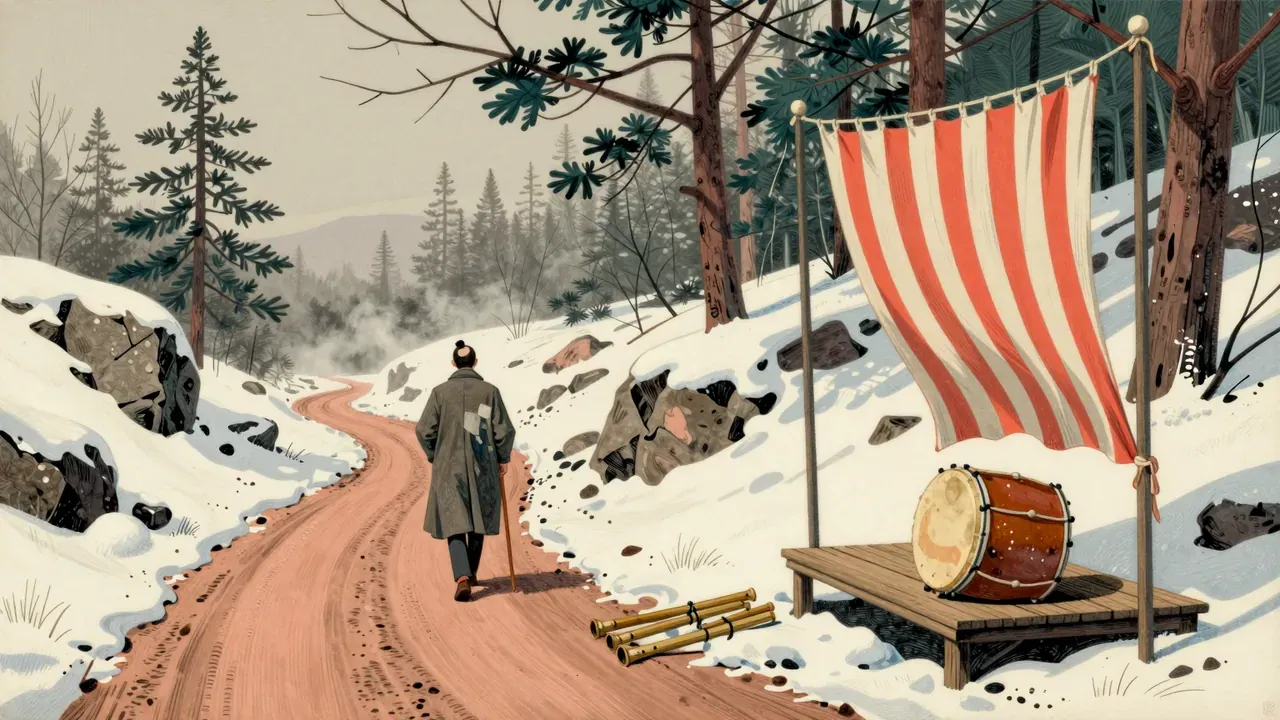
Zatoichi Goes to the Fire Festival (1970), directed by Kenji Misumi and starring Shintarō Katsu, is the twenty-first and Misumi’s final entry in the original Zatoichi series. Set in the late Edo period, it follows the blind swordsman as he confronts Yamikubo, a rival blind warlord who rules through fear and tribute. With cinematography by Kazuo Miyagawa and music by Akira Ifukube, the film uses the Fire Festival as both backdrop and moral crucible. It is a study in restraint — in performance, editing, and philosophy — closing a chapter not with spectacle but with accumulated weight.

13:00

Zatoichi in Desperation

Shintarō Katsu · 1972

The fifteenth Zatoichi film, directed by and starring Shintarō Katsu, follows the blind swordsman as he intervenes in a rural power struggle marked by corruption, poverty, and quiet complicity. With minimal action, sparse dialogue, and deliberate pacing, it trades series conventions for sustained moral weight—testing Zatoichi not with rivals, but with the cost of witnessing.

13:00

Zatoichi Meets Yojimbo

Kihachi Okamoto · 1970

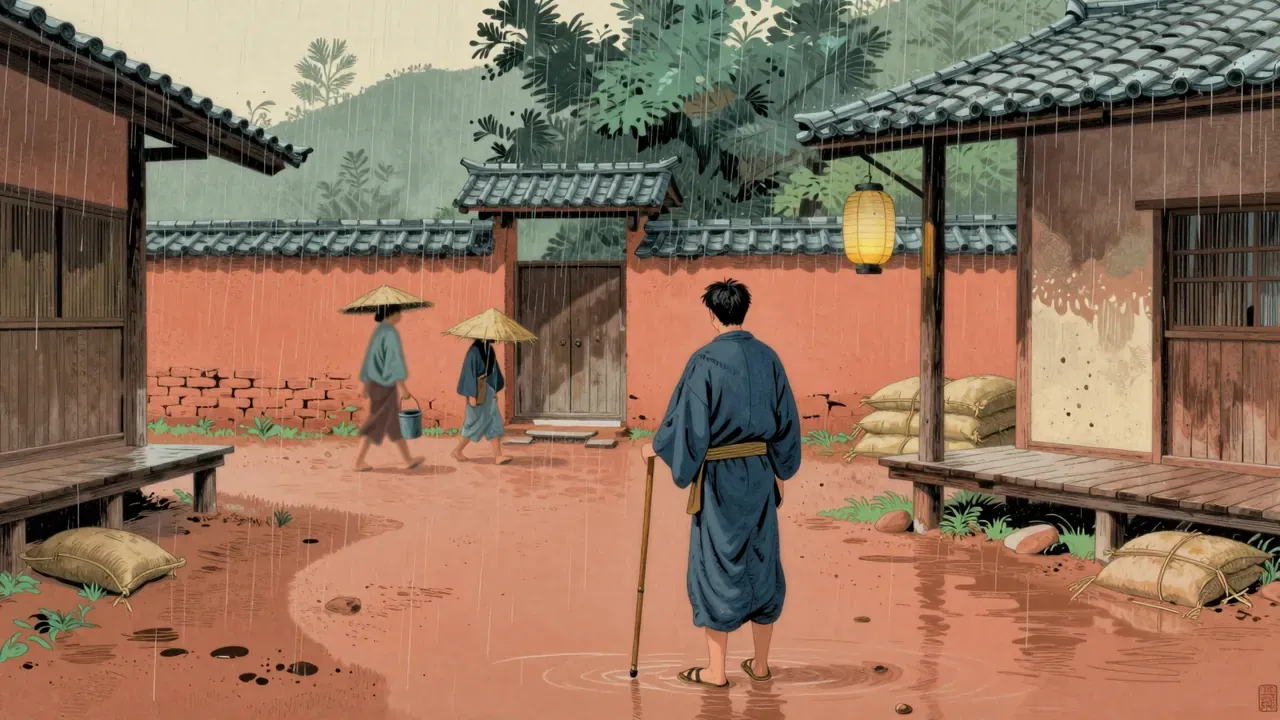
Kihachi Okamoto’s 1970 jidaigeki brings together Shintarō Katsu’s blind swordsman Zatoichi and Toshirō Mifune’s sardonic rōnin Daisaku Sasa in a tightly wound, rain-drenched confrontation. Neither man yields his nature; their duel ends in mutual injury, not revelation. The film privileges physical storytelling over exposition, with Akira Ifukube’s restrained score and Yoshinobu Nishioka’s weathered production design reinforcing its unsentimental tone. While some subplots falter, the central performances — grounded, economical, deeply embodied — make it a singular exercise in genre contrast.

13:00

Zatoichi on the Road

Kimiyoshi Yasuda · 1963

The fifth Zatoichi film follows the blind swordsman as he escorts a young woman fleeing a lord’s wrath, navigating rival yakuza factions and his own reluctant reputation. Directed by Kimiyoshi Yasuda and starring Shintarō Katsu, it sustains the series’ lean, episodic structure — prioritising quiet character beats and economical action over exposition or thematic expansion. Its strength is in restraint: in Katsu’s understated performance, Ifukube’s sparse score, and Yasuda’s unadorned framing. It presumes familiarity with the character and his world, offering continuity rather than reinvention.

13:00

Zatoichi the Fugitive

Tokuzō Tanaka · 1963

Zatoichi the Fugitive (1963), the fourth film in Daiei’s long-running chambara series, follows the blind swordsman as he enters a yakuza-controlled town, wins a sumo match, kills a bounty hunter, confronts a grieving matriarch, and becomes entangled in a succession crisis. Directed by Tokuzō Tanaka and starring Shintarō Katsu, it relies on precise staging, sparse music by Akira Ifukube, and performances rooted in implication rather than declaration. Its strength lies in economy: every scene advances moral or social logic, not just plot. It assumes familiarity with the character’s ethos and rewards attention to gesture, silence, and recurring motifs — making it essential viewing within the series, but less accessible in isolation.

13:00

Zatoichi the Outlaw

Satsuo Yamamoto · 1967

Zatoichi the Outlaw (1967), directed by Satsuo Yamamoto and starring Shintarō Katsu, is the sixteenth film in the Zatoichi series and the first produced by Katsu’s own company. Set in a rural village, it pits the blind swordsman against a sword-less rōnin leading a peasant movement for moral reform. With Kazuo Miyagawa’s restrained cinematography and Sei Ikeno’s contemplative score, the film foregrounds ideological tension over action—but stumbles in its handling of secondary characters and pacing. It is a thoughtful, uneven entry that rewards patience and familiarity with Edo-period social thought.

13:00

Zatoichi's Cane Sword

Kimiyoshi Yasuda · 1967

The fifteenth Zatoichi film, released in 1967, follows the blind masseur-swordsman as he intervenes in a provincial town overrun by rival gangs and a corrupt official. Built around Shintarō Katsu’s unflustered central performance and Ryōzō Kasahara’s lean script, it foregrounds craft, quiet agency and procedural justice over spectacle or ideology. Directed by Kimiyoshi Yasuda with functional precision, it offers a self-contained, tonally consistent episode — modest in scope, confident in execution.

13:00

Zatoichi's Conspiracy

Kimiyoshi Yasuda · 1973

Zatoichi’s Conspiracy (1973), directed by Kimiyoshi Yasuda, is the twenty-third entry in the long-running Japanese series. Shintarō Katsu reprises his iconic role as the blind swordsman drawn into a local conspiracy involving corrupt officials and seized land. With a lean 88-minute runtime, functional cinematography, and Akira Ifukube’s percussive score, the film relies on character consistency and physical storytelling rather than narrative innovation or psychological depth. It works best as a refinement — not a reinvention — of the series’ enduring ethics.

13:00

Zatoichi's Flashing Sword

Kazuo Ikehiro · 1964

The seventh Zatoichi film finds Shintarō Katsu’s blind swordsman recovering from an ambush, taking refuge in a riverside town, and becoming entangled in a feud between rival bosses over control of a river crossing. Directed with unshowy precision by Kazuo Ikehiro and written by Minoru Inuzuka, it leans on the series’ established grammar — terse dialogue, tactile action, moral economy — rather than expanding its scope. The fireworks promised early on become both deadline and motif, framing a climax that is less about vengeance than restoration of balance. It is a work of continuity, not rupture.

13:00

Zatoichi's Pilgrimage

Kazuo Ikehiro · 1966

The fourteenth Zatoichi film sees Shintarō Katsu’s blind swordsman undertake the Shikoku pilgrimage, seeking quiet reckoning rather than redemption. Directed by Kazuo Ikehiro with script by Kaneto Shindō, it trades action set-pieces for sustained atmosphere, subtle performance, and restrained craft. Violence is brief and consequential; stillness is prolonged and meaningful. The film’s strength lies in its commitment to rhythm over revelation, repetition over resolution.

13:00

Zatoichi's Revenge

Akira Inoue · 1965

Zatoichi’s Revenge (1965), directed by Akira Inoue, is the tenth film in Daiei’s chambara series starring Shintarō Katsu. Returning to his master’s village, Zatoichi uncovers a web of debt and coercion run by local officials and merchants. With minimal score by Akira Ifukube and unshowy cinematography by Fujio Morita, the film builds tension through stillness and precise action, culminating in two duels and a quiet redistribution of power. It is a study in procedural justice, not catharsis.

13:00

Zatoichi's Vengeance

Tokuzō Tanaka · 1966

The thirteenth Zatoichi film, released in 1966 by Daiei Film, follows the blind masseur as he carries a dying man’s burden into a yakuza-controlled town preparing for its thunder drum festival. Directed by Tokuzō Tanaka and starring Shintarō Katsu, it relies on Kazuo Miyagawa’s understated cinematography and Akira Ifukube’s percussive score to sustain its episodic, morally calibrated chambara rhythm.