A Chapter, Not a Climax
Zatoichi’s Cane Sword is the fifteenth entry in Daiei’s Zatoichi series, a mid-run instalment that consolidates the character’s established rhythm rather than expanding it. It works within the chambara tradition but with lower stakes and a quieter pulse than the more mythic or politically charged entries. The film aims to sustain Zatoichi as both folk hero and gentle outsider: a blind swordsman whose competence is never in doubt, whose moral compass is steady but unpreachy, and whose presence disrupts corruption without requiring grand declarations. It does not seek thematic rupture or stylistic innovation; instead, it relies on the reliability of its lead performance, the economy of its plotting, and the tactile familiarity of its world — the clink of sake cups, the rasp of a whetstone, the weight of a cane sword held just so. Its ambition is modest: to deliver another credible, self-contained episode in which justice arrives not through revolution but through quiet intervention and one well-timed cut. It assumes audience fluency with the series’ grammar and offers no exposition for newcomers. (142 words)
The Pace of Consequence
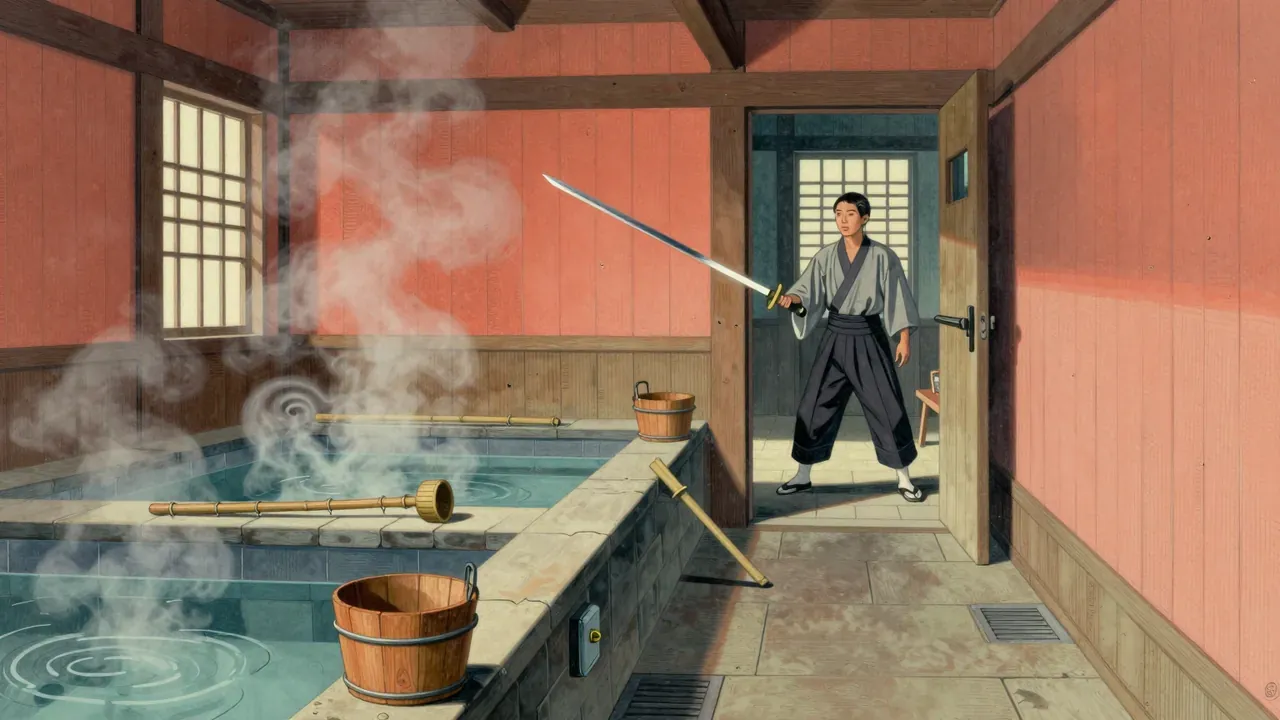
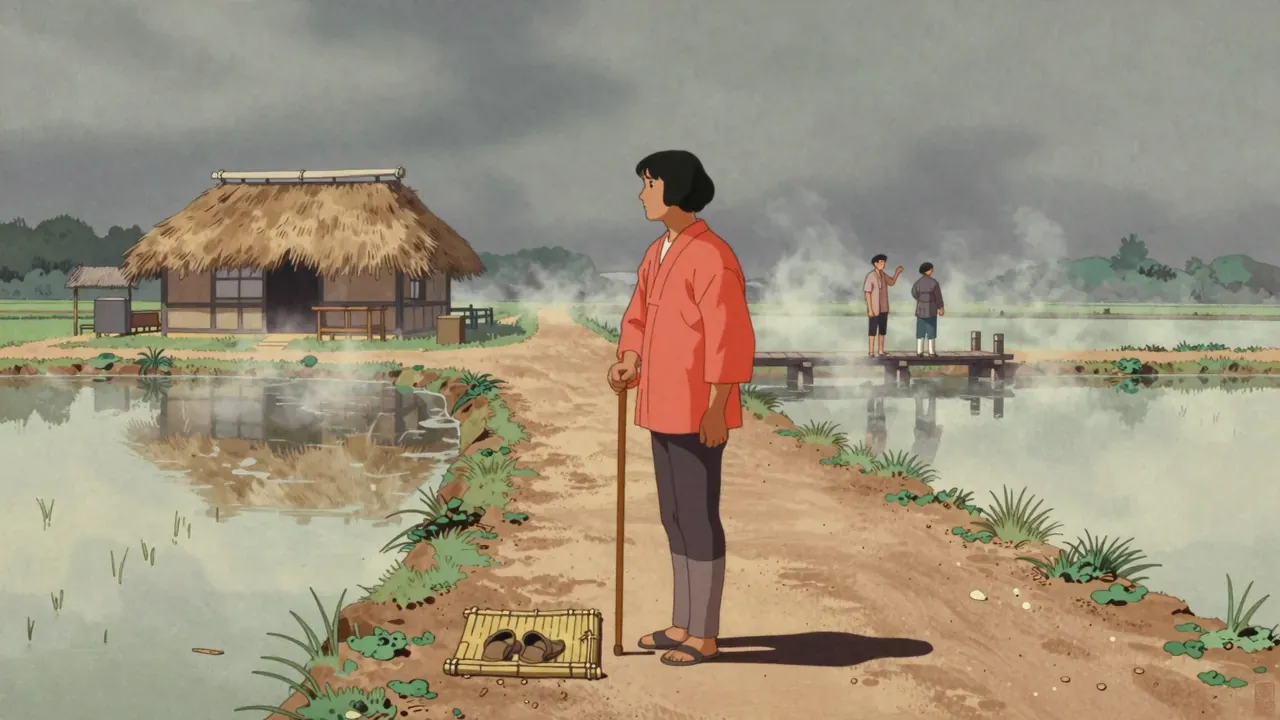
The story follows Zatoichi’s passage through a single town where gang rivalry, civic decay and swordsmithing craft intersect. Ryōzō Kasahara’s script parcels out information with restraint: motivations are implied, not explained; alliances shift without fanfare. Shintarō Katsu’s performance remains the anchor — his Zatoichi moves with deliberate slowness, speaks with dry patience, and fights with economical precision. Ichirō Saitō’s score avoids bombast, favouring shamisen-led melodies that underscore mood without dictating it. Kimiyoshi Yasuda directs with functional clarity: compositions are balanced but unadorned, editing favours continuity over flourish, and Yoshinobu Nishioka’s art direction grounds the film in weathered wood, low ceilings and practical interiors. There is no visual showboating — no slow motion, no extreme angles — only a steady gaze that treats innkeepers, blacksmiths and corrupt officials with equal, uninflected attention. The fight choreography is precise but unflashy, its impact coming from timing and consequence rather than speed or spectacle. (158 words)
What Lands Is What Is Left Unsaid
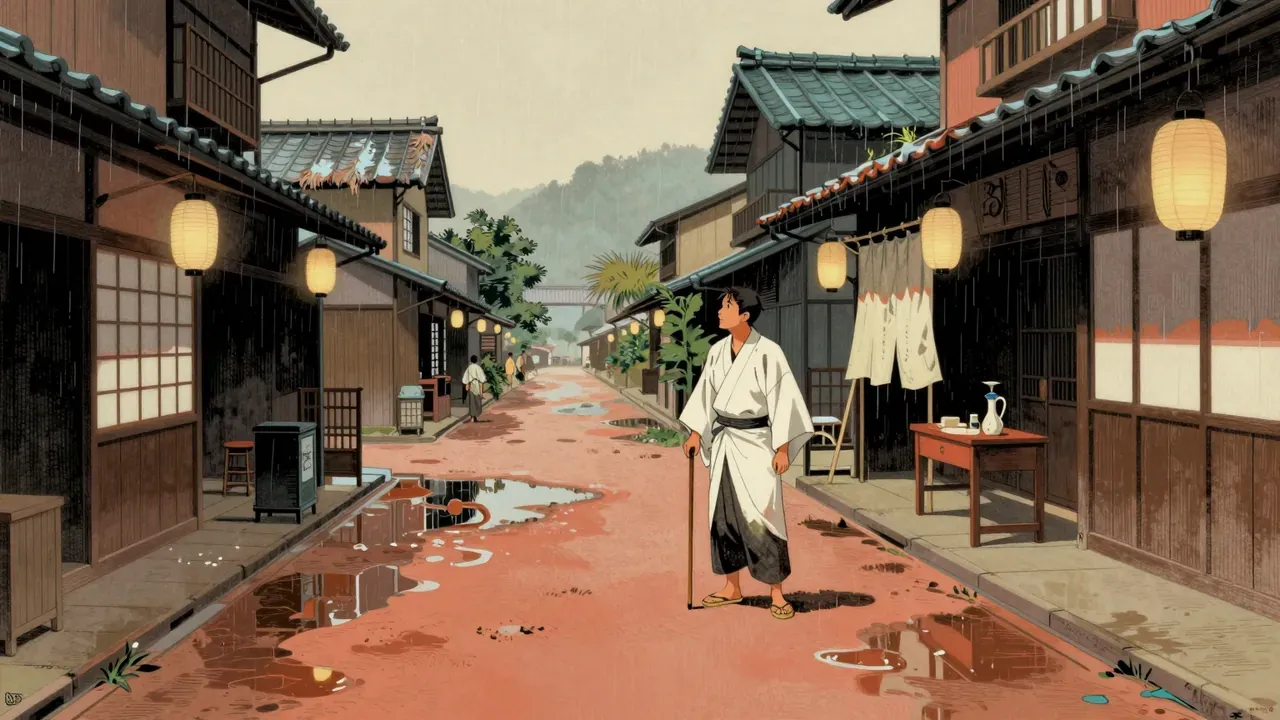
What lands most securely is the film’s tonal consistency: a blend of stoicism and lightness that never tips into farce or solemnity. Zatoichi’s quiet authority reads as earned, not imposed; his interventions feel like extensions of habit rather than heroism. The relationship between him and Senzo — a craftsman who sees the flaw in the cane sword before Zatoichi does — carries quiet weight, rooted in mutual respect for skill and limitation. The subplot involving Seikichi’s reluctance to inherit his father’s gang leadership gains subtle traction through Yoshihiko Aoyama’s understated performance and the script’s refusal to moralise about choice or duty. Even minor figures — the innkeeper Gembei, the sharp-eyed Oryu — occupy their roles without caricature. The film’s pacing allows space for these textures: a pause while Zatoichi listens to rain on a roof, a glance exchanged across a dim room, the sound of metal cooling in water. These moments do not advance plot but deepen atmosphere, and they land because they are neither hurried nor overstated. (156 words)
Where the Lines Blur, They Fade
What does not land is the political dimension: Inspector Kuwayama’s collusion with Boss Iwagoro remains abstract, never anchored in tangible bureaucracy or institutional detail. His menace feels generic, his authority unexamined — he functions as a plot device rather than a character with motive or history. Similarly, the town’s subjugation lacks specificity; we see gambling scams and intimidation but no sense of how power circulates beyond the immediate antagonists. The film’s refusal to name systems or structures leaves its critique thin, reducing corruption to a matter of bad individuals rather than embedded practice. Some supporting performances also falter under this restraint: Tatsuo Endo’s Iwagoro is physically imposing but emotionally monochrome, and Makoto Fujita’s Umazo, though technically capable, lacks the idiosyncrasy that makes other series henchmen memorable. The final confrontation, while cleanly executed, carries little dramatic surprise — the cane sword’s fragility is announced early, yet its breaking feels procedural rather than inevitable, its resolution more logistical than resonant. (154 words)
The Ethics of Maintenance
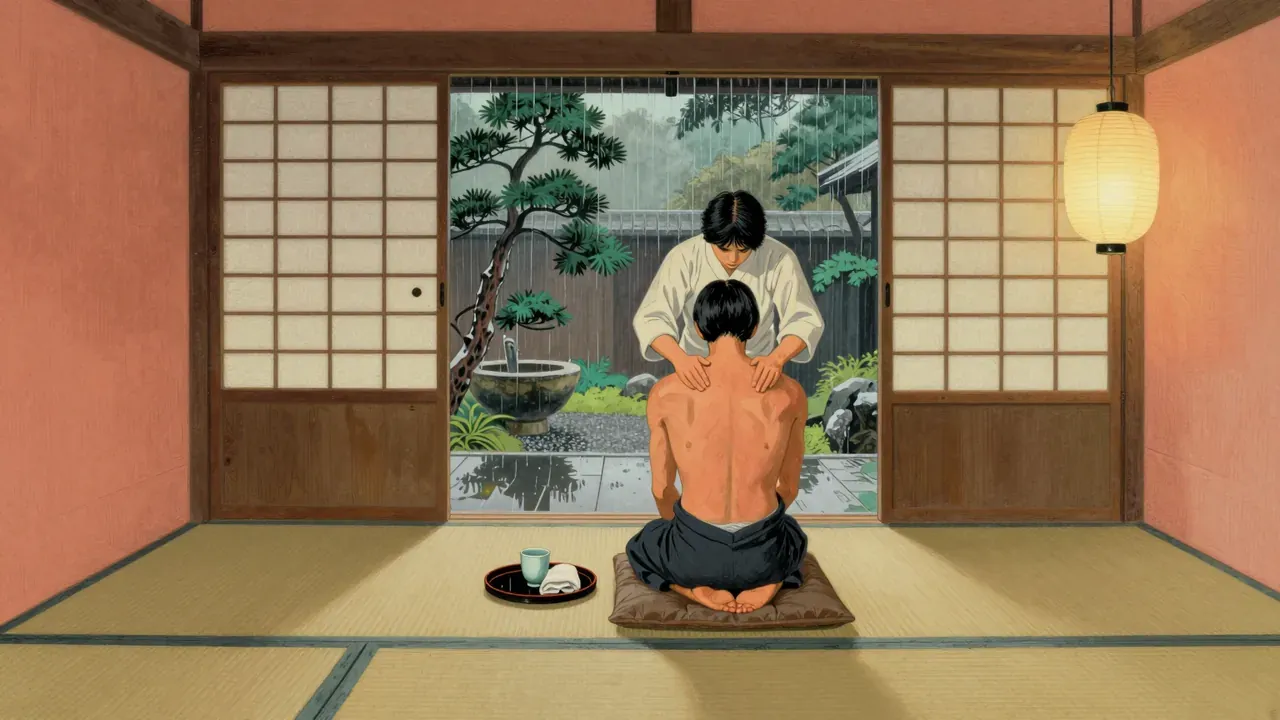
The themes that matter are craft as continuity, vulnerability as knowledge, and justice as maintenance rather than transformation. Zatoichi’s cane sword is not a weapon of conquest but a tool shaped by lineage and wear; its crack signals not decline but accountability — the understanding that even mastery has limits. Senzo’s role as apprentice swordsmith reframes Zatoichi’s violence as part of a material chain: forged, used, inspected, repaired, retired. The film treats blindness not as metaphor but as condition — Zatoichi navigates by sound, texture and memory, and others adapt to him without explanation or condescension. His interventions do not remake the town but restore equilibrium: a gambler exposed, a boy shielded from coercion, a corrupt official sidelined. There is no utopian vision here, only the daily work of holding lines — against greed, against inherited violence, against the assumption that strength must be loud. The film’s quiet insistence on care — in sword-making, in massage, in listening — becomes its ethical core. (149 words)
For Those Who Know the Rhythm
This film is for viewers already familiar with the Zatoichi series, particularly those who value consistency of tone and character over narrative escalation. It rewards attention to gesture, to silence, to the physical logic of objects — the weight of a cane, the grain of timber, the heat signature of a blade. It is not for those seeking psychological depth, structural innovation or political complexity; its moral universe is stable, its conflicts localised, its resolutions pragmatic. Anyone expecting the operatic gravity of Kurosawa or the existential drift of late-period Ozu will find it too grounded, too procedural. Nor is it ideal for first-time Zatoichi viewers: the shorthand between characters, the unspoken history, the ease with which Zatoichi moves through worlds assumes prior acquaintance. A viewer who values thematic density over atmosphere, or who finds repetition dull rather than reassuring, would likely leave unmoved. Change the premise — make Zatoichi an outsider to the series, or introduce systemic critique — and the film’s appeal would narrow further. (150 words)
A Well-Kept Promise
Yes, it is worth your evening — provided you approach it as a chapter, not a climax. Its ninety-three minutes unfold with unhurried confidence, offering neither revelation nor exhaustion, but a kind of calibrated calm. You will not leave unsettled or transformed, but you may leave with a clearer sense of how rhythm and restraint can carry meaning. It works best viewed alone or with someone who shares its tolerance for stillness, its interest in craft, its lack of urgency. Those who require narrative propulsion, emotional crescendo or stylistic distinction will find it thin. But for anyone willing to sit with Zatoichi as he listens, waits, assesses and acts — all without raising his voice — the film delivers exactly what it promises: a modest, well-made, quietly principled interlude. Its value lies not in what it adds to the series, but in how faithfully it sustains it. (147 words)