filmbriefs
Topic

Policing

Who enforces order, on whom, and with what consent.

25
in film
13:00
average
325 min
in total
34
across the network
Policing across the network →
All briefs25
13:00

Beyond the Law

Norman Mailer · 1968

Norman Mailer’s 1968 film is a self-financed, largely unscripted experiment set over one night in a Manhattan police station, following detectives and suspects through interrogations, lineups, and personal fallout. Shot with three crews over four nights, it uses improvisation to probe the psychological and ethical continuities between law enforcement and criminality — a theme Mailer pursued across his writing. Though technically rough and narratively diffuse, its rawness serves its purpose: to show power not as policy but as habit, posture, and proximity.
13:00

Code Unknown

Michael Haneke · 2000

Michael Haneke’s Code Unknown (2000) assembles intersecting lives in Paris, Romania and rural France through unedited long takes and strict perspective shifts. Juliette Binoche plays Anne, an actress whose professional command of emotion contrasts with her passivity amid real suffering — a neighbour’s screaming child, a deported homeless woman, her boyfriend’s war trauma. The film refuses exposition or resolution, using structure itself to examine translation, jurisdiction and silence as political conditions. Shot by Jürgen Jürges and edited by Prochaska, Hartusch and Muse, it sustains discomfort without catharsis.

13:00

Cure

Kiyoshi Kurosawa · 1997

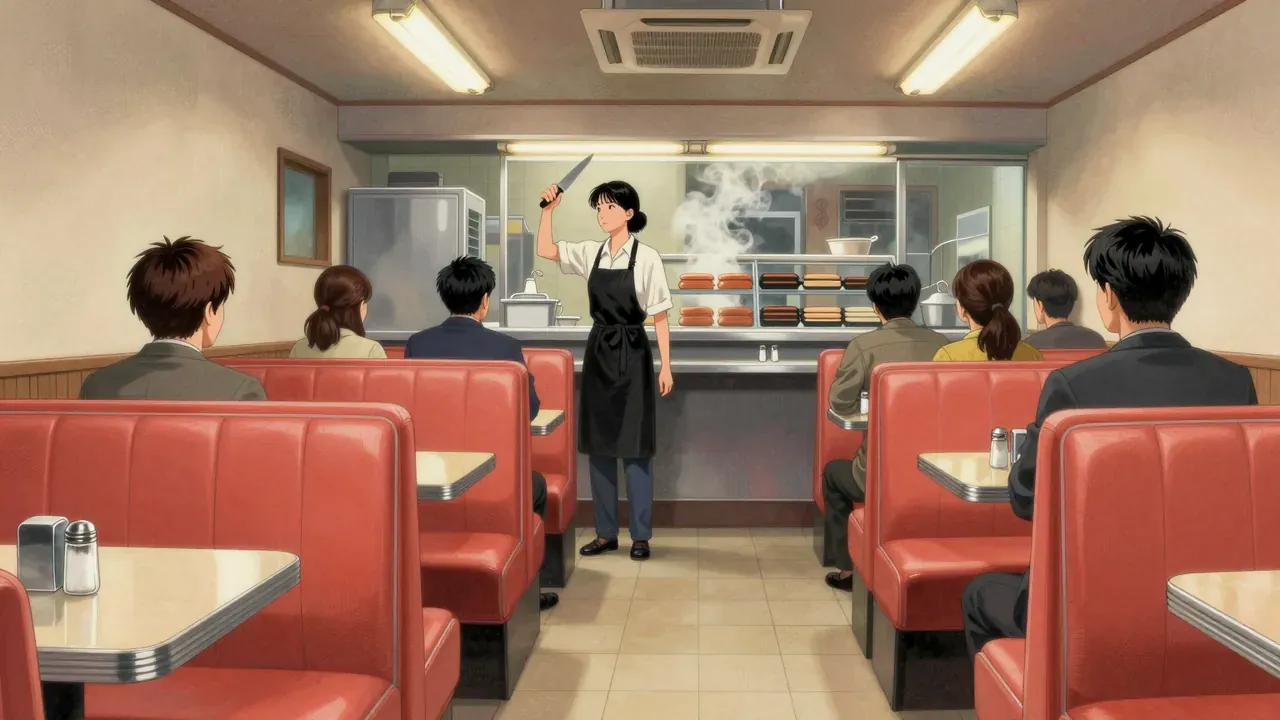
A Tokyo detective investigates a string of motiveless murders linked by an 'X' carved into victims and a mysterious man with apparent amnesia. As he traces each killer to the same enigmatic figure, his own grip on memory, motive, and agency begins to fray. Kiyoshi Kurosawa’s 1997 film treats hypnosis as ambient infection, building dread through repetition, restraint, and the slow erosion of certainty — not through gore or jump-scares, but through the unnerving plausibility of suggestion.

13:00

Deep Cover

Bill Duke · 1992

A Cincinnati police officer goes undercover in Los Angeles to dismantle a drug cartel, only to discover his mission is entangled with State Department interests protecting a South American politician. Directed by Bill Duke and starring Laurence Fishburne and Jeff Goldblum, the 1992 neo-noir sustains a tone of institutional weariness, using voice-over, Bojan Bazelli’s shadowed cinematography, and Michel Colombier’s score to trace the slow dissolution of professional conviction. Its strength lies in moral texture, not plot mechanics.

13:00

Fellow Citizen

Abbas Kiarostami · 1983

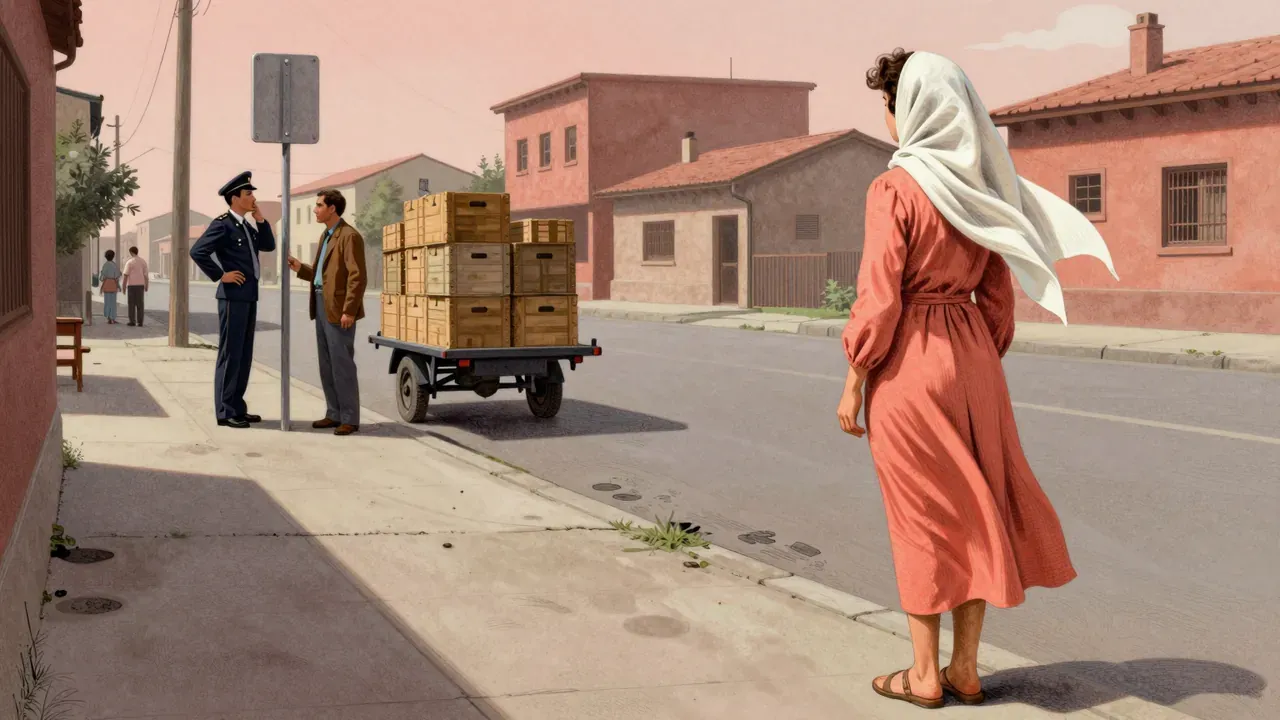
Fellow Citizen (1983) is Abbas Kiarostami’s 48-minute observational documentary, shot on a Tehran street. It follows a civil servant attempting to regulate pedestrian and vehicle movement, capturing unscripted reactions without narration, interviews or contextual framing. The film’s method is rigorously restrained: fixed camera, natural sound, no edits that conceal time. Its interest lies in behavioural nuance — hesitation, mimicry, negotiation — rather than argument or exposition.

13:00

Homicide

David Mamet · 1991

David Mamet’s 1991 crime drama follows a Jewish homicide detective pulled from a high-profile manhunt into the investigation of an elderly woman’s killing — a case that unravels his assumptions about identity, loyalty, and belonging. With Joe Mantegna, William H. Macy, and Ving Rhames, and shot by Roger Deakins, it trades procedural clarity for psychological precision, using police work as scaffolding for a stark, unsentimental study of assimilation, moral drift, and the cost of choosing between competing claims on the self.

13:00

Humanité

Bruno Dumont · 1999

Bruno Dumont’s 1999 Humanité follows a withdrawn French police lieutenant investigating the rape and murder of an eleven-year-old girl in rural Bailleul. Shot in natural light with minimal dialogue, it treats the case not as a puzzle but as a rupture in the fabric of daily life — observed with clinical patience, emotional restraint, and profound physical specificity. Emmanuel Schotté and Séverine Caneele deliver unadorned, deeply felt performances; Yves Cape’s cinematography grounds every moment in tangible reality. The film won the Grand Prix at Cannes and remains a defining work of late-20th-century arthouse realism.

13:00

Infernal Affairs

Andrew Lau, Alan Mak · 2002

A Hong Kong police officer and a triad mole spend ten years living each other’s lives, bound by secrecy and surveillance. Directed by Andrew Lau and Alan Mak, the 2002 crime drama uses tight structure, restrained performances, and precise craft to explore identity as performance — not moral failure, but institutional inevitability.

13:00

Infernal Affairs II

Andrew Lau, Alan Mak · 2003

A 2003 Hong Kong crime thriller and prequel to Infernal Affairs, set between 1991 and 1997. It charts the rise of triad heir Ngai Wing-hau and the parallel infiltration of two moles—one in the police, one in the triad—against the backdrop of Hong Kong’s impending handover. Directed by Andrew Lau and Alan Mak, it expands the original’s moral universe into a generational study of power, loyalty and erasure.

13:00

Infernal Affairs III

Andrew Lau, Alan Mak · 2003

Infernal Affairs III closes the Hong Kong crime trilogy by abandoning narrative resolution for psychological recursion. Interweaving timelines before and after Chan Wing-Yan’s death, it charts Senior Inspector Lau Kin-Ming’s irreversible dissociation as his criminal past overtakes his present self. Anchored by Andy Lau’s physically precise performance and Andrew Lau and Ng Man-Ching’s muted, interior-heavy cinematography, the film renders guilt as somatic decay—not moral failure but neurological saturation. Its power lies in accumulation, not climax: Morse code taps, repeated corridors, overlapping voices. It is the trilogy’s most demanding and least forgiving chapter.

13:00

Insomnia

Erik Skjoldbjærg · 1997

A Swedish detective investigating a teenage murder in Arctic Norway accidentally kills his partner, then covers it up. Haunted by insomnia under the midnight sun, he descends into paranoia and self-deception while trying to close the case — and avoid being exposed. Directed by Erik Skjoldbjærg, this 1997 Norwegian thriller is a tightly wound study in moral erosion, anchored by Stellan Skarsgård’s restrained performance and Erling Thurmann-Andersen’s desaturated cinematography.

13:00

Investigation of a Citizen Above Suspicion

Elio Petri · 1970

Elio Petri’s 1970 Italian crime satire follows a high-ranking police inspector who kills his mistress and then manipulates the ensuing investigation to confirm he is above suspicion. Starring Gian Maria Volonté and scored by Ennio Morricone, it uses stark formal control to dissect the mechanics of institutional impunity — not as corruption, but as routine. It won the Cannes Grand Prix, the David di Donatello for Best Film, and the Oscar for Best International Feature.

13:00

Lady Snowblood: Love Song of Vengeance

Toshiya Fujita · 1974

Lady Snowblood: Love Song of Vengeance (1974), directed by Toshiya Fujita, is the second film in the Lady Snowblood series — but a deliberate departure from its manga source and predecessor. Set in late-Meiji Japan, it follows Yuki Kashima (Meiko Kaji) as she infiltrates the household of anarchist Ransui Tokunaga (Jūzō Itami) under orders from the Secret Police. With restrained performances, muted cinematography by Tatsuo Suzuki and Masaki Tamura, and a script that favours implication over exposition, the film explores coercion, ideological uncertainty, and the quiet violence of bureaucratic control. Though structurally uneven and thematically opaque in places, it remains a precise, unsentimental study in moral suspension.

13:00

Police Story 2

Jackie Chan · 1988

Jackie Chan’s 1988 sequel trades the first film’s procedural texture for streamlined stunt logic: Ka-kui is demoted, provoked, resigns, then re-enters a bomb plot that culminates in the mall explosion and fireworks warehouse finale. Written by Chan and Edward Tang, shot by Arthur Wong, and awarded Best Action Choreography at the 1989 Hong Kong Film Awards, it delivers physical clarity over psychological depth — a film where every punch lands because the ground beneath it was measured first.

13:00

Quai des Orfèvres

Henri-Georges Clouzot · 1947

Henri-Georges Clouzot’s 1947 Quai des Orfèvres follows Inspector Antoine’s investigation into the murder of a lecherous businessman, against the backdrop of a rationed, anxious Paris. Built on memory rather than fidelity to its source novel, it centres Jenny Lamour — an ambitious performer — and her jealous husband, weaving class, gender and institutional procedure into its procedural spine. With Louis Jouvet, Suzy Delair and Bernard Blier, it avoids noir theatrics in favour of psychological precision and social texture.

13:00

Sweet Sweetback's Baadasssss Song

Melvin Van Peebles · 1971

Melvin Van Peebles’ 1971 independent film follows a Black performer fleeing police after intervening in an act of brutality. Made outside studio systems, with Van Peebles writing, directing, editing, scoring, producing, and starring, it uses rapid montage, percussive music by Earth, Wind & Fire, and raw physical performance to assert Black autonomy. Its influence on blaxploitation and independent Black cinema is widely acknowledged, and it was added to the US National Film Registry in 2020.

13:00

The Friends of Eddie Coyle

Peter Yates · 1973

Peter Yates’s 1973 neo-noir adapts George V. Higgins’s novel with unsentimental rigour, following small-time Boston gunrunner Eddie Coyle (Robert Mitchum) as he navigates a web of informants, robbers, and indifferent lawmen. Shot on location across Greater Boston by Victor J. Kemper, with a muted Dave Grusin score and Paul Monash’s terse script, it privileges behavioural realism over plot mechanics. Though commercially unsuccessful on release, it is now regarded as a landmark of 1970s crime cinema — lean, credible, and morally flat.

13:00

The Naked Kiss

Samuel Fuller · 1964

Samuel Fuller’s 1964 film follows Kelly, a former prostitute who seeks refuge in a small American town, becomes a nurse, and falls in love with its wealthiest man — only to discover his predatory abuse of children. When she kills him, she must fight to prove her account in a system that prefers silence to scandal. Shot by Stanley Cortez and starring Constance Towers, it is a lean, unsentimental examination of power, exposure, and the limits of social forgiveness.

13:00

Bad Lieutenant

Abel Ferrara · 1992

Abel Ferrara’s 1992 Bad Lieutenant follows a New York police officer over a single day of spiralling addiction, abuse of power, and spiritual erosion. With Harvey Keitel in a physically uncompromising performance, the film rejects redemption arcs and procedural logic in favour of sustained, unsparing immersion in ethical collapse. Shot on gritty 16mm by Ken Kelsch and scored sparsely by Joe Delia, it treats Catholic iconography and police authority as hollowed-out symbols. Not a thriller, but a forensic study of vacancy wearing a badge.

13:00

The Naked City

Jules Dassin · 1948

The Naked City (1948) follows NYPD detectives investigating the murder of a model across real New York locations. Directed by Jules Dassin and written by Albert Maltz, it prioritises procedural fidelity over character depth or moral commentary. William H. Daniels’ cinematography and Paul Weatherwax’s editing anchor the film in tangible urban space, while Miklós Rózsa’s score underscores its climactic bridge chase and elegiac epilogue. Winner of two Academy Awards, it remains influential for its documentary rigour and structural clarity — a film less about crime than about how cities and institutions absorb and resolve it.

13:00

Detroit

Kathryn Bigelow · 2017

Kathryn Bigelow’s Detroit dramatises the 1967 Algiers Motel incident with forensic restraint: tight framing, minimal score, and performances rooted in silence and hesitation. It focuses not on the wider riot but on how unchecked authority operates in a single night — and how institutions protect themselves through omission, delay, and procedural evasion. The film’s power lies in its refusal to resolve what history left open.

13:00

High and Low

Akira Kurosawa · 1963

Akira Kurosawa’s 1963 film High and Low adapts Evan Hunter’s King’s Ransom into a stark, vertically structured drama about a businessman’s moral crisis after a kidnapping goes wrong. Shot in black and white by Asakazu Nakai and Takao Saito, it divides cleanly between Gondō’s elevated Yokohama home and the city’s slums, using space, lens, and editing to interrogate inequality, policing, and accountability. With Toshirō Mifune and Tsutomu Yamazaki in career-defining roles, it remains a benchmark of socially engaged genre filmmaking.

13:00

Public Enemies

Michael Mann · 2009

Michael Mann’s 2009 biographical crime film adapts Bryan Burrough’s non-fiction account of John Dillinger’s final year and the FBI’s pursuit under Melvin Purvis. Shot digitally on location across Wisconsin and Illinois, it prioritises procedural detail, institutional logic, and tactile authenticity over psychological exposition or romantic myth. With Johnny Depp, Christian Bale, and Marion Cotillard, it charts the convergence of Depression-era desperation, federal ambition, and emerging surveillance infrastructure.

13:00

Stray Dog

Akira Kurosawa · 1949

A young Tokyo detective loses his service pistol in a crowded trolley in the summer of 1949. With the help of a veteran colleague, he traces it through the city’s black markets, yakuza networks, and dance halls — not to deliver vengeance, but to understand how postwar desperation reshapes morality, authority, and the very idea of justice.

13:00

The Big Heat

Fritz Lang · 1953

Fritz Lang’s 1953 crime film follows homicide detective Dave Bannion as he pursues the truth behind a fellow officer’s suicide, uncovering a web of police and syndicate collusion. After his wife is killed in a car bombing, Bannion operates outside the force, confronting mob enforcers and compromised officials. With stark cinematography, minimal score, and tightly wound performances — notably Gloria Grahame’s Debby Marsh and Lee Marvin’s Vince Stone — the film builds tension through repetition and consequence rather than exposition or psychology.