The scope of it
Detroit is a dramatisation of the Algiers Motel incident during the 1967 Detroit uprising, framed as a historical crime drama. It does not attempt to survey the riot’s scale or causes, nor does it offer political exposition or sociological framing. Instead, it narrows its focus to one building, one night, and the sequence of decisions — by police, National Guardsmen, civilians, and a private security guard — that culminate in three deaths and multiple acts of sustained, unchallenged violence. The film’s aim is forensic rather than panoramic: to reconstruct how authority, fear, and impunity coalesced in real time. It treats the event not as distant history but as a procedural rupture — where rules dissolved, accountability vanished, and the machinery of law enforcement operated without restraint or witness. This is not a film about civil unrest broadly; it is about what happens when institutional actors are left alone in a room with terrified people and no oversight. Its fidelity is to chronology and consequence, not to symbolic resonance or narrative uplift.
The look of it
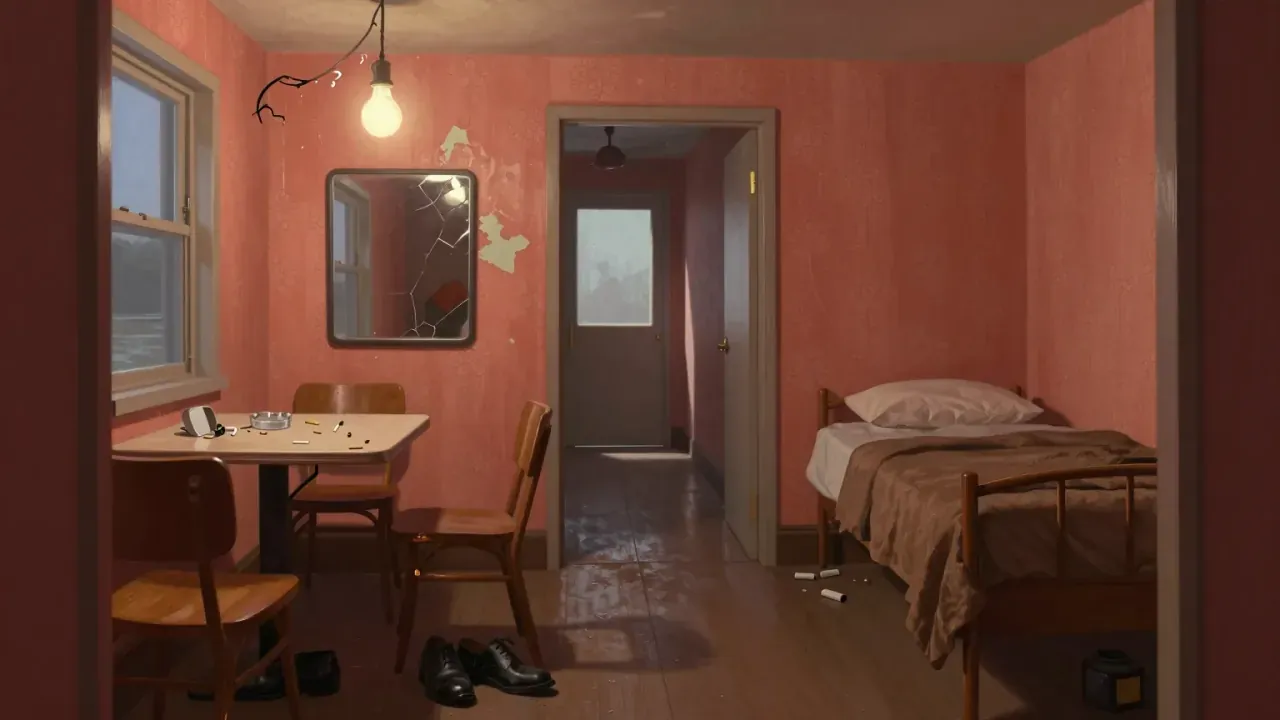
The story unfolds in three phases: the riot’s eruption, the siege of the Algiers annex, and the aftermath — trial and silence. Barry Ackroyd’s cinematography avoids stylisation: interiors are tightly framed, lit with practical sources, often underexposed to reflect the dim, humid claustrophobia of the motel rooms. William Goldenberg’s editing sustains tension through duration — long takes inside rooms, abrupt cuts between interrogation and reaction, minimal music until the final credits. James Newton Howard’s score remains sparse, almost absent during the central sequence. Performances are calibrated to restraint: John Boyega’s Melvin Dismukes watches more than he acts; Will Poulter’s Officer Krauss operates with chilling, uninflected certainty; Algee Smith’s Larry carries trauma in posture and hesitation. There is no monologue that explains motive; motivation emerges from gesture, pause, and refusal to look away. The script gives characters little backstory, trusting the weight of circumstance to do the work.
What holds
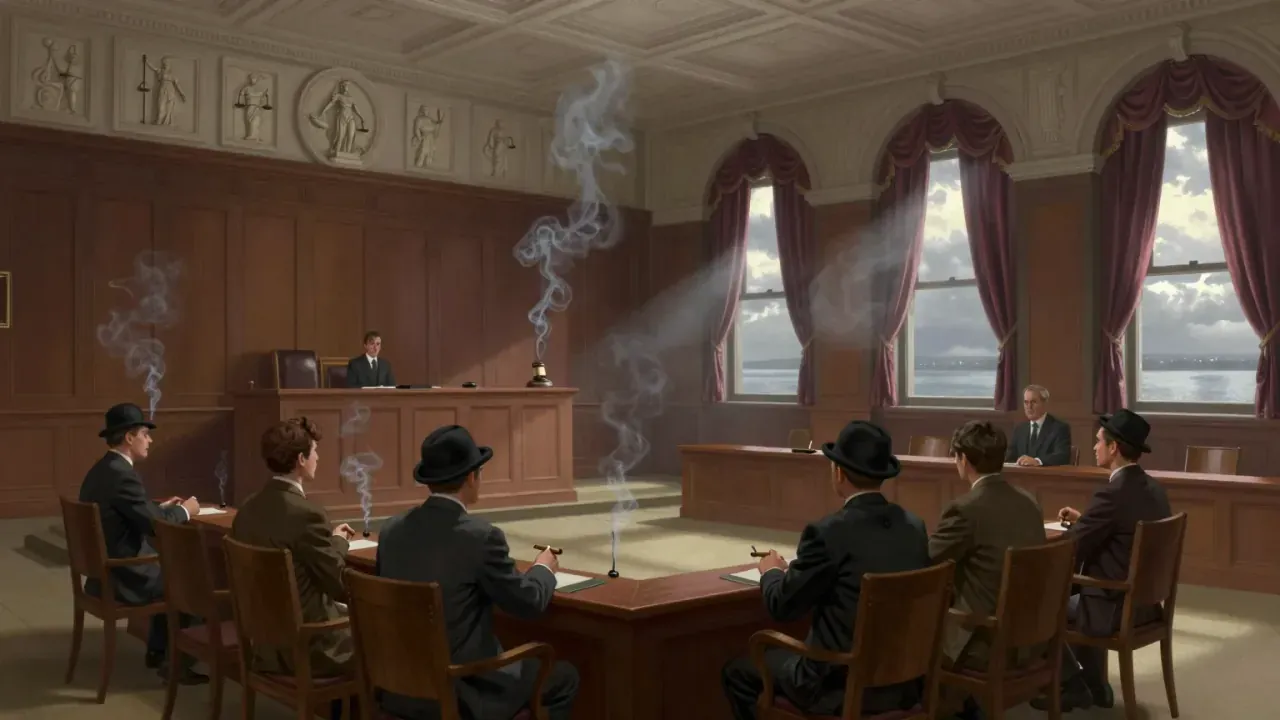
What lands most forcefully is the suffocating accumulation of small failures — the officer who fires first, the guardsman who leaves rather than intervene, the lawyer who exploits procedural gaps, the jury that hears testimony but sees no culpability. The film makes visible how systems protect themselves not through grand conspiracy but through quiet non-action: Dismukes’ silence, the withdrawal of troops, the dismissal of evidence on technical grounds. The courtroom scenes do not dramatise moral revelation but bureaucratic collapse — the moment when legal process ceases to be a vessel for justice and becomes a mechanism for closure without consequence. The ending does not offer catharsis or redress; it offers documentation: names, dates, outcomes. That restraint lands with cumulative force. It refuses to flatter the viewer with resolution, insisting instead on the durability of injustice when institutions fail to interrogate their own conduct. The film’s power lies in its refusal to resolve what history did not.
What slips
What does not land is the framing device — the opening newsreel-style montage of 1960s Detroit, followed by a voiceover about racial inequality. It gestures toward context but delivers none: no policy, no economic data, no civic history. It assumes familiarity while offering no scaffolding, leaving the viewer to supply the background the film declines to provide. Similarly, the characters outside the Algiers — the Dramatics band members, the white women Julie and Karen — remain functional rather than felt. Their arcs serve exposition, not empathy. The film’s narrow focus becomes a limitation when it sidelines the broader social texture that made the Algiers incident possible: housing policy, police deployment patterns, union decline, industrial flight. Without those anchors, the horror risks appearing exceptional rather than systemic. Some viewers may find the unrelenting intensity of the central sequence emotionally exhausting without sufficient structural counterweight — not because it is too much, but because the film offers no parallel register of resistance, solidarity, or even quiet dignity beyond survival.
The weight of it
The themes that matter are not race in abstraction but power in operation: how it accrues, delegates, conceals, and insulates itself. The film examines the difference between legality and legitimacy — how actions can be technically defensible yet morally indefensible, and how institutions preserve legitimacy by punishing only the most visible breaches. It treats silence as complicity not as metaphor but as practice: Dismukes’ failure to speak, the survivors’ coerced oaths, the jury’s verdict, the press’s muted coverage. It also explores the temporality of justice: two years pass between event and trial, during which memory frays, evidence degrades, and public attention shifts. The film suggests that delay is not neutral — it is an active component of impunity. Finally, it treats trauma not as individual pathology but as social residue: Larry’s withdrawal from music, Greene’s haunted stillness, the families’ failed civil suits. These are not symptoms to be healed but conditions to be acknowledged — enduring consequences of a night the state chose not to reckon with.
Who it is for
This film is for viewers who approach cinema as testimony — those willing to sit with discomfort without narrative reward, who value precision over persuasion, and who understand that some histories resist dramatisation without distortion. It is not for those seeking explanation, uplift, or moral clarity. It will frustrate viewers who expect historical films to contextualise, to balance perspectives, or to offer redemption arcs. Those who require character development beyond crisis, or who find extended sequences of psychological coercion emotionally inaccessible, may disengage. It is also unlikely to serve educators or students without supplementary material: the film assumes knowledge of Miranda rights, Michigan’s legal jurisdiction, and the chain of command between local police, National Guard, and federal troops. A viewer without that baseline may mistake omission for ambiguity.
What it costs
Yes, it is worth your evening — but only if you accept its terms: no relief, no summary, no authorial hand-holding. It demands attention not as entertainment but as reckoning. Its 143 minutes are not paced for comfort but for fidelity — each minute calibrated to the weight of what occurred. Some will argue it is too harrowing, too narrow, too unremitting. Others will say it is necessary precisely because it refuses to soften. What would change the verdict? A stronger integration of structural context — not as preamble but woven into the fabric of the narrative — or a more sustained exploration of survivor agency beyond endurance. As it stands, its rigour is its virtue and its limit. It does not ask you to feel better. It asks you to remember accurately.