filmbriefs
Topic

Animals

The other minds, granted moral status slowly and unevenly.

19
in film
13:00
average
247 min
in total
172
across the network
Animals across the network →
All briefs19
13:00

24 Frames

Abbas Kiarostami · 2017

Abbas Kiarostami’s final film, 24 Frames, comprises twenty-four uncut, static shots — each ninety seconds long — observing nature, animals, and thresholds between interior and exterior. Beginning with animated movement superimposed on Bruegel’s Hunters in the Snow, it proceeds into real-world stillness, testing how much meaning resides in time, attention, and unmediated presence. Released posthumously at Cannes 2017, it is a rigorous, unsentimental essay on perception and impermanence.
13:00

All That Breathes

Shaunak Sen · 2022

All That Breathes follows brothers Mohammad Saud and Nadeem Shehzad as they treat injured black kites in a makeshift clinic in Delhi. Shot over several years with minimal intervention, the film observes their daily labour — cleaning wounds, administering medicine, releasing recovered birds — against the backdrop of a city thick with pollution and political tension. It avoids exposition, relying instead on texture, repetition, and sound to convey interdependence: between species, faith and pragmatism, decay and devotion.

13:00

Amores perros

Alejandro González Iñárritu · 2000

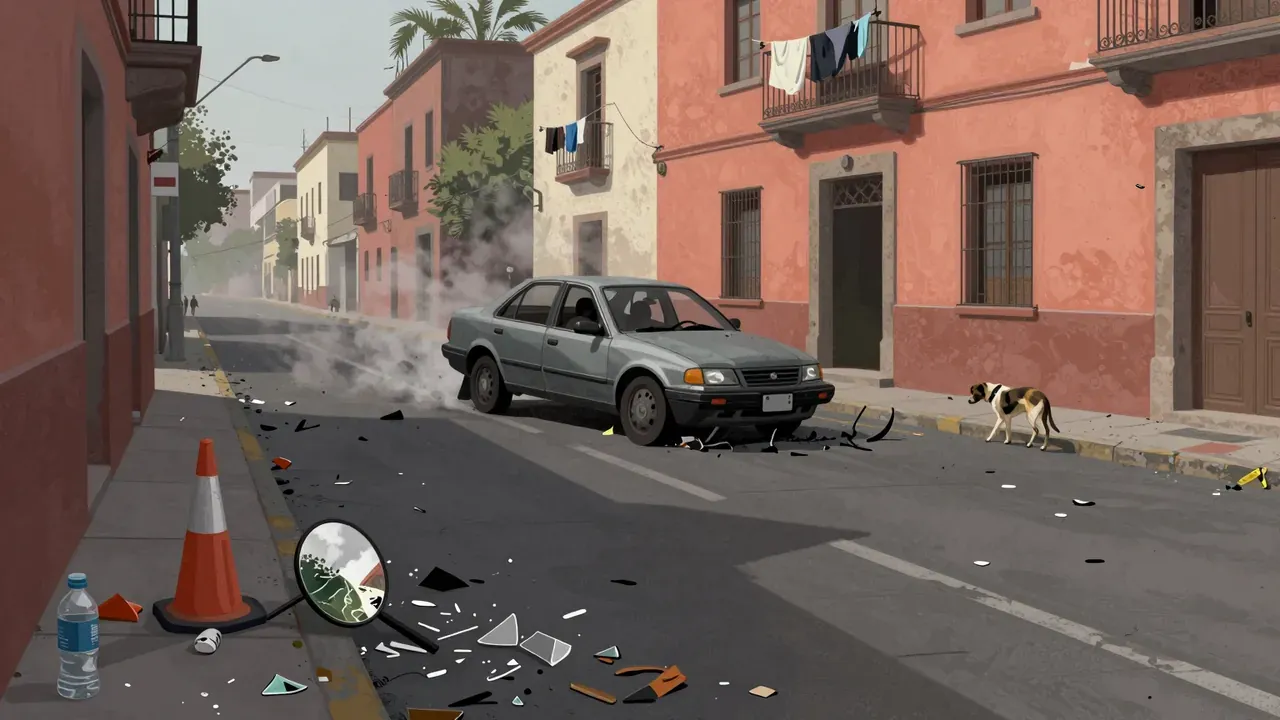
Alejandro González Iñárritu’s 2000 debut is a tripartite Mexican drama linked by a single car crash. Three stories — a teenager in dogfighting, a model recovering from injury, and a hitman estranged from his daughter — unfold across Mexico City’s social strata. Rodrigo Prieto’s unadorned cinematography and Iñárritu’s tight editing sustain a tone of controlled urgency. The film treats dogs not as symbols but as narrative counterpoints, and its themes — fractured masculinity, economic precarity, moral inertia — emerge through action, not exposition. It won the BAFTA for Best Film Not in the English Language and remains a touchstone of early-2000s arthouse cinema.

13:00

Elephant Boy

Robert J. Flaherty, Zoltan Korda · 1937

Elephant Boy (1937), directed by Robert J. Flaherty and Zoltan Korda, adapts Kipling’s 'Toomai of the Elephants' with location footage shot in Mysore and studio work at Denham. Twelve-year-old Sabu stars as a boy whose quiet observation of elephants earns him recognition among mahouts. The film balances documentary realism with narrative simplicity, avoiding sensationalism in favour of physical authenticity and restrained craft.

13:00

EO

Jerzy Skolimowski · 2022

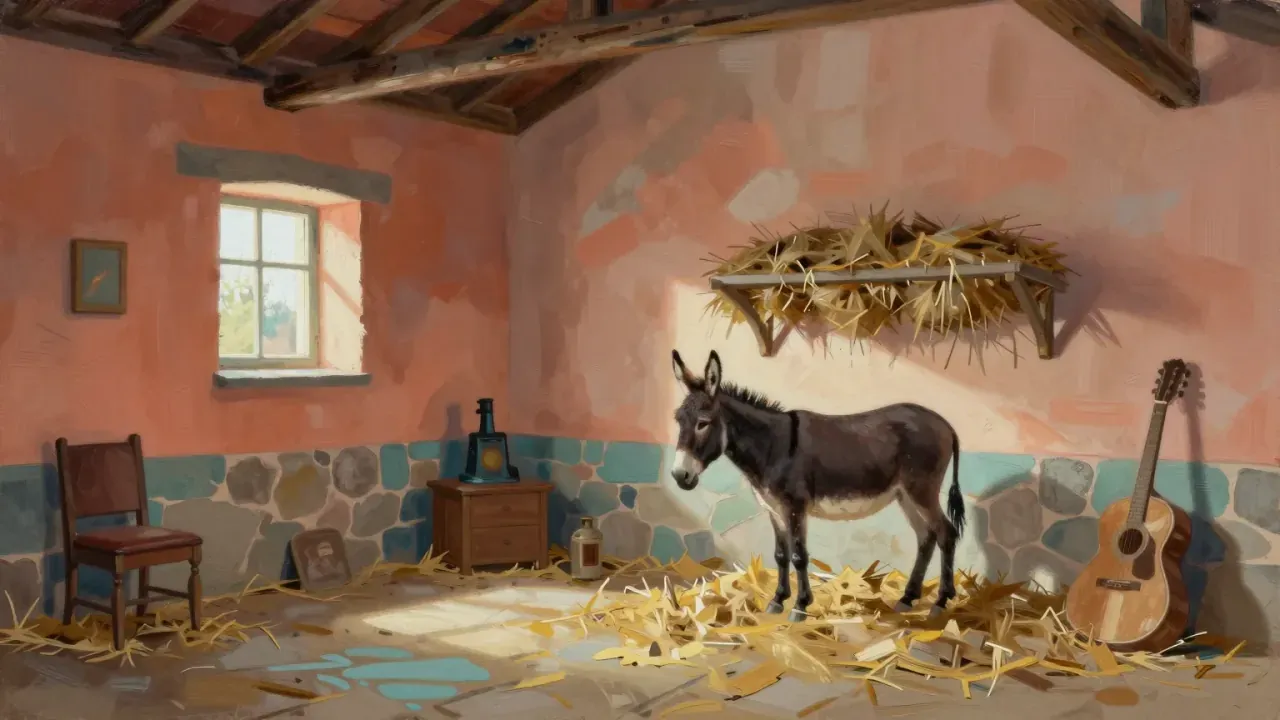
Directed by Jerzy Skolimowski, EO follows a Polish circus donkey across fragmented episodes in Poland and Italy — from stable to forest to slaughterhouse — using six real donkeys and a rigorously observational style. Inspired by Bresson’s Au hasard Balthazar, it rejects anthropomorphism in favour of sustained, unsentimental attention to non-human presence, time and physicality. Shot by Michał Dymek, scored by Paweł Mykietyn and edited by Agnieszka Glińska, it premiered at Cannes 2022, winning the Jury Prize and twelve international awards including Best Cinematography and Best Composer.

13:00

Gates of Heaven

Errol Morris · 1978

Errol Morris’s 1978 debut is an unnarrated documentary about pet cemeteries in California, built entirely from interviews with entrepreneurs, mourners and bystanders. Shot on a shoestring budget with three fired cinematographers before settling on Ned Burgess, it avoids irony, exposition and music, letting speech — hesitant, repetitive, earnest — carry philosophical weight. Its structure divides two competing businesses, revealing not satire or sentiment but a sustained inquiry into how people articulate meaning around death, care and failure.

13:00

Heart of a Dog

Laurie Anderson · 2015

Laurie Anderson’s 2015 essay-film Heart of a Dog reflects on the death of her dog Lolabelle, weaving personal memory, Buddhist bardo teachings, and reflections on post-9/11 New York into a meditative, non-linear structure. Composed, scored, and narrated by Anderson, it favours restraint over exposition, silence over score, and association over argument — offering not answers but a sustained mode of attention.

13:00

Japón

Carlos Reygadas · 2002

Japón (2002), Carlos Reygadas’s debut, follows a man fleeing existential collapse to a remote Mexican canyon, where he stays with an elderly indigenous widow. Shot on anamorphic 16mm in an extreme widescreen ratio, it unfolds in long, unbroken takes, prioritising physical presence over psychology. With minimal dialogue and a score drawn from Bach, Pärt, and Shostakovich, the film confronts mortality, desire, and ethical ambiguity through durational immersion — including unsimulated animal acts that drew UK censorship cuts. Its power lies in restraint, not revelation.

13:00

Jungle Book

Zoltan Korda · 1942

Zoltán Korda’s 1942 Jungle Book is a Hollywood-produced Technicolor fantasy starring Sabu as Mowgli, adapted loosely from Kipling. Shot by Lee Garmes and W. Howard Greene, scored by Miklós Rózsa, and designed by Vincent Korda, it foregrounds jungle atmosphere, animal presence, and physical performance over psychological depth or narrative precision. Though commercially successful and nominated for four Academy Awards, its human drama remains schematic, its themes implied rather than explored. It endures as a feat of mid-century studio craft — vivid, deliberate, and unapologetically ornamental.

13:00

Koko: A Talking Gorilla

Barbet Schroeder · 1978

Barbet Schroeder’s 1978 documentary observes Francine Patterson’s work teaching American Sign Language to Koko the gorilla at Stanford University. Shot by Néstor Almendros in restrained, natural light, it avoids explanation or advocacy, instead holding sustained, quiet attention on Koko’s signing, expressions, and interactions. It engages with questions of animal personhood, the ethics of observation, and the limits of human language — not as arguments, but as durational encounters. Released by New Yorker Films in the US and later restored by Criterion, it remains a singular, understated work in the history of science-facing documentary.

13:00

Okja

Bong Joon-ho · 2017

A teenage girl in the South Korean mountains raises Okja, a genetically modified 'super pig'. When the Mirando Corporation claims Okja as winner of its global breeding contest, Mija follows her to New York, aided by the Animal Liberation Front. What unfolds is a tonally restless adventure that maps the infrastructure of industrial meat — from farm to lab to slaughterhouse — while holding fast to the physical, emotional reality of one human-animal bond.

13:00

The Black Stallion

Carroll Ballard · 1979

Carroll Ballard’s 1979 adaptation of Walter Farley’s novel follows a boy shipwrecked with a wild black stallion, their bond forged in silence and survival on a deserted island, then tested in the high-stakes world of American horse racing. Shot by Caleb Deschanel and scored by Carmine Coppola, it favours duration, texture, and restraint over exposition or sentiment.

13:00

The Bread and Alley

Abbas Kiarostami · 1970

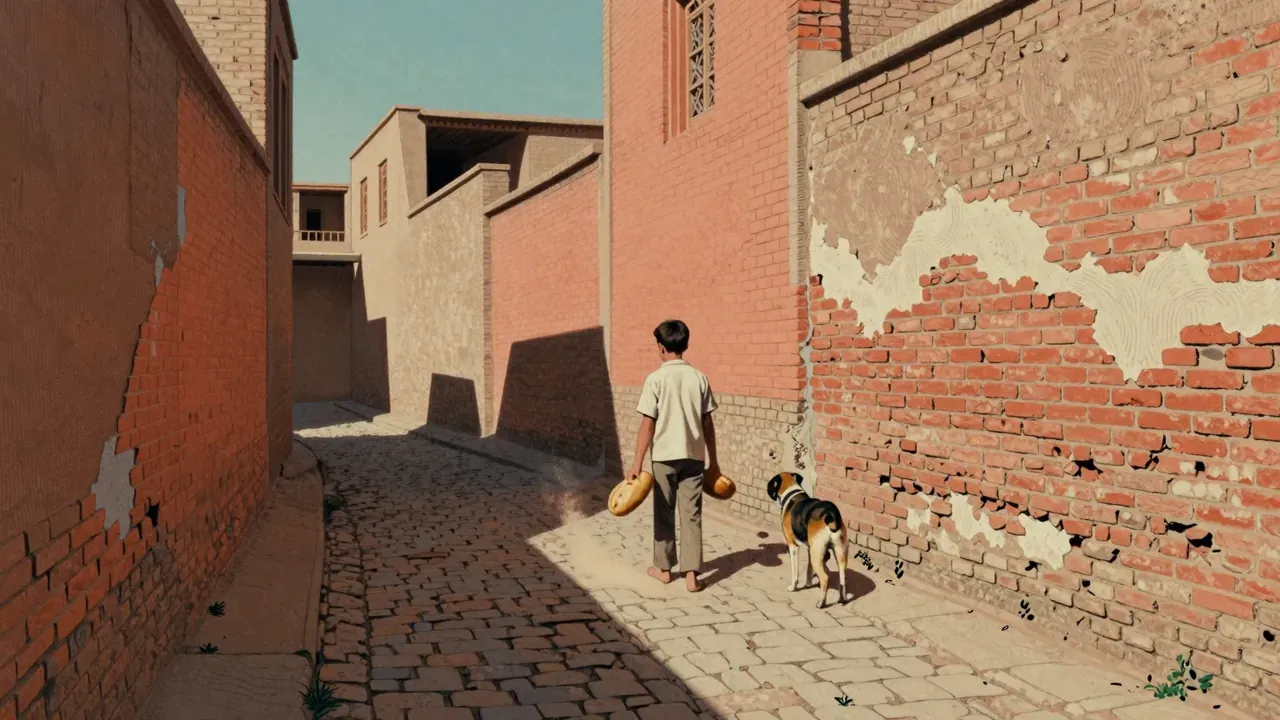
Abbas Kiarostami’s 1970 debut is a ten-minute black-and-white Persian-language short set in a Tehran alley. A boy carrying bread is blocked by a barking dog, improvises a way past, and is followed home by the same animal — only for a second boy with yogurt to trigger the same bark moments later. Shot in static, unadorned takes, it offers no exposition, no score, no close-ups, and no moral framing. Its power lies in its exactness: a study in singular decisions, shared space, and the fragility of cause-and-effect.

13:00

White Mane

Albert Lamorisse · 1953

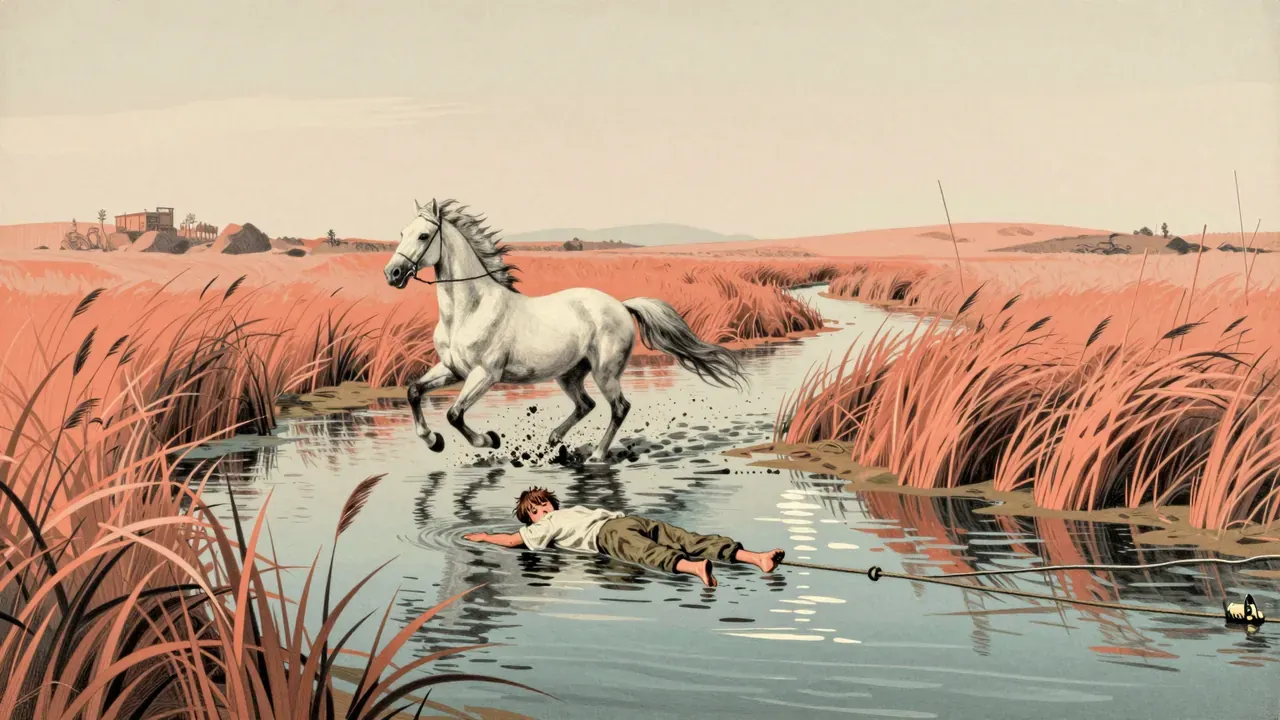
White Mane (1953) is a 47-minute French short directed by Albert Lamorisse, filmed on location in the Camargue marshes. It follows a boy’s wordless pursuit of a wild white stallion, using minimal narration, natural light, and real landscapes to build a fable about endurance, reciprocity, and the limits of human control. Not a conventional children’s story, it resists explanation, favouring atmosphere and physical presence over plot or psychology.

13:00

Au Hasard Balthazar

Robert Bresson · 1966

Robert Bresson’s 1966 film follows Balthazar, a donkey, through successive owners in rural France. Told with austere precision, it uses non-professional actors, restrained cinematography by Ghislain Cloquet, and near-silent observation to trace endurance, indifference, and quiet violation. Marie, played by Anne Wiazemsky, ages alongside Balthazar, her decline mirroring his — though neither is granted interiority. The film’s power lies in accumulation, not exposition; its final image — Balthazar dying among sheep — lands not as tragedy but as quiet, inevitable fact.

13:00

Frankenweenie

Tim Burton · 2012

Tim Burton’s 2012 stop-motion Frankenweenie expands his 1984 short into a black-and-white feature about Victor Frankenstein, a lonely boy who reanimates his dead dog Sparky — then contends with chaos when classmates follow suit. Built with meticulous puppetry and Danny Elfman’s score, it balances gothic parody with emotional sincerity, landing most strongly in its tactile detail and restrained treatment of loss. Though some subplots feel schematic and its satire stays broad, its commitment to mood, materiality, and moral ambiguity makes it a distinctive, unhurried piece of animation.

13:00

Grizzly Man

Werner Herzog · 2005

Werner Herzog’s 2005 documentary assembles Timothy Treadwell’s own footage, interviews with friends and experts, and his own narration to examine the bear enthusiast’s thirteen years in Alaska and his 2003 death alongside Amie Huguenard. It does not seek to vindicate or condemn, but to trace the logic of a man who believed he had transcended the boundary between human and wild—and what that belief cost.

13:00

Life of Pi

Ang Lee · 2012

Ang Lee’s 2012 adaptation of Yann Martel’s novel follows a teenage Indian boy stranded at sea with a Bengal tiger. Shot across India, Taiwan and Montreal, it uses meticulous visual effects, Claudio Miranda’s cinematography and Mychael Danna’s score to render philosophy tangible. Though its Pondicherry prologue feels expository and its dual-ending pivot risks imbalance, the film’s sustained attention to sensation — water, light, breath, weight — makes its central ambiguity feel earned, not evasive.

13:00

Umberto D.

Vittorio De Sica · 1952

A retired Roman civil servant struggles to keep his room, his dignity, and his dog in post-war Italy. Directed by Vittorio De Sica and written by Cesare Zavattini, this 1952 neorealist drama uses non-professional actors, restrained cinematography, and a tightly focused narrative to depict ageing, dependency, and quiet endurance without sentiment or solution.