The look of it
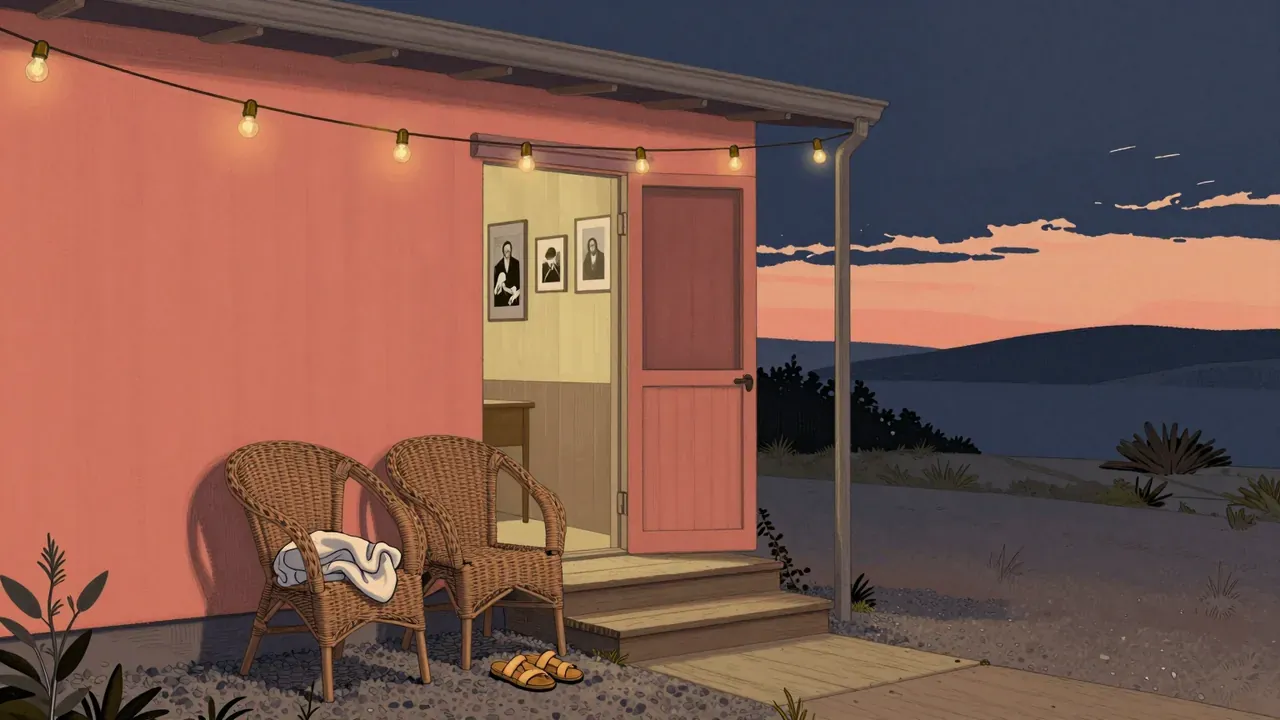
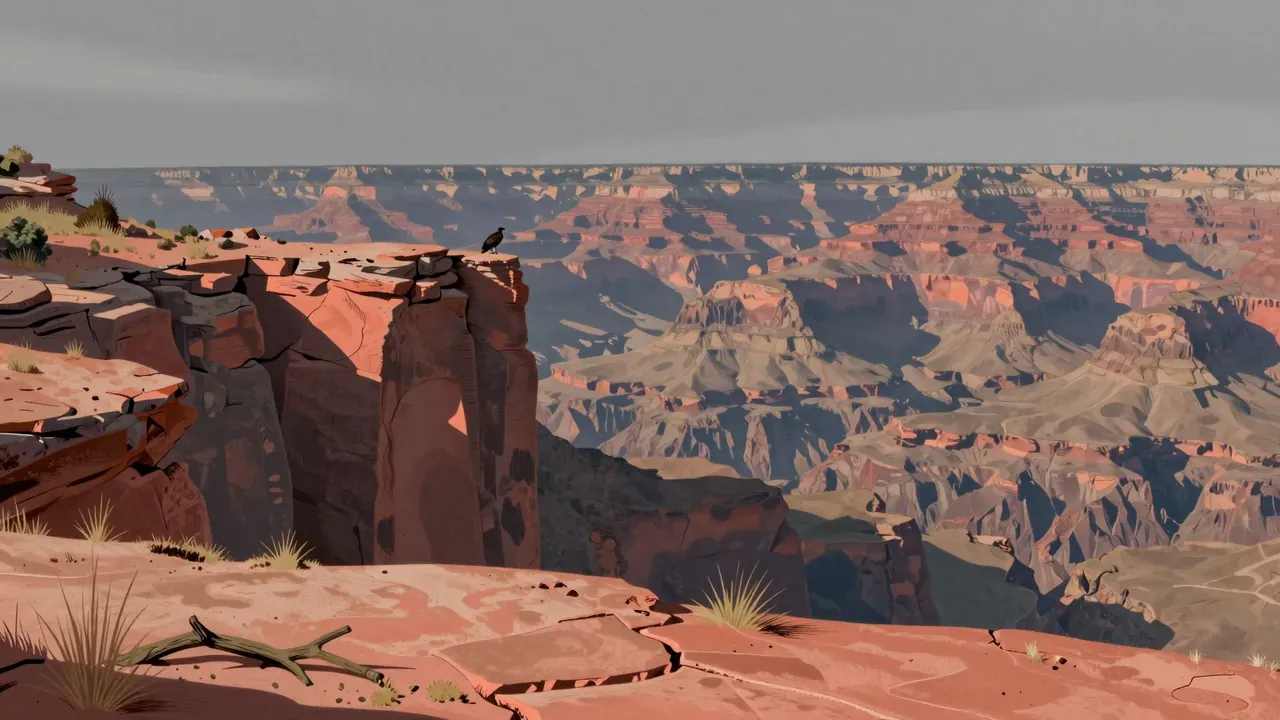
Japón is Carlos Reygadas’s 2002 debut feature, a Mexican drama shot on anamorphic 16mm in an unusually wide 2.66:1 aspect ratio. It sets out to confront existential inertia not through dialogue or exposition but through durational immersion: a man abandons Mexico City to die alone in a remote canyon, only to find himself drawn into the physical and moral gravity of an elderly indigenous widow’s life. The film rejects psychological realism in favour of sensory and ethical exposure — placing the viewer alongside its protagonist as his senses dull, then reawaken, not through revelation but through proximity to decay, labour, animal life, and unmediated human presence. Its ambition is structural as much as thematic: to make time, space, and embodiment carry meaning where language recedes. It does not seek to explain the man’s crisis, nor to resolve it; instead, it treats the landscape, the body, and the act of looking as co-equal agents in a slow reckoning with mortality and desire. This is not a story told, but a condition endured — and observed — in real time. (158 words)
The pace of it
The narrative follows a single trajectory: a man’s retreat, his stay with Ascen, and the quiet escalation of physical and emotional entanglement. Alejandro Ferretis plays the unnamed protagonist with minimal inflection, his performance calibrated to withdrawal and reactive vulnerability rather than interior monologue. Magdalena Flores, cast after three hundred auditions and directed without script or rehearsal, delivers a presence rooted in lived gesture and hesitation — her resistance in the unsimulated sex scene is neither acted nor suppressed, but permitted to exist as part of the film’s texture. Diego Martínez Vignatti’s cinematography holds long takes in low light, using the canyon’s scale and the house’s ramshackle geometry to frame bodies as elements within a larger, indifferent system. Editing by Daniel Melguizo and Carlos Serrano sustains duration without emphasis, letting silence and off-screen sound accumulate weight. The score — Bach, Pärt, Shostakovich — is deployed sparingly, never illustrative, often entering only after a scene has ended. Craft here serves refusal: of explanation, of rhythm, of comfort. (159 words)
The body in it
What lands is the film’s unwavering commitment to physical truth — not as shock, but as baseline. The canyon’s emptiness registers not as metaphor but as pressure; the widow’s hands repairing a roof, feeding chickens, or folding laundry carry the same narrative weight as the protagonist’s brooding. The camera’s distance from Ferretis’s face during moments of crisis makes his alienation legible not through expression but through spatial abandonment. The sex scene works because it refuses dramatisation: it is awkward, hesitant, unromantic, and morally unresolved — which is precisely its point. Similarly, the animal sequences land not for their brutality but for their banality: they are presented without commentary, as part of the same continuum of life and death that includes cooking, sleeping, and staring at the sky. The film’s pacing, often criticised as glacial, becomes its most persuasive device — it forces attention to what most films edit out: duration, repetition, the weight of doing nothing. When the protagonist finally walks away from the canyon, the lack of music, close-up, or reaction shot makes the departure feel less like resolution than continuation. (157 words)
The silence in it
What does not land is the film’s assumption of shared ethical tolerance. The unsimulated animal acts — the injured bird, the pig slaughter, the dog subjected to painful stimulus — are not integrated into the film’s moral architecture but placed beside it, as if their inclusion required no justification beyond realism. This sits uneasily with the film’s otherwise rigorous restraint: while human vulnerability is treated with care, animal suffering is presented as neutral fact, without counterpoint or contextual framing. Likewise, the protagonist’s cruelty towards Ascen — his silences, his sudden withdrawals, his use of her body as terrain for his own reawakening — risks reading as authorial indifference rather than critique. The film offers no internal mechanism to distinguish between observation and endorsement. Some viewers will find this honesty; others will read it as evasion. The absence of irony, distance, or even editorial pause around these moments leaves them hanging, unanchored — not provocative in a dialectical sense, but inert in their extremity. That imbalance weakens the film’s claim to moral seriousness, however unintentionally. (156 words)
The weight of it
The themes that matter are mortality as habit, not event; desire as physiological echo rather than romantic impulse; and dignity as something held in the body before it is granted by language or law. Japón treats ageing not as decline but as accumulation — of scars, routines, silences, and unspoken knowledge. The canyon is not symbolic of isolation but of scale: human life measured against geological time, animal life against human intention. Religion appears only in fragments — a rosary, a hymn hummed off-key — never as doctrine but as residue, like dust on a shelf. Sexuality is stripped of fantasy and framed as contact: skin on skin, breath on neck, weight on floorboards. The film’s central tension is between the protagonist’s abstracted despair and Ascen’s embodied continuity — her life persists regardless of his crisis, and her resilience is not heroic but ordinary. This ordinariness is the film’s quietest and most radical argument: that meaning resides not in transcendence but in persistence, not in answers but in the act of tending — to animals, to roofs, to each other, to time itself. (155 words)
The edge of it
This film is for viewers who treat duration as material, not obstacle — those accustomed to Béla Tarr, Chantal Akerman, or early Apichatpong, and willing to sit with discomfort without expecting catharsis. It rewards patience not with payoff but with recalibration: after ninety minutes, a glance at a chicken becomes charged, a pause before speaking feels consequential. It is not for those who require narrative propulsion, psychological clarity, or moral signposting. Anyone unsettled by unsimulated animal suffering — particularly scenes involving distress or death — should not watch; the BBFC cuts were not arbitrary. Nor is it for viewers who expect character motivation to be legible or whose tolerance for ambiguity ends at the first unexplained silence. Those who believe cinema must affirm human exceptionalism will find its level gaze at animal and human life equally discomfiting. A viewer who values craft over comfort, precision over persuasion, and endurance over explanation may find it essential. Someone who needs the film to tell them how to feel will leave frustrated — and rightly so. (159 words)
The leaving of it
Yes, it is worth your evening — but only if you accept its terms: no summary, no relief, no reassurance. Its 130 minutes ask for sustained attention, not passive consumption, and its value lies in how it reshapes perception during and after viewing. You will notice light differently the next day; you will hesitate before editing a pause in conversation. That shift is the film’s achievement — modest, irreversible, and earned. Those who dismiss it as pretentious miss how rigorously it avoids self-regard; those who call it nihilistic overlook its deep investment in the dignity of small, repeated acts. It fails only where it refuses to choose — between witness and complicity, between realism and responsibility — but that failure is itself instructive. A different director might have framed the animal sequences with context or counterpoint; a different editor might have cut away from discomfort. Reygadas does not. That choice is not neutral, but it is honest. If you can hold that honesty without flinching, the film repays you with attention itself — sharpened, slowed, returned. (158 words)