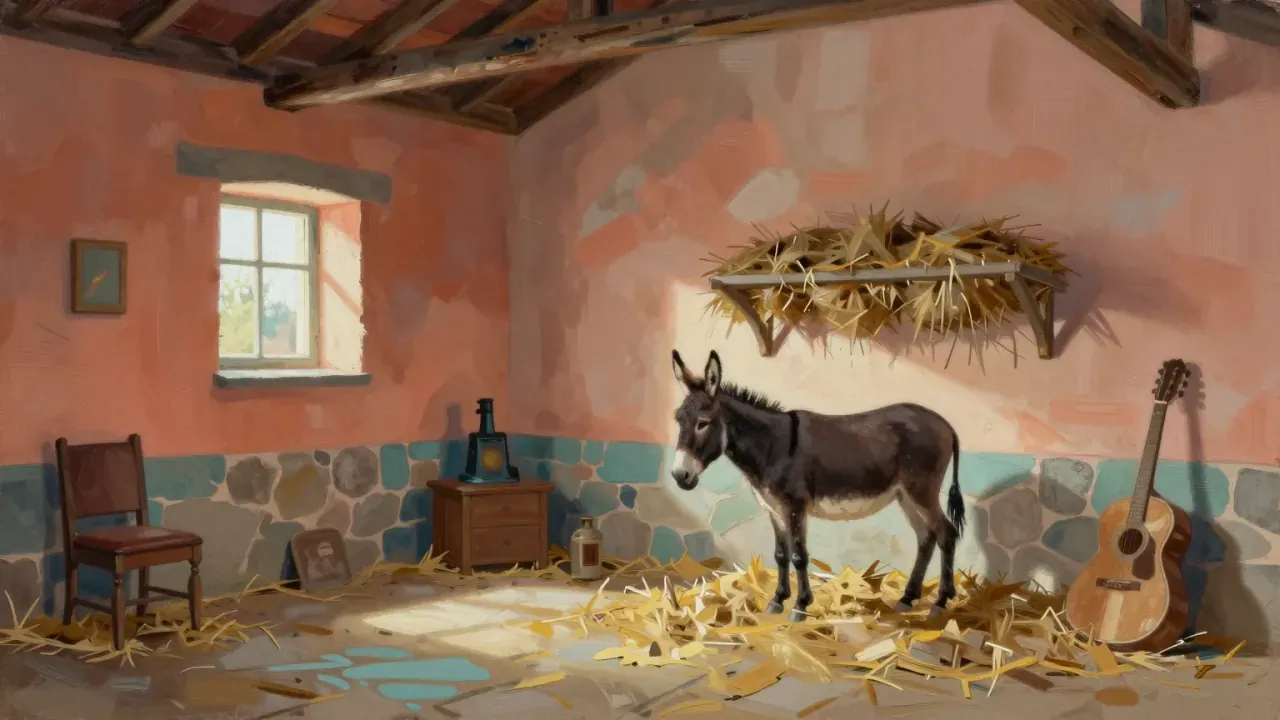
The shape of it
Au Hasard Balthazar is a French art film from 1966, written and directed by Robert Bresson, that follows the life of a donkey named Balthazar as he passes through successive owners in the rural Pyrenees. It is not an allegory dressed as realism, nor a fable with moral punctuation; it is a sustained act of attention to endurance, indifference, and quiet violation. Bresson does not ask the viewer to empathise with Balthazar as a symbol — he asks them to register his presence, weight, stillness, and eventual collapse as facts in a world that treats living beings as instruments or obstacles. The film’s ambition is structural and ethical: to strip narrative of psychological exposition, to refuse expressive performance, and to place the animal’s uninflected continuity at the centre of a human drama that unfolds around him without ever fully acknowledging him. It proceeds by accumulation — of gestures, repetitions, silences — rather than causality. Its method is ascetic, its aim not transcendence but exposure: of how cruelty operates without fanfare, how grace persists without reward, and how suffering can be both ordinary and absolute. (158 words)
The look of it
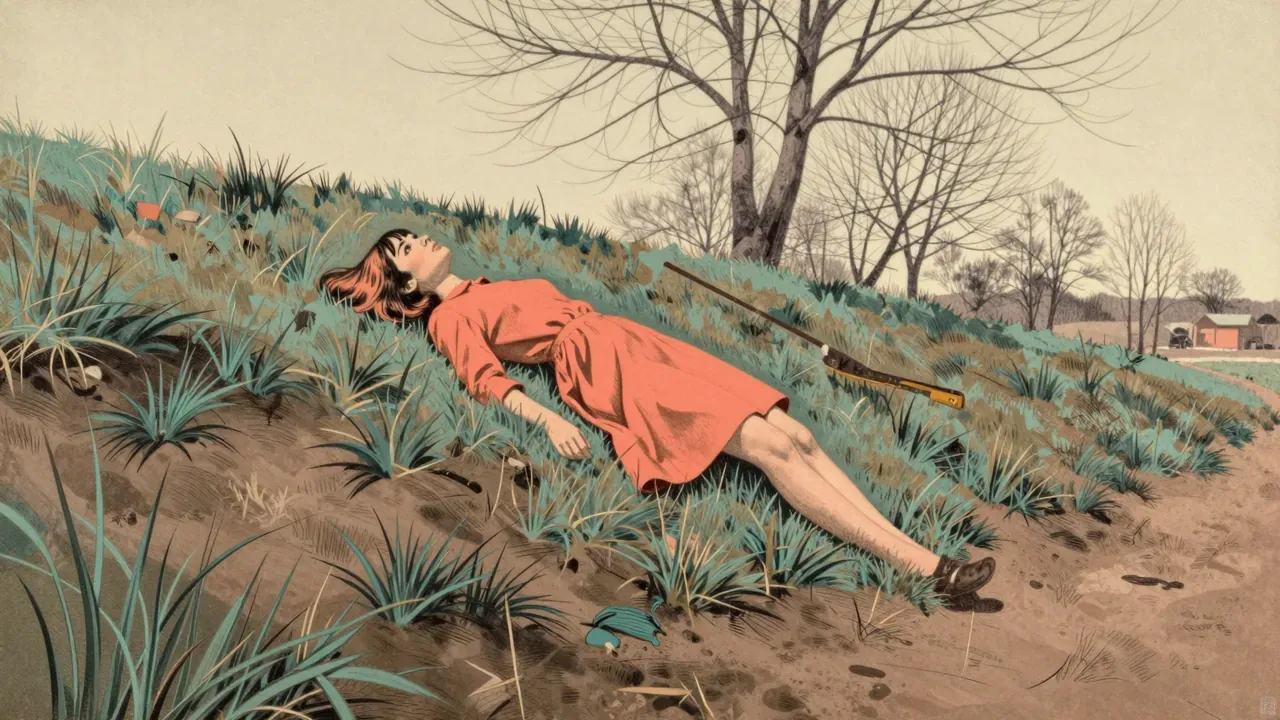
The story moves episodically across years, anchored by Balthazar’s physical continuity while human characters shift in role and moral weight. Anne Wiazemsky, then nineteen and untrained, plays Marie with a flat, unadorned delivery that resists interpretation — her face registers little beyond fatigue and withdrawal, consistent with Bresson’s direction of non-professionals as ‘models’ rather than actors. René Pascal appears only briefly as Jacques; most supporting roles are filled by local non-actors whose line readings lack inflection, reinforcing the film’s anti-theatrical stance. Ghislain Cloquet’s cinematography avoids dramatic contrast, favouring soft, even light that renders mud, stone, and fur with equal neutrality. Jean Wiener’s sparse piano score enters rarely and never underscores emotion. Raymond Lamy’s editing sustains long takes, often holding on Balthazar’s stillness after human action has ceased. There are no close-ups of faces for emphasis, no reaction shots to guide response. The film’s rhythm is dictated by animal time — slow, cyclical, resistant to narrative urgency. Every compositional choice serves this refusal of hierarchy between subject and background, human and beast, event and aftermath. (159 words)
The weight of it
What lands is the cumulative weight of repetition: Balthazar’s return to Marie after each abandonment, his silent witness to her degradation, the way his body absorbs blows that go unanswered. The final sequence — his collapse among sheep whose bells chime over him — does not resolve but condenses everything that precedes it: vulnerability, indifference, ritual, and a kind of unspoken consecration. The film’s restraint makes these moments land not as sentiment but as physical fact. Balthazar’s death is neither tragic nor redemptive; it is simply the end of a duration that has been measured in breaths, steps, and wounds. The absence of commentary forces attention onto texture — the grit on his coat, the tremor in his flank, the way light falls across his ribs when he lies down for the last time. This is not minimalism for its own sake but a formal discipline that prevents the viewer from looking away or assigning meaning prematurely. The film trusts duration to do the work that music, editing, or performance might otherwise perform. In doing so, it achieves a rare kind of gravity: not imposed, but accumulated. Its emotional force comes not from what it says about suffering, but from how thoroughly it refuses to look away from it. (157 words)
The silence of it
What does not land is any attempt to read the film as psychological portraiture or social critique with clear targets. Those expecting narrative coherence, character arcs, or moral clarity will find the film withholding. Balthazar remains opaque — not enigmatic, but simply unknowable in human terms — and the film declines to translate his experience into terms we recognise. The human characters, especially Gérard, function less as individuals than as vectors of impulse: jealousy, drunkenness, cruelty, neglect. Their motivations are neither explained nor dramatised, which frustrates viewers accustomed to cause-and-effect storytelling. Some may find the pacing inert, the repetitions mechanical rather than resonant. The refusal of expressive acting means no catharsis arrives through revelation or breakdown. Even Marie’s abuse is conveyed indirectly — through her posture, her silence, the way she avoids mirrors — and those who require explicit depiction of trauma may feel the film evades its own subject. The austerity risks alienation: it offers no comfort, no explanation, no release. That is its design, not a flaw — but it is also why some viewers, including Ingmar Bergman, have found it emotionally inaccessible. (156 words)
The measure of it
The themes that matter are endurance, indifference, and the asymmetry of care. Balthazar endures without agency, without recourse, without witness — yet his persistence structures the film’s moral field. Human beings move in and out of his life, imposing their needs, fears, and failures upon him, while he remains constant in his capacity to bear weight, absorb pain, and continue. The film explores how value is assigned — to animals, to women, to the poor — not through inherent worth but through utility and possession. It traces the erosion of innocence not as a fall but as a slow attrition: Marie’s childhood faith gives way to resignation, not rebellion; Jacques’s loyalty becomes passive, not protective. Jansenist ideas surface not as doctrine but as atmosphere — the sense that grace is rare, unearned, and often indistinguishable from suffering. There is no divine intervention, only the quiet persistence of life amid decay. The film’s Christianity is not doctrinal but phenomenological: it attends to bodies in extremis, to moments of surrender, to the weight of flesh, to the silence after violence. Its theology is one of observation, not proclamation. (155 words)
The demand of it
This film is for viewers who accept that meaning may reside in duration rather than revelation, and who trust form to carry weight where dialogue cannot. It rewards patience, rewatching, and attention to texture over plot. It is not for those who require narrative propulsion, emotional signposting, or psychological closure. Those who find abstraction intolerable, or who need characters to articulate inner states, will likely disengage early. Viewers drawn to conventional drama, social realism with clear stakes, or films that offer resolution — moral, emotional, or structural — should not expect satisfaction here. The film assumes its audience will sit with discomfort without demanding explanation. It is not indifferent to suffering, but it refuses to mediate it through sentiment. That refusal is deliberate, and it is why some critics, like Pauline Kael, found it ‘offensively holy’. A viewer who values emotional immediacy over sustained contemplation, or who expects cinema to clarify rather than complicate, would find little purchase in its rhythms. Nothing in the film changes that verdict — its rigour is its condition, not a bug to be fixed. (159 words)
The end of it
Yes, it is worth your evening — but only if you arrive prepared to meet it on its own terms. It demands attention without promising reward, and offers resonance without resolution. Its ninety-five minutes unfold with the inevitability of weather: gradual, unarguable, indifferent to preference. It is not entertainment, nor therapy, nor instruction — it is a test of attention, and its value lies in how thoroughly it recalibrates perception. Those who watch it once may feel estranged; those who return may find it reshaping how they see stillness, endurance, and the weight of living things. Its power accumulates slowly, like sediment, and its final image — Balthazar surrounded by sheep, bells ringing — lingers not because it explains anything, but because it refuses to stop being present. To call it ‘difficult’ mistakes its purpose: it is not obscure, but exacting. It asks for nothing more than time and attention — and gives back, in exchange, a rare kind of clarity: about what it means to persist, to witness, and to cease. (158 words)