filmbriefs
Topic

India

A subcontinent of languages, faiths and arguments, none of which resolve neatly.

16
in film
13:00
average
208 min
in total
89
across the network
India across the network →
All briefs16
13:00

All We Imagine as Light

Payal Kapadia · 2024

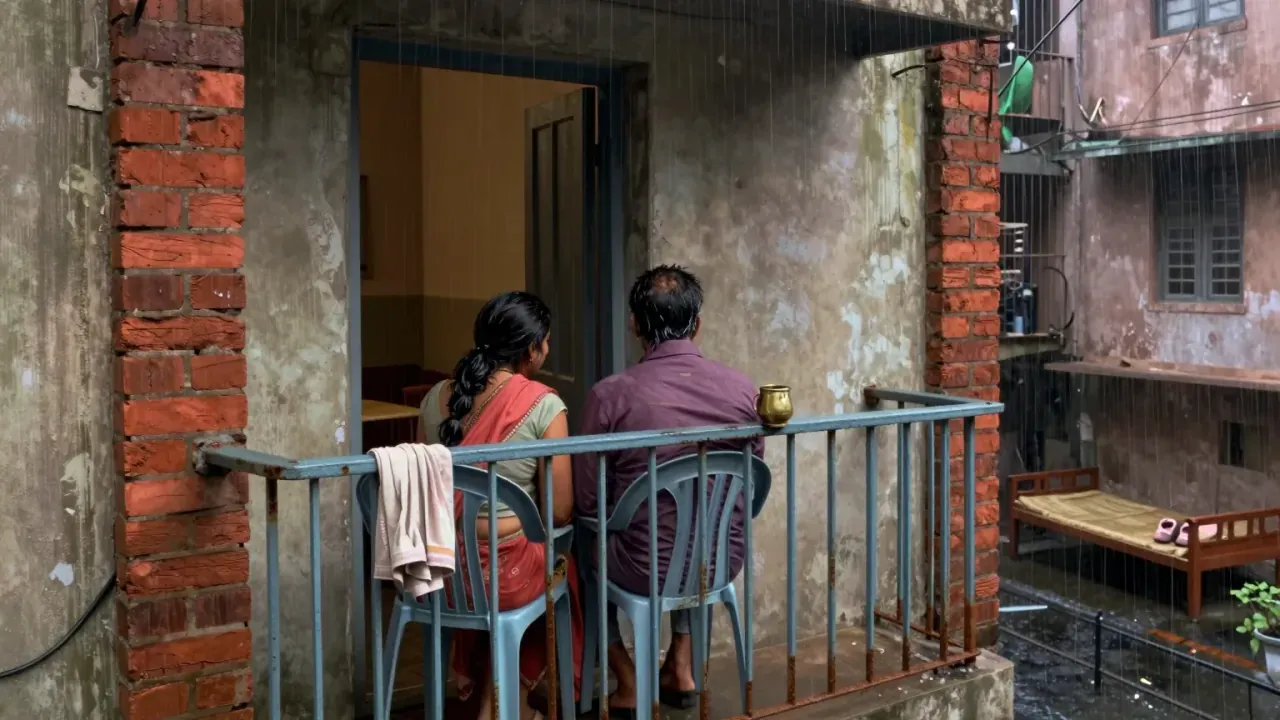
Payal Kapadia’s 2024 drama follows three women — nurses Prabha and Anu, and cook Parvaty — as they move between Mumbai’s chawls and Ratnagiri’s coast. Shot with restrained naturalism by Ranabir Das and edited with unhurried precision by Clément Pinteaux, it builds emotional resonance through duration, texture, and unspoken connection rather than plot. Premiering at Cannes, where it won the Grand Prix, it is a study in care, displacement, and the quiet dignity of ordinary endurance.
13:00

Monsoon Wedding

Mira Nair · 2001

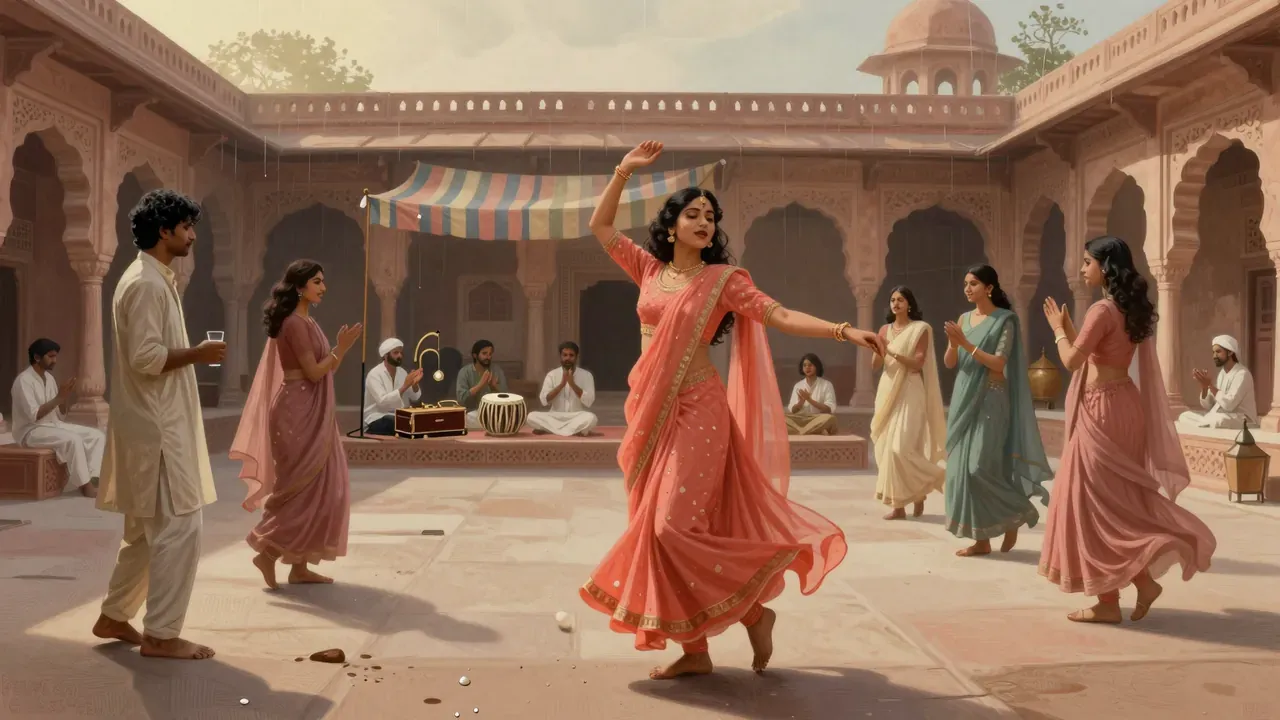
Set over four days in Delhi, Monsoon Wedding follows the Verma family as they prepare for their daughter Aditi’s arranged marriage. Amidst the chaos of planning, buried tensions surface — financial strain, generational rifts, unspoken abuse, and quiet acts of love. Directed by Mira Nair and written by Sabrina Dhawan, the film balances Bollywood energy with arthouse restraint, using ensemble storytelling, naturalistic performances, and layered sound design to explore how family, tradition, and healing operate in real time.

13:00

Phantom India

Louis Malle · 1969

Louis Malle’s 1969 seven-part documentary Phantom India is a 378-minute observational record of India, filmed over four months in 1968 with a crew of two. Shot in French, it avoids narration, explanation, or advocacy, relying instead on long takes, ambient sound, and unmediated presence. Though praised as Malle’s most personal work, it drew criticism from the Indian government and diaspora for its focus on poverty and ritual at the expense of modernity and agency. Its endurance lies not in completeness but in its unwavering, ambiguous attention.

13:00

Salaam Bombay!

Mira Nair · 1988

Mira Nair’s 1988 debut follows Krishna, a runaway boy who lands in Bombay’s Falkland Road slums and red-light district. Played by non-professional street children, the film renders their daily survival—tea-stall work, drug-running, petty theft—with documentary rigour and fictional discipline. Shot on location, edited for duration over pace, and scored sparingly by L. Subramaniam, it refuses uplift or explanation. Its power lies in accumulation, not climax; its ethics in restraint, not advocacy.

13:00

The Darjeeling Limited

Wes Anderson · 2007

Three estranged brothers travel across Rajasthan aboard a luxury train one year after their father’s death, attempting a spiritual journey that unravels into confrontation, failure, and quiet reconnection. Directed by Wes Anderson and shot by Robert Yeoman, the film employs symmetrical framing, a muted palette, and carefully curated music to explore inherited mourning, cultural distance, and the slow dissolution of control. It premiered at Venice in 2007, grossed $35.3m on a $17.5m budget, and received generally favourable reviews.

13:00

Apur Sansar

Satyajit Ray · 1959

Satyajit Ray’s 1959 Apur Sansar concludes the Apu Trilogy with quiet rigour: Soumitra Chatterjee’s debut as the adult Apu traces a path from drifting graduate to bereft father to tentative parent, shaped by Subrata Mitra’s restrained cinematography and Ravi Shankar’s sparse score. Adapted from Bibhutibhushan Bandopadhyay’s novel, it finds emotional gravity in understatement — in shared meals, unspoken decisions, and the slow reassembly of a life after loss.

13:00

Rang De Basanti

Rakeysh Omprakash Mehra · 2006

Rang De Basanti (2006) follows five Delhi students drawn into a British filmmaker’s documentary about 1920s Indian revolutionaries. As they rehearse acts of defiance, real-world corruption forces them to confront their own passivity. Directed by Rakeysh Omprakash Mehra, with cinematography by Binod Pradhan and music by A. R. Rahman, it blends contemporary realism with historical re-enactment to ask what civic courage costs today. Though its climax strains credibility, its emotional logic and ensemble performances sustain its 157-minute runtime.

13:00

Bombay

Mani Ratnam · 1995

Mani Ratnam’s 1995 Tamil drama Bombay follows a Hindu journalist and a Muslim schoolteacher who marry, raise twin sons, and build a life in Bombay — until the 1992–93 communal riots tear their world apart. Shot by Rajiv Menon and scored by A. R. Rahman, it anchors large-scale tragedy in small, tactile details: shared meals, childhood routines, the weight of names. Though criticised for narrative simplifications and political abstraction, its enduring power lies in its unwavering focus on love as labour, harmony as habit, and survival as quiet persistence.

13:00

Charlie Chaplin

Sakthi Chidambaram · 2002

Charlie Chaplin (2002) is a Tamil-language comedy directed by Sakthi Chidambaram, starring Prabhu Ganesan and Prabhu Deva as a wealthy businessman and his loyal photographer assistant in Ooty. When the husband briefly hires a call girl to appease his suspicious wife, the assistant covers for him by pretending the woman is his own lover — triggering a chain of deceptions that tests loyalty, reputation, and truth itself. Shot by Siva with functional clarity and scored by Bharani, the film balances farcical escalation with grounded performances. Though commercially successful and widely remade, it avoids moral scrutiny of its central transaction, resolving instead through courtroom confession and collective forgiveness.

13:00

Dilwale Dulhania Le Jayenge

Aditya Chopra · 1995

Dilwale Dulhania Le Jayenge (1995) is a 245-minute Hindi romantic drama directed by Aditya Chopra, starring Shah Rukh Khan and Kajol as NRIs whose courtship centres on winning parental consent rather than eloping. Shot across Switzerland, London and Punjab, it uses song, gesture and sustained tone to affirm family values without rejecting individual desire. Its enduring theatrical run — still screening daily in Mumbai since 1995 — reflects its design as ritual, not narrative.

13:00

Heat and Dust

James Ivory · 1983

Heat and Dust (1983), directed by James Ivory from Ruth Prawer Jhabvala’s adapted screenplay, interweaves two women’s lives across 1920s and 1982 India. Greta Scacchi and Julie Christie play Olivia and Anne, whose parallel affairs with Indian men expose enduring structures of power, desire and silence. Walter Lassally’s restrained cinematography and Humphrey Dixon’s measured editing sustain a mood of quiet inevitability. It is less a romance than a forensic study of inheritance — of privilege, of trauma, of the unspeakable things passed down with letters and land.

13:00

Jodhaa Akbar

Ashutosh Gowariker · 2008

A 2008 Hindi-language biographical epic directed by Ashutosh Gowariker, Jodhaa Akbar dramatises the 16th-century political marriage between Mughal emperor Akbar and Rajput princess Jodhaa Bai. Starring Hrithik Roshan and Aishwarya Rai, it uses spectacle, music by A. R. Rahman, and Neeta Lulla’s award-winning costume design to explore tolerance as daily practice — shared meals, translated texts, adjusted postures — rather than abstract ideal. Though criticised for compressing historical complexity and underdeveloping its female lead’s interiority, it remains notable for its visual coherence, disciplined pacing, and commitment to craft over concision.

13:00

Kuch Kuch Hota Hai

Karan Johar · 1998

Kuch Kuch Hota Hai (1998) is Karan Johar’s directorial debut: a Hindi-language romantic drama starring Shah Rukh Khan, Kajol, and Salman Khan. Structured across two timeframes, it follows a widower and his daughter as she reunites him with his college best friend. Shot in India, Mauritius, and Scotland, it blends aspirational visuals with classical storytelling—letters, songs, and delayed confessions—to explore inheritance, grief, and second chances. Its emotional logic is unwavering, its craft precise, and its cultural impact enduring.

13:00

Mother India

Mehboob Khan · 1957

Mother India (1957), directed by Mehboob Khan, is a Hindi-language drama starring Nargis as Radha, a woman who withstands drought, debt, and betrayal to uphold dignity in a newly independent India. Adapted from Khan’s 1940 film Aurat and written by S. Ali Raza, it counters Katherine Mayo’s polemical 1927 book of the same name by casting rural motherhood as the ethical core of the nation. Shot across villages in Maharashtra, Gujarat, and Uttar Pradesh, with music by Naushad and cinematography by Faredoon Irani, it blends vernacular realism and Hindu mythic framing. At 172 minutes, it moves deliberately, anchoring its vision of resilience in agricultural labour, moral choice, and communal endurance.

13:00

Sholay

Ramesh Sippy · 1975

A 1975 Hindi-language dacoit western directed by Ramesh Sippy, Sholay follows two outlaws hired to eliminate a ruthless bandit in a rural Indian village. Built on Salim-Javed’s tightly wound script, Dwarka Divecha’s stark cinematography, and R. D. Burman’s iconic score, it synthesises Spaghetti Western pacing, samurai film gravitas, and Indian folk idioms into a mythic, 204-minute epic. Its enduring power lies in formal discipline — in gesture, silence, and repetition — rather than psychological realism or moral ambiguity.

13:00

Swades

Ashutosh Gowariker · 2004

A NASA engineer returns to rural India to find his childhood nanny and stays to build a micro-hydroelectric plant. Directed by Ashutosh Gowariker and starring Shah Rukh Khan, Swades (2004) is a deliberate, physically grounded Hindi drama that treats infrastructure, education, and caste not as themes but as daily practices — demanding patience, precision, and collective labour over rhetoric or revelation.