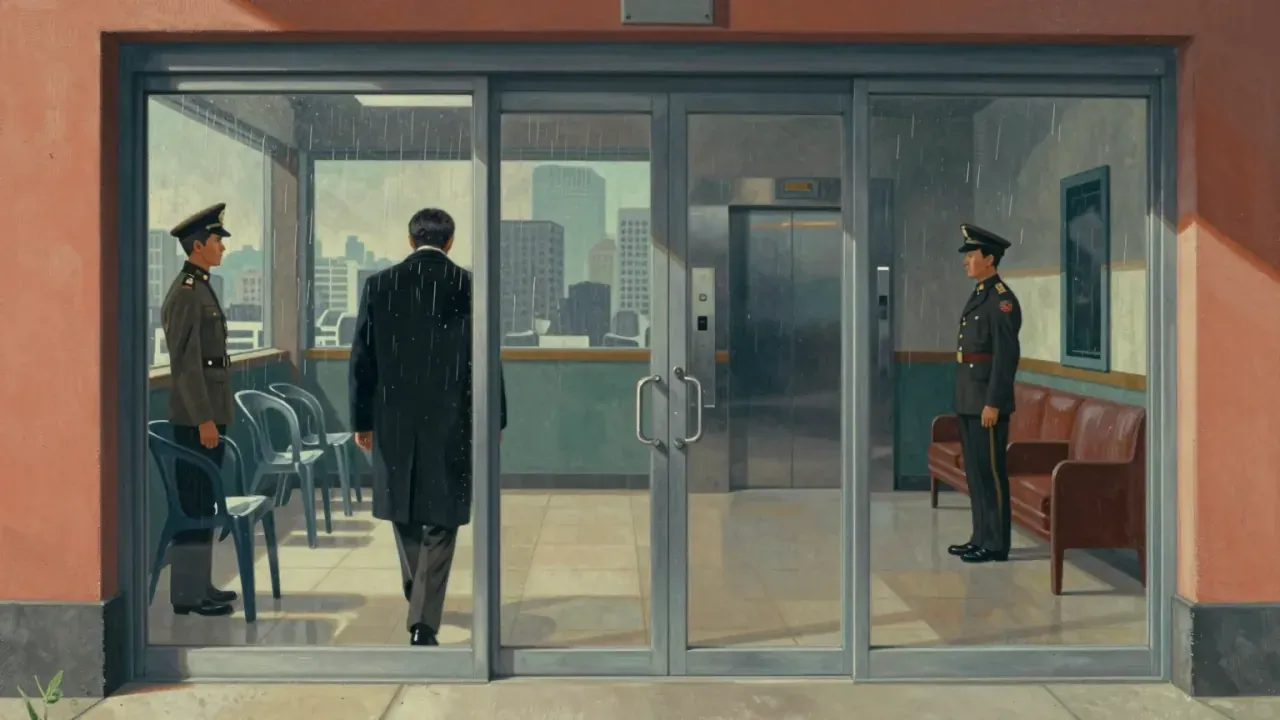
Two women, fifty years apart
Heat and Dust is a dual-period drama that traces parallel acts of transgression across fifty years: Olivia’s affair with an Indian Nawab in 1920s British India, and her great-niece Anne’s parallel entanglement in 1982 Satipur. It is not a romance in the conventional sense, nor a critique of empire dressed as one; it is an adaptation of Ruth Prawer Jhabvala’s Booker Prize–winning novel, written by her for the screen, and structured as a slow, deliberate counterpoint between two women who choose rupture over accommodation. The film does not seek to resolve colonial tension through narrative catharsis, but to hold it in suspension — in the heat, in the dust, in the silence between sentences. Its ambition lies in restraint: to let distance do the work of comparison, to trust the viewer to notice how little changes when the skin, the decade or the passport shifts. It treats history not as progression but as recurrence — not as lesson, but as echo.
The look of it
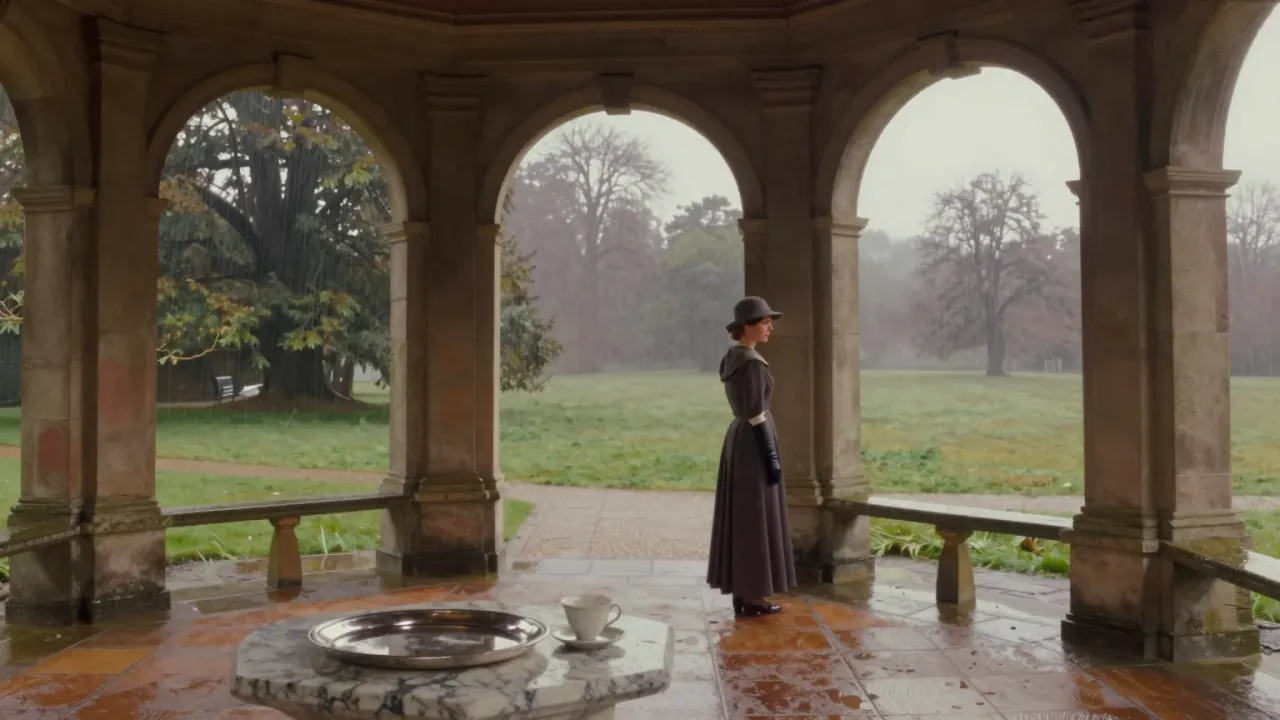
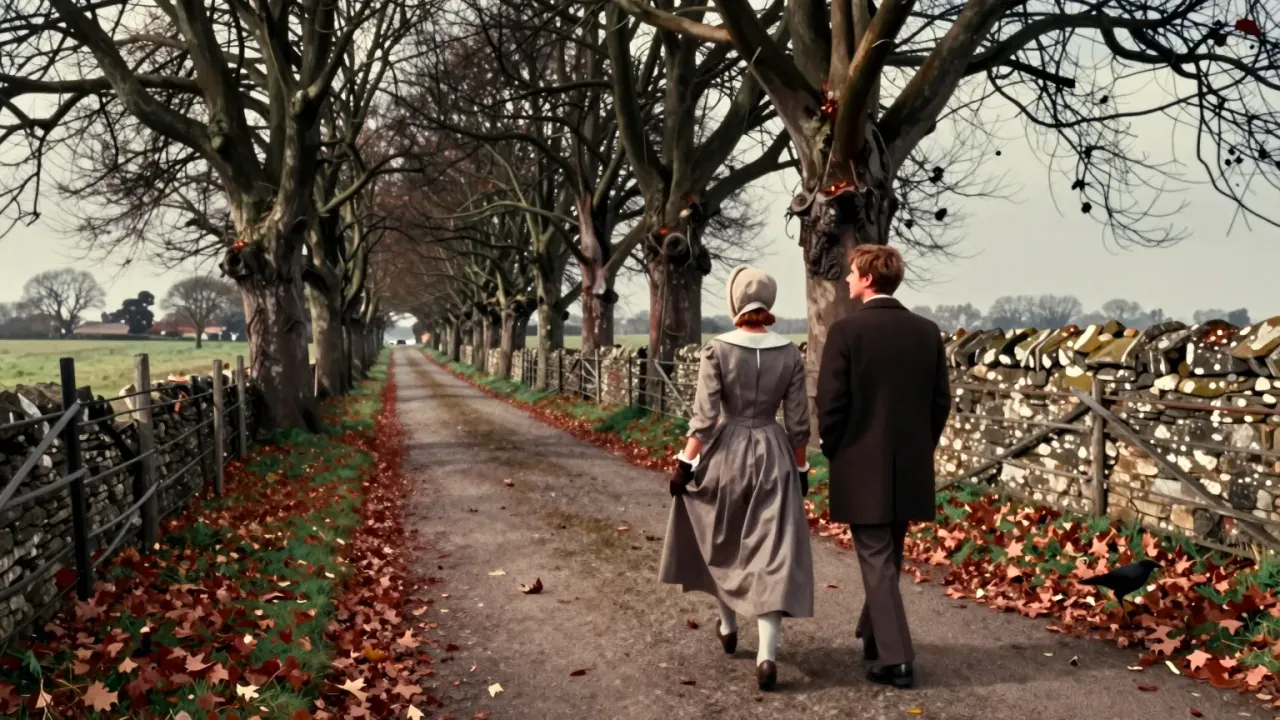
The story unfolds through intercut timelines, anchored by Julie Christie’s quiet, watchful Anne and Greta Scacchi’s restless, luminous Olivia. Walter Lassally’s cinematography avoids exoticism: his frames are composed, uncluttered, often held long enough for light to shift on a wall or dust to settle in a sunbeam. There is no score swell at moments of revelation; Richard Robbins’ music enters sparingly, like a guest who knows when to leave. Editing by Humphrey Dixon maintains rhythmic parity between past and present — neither timeline rushes to explain the other. Performances avoid declamation: Shashi Kapoor’s Nawab is charm layered over calculation, Zakir Hussain’s Inder Lal is courtesy edged with fatigue, Madhur Jaffrey’s Begum radiates authority without volume. The script gives characters space to hesitate, to look away, to speak in half-sentences — a formal choice that mirrors the film’s central preoccupation with what remains unsaid across cultures, generations and languages.
What stays unsaid
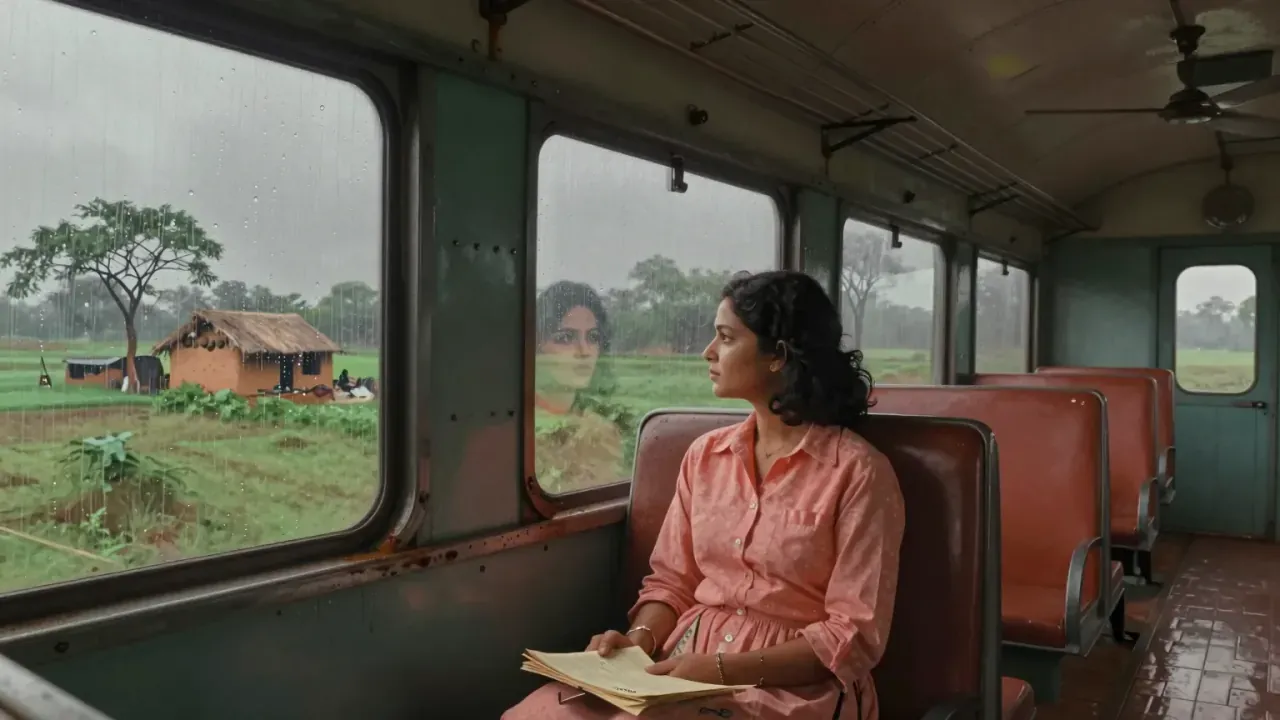
What lands is the film’s refusal to flatter either its Englishwomen or their Indian counterparts. Olivia’s rebellion is neither noble nor naive — it is impulsive, self-absorbed, materially enabled by colonial privilege even as it rejects its mores. Anne’s pilgrimage is similarly ambiguous: her search for truth about Olivia doubles as an evasion of her own life in England. The film trusts its audience to sit with discomfort — in Olivia’s abortion, in Anne’s decision not to have one, in the Nawab’s political marginalisation, in Inder Lal’s quiet complicity in both systems. The visual discipline pays off: a single shot of Olivia stepping barefoot into a courtyard pool, or Anne watching monsoon rain blur the glass of a train window, carries more weight than exposition ever could. These moments land because they are earned by accumulation, not emphasis — because the film treats attention as a moral act, not a stylistic flourish.
Where the frame tilts
What does not land is the framing device’s structural asymmetry. Anne’s 1982 thread lacks the same density of social texture as Olivia’s: her encounters feel curated rather than lived-in — Chid the American sanyasi reads as allegory rather than character, and Harry Hamilton-Paul’s recollections, though delivered with grace by Nickolas Grace, function more as exposition than memory. The film’s resistance to psychological explanation works against itself in places: Douglas Rivers remains emotionally opaque beyond his civil service bearing, and the Nawab’s inner life is suggested only through gesture and implication, which risks flattening him into symbol. Some viewers will find the pacing too deliberate — long takes, minimal dialogue, withheld motivation — especially where the script assumes familiarity with the Raj’s bureaucratic hierarchies or the unspoken rules of Anglo-Indian domesticity. The film does not fail these viewers; it simply does not address them.
What the dust covers
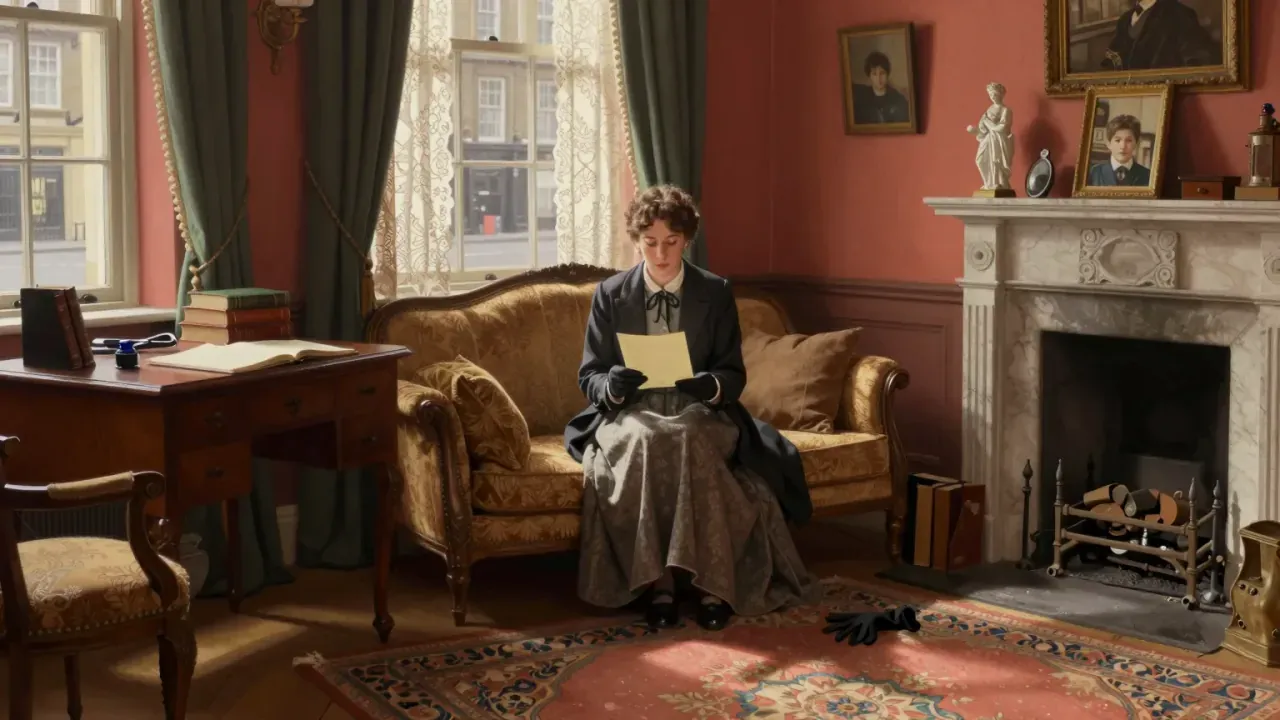
The themes that matter are inheritance and erasure — not just of blood or property, but of voice, agency and consequence. Olivia’s letters survive, but their meaning is unstable; Anne reconstructs a life from fragments, yet her own choices replicate rather than revise the pattern. Colonialism appears not as backdrop but as grammar: it shapes how desire is named, how risk is distributed, how silence is enforced. The film interrogates translation — of language, of feeling, of power — not as failure but as inevitable condition. Class operates as quietly as caste: Olivia moves between worlds because she can; Anne does so because she inherits the right to move, not the knowledge of how to stay. Sexuality is treated as terrain where culture and individual will collide — never liberated, never condemned, always mediated. The heat and dust are literal, yes, but also metaphors for what obscures clarity: time, bias, translation, memory, the sheer physical weight of history pressing down on the present.
Who it waits for
This film is for viewers who value precision over propulsion, who find tension in stillness and resonance in repetition. It suits those familiar with Merchant Ivory’s earlier work — The Householder, Shakespeare Wallah — or with period fiction that resists nostalgia, such as A Passage to India or The Jewel in the Crown. It is not for those who require narrative closure, moral certainty or emotional signposting. Viewers who expect historical drama to clarify rather than complicate will find it withholding. Those who associate ‘India’ on screen with spectacle or spiritual uplift will be disappointed: this India is administrative, humid, bureaucratically constrained. The film assumes patience — not as virtue, but as prerequisite. Someone who watches for plot alone will leave baffled; someone who watches for texture, rhythm and subtext will find it rich. A change in editing tempo or a stronger anchoring of Anne’s interiority would make it more accessible without sacrificing its rigour.
Why it holds your time
Yes, it is worth your evening — provided you approach it as a sustained act of attention, not passive consumption. Its 133 minutes unfold like a slow-developing photograph: details emerge only if you hold the frame steady. It rewards rewatching not for hidden clues but for shifts in emphasis — how a glance gains weight on second viewing, how a line of dialogue acquires irony once context settles. It is not entertainment in the transactional sense, but it is deeply absorbing for those willing to meet it on its terms. Those who dislike ambiguity, who prefer protagonists with clear arcs or stories that resolve cleanly, will find it frustrating. Its value lies in its refusal to simplify — in showing how colonialism endures not in statues or speeches, but in the inherited grammar of choice, silence and consequence. To dismiss it as ‘slow’ is to mistake its method for its message.