filmbriefs
Topic

Gothic

Ruin, dread and the sublime, from the novel to the screen.

20
in film
13:00
average
260 min
in total
32
across the network
Gothic across the network →
All briefs20
13:00

Frankenstein

Guillermo del Toro · 2025

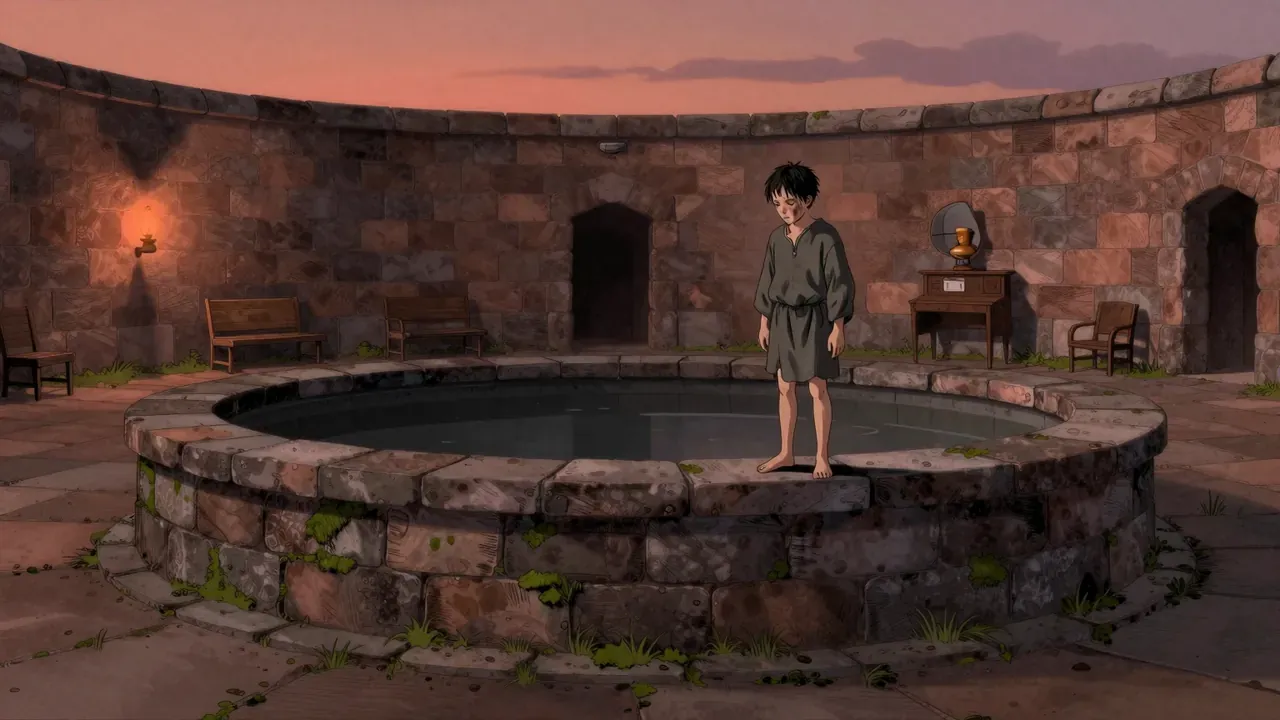
Guillermo del Toro’s 2025 Frankenstein reimagines Mary Shelley’s novel as a morally dense, visually austere drama centred on Victor Frankenstein (Oscar Isaac) and his Creature (Jacob Elordi). Shot by Dan Laustsen and scored by Alexandre Desplat, it trades genre thrills for theological gravity, emphasising responsibility, language, and embodied consequence. Though its pacing falters mid-film and some supporting roles lack depth, its production design, performances, and thematic coherence make it a singular, sombre achievement—less monster movie than sacred rite.
13:00

The Devil's Backbone

Guillermo del Toro · 2001

Set in a remote Spanish orphanage during the final months of the Civil War, The Devil's Backbone follows a newly arrived boy who encounters the ghost of a murdered peer. Directed by Guillermo del Toro and shot by Guillermo Navarro, the film uses gothic horror conventions to explore inheritance, trauma, and moral accountability. Its restrained performances, muted palette, and deliberate pacing build tension not through shocks but through accumulated silence and implication. Though some narrative devices feel functional rather than felt, its emotional and historical precision makes it a singular entry in both Spanish cinema and the ghost-story tradition.

13:00

The Innocents

Jack Clayton · 1961

Jack Clayton’s 1961 adaptation of Henry James’s The Turn of the Screw sustains a rigorous ambiguity: are the ghosts real, or projections of the governess’s repressed psyche? Shot by Freddie Francis in stark CinemaScope, scored by Georges Auric with early electronic textures, and carried almost entirely by Deborah Kerr’s tightly coiled performance, the film refuses resolution. Its power lies in what it withholds — no confirmation, no diagnosis, no moral anchor — making it a landmark of psychological horror and arthouse restraint.

13:00

The Night of the Hunter

Charles Laughton · 1955

Charles Laughton’s 1955 film adapts Davis Grubb’s novel into a Southern Gothic fable starring Robert Mitchum as a murderous preacher pursuing two children for hidden money. Shot by Stanley Cortez with expressionist lighting and deliberate pacing, it favours symbolic repetition over psychological realism. Though poorly received on release, it is now regarded as a landmark of arthouse thriller cinema.

13:00

The Others

Alejandro Amenábar · 2001

Set in 1945 Jersey, The Others follows Grace Stewart, a devout mother shielding her photosensitive children in a remote manor. When new servants arrive, strange occurrences mount — whispers, moving objects, unseen figures — until Grace uncovers a truth far more unsettling than ghosts. Directed and written by Alejandro Amenábar, it relies on atmosphere, performance and precise craft rather than shock or spectacle.

13:00

Valerie and Her Week of Wonders

Jaromil Jireš · 1970

Valerie and Her Week of Wonders (1970) is a 73-minute Czechoslovak surrealist fantasy directed by Jaromil Jireš, adapted from Vítězslav Nezval’s novel. Set in a dreamlike Renaissance town, it follows thirteen-year-old Valerie through a week of shifting identities, masked authorities, and uncanny transformations. Shot on location in Slavonice and at Barrandov Studios, with cinematography by Jan Čuřík and music by Luboš Fišer, it blends Gothic horror, eroticism and folklore without exposition or resolution. Its power lies in sustained atmosphere, precise design and the unblinking presence of its young lead.

13:00

Beetlejuice

Tim Burton · 1988

Beetlejuice (1988) is Tim Burton’s gothic comedy horror about a recently deceased couple who hire a chaotic bio-exorcist to scare away their home’s new occupants. With Michael Keaton, Alec Baldwin, Geena Davis, and Winona Ryder, it builds its world from deliberate artifice — stop-motion, saturated colour, Elfman’s calypso-infused score — and treats the afterlife as a malfunctioning bureaucracy. Its strength lies in tonal consistency and visual wit, not psychological realism or causal clarity.

13:00

Bride of Frankenstein

James Whale · 1935

James Whale’s 1935 Bride of Frankenstein refines the gothic horror of its predecessor into something stranger and more enduring: a stylised, ironic, deeply humane meditation on autonomy and complicity. With Boris Karloff, Elsa Lanchester and Ernest Thesiger at their most expressive, and John J. Mescall’s chiaroscuro cinematography and Franz Waxman’s unresolved score lending it formal rigour, the film sustains a unique tonal balance — part fable, part farce, part tragedy. Its reputation as a masterpiece rests not on scares, but on its precision, its patience and its refusal to resolve what it sets in motion.

13:00

Edward Scissorhands

Tim Burton · 1990

Edward Scissorhands (1990), directed by Tim Burton and written by Caroline Thompson, tells of an unfinished humanoid with scissor hands adopted by a suburban family. Johnny Depp stars opposite Winona Ryder, with Danny Elfman scoring and Bo Welch designing the iconic pastel suburb and Gothic mansion. It is a visually unified, deliberately paced fable about difference, empathy, and the quiet violence of assimilation — more mood piece than narrative engine.

13:00

Rebecca

Alfred Hitchcock · 1940

Alfred Hitchcock’s 1940 adaptation of Daphne du Maurier’s novel is a black-and-white psychological thriller about a young woman who marries a widowed aristocrat and moves into his Cornwall estate, Manderley — a house saturated with the memory of his first wife, Rebecca, who died under ambiguous circumstances. Though unseen, Rebecca dominates every room, every conversation, every glance. The film’s power lies in its restraint: its suspense is atmospheric, its horror psychological, its resolution earned not by revelation but by erosion of illusion.

13:00

Sleepy Hollow

Tim Burton · 1999

Tim Burton’s 1999 Sleepy Hollow reimagines Washington Irving’s tale as a painterly, studio-crafted horror fable. Johnny Depp plays Ichabod Crane, a forensic-minded constable investigating decapitations in an insular Hudson Valley village. With Emmanuel Lubezki’s moody cinematography, Rick Heinrichs’ Oscar-winning production design, and Danny Elfman’s brooding score, the film builds dread through saturated colour, deliberate artifice and tactile detail — not plot mechanics or psychological realism. Its strengths are visual and atmospheric; its weaknesses lie in structural looseness and underdeveloped relationships. It rewards patience with mood over momentum.

13:00

Stoker

Park Chan-wook · 2013

Park Chan-wook’s English-language debut is a Southern Gothic psychological thriller about an 18-year-old girl whose father’s death brings his enigmatic brother into her life. As buried family truths surface, her acute perception becomes both weapon and wound. Stylised cinematography, Clint Mansell’s score and restrained performances build a world where atmosphere carries more weight than exposition.

13:00

Sweeney Todd: The Demon Barber of Fleet Street

Tim Burton · 2007

Tim Burton’s 2007 adaptation of Sweeney Todd condenses Stephen Sondheim’s stage musical into a tightly wound Gothic drama. Starring Johnny Depp and Helena Bonham Carter, it follows a vengeful barber and his pie-making accomplice in a blood-soaked, desaturated Victorian London. With Dariusz Wolski’s cinematography, Dante Ferretti’s production design, and a ruthlessly edited score, it sustains a tone of operatic despair — prioritising psychological intensity over narrative breadth or musical spectacle.

13:00

Vampyr

Carl Theodor Dreyer · 1932

Carl Theodor Dreyer’s 1932 Vampyr is a Gothic horror film shot on location in France, starring amateur actor Nicolas de Gunzburg as Allan Gray, a student of the occult who enters a cursed village. With minimal dialogue, gauze-diffused cinematography by Rudolph Maté, and a sparse score by Wolfgang Zeller, it builds dread through atmosphere, not exposition. Adapted loosely from Sheridan Le Fanu, it treats vampirism as a perceptual condition — blurring boundaries between dream and wakefulness, self and other, presence and absence.

13:00

Coraline

Henry Selick · 2009

A girl finds a door to an alternate version of her home where everything, including her parents, is more attentive and colourful, until she learns the price. Henry Selick's 2009 stop-motion film, based on Neil Gaiman's novella, builds dread through craft rather than jump scares.

13:00

Corpse Bride

Tim Burton, Mike Johnson · 2005

Corpse Bride follows Victor, an anxious young man in an arranged marriage, who accidentally weds a murdered woman named Emily after placing a ring on what he thinks is a tree root, then must choose between her vivid Land of the Dead and his living fiancée. Co-directed by Tim Burton and Mike Johnson for Laika on a $40 million budget, shot on digital cameras rather than film, it grossed $118 million and drew three award nominations.

13:00

Sleeping Beauty

Clyde Geronimi, Les Clark, Eric Larson, Wolfgang Reitherman · 1959

Princess Aurora is cursed at birth to die by a spinning wheel's needle, saved instead by three fairies who soften the curse to a deep sleep breakable only by true love's kiss, while the evil fairy Maleficent works to see the original curse fulfilled anyway. Designed around Eyvind Earle's tapestry-like visual style, drawing on pre-Renaissance European art, and scored using Tchaikovsky's 1889 ballet, the film took nearly ten years and $6 million to complete, making it Disney's most expensive animated feature at the time — and, on release, one of its most costly failures.

13:00

Snow White and the Seven Dwarfs

David Hand, William Cottrell, Wilfred Jackson, Larry Morey · 1937

Snow White and the Seven Dwarfs follows the fairy-tale plot closely — a jealous queen, a poisoned apple, seven miners who take in a runaway princess — but its significance is in what it proved possible: a full-length animated feature with distinct character personalities, made for $1.5 million after two years of story meetings that discarded far more ideas than they kept. Industry figures dismissed it in advance as Disney's Folly; it opened at the Carthay Circle Theatre in December 1937 and changed what a cartoon was allowed to be.

13:00

The Nightmare Before Christmas

Henry Selick · 1993

The Nightmare Before Christmas follows Jack Skellington, Halloween Town's bored king, as he discovers Christmas Town and decides, badly, that he can run the holiday himself. Henry Selick directed the stop-motion musical from a story and poem by Tim Burton, with songs and score by Danny Elfman, who also voices Jack's singing parts. Released under Disney's Touchstone label rather than the studio's own name, it grossed $75.1 million and earned an Academy Award nomination for Best Visual Effects, a first for an animated film.

13:00

Wallace & Gromit: The Curse of the Were-Rabbit

Nick Park, Steve Box · 2005

Wallace & Gromit: The Curse of the Were-Rabbit expands the stop-motion duo into a monster-movie parody, following the pair's pest-control business as a mysterious Were-Rabbit starts terrorizing a town's giant-vegetable competition. Directed by Nick Park and Steve Box for Aardman and DreamWorks Animation on a $30 million budget, it grossed $194 million and became the first stop-motion film to win the Academy Award for Best Animated Feature.