filmbriefs
Topic

Espionage

The trade in other people's secrets.

18
in film
13:00
average
234 min
in total
31
across the network
Espionage across the network →
All briefs18
13:00

Army of Shadows

Jean-Pierre Melville · 1969

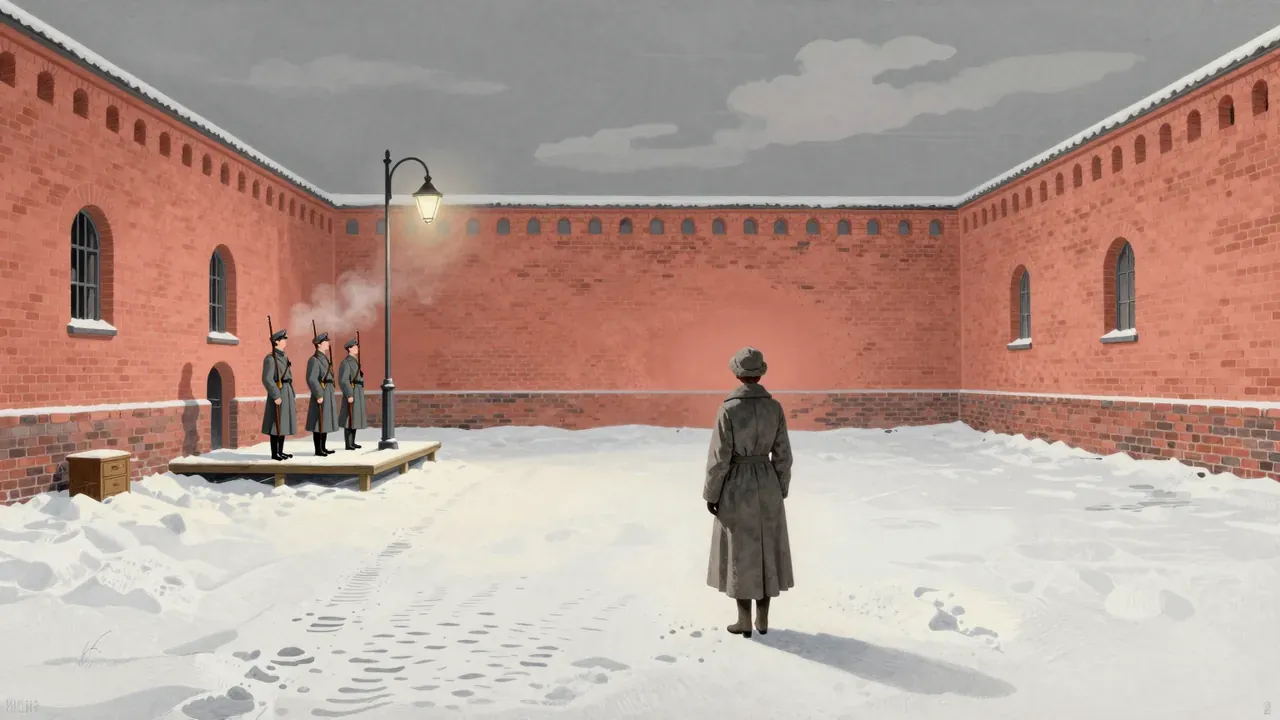
Jean-Pierre Melville’s 1969 Army of Shadows is a stark, procedural drama about French Resistance operatives during Nazi occupation. Based on Joseph Kessel’s memoir, it follows Philippe Gerbier and his cell as they navigate safe houses, betrayals, failed rescues, and grim moral calculations — all rendered with clinical precision, minimal score, and unvarnished performances. Released to indifference in 1969, it was rediscovered and acclaimed after its 2006 restoration.

13:00

Charade

Stanley Donen · 1963

Stanley Donen’s 1963 Charade pairs Cary Grant and Audrey Hepburn in a Paris-set romantic thriller about stolen wartime gold, shifting identities and a widow who inherits confusion. Written by Peter Stone and shot by Charles Lang, it balances suspense, banter and visual clarity without overreaching. Its strengths lie in structure, performance and tone; its limits in psychological depth and thematic ambition. It remains a masterclass in mid-century studio craft.

13:00

Dishonored

Josef von Sternberg · 1931

A 1931 Paramount drama directed by Josef von Sternberg, starring Marlene Dietrich as Marie Kolverer, a Viennese pianist turned secret agent whose loyalty, love, and eventual execution unfold with stark visual discipline and minimal exposition. Lee Garmes’ cinematography and Travis Banton’s costumes anchor a film less concerned with espionage mechanics than with dignity in extremis.

13:00

Foreign Correspondent

Alfred Hitchcock · 1940

Alfred Hitchcock’s 1940 thriller follows an American reporter uncovering a fascist conspiracy in pre-war Europe. Made under urgent political conditions and reshaped mid-production to mirror real-world events, it prioritises procedural tension and moral clarity over psychological depth or historical fidelity. Its strengths lie in set-piece choreography, studio-crafted suspense, and a prescient final sequence set in a besieged radio station.

13:00

Hopscotch

Ronald Neame · 1980

Hopscotch (1980) is a low-key, Mozart-scored spy comedy starring Walter Matthau as Miles Kendig, a CIA veteran who retaliates against forced retirement by writing and publishing an explosive memoir — mailing chapters to rival intelligence agencies across Europe and the US. Directed by Ronald Neame and adapted by Bryan Forbes and Brian Garfield, it trades thrills for procedural wit, treating espionage as bureaucratic farce rather than mortal peril. Its pleasures lie in Matthau’s dry authority, Arthur Ibbetson’s unshowy camerawork, and Ian Fraser’s precisely deployed classical score.

13:00

Ministry of Fear

Fritz Lang · 1944

Fritz Lang’s 1944 Ministry of Fear adapts Graham Greene’s novel into a tightly paced spy thriller set in Blitz-era London. Ray Milland plays Stephen Neale, a man recently released from a mental asylum who stumbles into a Nazi espionage ring masquerading as a charitable organisation. The film prioritises procedural suspense and period texture over the novel’s deep psychological guilt, delivering a lean, atmospheric, studio-era noir anchored in tangible wartime detail.

13:00

Night Train to Munich

Carol Reed, Edward Black, Sidney Gilliat, Frank Launder · 1940

Night Train to Munich (1940) is a British spy thriller directed by Carol Reed, written by Sidney Gilliat and Frank Launder. It follows a British agent’s mission to rescue a Czech scientist and his daughter from Nazi custody, culminating in a tense train journey to Munich and a daring escape across the Alps. Starring Margaret Lockwood and Rex Harrison, it balances suspense with wry humour and prioritises plot logic over psychological depth or historical detail.

13:00

Notorious

Alfred Hitchcock · 1946

Alfred Hitchcock’s 1946 spy thriller follows an American agent who recruits the daughter of a Nazi sympathiser to infiltrate a German exile network in Rio. What unfolds is less a tale of espionage than a precise, emotionally restrained study of love under surveillance — where every glance is tactical, every touch conditional, and every silence charged with consequence. Shot on RKO soundstages with meticulous control, it relies on performance, composition, and pacing to build tension without action.

13:00

Samurai Spy

Masahiro Shinoda · 1965

Masahiro Shinoda’s 1965 Samurai Spy follows ninja spy Sasuke Sarutobi amid the unstable truce after Sekigahara. Drawn reluctantly into a web of double agents working for Tokugawa and Toyotomi factions, Sasuke navigates shifting loyalties, unverifiable identities, and pervasive distrust. With restrained performances, Kazuo Miyagawa’s chiaroscuro cinematography, and Tōru Takemitsu’s sparse, haunting score, the film builds tension through ambiguity rather than action. It is less a tale of heroic infiltration than a study in exhaustion, institutional compromise, and the quiet collapse of certainty in the service of power.

13:00

The In-Laws

Arthur Hiller · 1979

The In-Laws (1979) pairs Alan Arkin and Peter Falk as fathers-in-law drawn into international intrigue when a mild-mannered dentist is swept up by his future son-in-law’s seemingly unhinged CIA operative father. Written by Andrew Bergman and directed by Arthur Hiller, it sustains a high-wire act of farcical escalation grounded entirely in character logic — not plot mechanics — and remains a benchmark for odd-couple comedy built on timing, contrast, and unwavering commitment to its central conceit.

13:00

The Lady Vanishes

Alfred Hitchcock · 1938

Alfred Hitchcock’s 1938 *The Lady Vanishes* follows a young woman who discovers her fellow passenger has vanished — and that no one else remembers her. Set aboard a train crossing a fictional Balkan country, the film uses wit, tight plotting and psychological precision to explore trust, testimony and the fragility of shared reality. Produced by Edward Black for Gainsborough Pictures, it remains a benchmark of British suspense.

13:00

The Man Who Knew Too Much

Alfred Hitchcock · 1934

Alfred Hitchcock’s 1934 British thriller follows a couple who uncover an assassination plot while on holiday in Switzerland, then race to stop it in London — all without police help. Built on tight pacing, precise editing, and Arthur Benjamin’s Storm Clouds Cantata, it prioritises cause-and-effect over psychology, domestic stakes over geopolitical spectacle. Though leaner and less polished than Hitchcock’s later work, its structural rigour and unwavering focus make it a masterclass in economical suspense.

13:00

The Rock

Michael Bay · 1996

The Rock is a 1996 action thriller directed by Michael Bay, set on Alcatraz Island, where a rogue Marine general threatens San Francisco with VX gas. An FBI chemist and a retired SAS operative must infiltrate the prison to disarm the rockets. Anchored by Sean Connery and Nicolas Cage, it prioritises spatial logic, procedural detail and moral calibration over political complexity or stylistic experimentation.

13:00

The Spy Who Came in from the Cold

Martin Ritt, Paul Dehn, Guy Trosper · 1965

A 1965 British spy film adapted from John le Carré’s novel, following MI6 agent Alec Leamas as he stages a defection to East Germany. Directed by Martin Ritt and shot by Oswald Morris, it trades action for atmosphere, using restrained performances, deliberate pacing, and a muted palette to expose the hollowness of Cold War certainties. Richard Burton anchors a cast including Claire Bloom and Oskar Werner, while Sol Kaplan’s sparse score and Anthony Harvey’s unhurried editing deepen its sense of procedural dread.

13:00

Nikita

Luc Besson · 1990

A convicted junkie is erased from official record and retrained as a government assassin. Under the supervision of a shadowy agency, she masters weapons, languages and deception — then begins a fragile relationship with a man who knows nothing of her past. When duty and desire collide, she must choose between two irreconcilable lives. Luc Besson’s 1990 French thriller is a study in control, performance and the cost of competence.

13:00

Pickup on South Street

Samuel Fuller · 1953

Samuel Fuller’s 1953 thriller follows a pickpocket who steals microfilm containing state secrets, dragging a disillusioned courier, a cynical informant, and weary detectives into a collision of Cold War paranoia and New York street logic. Shot with documentary restraint by Joseph MacDonald and driven by terse, unsentimental performances — especially Thelma Ritter’s Oscar-nominated turn — it treats ideology as incidental to survival, and patriotism as a negotiable commodity.

13:00

The 39 Steps

Alfred Hitchcock · 1935

Alfred Hitchcock’s 1935 adaptation of John Buchan’s novel is a foundational British spy thriller: Robert Donat plays Richard Hannay, a man falsely accused who flees across England and Scotland pursued by spies and police alike. Shot by Bernard Knowles and edited by Derek Twist, it relies on geography, rhythm and understated performance rather than exposition or spectacle. Though it departs significantly from the source, it established core Hitchcock tropes — the innocent man on the run, the MacGuffin, the public-space climax — and remains a masterclass in classical suspense construction.

13:00

Zero Dark Thirty

Kathryn Bigelow · 2012

Zero Dark Thirty follows CIA analyst Maya across ten years of intelligence work leading to the 2011 raid on Osama bin Laden’s Abbottabad compound. Directed by Kathryn Bigelow and written by Mark Boal, it foregrounds process over personality, using chronology, repetition, and restraint to depict a hunt defined by uncertainty, attrition, and contested methods. Its strengths lie in its procedural fidelity and understated performances; its weaknesses stem from its refusal to contextualise torture or reckon with the broader consequences of the operation.