filmbriefs
Topic

China

A civilisation that keeps outlasting the people who declare it finished.

13
in film
13:00
average
169 min
in total
109
across the network
China across the network →
All briefs13
13:00

Dim Sum: A Little Bit of Heart

Wayne Wang · 1985

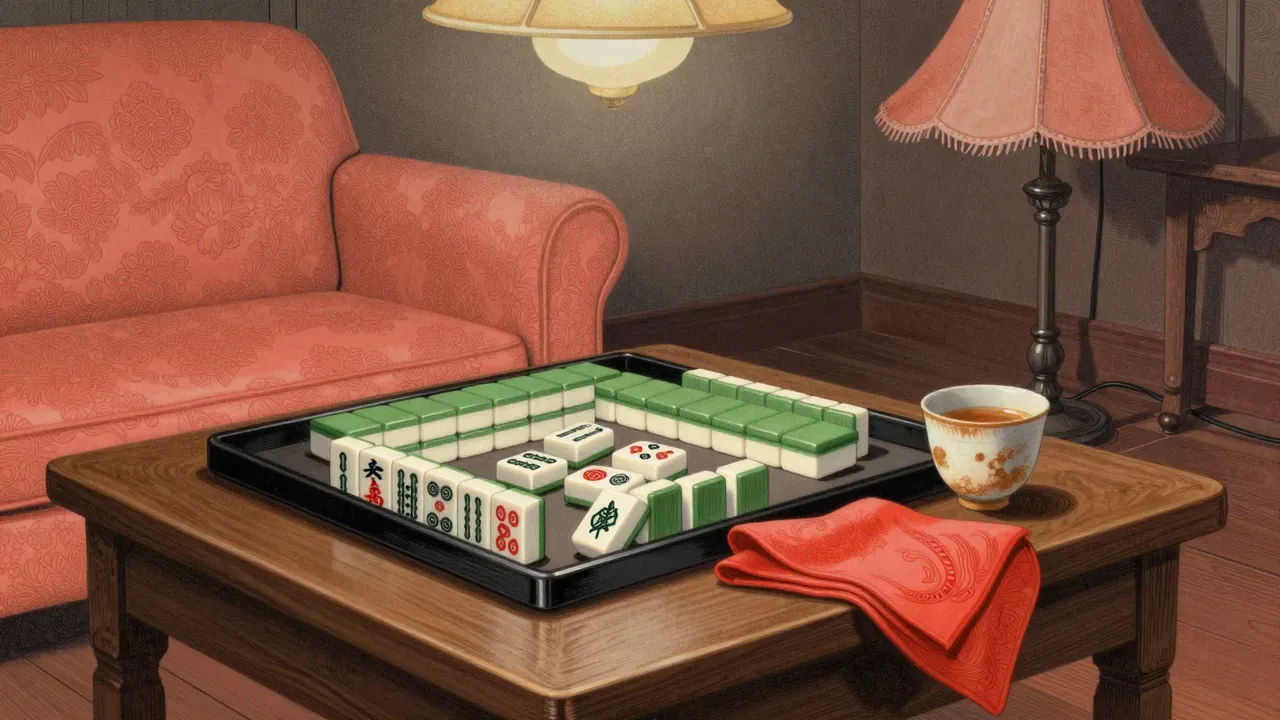
Dim Sum: A Little Bit of Heart (1985), directed by Wayne Wang, follows Julia, a Chinese immigrant widow in San Francisco, as she navigates the Lunar New Year amid a fortune-teller’s prediction of her death. With gentle precision, the film observes her efforts to arrange her daughter’s marriage and revisit China, all within the rhythms of family meals, mahjong games, and unspoken affection. Starring Cora Miao, Victor Wong, Joan Chen, and Amy Hill, it is a restrained, dialogue-driven drama grounded in behavioural realism and cultural specificity.
13:00

Farewell My Concubine

Chen Kaige · 1993

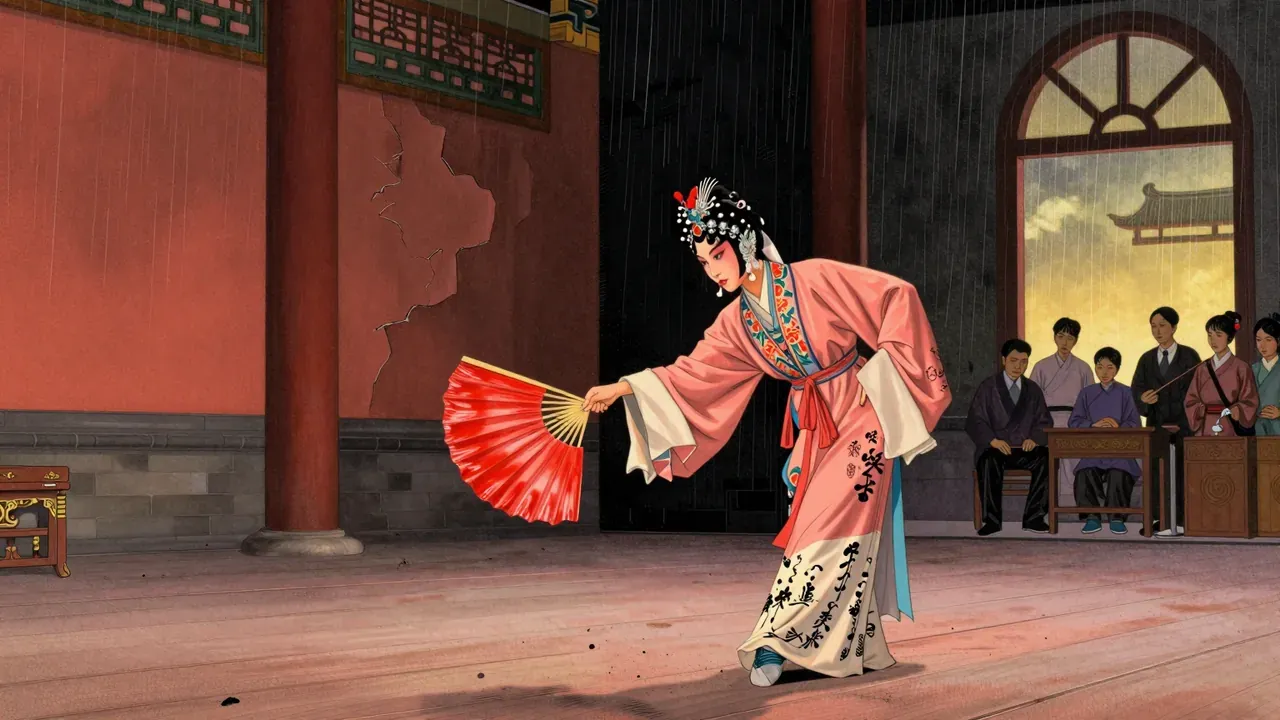
Farewell My Concubine follows two Peking opera performers across five decades of Chinese history. Their artistic partnership and fraught personal bond are tested by war, revolution, and ideological purges. Directed by Chen Kaige and starring Leslie Cheung, Zhang Fengyi, and Gong Li, it uses the formal rigour of opera as both subject and structure — tracing how discipline, repetition, and gesture sustain and ultimately shatter the self.

13:00

Once Upon a Time in China II

Tsui Hark · 1992

Tsui Hark’s 1992 sequel follows Jet Li’s Wong Fei-hung through 1895 Canton, where acupuncture seminars are stormed by cultists, British consulates are breached by Qing soldiers, and revolution is passed hand-to-hand on a scrap of cloth. With Arthur Wong’s restrained cinematography and Yuen Woo-ping’s grounded choreography, it frames wuxia not as fantasy but as embodied history — urgent, unresolved, and materially precise.

13:00

Once Upon a Time in China III

Tsui Hark · 1993

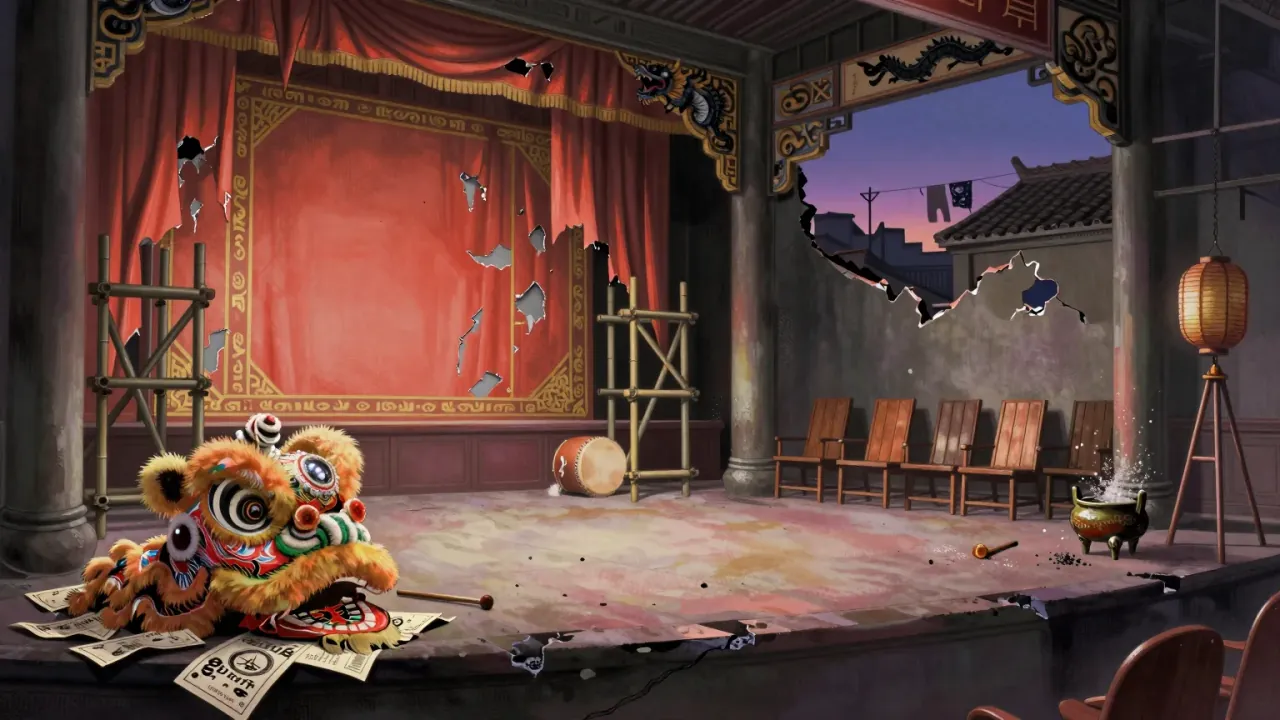
Once Upon a Time in China III (1993), directed by Tsui Hark, follows Wong Fei-hung to Beijing for a state-sponsored lion dance competition meant to restore Chinese prestige amid foreign imperialism. Jet Li anchors a tightly plotted narrative where choreography, moral choice, and historical constraint converge — culminating in a scaffold battle and a rejected medal. Andrew Lau’s cinematography and Marco Mak’s editing serve clarity over flourish. The film works best when action carries meaning and falters when plot relies on underdeveloped antagonists or external conspiracies.

13:00

Once Upon a Time in China IV

Yuen Bun · 1993

Once Upon a Time in China IV (1993) replaces Jet Li with Vincent Zhao and Tsui Hark with Yuen Bun, shifting focus from moral authority to symbolic performance. Set in Beijing during the Boxer Rebellion, it pits Wong Fei-hung against a xenophobic cult and an international lion dance competition rigged by colonial powers. Arthur Wong’s functional cinematography and Yuen Bun’s weapon-focused choreography anchor a thin script, where political stakes remain vague but physical detail — rope, lantern smoke, masked formations — carries real weight.

13:00

The Last Emperor

Bernardo Bertolucci · 1987

Bernardo Bertolucci’s 1987 epic traces the life of Puyi, last Emperor of China, from infant coronation in the Forbidden City to political re-education in a Communist prison. Shot on location in Beijing with unprecedented access, it uses scale, silence and ritual to explore how systems — imperial, colonial, fascist, communist — inscribe themselves on a single body. John Lone stars, supported by Joan Chen, Peter O'Toole and a cast of thousands. Vittorio Storaro’s cinematography and Ryuichi Sakamoto’s score anchor its formal rigour. It won nine Academy Awards, including Best Picture and Best Director.

13:00

Drunken Master II

Lau Kar-leung · 1994

Drunken Master II is a 1994 Hong Kong martial arts film directed by Lau Kar-leung and starring Jackie Chan as Wong Fei-hung. Set in early 20th-century Canton, it follows Wong’s moral and physical trial after accidentally acquiring an Imperial Seal targeted by British colonial agents. Built around formally distinct fight scenes — Hung Ga, Shaolin, Drunken Boxing, Taekwondo — the film anchors comedy in consequence and action in lineage. Its unflinching final image of Wong’s disability remains controversial, but its choreographic rigour and ethical structure mark it as a high point of the genre.

13:00

Raise the Red Lantern

Zhang Yimou · 1991

A 1991 Mandarin-language period drama directed by Zhang Yimou and adapted by Ni Zhen from Su Tong’s novella, Raise the Red Lantern follows Songlian (Gong Li), a young woman forced into becoming the fourth wife of a wealthy patriarch in 1920s Republican China. Set within the rigid confines of the Qiao Family Compound, the film charts her gradual subjection to a system where status is signalled by red lanterns, nightly visits, and foot massages — all governed by unspoken rules and silent hierarchies. Zhao Fei’s cinematography, Zhao Jiping’s score and Gong Li’s restrained performance cohere into a portrait of enclosure, repetition and eroded agency.

13:00

Once Upon a Time in China

Tsui Hark · 1991

Tsui Hark’s 1991 Hong Kong action-drama stars Jet Li as Wong Fei-hung, a physician and martial artist navigating colonial pressure, legal collapse and local corruption in late-19th-century Foshan. Built around his Po-chi-lam clinic, the film treats kung fu as inseparable from ethics, education and civic responsibility — with fights that serve character, not spectacle, and a climax resolved through perception, not firepower.

13:00

Red Cliff

John Woo · 2008

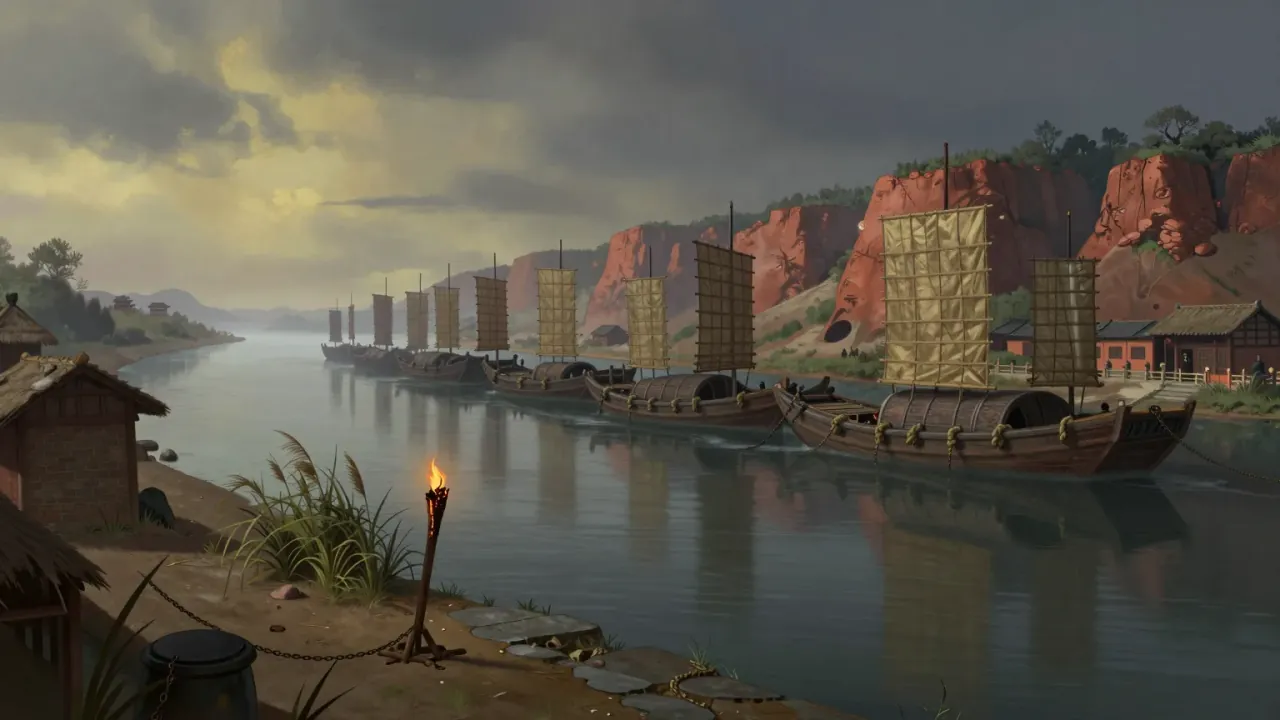
John Woo’s 2008–09 two-part epic Red Cliff adapts the Battle of Red Cliffs with deliberate historical latitude, prioritising psychological texture and tactical realism over strict fidelity. Shot across reservoirs and studios in China, it follows the fragile Sun–Liu alliance against Cao Cao’s imperial army, using wide compositions, restrained performances, and weather-driven strategy to ground myth in physical reality. The full 288-minute version demands—and rewards—attention to rhythm, gesture, and consequence.

13:00

Sunrise

Yu Benzheng · 1985

Sunrise (1985), directed by Yu Benzheng, is a 149-minute Chinese drama set in post-Mao Shanghai. Starring Fang Shu and Wang Shihuai, it traces the slow erosion of a marriage under economic strain, with Wang Fuli playing a complicating presence. Written by Wan Fang and shot by Zhu Yongde, it won the Hundred Flowers Award for Best Picture and the Huabiao Award for Outstanding Film. It bears no relation to the 1927 American silent film of the same name.

13:00

The Assassin

Hou Hsiao-Hsien · 2015

Hou Hsiao-Hsien’s 2015 wuxia film, set in the Tang dynasty, follows an assassin ordered to kill her cousin and former betrothed. Loosely based on a ninth-century story, it replaces genre conventions with austere composition, elliptical storytelling and profound stillness. Shot by Mark Lee Ping Bin and scored by Lim Giong, it won the Golden Horse Award for Best Feature Film and Best Director at Cannes.

13:00

The Story of Qiu Ju

Zhang Yimou · 1992

Set in rural Shaanxi in 1992, Zhang Yimou’s The Story of Qiu Ju follows a pregnant peasant woman’s dogged pursuit of a simple apology from the village headman who injured her husband. Shot with documentary restraint and anchored by Gong Li’s understated performance, the film charts her passage through layers of China’s evolving legal bureaucracy — not as satire or protest, but as a precise, unsentimental study of how institutions absorb, deflect, and ultimately misinterpret human need.