The purpose of the fist
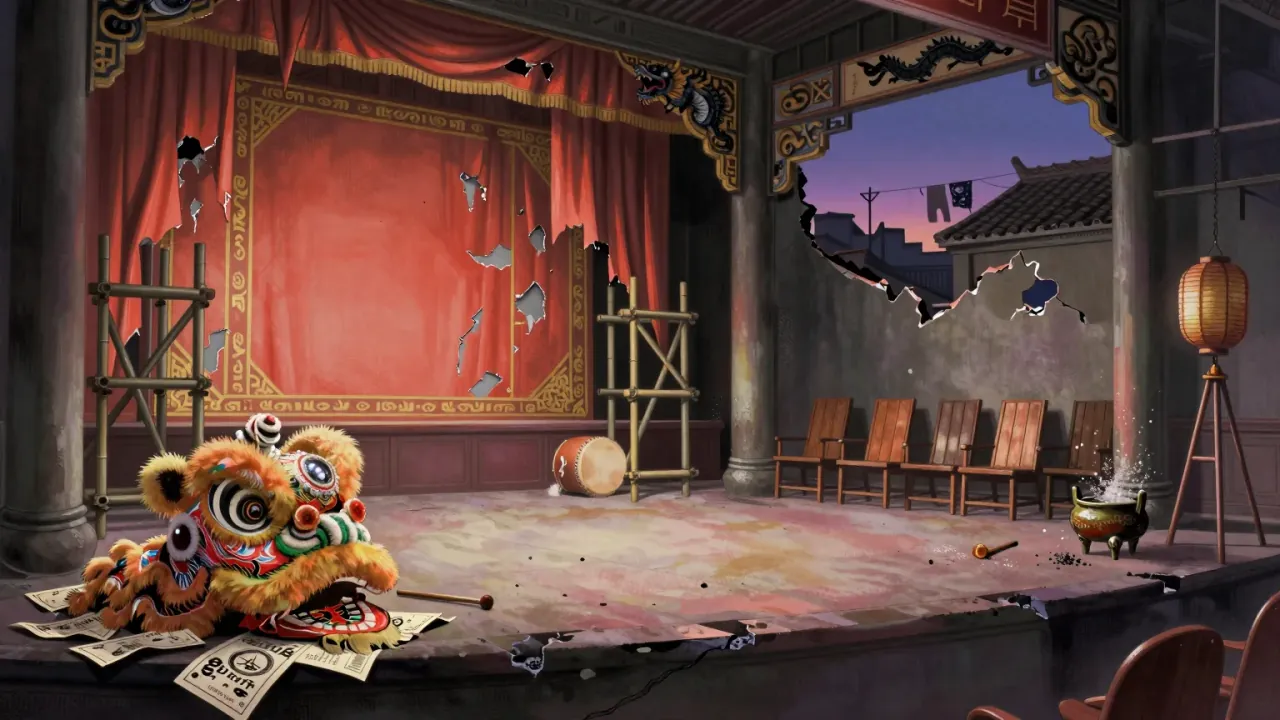
Once Upon a Time in China is a Hong Kong martial arts film set in late-Qing Foshan, built around Wong Fei-hung as physician, martial artist and reluctant symbol of cultural resilience. Tsui Hark directs, writes and produces; the film aims to reframe the wuxia genre not as mythic escapism but as grounded historical allegory — one where kung fu operates within real social hierarchies, colonial pressure, legal impotence and technological asymmetry. It treats martial skill as inseparable from ethics, pedagogy and civic duty: Wong teaches not just forms but restraint, diagnoses illness before fighting, and insists on testimony and due process even when the state abandons them. The film’s ambition is structural as much as thematic: to anchor spectacle in period texture, to make lion-dance rhythms and clinic interiors carry narrative weight, and to position Wong not as a lone hero but as a node in a network of apprentices, rivals, foreign agents and compromised officials. Its opening sequence — firecrackers mistaken for cannon fire, Wong finishing the lion dance mid-chaos — establishes that tension between tradition and misreading, performance and peril, as its governing condition. (158 words)
The look of it
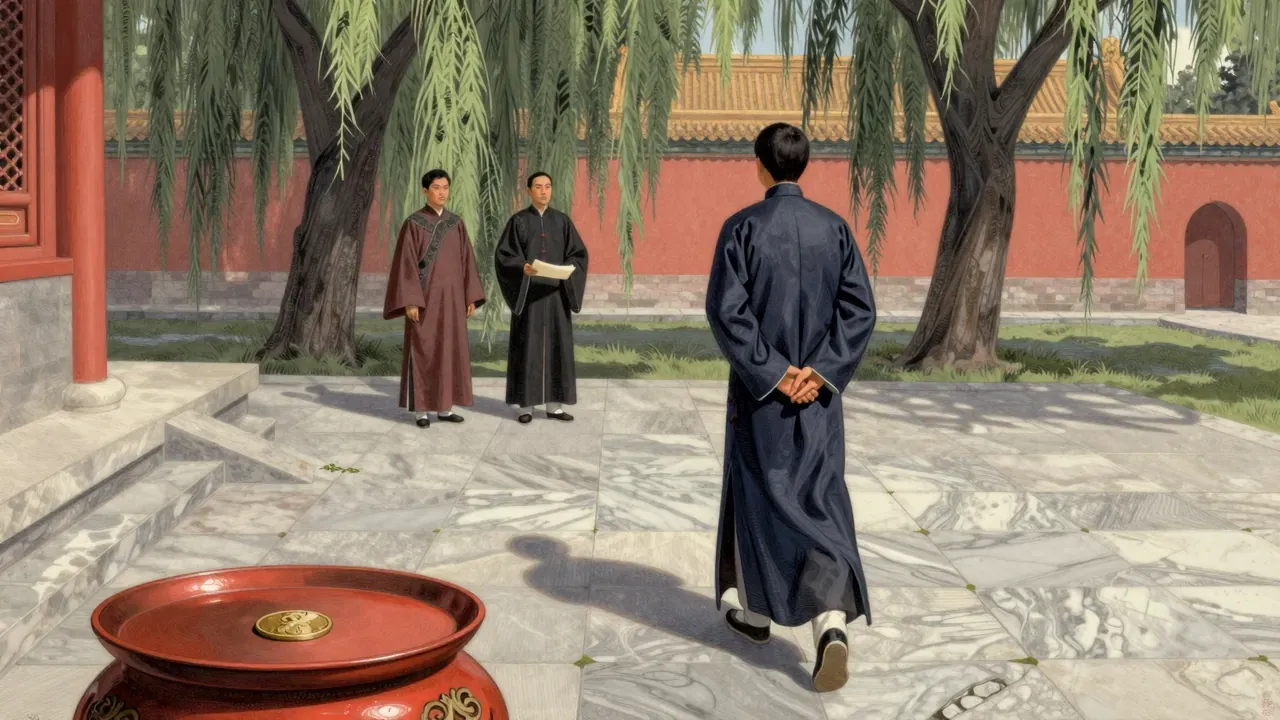
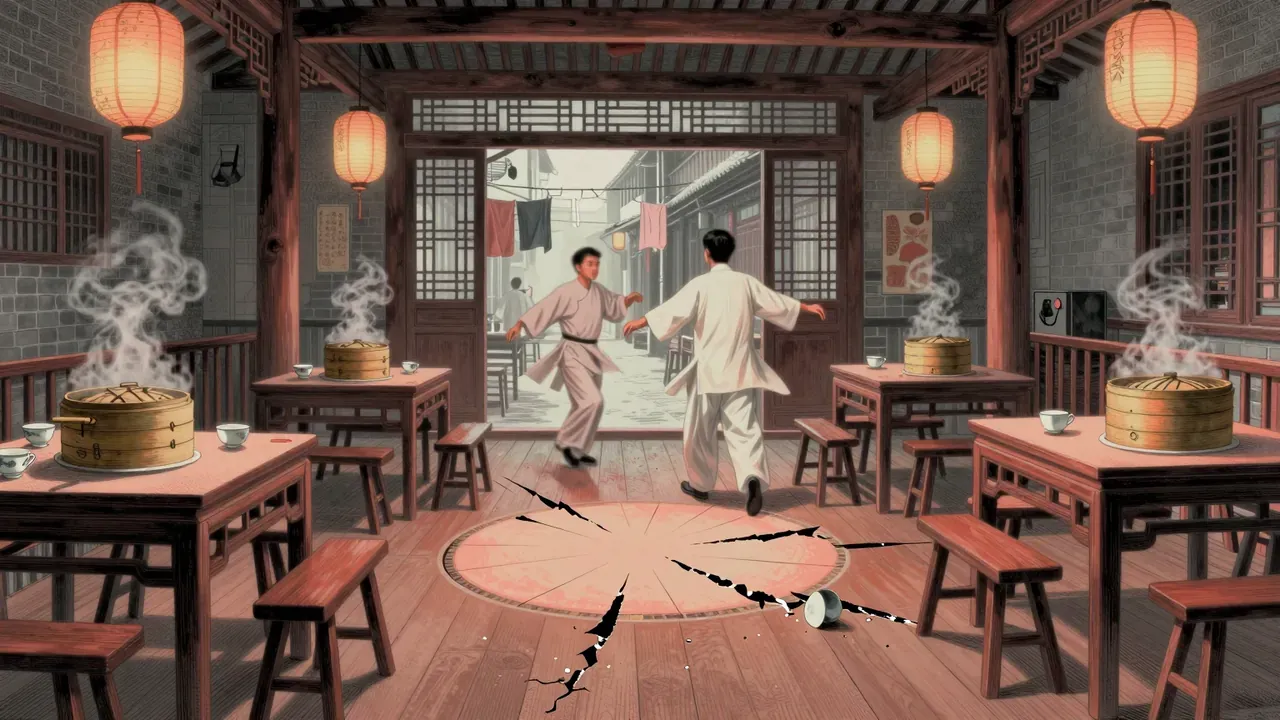
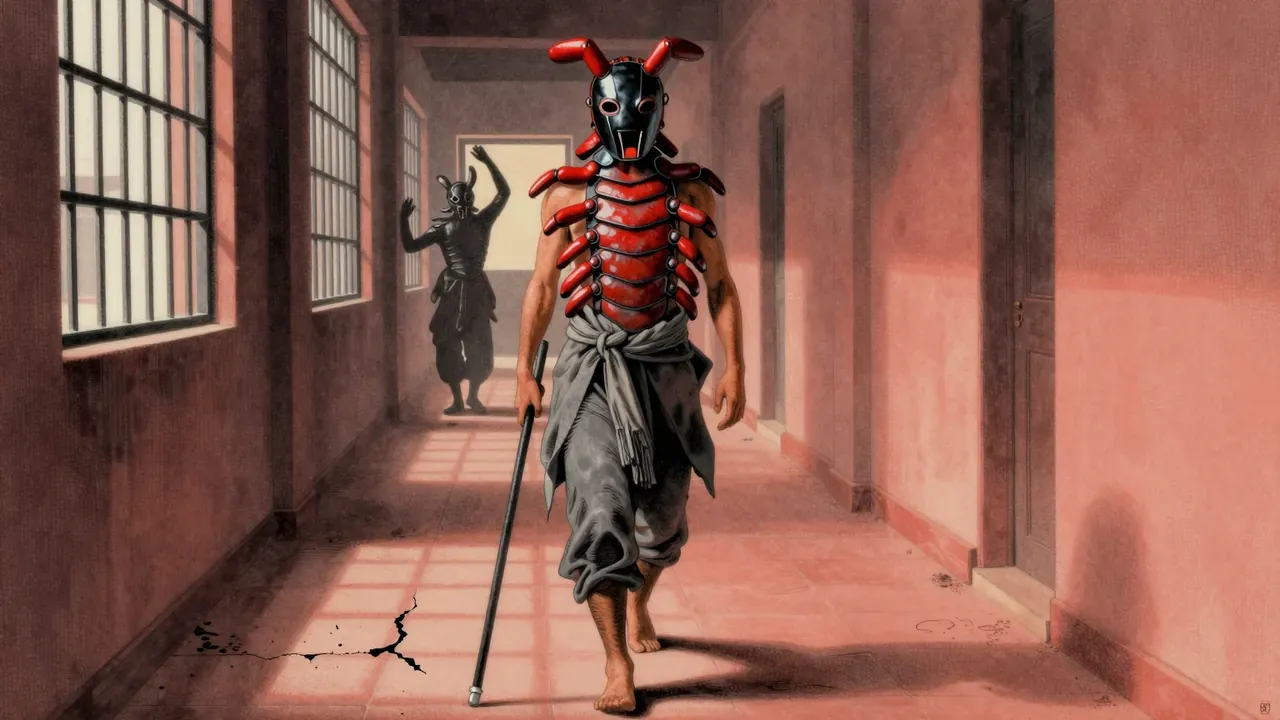
The story follows Wong Fei-hung’s entanglement with local militia, opera troupes, foreign businessmen and corrupt officials, all orbiting his Po-chi-lam clinic. Jet Li’s performance grounds the role in quiet authority and physical precision: he moves with economy, rarely raises his voice, and absorbs injury without flinching. Yuen Biao and Jacky Cheung offer contrasting energies — the former as loyal but volatile apprentice, the latter as earnest, awkward Leung Foon — while Rosamund Kwan’s 13th Aunt carries unspoken tension between modernity and convention. James Wong’s score uses erhu and percussion to underscore moral gravity rather than cue action. Marco Mak’s editing favours medium takes over rapid cuts, letting fight choreography unfold legibly: Wong’s victories are decisive but never effortless, and the camera stays close enough to register exhaustion, hesitation or calculation. Tsui Hark avoids stylised slow motion or wirework; fights are staged in cramped rooms, narrow alleys and smoke-filled theatres, their outcomes shaped by terrain, numbers and consequence. Even the climactic shipboard sequence resolves through tactical improvisation — flicking a bullet, not firing one — reinforcing the film’s insistence that mastery lies in perception and timing, not dominance. (159 words)
What sticks
What lands is the film’s sustained moral clarity amid institutional collapse. Wong’s refusal to abandon principle — whether treating enemies, insisting on witness testimony, or surrendering to prison rather than fleeing justice — gives the narrative backbone. The clinic, Po-chi-lam, functions as both literal and symbolic centre: a place of healing, instruction and quiet resistance where herbal cabinets and calligraphy scrolls coexist with staff who speak English, read Western medicine texts and debate colonialism. The Shaho Gang’s descent into human trafficking under foreign protection feels historically plausible, not cartoonish, because their corruption is transactional, not ideological. Even minor characters register: Wu Ma as the Jesuit priest who dies shielding Wong, Kent Cheng as the Governor whose pragmatism curdles into complicity. The film’s visual grammar supports this — Gordon Willis is not involved, but the cinematography (uncredited in the fact sheet) keeps interiors dim and textured, daylight harsh and unflattering, and crowds dense but legible. When Wong flicks the bullet into Jackson’s forehead, it reads not as fantasy but as the culmination of a hundred small choices about attention, leverage and consequence. (157 words)
Where it slips
What does not land is the romantic thread between Wong and 13th Aunt, which remains muted to the point of abstraction. Their mutual regard is established early but never deepens beyond glances and formal address; no scene tests or complicates the taboo beyond stating it. Leung Foon’s infatuation with her is more vividly rendered than Wong’s own feelings, making the central relationship feel like scaffolding rather than substance. ‘Iron Vest’ Yim’s arc also falters: his cheating is revealed too late, his motivation — fame and school-building — underserved by screen time, and his final line about guns reads less as thematic summation than convenient exposition. The film’s pacing sags in the middle third, particularly during Wong’s imprisonment and the interlude at the clinic after the theatre attack, where exposition accumulates without forward momentum. Some supporting characters blur: Yen Shi-Kwan and Yuen Cheung-yan appear in the cast list but leave no distinct impression, and the Shaho Gang’s leader lacks individuality beyond menace. The film’s commitment to historical texture occasionally chafes against narrative urgency — the Governor’s shifting loyalties, for instance, feel driven by plot necessity rather than psychological logic. These are not fatal flaws, but they dilute the emotional through-line. (159 words)
What it’s really about
The themes that matter are sovereignty of knowledge, the fragility of law under empire, and the labour of ethical continuity. Wong’s clinic is a site of epistemic resistance: he cross-references Chinese herbals with Western anatomy texts, treats patients regardless of affiliation, and insists on diagnosis before intervention — a quiet rebuttal to colonial claims of civilisational superiority. The unequal treaties inscribed on Liu Yongfu’s fan are not backdrop but active force: they enable Jackson’s trafficking ring, justify the Governor’s capitulation, and render Wong’s legal appeals futile. Martial skill here is inseparable from literacy — of language, medicine, politics and history — and the film treats teaching as political work: Wong’s apprentices absorb not just stances but standards. The recurring motif of translation — 13th Aunt speaking English, Bucktooth So interpreting for the escaped labourer, Wong reading treaty texts aloud — frames understanding as contested ground. Colonialism is shown not as monolithic oppression but as layered compromise: foreign capital, local gangsters and Qing officials collude not out of shared ideology but mutual interest. What endures is not victory but vigilance — the daily choice to treat, teach and testify despite the odds. (156 words)
Who it’s for
This film is for viewers who value historical texture over kinetic rush, who find moral deliberation as gripping as combat, and who accept that a martial arts film can be about bureaucracy, translation and clinic management as much as fists. It rewards attention to composition, gesture and silence. It is not for those seeking uncomplicated heroics, rapid-fire quips or stylistic flamboyance: Tsui Hark’s direction is controlled, not showy, and the action serves character, not vice versa. Someone who loved the operatic excess of A Touch of Zen or the surreal energy of Dragon Inn might find this restrained to the point of austerity. A viewer expecting Jet Li’s later, more acrobatic roles may be surprised by his stillness here. That said, the verdict holds only if one accepts the film’s terms: swap spectacle for substance, and the reward is cumulative, not immediate. Remove the historical grounding or the emphasis on pedagogy, and the film loses its spine — but those elements are non-negotiable, not optional extras. (158 words)
Is it worth your evening
Yes, it is worth your evening — not as light diversion but as sustained engagement with how integrity operates under pressure. Its 128 minutes accumulate weight: each clinic visit, each failed court hearing, each quiet exchange in Po-chi-lam reinforces the cost of consistency. The film earns its runtime by refusing shortcuts — Wong’s surrender, his imprisonment, the delayed rescue — all feel earned, not contrived. It works best watched whole, without pause, so its rhythms — the lion dance, the opera, the furnace roar — settle into the body. Those who dislike slow-burn moral realism or find period detail inert will not warm to it, but that is a preference, not a flaw. The film does not ask for admiration; it asks for alignment. If you believe competence, compassion and craft deserve equal billing with courage — and that a bullet flicked from finger to forehead is meaningful only because of everything that precedes it — then this is time well spent. It leaves no residue of hype, only the quiet hum of something solidly built. (159 words)