What it is
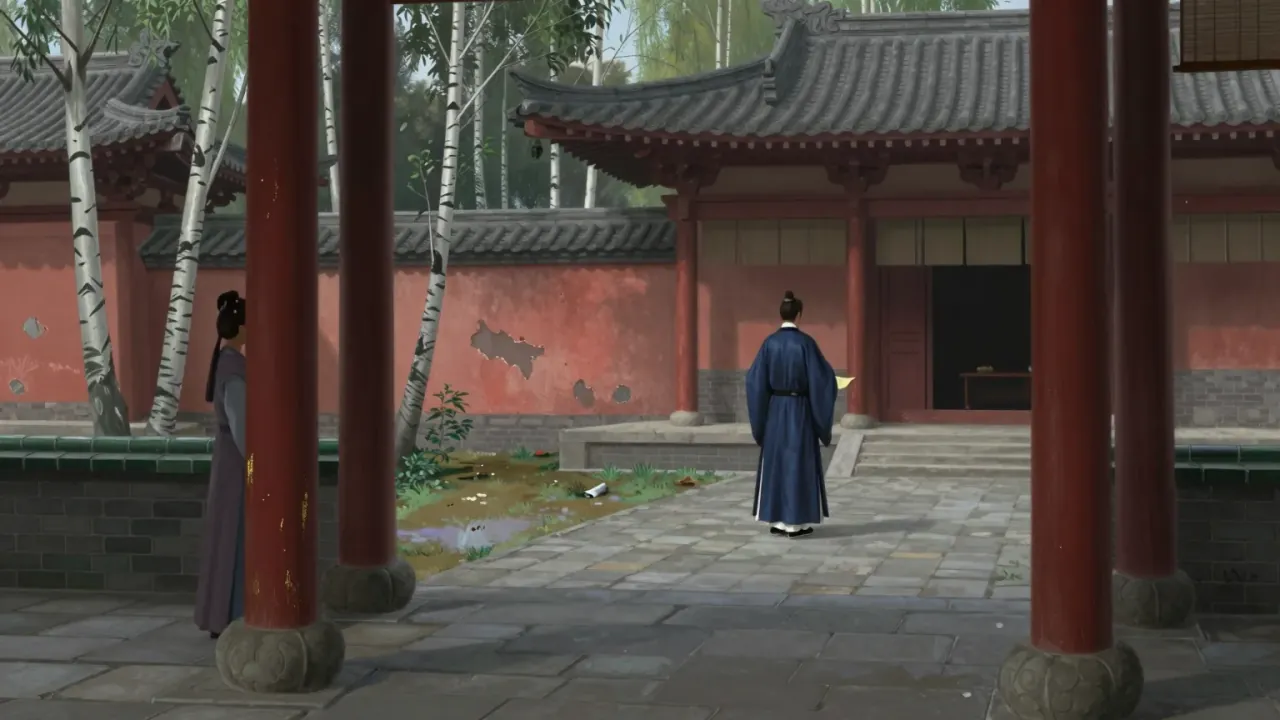
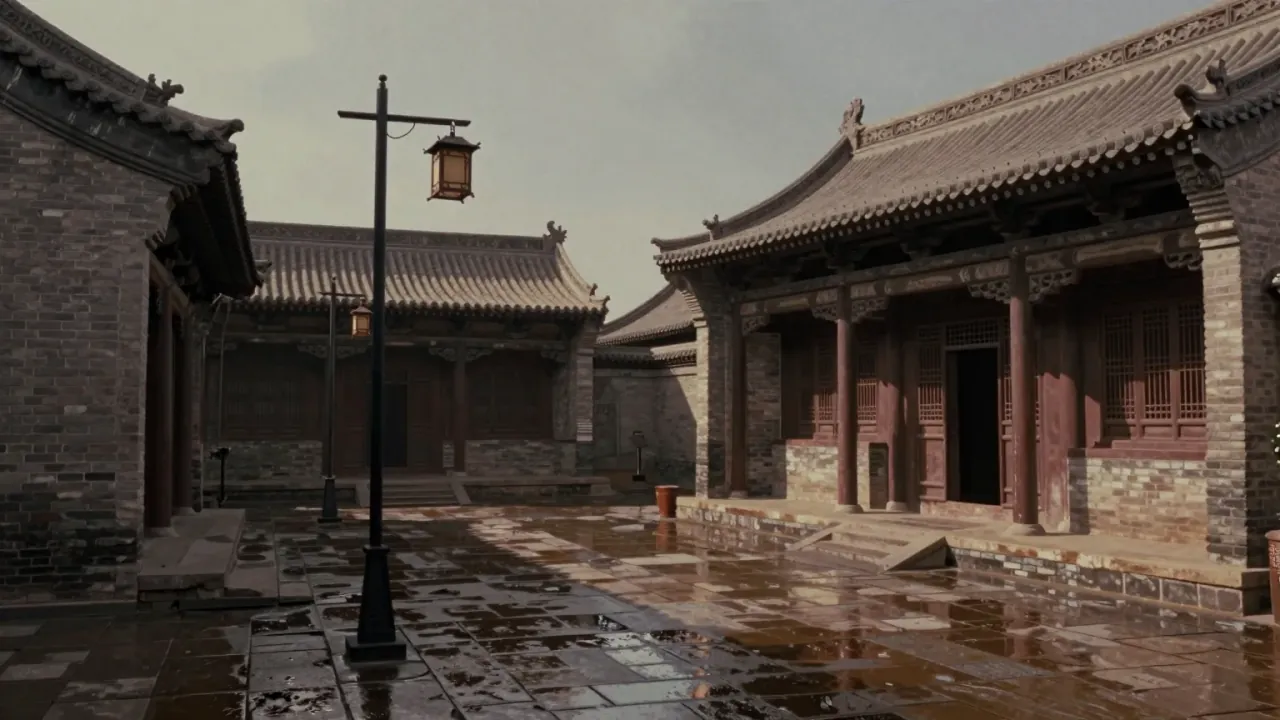
Raise the Red Lantern is a 1991 Mandarin-language period drama set in Republican China during the 1920s, adapted by Ni Zhen from Su Tong’s novella Wives and Concubines. It follows Songlian, a nineteen-year-old educated woman forced into marriage as the fourth wife of a wealthy, unseen patriarch. The film does not seek psychological realism or historical exposition but constructs a tightly controlled symbolic world where ritual governs identity, desire, and survival. Every gesture — the lighting of red lanterns, the foot massage, the nightly choice of mistress — functions as both custom and currency. Zhang Yimou treats the household not as a home but as a closed system of calibrated power: hierarchical, repetitive, and fatalistic. The film’s ambition lies in rendering that system visible through visual and behavioural rigour rather than exposition or moral commentary. It avoids explaining why the Chen family operates this way; instead, it shows how its logic absorbs and undoes those inside it. The setting — the Qiao Family Compound in Shanxi — is not backdrop but architecture of constraint, its courtyards and corridors framing characters like specimens under glass. This is not a story about escape or reform, but about enclosure made legible. (158 words)
How it works
The narrative unfolds with deliberate, almost liturgical pacing: seasonal chapters mark time while Zhao Fei’s cinematography holds interiors in deep, saturated reds and muted greys, using symmetry and shallow focus to compress space and attention. Gong Li’s performance as Songlian is restrained but precise — her shifts from composure to calculation to disintegration are registered in posture, silence, and gaze rather than speech. Supporting actors calibrate their roles with equal economy: Cao Cuifen’s Zhuoyun moves with quiet menace, He Saifei’s Meishan with brittle theatricality, Kong Lin’s Yan’er with suppressed fury. Ni Zhen’s script omits backstory and exposition, trusting image and repetition to convey status, rivalry, and erosion. Zhao Jiping’s score uses traditional instruments sparingly — flute solos echo loss, strings swell only at moments of rupture — while Du Yuan’s editing sustains rhythm without hurry, letting scenes breathe until their weight settles. There are no flashbacks, no voiceover, no explanatory dialogue: meaning accrues through recurrence — lanterns lit, lanterns covered, lanterns lit again in mockery. The craft serves not expression but structure: every frame reinforces the house’s grammar of control. (159 words)
What lands
What lands most decisively is the film’s visual and behavioural coherence. The red lanterns are neither metaphor nor decoration but functional objects whose presence or absence dictates daily reality — meals, touch, light, dignity. That clarity makes the system legible before it becomes oppressive. The performances avoid broad strokes: Gong Li’s Songlian never begs for sympathy, and her descent feels less like breakdown than attrition — the slow leaching of agency until only gesture remains. Zhao Fei’s lighting keeps faces half-submerged, making recognition conditional on proximity and favour. The seasonal chapter titles — ‘Summer’, ‘Autumn’, ‘Winter’ — do not signal change but stasis disguised as passage; the final ‘Next Summer’ confirms cyclical repetition, not renewal. Even the phonograph playing Meishan’s aria after her death works not as ghost story but as acoustic residue — sound outliving its source, just as ritual outlives its meaning. The film’s restraint prevents melodrama from overwhelming its design: cruelty is administered quietly, punishment enforced through routine, not spectacle. Its power lies in how little it needs to say to make hierarchy feel inescapable. (157 words)
What does not
What does not land is the master’s invisibility as a sustained dramatic device. His face remains obscured, his voice muffled, his authority conveyed only through servants’ deference and the wives’ reactions. This works initially as abstraction, but over 125 minutes it begins to hollow the central conflict: without a clear antagonist or even a discernible psychology, the system risks feeling abstracted beyond empathy. The son’s flute motif — introduced early, then abandoned — gestures toward generational continuity but lacks development or payoff. Some plot turns rely on coincidence rather than character logic: Songlian overhearing Meishan’s affair, Yan’er’s hidden lanterns discovered by chance, the accidental slip about the doctor — these hinge on narrative convenience, not inevitability. The film’s refusal to name the master’s motives or even his age leaves certain tensions unresolved, not enigmatic. A viewer expecting causal clarity or moral reckoning may find the ending’s silence unsatisfying rather than resonant. The formal discipline that serves the film elsewhere occasionally calcifies into distance: the compound feels less like a lived-in world than a diagram rendered in silk and snow. That is a choice, not a flaw — but it narrows the emotional bandwidth. (156 words)
The themes that matter
The themes that matter are not love or betrayal in the conventional sense, but ritual as governance, visibility as privilege, and repetition as erasure. The red lanterns are not symbols of passion but instruments of allocation — light measured, assigned, revoked. Status is not earned but performed, and performance is exhausted by repetition until it becomes involuntary. The film treats memory as fragile: Songlian’s lost flute, her schoolgirl clothes worn again at the end, the servants forgetting who she was — all suggest identity as something conferred, then withdrawn, then discarded. Class operates not through wealth alone but through access to the master’s attention, which itself is mediated by servants, doctors, and seasonal menus. Femininity is codified into service, surveillance, and self-policing: Zhuoyun warns Songlian about Meishan while plotting against her; Yan’er curses her mistress yet mimics her rituals. There is no solidarity, only competition for diminishing returns. The house does not suppress individuality — it renders it irrelevant. What persists is form: the lanterns, the massage, the covered windows, the snow. The film’s enduring concern is how systems survive not by force alone, but by making their logic feel inevitable, even to those it consumes. (159 words)
Who should watch it
This film is for viewers who value formal precision over narrative propulsion, who find tension in stillness and meaning in repetition. It suits those accustomed to arthouse pacing, attuned to composition and performance nuance, and willing to sit with ambiguity rather than seek resolution. It is not for viewers who require psychological exposition, clear antagonists, or forward-moving plot — those expecting a conventional marital drama or feminist polemic will find its restraint alienating. Some may object to its lack of historical context: the Warlord Era is present only as décor, not cause. Others may reject its gender politics as deterministic rather than analytical. But the verdict does not rest on whether it explains oppression, only whether it renders its mechanics with integrity — and it does. A viewer who dislikes it would likely prefer films where characters drive events rather than submit to them. Change the pacing or add exposition, and the film’s central argument — that ritual can be more binding than law — would dissolve. (158 words)
Is it worth your evening
Yes, it is worth your evening — not as diversion but as calibration. Its 125 minutes ask for attention, not investment; reward comes not from identification but from perception sharpened. You leave not with answers but with a heightened awareness of how power operates through routine, how light can signify access, how silence can enforce hierarchy. It repays rewatching because its details — the placement of a teacup, the angle of a lantern pole, the timing of a servant’s bow — deepen with scrutiny. Those who find it cold or remote are not wrong, but they are responding to its design, not misreading it. It is not for everyone: viewers seeking catharsis, closure, or character growth will be disappointed. But for those who accept that some truths are best shown, not told, Raise the Red Lantern remains one of the most rigorously constructed portraits of systemic constraint ever filmed. Its value lies not in what it says about 1920s China, but in how unmistakably it shows how systems endure. (157 words)