filmbriefs
Topic

Corruption

The quiet system running alongside the official one.

19
in film
13:00
average
247 min
in total
38
across the network
Corruption across the network →
All briefs19
13:00

Ace in the Hole

Billy Wilder · 1951

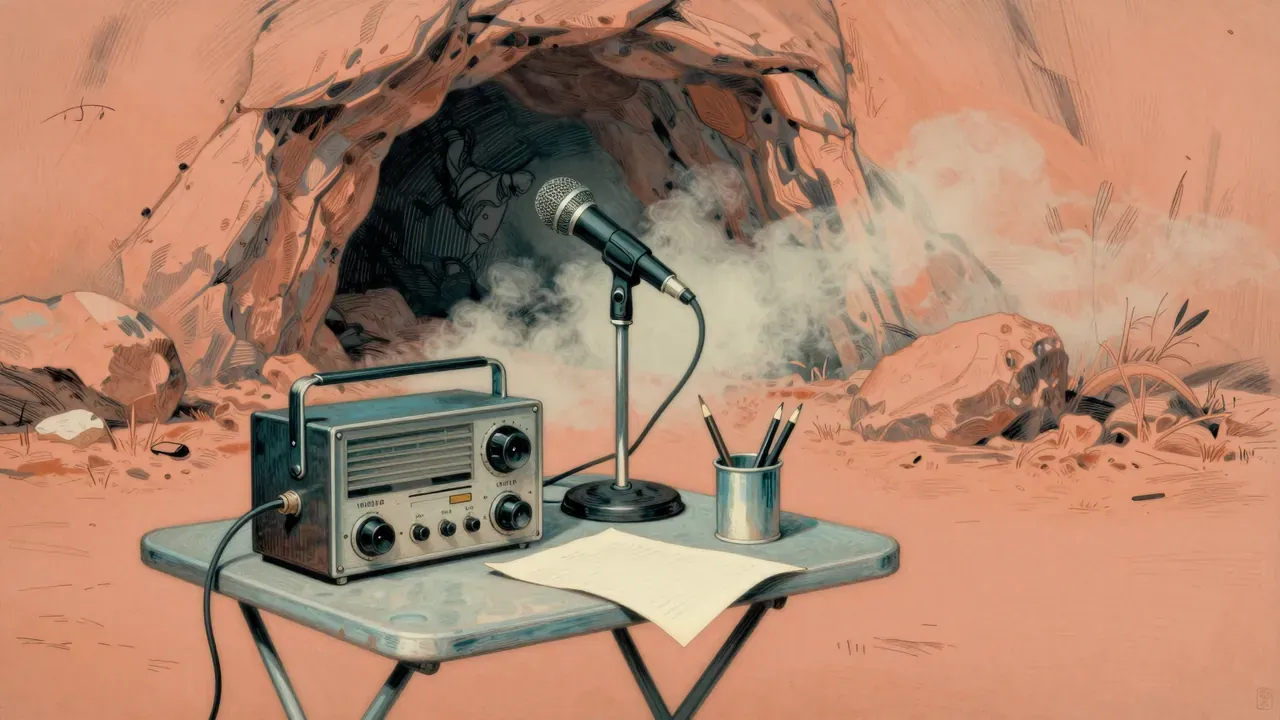
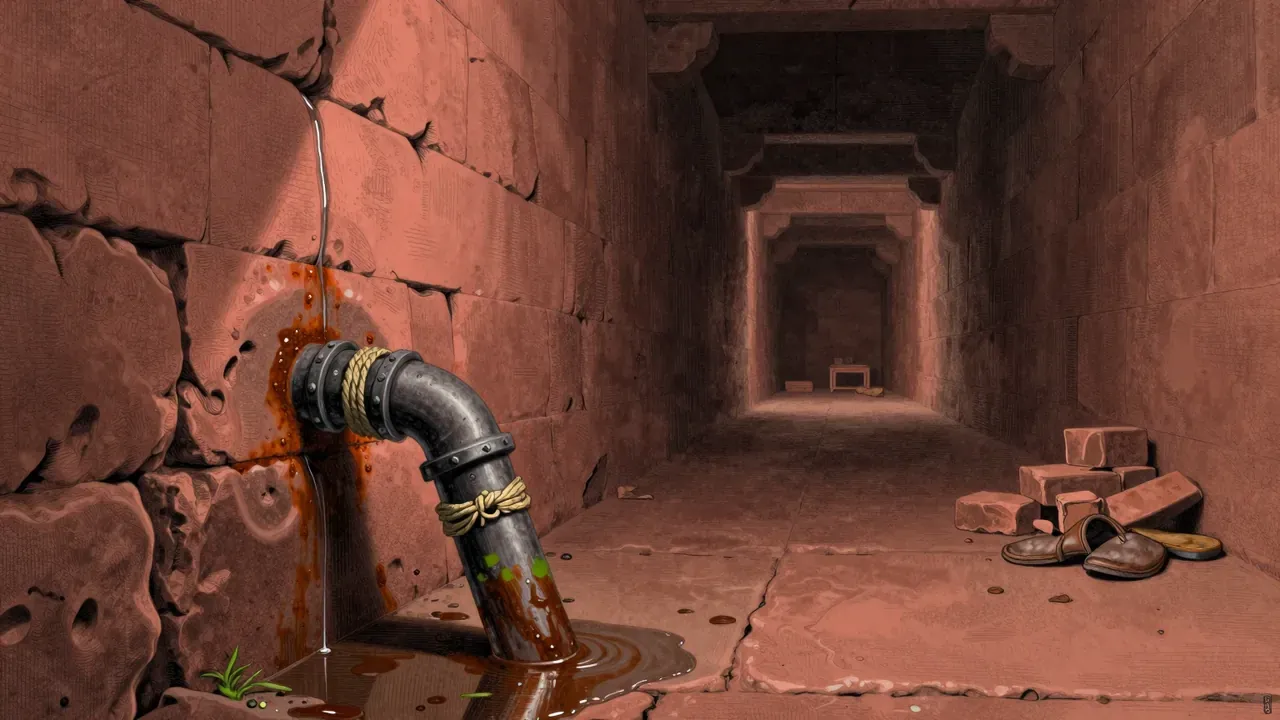
Billy Wilder’s 1951 drama follows a disgraced reporter who manipulates a cave rescue into a week-long media circus in rural New Mexico. With Kirk Douglas as the ruthlessly pragmatic Chuck Tatum, the film charts the incremental erosion of ethics across journalism, law enforcement, and community—treating truth as a negotiable resource rather than a principle. Shot by Charles Lang and edited by Arthur P. Schmidt, it remains stark, unsentimental, and structurally rigorous.
13:00

An Enemy of the People

Satyajit Ray · 1990

Satyajit Ray’s 1990 Bengali-language drama transposes Ibsen’s An Enemy of the People to a small Indian town whose economy depends on a temple’s ‘holy water’. When doctor Ashok Gupta (Soumitra Chatterjee) proves the water is contaminated, he is systematically silenced by municipal officials, journalists and religious authorities — all invested in maintaining the status quo. Shot with clinical precision and performed with restrained gravity, the film traces the erosion of professional integrity and communal trust. Though its resolution feels underprepared, its central inquiry — how facts are weighed against utility — remains urgently relevant.

13:00

Deep Cover

Bill Duke · 1992

A Cincinnati police officer goes undercover in Los Angeles to dismantle a drug cartel, only to discover his mission is entangled with State Department interests protecting a South American politician. Directed by Bill Duke and starring Laurence Fishburne and Jeff Goldblum, the 1992 neo-noir sustains a tone of institutional weariness, using voice-over, Bojan Bazelli’s shadowed cinematography, and Michel Colombier’s score to trace the slow dissolution of professional conviction. Its strength lies in moral texture, not plot mechanics.

13:00

Gomorrah

Matteo Garrone · 2008

Matteo Garrone’s 2008 film adapts Roberto Saviano’s non-fiction book into a five-thread portrait of the Camorra’s reach across Naples and Caserta. It follows a timid middleman, a teenage recruit, a waste-management graduate, a tailor, and two deluded wannabes — none heroic, none redeemed. Shot with documentary restraint by Marco Onorato and edited without flourish by Marco Spoletini, it treats crime as infrastructure: logistical, banal, and woven into fashion, toxic dumping, and housing estates. It won the Cannes Grand Prix and seven David di Donatello awards.

13:00

Graduation

Cristian Mungiu · 2016

A Transylvanian doctor tries to fix his daughter’s exam results after she is assaulted, triggering a slow collapse of professional, marital and paternal certainties. Directed by Cristian Mungiu, the film observes moral compromise as a series of quiet, irreversible steps — not grand betrayals, but small accommodations made in the name of love, duty, or survival.

13:00

Hands Over the City

Francesco Rosi · 1963

Francesco Rosi’s 1963 Golden Lion winner follows Neapolitan developer and councillor Edoardo Nottola as he leverages public office for private real-estate gain—until a building collapse triggers an official inquiry. Shot in stark, observational style by Gianni Di Venanzo and written with journalistic rigour, the film avoids psychology and spectacle in favour of committee rooms, permits, and quiet complicity. Rod Steiger and Carlo Fermariello anchor a cast that includes non-professionals, reinforcing its documentary texture. It is a film about how power consolidates not in crises but in paperwork.

13:00

Investigation of a Citizen Above Suspicion

Elio Petri · 1970

Elio Petri’s 1970 Italian crime satire follows a high-ranking police inspector who kills his mistress and then manipulates the ensuing investigation to confirm he is above suspicion. Starring Gian Maria Volonté and scored by Ennio Morricone, it uses stark formal control to dissect the mechanics of institutional impunity — not as corruption, but as routine. It won the Cannes Grand Prix, the David di Donatello for Best Film, and the Oscar for Best International Feature.

13:00

Lola

Rainer Werner Fassbinder · 1981

Rainer Werner Fassbinder’s 1981 drama Lola, the second film in his BRD Trilogy, relocates Heinrich Mann’s Professor Unrat to 1957 Coburg. It follows building commissioner von Bohm’s doomed attempt to impose integrity on a town whose elite — mayor, banker, police chief — all profit from property developer Schuckert’s brothel, run by singer Lola. As von Bohm falls for her, uncovers systemic corruption, and ultimately marries her with Schuckert’s blessing, the film anatomises how moral authority is staged, delegated, and sold. Stylised, unsentimental, and rigorously structured, it treats reconstruction not as renewal but as rebranding.

13:00

Salvatore Giuliano

Francesco Rosi · 1962

Francesco Rosi’s 1962 docudrama reconstructs the life and death of Sicilian bandit Salvatore Giuliano not as myth or biography, but as a forensic inquiry into institutional complicity. Shot on location in Sicily with non-professional actors, it uses fragmented chronology, courtroom transcripts and contradictory testimony to expose how power operates across Mafia, carabinieri and judiciary. Giuliano appears only fleetingly — dead, distant, obscured — while figures like his betrayer Pisciotta and judges presiding over rigged trials occupy the frame. The film’s rigour lies in its refusal to narrativise, opting instead for procedural clarity and structural irony.

13:00

The Bad Sleep Well

Akira Kurosawa · 1960

Akira Kurosawa’s 1960 drama follows a man who marries into a corrupt Japanese corporation to expose the men responsible for his father’s suicide. Built on Hamlet’s spine but rooted in postwar Tokyo’s bureaucracy, it uses meticulous staging, restrained performances and a deliberate pace to dissect how power evades accountability. Though its opening sequences are masterful, its conclusion trades catharsis for quiet despair — a choice that clarifies its theme but tests the viewer’s stamina.

13:00

The Law of the Border

Lütfi Ömer Akad · 1966

The Law of the Border (1966), directed by Lütfi Ömer Akad and written by Yılmaz Güney, follows Hidir, a smuggler in eastern Turkey striving to send his son to school. Set against a stark landscape and a rigid social hierarchy, the film grounds its drama in material reality — poverty, geography, and institutional neglect — rather than individual vice. Its social realism marked a turning point in Turkish cinema, rejecting studio artifice for location shooting, restrained performances, and a focus on systemic forces. Restored from a single surviving print, its technical imperfections underscore its historical fragility.

13:00

The Long Good Friday

John Mackenzie · 1980

Set over one Easter weekend in 1980, The Long Good Friday follows London gangster Harold Shand as his plans to redevelop the Docklands and attract American investment unravel amid coordinated attacks. Directed by John Mackenzie and written by Barrie Keeffe, the film uses tight framing, restrained performances, and real London locations to chart the collapse of authority — not through violence, but through the sudden withdrawal of trust, information, and time.

13:00

Traffic

Steven Soderbergh · 2000

Steven Soderbergh’s 2000 crime drama Traffic traces the US drug trade across four interwoven storylines — political, enforcement, consumer, and supplier — using distinct colour grading, multilingual dialogue (including unsubtitled English and fully subtitled Spanish), and a procedural rhythm. Written by Stephen Gaghan and shot by Soderbergh under a pseudonym, it won four Academy Awards including Best Director and Best Supporting Actor for Benicio del Toro. Its ambition lies in structural coherence, not emotional resolution.

13:00

Xala

Ousmane Sembène · 1975

Ousmane Sembène’s 1975 satire follows El Hadji, a Senegalese businessman whose sudden impotence coincides with his appointment to the Chamber of Commerce and his third marriage. As his business unravels and his authority crumbles, the affliction proves allegorical: a diagnosis of moral and political failure in post-independence Senegal. Stylised, unsentimental and precisely constructed, the film uses folk logic and social ritual to indict elite complicity, not individual weakness.

13:00

Zatoichi and the Chest of Gold

Kazuo Ikehiro · 1964

In Japan, 1964, Zatoichi travels to a drought-stricken village to pay respects at a grave — only to become entangled in the theft of 1,000 ryo raised for taxes. As corrupt officials, rogue samurai, and desperate bandits converge, he navigates a web of complicity without recourse to vengeance. Directed by Kazuo Ikehiro and shot by Kazuo Miyagawa, this sixth Zatoichi film marks a formal and ethical shift: quieter, more politically attentive, and anchored in the material reality of feudal obligation.

13:00

Zatoichi's Revenge

Akira Inoue · 1965

Zatoichi’s Revenge (1965), directed by Akira Inoue, is the tenth film in Daiei’s chambara series starring Shintarō Katsu. Returning to his master’s village, Zatoichi uncovers a web of debt and coercion run by local officials and merchants. With minimal score by Akira Ifukube and unshowy cinematography by Fujio Morita, the film builds tension through stillness and precise action, culminating in two duels and a quiet redistribution of power. It is a study in procedural justice, not catharsis.

13:00

Chicago

Rob Marshall · 2002

Rob Marshall’s 2002 musical adapts the Broadway hit into a sleek, satirical portrait of fame and justice in 1920s Chicago. Framing songs as Roxie Hart’s internal fantasies, it contrasts vaudeville stylisation with gritty realism to expose how spectacle displaces truth. Starring Renée Zellweger, Catherine Zeta-Jones, and Richard Gere, it won six Oscars including Best Picture—the first musical to do so since 1968.

13:00

Man on Fire

Tony Scott · 2004

Tony Scott’s 2004 crime thriller relocates A. J. Quinnell’s novel to Mexico City, following a broken ex-agent (Denzel Washington) who hunts kidnappers after his charge (Dakota Fanning) is abducted. Anchored by restrained performances and Paul Cameron’s urgent cinematography, it sustains emotional intimacy amid escalating violence — less cathartic thriller than austere study in accountability, endurance, and institutional decay.

13:00

The Big Heat

Fritz Lang · 1953

Fritz Lang’s 1953 crime film follows homicide detective Dave Bannion as he pursues the truth behind a fellow officer’s suicide, uncovering a web of police and syndicate collusion. After his wife is killed in a car bombing, Bannion operates outside the force, confronting mob enforcers and compromised officials. With stark cinematography, minimal score, and tightly wound performances — notably Gloria Grahame’s Debby Marsh and Lee Marvin’s Vince Stone — the film builds tension through repetition and consequence rather than exposition or psychology.