filmbriefs
Topic

The Belle Epoque

Europe's last long peace, remembered mostly because of what came next.

12
in film
13:00
average
156 min
in total
13
across the network
The Belle Epoque across the network →
All briefs12
13:00

And the Ship Sails On

Federico Fellini · 1983

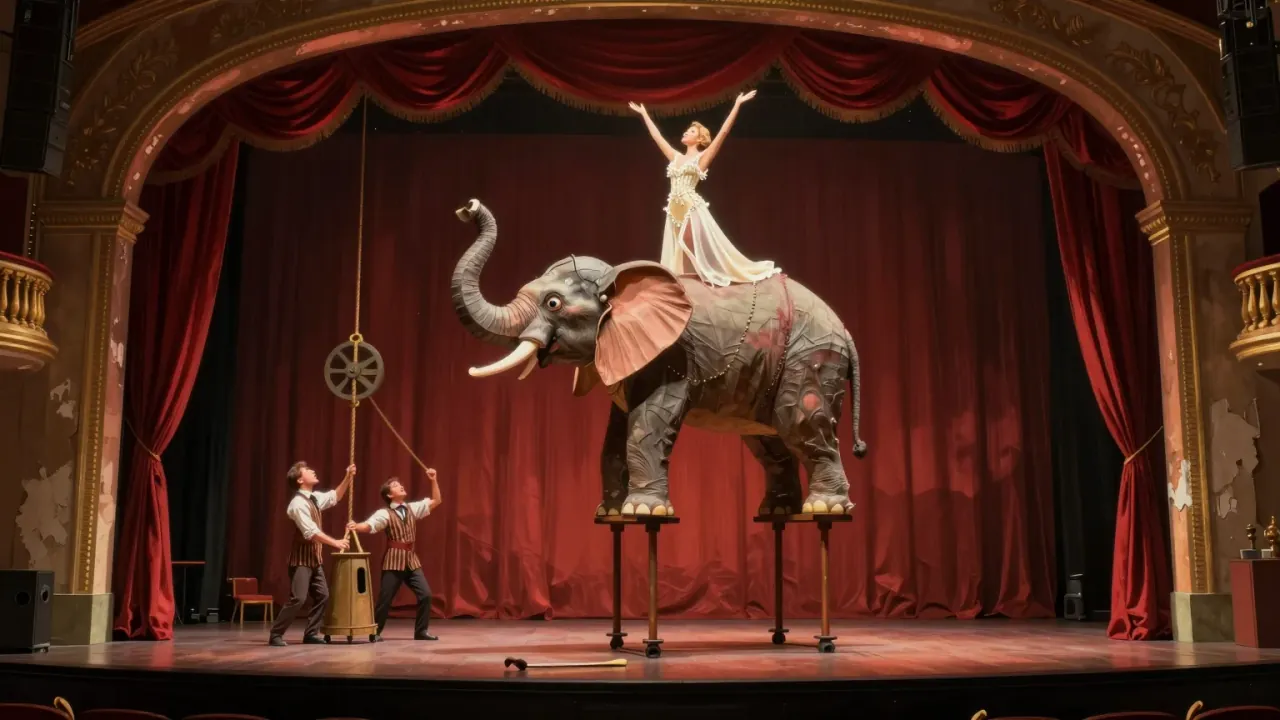
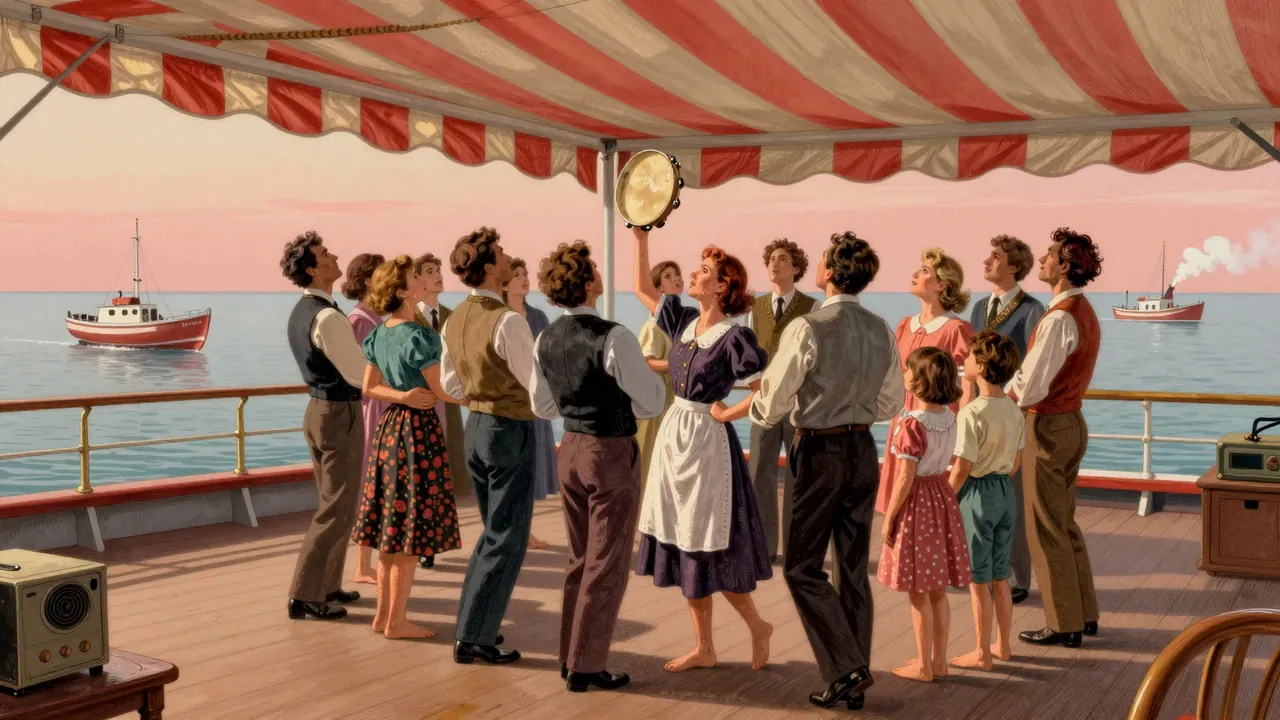
Set aboard the luxury liner Gloria N. in July 1914, Federico Fellini’s And the Ship Sails On follows a funeral voyage to scatter the ashes of a legendary opera singer. Through journalist Orlando’s wry narration, the film assembles a gallery of caricatured aristocrats, artists, and dignitaries — all performing grief, status, and obsession aboard a vessel that doubles as a stage, museum, and mausoleum. Giuseppe Rotunno’s cinematography and Dante Ferretti’s sets sustain a lush, theatrical artifice, while Gianfranco Plenizio’s score underscores the film’s blend of grandeur and gentle absurdity. The voyage ends not with resolution but with sinking — literal and metaphorical — as the ship founders amid cannon fire and butterflies.
13:00

Casque d'Or

Jacques Becker · 1952

Jacques Becker’s 1952 drama follows Marie and Manda, lovers caught in the violent hierarchies of Belle Époque Paris. Shot with precise, unadorned realism, it avoids moralising or spectacle, instead anchoring emotion in gesture, setting, and consequence. Simone Signoret and Serge Reggiani deliver performances of quiet intensity, supported by Robert Lefebvre’s understated cinematography and Marguerite Renoir’s taut editing. Its final sequence — Marie watching Manda’s execution from a hotel window — remains one of cinema’s most devastating uses of spatial restraint.

13:00

Elena and Her Men

Jean Renoir · 1956

Jean Renoir’s 1956 film follows a Polish princess in fin de siècle Paris whose romantic entanglements intersect with a general’s wavering ambition and a shoe magnate’s calculations. Shot in Paris studios and locations, with design by Jean André and music by Joseph Kosma, it treats politics as theatre and desire as strategy — light in tone, precise in execution, and deliberately unmoored from psychological realism.

13:00

French Cancan

Jean Renoir · 1955

Jean Renoir’s 1955 French Cancan follows nightclub owner Henri Danglard as he transforms a Montmartre dance hall into the Moulin Rouge, betting everything on the revival of the cancan. Starring Jean Gabin and Françoise Arnoul, it is a musical comedy-drama less concerned with plot than with the textures of creation: rehearsal, construction, rivalry, and collective euphoria. Shot in colour at Joinville Studios with art direction by Max Douy and cinematography by Michel Kelber, it evokes Impressionist painting without imitation. Though uneven in emotional payoff, it remains a singular testament to Renoir’s belief in cinema as a space for presence, not just meaning.

13:00

Heaven Can Wait

Ernst Lubitsch · 1943

Ernst Lubitsch’s 1943 Heaven Can Wait follows Henry Van Cleve, a New York heir who, upon arriving at the reception area of Hell, recounts his life to prove he belongs there. Framed as a wry, non-chronological character study, the film uses fantasy not for spectacle but for structure—tracing seventy years of privilege, marriage, and quiet moral drift with precision, irony, and deep affection for its characters’ limitations.

13:00

Love Story

Claude Autant-Lara · 1943

Set in late-nineteenth-century France, Claude Autant-Lara’s Love Story (Douce) follows Douce de Bonafé, a sheltered heiress whose quiet affection for the estate manager Fabien collides with her governess Irène’s ambition. When Irène pursues Fabien — and then Douce’s widowed father — the household’s fragile equilibrium fractures. With restrained performances, Philippe Agostini’s subdued cinematography, and a script that trusts silence over exposition, the film traces how inherited structures of class and gender compress desire into inevitability. Its tragedy is understated, its pacing unhurried, its moral landscape deliberately unresolved.

13:00

Mayerling

Anatole Litvak · 1936

Anatole Litvak’s 1936 Mayerling is a French historical drama starring Charles Boyer and Danielle Darrieux, adapted from Claude Anet’s novel Idyll’s End. Set in late-19th-century Vienna, it traces Crown Prince Rudolf’s estrangement from duty and his fatal relationship with Baroness Marie Vetsera. Shot in restrained, underlit interiors by Armand Thirard and scored by Honegger, Jaubert and Tchaikovsky, the film avoids melodrama in favour of cumulative emotional weight. Though criticised in 1936 for its muted politics and ambiguous ending, its coherence, precision and formal discipline make it a distinctive artefact of interwar European arthouse cinema.

13:00

Smiles of a Summer Night

Ingmar Bergman · 1955

Set over one Midsummer Night in early-twentieth-century Sweden, Ingmar Bergman’s Smiles of a Summer Night traces shifting affections among lawyers, actresses, counts and servants. Shot by Gunnar Fischer and scored by Erik Nordgren, it balances theatrical structure with emotional nuance, using wit and restraint rather than exposition or psychology to resolve its tangles. It is a film about how love negotiates time, class and habit — not revelation, but recalibration.

13:00

The Earrings of Madame de...

Max Ophüls · 1953

Max Ophüls’ 1953 French drama traces a pair of diamond earrings through the hands of an aristocratic couple and an Italian diplomat in Belle Époque Paris. Structured as a precise, repeating circuit rather than a linear narrative, it uses gliding camerawork, restrained performances, and ornate production design to explore desire, concealment, and social ritual—without psychological exposition or moral framing.

13:00

Gigi

Vincente Minnelli, Charles Walters · 1958

Gigi (1958) is a Metro-Goldwyn-Mayer romantic musical set in Belle Époque Paris, adapted by Alan Jay Lerner from Colette’s novella. Leslie Caron stars as a young woman raised to be a courtesan who instead chooses love on her own terms. Directed by Vincente Minnelli and Charles Walters, it features music by Frederick Loewe, cinematography by Joseph Ruttenberg and Ray June, and costumes by Cecil Beaton. It won nine Academy Awards, including Best Picture and Best Director.

13:00

Letter from an Unknown Woman

Max Ophüls · 1948

Max Ophüls’ 1948 adaptation of Stefan Zweig’s novella follows Lisa Berndle’s lifelong devotion to concert pianist Stefan Brand, rendered in flashback through her final letter. Joan Fontaine’s restrained performance and Franz Planer’s under-lit cinematography sustain a mood of quiet accumulation, where emotional weight gathers not in climaxes but in silences, glances, and withheld names.

13:00

Moulin Rouge!

Baz Luhrmann · 2001

A hyper-stylised 2001 romantic musical set in 1899 Paris, Moulin Rouge! uses anachronistic pop songs, saturated visuals and theatrical storytelling to explore love, artifice and sacrifice. Directed by Baz Luhrmann, it stars Nicole Kidman and Ewan McGregor as a poet and a courtesan whose affair unfolds amid the glittering chaos of the Moulin Rouge cabaret. Its craft — cinematography, editing, production design and costume — won multiple awards, including two Oscars. Though divisive in its relentlessness, it remains a defining example of early-21st-century cinematic maximalism.