filmbriefs
Topic

Christianity

Two thousand years of a sect that became the West's default setting.

12
in film
13:00
average
156 min
in total
49
across the network
Christianity across the network →
All briefs12
13:00

Androcles and the Lion

Chester Erskine, Nicholas Ray · 1952

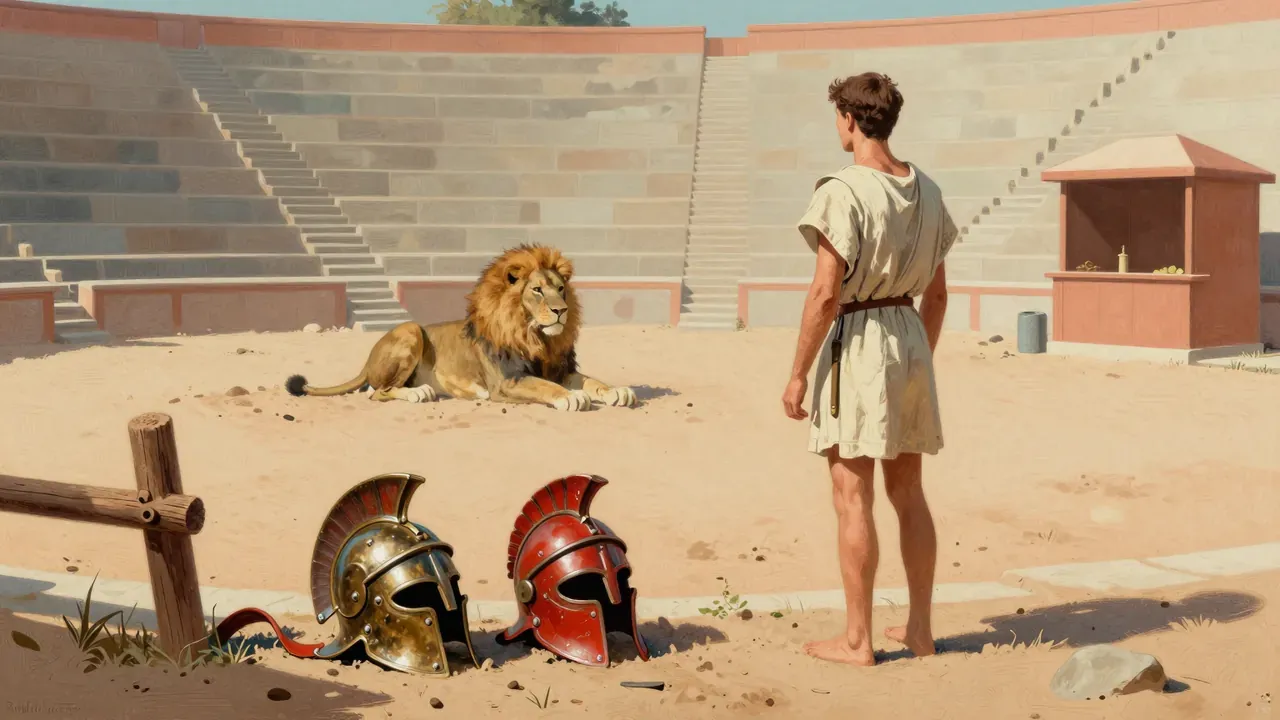
RKO’s 1952 Androcles and the Lion adapts George Bernard Shaw’s 1912 play with strict fidelity to his text, casting Alan Young as a gentle Christian tailor who befriends a lion in the Roman wilderness. Directed by Chester Erskine and Nicholas Ray, it foregrounds verbal wit over visual spectacle, staging philosophical debate in studio-bound sets. Though reshoots added arena theatrics, the film’s strength remains its unflinching commitment to Shaw’s irony, pacifism, and bureaucratic satire—making it a rare, talkative anomaly in the sword-and-sandal cycle.
13:00

Diary of a Country Priest

Robert Bresson · 1951

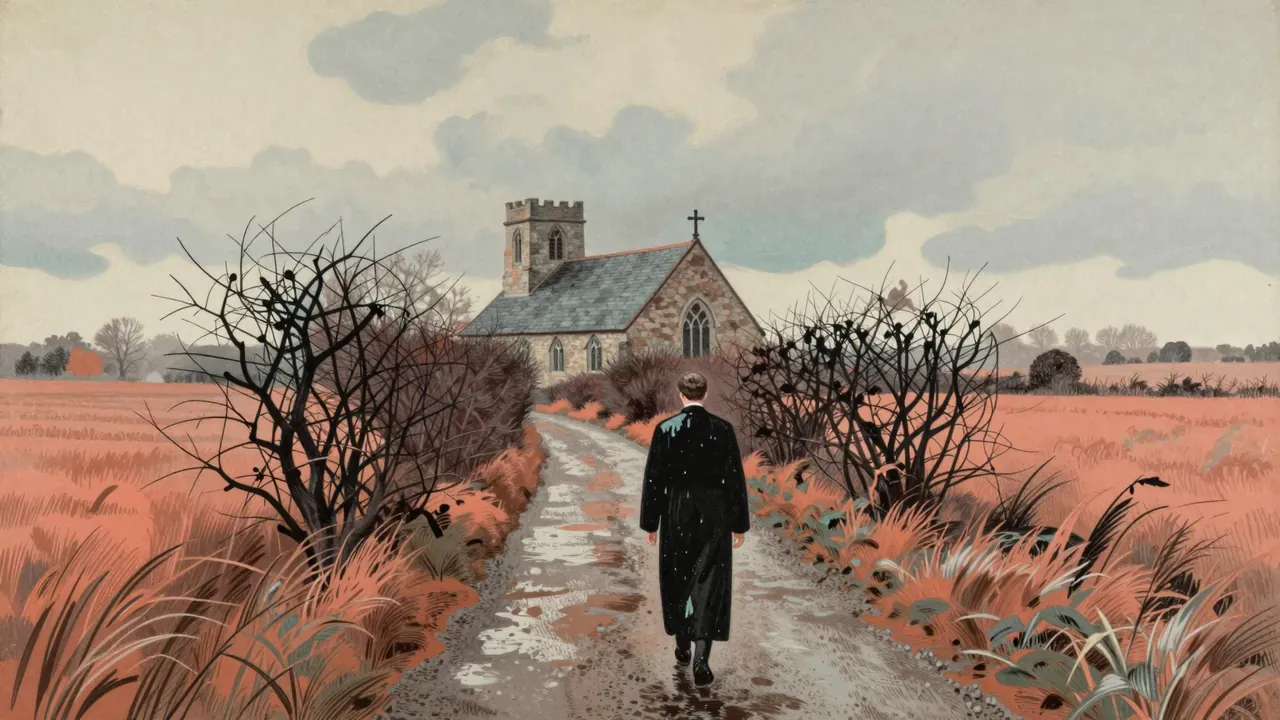
Robert Bresson’s 1951 adaptation of Georges Bernanos’ novel follows a young priest in rural France whose failing health, spiritual doubt, and isolation are rendered with stark formal discipline. Voice-over narration repeats on-screen action; performances are muted; light is flat and spaces are empty. It is less a story of faith than of vocation as daily, unglamorous labour — and grace as something given, not earned.

13:00

Europe '51

Roberto Rossellini · 1952

Roberto Rossellini’s 1952 film follows Irene Girard (Ingrid Bergman), an industrialist’s wife in post-war Rome, whose son’s death precipitates a radical commitment to helping others — a commitment that brings her into conflict with family, politics, medicine, the church and finally the asylum. Shot in austere black-and-white by Aldo Tonti, with a sparse score by Renzo Rossellini, the film treats compassion as a systemic challenge rather than a personal virtue.

13:00

Léon Morin, Priest

Jean-Pierre Melville · 1961

Set in German-occupied France, Léon Morin, Priest follows Barny, a widowed atheist and communist, as she enters a theological dialogue with a young priest. Their conversations—calm, rigorous, unresolved—unfold against a backdrop of scarcity and danger. Directed by Jean-Pierre Melville and adapted from Béatrix Beck’s novel, the film resists melodrama, preferring quiet precision in performance, cinematography, and structure. It is less about conversion than continuity: how people maintain moral shape when the world collapses around them.

13:00

Rome, Open City

Roberto Rossellini · 1945

Rome, Open City (1945) is a foundational Italian neorealist war drama directed by Roberto Rossellini, shot in Rome months after Nazi withdrawal using salvaged film stock and largely non-professional performers. Set during the German occupation in 1944, it follows a Resistance fighter, a Catholic priest, and civilians navigating betrayal, sacrifice and moral compromise. Its raw aesthetic—uneven lighting, abrupt edits, sparse score—emerges from material constraint, not stylistic choice. Though structurally uneven and morally uncompromising, it remains essential for its unflinching portrayal of collective endurance under occupation.

13:00

The Flowers of St. Francis

Roberto Rossellini · 1950

Roberto Rossellini’s 1950 film adapts nine parables from medieval Franciscan texts into a series of quiet, unadorned episodes. Shot in rural Italy with monks and one professional actor, it forgoes narrative for ritual, psychology for posture, and explanation for repetition. Its power lies in stillness, humility, and the radical simplicity of its vision.

13:00

The King of Kings

Cecil B. DeMille, Arthur Rosson, Frank Urson · 1927

Cecil B. DeMille’s 1927 silent film The King of Kings depicts the life of Jesus with deliberate spectacle—Technicolor halos, sepia-tinted sermons, hand-coloured torchlight—and a script that blends Gospel texts with invented moments designed to jolt contemporary audiences. H. B. Warner stars as a calm, physically present Christ; Jacqueline Logan plays a vividly secular Mary Magdalene. Though structurally episodic and occasionally blunt in its symbolism, the film remains a landmark of studio-era craft, theological address, and early colour technology.

13:00

The Milky Way

Luis Buñuel · 1969

Luis Buñuel’s 1969 film follows two French vagrants walking the Camino de Santiago, encountering historical Christian heresies, doctrinal disputes, and theological contradictions staged with documentary precision and surrealist detachment. Shot in straightforward colour by Christian Matras and written by Buñuel and Jean-Claude Carrière, it treats dogma as performance, time as collapse, and pilgrimage as recursion — not redemption.

13:00

Andrei Rublev

Andrei Tarkovsky · 1966

Andrei Rublev (1966) is a Soviet arthouse film directed by Andrei Tarkovsky, loosely based on the life of a 15th-century Russian icon painter. Shot in black and white by Vadim Yusov, with a sparse score by Vyacheslav Ovchinnikov, it unfolds across seven episodic chapters set against the chaos of medieval Rus’. Anatoly Solonitsyn plays Rublev as a man whose vocation is tested by violence, doubt, and self-imposed silence. The film culminates in a colour epilogue showing Rublev’s surviving icons — most notably The Trinity — affirming art’s endurance beyond its maker. Censored on release, it is now regarded as a landmark of cinematic philosophy.

13:00

Faraway, So Close!

Wim Wenders · 1993

Wim Wenders’ 1993 fantasy sequel Faraway, So Close! follows the angel Cassiel as he becomes human in reunified Berlin, navigating bureaucracy, addiction, and criminal enterprise. Shot by Jürgen Jürges and scored by Laurent Petitgand, it trades the poetic stillness of Wings of Desire for a grittier, more fragmented register — one that reflects the city’s uncertain new reality. Though it won the Grand Prix at Cannes, its loose structure and tonal shifts divided critics. It is a film of texture over trajectory, best approached as a sustained meditation on presence, not a story with stakes.

13:00

Tender Mercies

Bruce Beresford · 1983

Tender Mercies (1983), directed by Bruce Beresford and written by Horton Foote, follows Mac Sledge — a washed-up country singer recovering from alcoholism — as he rebuilds a life with a young widow and her son in rural Texas. Robert Duvall’s Oscar-winning performance anchors a film defined by restraint: sparse dialogue, unvarnished performances, and a documentary-like gaze. It avoids melodrama, instead locating meaning in small, repeated acts of care — mowing the lawn, singing quietly, sharing meals. Shot on location in Waxahachie, Texas, with Russell Boyd’s naturalistic cinematography and George Dreyfus’s understated score, it is a study in endurance, presence, and the quiet persistence of mercy.

13:00

Winter Light

Ingmar Bergman · 1963

Ingmar Bergman’s 1963 drama follows a Swedish pastor through a single day of spiritual collapse—failing his congregation, his lover, and himself. Shot in austere black-and-white by Sven Nykvist, with no score beyond diegetic organ music, it is a rigorously restrained chamber piece about the physical and moral cost of sustaining belief when conviction has already vanished.