The shape of it
Andrei Rublev is a biographical fiction about a 15th-century Russian icon painter, but it does not seek historical fidelity. It uses Rublev’s life as scaffolding for a meditation on artistic vocation under duress — specifically, how faith, silence, and suffering shape the conditions in which sacred art becomes possible. Tarkovsky and Konchalovsky wrote it not to reconstruct a man but to test an idea: that creativity is inseparable from moral choice, and that the artist’s refusal to speak or paint may be as decisive as any brushstroke. The film unfolds across seven loosely linked episodes spanning decades of political fragmentation, invasion, and spiritual uncertainty in medieval Rus’. Its structure rejects linear biography in favour of thematic recurrence — fire, flight, bell-casting, icon-painting — each episode probing whether art can endure when its foundations — belief, community, peace — are eroded. The project was conceived during Khrushchev’s Thaw but completed under Brezhnev’s tightening orthodoxy; its restraint and gravity were acts of quiet insistence, not evasion. It asks what remains of the artist when all external supports vanish — and answers not with doctrine, but with image, rhythm, and duration. (158 words)
The look of it
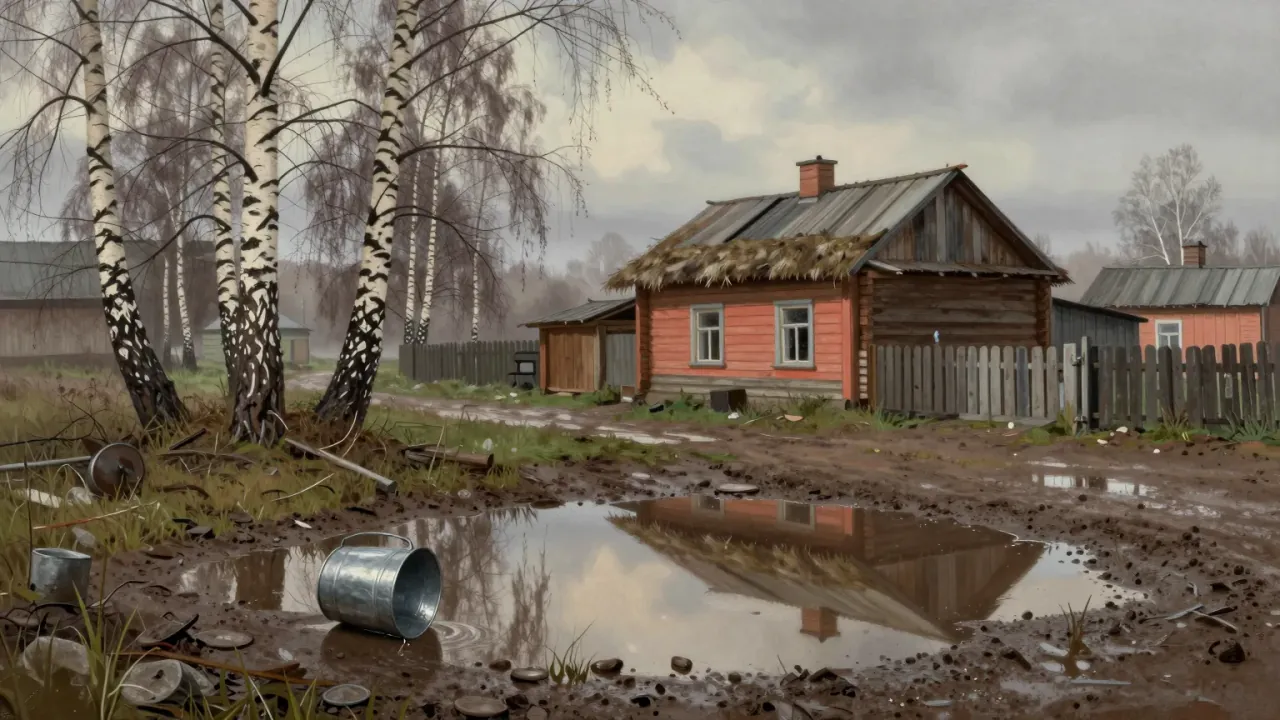
The story moves episodically, anchored by Anatoly Solonitsyn’s Rublev: watchful, physically still, internally turbulent. His performance avoids exposition; meaning accrues through gaze, posture, and hesitation. Vadim Yusov’s black-and-white cinematography favours long takes, shallow focus, and natural light — interiors are often dim, faces half-submerged, landscapes vast and indifferent. Composition privileges weight over symmetry: figures cluster at the edge of frame; horses loom large in mud; snow falls without commentary. Vyacheslav Ovchinnikov’s score is sparse — strings and percussion used like punctuation, not accompaniment. Editing is deliberate, sometimes glacial: a single shot of rain on river water lasts over a minute. The epilogue’s shift to colour is abrupt and functional — not symbolic flourish, but structural necessity, separating Rublev’s lived world from his surviving work. There are no close-ups of icons until the final sequence; their revelation is deferred, earned. The film’s craft is anti-theatrical: no music swells to cue emotion, no cut tightens to heighten tension. Instead, it trusts time itself as a medium — letting silence hold space for reflection, letting weather and mud register as historical fact. (159 words)
The weight of it
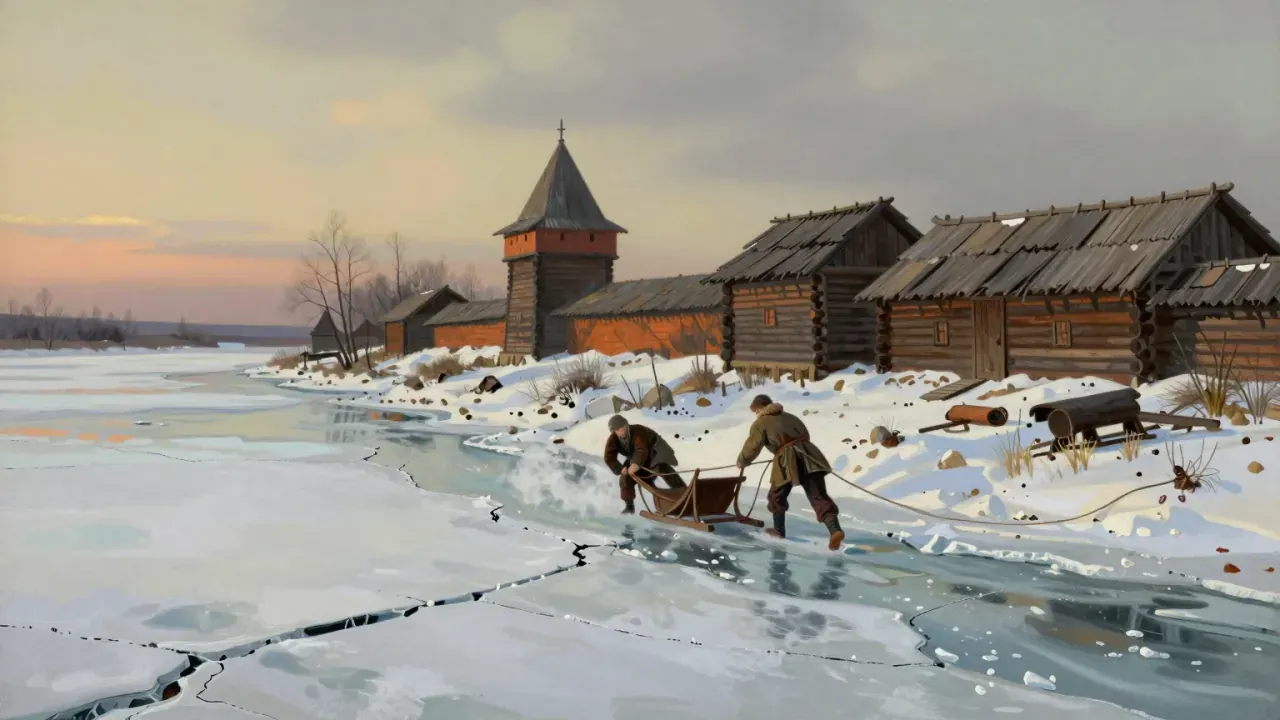
What lands is the film’s physical conviction. Every location — the wooden walls of Pskov, the frozen Nerl River, the earthen ramparts of Izborsk — feels inhabited, not dressed. The violence is unvarnished but never sensational: a raid on a monastery registers not through gore but through the slow collapse of order — scattered eggs, a dropped chalice, a child’s abandoned shoe. The bell-casting sequence works because its tension derives from process, not plot: the repeated failures, the cracked mould, the exhaustion of the foundry workers, the doubt in the young master’s face — all rendered with documentary patience. Solonitsyn’s Rublev gains authority not through speech but through withdrawal: his vow of silence after witnessing atrocity is more forceful than any monologue. The final colour sequence lands because it arrives without fanfare — not as reward, but as evidence. We see the Trinity icon not as illustration but as residue: the only thing that outlasts the men who made it, the wars they endured, the silence they chose. The film’s endurance lies in this refusal to conflate beauty with comfort. (157 words)
The friction of it
What does not land is the prologue — a jarringly stylised, circus-like sequence involving a runaway hot-air balloon and a monk who leaps from a tower. Its allegorical intent is clear, but its tone clashes with the grounded severity of what follows; it reads less as prelude and more as a discarded experiment grafted on. Several episodes also strain under their own weight: the ‘Journey’ section, where monks travel through plague-ridden villages, risks monotony — its repetitions feel procedural rather than cumulative. The film’s resistance to exposition means some transitions lack anchor: characters appear and vanish without explanation, motivations remain opaque, historical context is withheld. This is intentional, but it can read as opacity rather than austerity. Some viewers will find the pacing punitive — not contemplative, but withholding. The absence of dialogue in key stretches does not always deepen meaning; sometimes it simply suspends engagement. And while the epilogue’s colour is formally justified, its sudden shift risks aestheticism — as if the film, having denied us colour for three hours, offers it now as consolation rather than consequence. (156 words)
The grain of it
The themes that matter are artistic responsibility, silence as resistance, and the materiality of faith. Tarkovsky treats icon-painting not as decoration but as labour — mixing pigments, preparing panels, grinding lapis lazuli — and ties that labour to moral stamina. The film insists that belief is not abstract but embodied: it lives in the calluses of a bell-founder, the tremor in a painter’s hand, the decision to walk away from a commission rather than falsify devotion. It treats censorship not as external pressure but as internal crisis — Rublev’s self-imposed silence mirrors the state’s suppression of religious expression, but the film refuses to equate them. Instead, it locates freedom in constraint: in the discipline of form, the limits of wood and tempera, the humility of copying tradition. The recurring motif of horses — grazing, fleeing, wading — grounds transcendence in biology and breath. This is not mysticism as escape, but as attention: faith as sustained looking, art as faithful record. The film’s historical setting is not backdrop but condition — the chaos of fragmented principalities makes every act of creation an assertion against entropy. (159 words)
The demand of it
This film is for viewers who accept duration as part of meaning — those who do not require narrative propulsion or emotional signposting, and who trust image and rhythm to carry argument. It suits people accustomed to long-form painting, classical music, or liturgical time. It is not for those who need clarity of cause and effect, or who measure engagement by plot turns. Anyone expecting historical exposition, character arcs, or psychological realism will find it withholding. Those who dislike extended silences, static framing, or unresolved endings should look elsewhere. A viewer who values accessibility over rigour, or immediacy over accumulation, will likely disengage before the bell-casting sequence. The verdict would change if the film were shorter, or if its structure offered more connective tissue — but that would compromise its central thesis: that art’s value lies not in convenience, but in endurance. Its audience is narrow by design, not accident. (158 words)
The measure of it
Yes, it is worth your evening — but only if you give it your full attention and accept its terms. It demands nothing less than your willingness to sit with ambiguity, to let images settle without interpretation, to tolerate stretches where nothing appears to happen. Its power emerges cumulatively, not episodically: the weight of the final icon sequence rests on everything that precedes it — the mud, the snow, the blood, the silence. Anyone who watches it distracted, or treats it as background, will miss its architecture. It is not for casual viewing, nor for those seeking catharsis or resolution. But for those who meet it on its own ground, it repays attention with rare density — not of information, but of implication. Its 185 minutes do not pass quickly, but they do not drag; they accumulate like sediment. To ask whether it is ‘worth it’ is to misunderstand its purpose: it is not entertainment, but encounter. And encounters, unlike commodities, cannot be assessed before they occur. (159 words)