filmbriefs
Topic

Islands

Isolation as a natural experiment.

8
in film
13:00
average
104 min
in total
17
across the network
Islands across the network →
All briefs8
13:00

Fårö Document

Ingmar Bergman · 1970

Shot on Fårö in early 1969, Ingmar Bergman’s Fårö Document is a 16 mm documentary about the island’s 754 residents, their infrastructure deficits, educational underfunding and political marginalisation. With Sven Nykvist as cinematographer and a five-person crew, it avoids stylisation in favour of direct testimony and observational footage — interviews with the mayor, farmers and schoolchildren, scenes of seasonal labour and civic meetings. Broadcast on Swedish television on 1 January 1970, it functions as both record and advocacy, calling for subsidies, daycare, schools and a bridge across Fårö Sound.
13:00

Fårö Document 1979

Ingmar Bergman · 1979

Ingmar Bergman’s 1979 documentary observes daily life on Sweden’s Fårö island with absolute restraint: no narration, no music, no interviews, no explanation. Shot by Arne Carlsson for Cinematograph, it records fishing, farming, schooling, and worship in unhurried, uninflected takes. Its power lies in duration and precision — not in what it reveals, but in how it trains attention on the ordinary.

13:00

Godzilla vs. the Sea Monster

Jun Fukuda · 1966

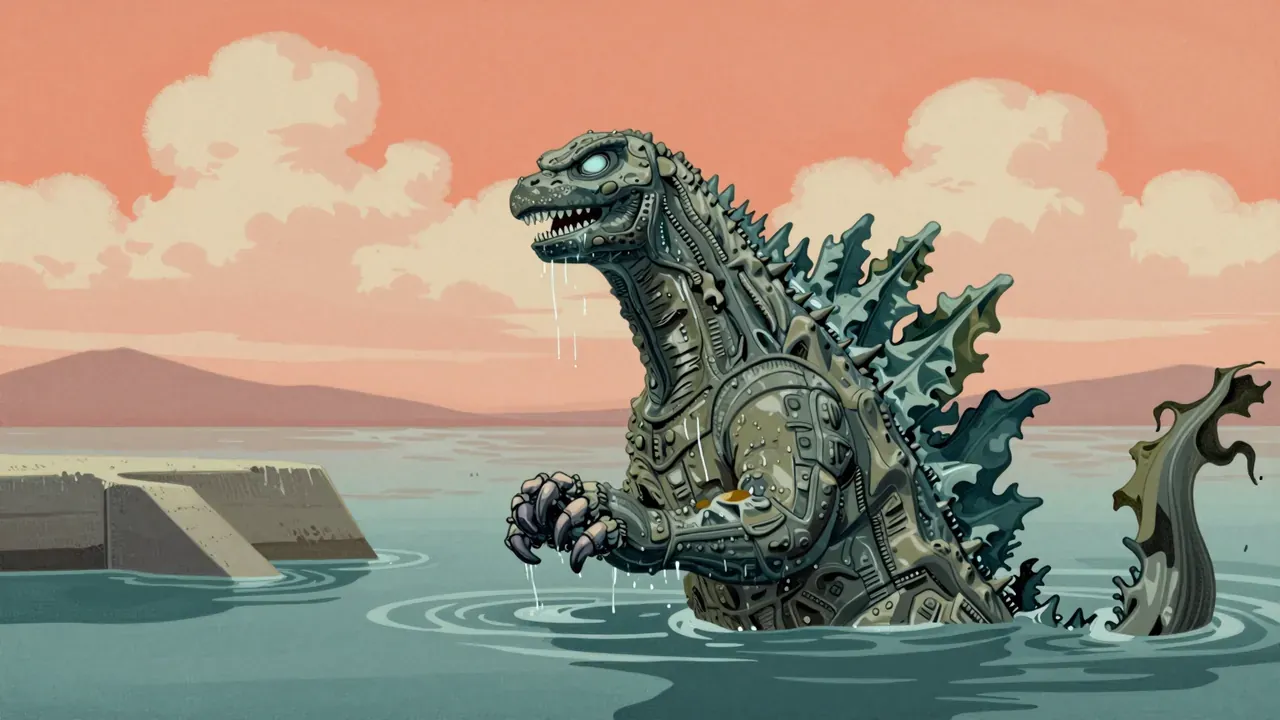
Godzilla vs. the Sea Monster (1966) is Toho’s pragmatic pivot: a South Seas island replaces Tokyo, Ebirah replaces Kong, and Masaru Sato replaces Akira Ifukube. Directed by Jun Fukuda with effects by Sadamasa Arikawa, it relies on repurposed suits, aquarium shots, and a script that never fully sheds its abandoned premise. Its strengths are tactile — Nakajima’s submerged performance, Yamada’s flat daylight, Sato’s light score — not thematic. It is a document of constraint, not conviction.

13:00

I Know Where I'm Going!

Michael Powell, Emeric Pressburger · 1945

Made in 1945 by Powell and Pressburger, I Know Where I'm Going! follows Joan Webster, a determined Englishwoman whose plans to marry a wealthy industrialist on a Hebridean island are stalled by gales and community. Stuck on Mull, she meets Torquil MacNeil and begins to question the life she assumed was fixed. Shot on location and at Denham Studios, with Erwin Hillier’s restrained cinematography and Allan Gray’s folk-inflected score, the film is a precisely engineered argument against instrumental thinking — where place, time and tradition act not as scenery but as quiet, persistent agents of change.

13:00

Son of Godzilla

Jun Fukuda · 1967

Son of Godzilla (1967) is Toho’s eighth kaiju film and the first to introduce Minilla, Godzilla’s infant son. Directed by Jun Fukuda on a reduced budget, it shifts focus from nuclear anxiety to familial bonding and juvenile spectacle. Filmed in Guam and Japan, it features marionette Kamacuras, a giant spider named Kumonga, and a deliberately oversized Godzilla suit to convey paternal stature. Marchan the Dwarf performs Minilla, whose design draws from contemporary manga. Though critics were divided and the film underperformed in the US, it remains a distinctive artefact of Shōwa-era genre filmmaking — tactile, economical, and quietly committed to its own small-scale logic.

13:00

Stromboli

Roberto Rossellini · 1950

Roberto Rossellini’s 1950 Stromboli stars Ingrid Bergman as a displaced Lithuanian woman who marries to escape an internment camp, only to confront harsh isolation on the volcanic island of Stromboli. Shot on location with non-professional actors and pared-down craft, it is a foundational neorealist work that treats landscape, silence, and endurance as primary dramatic tools — less a story about a woman than an inquiry into what happens when identity is stripped back to breath, rock, and sky.

13:00

The Inland Sea

Lucille Carra · 1991

Lucille Carra’s 1991 documentary follows Donald Richie’s 1971 journey across Japan’s Seto Inland Sea islands. Shot by Hiro Narita and narrated by Richie, it observes daily life on depopulating islands with deliberate slowness and minimal intervention. There are no interviews, no score, no explanatory text — only light, sound, and a voice reflecting on continuity and quiet change.

13:00

Caro diario

Nanni Moretti · 1993

Caro diario (1993) is Nanni Moretti’s semi-autobiographical essay film in three chapters: riding a Vespa through Rome, seeking quiet on the Aeolian Islands, and navigating misdiagnosis and treatment for Hodgkin’s lymphoma. Shot with quiet precision by Giuseppe Lanci and edited by Mirco Garrone, it uses personal experience to examine failures of attention in politics, culture, and medicine. Moretti appears as himself throughout, his dry, self-aware tone holding the film’s fragments together.