filmbriefs
Topic

Railways

The technology that standardised time.

8
in film
13:00
average
104 min
in total
35
across the network
Railways across the network →
All briefs8
13:00

Brief Encounter

David Lean · 1945

David Lean’s 1945 adaptation of Noël Coward’s Still Life follows Laura Jesson and Alec Harvey, two married strangers whose brief, chaste affair unfolds over Thursdays in a Lancashire railway station. Shot in stark black-and-white by Robert Krasker, scored with Rachmaninoff’s Second Piano Concerto, and performed with extraordinary restraint by Celia Johnson and Trevor Howard, it renders love not as liberation but as quiet crisis — a collision of feeling and duty that resolves not in triumph or tragedy, but in return.
13:00

La Bête Humaine

Jean Renoir · 1938

Jean Renoir’s 1938 adaptation of Zola’s La Bête humaine follows railway driver Lantier, whose inherited violent impulses collide with a web of guilt, desire, and industrial routine. Shot by Curt Courant and scored by Joseph Kosma, it uses the railway as both setting and structural principle — a world governed by timetables, steam, and inescapable consequence.

13:00

Shoah

Claude Lanzmann · 1985

A nine-hour French documentary directed by Claude Lanzmann, released in 1985. Made over eleven years, it contains no archival footage, no narration, no music — only interviews with survivors, perpetrators and bystanders, filmed on location at former death camps in Poland. Its method is durational, forensic and ethically uncompromising: testimony is left untranslated where necessary, interpreters’ voices remain audible, silence is preserved, and geography is matched to memory. It does not explain the Holocaust but locates it in speech, space and procedure.

13:00

Terminal Station

Vittorio De Sica · 1953

Terminal Station (1953) is Vittorio De Sica’s English-language drama set entirely in Rome’s Termini station, following an American woman torn between her husband and an Italian lover. Produced by David O. Selznick and plagued by creative conflict, it exists in two versions — an 89-minute Italian cut and a 72-minute American recut titled Indiscretion of an American Wife. Shot on location with restrained performances and atmospheric cinematography, it prioritises place and pause over plot, exposing tensions between neorealism and Hollywood convention. Though nominated at Cannes and for an Oscar, it divided critics and performers alike.

13:00

L'Arrivée d'un train en gare de La Ciotat

Auguste Lumière, Louis Lumière · 1896

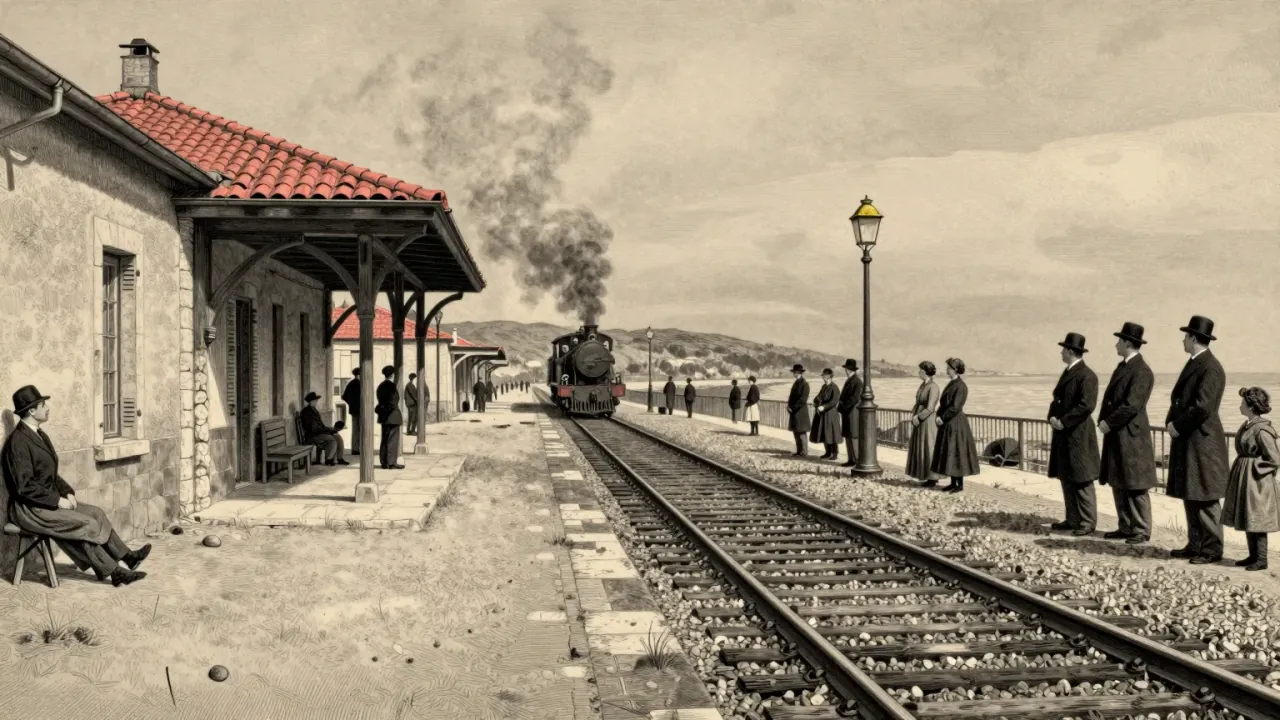
L'Arrivée d'un train en gare de La Ciotat (1896) is a fifty-second silent actuality film by Auguste and Louis Lumière, recording a steam locomotive arriving at La Ciotat station. Shot in a single unedited take with the Cinématographe, it exemplifies early cinema’s documentary impulse and technical ambition. Though often mythologised for causing audience panic, no contemporary evidence supports this. Its significance lies in its formal restraint, its demonstration of cinematic continuity, and its role in establishing the medium’s foundational grammar.

13:00

Closely Watched Trains

Jiří Menzel · 1966

Jiří Menzel’s 1966 debut follows Miloš Hrma, a teenage train dispatcher in German-occupied Bohemia, as he navigates sexual anxiety, bureaucratic absurdity and a small act of resistance. Adapted from Bohumil Hrabal’s novella, it treats war as ambient pressure rather than spectacle, finding gravity in hesitation, humour in proportion, and dignity in failure. Shot by Jaromír Šofr at Barrandov Studios and released the same year, it won the 1968 Academy Award for Best International Feature Film.

13:00

The General

Buster Keaton, Clyde Bruckman · 1926

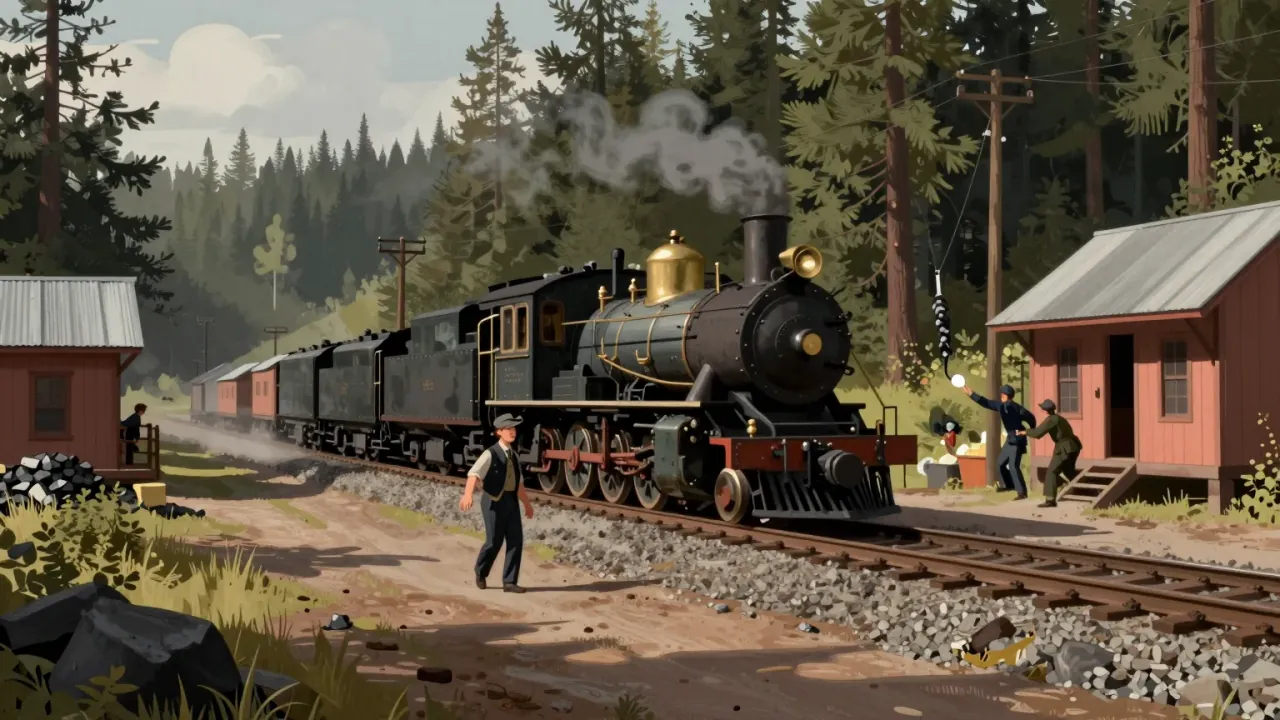
Buster Keaton’s 1926 film The General is a romantic comedy-war film set during the American Civil War, co-directed with Clyde Bruckman. Starring Keaton as a Southern railroad engineer, it follows his pursuit of a stolen locomotive and his estranged sweetheart across Oregon landscapes shot with period-accurate trains and practical stunts. Though poorly received on release, it is now widely regarded as a landmark of cinematic craft — precise, physically coherent, and emotionally restrained.

13:00

Unstoppable

Tony Scott · 2010

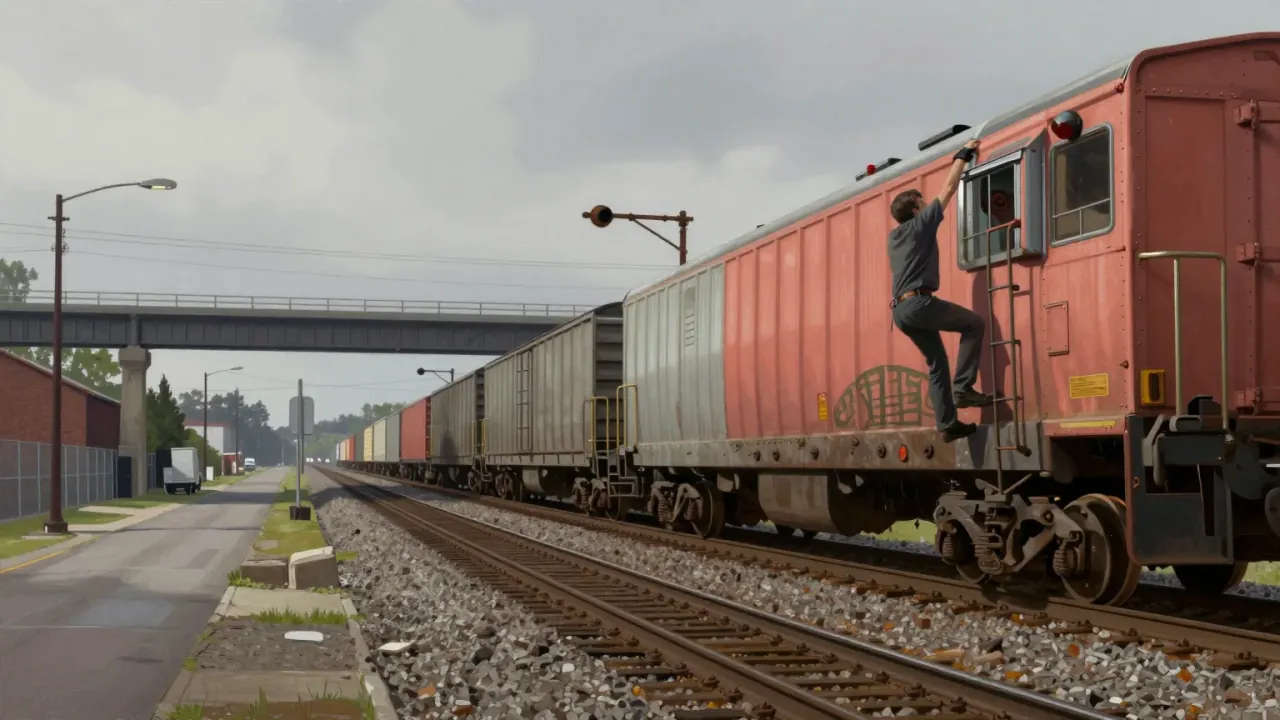
Tony Scott’s 2010 action thriller Unstoppable follows veteran engineer Frank Barnes and rookie conductor Will Colson as they attempt to couple to and slow a runaway freight train carrying toxic chemicals. Based loosely on the 2001 CSX 8888 incident, it prioritises procedural realism, mechanical stakes and spatial clarity over character depth or thematic expansion. Shot across Western Pennsylvania and Ohio, it uses real rail infrastructure and practical effects to ground its escalating tension. With Chris Pine and Denzel Washington leading a functional ensemble, and Ben Seresin’s cinematography anchoring every beat in tangible geography, the film delivers a tightly wound, 98-minute exercise in cause, consequence and controlled velocity.