filmbriefs
Topic

Propaganda

Persuasion that hides the fact it is persuading.

17
in film
13:00
average
221 min
in total
35
across the network
Propaganda across the network →
All briefs17
13:00

49th Parallel

Michael Powell · 1941

49th Parallel (1941), directed by Michael Powell and written by Emeric Pressburger, follows six German sailors stranded in Canada after their U-boat is destroyed. As they attempt to cross into neutral America, each encounter — with Inuit hunters, Hutterite farmers, a bohemian writer, and a disillusioned soldier — exposes the limits of Nazi ideology. Shot across Canada and at Denham Studios, with music by Ralph Vaughan Williams and editing by David Lean, it is a morally precise, formally restrained war drama that argues through confrontation, not combat.


13:00

Alexander Nevsky

Sergei Eisenstein, Dmitri Vasilyev · 1938

Alexander Nevsky (1938) is a Soviet historical drama directed by Sergei Eisenstein and Dmitri Vasilyev, depicting Prince Alexander’s defeat of the Teutonic Knights in 1242. Shot by Eduard Tisse and scored by Sergei Prokofiev, it uses stylised performances, rigorous montage, and a landmark battle sequence to advance a socialist realist vision of collective defence and principled leadership. Though shaped by Stalin-era constraints — including censorship and allegorical framing — its formal control and thematic cohesion remain potent. It is less a period piece than a functional artefact: history made operational.

13:00

Boat People

Ann Hui · 1982

Ann Hui’s 1982 docudrama, shot on Hainan Island with PRC permission, follows a Japanese photojournalist witnessing life in post-war Vietnam. Built from interviews with Vietnamese refugees, it renders systemic coercion through restrained performances, unvarnished cinematography, and a structure that contrasts staged propaganda with lived hardship. It won Best Film at the 1983 Hong Kong Film Awards and remains a landmark of Hong Kong New Wave realism.

13:00

Bowling for Columbine

Michael Moore · 2002

Michael Moore’s 2002 documentary uses the Columbine massacre as a lens to examine America’s relationship with guns, fear, and violence. Through staged interventions, selective interviews, and associative editing, it builds a case against cultural complacency — not by proving single causes, but by exposing patterns of denial, profit, and performance. It won the Academy Award for Best Documentary and remains a touchstone for debates about advocacy filmmaking.

13:00

General Idi Amin Dada: A Self Portrait

Barbet Schroeder · 1974

Barbet Schroeder’s 1974 documentary follows Idi Amin across military drills, cabinet meetings, and staged spectacles, all filmed with Amin’s full cooperation and direction. Shot by Néstor Almendros, it presents Amin’s self-mythology without commentary, letting his rhetoric, gestures, and contradictions accumulate as evidence. Though stripped of historical context or moral framing, its rigour lies in sustained observation — a portrait not of a man, but of power performing itself.

13:00

Hearts and Minds

Peter Davis · 1974

Hearts and Minds (1974), directed by Peter Davis, is a fiercely focused documentary about the Vietnam War that builds its argument through juxtaposition rather than narration. Shot by Richard Pearce and edited by Lynzee Klingman, it assembles interviews with American officials, veterans, and Vietnamese civilians into a sustained critique of US assumptions about race, power, and civilisation. Winning the 1975 Academy Award for Best Documentary, it remains polarising: praised for its moral urgency and condemned for its selectivity. Its enduring significance lies not in balance, but in its unflinching exposure of how language enables violence—and how footage, once recorded, outlives intention.

13:00

In Which We Serve

Noël Coward, David Lean · 1942

Made in 1942 with Ministry of Information backing, In Which We Serve tells the story of HMS Torrin through flashbacks from survivors adrift after its sinking off Crete. Directed by Noël Coward and David Lean, it traces the ship’s commissioning, service at Narvik and Dunkirk, and the private lives of its crew — from Captain Kinross to sailor Shorty Blake. Its power lies in restraint: understated performances, muted cinematography, and a structure that treats duty as continuity, not climax.

13:00

Mr. Freedom

William Klein · 1969

William Klein’s 1969 Mr. Freedom is a French-made English-language satirical comedy starring Albert Augier as a US vigilante sent to France to combat communism — and to enforce a ‘white wall of freedom’. With Delphine Seyrig, Donald Pleasence, and Daniel Cohn-Bendit, it deploys inflatable villains, supermarket embassies, and nuclear brinkmanship to dissect Cold War rhetoric, white nationalism, and the theatricality of power. Pierre Lhomme shot it; Michel Colombier scored it. It is abrasive, uncompromising, and deliberately exhausting — less a story than a sustained political provocation.

13:00

Native Land

Leo Hurwitz, Paul Strand · 1942

A 1942 American docudrama co-directed by Leo Hurwitz and Paul Strand, Native Land combines archival footage and staged reenactments to document corporate suppression of union organising in the 1930s, drawing on the La Follette Committee’s findings. Paul Robeson narrates and sings; Marc Blitzstein scores; Strand photographs. Restored in 2011 from original nitrate elements, it remains a rigorous, austere, and politically uncompromising work of activist cinema.

13:00

Sanshiro Sugata Part II

Akira Kurosawa · 1945

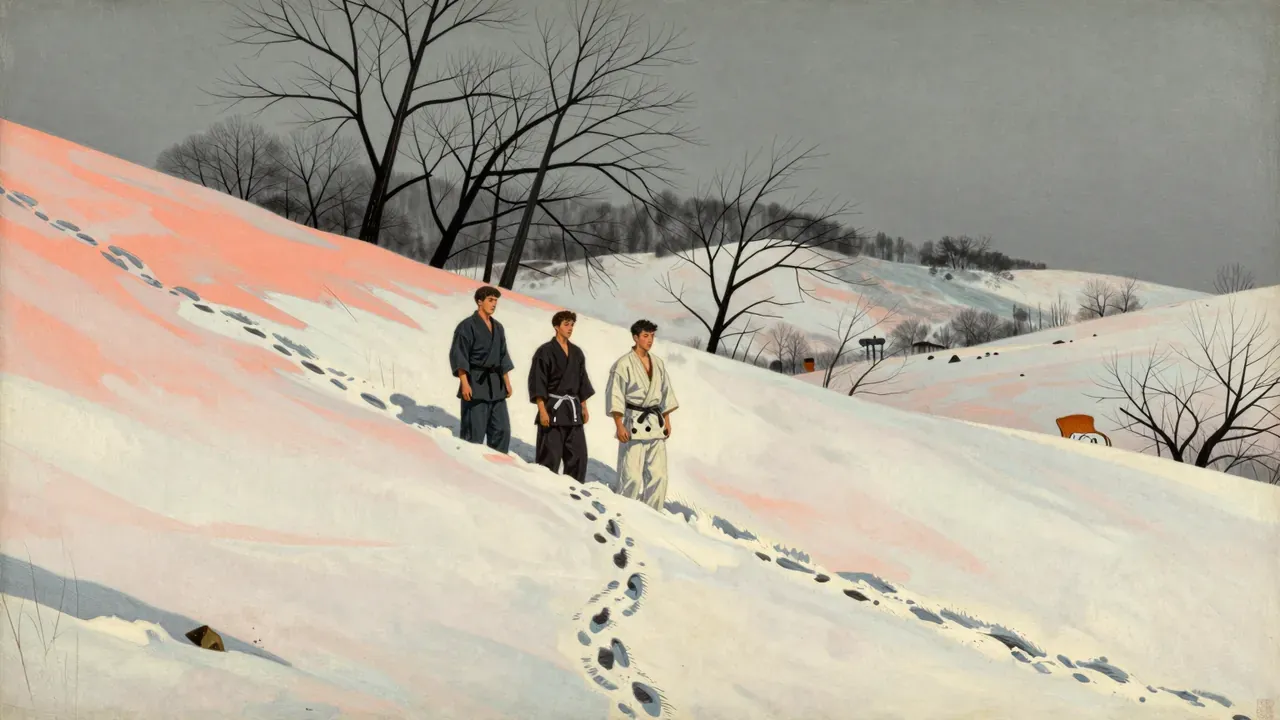
Made in early 1945 for Toho, Sanshiro Sugata Part II follows Sanshiro Sugata’s training under judo’s founder, culminating in a symbolic boxing match against an American sailor. Directed and edited by Akira Kurosawa, with cinematography by Takeo Itō and music by Seiichi Suzuki, the film departs from the spiritual focus of its predecessor to assert judo’s moral and physical supremacy amid Japan’s wartime collapse. Its fights are tightly structured, its ideology unambiguous, its landscape functional rather than lyrical. It is less a character study than a controlled rehearsal of triumph — historically revealing, aesthetically restrained.

13:00

That Hamilton Woman

Alexander Korda · 1941

That Hamilton Woman (1941) is a black-and-white historical drama directed by Alexander Korda, starring Vivien Leigh and Laurence Olivier as Emma Hamilton and Horatio Nelson. Made in Hollywood during British exile, it uses the Napoleonic Wars as allegory for Britain’s resistance to Nazi Germany. The film follows Emma’s rise from courtesan to national symbol and her tragic decline, framed by Nelson’s principled defiance and ultimate sacrifice at Trafalgar. Crafted with restraint and moral clarity, it prioritises thematic weight over psychological nuance or visual spectacle.

13:00

The Most Beautiful

Akira Kurosawa · 1944

Akira Kurosawa’s 1944 film The Most Beautiful follows young women working at a Japanese optics factory during the Second World War. Shot on location with a semidocumentary approach, it depicts their collective effort to meet production targets, their dormitory life, and the personal costs of unwavering dedication. Though commissioned as propaganda, its austerity and focus on physical and emotional strain lend it an unexpected gravity — less a celebration of sacrifice than a quiet record of its weight.

13:00

Battleship Potemkin

Sergei Eisenstein · 1925

Battleship Potemkin (1925) is Sergei Eisenstein’s landmark Soviet silent film dramatising the 1905 mutiny aboard the battleship Potemkin. Made as political art rather than historical record, it uses radical montage—especially in the iconic Odessa Steps sequence—to generate collective emotion and ideological conviction. Shot by Eduard Tisse and Vladimir Uralsky, edited by Eisenstein and Grigori Aleksandrov, it relies on non-professional actors, symbolic types, and rhythmic editing over psychology or narrative. Though its revolutionary certainty feels schematic today, its formal mastery remains potent and instructive.

13:00

Notre musique

Jean-Luc Godard · 2004

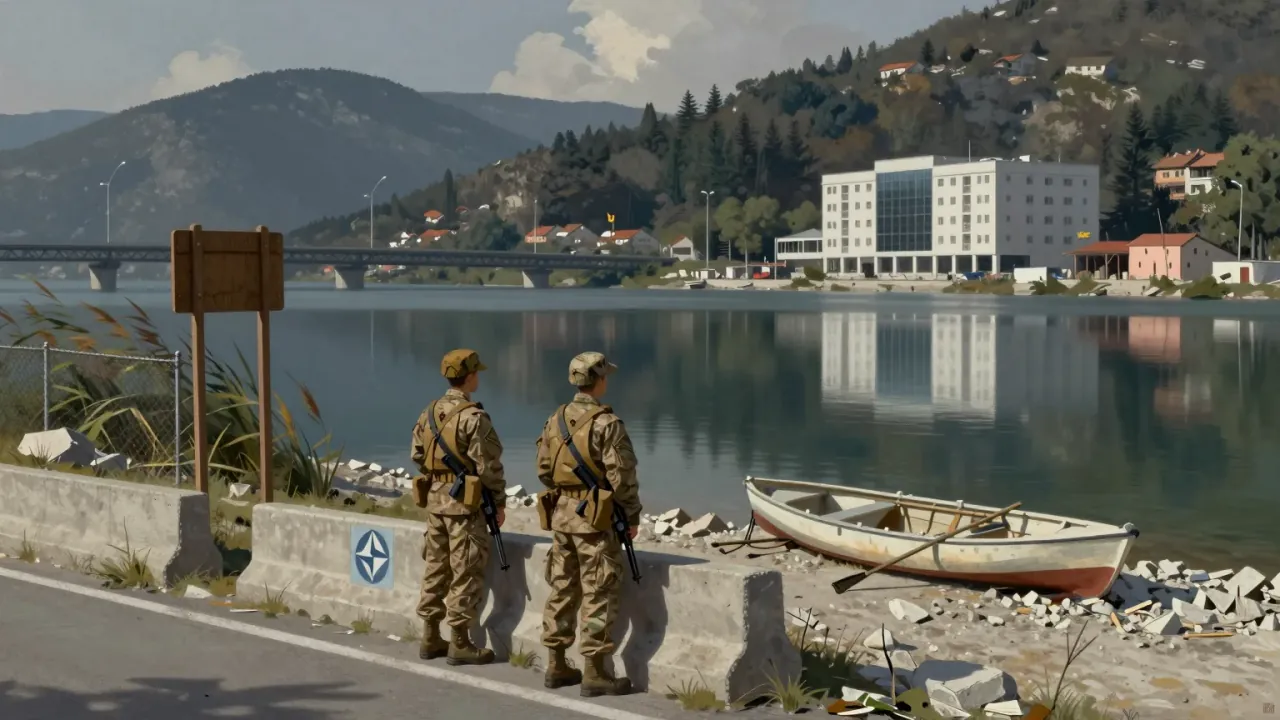
Jean-Luc Godard’s 2004 essay-film Notre musique uses Dante’s tripartite structure — Hell, Purgatory, Heaven — to examine how violence, language, and image condition moral perception. Set around a Sarajevo arts conference, it stages encounters between Israeli and Palestinian voices, philosophers and poets, while critiquing cinematic conventions like shot/reverse shot. Julien Hirsch’s restrained cinematography and Godard’s elliptical editing foreground ethics over exposition. Though formally demanding and emotionally austere, it rewards sustained attention with a rare rigour in thinking through representation itself.

13:00

October: Ten Days That Shook the World

Grigori Aleksandrov, Sergei Eisenstein · 1927

October: Ten Days That Shook the World (1927) is a Soviet silent film commissioned for the tenth anniversary of the Bolshevik Revolution. Directed by Sergei Eisenstein and Grigori Aleksandrov, it dramatises the uprising through intellectual montage — juxtaposing images to generate ideas rather than narrative. Eduard Tisse’s stark cinematography and Eisenstein’s rigorous editing construct revolution as rhythm, mass, and inevitability. Though criticised at the time for opacity and formalism, it remains a foundational work of avant-garde cinema and political filmmaking.

13:00

Storm over Asia

Vsevolod Pudovkin · 1928

Storm over Asia (1928), directed by Vsevolod Pudovkin, is the final film of his revolutionary trilogy. Set in a fictionalised Mongolia under British occupation, it follows a Mongol trapper elevated to puppet ruler — then turned against his masters. Made by Mezhrabpom-Film with cinematography by Anatoli Golovnya, it uses real Cham dance footage and a tightly controlled visual style to argue that legitimacy is performative, and resistance begins when the performance is reclaimed.

13:00

Strike

Sergei Eisenstein · 1925

Sergei Eisenstein’s 1925 debut is a Soviet silent propaganda film depicting a 1903 factory strike. Using rapid montage, symbolic cross-cutting (notably workers and slaughtered cattle), and stylised performances, it advances a Marxist analysis of labour, provocation and state violence. Shot by Eduard Tisse and edited by Eisenstein himself, it prioritises ideological clarity over psychological realism. Though initially confusing to audiences, it is now regarded as a foundational work of avant-garde cinema and a key text in film theory.