filmbriefs
Topic

The Great Depression

What happens when the machinery stops and nobody knows why.

12
in film
13:00
average
156 min
in total
18
across the network
The Great Depression across the network →
All briefs12
13:00

Design for Living

Ernst Lubitsch, Ben Hecht · 1933

Ernst Lubitsch and Ben Hecht’s 1933 romantic comedy adapts Noël Coward’s play into a buoyant, Depression-era farce about a woman living with two men who love her. Starring Fredric March, Gary Cooper and Miriam Hopkins, it trades Coward’s epigrams for physical charm and situational humour, using swift editing, uncluttered cinematography and effortless performances to sustain its risqué premise without scandal. Though structurally loose and verbally thin, it remains a rare, coherent vision of non-monogamy as joyful improvisation — not transgression.

13:00

Every-Night Dreams

Mikio Naruse · 1933

Mikio Naruse’s 1933 silent drama follows Omitsu, a bar hostess in depression-era Yokohama, as she navigates poverty, abandonment, and moral compromise to protect her young son. With Sumiko Kurishima in a performance of extraordinary restraint, the film traces how economic precarity reshapes love, duty, and selfhood — not through grand tragedy, but through accumulated, quiet concessions.

13:00

Holiday

George Cukor · 1938

George Cukor’s 1938 Holiday adapts Philip Barry’s play into a precise, unhurried romantic comedy about Johnny Case, a self-made banker who plans to retire at thirty, and Linda Seton, the restless daughter of a banking dynasty. Set in a gilded Park Avenue mansion, it tests whether personal integrity can survive assimilation into inherited privilege. Katharine Hepburn and Cary Grant anchor a literate, understated performance style; Franz Planer’s cinematography and Otto Meyer’s editing sustain quiet rhythm over speed. Though rooted in the stage, it resists theatrical artifice, trusting dialogue and gesture over exposition. Nominated for Best Art Direction, it holds a 100% Tomatometer score but was not a box-office success — a film that rewards attention, not immersion.

13:00

King of the Hill

Steven Soderbergh · 1993

Steven Soderbergh’s 1993 coming-of-age drama, adapted from A. E. Hotchner’s memoir, follows eleven-year-old Aaron as he lives alone in a St. Louis hotel during the Great Depression, his mother hospitalised and his father absent. With restrained cinematography by Elliot Davis, sparse scoring by Cliff Martinez, and a lead performance of extraordinary quietude from Jesse Bradford, the film builds emotional force through accumulation — not climax. It treats poverty, illness, and abandonment as environmental facts, not dramatic engines, and finds moral weight in small, sustained acts of self-preservation.

13:00

Make Way for Tomorrow

Leo McCarey · 1937

Make Way for Tomorrow (1937), directed by Leo McCarey, follows Barkley and Lucy Cooper, an elderly couple forced to separate after losing their home. With no room for both in any of their children’s houses, they spend their final days together wandering the city before boarding trains to different states. Shot in restrained, unadorned style, it avoids sentimentality while building unbearable emotional pressure through quiet observation and unwavering performances.

13:00

My Man Godfrey

Gregory La Cava · 1936

My Man Godfrey (1936), directed by Gregory La Cava, follows a homeless man hired as butler by a Manhattan socialite during the Great Depression. William Powell and Carole Lombard anchor a sharp, fast-paced romantic comedy that skewers wealth while relying on inherited status to resolve its tensions. Ted Tetzlaff’s cinematography and tight editing sustain its screwball energy, though the finale retreats from its earlier bite. Critically lauded then and now, it remains a masterclass in studio-era comic construction — elegant, economical, and knowingly incomplete.

13:00

Paper Moon

Peter Bogdanovich · 1973

Paper Moon (1973), directed by Peter Bogdanovich, follows Moses Pray and Addie Loggins — a grifter and a sharp-witted orphan — as they travel across Depression-era Kansas and Missouri, running small scams to survive. Shot in black-and-white by László Kovács, it stars Ryan and Tatum O'Neal in performances defined by restraint and reciprocity. Adapted by Alvin Sargent from Joe David Brown’s novel, it avoids moral framing in favour of behavioural accuracy, treating fraud as labour and kinship as negotiation. Tatum O'Neal won the Academy Award for Best Supporting Actress at age ten.

13:00

The Awful Truth

Leo McCarey · 1937

Leo McCarey’s 1937 screwball comedy stars Cary Grant and Irene Dunne as a divorcing couple whose competitive courtship reveals they still love each other. Built on Viña Delmar and Sidney Buchman’s script, it replaces moralising with behavioural precision, using dog custody hearings, nightclub sabotage and society-party sabotage to expose the gap between social performance and private feeling. Joseph Walker’s cinematography and Al Clark’s editing sustain its tight, unhurried rhythm. Though some supporting elements feel thin and its class framework dated, its central performances and structural clarity remain benchmarks of studio-era comedy.

13:00

The Shop Around the Corner

Ernst Lubitsch · 1940

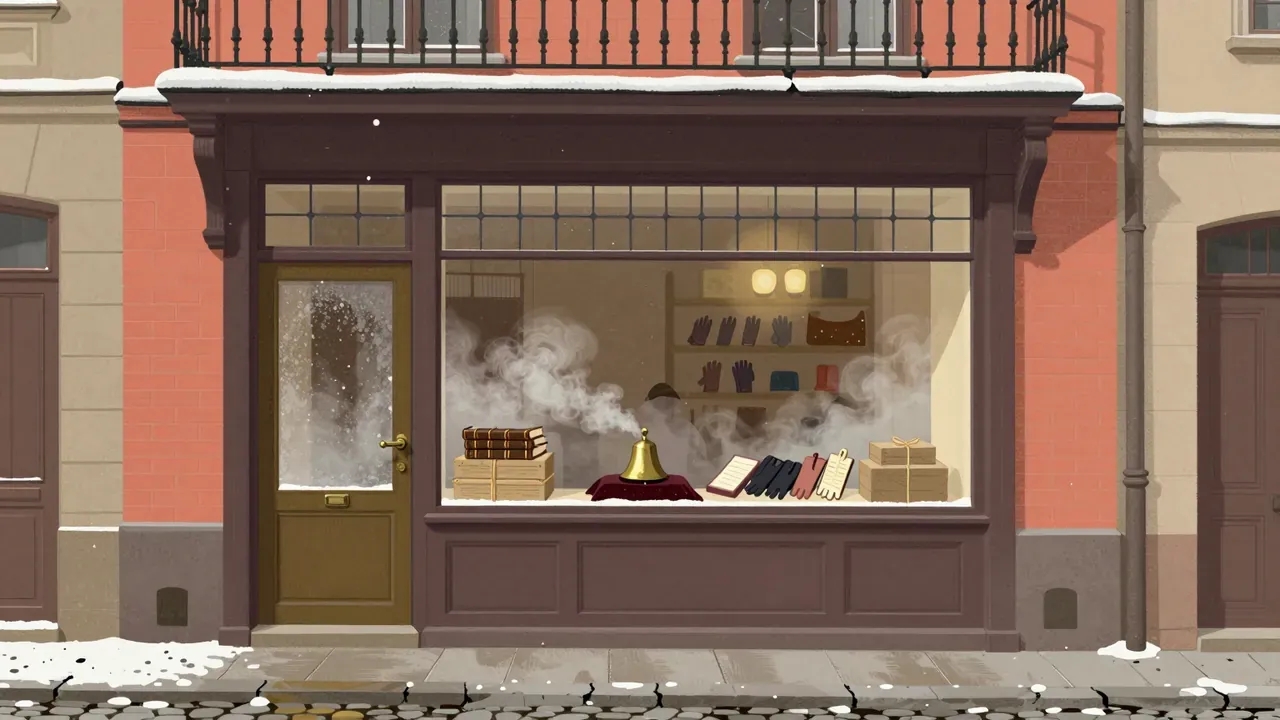
Ernst Lubitsch’s 1940 MGM film follows two Budapest shop clerks who feud at work while falling in love through anonymous letters. Shot in sequence with deliberate pacing, it trusts silence, gesture, and understated performance over plot mechanics. Though its reliance on coincidence weakens some turns, its fidelity to emotional realism and quiet dignity of ordinary life remains deeply affecting.

13:00

Modern Times

Charlie Chaplin · 1936

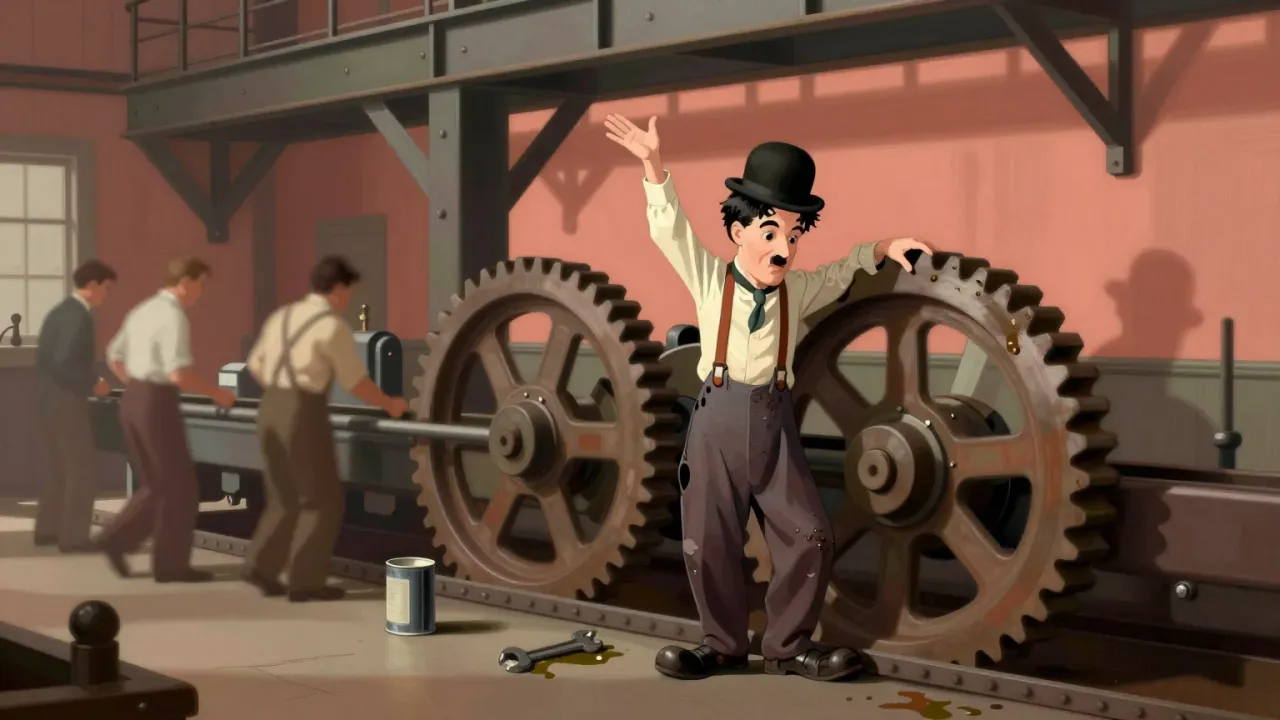
Charlie Chaplin’s 1936 Modern Times is his final silent film and last appearance as the Little Tramp. Set against the Great Depression, it follows the Tramp and a young woman, Ellen, through unemployment, mistaken arrests, factory work, and fleeting shelter — all rendered through tightly choreographed slapstick and sparse, stylised sound. Though episodic, its gags target automation, surveillance, and class with surgical precision. Composed and directed by Chaplin, it remains a landmark of cinematic satire and humanist comedy.

13:00

Public Enemies

Michael Mann · 2009

Michael Mann’s 2009 biographical crime film adapts Bryan Burrough’s non-fiction account of John Dillinger’s final year and the FBI’s pursuit under Melvin Purvis. Shot digitally on location across Wisconsin and Illinois, it prioritises procedural detail, institutional logic, and tactile authenticity over psychological exposition or romantic myth. With Johnny Depp, Christian Bale, and Marion Cotillard, it charts the convergence of Depression-era desperation, federal ambition, and emerging surveillance infrastructure.

13:00

They Live by Night

Nicholas Ray · 1948

Nicholas Ray’s 1948 debut follows a young convict and a service-station attendant who marry and flee across Depression-era America. Shot with quiet intensity by George E. Diskant and performed with understated gravity by Farley Granger and Cathy O'Donnell, it treats love and lawlessness as inseparable states — not as rebellion, but as the only possible response to a world that denies them personhood.